


Global Zellweger Spectrum Disorders Market Segmentation, By Type (Heimler Syndrome, Infantile Refsum Disease, Neonatal Adrenoleukodystrophy, and Zellweger Syndrome), Therapy (Pediatricians, Neurologists, Surgeons, Audiologists, Ophthalmologists, and Orthopedists), Diagnosis (Blood Test, Urine Test, Ultrasound, and Genetic Test), End-Users (Hospitals, Homecare, Speciality Centres, and Others), Distribution Channel (Hospital Pharmacy, Online Pharmacy, and Retail Pharmacy)- Industry Trends and Forecast to 2032
Zellweger Spectrum Disorders Market Size
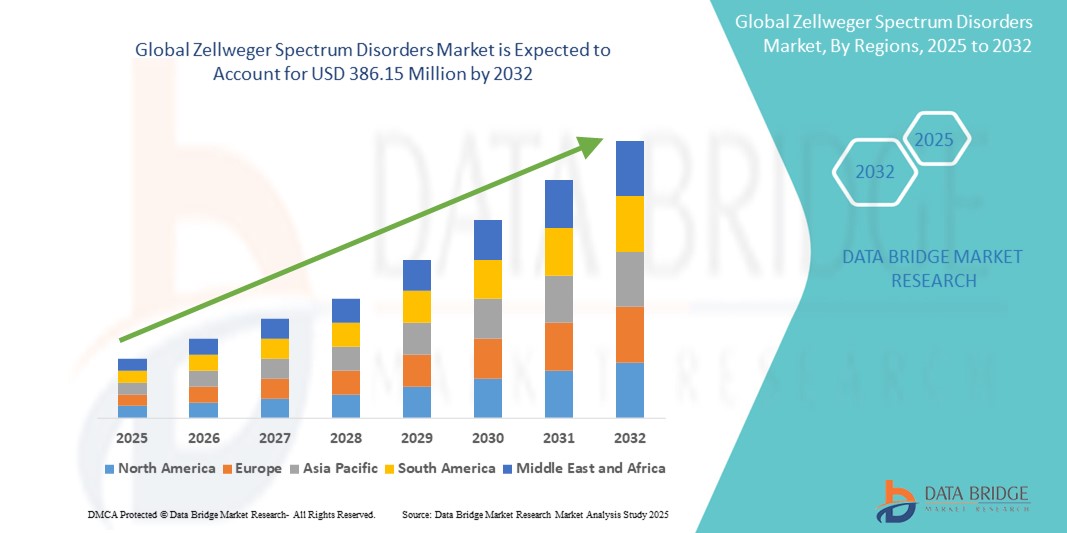
- The global Zellweger spectrum disorders market size was valued at USD 197.82 million in 2024 and is expected to reach USD 386.15 million by 2032, at a CAGR of 8.72% during the forecast period
- The market growth is primarily driven by increasing awareness and diagnosis of rare genetic disorders, along with advancements in genetic testing and newborn screening programs that facilitate early detection of Zellweger spectrum disorders
- In addition, growing research funding, the emergence of targeted therapies, and enhanced healthcare infrastructure are supporting better disease management and patient outcomes. These combined factors are contributing to the rising demand for effective treatment options, thereby accelerating the market's expansion
Zellweger Spectrum Disorders Market Analysis
- Zellweger spectrum disorders (ZSDs), a group of rare congenital peroxisomal biogenesis disorders, are gaining growing attention in the rare disease landscape due to increasing clinical recognition, research activity, and patient advocacy
- The rising demand for ZSD-related diagnostics and supportive treatments is primarily driven by improved access to genetic testing, growing awareness among healthcare professionals, and initiatives aimed at early detection through neonatal screening
- North America dominated the Zellweger spectrum disorders market with the largest revenue share of 39.4% in 2024, supported by robust healthcare infrastructure, ongoing clinical research, and proactive rare disease policy frameworks, particularly in the U.S., which benefits from strong collaborations between research institutions and patient organizations
- Asia-Pacific is expected to be the fastest growing region in the Zellweger spectrum disorders market during the forecast period, fueled by increasing investment in rare disease diagnostics, expanding healthcare access, and growing awareness among medical professionals in emerging economies
- Genetic Test segment dominated the Zellweger spectrum disorders market with a market share of 48.4% in 2024, driven by its high diagnostic accuracy and growing availability of advanced genomic technologies for early and definitive detection
Report Scope and Zellweger Spectrum Disorders Market Segmentation
|
Attributes |
Zellweger Spectrum Disorders Key Market Insights |
|
Segments Covered |
|
|
Countries Covered |
North America
Europe
Asia-Pacific
Middle East and Africa
South America
|
|
Key Market Players |
|
|
Market Opportunities |
|
|
Value Added Data Infosets |
In addition to the insights on market scenarios such as market value, growth rate, segmentation, geographical coverage, and major players, the market reports curated by the Data Bridge Market Research also include in-depth expert analysis, pricing analysis, brand share analysis, consumer survey, demography analysis, supply chain analysis, value chain analysis, raw material/consumables overview, vendor selection criteria, PESTLE Analysis, Porter Analysis, and regulatory framework. |
Zellweger Spectrum Disorders Market Trends
“Advancements in Genetic Testing and Early Diagnostic Tools”
- A significant and accelerating trend in the global Zellweger spectrum disorders (ZSDs) market is the advancement of genetic testing technologies and the increasing implementation of early diagnostic tools, particularly through newborn screening programs. These developments are improving early detection rates and enabling prompt medical intervention
- For instance, the adoption of next-generation sequencing (NGS) panels by diagnostic labs such as Invitae and GeneDx has allowed for more precise identification of PEX gene mutations responsible for ZSDs. These tests can detect mutations even in cases with atypical clinical presentation, enabling more accurate diagnosis
- The integration of advanced diagnostics into neonatal screening programs in countries such as the U.S. and Japan is facilitating earlier identification and management of ZSDs. Early diagnosis enables timely access to supportive therapies and the potential to slow progression of neurological and systemic damage
- Furthermore, AI-based data interpretation tools are enhancing the speed and accuracy of genetic result analysis. This helps clinicians provide faster diagnoses and initiate multidisciplinary care involving pediatric neurologists, audiologists, and ophthalmologists
- Organizations such as Global Genes and NORD are also promoting awareness and early testing through patient education initiatives and partnerships with healthcare providers. These efforts are leading to increased testing uptake and better-informed patient communities
- This trend toward early, precise, and technology-enabled diagnosis is reshaping clinical approaches to rare genetic disorders such as ZSDs. Consequently, diagnostic companies and research institutions are focusing on refining genetic assays and expanding access to early screening tools globally.
- The growing emphasis on early diagnosis not only enhances patient outcomes but also drives consistent demand for genetic testing services and fosters clinical research on targeted therapies for Zellweger spectrum disorders
Zellweger Spectrum Disorders Market Dynamics
Driver
“Increasing Awareness, Diagnostic Advancements, and Supportive Policy Frameworks”
- The growing awareness of rare diseases, advancements in molecular diagnostics, and expanding support from healthcare policy frameworks are significant drivers of the Zellweger spectrum disorders market
- For instance, initiatives such as the NIH’s Rare Diseases Clinical Research Network and newborn screening mandates in parts of North America and Europe are encouraging earlier diagnosis and comprehensive care for conditions such as ZSDs
- The increased use of whole-exome sequencing and targeted panels for rare genetic conditions is enhancing diagnostic accuracy, especially in neonates with neurological abnormalities, thereby enabling earlier therapeutic intervention
- Moreover, global support from rare disease organizations and regulatory bodies has led to more robust funding, research collaborations, and access to specialized care centers that focus on ZSD management and supportive treatments
- The presence of multidisciplinary care teams—including pediatricians, neurologists, and genetic counselors—at tertiary care hospitals and specialty clinics further improves long-term outcomes for patients and provides families with continuous care and counseling
- These factors are collectively driving the demand for early detection, structured care delivery, and increased availability of diagnostic resources for Zellweger spectrum disorders across key regions
Restraint/Challenge
“Limited Therapeutic Options and High Cost of Genetic Diagnostics”
- The lack of curative therapies and limited availability of targeted treatments for Zellweger spectrum disorders remain significant challenges in market growth
- Currently, management is largely supportive and symptomatic, focusing on addressing hearing, vision, neurological, and hepatic complications. The absence of disease-modifying therapies restricts clinical outcomes and long-term prognosis
- In addition, the high cost of comprehensive genetic testing can be a barrier in low- and middle-income countries, where health systems may lack the infrastructure or reimbursement frameworks to support advanced diagnostics
- For instance, while next-generation sequencing has become more accessible in developed regions, out-of-pocket expenses for rare disease testing remain high in underserved markets, leading to delayed or missed diagnoses
- Furthermore, the rarity of ZSDs poses challenges in conducting large-scale clinical trials, thereby slowing drug development progress. Limited patient populations, coupled with a lack of standardized treatment protocols, further complicate therapeutic innovation
- Overcoming these hurdles will require increased global investment in rare disease research, expansion of genetic testing coverage through insurance or public health initiatives, and the development of novel therapeutics targeting the underlying metabolic dysfunction in Zellweger spectrum disorders
Zellweger Spectrum Disorders Market Scope
The market is segmented on the basis of type, therapy, diagnosis, end-users, and distribution channel.
- By Type
On the basis of type, the Zellweger spectrum disorders market is segmented into Heimler Syndrome, Infantile Refsum Disease, Neonatal Adrenoleukodystrophy, and Zellweger Syndrome.
Zellweger Syndrome dominated the market with the largest market revenue share of 42.3% in 2024, owing to its relatively higher incidence and severe clinical presentation. Early onset and the need for intensive multidisciplinary care drive increased diagnostic and treatment activities, contributing to its market dominance.
Infantile Refsum Disease is anticipated to witness the fastest growth rate from 2025 to 2032, fueled by improved clinical recognition and genetic testing capabilities. Advancements in diagnostics are helping identify milder phenotypes earlier, increasing demand for long-term supportive management.
- By Therapy
On the basis of therapy, the Zellweger spectrum disorders market is segmented into pediatricians, neurologists, surgeons, audiologists, ophthalmologists, and orthopedists. Pediatricians held the largest market revenue share of 35.6% in 2024, as they are typically the first point of contact for managing ZSDs. Their central role in diagnosing, coordinating multidisciplinary care, and providing ongoing symptom management solidifies their leading position.
Neurologists are expected to witness the fastest growth rate from 2025 to 2032, driven by increasing involvement in treating neurological complications associated with Zellweger spectrum disorders, particularly as more cases are diagnosed and referred for specialist intervention.
- By Diagnosis
On the basis of diagnosis, the Zellweger spectrum disorders market is segmented into blood test, urine test, ultrasound, and genetic test. Genetic Test dominated the market with a revenue share of 48.4% in 2024, driven by its high accuracy in detecting PEX gene mutations and its increasing availability through advanced sequencing platforms. Genetic testing remains the gold standard in confirming diagnosis, especially in neonatal and pediatric care settings.
Ultrasound is anticipated to witness the fastest growth rate from 2025 to 2032, due to its utility in identifying liver, kidney, and brain abnormalities associated with ZSDs in both prenatal and postnatal stages, offering a non-invasive and accessible diagnostic approach.
- By End-Users
On the basis of end-users, the Zellweger spectrum disorders market is segmented into hospitals, homecare, speciality centres, and others. Hospitals accounted for the largest market share of 51.2% in 2024, owing to their ability to provide integrated diagnostic services, inpatient care, and coordinated specialist consultations required for managing complex disorders such as ZSDs. Hospitals are also the primary setting for newborn screening and early diagnosis.
Specialty Centres are projected to experience the fastest growth from 2025 to 2032, driven by the emergence of dedicated rare disease centers offering personalized care, access to clinical trials, and specialized therapies tailored for patients with Zellweger spectrum disorders.
- By Distribution Channel
On the basis of distribution channel, the Zellweger spectrum disorders market is segmented into hospital pharmacy, online pharmacy, and retail pharmacy. Hospital Pharmacy dominated the market with a share of 39.4% in 2024, as medications, supplements, and symptomatic treatments for ZSDs are primarily dispensed in hospital settings, ensuring controlled and timely delivery within a multidisciplinary treatment plan.
Online Pharmacy is expected to witness the fastest growth rate from 2025 to 2032, driven by increasing adoption of e-commerce platforms for recurring purchases of nutritional and supportive care products, offering caregivers enhanced convenience and accessibility.
Zellweger Spectrum Disorders Market Regional Analysis
- North America dominated the Zellweger spectrum disorders market with the largest revenue share of 39.4% in 2024, supported by robust healthcare infrastructure, ongoing clinical research, and proactive rare disease policy frameworks
- Healthcare providers in the region place high value on early, precise diagnosis and coordinated multidisciplinary care, leading to higher utilization of genetic panels, specialized metabolic clinics, and supportive therapies for ZSD patients
- This regional lead is further supported by robust reimbursement frameworks, active patient‑advocacy networks, and concentrated clinical‑trial activity, positioning North America as the primary hub for both diagnostic services and emerging therapeutic development in Zellweger spectrum disorders
U.S. Zellweger Spectrum Disorders Market Insight
The U.S. Zellweger spectrum disorders market captured the largest revenue share of 82.5% in 2024 within North America, driven by advanced genomic testing infrastructure and well-established newborn screening programs. The country’s leadership in rare disease research, supported by initiatives from the NIH and FDA, enables early diagnosis and coordinated care for ZSD patients. Furthermore, a strong network of academic medical centers and patient advocacy organizations fosters access to specialized care, facilitating long-term management and clinical trial participation.
Europe Zellweger Spectrum Disorders Market Insight
The Europe Zellweger spectrum disorders market is projected to expand at a substantial CAGR throughout the forecast period, supported by national rare disease strategies and increasing government funding for genetic research. The region’s expanding newborn screening coverage and investment in early diagnostic tools are accelerating the identification of ZSDs. In addition, rising collaboration between healthcare institutions and academic researchers across countries such as France, Germany, and the Netherlands is driving improvements in patient outcomes and expanding access to multidisciplinary care.
U.K. Zellweger Spectrum Disorders Market Insight
The U.K. Zellweger spectrum disorders market is anticipated to grow at a noteworthy CAGR during the forecast period, fueled by the NHS’s commitment to rare disease treatment and diagnosis. Nationwide programs such as the Genomic Medicine Service and 100,000 Genomes Project support early identification of ZSDs. Increasing awareness among clinicians and families, combined with centralized access to genetic counseling and metabolic clinics, is driving market growth across both pediatric and specialist care segments.
Germany Zellweger Spectrum Disorders Market Insight
The Germany Zellweger spectrum disorders market is expected to expand at a considerable CAGR during the forecast period, supported by robust health insurance coverage, strong biomedical research infrastructure, and a focus on early diagnosis. The country's emphasis on integrating genetic testing into standard clinical care, along with funding from federal and EU initiatives, is encouraging the early detection and long-term management of ZSDs. Academic medical centers across Germany also contribute to clinical research and pilot therapeutic studies for rare metabolic disorders.
Asia-Pacific Zellweger Spectrum Disorders Market Insight
The Asia-Pacific Zellweger spectrum disorders market is poised to grow at the fastest CAGR of 24% from 2025 to 2032, driven by increasing awareness of rare diseases, improving access to genetic diagnostics, and rapid healthcare infrastructure development in countries such as China, India, and Japan. Growing government investments in rare disease registries and screening initiatives are enhancing early diagnosis rates. In addition, expanding collaborations between international and regional institutions are supporting clinical research and patient support programs in the region.
Japan Zellweger Spectrum Disorders Market Insight
The Japan Zellweger spectrum disorders market is gaining momentum due to the country’s advanced healthcare infrastructure and proactive policies on genetic disorders. Nationwide newborn screening programs and government-supported initiatives to improve rare disease care are helping increase diagnosis rates. Japan’s aging healthcare workforce and focus on early, technology-driven interventions are also driving demand for integrated care solutions involving geneticists, pediatricians, and specialized rare disease units.
India Zellweger Spectrum Disorders Market Insight
The India Zellweger spectrum disorders market accounted for the largest market revenue share in Asia Pacific in 2024, supported by the country’s rising investments in genetic testing infrastructure and growing public health awareness. National rare disease policy implementation, increased availability of diagnostic labs, and collaboration with international research bodies are boosting identification and care for ZSDs. India’s rapidly expanding pediatric healthcare sector and emphasis on early childhood screening are further accelerating market development.
Zellweger Spectrum Disorders Market Share
The Zellweger Spectrum Disorders industry is primarily led by well-established companies, including:
- Invitae Corporation (U.S.)
- GeneDx, LLC (U.S.)
- PerkinElmer, Inc. (U.S.)
- Thermo Fisher Scientific Inc. (U.S.)
- Illumina, Inc. (U.S.)
- Centogene N.V. (Germany)
- Eurofins Scientific SE (Luxembourg)
- Labcorp (U.S.)
- Fulgent Genetics, Inc. (U.S.)
- Ambry Genetics Corporation (U.S.)
- Natera, Inc. (U.S.)
- Baylor Genetics (U.S.)
- Sanofi (France)
- Orphazyme A/S (Denmark)
- Greenwood Genetic Center (U.S.)
- HudsonAlpha Institute for Biotechnology (U.S.)
- Blueprint Genetics (Finland)
- BGI Genomics Co., Ltd. (China)
- Roche Diagnostics International Ltd. (Switzerland)
- Quest Diagnostics Incorporated (U.S.)
What are the Recent Developments in Global Zellweger Spectrum Disorders Market?
- In May 2024, Invitae Corporation, a leader in genetic testing, expanded its rare disease diagnostics portfolio by launching an enhanced next-generation sequencing panel specifically targeting peroxisomal biogenesis disorders, including Zellweger spectrum disorders. This development reflects the growing demand for early and accurate diagnosis in rare genetic conditions and Invitae’s commitment to increasing accessibility and precision in genomic medicine, ultimately supporting improved patient care pathways for affected families
- In March 2024, the National Institutes of Health (NIH) announced new funding under the Rare Diseases Clinical Research Network (RDCRN) to support a multi-institutional study on peroxisomal disorders, including Zellweger spectrum disorders. The initiative aims to improve understanding of disease progression, optimize clinical care standards, and facilitate patient recruitment for future therapeutic trials. This move emphasizes the growing prioritization of rare disease research in public health agendas
- In February 2024, Peroxisome Disease Alliance, a global patient advocacy group, launched an international awareness campaign focusing on Zellweger spectrum disorders. The campaign aims to improve early diagnosis through education initiatives targeting pediatricians and primary care physicians, while also advocating for broader newborn screening. The initiative highlights the increasing role of patient organizations in driving clinical and policy engagement around rare genetic conditions
- In January 2024, GeneDx, a clinical genomics company, introduced a collaboration with major pediatric hospitals across Europe to pilot AI-driven variant interpretation tools tailored for complex rare diseases such as Zellweger spectrum disorders. This initiative seeks to accelerate diagnosis timelines and improve the accuracy of genetic result interpretation, showcasing innovation in integrating AI with rare disease diagnostics
- In December 2023, Orphazyme A/S, a rare disease biotech firm, announced early-stage preclinical results for a novel compound targeting peroxisomal dysfunction related to Zellweger spectrum disorders. While still in development, the findings mark a step toward addressing the critical need for disease-modifying treatments and reflect the rising pharmaceutical interest in targeting the molecular basis of peroxisomal disorders
SKU-
Accédez en ligne au rapport sur le premier cloud mondial de veille économique
- Tableau de bord d'analyse de données interactif
- Tableau de bord d'analyse d'entreprise pour les opportunités à fort potentiel de croissance
- Accès d'analyste de recherche pour la personnalisation et les requêtes
- Analyse de la concurrence avec tableau de bord interactif
- Dernières actualités, mises à jour et analyse des tendances
- Exploitez la puissance de l'analyse comparative pour un suivi complet de la concurrence
Méthodologie de recherche
La collecte de données et l'analyse de l'année de base sont effectuées à l'aide de modules de collecte de données avec des échantillons de grande taille. L'étape consiste à obtenir des informations sur le marché ou des données connexes via diverses sources et stratégies. Elle comprend l'examen et la planification à l'avance de toutes les données acquises dans le passé. Elle englobe également l'examen des incohérences d'informations observées dans différentes sources d'informations. Les données de marché sont analysées et estimées à l'aide de modèles statistiques et cohérents de marché. De plus, l'analyse des parts de marché et l'analyse des tendances clés sont les principaux facteurs de succès du rapport de marché. Pour en savoir plus, veuillez demander un appel d'analyste ou déposer votre demande.
La méthodologie de recherche clé utilisée par l'équipe de recherche DBMR est la triangulation des données qui implique l'exploration de données, l'analyse de l'impact des variables de données sur le marché et la validation primaire (expert du secteur). Les modèles de données incluent la grille de positionnement des fournisseurs, l'analyse de la chronologie du marché, l'aperçu et le guide du marché, la grille de positionnement des entreprises, l'analyse des brevets, l'analyse des prix, l'analyse des parts de marché des entreprises, les normes de mesure, l'analyse globale par rapport à l'analyse régionale et des parts des fournisseurs. Pour en savoir plus sur la méthodologie de recherche, envoyez une demande pour parler à nos experts du secteur.
Personnalisation disponible
Data Bridge Market Research est un leader de la recherche formative avancée. Nous sommes fiers de fournir à nos clients existants et nouveaux des données et des analyses qui correspondent à leurs objectifs. Le rapport peut être personnalisé pour inclure une analyse des tendances des prix des marques cibles, une compréhension du marché pour d'autres pays (demandez la liste des pays), des données sur les résultats des essais cliniques, une revue de la littérature, une analyse du marché des produits remis à neuf et de la base de produits. L'analyse du marché des concurrents cibles peut être analysée à partir d'une analyse basée sur la technologie jusqu'à des stratégies de portefeuille de marché. Nous pouvons ajouter autant de concurrents que vous le souhaitez, dans le format et le style de données que vous recherchez. Notre équipe d'analystes peut également vous fournir des données sous forme de fichiers Excel bruts, de tableaux croisés dynamiques (Fact book) ou peut vous aider à créer des présentations à partir des ensembles de données disponibles dans le rapport.











