Global Adrenoleukodystrophy Treatment Market Segmentation, By Type (Childhood Cerebral Adrenoleukodystrophy (ccALD), Adrenomyelopathy, Addison’s Disease, and Others), Treatment Type (Medication, Gene Therapy, Bone Marrow Transplantation, and Others), Route of Administration (Oral and Parenteral), End Users (Hospitals, Homecare, Specialty Clinics, and Others), Distribution Channel (Hospital Pharmacy, Online Pharmacy, Retail Pharmacy, and Others)- Industry Trends and Forecast to 2033
Adrenoleukodystrophyの処置の市場のサイズおよび成長率は何ですか。
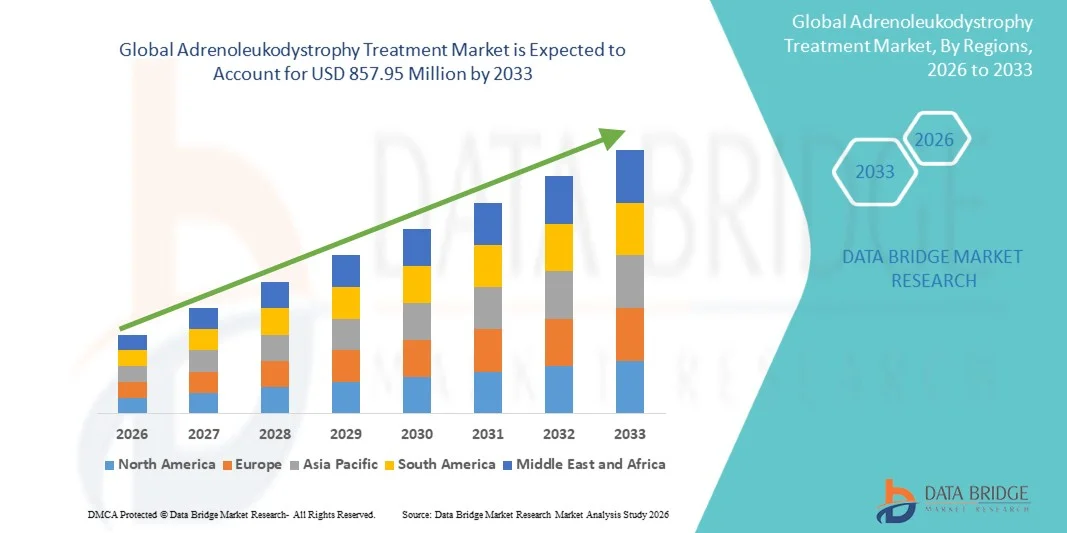
- データブリッジ市場調査分析により、グローバルアドレノーコジストロフィー治療市場規模が評価されました2025年のUSD 393.04百万そして到達する予定2033年までのUSD 857.95百万, お問い合わせ10.25%のCAGR予報期間中
- 市場成長はまれな増加の診断率によって主に燃料を供給されます遺伝的障害遺伝子治療および酵素標的治療における継続的な進歩、アドレノルコジストロフィー患者の治療可能性を広げています
- また、希少疾患研究への投資拡大、意識向上プログラムの普及、新生児スクリーニングへの取り組みの拡充など、標的療法重要な治療アプローチとして。 これらの収束因子は、革新的な治療オプションの開発と採用を加速し、これにより、業界の成長を著しく向上しています
市場規模と予測
- グローバル市場価値 (2025):米ドル 393.04 百万
- 期待される市場価値 (2033):米ドル 857.95 百万
- 予測CAGR (2026–2033):10.25%
Adrenoleukodystrophy治療市場の主要なテイクアウトは何ですか
- Adrenoleukodystrophyの処置はmyelinの外装および副腎を損なうこのまれな、継承された神経学的無秩序を管理することに焦点を合わせます。 治療アプローチには、肝毒性幹細胞移植、遺伝子治療, コルチコステロイド副腎不全、および支持的ケアのための療法は、病気の進行を遅くし、忍耐強い結果を改善するために本質的にこれらの処置をします
- adrenoleukodystrophy 治療に対するエスケーラビリティの要求は、主に希少な遺伝的障害の認識を高め、新生児スクリーニングプログラムによる早期診断の改善、遺伝子改変幹細胞治療や標的分子療法などの高度な療法の急速な発展によって燃料を供給されます。
- 北アメリカは2025年に41.3%の最大の収益シェアを持つアドレノロコジストロフィー治療市場を支配しました。強力な研究インフラ、革新的な治療法の早期採用、希少疾患の大きなバイオテクノロジーおよび製薬会社の存在は、特に米国では、規制のインセンティブとまれな病気の資金調達が臨床開発活動をサポートしていると述べています。
- アジア・パシフィックは、医療インフラの改善、希少な遺伝子障害の認知度向上、新興国における高度診断・治療施設へのアクセス拡大など、予測期間におけるアドレノロコジストロフィー治療市場で最も急速に成長する地域であると予想されます。
- 遺伝子治療セグメントは、2025年に38.6%の市場シェアを持つ副腎球体治療市場を支配し、疾患の根本的な遺伝的原因と革新的な遺伝子ベースの治療ソリューションのための臨床試験および規制当局の承認の増加に対処する可能性がある
レポートスコープとアドレノールコダイストロフィー治療市場セグメンテーション
|
アトリビュート |
Adrenoleukodystrophyの処置のキー マーケットの洞察 |
|
カバーされる区分 |
|
|
カバーされた国 |
北アメリカ
ヨーロッパ
アジアパシフィック
中東・アフリカ
南米
|
|
主要市場プレイヤー |
|
|
マーケットチャンス |
|
|
付加価値データインフォセットを追加 |
市場価値、成長率、セグメンテーション、地理的カバレッジ、主要なプレーヤーなどの市場シナリオに関する洞察に加えて、Data Bridge Market Researchがキュレーションした市場レポートには、詳細なエキスパート分析、患者疫学、パイプライン分析、価格設定分析、規制フレームワークも含まれています。 |
Adrenoleukodystrophy治療市場の重要な傾向は何ですか
「遺伝子治療と精密薬のアプローチの高度化」
- グローバルアドレノロコジストロフィー治療市場での有意で加速傾向は、遺伝子治療と精密医学の成長発展は、症状の管理ではなく、疾患の根本的な遺伝子原因に対処することを目的としています。 この進化は、まれな神経障害のための治療的景観を著しく変えています
- 例えば、青鳥バイオによって開発された遺伝子治療であるSkysonaは、患者の幹細胞を変更して、疾患の原因となる欠陥遺伝子の機能的コピーを導入することで、脳副腎細胞を治療するように設計されています。 同様に、いくつかのバイオテクノロジー企業は、治療の可用性を拡大するために、臨床試験を通じて新しい遺伝子ベースの治療法を開発しています
- 治療戦略における遺伝子治療統合により、Adrenoleukodystrophy、潜在的に減速または神経変性を抑制する欠陥遺伝子の修正が可能になります。 たとえば、新興療法はウイルスベクトルを利用して、機能性遺伝子を患者細胞に届け、代謝機能を改善し、さらなる病気の進行を防止します。 さらに、精密医学のアプローチは、個々の遺伝的プロファイルと疾患の重症に基づいて臨床医の仕立て治療戦略を支援しています
- 高度な遺伝的診断と治療プラットフォームの統合の増加により、早期疾患の識別と標的治療計画が容易になります。 調整されたケアプログラムおよび専門にされた処置の中心によって、ヘルスケア プロバイダーは遺伝的テスト、神経学的監視および影響を受けた患者のための広範囲の処置のアプローチを提供するために高度の療法を結合できます
- よりターゲティングされた革新的で病変の治療ソリューションに対するこの傾向は、まれな病気療法の風景を根本的に再構築することです。 その結果、Orchard Therapeuticsなどの企業は、アドレノロコジストロフィーと他の相続した代謝障害に関連する遺伝的欠陥を修正することを目的とした遺伝子修飾細胞療法を開発しています
- アドレノロコジストロフィーの根幹原因を標的とする先進的な治療ソリューションの需要は、臨床医や研究者が長期疾患管理を優先し、患者の生存結果を改善するため、急速に成長しています
- 遺伝子検査技術とバイオマーカーベースの診断の高度化は、早期疾患の検出と患者の層化を改善し、ヘルスケアプロバイダがより標的かつ効果的な治療戦略を提供できるようにします
Adrenoleukodystrophy 治療市場 動的
ドライバー
「希少疾患の有利化と遺伝子治療の拡大による需要の拡大」
- 希少遺伝障害に対する意識プログラムの普及が進んでおり、先進的なバイオテクノロジー研究への投資の拡大と相まって、アドレノールコダイストロフィー治療ソリューションに対する高まる需要のための重要なドライバーです
- 例えば、2022年9月、ブルーバードバイオは、米国食品医薬品局(Skysona gene Therapy)の規制承認を受け、早期活性脳副腎球体を治療し、まれな神経疾患の治療パイプラインを強化しました。 重要な企業によるそのような戦略は、予測期間におけるアドレノルコジストロフィー治療業界の成長を促進することが期待されています
- ヘルスケアプロバイダーは、アドレノールコジストロフィーに関連した長期神経系合併症の認識が高まるにつれて、幹細胞移植や遺伝子治療などの高度な治療オプションの需要は、専門医療センター全体で増加しています
- さらに、複数の国で新生児スクリーニングプログラムの拡大実装は、治療の成功率を大幅に向上させ、高度療法の対象となる患者集団を拡大するアドレノールコジストロフィーの早期発見を可能にしています。
- バイオテクノロジー企業、学術研究機関、医療機関とのコラボレーションが加速し、希少な遺伝子代謝障害への対応を目指した革新的な治療法の開発を加速し、世界的な治療生態系を強化しています。 オルファン薬物のインセンティブや研究資金の増加は、新たな治療ソリューションの開発をサポート
- 政府のイニシアチブとまれな病気の資金調達プログラムを拡大することは、アドレノールコジストロフィーや他の相続した代謝障害のための高度療法でより大きく投資する製薬会社を奨励しています
- 孤児の薬物の指定および加速された承認の道による高められた調整可能なサポートは企業がより効率的に、まれな病気のための処置の可用性を支える革新的な療法をもたらすのを助けます
拘束/チャレンジ
「限られた患者の人口および高い処置の費用」
- アドレノロコジストロフィーの影響を受けている患者集団の周囲の懸念は、全体的な市場拡大に大きな課題を提示します。 病気はまれな遺伝的障害として分類されるので、診断された患者の少数数は大規模な商業機会を制限し、広範な療法の採用を遅らせます
- たとえば、遺伝子治療や幹細胞移植などの先進的な治療に関連する高い開発コストは、多くの場合、非常に高価な治療オプションで結果し、強力な払い戻しサポートなしで多くの患者にとってアクセシビリティが困難になります
- 改善された償還フレームワーク、政府の資金援助プログラム、およびまれな病気サポートの取り組みを通じて、これらの経済課題に対処することは、高度治療への患者のアクセスを改善するために不可欠です。 Orchard Therapeuticsやbluebird bioなどの企業は、長期治療の障壁を削減するために、臨床研究とパートナーシップを拡大することに焦点を当てています。 また、希少疾患の治療のための複雑な規制要件は、製品の承認を遅くし、革新的な治療のための市場参入を遅らせることができます
- 高度な療法は、有望な臨床結果を実証し続けながら, 治療のコストと専門的治療センターの限られた可用性は、主要な障壁を維持します, 特に医療市場を開発する
- 拡大されたまれな病気の資金プログラム、改善された診断基盤および高度の療法への広いアクセスによってこれらの挑戦を克服することはアドレノルコジストロフィーの処置の市場で長期成長を持続させるために不可欠です
- 幹細胞移植などの複雑な手順を実行できる専門治療センターおよび訓練された医療専門家の限られた可用性は、患者が高度な治療へのアクセスを制限することができます
- また、一部の地域では、意識の欠如や限られた遺伝的検査インフラが不足しているため、早期診断の遅延は、タイムリーな治療の開始を妨げる可能性があり、患者の結果に悪影響を及ぼします
Adrenoleukodystrophy治療市場はどのように区分されますか
市場はタイプ、処理タイプ、管理のルート、エンド ユーザーおよび配分チャネルに基づいて区分されます。
- タイプ別
タイプに基づいて、Adrenoleukodystrophy治療市場は小児Cerebral Adrenoleukodystrophy(ccALD)、Adrenomyelopathy、Addisonの病気、その他に分けられます。 小児Cerebral Adrenoleukodystrophy(ccALD)セグメントは、影響を受けた子供たちの病気の重症度と急速な進行によって駆動され、2025年に最大の市場収益シェアで市場を支配しました。 アドレノロコジストロフィーのこの形態は、遺伝子治療および肝幹細胞移植を含む即時の医療介入を必要とし、治療需要を大幅に増加させます。 標的療法および成長する新生児スクリーニングプログラムの可用性は、CCALD症例の高い診断率にも貢献しています。 さらに、疾患の脳形態を標的する強力な研究焦点と臨床試験は、セグメントの成長をサポートしています。 ヘルスケアシステムは、積極的な神経学的進行によるCCALDの早期治療を優先し、市場優位性を強化します。
Adrenomyelopathyセグメントは、予報期間中に最速の成長率を目撃するために期待されています, 増加意識と疾患の成人のオンセット形態のための診断能力を向上させました. 認知症は、一般的に生活の中で後進し、小児期の形態と比較して、より大きな診断されていない患者の人口に影響を与えます。 遺伝子検査がより広く利用できるように、この状態のためにより多くの大人の患者が診断され、扱われます。 対症治療アプローチと支持療法の進歩も治療の採用を拡大しています。 また、神経変性疾患管理に関する研究が増加し、認知症の治療的発展を加速することが期待されます。 これらの要因は、このセグメントの強力な予測成長に貢献します。
- 処置のタイプによって
治療の種類に基づいて、Adrenoleukodystrophy治療市場は、薬、遺伝子治療、骨髄移植などに分けられます。 遺伝子治療セグメントは、2025年に38.6%の最大の市場収益シェアで市場を支配し、疾患の根本的な遺伝子変異を直接解決する可能性がある。 遺伝子治療は、感染性遺伝子の機能的コピーを患者の幹細胞に導入することにより、神経損傷を引き起こす非常に長い鎖脂肪酸の蓄積を防ぐことができます。 遺伝子ベースの治療法の臨床試験および規制承認の成功は、これらの治療法の採用を大幅に加速しました。 例えば、青鳥バイオによって開発されたSkysonaは、患者自身の肝幹細胞を変更することにより、疾患の早期脳形態の治療に有望な結果を示す。 また、バイオテクノロジー企業や支持的なオーファン薬の規制から投資を成長させることは、革新的な遺伝子治療プラットフォームの開発を奨励し、このセグメントの優位性を強化しています。
薬分野は、2026年から2033年までの予測期間中に最速の成長率を目撃する予定で、薬物療法の増加による燃料供給により、障害に関連する副腎不全および神経的症状を管理します。 医薬品、特にコルチコステロイドは、影響を受けた患者の副腎機能不全を治療するために広く使用され、長期疾患管理の重要な成分となっています。 高度療法と比較して薬のアクセシビリティと比較的低コストの費用も、さまざまなヘルスケア設定の広範な採用に貢献します。 また、製薬会社は、病気の進行を遅くし、患者の生活の質を改善することを目的とした支援療法の開発に積極的に投資しています。 まれな代謝障害および改善された診断機能の上昇の意識はまた早期の薬理学的処置を受け取る患者の数を高めます。 これらの要因は、今後数年間で薬のセグメントの投影された急成長を一括サポートします。
- 行政のルートで
管理の経路に基づいて、市場は経口および括弧に区分されます。 経口セグメントは、遺伝子治療、骨髄移植、および静脈内薬などの高度な治療アプローチの性質のために、最大収益シェア2025で市場を支配しました。 これらの療法は専門にされたヘルスケア設定の医学の監督の下で管理を、正確な投薬および忍耐強い監視保障します要求します。 経口配達はまた、経口処理と比較してより速い治療効果とより高い生物学的利用性を提供します。 病院および専門医は頻繁に重度の神経条件のための注射可能なか注入ベースの処置を利用します。 また、生体薬および細胞ベースの療法の進歩は、希少疾患の治療における育児管理方法の使用をさらに増加させています。
経口セグメントは、副腎不全と神経症状を管理するための経口コルチコステロイドおよび支持薬の使用の増加による予測期間中の最速の成長率を目撃することが期待されます。 経口薬は長期病気管理のための便利で費用効果が大きい処置の選択を提供します。 患者はしばしば経口投与を好むので、治療は病院の外の設定を継続することができます。 配合技術の向上も、薬の安定性と患者のコンプライアンスを強化しています。 まれな代謝障害のための経口治療レジメンの増加可能性は、このセグメントのさらなる成長を促進することが期待されます。 認知と診断が向上するにつれて、アクセス可能な経口療法の需要は上昇し続けます。
- エンドユーザーによる
エンドユーザーをベースに、病院、ホームケア、専門クリニック、その他に市場を分けています。 病院のセグメントは、Adrenoleukodystrophyを治療する複雑さのために2025年に最大の収益シェアで市場を支配しました。 幹細胞移植や遺伝子治療などの高度な療法は、主に病院の設定で利用可能な専門医療インフラと分岐臨床の専門知識が必要です。 病院はまた、MRIスキャン、遺伝子検査、および疾患管理に必要な神経評価を含む包括的な診断サービスを提供しています。 また、集中療法を受けている患者は、しばしばクローズモニタリングと治療後のケアを必要とする。 熟練した医療従事者や先進的な治療技術が、この分野における病院の優位性をさらに強化します。
スペシャリティクリニックのセグメントは、希少疾患および神経障害治療センターの確立の増加による予測期間における最速の成長率を目撃することを期待しています。 これらのクリニックは、個人化された患者ケアと、まれな遺伝状態に合わせた高度な治療プロトコルに焦点を当てています。 多くの専門クリニックは、研究機関と製薬会社と協力して、臨床試験と革新的な治療へのアクセスを提供します。 希少疾患の専門的ケアに重点を置いたことは、これらの施設に対する患者の好みを運転しています。 また、紹介ネットワークや治療サービスの改善、専門クリニックへのアクセスをグローバルに拡大しています。 これらの要因は、セグメントの成長を著しく向上することが期待されます。
- 流通チャネル
流通チャネルに基づいて、市場は病院の薬局、オンライン薬局、小売薬局、その他に分けられます。 病院薬局のセグメントは、遺伝子治療や骨髄移植などの高度な治療の病院ベースの管理のために、2025年に最大の収益シェアで市場を支配しました。 病院薬局は、まれな病気の治療に必要な専門薬を管理する上で重要な役割を果たしています。 高コストの生態学的薬および細胞ベースの治療薬の適切な貯蔵、処理および分配を保証します。 また、病院薬局は、規制された医療環境内で作動し、患者の安全と治療の正確さを保証します。 重度の神経障害のための病院ベースの治療プロトコルの増加の使用は、さらにこのセグメントの優位性をサポートしています。
オンライン薬局のセグメントは、デジタルヘルスケアプラットフォームの急速な拡大による予測期間中に最速の成長率を目撃し、便利な薬物アクセスのための患者の好みを高めることが期待されます。 オンライン薬局は、長期薬の治療のためのより簡単な注文プロセス、宅配、および改善されたアクセシビリティを提供します。 アドレノロコジストロフィーに関連する慢性的な症状を管理する患者は、処方や医療用品を得るために、デジタルヘルスケアサービスに依存しています。 また、治療薬の相談の成長は、オンライン処方の履行を促進しています。 ヘルスケアディストリビューションチャネルのデジタル化は、このセグメントの飛躍的な成長を期待しています。
アドレノロコジストロフィー治療市場の最大のシェアはどの地域ですか
- 北アメリカは2025年に41.3%の最大の収益シェアを持つアドレノロコジストロフィー治療市場を支配しました。強力な研究インフラ、革新的な治療の早期採用、および希少疾患の治療を発展させる主要なバイオテクノロジーおよび製薬会社の存在によって特徴付けられました
- 高度に早期診断、専門的治療プログラムを優先し、広範な新生児スクリーニングプログラムによって支えられた高度の治療ソリューションへのアクセスおよびまれな遺伝障害の意識を高める地域におけるヘルスケアプロバイダーおよび研究機関
- この広範囲にわたる治療の採用は、強力な規制サポート、バイオテクノロジーの研究における実質的な投資、および先進的な治療を開発する主要な医薬品およびバイオテクノロジー企業の存在によってさらに支持され、北米を臨床および研究設定の両方でアドレノルコジストロフィー治療ソリューションのリーディング市場として確立します
米国Adrenoleukodystrophy治療市場インサイト
米国アドレノロコジストロフィー治療市場は、北米で78%の最大の収益シェアをキャプチャし、先進医療インフラ、広スプレッド新生児スクリーニングプログラム、および遺伝子治療や肝毒性幹細胞移植などの革新的な治療法の早期採用の存在によって燃料を供給しました。 患者と介護者は、根本的な遺伝的欠陥をターゲットとする最先端の治療へのアクセスを優先します。 臨床試験を実施し、オルファン医薬品の開発を行うバイオテクノロジーおよび製薬企業の存在は、市場をさらに推進します。 また、オーファン薬物のインセンティブや高速トラックの承認を含む、支持的な規制枠組みは、米国におけるアドレノルコジストロフィー治療オプションの拡大に著しく貢献しています。
ヨーロッパAdrenoleukodystrophyの処置の市場洞察
欧州アドレノレコジストロフィー治療市場は、主に希少遺伝障害および改善された医療インフラの高められた意識によって駆動され、予測期間全体で実質的なCAGRで拡大するように計画されています。 希少疾患の治療のための厳しい規制対応、早期診断プログラムとともに、地域全体の高度な治療の採用を促進しています。 ヨーロッパのヘルスケアプロバイダは、アドレノールコジストロフィーに関連付けられている神経および副腎合併症を管理するために、学際的なケアアプローチを統合しています。 ドイツ、フランス、イタリアなどの国では、病院や専門クリニック治療センターの普及、市場拡大を支援しています。
U.K. Adrenoleukodystrophy治療市場インサイト
U.K. adrenoleukodystrophy治療市場は、まれな病気や政府主導のまれな病気のイニシアチブの意識を高めることによって、予測期間中に注目すべきCAGRで成長することを期待しています。 遺伝子検査と新生検による早期発見に重点を置き、遺伝子治療と支持薬とのタイムリーな介入を奨励しています。 また、堅牢な医療インフラ、専門クリニックへのアクセスが容易で、研究機関とバイオテクノロジー企業とのコラボレーションも、革新的な治療法の採用をサポートします。 希少疾患の治療のための償還プログラムの増大可能性は、さらなる市場の成長を刺激しています。
ドイツ Adrenoleukodystrophy 治療市場 Insight
ドイツアドレノロコジストロフィー治療市場は、予測期間中にかなりのCAGRで拡大することが期待されています, 強力な研究活動によって燃料を供給, 高度な病院施設, パーソナライズされたケアに焦点を合わせます. ウェアネスキャンペーンや遺伝子カウンセリングプログラムが早期診断率を高めており、効果的な介入に不可欠です。 専門的治療センターの先進的な遺伝子治療と幹細胞治療の統合は、特に疾患の脳形態のために、牽引を得ています。 ドイツは革新、忍耐強い安全およびヘルスケアの質に焦点を合わせ、全面的な市場成長を後押しする新しい処置のアプローチの採用を支えます。
Asia-Pacific Adrenoleukodystrophy 治療市場 洞察
アジア・パシフィック・アドレノルコジストロフィー治療市場は、2026~2033年頃の最速のCAGRで成長し、ヘルスケア投資の拡大、先進的な診断へのアクセス拡大、中国、日本、インドなどの国におけるまれな遺伝子障害の認知度の向上に取り組みます。 病院インフラの整備と、先進的な治療を管理できる専門クリニックの増大が市場拡大を支援しています。 また、遺伝子治療および支持療法の可用性を高めるために、まれな病気のケアを促進する政府の取り組みは、治療の採用を加速しています。 都市や半都市地域における治療の有用性とアクセシビリティを高め、APAC市場におけるさらなる成長を推進しています。
Japan Adrenoleukodystrophy 治療市場 Insight
日本アドレノロコジストロフィー治療市場は、先進医療システムにより勢いを増大させ、希少疾患に注力し、遺伝子治療や臨床研究への投資を増加させています。 遺伝的スクリーニングと強固な病院ベースのケアプログラムによる早期検出は、高度な治療の採用を促進しています。 患者さんや介護者は、病気の進行を遅くし、生活の質を向上させることができる革新的な治療法をますますます好む。 専門センターの多分野にわたるケアチームによる治療プロトコルの統合は、市場成長に貢献しています。 さらに、政府の資金調達やオーファン薬物のインセンティブは、治療のアクセシビリティと採用をサポートしています。
インド Adrenoleukodystrophy 治療市場 洞察
インドのアドレノロコジストロフィー治療市場は、2025年にアジア・パシフィックで最大の市場収益シェアを占め、医療インフラの改善、希少疾患の普及、診断および治療施設の可用性の向上に寄与しました。 インドの成長を続ける中級クラス、都市医療ネットワークの拡大、希少疾患プログラムの増大投資は、遺伝子治療と支援ケアを含む先進的な治療法の需要を促進しています。 希少疾患管理のための政府主導の取り組みの導入と国際バイオテクノロジー企業とのコラボレーションの増加は、さらなる加速治療の採用です。 高度の診断技術の高度の診断技術の高度の医院およびよりよいアクセスを拡大する現実性はインドの市場成長を促進する主要な要因です。
Adrenoleukodystrophy治療市場でトップ企業は
Adrenoleukodystrophyの処置の企業は主に下記のものを含んでいる確立された会社によって、導きます:
- 株式会社ブルーバードバイオ(米国)
- Minoryxの治療薬S.L. (スペイン)
- ポクセルSA(フランス)
- バイキング・セラピューティクス株式会社(米国)
- Genetix Biotherapeutics Inc.(米国)
- MedDay医薬品 SAS(フランス)
- Orpheris Inc.(米国)
- NeuroVia Biotech (米国)
- Sperogenixの治療薬(米国)
- オートバーン治療薬(米国)
- マゼンタ・セラピューティクス株式会社(米国)
- タイシャ遺伝子治療(米国)
- Neurogene, Inc.(米国)
- SwanBio Therapeutics, Inc.(米国)
- Ultragenyx Pharmaceutical Inc.(米国)
- Regenxbio Inc.(米国)
- Neuraxpharm Group GmbH (ドイツ)
- Vertex Pharmaceuticals社(米国)
- 株式会社PTCセラピューティクス(米国)
- NeuroVive Pharmaceutical AB(スウェーデン)
グローバルアドレノロコジストロフィー治療市場における最近の発展は何ですか
- 2025年7月には、EMAがマーケティング承認申請(MAA)を検証した際、Minoryx Therapeuticsが規制マイルストーンを達成し、脳副腎球体のための経口候補地のleriglitazoneを検証し、新規病変薬の広範な可用性に向けた進捗を強調
- 2024年10月、長期臨床データでは、Adrenoleukodystrophyが認められた最初の遺伝子治療が、治療を受けた患者の94パーセントが、遺伝子ベースの介入の内因性的影響を強調した後、主要な障害の6年を残さずに残っていることを示しています。
- 2024年6月、スタンフォード医薬品は、その小児医療センターは、米国で唯一の4拠点の1つとなったことを発表しました。これにより、X-linkedアドレノロコジストロフィーのFDA-承認遺伝子治療を提供し、臨床試験を超えたライフ・アセテート治療への臨床アクセスを拡大
- 2023年6月、Minoryx Therapeuticsは、成人のX-ALD患者におけるレグリラゾンのPhase 3臨床試験(CALYX)を開始するためのFDA承認を受け、現在の基準を超える潜在的な将来の治療オプションに対する重要なステップを示す
- 2021年11月、アドレノルコダイストロフィー(エルヴァルドゲンオートテムセル、Skysonaブランド)のために特別に開発された最初の遺伝子治療は、自然バイオテクノロジーで報告され、影響を受けた小児における進行性神経学的低下を抑えることができるALDの最初の遺伝子治療として歴史的な進歩を表現しています
SKU-
世界初のマーケットインテリジェンスクラウドに関するレポートにオンラインでアクセスする
- インタラクティブなデータ分析ダッシュボード
- 成長の可能性が高い機会のための企業分析ダッシュボード
- カスタマイズとクエリのためのリサーチアナリストアクセス
- インタラクティブなダッシュボードによる競合分析
- 最新ニュース、更新情報、トレンド分析
- 包括的な競合追跡のためのベンチマーク分析のパワーを活用
調査方法
データ収集と基準年分析は、大規模なサンプル サイズのデータ収集モジュールを使用して行われます。この段階では、さまざまなソースと戦略を通じて市場情報または関連データを取得します。過去に取得したすべてのデータを事前に調査および計画することも含まれます。また、さまざまな情報ソース間で見られる情報の不一致の調査も含まれます。市場データは、市場統計モデルと一貫性モデルを使用して分析および推定されます。また、市場シェア分析と主要トレンド分析は、市場レポートの主要な成功要因です。詳細については、アナリストへの電話をリクエストするか、お問い合わせをドロップダウンしてください。
DBMR 調査チームが使用する主要な調査方法は、データ マイニング、データ変数が市場に与える影響の分析、および一次 (業界の専門家) 検証を含むデータ三角測量です。データ モデルには、ベンダー ポジショニング グリッド、市場タイムライン分析、市場概要とガイド、企業ポジショニング グリッド、特許分析、価格分析、企業市場シェア分析、測定基準、グローバルと地域、ベンダー シェア分析が含まれます。調査方法について詳しくは、お問い合わせフォームから当社の業界専門家にご相談ください。
カスタマイズ可能
Data Bridge Market Research は、高度な形成的調査のリーダーです。当社は、既存および新規のお客様に、お客様の目標に合致し、それに適したデータと分析を提供することに誇りを持っています。レポートは、対象ブランドの価格動向分析、追加国の市場理解 (国のリストをお問い合わせください)、臨床試験結果データ、文献レビュー、リファービッシュ市場および製品ベース分析を含めるようにカスタマイズできます。対象競合他社の市場分析は、技術ベースの分析から市場ポートフォリオ戦略まで分析できます。必要な競合他社のデータを、必要な形式とデータ スタイルでいくつでも追加できます。当社のアナリスト チームは、粗い生の Excel ファイル ピボット テーブル (ファクト ブック) でデータを提供したり、レポートで利用可能なデータ セットからプレゼンテーションを作成するお手伝いをしたりすることもできます。