世界の心膜炎治療薬市場のセグメンテーション:薬剤別(非ステロイド性抗炎症薬(NSAID)、ステロイド、抗生物質、コルヒチン、その他)、投与経路別(経口、非経口、その他)、エンドユーザー別(病院、在宅医療、専門クリニック、その他)、流通チャネル別(病院薬局、オンライン薬局、小売薬局)- 業界動向と2033年までの予測
心膜炎治療薬市場規模
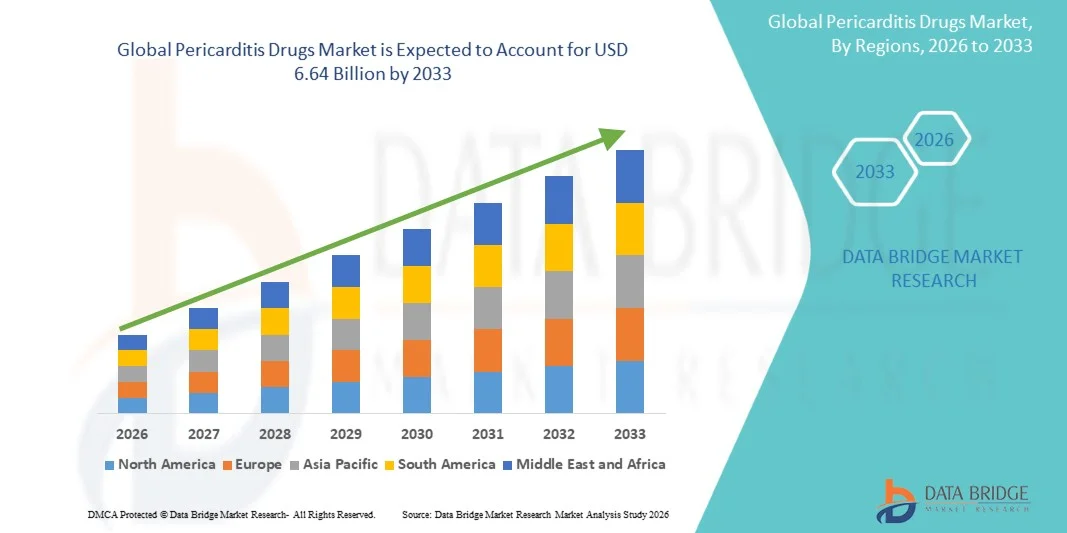
- 世界の心膜炎治療薬市場規模は、2025年には43億3000万米ドルと評価され 、 予測期間中の年平均成長率(CAGR)5.50%で、2033年には66億4000万米ドルに達すると予測されている。
- 市場の成長は、心膜疾患の罹患率の上昇、心血管疾患に対する意識の高まり、および治療に用いられる抗炎症療法や免疫調節療法の進歩によって大きく促進されている。
- さらに、効果的で標的を絞った長期的な治療法に対する需要の高まり、診断能力の向上、医療サービスへのアクセス拡大が相まって、早期介入と疾患管理の改善を後押ししています。これらの要因が複合的に作用することで、心膜炎治療薬の普及が加速し、業界の成長を大きく促進しています。
心膜炎治療薬市場分析
- 抗炎症剤、コルヒチン、コルチコステロイド、および新規バイオ医薬品を含む心膜炎治療薬は、炎症を軽減し、再発を予防し、標的療法およびガイドラインに基づいた治療によって患者の転帰を改善する能力があるため、入院および外来の両方の環境において、急性および再発性心膜炎の管理においてますます重要になっています。
- 心膜炎治療薬の需要増加の主な要因は、心血管疾患および炎症性疾患の発生率の上昇、診断率の向上、そしてNSAIDやコルヒチンなどの第一選択薬を効果的な疾患管理に推奨する標準化された治療プロトコルの普及拡大である。
- 北米は、高度な医療インフラ、高い診断率、高い臨床意識、大手製薬会社の存在に支えられ、2025年には45.6%という最大の収益シェアで心膜炎治療薬市場を席巻した。米国では、再発例や治療抵抗性症例に対して、ガイドラインに基づいた治療法や生物学的製剤が広く利用されている。
- アジア太平洋地域は、医療インフラの改善、心血管疾患に対する意識の高まり、医療費の増加、新興国における患者数の増加などを背景に、予測期間中に心膜炎治療薬市場で最も急速に成長する地域になると予想されている。
- 非ステロイド性抗炎症薬(NSAID)セグメントは、2025年の心膜炎治療薬市場において60.9%の市場シェアを占め、市場を牽引しました。これは、NSAIDとコルヒチンが、その有効性が実証され、入手しやすく、主要な臨床ガイドラインに含まれていることから、急性および再発性心膜炎の第一選択治療薬として広く使用されていることが要因です。
レポートの範囲と心膜炎治療薬市場のセグメンテーション
|
属性 |
心膜炎治療薬の主要市場動向 |
|
対象分野 |
|
|
対象国 |
北米
ヨーロッパ
アジア太平洋
中東およびアフリカ
南アメリカ
|
|
主要市場プレーヤー |
|
|
市場機会 |
|
|
付加価値データ情報セット |
Data Bridge Market Researchが作成した市場レポートには、市場価値、成長率、セグメンテーション、地理的範囲、主要企業などの市場シナリオに関する洞察に加え、専門家による詳細な分析、患者疫学、パイプライン分析、価格分析、規制枠組みも含まれています。 |
心膜炎治療薬市場の動向
「標的型抗炎症療法および生物学的療法の進歩」
- 世界の心膜炎治療薬市場における顕著かつ加速的な傾向は、NSAIDやコルヒチンなどの既存の治療法に加え、IL-1阻害剤を含む標的型抗炎症療法や生物学的製剤の採用が増加していることであり、これにより再発性および難治性の症例の予後が改善されている。
- For instance, drugs such as anakinra and rilonacept are being utilized in patients with recurrent pericarditis who do not respond adequately to conventional therapies, demonstrating improved symptom control and reduced recurrence rates
- The integration of precision medicine approaches is enabling clinicians to better stratify patients based on disease severity and recurrence risk, allowing more personalized treatment regimens and optimized therapeutic responses
- The growing alignment of treatment protocols with clinical guidelines and evidence-based practices is facilitating standardized care across healthcare systems, improving early intervention and long-term disease management outcomes
- The increasing use of combination therapy approaches, particularly colchicine with NSAIDs or corticosteroids, is gaining traction to enhance treatment efficacy and reduce recurrence rates in moderate to severe cases
- The rising focus on outpatient and long-term maintenance therapy is encouraging the development of convenient oral and self-administered drug options, supporting improved patient adherence and reduced hospitalization rates
Pericarditis Drugs Market Dynamics
Driver
“Rising Prevalence of Cardiovascular and Inflammatory Conditions with Improved Diagnosis Rates”
- The increasing prevalence of cardiovascular and inflammatory disorders, coupled with enhanced diagnostic capabilities and greater clinical awareness, is a significant driver for the growing demand for pericarditis drugs
- For instance, the expanding use of imaging techniques such as echocardiography and cardiac MRI is enabling earlier and more accurate detection of pericardial inflammation, leading to timely treatment initiation
- As healthcare systems strengthen their focus on cardiovascular care, more patients are being diagnosed and treated for both acute and recurrent pericarditis, increasing the overall patient pool requiring pharmacological intervention
- Furthermore, the widespread adoption of guideline-recommended therapies such as NSAIDs and colchicine as first-line treatments is driving consistent drug utilization across clinical settings
- The convenience of oral therapies, combined with improved access to healthcare services and expanding insurance coverage in several regions, is further supporting treatment adherence and market growth in both hospital and outpatient settings
- The growing availability of specialty care and cardiology-focused treatment centers is also contributing to better disease management and increased prescription rates of pericarditis drugs
Restraint/Challenge
“Limited Awareness, Recurrence Management Complexity, and Safety Concerns”
- Concerns surrounding limited awareness of pericarditis in certain regions, along with challenges in managing recurrent and refractory cases, pose a significant restraint to broader market penetration
- For instance, delayed diagnosis due to symptom overlap with other cardiovascular conditions can lead to suboptimal treatment initiation and prolonged disease progression in some patients
- Addressing these challenges requires improved physician education, broader screening practices, and adherence to clinical guidelines to ensure timely and accurate diagnosis and treatment
- In addition, long-term use of corticosteroids and other therapies may be associated with adverse effects, raising concerns among clinicians regarding safety and optimal treatment duration
- While newer biologics offer improved efficacy for resistant cases, their high cost and limited accessibility in certain regions can further restrict adoption, particularly in cost-sensitive healthcare systems
- The lack of standardized treatment pathways for recurrent pericarditis across all regions can lead to variability in care and inconsistent patient outcomes
- Overcoming these challenges through increased awareness, better diagnostic infrastructure, safer long-term treatment strategies, and improved affordability of advanced therapies will be critical for sustained market growth
Pericarditis Drugs Market Scope
The market is segmented on the basis of drugs, route of administration, end-users, and distribution channel.
- By Drugs
On the basis of drugs, the pericarditis drugs market is segmented into nonsteroidal anti-inflammatory agents (NSAIDs), steroids, antibiotics, colchicine, and others. The NSAIDs segment dominated the market with the largest market revenue share of 60.9% in 2025, driven by their status as first-line therapy for acute pericarditis due to their strong anti-inflammatory and pain-relieving properties. NSAIDs such as ibuprofen and aspirin are widely prescribed due to their effectiveness in reducing inflammation and symptom severity, as well as their accessibility and inclusion in major clinical guidelines. Their relatively low cost and broad availability further support their dominant position across both developed and emerging healthcare systems. The segment also benefits from strong physician familiarity and long-standing clinical usage in initial treatment protocols.
The colchicine segment is anticipated to witness the fastest growth rate of 10% from 2026 to 2033, fueled by its proven efficacy in reducing recurrence rates in both acute and recurrent pericarditis. Colchicine is increasingly recommended in combination with NSAIDs as part of standard treatment regimens, significantly improving patient outcomes. Its growing adoption is supported by expanding clinical evidence and inclusion in international guidelines as a key adjunct therapy. In addition, its oral administration and favorable long-term tolerability profile make it suitable for extended treatment courses. Rising awareness among clinicians regarding recurrence prevention is further accelerating its uptake across healthcare settings.
- By Route of Administration
On the basis of route of administration, the pericarditis drugs market is segmented into oral, parenteral, and others. The oral segment dominated the market with the largest market revenue share of 75% in 2025, driven by the widespread use of oral NSAIDs and colchicine as first-line and maintenance therapies. Oral administration is preferred due to its convenience, non-invasive nature, and suitability for both hospital discharge and outpatient management. Patients benefit from ease of adherence, reduced hospital dependency, and the ability to manage long-term treatment at home. The segment also benefits from the availability of multiple oral formulations and fixed-dose regimens that simplify treatment protocols.
The parenteral segment is anticipated to witness the fastest growth rate of 11% from 2026 to 2033, driven by the increasing use of injectable biologics such as IL-1 inhibitors for refractory and recurrent pericarditis cases. Parenteral therapies are often administered in hospital or specialty clinic settings, particularly for patients who do not respond to conventional oral treatments. The growing adoption of advanced therapies requiring injection or infusion is contributing to segment growth. In addition, the rise in severe and treatment-resistant cases is prompting clinicians to rely more on injectable options for rapid and targeted intervention. Improved healthcare infrastructure and specialist care availability are further supporting this segment’s expansion.
- By End-Users
On the basis of end-users, the pericarditis drugs market is segmented into hospitals, homecare, specialty clinics, and others. The hospitals segment dominated the market with the largest market revenue share of 50% in 2025, driven by the high volume of acute pericarditis diagnoses and initial treatment initiation in inpatient settings. Hospitals are equipped with advanced diagnostic tools such as echocardiography and cardiac MRI, enabling accurate detection and management of pericardial conditions. They also provide access to a wide range of medications, including intravenous therapies and biologics for severe cases. The presence of multidisciplinary cardiology teams further supports comprehensive treatment and monitoring, reinforcing hospital dominance in the market.
The specialty clinics segment is anticipated to witness the fastest growth rate of 10% from 2026 to 2033, driven by the increasing focus on outpatient care and specialized cardiovascular treatment centers. These clinics offer targeted expertise in managing recurrent and chronic pericarditis, often providing follow-up care and long-term therapy management. Patients increasingly prefer specialty clinics for personalized treatment approaches, reduced waiting times, and continuity of care. The growing number of cardiology-focused clinics, along with improved access to specialist physicians, is contributing to segment expansion. In addition, the shift toward decentralized healthcare delivery is supporting the rapid growth of this segment.
- By Distribution Channel
On the basis of distribution channel, the pericarditis drugs market is segmented into hospital pharmacy, online pharmacy, and retail pharmacy. The hospital pharmacy segment dominated the market with the largest market revenue share of 55% in 2025, driven by the high dependency on hospitals for initial diagnosis and treatment of pericarditis. Hospital pharmacies ensure immediate availability of prescribed medications, including NSAIDs, colchicine, corticosteroids, and biologics used in acute and severe cases. They also play a critical role in dispensing medications during inpatient stays and post-discharge management. The integration of hospital pharmacies with clinical care pathways ensures accurate medication dispensing and adherence to treatment protocols.
The online pharmacy segment is anticipated to witness the fastest growth rate of 13% from 2026 to 2033, driven by increasing digitalization of healthcare services and rising consumer preference for convenient drug purchasing options. Online platforms enable patients to order prescribed medications with home delivery, improving accessibility especially in urban and semi-urban regions. The growth of telemedicine and e-prescriptions is further supporting the expansion of online pharmacy channels. In addition, competitive pricing, discounts, and availability of a wide range of drugs are encouraging users to adopt digital platforms. Growing internet penetration and smartphone usage are key factors accelerating this segment’s rapid growth.
Pericarditis Drugs Market Regional Analysis
- North America dominated the pericarditis drugs market with the largest revenue share of 45.6% in 2025, supported by advanced healthcare infrastructure, higher diagnosis rates, strong clinical awareness, and the presence of major pharmaceutical companies
- Patients in the region benefit from early diagnosis and widespread adoption of guideline-recommended therapies such as NSAIDs, colchicine, and biologics, supported by well-established reimbursement systems and access to specialized care
- This widespread adoption is further supported by higher healthcare expenditure, availability of advanced treatment options, and a strong presence of leading pharmaceutical companies, making North America a key hub for pericarditis diagnosis and treatment across both hospital and outpatient settings
U.S. Pericarditis Drugs Market Insight
The U.S. captured the largest revenue share of 45% in 2025 within the global pericarditis drugs market, driven by a high prevalence of cardiovascular diseases, advanced diagnostic capabilities, and strong clinical awareness among healthcare professionals. Patients in the region benefit from early detection and widespread adoption of guideline-recommended therapies such as NSAIDs, colchicine, corticosteroids, and biologics for recurrent cases. The presence of well-established healthcare infrastructure, favorable reimbursement policies, and leading pharmaceutical companies further supports market growth. In addition, increasing utilization of advanced therapies for treatment-resistant pericarditis and strong access to specialist care contribute significantly to the region’s dominance.
Europe Pericarditis Drugs Market Insight
The Europe pericarditis drugs market is projected to expand at a steady CAGR throughout the forecast period, primarily driven by the rising burden of cardiovascular diseases and increasing adoption of standardized clinical guidelines for pericarditis management. The region benefits from strong healthcare systems, supportive reimbursement frameworks, and growing awareness regarding early diagnosis and long-term treatment. Countries across Europe are witnessing higher utilization of colchicine-based combination therapies and biologics for recurrent cases. Furthermore, ongoing research activities and clinical trials focused on inflammatory heart conditions are contributing to improved treatment approaches and market expansion across both hospital and outpatient settings.
U.K. Pericarditis Drugs Market Insight
The U.K. pericarditis drugs market is anticipated to grow at a notable CAGR during the forecast period, driven by increasing awareness of cardiovascular health and the availability of advanced treatment options through the National Health Service (NHS). The rising incidence of pericarditis, along with improved diagnostic infrastructure, is supporting timely treatment initiation. Patients in the U.K. increasingly benefit from guideline-driven therapies, including NSAIDs and colchicine as first-line treatments. In addition, the presence of specialized cardiology centers and growing adoption of biologics for recurrent pericarditis are further contributing to market growth.
Germany Pericarditis Drugs Market Insight
The Germany pericarditis drugs market is expected to expand at a considerable CAGR during the forecast period, fueled by a strong healthcare system, high diagnostic accuracy, and increasing emphasis on evidence-based treatments. Germany’s focus on innovation and clinical research supports the adoption of advanced therapies, including biologics for refractory cases. The country’s aging population and rising prevalence of chronic inflammatory and cardiovascular diseases are key growth drivers. In addition, widespread availability of specialist cardiology services and adherence to European treatment guidelines are enhancing the management of pericarditis across healthcare facilities.
Asia-Pacific Pericarditis Drugs Market Insight
The Asia-Pacific pericarditis drugs market is poised to grow at the fastest CAGR of around 9–11% during the forecast period of 2026 to 2033, driven by increasing healthcare expenditure, rising awareness of cardiovascular diseases, and improving access to diagnostic and treatment facilities. The region’s large and growing patient population, coupled with rapid urbanization and lifestyle-related health risks, is contributing to higher incidence rates. Government initiatives to strengthen healthcare infrastructure and expand insurance coverage are further supporting market expansion. In addition, the increasing availability of affordable generic drugs and growing adoption of guideline-based therapies are accelerating market growth across emerging economies.
Japan Pericarditis Drugs Market Insight
The Japan pericarditis drugs market is gaining momentum due to the country’s advanced healthcare system, high life expectancy, and strong focus on precision medicine. The aging population in Japan contributes to a higher prevalence of cardiovascular and inflammatory conditions, including pericarditis. Healthcare providers in the country emphasize early diagnosis and effective management using standardized treatment protocols. The adoption of biologics for recurrent and treatment-resistant cases is also increasing. Furthermore, Japan’s strong research and development ecosystem and integration of advanced diagnostic technologies are supporting improved patient outcomes and market growth.
India Pericarditis Drugs Market Insight
The India pericarditis drugs market accounted for a significant share within Asia-Pacific in 2025, driven by a rapidly growing population, increasing prevalence of cardiovascular diseases, and improving healthcare infrastructure. Rising awareness among patients and healthcare professionals is leading to better diagnosis and treatment of pericarditis. The expansion of healthcare facilities in urban and semi-urban areas, along with the availability of affordable generic medications, is supporting market growth. In addition, government initiatives aimed at strengthening healthcare access and the growing presence of specialty cardiology services are further contributing to the adoption of pericarditis drugs across the country.
Pericarditis Drugs Market Share
The Pericarditis Drugs industry is primarily led by well-established companies, including:
- Kiniksa Pharmaceuticals (U.S.)
- Pfizer Inc. (U.S.)
- Bayer AG (Germany)
- AstraZeneca PLC (U.K.)
- Sanofi (France)
- Johnson & Johnson Services, Inc. (U.S.)
- Merck & Co., Inc. (U.S.)
- Allergan plc (Ireland)
- Novartis AG (Switzerland)
- Takeda Pharmaceutical Co. Ltd (Japan)
- Sun Pharmaceutical Industries Ltd. (India)
- Dr. Reddy’s Laboratories (India)
- Teva Pharmaceuticals (Israel)
- Zydus Cadila (India)
- Cipla Ltd. (India)
- Lincoln Pharmaceuticals Ltd. (India)
- Unicure India Pvt. Ltd. (India)
- R-Pharm International LLC (Russia)
- Unimed Laboratories (India)
- Cardiol Therapeutics Inc. (Canada)
What are the Recent Developments in Global Pericarditis Drugs Market?
- In August 2025, updated pericarditis clinical guidelines highlighted the expanded role of anti-IL-1 therapies such as rilonacept and anakinra for recurrent and hard-to-treat pericarditis, marking a shift in treatment standards toward targeted biologic options beyond traditional NSAIDs and steroids
- In February 2025, Kiniksa Pharmaceuticals announced the development of KPL-387, a next-generation monoclonal antibody targeting the interleukin-1 receptor for recurrent pericarditis, with plans to initiate Phase 2/3 clinical trials in mid-2025, reflecting continued innovation in targeted therapies
- In January 2025, the U.S. Food and Drug Administration (FDA) updated regulatory information regarding ARCALYST (rilonacept) for recurrent pericarditis, reflecting revised product labeling and ongoing post-marketing safety updates that support its continued use and monitoring in recurrent pericarditis treatment
- In March 2021, Kiniksa Pharmaceuticals announced that the U.S. Food and Drug Administration (FDA) approved ARCALYST (rilonacept) for the treatment of recurrent pericarditis and to reduce the risk of recurrence in adults and children 12 years and older, marking the first FDA-approved therapy specifically for this condition and expected to launch commercially
- In March 2021, the FDA granted orphan drug designation and approval labeling for rilonacept (ARCALYST) specifically for recurrent pericarditis, solidifying its status as a targeted biologic therapy and providing regulatory exclusivity
SKU-
世界初のマーケットインテリジェンスクラウドに関するレポートにオンラインでアクセスする
- インタラクティブなデータ分析ダッシュボード
- 成長の可能性が高い機会のための企業分析ダッシュボード
- カスタマイズとクエリのためのリサーチアナリストアクセス
- インタラクティブなダッシュボードによる競合分析
- 最新ニュース、更新情報、トレンド分析
- 包括的な競合追跡のためのベンチマーク分析のパワーを活用
調査方法
データ収集と基準年分析は、大規模なサンプル サイズのデータ収集モジュールを使用して行われます。この段階では、さまざまなソースと戦略を通じて市場情報または関連データを取得します。過去に取得したすべてのデータを事前に調査および計画することも含まれます。また、さまざまな情報ソース間で見られる情報の不一致の調査も含まれます。市場データは、市場統計モデルと一貫性モデルを使用して分析および推定されます。また、市場シェア分析と主要トレンド分析は、市場レポートの主要な成功要因です。詳細については、アナリストへの電話をリクエストするか、お問い合わせをドロップダウンしてください。
DBMR 調査チームが使用する主要な調査方法は、データ マイニング、データ変数が市場に与える影響の分析、および一次 (業界の専門家) 検証を含むデータ三角測量です。データ モデルには、ベンダー ポジショニング グリッド、市場タイムライン分析、市場概要とガイド、企業ポジショニング グリッド、特許分析、価格分析、企業市場シェア分析、測定基準、グローバルと地域、ベンダー シェア分析が含まれます。調査方法について詳しくは、お問い合わせフォームから当社の業界専門家にご相談ください。
カスタマイズ可能
Data Bridge Market Research は、高度な形成的調査のリーダーです。当社は、既存および新規のお客様に、お客様の目標に合致し、それに適したデータと分析を提供することに誇りを持っています。レポートは、対象ブランドの価格動向分析、追加国の市場理解 (国のリストをお問い合わせください)、臨床試験結果データ、文献レビュー、リファービッシュ市場および製品ベース分析を含めるようにカスタマイズできます。対象競合他社の市場分析は、技術ベースの分析から市場ポートフォリオ戦略まで分析できます。必要な競合他社のデータを、必要な形式とデータ スタイルでいくつでも追加できます。当社のアナリスト チームは、粗い生の Excel ファイル ピボット テーブル (ファクト ブック) でデータを提供したり、レポートで利用可能なデータ セットからプレゼンテーションを作成するお手伝いをしたりすることもできます。