



North America Containerized Data Center Market Segmentation, By Offering (Hardware and Services), Ownership (Lease/Outsource and Purchase), Container Size (20 ft., 40 ft. and 60 ft.), Container Type (Customized Container, Compact All-in-One Container and Standalone Container), Organization Size (Large Organization and Small & Medium Organization), Application (Greenfield, Brownfield and Upgrade & Consolidation), End-User (Banking, Financial Services and Insurance (BFSI), Healthcare, IT & Telecom, Retail & Ecommerce, Energy & Utilities, Government, Media & Entertainment, Education, Military & Defense and Others),- Industry Trends and Forecast to 2033
北米コンテナ化されたデータセンター市場規模と成長率は何ですか
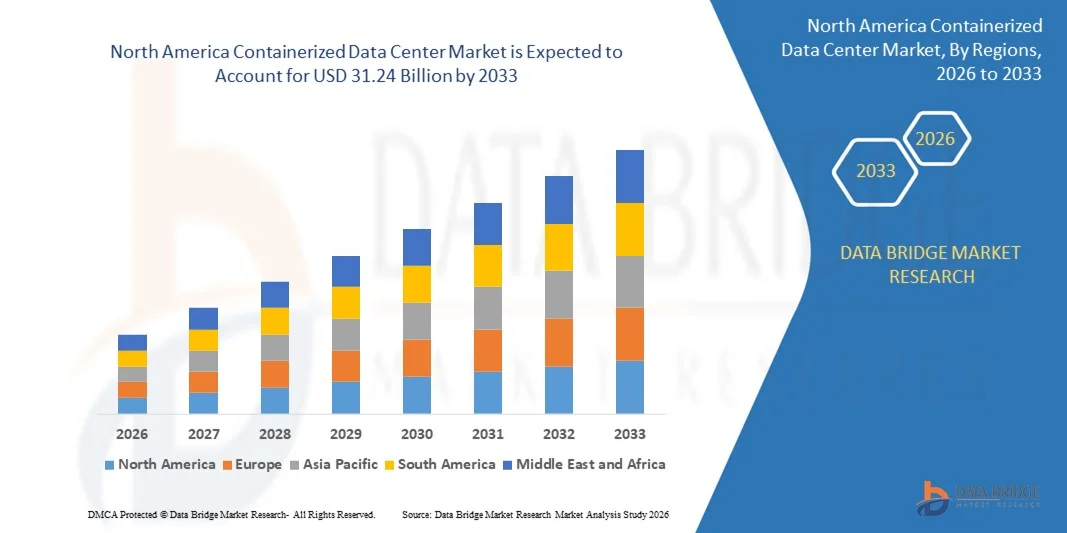
- データブリッジ市場調査分析によると、北米コンテナ化データセンター市場規模が評価されました2025年のUSD 7.71億そして到達する予定2033年までに31.24億米ドル, お問い合わせ19.10%のCAGR予報期間中
- 市場成長は、企業やクラウドサービスプロバイダ間でスケーラブル、モジュラー、および急速に展開可能なデータセンターソリューションの需要の増加によって大きく燃料を供給しています
- エッジコンピューティングと高性能コンピューティング(HPC)ソリューションの活用は、エンドユーザーに近いコンテナ化されたデータセンターの展開を推進しています。
市場規模と予測
- グローバル市場価値 (2025):米ドル 7.71 億
- 期待される市場価値 (2033):31.24億米ドル
- 予測CAGR (2026–2033):19.10%
北米コンテナ化データセンター市場分析
- コンテナ化されたデータセンターは、従来のレンガと乳鉢データセンターと比較して、モジュール性、より高速な展開、および柔軟性を提供し、デジタルおよびクラウドサービスを拡大するのに理想的です
- エッジコンピューティング、AI、IoTインフラにおける企業、電気通信事業者、クラウドサービスプロバイダによる投資の増加が加速化
- 米国のコンテナ化されたデータセンター市場は、北米で最大2025の収益シェアをキャプチャし、クラウドサービス、エッジコンピューティング、および高性能コンピューティングアプリケーションの強力な採用によって燃料を供給しました
- カナダは、最も高い化合物の年間成長率(CAGR)を目撃する見込み北米コンテナ化データセンターデジタルインフラへの投資の増加、クラウド・エッジ・コンピューティングの普及、データ・ソベリニティの支援政府の取り組みの増加、エネルギー効率とモジュラー・データセンター・ソリューションの需要増加による市場
- ハードウェアセグメントは、サーバー、ストレージ、ネットワーク、電力、および冷却システムなどのプレハブITインフラストラクチャコンポーネントの強力な需要によって駆動され、2025年に最大の市場収益シェアを保持しました。 ハードウェアベースのコンテナ化されたデータセンターは、より高速な導入、スケーラビリティ、および建設コストの削減のために広く好まれています
報告書 スコープと北米 コンテナ化されたデータセンター市場セグメント
|
アトリビュート |
北米コンテナ化されたデータセンターキーマーケットの洞察 |
|
カバーされる区分 |
|
|
カバーされた国 |
北アメリカ
|
|
主要市場プレイヤー |
|
|
マーケットチャンス |
|
|
付加価値データインフォセットを追加 |
市場価値、成長率、市場セグメント、地理的カバレッジ、市場プレイヤー、市場シナリオなどの市場洞察に加えて、データブリッジ市場リサーチチームがキュレーションした市場レポートには、詳細なエキスパート分析、インポート/エクスポート分析、価格分析、生産消費分析、および農薬分析が含まれます。 |
北米コンテナ化されたデータセンター市場における重要なトレンドは何ですか
スケーラブルとモジュラーデータセンターソリューションのライジング要求
- モジュラー、ポータブル、および急速に展開可能なITインフラの高まりは、企業やクラウドサービスプロバイダとして、北米のコンテナ化されたデータセンター市場を著しく形成しています。 コンテナ化されたデータセンターは、導入時間を削減し、運用コストを削減し、エッジコンピューティングをサポートし、ベンダーが新しい設計と冷却技術に革新することを可能にします
- クラウドサービス、高性能コンピューティング(HPC)、データ集中型アプリケーションの導入が加速し、電気通信、金融、医療、政府の各分野におけるコンテナ化されたデータセンターの展開を加速しました。 組織は、デジタルトランスフォーメーションへの取り組みをサポートする、エネルギー効率、空間最適化、安全なITソリューションを積極的に募集しています。
- モジュラー性、迅速な展開、および持続可能性の傾向は、購買と投資の決定に影響を及ぼすものであり、企業はエネルギー効率の高い冷却、透明性のある運用指標を強調し、グリーンビルディングおよびデータセンター規格に準拠しています。 これらの要因は、プロバイダが競争力のある市場での提供を差別化し、クライアントの信頼を築きます。また、環境にやさしい認定の採用を推進しています。
- たとえば、2024年、カナダの米国とシュナイダーエレクトリックのVertivは、コンテナ化されたデータセンターソリューションを統合冷却および監視技術で拡張しました。 これらは、企業を成長させるために導入されました。クラウドプロバイダー企業キャンパス、コロケーション施設、リモートエッジの拠点を横断するスケーラブルで高密度ITインフラの需要
- コンテナ化されたデータセンターの需要が高まっていますが、持続的な市場拡大は、継続的な研究開発、費用対効果の高い製造、および従来のデータセンターと比較して信頼性とセキュリティを維持することに依存しています。 提供者はまたモジュール性を高めること、改善に焦点を合わせますサプライチェーン性能、エネルギー効率、およびより広い採用のための操作上の柔軟性のバランスをとる解決を開発し、
北米コンテナ化されたデータセンター市場ダイナミクス
ドライバー
スケーラブル、ポータブル、およびエネルギー効率性ITインフラストラクチャの需要の拡大
- モジュラーおよびコンテナ化されたデータセンターのエンタープライズおよびクラウドサービスプロバイダの需要を上げることは、北アメリカ市場の主要なドライバです。 組織は、従来のレンガと乳鉢の施設をコンテナ化したソリューションで、迅速な導入ニーズに対応し、運用上のオーバーヘッドを削減しています。
- エッジコンピューティング、高密度コンピューティング、テレコム、およびエンタープライズITインフラにおけるアプリケーションを拡大し、市場成長をサポートします。 コンテナ化されたデータセンターは、スペースを最適化し、エネルギー消費を削減し、ITレジリエンスを向上させ、新興技術の採用を支援します。
- データセンタープロバイダとテクノロジーベンダーは、イノベーション、モニタリングソフトウェアとの統合、エネルギー効率とグリーン基準の遵守を通じて、コンテナ化されたソリューションを積極的に推進しています。 これらの取り組みは、デジタル化、データトラフィックの拡大、安全性、柔軟性、費用対効果の高いITインフラの要求を高めることでサポートされます。
- たとえば、2023年、カナダの米国とバーチングのHPEは、企業やクラウドアプリケーション向けのコンテナ化されたデータセンターソリューションの展開を拡大しました。 これにより、エッジコンピューティングとHPC環境の採用が高まり、繰り返しの展開と運用効率が向上
- スケーラブルでモジュラーなインフラの需要が高まっていますが、採用の幅はコストの最適化、コンポーネントの可用性、標準化された導入慣行によって異なります。 エネルギー効率の高い設計、高度な冷却システム、および安全なIT管理への投資は、地域の需要を満たし、競争上の優位性を維持するために不可欠です
拘束/チャレンジ
従来のデータセンターと比較して高いコストと限られた意識
- 従来のデータセンターと比較して、コンテナ化されたデータセンターソリューションの比較的高いコストは、小企業間の採用を制限する重要な課題を残します。 高度の冷却および監視の条件と結合される高い部品および統合の費用は、高められた価格に貢献します
- 特に中規模・小企業では、組織の意識が制限されています。 機能的な利点と展開の利点の限られた理解は、特定のセクターにわたって採用を制限し、技術革新を低下させることは、より少ない技術に精通した業界を占める
- サプライチェーン、デプロイメント、および運用上の課題は、コンテナ化されたソリューションは、認定サプライヤー、専門的インストールを必要とし、厳格な安全およびITセキュリティ基準を遵守しているため、市場成長にも影響します。 ロジスティックな複雑さと既存のITとの統合インフラ導入コストを増加させる
- たとえば、2024年、メキシコとブラジルに展開する企業は、コンテナ化ソリューションを導入し、従来型データセンターと比較して、運用およびエネルギー効率のメリットを把握し、価格の上昇を遅らせると報告しました。 これらの要因は、ベンダーの決定に大きな企業やクラウド顧客に焦点を当てる影響も
- これらの課題を克服することは、コスト効率の高い生産、流通ネットワークを拡大し、ITマネージャーや意思決定者に集中した教育取り組みが必要になります。 テクノロジーパートナー、データセンター事業者、認証機関とのコラボレーションにより、北米のコンテナ化されたデータセンター市場における長期的成長の可能性を享受できます。 さらに、コスト競争力とエネルギー効率の高いソリューションの開発は、幅広い採用に不可欠です
北アメリカ コンテナ化されたデータセンター市場スコープ
市場は、提供、所有権、コンテナサイズ、コンテナタイプ、組織サイズ、アプリケーション、エンドユーザーに基づいてセグメント化されます。
- 提供サービス
提供に基づいて、北米コンテナ化されたデータセンター市場は、ハードウェアおよびサービスにセグメント化されます。 ハードウェアセグメントは、サーバー、ストレージ、ネットワーク、電力、および冷却システムなどのプレハブITインフラストラクチャコンポーネントの強力な需要によって駆動され、2025年に最大の市場収益シェアを保持しました。 ハードウェアベースのコンテナ化されたデータセンターは、より高速な導入、スケーラビリティ、および建設コストの削減のために広く好まれています。
サービスセグメントは、インストール、統合、監視、メンテナンス、およびマネージドサービスの需要の増加によって駆動され、2026から2033までの最速の成長率を目撃する予定です。 エッジ・ロケーションとリモート・サイトを横断して展開を成長させる企業は、専門サービス・プロバイダーに業務効率性を付与する企業を奨励しています。
- 所有権によって
所有権に基づいて、市場はリース/アウトソースと購入に分割されます。 購買部門は、インフラ、データセキュリティ、カスタマイズに関する長期制御を求める大企業やクラウドプロバイダーがサポートする2025年に最大の収益分配を行いました。
リース/アウトソースのセグメントは、2026年から2033年にかけて最も速い成長率を目撃し、柔軟な展開モデルの優先順位を高め、先行投資を削減し、運用責任を削減することによって期待されます。 このモデルは、容量要件の変動を伴う中小企業や企業の間で人気を集めています。
- 容器のサイズによって
コンテナサイズに基づいて、市場は20 ft.、40 ft.、60 ft.コンテナに分割されます。 40 ft. コンテナセグメントは、2025年に最大の市場シェアを占め、バランスの取れた容量、輸送の容易さ、および幅広い企業およびエッジコンピューティングアプリケーションに適した適性を備えています。
60 ft. コンテナセグメントは、2026 から 2033 までの最速の成長率を目撃し、高密度コンピューティング、大規模展開、および一元化されたモジュラーデータセンターのインストールに対する需要の増加によって推進されます。
- コンテナタイプ別
容器のタイプに基づいて、市場はカスタマイズされた容器、密集したオールインワン容器および独立容器に分けられます。 カスタマイズされたコンテナセグメントは、2025年に最大の収益シェアを保持し、企業は、特定の電力、冷却、およびワークロード要件を満たすように、より要求の厳しいソリューションを合わせた。
コンパクトなオールインワンコンテナセグメントは、2026年から2033年までの最速の成長率を目撃し、完全に統合されたプラグアンドプレイソリューションによって駆動され、特にエッジおよびリモートアプリケーション向けに迅速な展開が可能になります。
- 組織規模
組織規模に基づいて、市場は大規模な組織と中小企業の組織に分けられます。 大規模な組織セグメントは、2025年に市場を支配し、高データ処理ニーズ、大規模なIT予算、およびクラウド、AI、および高性能コンピューティングのワークロードの広範な採用によって支えられています。
中小企業は、2026年から2033年までの最も速い成長率を目撃し、デジタルトランスフォーメーションを高め、データ生成を増加させ、費用対効果の高いモジュラーITインフラソリューションの採用を増加させることが期待されます。
- 用途別
アプリケーションに基づいて、市場は、グリーンフィールド、ブラウンフィールド、およびアップグレード&統合にセグメント化されます。 グリーンフィールドのセグメントは、2025年に最大の市場シェアを保持し、新しいデータセンターの展開と、企業やクラウドサービスプロバイダを横断したデジタルインフラの拡大によって推進されました。
アップグレードと統合セグメントは、従来のデータセンターを近代化し、エネルギー効率を改善し、モジュラーコンテナソリューションを使用してワークロードを統合するなど、2026から2033までの最速の成長率を目撃する予定です。
- エンドユーザーによる
エンドユーザーに基づいて、市場は、銀行、金融サービス、保険(BFSI)、ヘルスケア、IT&テレコム、小売&eコマース、エネルギー&ユーティリティ、政府、メディア&エンターテインメント、教育、軍事&防衛などに分かれています。 IT&テレコムセグメントは、データトラフィック、クラウド導入、エッジコンピューティングインフラストラクチャの展開の急激な成長によって駆動され、2025年に最大の収益シェアのために考慮しました。
ヘルスケア部門は、デジタルヘルスソリューション、電子健康記録、テレメディシンプラットフォーム、および安全性、スケーラブル、およびコンプライアンスのデータインフラストラクチャの採用の増加によって駆動され、2026から2033までの最速の成長率を目撃する予定です。
北米コンテナ化データセンター市場地域分析
- 米国のコンテナ化されたデータセンター市場は、北米で最大2025の収益シェアをキャプチャし、クラウドサービス、エッジコンピューティング、および高性能コンピューティングアプリケーションの強力な採用によって燃料を供給しました
- 企業は、急速なスケーラビリティ、災害の回復およびリモート操作をサポートするモジュラーデータセンターの展開をますます優先しています
- 大手クラウドサービスプロバイダ、テクノロジーベンダー、コロケーション事業者の存在感は、AIやIoTインフラの上昇した投資と組み合わせ、市場拡大に著しく貢献しています。
カナダ コンテナ化されたデータセンター市場情報
カナダのコンテナ化されたデータセンター市場は、スケーラブル、エネルギー効率、および急速に導入可能なデータセンターソリューションの需要の増加によって駆動され、2026年から2033年までの安定した成長を目撃する見込みです。 クラウドコンピューティング、エッジコンピューティング、AI主導のワークロードの採用は、企業やサービスプロバイダが、柔軟でローカライズされたインフラストラクチャニーズをサポートするために、コンテナ化されたデータセンターに投資することを奨励しています。 また、厳格なデータ sovereignty 規制と持続可能性とグリーン IT への取り組みに重点を置き、各国の境界内でモジュラーデータセンターを展開する組織を促しています。 政府のイニシアチブが支え、ハイパースケールとエッジの展開を拡大するカナダの強力なデジタルインフラ開発は、引き続き市場成長を加速する見込みです。
北米コンテナ化データセンター市場シェア
北アメリカのコンテナ化されたデータセンター業界は、主に、以下のような広範な企業によって供給されています。
- Vertivグループ株式会社(米国)
- IBM Corporation (米国)
- Cisco (米国)
- アメリカン・ポートウェル・テクノロジー株式会社(米国)
- 株式会社PCX(米国)
- IBM Corporation (米国)
- Hewlett Packard Enterprise(アメリカ)
- Dell Technologies(米国)
- シスコシステムズ株式会社(米国)
- Vertiv Holdings Co.(米国)
- シュナイダーエレクトリック(米国)
- Rittal GmbH & Co. KG (カナダ)
- 株式会社イートン(米国)
- デルタ電子株式会社(米国)
- CommScope(アメリカ)
- BMarkoの構造(米国)
- 株式会社PCX(米国)
- コンパスデータセンター(カナダ)
- 蒸気IO(米国)
- EdgeMicro (アメリカ)
北米コンテナ化データセンター市場の最新動向
- 2025年7月、Dell Technologiesは、CoreWeaveと戦略的パートナーシップを締結し、IR7000ラックと統合した液体冷却されたPowerEdge XE9712サーバーを配信しました。 開発は、NVIDIA Grace CPU および Blackwell GPU を搭載した AI 主導のクラウド環境を有効にすることに焦点を当てています。 大規模AIワークロード向け高性能コンピューティングの効率化と熱管理を強化 パートナーシップは、データセンターインフラストラクチャを近代化しながら、高度なAIモデルのトレーニングと推論をサポートしています。 液体冷却、AIに最適化されたコンテナ化およびモジュラーデータセンターソリューションの採用を加速する見込み
- Nutanixは2025年5月、クラウドネイティブAOSソリューションを発表し、エンタープライズデータプラットフォームをKubernetes環境に拡張しました。 開発は、シームレスな災害復旧と、コンテナ化アプリケーション用のクラウドネイティブモビリティを可能にします。 ハイブリッドインフラやマルチクラウドインフラにおける運用レジリエンスを向上させます。 コンテナ化されたワークロードをサポートすることで、アプリケーションポータビリティとスケーラビリティを高めます。 コンテナ化されたデータセンター展開をサポートするソフトウェアエコシステムを強化
- 2025年4月、Axiom Spaceは、2025年の終わりまでに低地球軌道に軌道データセンターノードを起動する計画を発表しました。 これらのノードは、国家のセキュリティと商用ユーザー向けに、安全でクラウド対応のデータストレージとAI/ML機能を提供することを目指しています。 地上限を超えたデータセンターの展開に新たなアプローチを導入 データセキュリティ、レジリエンス、グローバルアクセシビリティを強化します。 このイノベーションは、コンテナ化およびモジュラーデータセンター市場の概念範囲を拡大します
- 2025年4月、KyndrylがAIプライベートクラウドサービスを立ち上げ、エンタープライズレベルのAI展開をサポート 金融サービス、ヘルスケア、テクノロジー、製造などの分野にわたって、コンテナ化されたAIのワークロードに関するコンサルティングおよび管理サービスを提供しています。 組織がプライベートクラウド環境内でAIを安全に展開することを可能にします。 サービスは、AIインフラストラクチャのガバナンス、パフォーマンス、スケーラビリティを向上させます。 この開発により、民間のAIエコシステムを支えるコンテナ化されたデータセンターソリューションの需要が向上
- 2025年3月、AWSは、通信事業者向けにカスタマイズされた新しい Outposts ラックおよびサーバーの提供を発表しました。 ソリューションは、5GコアとRANワークロードの展開を可能にし、セキュリティと自動管理を強化します。 テレコムネットワークの低レイテンシ、オンプレミス処理要件に対応しています。 リリースは、エッジと分散コンピューティング機能を強化します。 テレコムに焦点を絞ったユースケースを拡充することで、コンテナ化されたデータセンター市場にも積極的に影響
SKU-
世界初のマーケットインテリジェンスクラウドに関するレポートにオンラインでアクセスする

- インタラクティブなデータ分析ダッシュボード
- 成長の可能性が高い機会のための企業分析ダッシュボード
- カスタマイズとクエリのためのリサーチアナリストアクセス
- インタラクティブなダッシュボードによる競合分析
- 最新ニュース、更新情報、トレンド分析
- 包括的な競合追跡のためのベンチマーク分析のパワーを活用
調査方法
データ収集と基準年分析は、大規模なサンプル サイズのデータ収集モジュールを使用して行われます。この段階では、さまざまなソースと戦略を通じて市場情報または関連データを取得します。過去に取得したすべてのデータを事前に調査および計画することも含まれます。また、さまざまな情報ソース間で見られる情報の不一致の調査も含まれます。市場データは、市場統計モデルと一貫性モデルを使用して分析および推定されます。また、市場シェア分析と主要トレンド分析は、市場レポートの主要な成功要因です。詳細については、アナリストへの電話をリクエストするか、お問い合わせをドロップダウンしてください。
DBMR 調査チームが使用する主要な調査方法は、データ マイニング、データ変数が市場に与える影響の分析、および一次 (業界の専門家) 検証を含むデータ三角測量です。データ モデルには、ベンダー ポジショニング グリッド、市場タイムライン分析、市場概要とガイド、企業ポジショニング グリッド、特許分析、価格分析、企業市場シェア分析、測定基準、グローバルと地域、ベンダー シェア分析が含まれます。調査方法について詳しくは、お問い合わせフォームから当社の業界専門家にご相談ください。
カスタマイズ可能
Data Bridge Market Research は、高度な形成的調査のリーダーです。当社は、既存および新規のお客様に、お客様の目標に合致し、それに適したデータと分析を提供することに誇りを持っています。レポートは、対象ブランドの価格動向分析、追加国の市場理解 (国のリストをお問い合わせください)、臨床試験結果データ、文献レビュー、リファービッシュ市場および製品ベース分析を含めるようにカスタマイズできます。対象競合他社の市場分析は、技術ベースの分析から市場ポートフォリオ戦略まで分析できます。必要な競合他社のデータを、必要な形式とデータ スタイルでいくつでも追加できます。当社のアナリスト チームは、粗い生の Excel ファイル ピボット テーブル (ファクト ブック) でデータを提供したり、レポートで利用可能なデータ セットからプレゼンテーションを作成するお手伝いをしたりすることもできます。











