



Asia-Pacific Cardiac Rhythm Management Market Segmentation, By CM Type (ECG Devices, Implantable Loop Recorders (ILR), Mobile Cardiac Telemetry Devices (MCT), Event Monitors, Cardiac Output Monitoring Devices (COM), and Smart ECG Monitors), CRM Type (Defibrillators and Pacemakers), End-User (Hospitals, Clinics, and Cardiac Centers, Ambulatory Surgical Centers, and Others)- Industry Trends and Forecast to 2033
Asia-Pacific Cardiac Rhythm Management Market Size
- The Asia-Pacific cardiac rhythm management market size was valued at USD 2.02 billion in 2025 and is expected to reach USD 2.96 billion by 2033, at a CAGR of 4.91% during the forecast period
- The market growth is largely fueled by the rising prevalence of cardiovascular diseases, increasing geriatric population, and expanding access to advanced cardiac care across emerging economies in the region
- Furthermore, growing adoption of implantable devices such as pacemakers and defibrillators, supportive government healthcare initiatives, and continuous technological advancements in minimally invasive and remote monitoring solutions are establishing cardiac rhythm management systems as a critical component of modern cardiology care. These converging factors are accelerating the uptake of advanced cardiac devices, thereby significantly boosting the industry's growth
Asia-Pacific Cardiac Rhythm Management Market Analysis
- Cardiac rhythm management (CRM) systems, including pacemakers, implantable cardioverter defibrillators (ICDs), and cardiac resynchronization therapy (CRT) devices, are increasingly vital components of modern cardiovascular care across hospitals and specialty cardiac centers in the Asia-Pacific region due to their ability to effectively monitor and regulate abnormal heart rhythms, improve survival rates, and enhance patient quality of life
- The escalating demand for cardiac rhythm management devices is primarily fueled by the rising prevalence of arrhythmias and other cardiovascular diseases, a rapidly aging population, improving healthcare infrastructure, and expanding access to advanced cardiac treatment in emerging Asia-Pacific economies
- China dominated the Asia-Pacific cardiac rhythm management market with the largest revenue share of 38.6% in 2025, characterized by a large patient pool, increasing healthcare expenditure, and continuous expansion of tertiary care hospitals, with significant growth in device implantation procedures supported by domestic manufacturing capabilities and strategic collaborations with global medical device companies
- India is expected to be the fastest growing country in the Asia-Pacific cardiac rhythm management market during the forecast period, owing to improving cardiac care facilities, rising awareness regarding early diagnosis and treatment of heart rhythm disorders, and supportive government healthcare initiatives
- Pacemaker segment dominated the Asia-Pacific cardiac rhythm management market with a market share of 44.3% in 2025, driven by its widespread clinical adoption, strong safety profile, and growing preference for minimally invasive implantation procedures across major healthcare institutions
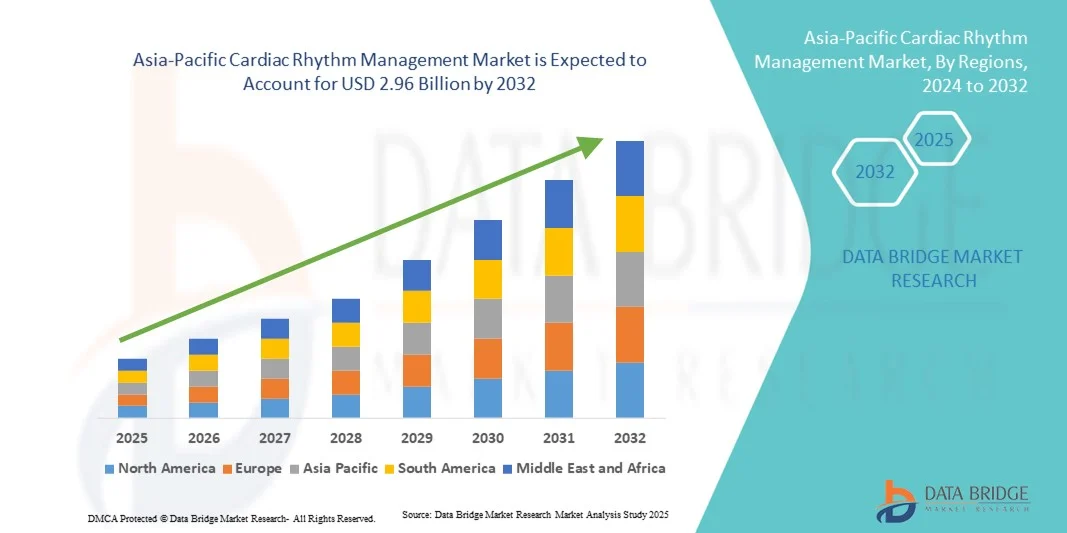
Report Scope and Asia-Pacific Cardiac Rhythm Management Market Segmentation
|
Attributes |
Asia-Pacific Cardiac Rhythm Management Key Market Insights |
|
Segments Covered |
|
|
Countries Covered |
Asia-Pacific
|
|
Key Market Players |
|
|
Market Opportunities |
|
|
Value Added Data Infosets |
In addition to the insights on market scenarios such as market value, growth rate, segmentation, geographical coverage, and major players, the market reports curated by the Data Bridge Market Research also include in-depth expert analysis, patient epidemiology, pipeline analysis, pricing analysis, and regulatory framework |
Asia-Pacific Cardiac Rhythm Management Market Trends
Rising Adoption of Remote Monitoring and Minimally Invasive Technologies
- A significant and accelerating trend in the Asia-Pacific cardiac rhythm management market is the increasing adoption of remote patient monitoring technologies and minimally invasive implantation techniques across major healthcare systems. This integration of digital health tools is significantly enhancing clinical efficiency and long-term patient management
- For instance, leading hospitals across Japan and Australia are deploying remote monitoring platforms integrated with implantable cardioverter defibrillators (ICDs) and pacemakers, enabling physicians to track patient heart rhythms in real time and reduce unnecessary hospital visits. Similarly, next-generation leadless pacemakers are gaining traction for offering reduced surgical complications and shorter recovery periods
- Digital integration in cardiac rhythm management devices enables features such as continuous data transmission, early detection of arrhythmias, and automated clinical alerts to physicians. For instance, certain advanced pacemaker systems utilize remote telemetry to improve follow-up compliance and can generate intelligent alerts if abnormal cardiac activity is detected. Furthermore, minimally invasive implantation techniques offer patients shorter hospital stays and faster post-procedure recovery
- The seamless integration of cardiac rhythm management devices with hospital information systems and telehealth platforms facilitates centralized monitoring and data-driven decision-making across cardiology departments. Through a unified digital interface, healthcare providers can manage device diagnostics alongside imaging reports, laboratory data, and electronic health records, creating a more coordinated and efficient care pathway
- This trend toward more connected, data-driven, and patient-centric cardiac care is fundamentally reshaping clinical expectations in the Asia-Pacific region. Consequently, companies such as Medtronic and Abbott are expanding their remote monitoring capabilities and introducing MRI-compatible and leadless pacing technologies tailored to evolving regional healthcare needs
- The demand for cardiac rhythm management systems that offer seamless remote connectivity and minimally invasive solutions is growing rapidly across Asia-Pacific healthcare institutions, as providers increasingly prioritize improved clinical outcomes, operational efficiency, and long-term patient safety
Asia-Pacific Cardiac Rhythm Management Market Dynamics
Driver
Growing Need Due to Rising Cardiovascular Disease Burden and Aging Population
- The increasing prevalence of cardiovascular diseases and arrhythmias across Asia-Pacific countries, coupled with a rapidly aging population, is a significant driver for the heightened demand for cardiac rhythm management devices
- For instance, in March 2024, Abbott announced the expansion of its cardiac rhythm management portfolio in India with advanced MRI-compatible pacemakers, aiming to improve access to safe and effective rhythm therapy. Such strategies by key companies are expected to drive the Asia-Pacific cardiac rhythm management market growth in the forecast period
- As healthcare systems become more focused on early diagnosis and long-term management of heart rhythm disorders, implantable devices offer advanced features such as real-time monitoring, improved battery longevity, and enhanced diagnostic capabilities, providing a compelling upgrade over conventional pharmacological management alone
- Furthermore, the growing expansion of tertiary care hospitals and specialized cardiac centers across emerging economies is making cardiac rhythm management devices an integral component of comprehensive cardiovascular treatment programs, offering seamless integration with advanced imaging and interventional cardiology services
- The clinical benefits of timely device implantation, improved survival rates in high-risk patients, and the ability to remotely monitor device performance are key factors propelling the adoption of cardiac rhythm management systems in both public and private healthcare sectors. The increasing availability of reimbursement support and physician training programs further contribute to market growth
Restraint/Challenge
High Device Costs and Limited Accessibility in Emerging Economies
- Concerns surrounding the high cost of implantable cardiac rhythm management devices and limited reimbursement coverage in certain Asia-Pacific countries pose a significant challenge to broader market penetration. As these devices require specialized implantation procedures and long-term follow-up care, affordability remains a critical barrier in price-sensitive markets
- For instance, disparities in healthcare infrastructure between urban and rural regions have limited access to advanced electrophysiology labs and trained specialists, making it difficult for eligible patients to receive timely device implantation
- Addressing these cost and accessibility challenges through localized manufacturing, value-based pricing models, and expanded insurance coverage is crucial for improving patient access. Companies such as BIOTRONIK and Boston Scientific are focusing on strategic partnerships and regional expansion initiatives to strengthen their presence in emerging Asia-Pacific markets. In addition, procedural risks and concerns related to device-related complications may create hesitation among certain patient groups and healthcare providers
- While technological advancements are steadily improving device safety and performance, the perceived high upfront investment and need for specialized clinical expertise can still hinder widespread adoption, particularly in lower-income and rural healthcare settings
- Overcoming these challenges through broader reimbursement reforms, physician training programs, enhanced infrastructure development, and cost-optimized device offerings will be vital for sustained market growth across the Asia-Pacific cardiac rhythm management landscape
Asia-Pacific Cardiac Rhythm Management Market Scope
The market is segmented on the basis of CM type, CRM type, and end-user.
- By CM Type
On the basis of CM type, the Asia-Pacific cardiac rhythm management market is segmented into ECG Devices, Implantable Loop Recorders (ILR), Mobile Cardiac Telemetry Devices (MCT), Event Monitors, Cardiac Output Monitoring Devices (COM), and Smart ECG Monitors. The ECG Devices segment dominated the market with the largest market revenue share in 2025, driven by its widespread use as a first-line diagnostic tool for detecting arrhythmias and other cardiac abnormalities. ECG devices are extensively utilized across hospitals, clinics, and diagnostic centers due to their cost-effectiveness, non-invasive nature, and ease of operation. The growing burden of cardiovascular diseases across Asia-Pacific countries has significantly increased routine cardiac screening procedures, further strengthening segment dominance. In addition, technological advancements such as portable and wireless ECG systems have enhanced accessibility in both urban and semi-urban healthcare settings. Government-led screening initiatives and rising awareness regarding early cardiac diagnosis also contribute to sustained demand for ECG devices across the region.
The Implantable Loop Recorders (ILR) segment is anticipated to witness the fastest growth rate from 2026 to 2033, fueled by the increasing need for long-term cardiac rhythm monitoring in patients with unexplained syncope and intermittent arrhythmias. ILRs provide continuous monitoring over extended periods, enabling early detection of infrequent but clinically significant events. Rising physician preference for minimally invasive diagnostic tools and advancements in miniaturization technology are accelerating adoption across tertiary care centers. Growing awareness about the benefits of early arrhythmia detection and stroke prevention further supports segment expansion. Moreover, improving reimbursement policies and expanding electrophysiology services in emerging Asia-Pacific markets are strengthening growth prospects for ILRs.
- By CRM Type
On the basis of CRM type, the market is segmented into defibrillators and pacemakers. The Pacemakers segment dominated the Asia-Pacific cardiac rhythm management market with the largest market revenue share of 44.3% in 2025, attributed to the high prevalence of bradycardia and conduction disorders among the aging population. Pacemakers are widely adopted due to their proven clinical efficacy, long-term reliability, and expanding indications in cardiac care. Continuous improvements such as MRI-compatible and leadless pacemakers have enhanced patient safety and procedural efficiency. Increasing implantation procedures across China, Japan, and India have further reinforced segment leadership. In addition, expanding cardiac care infrastructure and physician training programs are contributing to sustained pacemaker demand across the region.
The Defibrillators segment is expected to witness the fastest CAGR from 2026 to 2033, driven by the rising incidence of sudden cardiac arrest and ventricular arrhythmias. Implantable cardioverter defibrillators (ICDs) and cardiac resynchronization therapy defibrillators (CRT-Ds) are gaining traction due to their life-saving capabilities and expanding clinical guidelines supporting their use. Technological advancements enabling remote monitoring and improved battery longevity are further accelerating adoption. Increasing awareness about preventive cardiac care and improved diagnostic rates are leading to earlier device implantation in high-risk patients. Furthermore, expanding healthcare investments and improved access to specialized electrophysiology services in emerging Asia-Pacific economies are supporting rapid segment growth.
- By End-User
On the basis of end-user, the Asia-Pacific cardiac rhythm management market is segmented into hospitals, clinics and cardiac centers, ambulatory surgical centers, and others. The Hospitals segment dominated the market with the largest revenue share in 2025, owing to the availability of advanced electrophysiology labs, skilled cardiologists, and comprehensive post-implant monitoring facilities. Hospitals handle a high volume of complex cardiac procedures, including pacemaker and defibrillator implantations. The presence of integrated diagnostic and surgical infrastructure ensures effective management of complications and long-term follow-up care. Increasing government investments in public hospitals and expansion of tertiary care institutions across Asia-Pacific countries further strengthen this segment’s dominance. In addition, hospitals often serve as primary referral centers for advanced cardiac rhythm management procedures.
The Ambulatory Surgical Centers segment is anticipated to witness the fastest growth rate from 2026 to 2033, driven by the growing preference for cost-effective and minimally invasive outpatient procedures. Technological advancements have made certain device implantations safer and more efficient, enabling same-day discharge in selected patients. Rising patient demand for shorter hospital stays and reduced healthcare costs supports the shift toward ambulatory settings. Expanding private healthcare infrastructure and favorable reimbursement frameworks in developed Asia-Pacific markets further encourage adoption. Moreover, improved procedural efficiency and streamlined care pathways are positioning ambulatory surgical centers as an emerging growth hub within the regional cardiac rhythm management landscape.
Asia-Pacific Cardiac Rhythm Management Market Regional Analysis
- China dominated the Asia-Pacific cardiac rhythm management market with the largest revenue share of 38.6% in 2025, characterized by a large patient pool, increasing healthcare expenditure, and continuous expansion of tertiary care hospitals
- Healthcare providers across the region highly prioritize early diagnosis, minimally invasive implantation procedures, and remote monitoring capabilities offered by cardiac rhythm management systems to improve long-term patient outcomes and reduce hospital readmissions
- This widespread adoption is further supported by growing healthcare expenditure, a rapidly aging population, improving reimbursement frameworks, and the strengthening presence of global and domestic medical device manufacturers, establishing cardiac rhythm management systems as an essential component of modern cardiovascular care across Asia-Pacific healthcare institutions
The China Cardiac Rhythm Management Market Insight
The China cardiac rhythm management market captured the largest revenue share of 38.6% in 2025 within Asia-Pacific, fueled by the rising prevalence of cardiovascular diseases and the rapid expansion of tertiary healthcare infrastructure. Patients and healthcare providers are increasingly prioritizing early diagnosis and advanced implantable devices such as pacemakers and defibrillators to manage arrhythmias effectively. The growing preference for minimally invasive procedures, combined with expanding reimbursement coverage and domestic manufacturing capabilities, further propels the cardiac rhythm management industry. Moreover, continuous investments in hospital modernization and collaborations between global and local medical device companies are significantly contributing to the market's expansion.
Japan Cardiac Rhythm Management Market Insight
The Japan cardiac rhythm management market is projected to expand at a substantial CAGR throughout the forecast period, primarily driven by the country’s rapidly aging population and high incidence of cardiac rhythm disorders. The increase in healthcare expenditure, coupled with strong adoption of technologically advanced and MRI-compatible devices, is fostering the uptake of cardiac rhythm management systems. Japanese healthcare providers are also drawn to remote monitoring capabilities and long-term device reliability. The country is experiencing significant growth in both hospital-based implantations and outpatient cardiac care programs, with advanced CRM systems being incorporated into comprehensive cardiovascular treatment pathways.
India Cardiac Rhythm Management Market Insight
The India cardiac rhythm management market is anticipated to grow at a noteworthy CAGR during the forecast period, driven by improving cardiac care infrastructure and increasing awareness regarding arrhythmia management. In addition, the rising burden of heart disease and government initiatives to strengthen public healthcare systems are encouraging broader adoption of implantable devices. India’s expanding network of private hospitals and specialized cardiac centers, alongside improving insurance penetration, is expected to continue to stimulate market growth.
Australia Cardiac Rhythm Management Market Insight
The Australia cardiac rhythm management market is expected to expand at a considerable CAGR during the forecast period, fueled by increasing demand for advanced cardiac therapies and strong healthcare reimbursement frameworks. Australia’s well-established hospital infrastructure, combined with its emphasis on early diagnosis and preventive cardiology, promotes the adoption of pacemakers and implantable defibrillators, particularly among elderly patients. The integration of remote monitoring systems with hospital networks is also becoming increasingly prevalent, aligning with national digital health strategies and patient-centered care models.
Asia-Pacific Cardiac Rhythm Management Market Share
The Asia-Pacific Cardiac Rhythm Management industry is primarily led by well-established companies, including:
- Medtronic (Ireland)
- Abbott U.S.)
- Boston Scientific Corporation (U.S.)
- BIOTRONIK SE & Co. KG (Germany)
- MicroPort Scientific Corporation (China)
- LivaNova PLC (U.K.)
- Koninklijke Philips N.V. (Netherlands)
- NIHON KOHDEN CORPORATION (Japan)
- Lepu Medical Technology Co., Ltd. (China)
- Shree Pacetronix Ltd. (India)
- OSCOR Inc. (U.S.)
- Cardiac Science Corporation (U.S.)
- Defibtech LLC (U.S.)
- ZOLL Medical Corporation (U.S.)
- Schiller AG (Switzerland)
- Stryker (U.S.)
- EBR Systems Inc. (U.S.)
- Asahi Kasei Corporation (Japan)
- Japan Lifeline Co., Ltd. (Japan)
- Osypka AG (Germany)
What are the Recent Developments in Asia-Pacific Cardiac Rhythm Management Market?
- In October 2025, A 69-year-old woman in Kolkata became the first person in eastern India to receive the world’s first dual-chamber leadless pacemaker (AVEIR DR), marking a clinical milestone for advanced pacemaker implantation without traditional leads in the region
- In July 2025, Johnson & Johnson launched its VARIPULSE™ Platform across Asia-Pacific, a new pulsed field ablation (PFA) system used for treating atrial fibrillation with integrated 3D cardiac mapping, aiming to enhance procedural precision and efficiency for arrhythmia care in the region
- In November 2024, Abbott launched the AVEIR™ VR leadless pacemaker system in India to treat patients with slow heart rhythms; this leadless technology offers long battery life and unique mapping capabilities, representing a significant advancement in minimally invasive heart rhythm management
- In May 2023, Medtronic received FDA approval for its next-generation Micra™ leadless pacing systems (Micra AV2 and Micra VR2) offering longer battery life and enhanced AV synchrony, supporting broader adoption of leadless pacemakers with improved performance
- In May 2023, The Heart Rhythm Society (HRS), together with the Asia Pacific Heart Rhythm Society (APHRS), released new expert consensus recommendations on the management of remote device clinics to optimise remote monitoring practices for cardiovascular implantable electronic devices (CIEDs), reflecting a shift toward expanded telehealth monitoring across Asia-Pacific
SKU-
세계 최초의 시장 정보 클라우드 보고서에 온라인으로 접속하세요

- 대화형 데이터 분석 대시보드
- 높은 성장 잠재력 기회를 위한 회사 분석 대시보드
- 사용자 정의 및 질의를 위한 리서치 분석가 액세스
- 대화형 대시보드를 통한 경쟁자 분석
- 최신 뉴스, 업데이트 및 추세 분석
- 포괄적인 경쟁자 추적을 위한 벤치마크 분석의 힘 활용
연구 방법론
데이터 수집 및 기준 연도 분석은 대규모 샘플 크기의 데이터 수집 모듈을 사용하여 수행됩니다. 이 단계에는 다양한 소스와 전략을 통해 시장 정보 또는 관련 데이터를 얻는 것이 포함됩니다. 여기에는 과거에 수집한 모든 데이터를 미리 검토하고 계획하는 것이 포함됩니다. 또한 다양한 정보 소스에서 발견되는 정보 불일치를 검토하는 것도 포함됩니다. 시장 데이터는 시장 통계 및 일관된 모델을 사용하여 분석하고 추정합니다. 또한 시장 점유율 분석 및 주요 추세 분석은 시장 보고서의 주요 성공 요인입니다. 자세한 내용은 분석가에게 전화를 요청하거나 문의 사항을 드롭하세요.
DBMR 연구팀에서 사용하는 주요 연구 방법론은 데이터 마이닝, 시장에 대한 데이터 변수의 영향 분석 및 주요(산업 전문가) 검증을 포함하는 데이터 삼각 측량입니다. 데이터 모델에는 공급업체 포지셔닝 그리드, 시장 타임라인 분석, 시장 개요 및 가이드, 회사 포지셔닝 그리드, 특허 분석, 가격 분석, 회사 시장 점유율 분석, 측정 기준, 글로벌 대 지역 및 공급업체 점유율 분석이 포함됩니다. 연구 방법론에 대해 자세히 알아보려면 문의를 통해 업계 전문가에게 문의하세요.
사용자 정의 가능
Data Bridge Market Research는 고급 형성 연구 분야의 선두 주자입니다. 저희는 기존 및 신규 고객에게 목표에 맞는 데이터와 분석을 제공하는 데 자부심을 느낍니다. 보고서는 추가 국가에 대한 시장 이해(국가 목록 요청), 임상 시험 결과 데이터, 문헌 검토, 재생 시장 및 제품 기반 분석을 포함하도록 사용자 정의할 수 있습니다. 기술 기반 분석에서 시장 포트폴리오 전략에 이르기까지 타겟 경쟁업체의 시장 분석을 분석할 수 있습니다. 귀하가 원하는 형식과 데이터 스타일로 필요한 만큼 많은 경쟁자를 추가할 수 있습니다. 저희 분석가 팀은 또한 원시 엑셀 파일 피벗 테이블(팩트북)로 데이터를 제공하거나 보고서에서 사용 가능한 데이터 세트에서 프레젠테이션을 만드는 데 도움을 줄 수 있습니다.











