Global Non-Infectious Uveitis Market Segmentation, By Type (Anterior Uveitis, Intermediate Uveitis, Posterior Uveitis, and Panuveitis), Treatment Type (Pharmacological Treatment, Surgical Treatment, and Other Therapies), Route of Administration (OralInjectable, and Topical), End User (Hospitals and Clinics, Ophthalmic Care Centers, and Homecare Settings) – Industry Trends and Forecast to 2032
Non-Infectious Uveitis Market Analysis
The global non-infectious uveitis market is significantly influenced by the rising prevalence of uveitis, with an estimated global prevalence ranging between 38 and 221 per 100,000 people, depending on the region. It is one of the leading causes of blindness worldwide, particularly in individuals aged 20 to 50. Non-infectious uveitis, often associated with autoimmune and systemic diseases such as ankylosing spondylitis, sarcoidosis, and rheumatoid arthritis, accounts for a substantial portion of all uveitis cases, particularly in developed regions. Epidemiological studies suggest that about 10-15% of uveitis cases are non-infectious, with a higher incidence observed in developed countries due to better diagnostic capabilities. In the United States, the incidence of non-infectious uveitis is estimated to be around 20,000-25,000 new cases annually. This condition is often chronic, requiring long-term treatment with corticosteroids, immunosuppressive drugs, and biologics, driving the demand for advanced therapeutic options.
Non-Infectious Uveitis Market Size
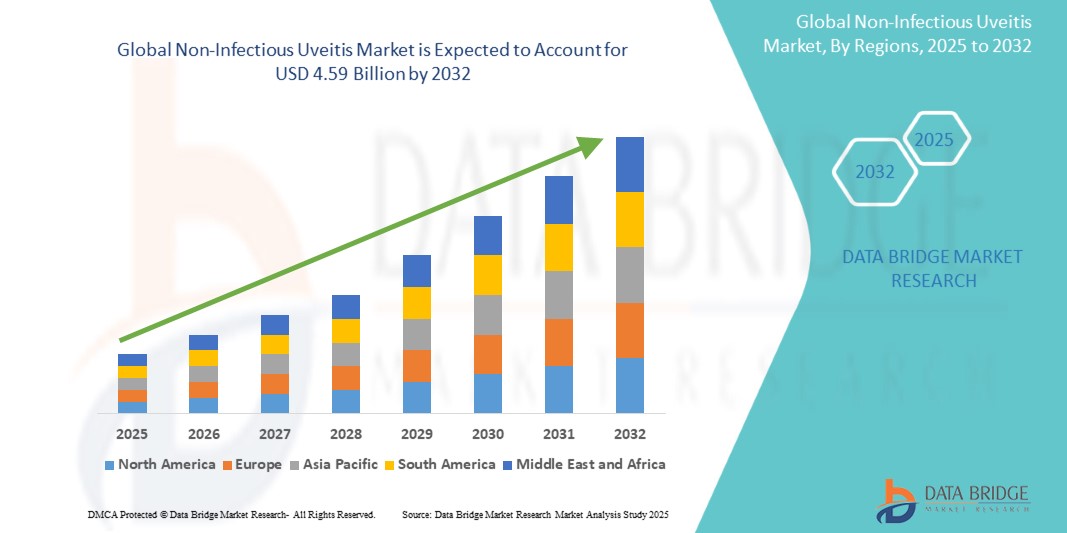
Global non-infectious uveitis market size was valued at USD 2.15 billion in 2024 and is projected to reach USD 4.59 billion by 2032, with a CAGR of 8.48% during the forecast period of 2025 to 2032. In addition to the insights on market scenarios such as market value, growth rate, segmentation, geographical coverage, and major players, the market reports curated by the Data Bridge Market Research also include depth expert analysis, patient epidemiology, pipeline analysis, pricing analysis, and regulatory framework.
Non-Infectious Uveitis Market Trends
“Shift toward Biologic and Targeted Therapies”
A notable trend in the global non-infectious uveitis market is the increasing shift toward biologic drugs and targeted therapies. This transition reflects a growing preference for treatments that offer more precision in addressing the underlying causes of uveitis, particularly those associated with autoimmune diseases. Unlike traditional corticosteroids, which can have significant side effects when used long-term, biologics such as TNF-alpha inhibitors and interleukin inhibitors provide more targeted action, focusing on specific immune pathways involved in inflammation. This approach not only enhances treatment efficacy but also minimizes adverse effects, making it a preferred option for many patients. The rising adoption of these therapies is improving overall treatment outcomes and changing the landscape of uveitis management, as healthcare providers increasingly opt for drugs that offer better control of the disease with fewer complications.
Report Scope and Non-Infectious Uveitis Market Segmentation
|
Attributes |
Non-Infectious Uveitis Key Market Insights |
|
Segments Covered |
|
|
Countries Covered |
U.S., Canada, Mexico, Germany, France, U.K., Netherlands, Switzerland, Belgium, Russia, Italy, Spain, Turkey, Rest of Europe, China, Japan, India, South Korea, Singapore, Malaysia, Australia, Thailand, Indonesia, Philippines, Rest of Asia-Pacific, Saudi Arabia, U.A.E., South Africa, Egypt, Israel, Rest of Middle East and Africa, Brazil, Argentina, Rest of South America |
|
Key Market Players |
Novartis AG (Switzerland), Regeneron Pharmaceuticals, Inc. (U.S.), Bayer AG (Germany), AbbVie Inc. (U.S.), Santen Pharmaceutical Co., Ltd. (Japan), Pfizer Inc. (U.S.), Johnson & Johnson Services, Inc. (U.S.), Horizon Therapeutics plc (Ireland), Sanofi S.A. (France), Lilly (U.S.), Amgen Inc. (U.S.), Aerie Pharmaceuticals, Inc. (U.S.), Bristol-Myers Squibb (U.S.), Alcon Inc. (U.S.), Teva Pharmaceutical Industries Ltd. (Israel), and Merck & Co., Inc. (U.S.) |
|
Market Opportunities |
|
|
Value Added Data Infosets |
In addition to the insights on market scenarios such as market value, growth rate, segmentation, geographical coverage, and major players, the market reports curated by the Data Bridge Market Research also include depth expert analysis, patient epidemiology, pipeline analysis, pricing analysis, and regulatory framework. |
Non-Infectious Uveitis Market Definition
Non-Infectious Uveitis refers to inflammation of the uvea (the middle layer of the eye) that is not caused by an infectious agent. It is typically associated with autoimmune or systemic inflammatory conditions, such as rheumatoid arthritis, sarcoidosis, or ankylosing spondylitis. This condition can affect different parts of the eye, including the anterior (front), intermediate (middle), posterior (back), or all layers (panuveitis), and can lead to symptoms such as pain, redness, blurred vision, and light sensitivity. If left untreated, non-infectious uveitis can result in severe complications, including vision loss.
Non-Infectious Uveitis Market Dynamics
Drivers
- Increasing Prevalence of Autoimmune Diseases
The rising incidence of autoimmune and systemic inflammatory disorders is a significant driver for the global non-infectious uveitis market. Conditions such as rheumatoid arthritis, ankylosing spondylitis, and sarcoidosis are closely linked to the development of non-infectious uveitis. These diseases often trigger immune-mediated inflammation in the uvea, leading to complications such as pain, redness, blurred vision, and potential vision loss if untreated. The increasing prevalence of these conditions is pushing healthcare providers to focus on early detection and effective management of uveitis. Advanced diagnostic tools, such as optical coherence tomography (OCT) and fluorescein angiography, are gaining traction for accurate assessment. Simultaneously, the demand for innovative treatments such as biologics and immunomodulatory therapies is rising, as these provide targeted and long-term relief with fewer side effects compared to traditional corticosteroids. This trend underscores the critical need for improved diagnostic and therapeutic solutions to manage the growing burden of non-infectious uveitis effectively.
- Advancements in Biologic Therapies
Advancements in biologic therapies have transformed the treatment landscape for non-infectious uveitis, offering a more precise and effective approach. Biologic drugs, including TNF-alpha inhibitors (such as adalimumab) and interleukin inhibitors, target specific inflammatory pathways involved in the disease process, addressing the root cause rather than just alleviating symptoms. Unlike traditional corticosteroids, which can lead to significant side effects such as cataracts, glaucoma, and systemic complications when used long-term, biologics provide a safer alternative with fewer adverse effects. These therapies have demonstrated superior efficacy in reducing inflammation, preventing relapses, and preserving vision in patients with chronic or severe cases of non-infectious uveitis. As healthcare providers increasingly adopt biologics for their ability to deliver sustained benefits and improved patient outcomes, their role in the market continues to expand. This shift toward advanced immunomodulatory treatments underscores the growing importance of biologics as a cornerstone in managing this vision-threatening condition.
Opportunities
- Increasing Collaborations and Partnerships
Collaborations and partnerships are playing a pivotal role in advancing the global non-infectious uveitis market. Pharmaceutical companies, research institutions, and healthcare providers are increasingly joining forces to drive innovation in therapeutics and expand access to care. These alliances facilitate the pooling of resources, expertise, and technologies to develop novel treatments that address unmet needs. For instance, partnerships between drug manufacturers and research organizations accelerate the clinical development of biologics and advanced therapies, ensuring quicker market entry. Furthermore, collaborations with healthcare providers enable the dissemination of these therapies in underserved regions, where access to specialized care is often limited. Such initiatives also include educational campaigns and training programs for clinicians, enhancing the overall standard of care. By bridging gaps in knowledge, resources, and geographic availability, these partnerships are not only fostering innovation but also ensuring that advanced therapeutic options reach a broader patient population, significantly improving treatment outcomes globally.
- Government Initiatives for Vision Care
Government initiatives for vision care are significantly impacting the global non-infectious uveitis market by prioritizing the prevention of vision loss through targeted programs and investments. Public health campaigns, such as those advocating for early detection and treatment of eye diseases, are raising awareness about uveitis and its potential complications. Governments in low- and middle-income countries are particularly focusing on improving access to diagnostic tools and treatment options for underserved populations. These efforts include establishing vision care centers, subsidizing treatments, and integrating eye care into primary healthcare services. Furthermore, government-funded research programs are fostering innovation in uveitis therapeutics, supporting the development of advanced biologics and drug delivery systems. Such initiatives often collaborate with global organizations and private stakeholders to amplify their reach and effectiveness. By addressing both awareness and accessibility challenges, these programs are not only improving patient outcomes but also driving the growth of the uveitis treatment market in resource-constrained settings.
Restraints/Challenges
- High Cost of Advanced Therapies
The high cost of advanced therapies is a significant barrier in the global non-infectious uveitis market, limiting access to effective treatments for many patients. Biologic drugs, such as TNF-alpha inhibitors and interleukin inhibitors, have revolutionized uveitis management by providing targeted and long-lasting solutions. However, their elevated prices make these therapies unaffordable for a large segment of the population, particularly in low- and middle-income countries where healthcare budgets are constrained. This financial burden often results in delayed treatment or a reliance on traditional corticosteroids, which, while cost-effective, can lead to severe side effects and suboptimal outcomes in chronic cases. Moreover, the lack of widespread insurance coverage or reimbursement policies exacerbates the accessibility issue. This restraint not only impacts patient care but also hinders market growth, underscoring the need for more cost-effective treatment options and supportive healthcare policies to bridge the affordability gap.
- Limited Awareness and Diagnosis in Underserved Regions
Limited awareness and diagnostic capabilities in underserved regions present a major challenge for the global non-infectious uveitis market. Many healthcare providers in low- and middle-income countries face difficulties diagnosing non-infectious uveitis due to a lack of expertise, training, and essential diagnostic tools. The symptoms of uveitis, such as blurred vision and eye pain, are often misdiagnosed as less severe conditions, leading to delays in appropriate treatment. Additionally, advanced diagnostic equipment such as optical coherence tomography (OCT) and fluorescein angiography, which are crucial for accurate diagnosis, are not always accessible in these regions due to financial or infrastructural limitations. Without early detection, uveitis can lead to severe complications, including permanent vision loss. The challenge is further compounded by limited access to advanced therapies, which reduces treatment options. Addressing this issue requires increased awareness, targeted education for healthcare professionals, and better infrastructure to improve early diagnosis and treatment, ensuring better outcomes for patients globally.
This market report provides details of new recent developments, trade regulations, import-export analysis, production analysis, value chain optimization, market share, impact of domestic and localized market players, analyses opportunities in terms of emerging revenue pockets, changes in market regulations, strategic market growth analysis, market size, category market growths, application niches and dominance, product approvals, product launches, geographic expansions, technological innovations in the market. To gain more info on the market contact Data Bridge Market Research for an Analyst Brief, our team will help you take an informed market decision to achieve market growth.
Non-Infectious Uveitis Market Scope
The market is segmented on the basis of type, treatment type, route of administration, and end user. The growth amongst these segments will help you analyze meagre growth segments in the industries and provide the users with a valuable market overview and market insights to help them make strategic decisions for identifying core market applications.
Type
- Anterior Uveitis
- Intermediate Uveitis
- Posterior Uveitis
- Panuveitis
Treatment Type
- Pharmacological Treatment
- Surgical Treatment
- Other Therapies
Route of Administration
- Oral
- Injectable
- Topical
End User
- Hospitals and Clinics
- Ophthalmic Care Centers
- Homecare Settings
Non-Infectious Uveitis Market Regional Analysis
The market is analyzed and market size insights and trends are provided by country, type, treatment type, route of administration, and end user as referenced above.
The countries covered in the market are U.S., Canada, Mexico, Germany, France, U.K., Netherlands, Switzerland, Belgium, Russia, Italy, Spain, Turkey, rest of Europe, China, Japan, India, South Korea, Singapore, Malaysia, Australia, Thailand, Indonesia, Philippines, rest of Asia-Pacific, Saudi Arabia, U.A.E., South Africa, Egypt, Israel, rest of Middle East and Africa, Brazil, Argentina, and rest of South America.
North America is expected to dominate the market due to its well-established healthcare infrastructure, which provides a solid foundation for the integration of advanced technologies such as AI in diagnostics. The region’s high adoption of innovative therapies, particularly in oncology and chronic disease management, fuels the demand for more accurate and efficient diagnostic tools to improve treatment outcomes.
Asia-Pacific is expected to be the fastest growing due to several key factors. Increasing healthcare awareness in the region, coupled with rising incidences of autoimmune diseases, has created a greater demand for accurate and timely diagnostic solutions. As autoimmune diseases often present complex and diverse symptoms, AI-driven pathology tools can significantly enhance early detection and diagnosis.
The country section of the report also provides individual market impacting factors and changes in regulation in the market domestically that impacts the current and future trends of the market. Data points such as down-stream and upstream value chain analysis, technical trends and porter's five forces analysis, case studies are some of the pointers used to forecast the market scenario for individual countries. Also, the presence and availability of global brands and their challenges faced due to large or scarce competition from local and domestic brands, impact of domestic tariffs and trade routes are considered while providing forecast analysis of the country data.
Non-Infectious Uveitis Market Share
The market competitive landscape provides details by competitor. Details included are company overview, company financials, revenue generated, market potential, investment in research and development, new market initiatives, global presence, production sites and facilities, production capacities, company strengths and weaknesses, product launch, product width and breadth, application dominance. The above data points provided are only related to the companies' focus related to market.
Non-Infectious Uveitis Market Leaders Operating in the Market Are:
- Novartis AG (Switzerland)
- Regeneron Pharmaceuticals, Inc. (U.S.)
- Bayer AG (Germany)
- AbbVie Inc. (U.S.)
- Santen Pharmaceutical Co., Ltd. (Japan)
- Pfizer Inc. (U.S.)
- Johnson & Johnson Services, Inc. (U.S.)
- Horizon Therapeutics plc (Ireland)
- Sanofi S.A. (France)
- Lilly (U.S.)
- Amgen Inc. (U.S.)
- Aerie Pharmaceuticals, Inc. (U.S.)
- Bristol-Myers Squibb (U.S.)
- Alcon Inc. (U.S.)
- Teva Pharmaceutical Industries Ltd. (Israel)
- Merck & Co., Inc. (U.S.)
Latest Developments in Non-Infectious Uveitis Market
- In January 2024, Tarsier Pharma, Ltd., a clinical-stage ophthalmic biopharmaceutical company, has received FDA approval under a Special Protocol Assessment (SPA) for the clinical trial protocol and statistical analysis of the Tarsier-04 Phase 3 trial, evaluating TRS01 eye drops for non-infectious uveitis, including uveitic glaucoma. This approval paves the way for advancing TRS01 towards potential commercialization, strengthening the company’s position in the ophthalmic market
- In February 2019, EyePoint Pharmaceuticals, Inc. has officially launched YUTIQTM in the U.S., a three-year micro-insert FDA-approved for treating chronic non-infectious uveitis affecting the posterior segment of the eye. This launch enhances the company’s portfolio, positioning it as a leader in long-term ophthalmic treatments and expanding its market presence.
SKU-
세계 최초의 시장 정보 클라우드 보고서에 온라인으로 접속하세요
- 대화형 데이터 분석 대시보드
- 높은 성장 잠재력 기회를 위한 회사 분석 대시보드
- 사용자 정의 및 질의를 위한 리서치 분석가 액세스
- 대화형 대시보드를 통한 경쟁자 분석
- 최신 뉴스, 업데이트 및 추세 분석
- 포괄적인 경쟁자 추적을 위한 벤치마크 분석의 힘 활용
연구 방법론
데이터 수집 및 기준 연도 분석은 대규모 샘플 크기의 데이터 수집 모듈을 사용하여 수행됩니다. 이 단계에는 다양한 소스와 전략을 통해 시장 정보 또는 관련 데이터를 얻는 것이 포함됩니다. 여기에는 과거에 수집한 모든 데이터를 미리 검토하고 계획하는 것이 포함됩니다. 또한 다양한 정보 소스에서 발견되는 정보 불일치를 검토하는 것도 포함됩니다. 시장 데이터는 시장 통계 및 일관된 모델을 사용하여 분석하고 추정합니다. 또한 시장 점유율 분석 및 주요 추세 분석은 시장 보고서의 주요 성공 요인입니다. 자세한 내용은 분석가에게 전화를 요청하거나 문의 사항을 드롭하세요.
DBMR 연구팀에서 사용하는 주요 연구 방법론은 데이터 마이닝, 시장에 대한 데이터 변수의 영향 분석 및 주요(산업 전문가) 검증을 포함하는 데이터 삼각 측량입니다. 데이터 모델에는 공급업체 포지셔닝 그리드, 시장 타임라인 분석, 시장 개요 및 가이드, 회사 포지셔닝 그리드, 특허 분석, 가격 분석, 회사 시장 점유율 분석, 측정 기준, 글로벌 대 지역 및 공급업체 점유율 분석이 포함됩니다. 연구 방법론에 대해 자세히 알아보려면 문의를 통해 업계 전문가에게 문의하세요.
사용자 정의 가능
Data Bridge Market Research는 고급 형성 연구 분야의 선두 주자입니다. 저희는 기존 및 신규 고객에게 목표에 맞는 데이터와 분석을 제공하는 데 자부심을 느낍니다. 보고서는 추가 국가에 대한 시장 이해(국가 목록 요청), 임상 시험 결과 데이터, 문헌 검토, 재생 시장 및 제품 기반 분석을 포함하도록 사용자 정의할 수 있습니다. 기술 기반 분석에서 시장 포트폴리오 전략에 이르기까지 타겟 경쟁업체의 시장 분석을 분석할 수 있습니다. 귀하가 원하는 형식과 데이터 스타일로 필요한 만큼 많은 경쟁자를 추가할 수 있습니다. 저희 분석가 팀은 또한 원시 엑셀 파일 피벗 테이블(팩트북)로 데이터를 제공하거나 보고서에서 사용 가능한 데이터 세트에서 프레젠테이션을 만드는 데 도움을 줄 수 있습니다.