


Rheumatoid Arthritis Market Overview
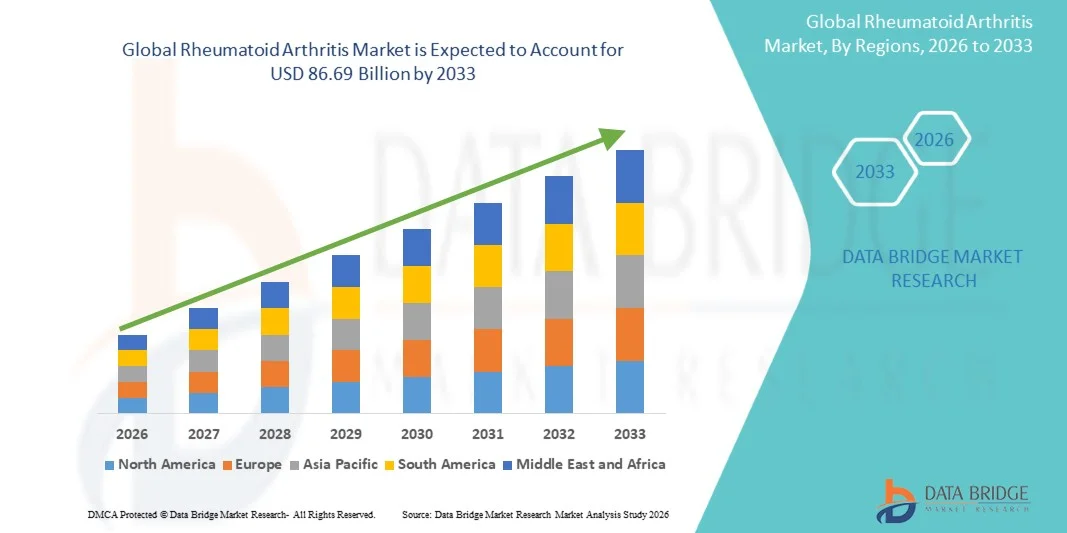
The Rheumatoid Arthritis Market was valued at USD 56.49 billion in 2025 and is projected to reach USD 86.69 billion by 2033, growing at a CAGR of 5.50% from 2026 to 2033. The Rheumatoid Arthritis Market is experiencing consistent growth driven by the rising prevalence of autoimmune disorders, increasing demand for advanced disease-modifying therapies, growing adoption of biologic and targeted treatments, and continuous advancements in diagnostic and treatment technologies. The increasing focus on early diagnosis, personalized treatment approaches, and improved disease management strategies is accelerating market expansion across healthcare systems worldwide.
The growing burden of rheumatoid arthritis globally, combined with increasing awareness regarding autoimmune disease management and the availability of advanced therapies, is encouraging healthcare providers to adopt innovative treatment solutions. Biologic drugs, Janus kinase (JAK) inhibitors, biosimilars, and targeted synthetic disease-modifying antirheumatic drugs (DMARDs) are transforming rheumatoid arthritis treatment by improving symptom control and slowing disease progression. Furthermore, advancements in precision medicine, biomarker identification, and patient-specific treatment strategies are supporting better clinical outcomes and driving the adoption of advanced rheumatoid arthritis therapies across hospitals, specialty clinics, and rheumatology centers.
Key Market Trends & Insights
- North America dominated the Rheumatoid Arthritis Market with the largest revenue share of 36.2% in 2025, supported by the strong presence of advanced healthcare infrastructure, high adoption of biologic and targeted therapies, increasing prevalence of autoimmune disorders, and significant investments in rheumatology research and drug development. The region benefits from favorable reimbursement frameworks, early adoption of advanced diagnostic technologies, and the presence of leading pharmaceutical companies developing innovative rheumatoid arthritis treatments.
- The medication segment dominated the market with a 5% revenue share in 2025, driven by extensive use of DMARDs, biologics, corticosteroids, and targeted synthetic therapies for long-term disease management and inflammation control.
- Asia-Pacific is expected to be the fastest-growing region at a CAGR of 6.9% from 2026 to 2033, fueled by the rising prevalence of autoimmune diseases, improving healthcare access, increasing government investments in healthcare infrastructure, and growing adoption of advanced biologics and targeted therapies across countries such as China, India, and Japan. Expanding specialty clinics and improving diagnostic capabilities are further accelerating market growth in the region.
- The medication segment dominates the treatment category with a 62.5% revenue share in 2025, owing to the extensive use of disease-modifying antirheumatic drugs (DMARDs), biologics, and targeted synthetic therapies for long-term rheumatoid arthritis management. Increasing physician preference for pharmacological treatment approaches, availability of advanced biologic therapies, and continuous development of novel anti-inflammatory drugs are strengthening segment growth.
Market Size & Forecast
- Global Market Value (2025): USD 56.49 Billion
- Expected Market Value (2033): USD 86.69 Billion
- Forecast CAGR (2026–2033): 5.50%
- Leading Region in 2025: North America
- Fastest Growing Region: Asia-Pacific
Report Scope and Rheumatoid Arthritis Market Segmentation
|
Attributes |
Rheumatoid Arthritis Key Market Insights |
|
Segments Covered |
· By Diagnosis: Blood Test, Physical Examination, and Imaging Test · By Treatment: Medication, Therapy, and Surgery · By Route of Administration: Oral, Subcutaneous, and Others · By End-Users: Hospitals, Specialty Clinics, and Others · By Distribution Channel: Hospital Pharmacy, Retail Pharmacy, and Others |
|
Countries Covered |
North America · U.S. · Canada · Mexico Europe · Germany · France · U.K. · Netherlands · Switzerland · Belgium · Russia · Italy · Spain · Turkey · Rest of Europe Asia-Pacific · China · Japan · India · South Korea · Singapore · Malaysia · Australia · Thailand · Indonesia · Philippines · Rest of Asia-Pacific Middle East and Africa · Saudi Arabia · U.A.E. · South Africa · Egypt · Israel · Rest of Middle East and Africa South America · Brazil · Argentina · Rest of South America |
|
Key Market Players |
• AbbVie Inc. (U.S.) |
|
Market Opportunities |
· Expansion of Biologics and Biosimilars Adoption · Expansion of Biologics and Biosimilars Adoption · Rising Healthcare Access and Expanding Treatment Infrastructure in Emerging Markets |
|
Value Added Data Infosets |
In addition to the insights on market scenarios such as market value, growth rate, segmentation, geographical coverage, and major players, the market reports curated by the Data Bridge Market Research also include in-depth expert analysis, geographically represented company-wise production and capacity, network layouts of distributors and partners, detailed and updated price trend analysis and deficit analysis of supply chain and demand. |
Rheumatoid Arthritis Market Trends
Trend: Rising Adoption of Advanced Biologic Therapies and Personalized Rheumatoid Arthritis Management
The Rheumatoid Arthritis Market is witnessing increasing adoption of advanced treatment approaches, including biologic drugs, targeted synthetic therapies, and personalized medicine strategies aimed at improving disease control and patient outcomes. Healthcare providers are increasingly shifting toward early diagnosis and aggressive disease management to prevent joint damage and disability associated with rheumatoid arthritis. The growing use of biomarkers, advanced imaging techniques, and patient-specific treatment approaches is enhancing disease monitoring and therapy selection. Pharmaceutical companies are also expanding research into novel immune-modulating therapies to address unmet needs among patients with moderate-to-severe rheumatoid arthritis. For instance, companies such as AbbVie Inc., Pfizer Inc., and Roche Holding AG continue to strengthen their rheumatoid arthritis portfolios through biologics and targeted therapies, supporting innovation and broader access to advanced treatment options.
Rheumatoid Arthritis Market Dynamics
Key Market Driver: Increasing Prevalence of Autoimmune Disorders and Growing Demand for Effective Disease Management
The rising global burden of rheumatoid arthritis and other autoimmune diseases is a major factor driving demand for advanced diagnostic and therapeutic solutions. Rheumatoid arthritis affects millions of individuals worldwide and requires long-term disease management to control inflammation, reduce pain, and prevent irreversible joint damage. According to global health estimates, autoimmune disorders are becoming increasingly recognized as a significant healthcare burden, encouraging greater investment in rheumatology care and treatment innovation. The growing adoption of disease-modifying antirheumatic drugs (DMARDs), biologics, and targeted therapies is improving clinical outcomes for patients who do not respond adequately to conventional treatments. In addition, advancements in diagnostic methods such as anti-CCP antibody testing, inflammatory biomarker analysis, and imaging technologies are enabling earlier disease detection and timely intervention. The expansion of specialty clinics and improved access to rheumatology services are further supporting market growth.
Key Restraint/Challenge: High Cost of Biologic Therapies and Limited Access to Advanced Rheumatoid Arthritis Treatments
A significant challenge in the Rheumatoid Arthritis Market is the high cost associated with biologic drugs, targeted therapies, and long-term disease management. Advanced rheumatoid arthritis treatments often require continuous administration, regular monitoring, and specialized healthcare support, increasing the overall treatment burden for patients and healthcare systems. Limited reimbursement coverage in certain regions and affordability challenges in developing economies can restrict access to premium therapies. In addition, the requirement for specialized rheumatologists and advanced diagnostic infrastructure creates barriers to early diagnosis and effective treatment, particularly in underserved areas. Although biosimilars are improving affordability and accessibility, pricing pressure and regulatory complexities continue to influence market adoption of advanced rheumatoid arthritis therapies.
Key Market Opportunity: Expansion of Precision Medicine, Biosimilars, and Digital Healthcare Solutions
The integration of precision medicine, biosimilar therapies, and digital healthcare technologies presents significant growth opportunities for the rheumatoid arthritis market. Advances in biomarker-based treatment selection and personalized therapy approaches are enabling clinicians to identify the most effective treatment options for individual patients. The increasing availability of biosimilars for established biologic therapies is creating opportunities to reduce treatment costs and expand patient access globally. Furthermore, digital health platforms, remote monitoring tools, and artificial intelligence-based analytics are supporting improved disease tracking, medication adherence, and personalized patient management. Growing healthcare investments in emerging economies, along with increasing awareness regarding early rheumatoid arthritis diagnosis and treatment, are expected to accelerate adoption of advanced rheumatoid arthritis care solutions across hospitals, specialty clinics, and outpatient settings.
Rheumatoid Arthritis Market Scope
The rheumatoid arthritis market is segmented on the basis of diagnosis, treatment, route of administration, end-users, and distribution channel.
By Diagnosis
On the basis of diagnosis, the Rheumatoid Arthritis Market is segmented into blood test, physical examination, and imaging test. The Blood Test segment dominated the market with a 44.8% share in 2025, owing to its critical role in detecting rheumatoid factor (RF), anti-CCP antibodies, ESR, and CRP biomarkers that enable early and accurate disease identification. It is widely used across hospitals and diagnostic laboratories due to high accuracy and standardization. Increasing awareness regarding early-stage diagnosis and routine screening for autoimmune disorders is further supporting adoption. Advancements in laboratory automation and high-sensitivity immunoassays are improving diagnostic efficiency. Growing healthcare access in emerging economies is also boosting test volumes. Rising prevalence of rheumatoid arthritis globally is increasing demand for reliable blood-based diagnostics. The segment benefits from cost-effectiveness compared to imaging techniques. Expansion of diagnostic networks and point-of-care testing facilities is further strengthening market penetration. Continuous clinical research on novel biomarkers is enhancing diagnostic precision. Integration of digital lab reporting systems is improving workflow efficiency. Strong preference among physicians for confirmatory testing is sustaining demand.
The Imaging Test segment is projected to register the fastest growth at a CAGR of 6.9% from 2026 to 2033, driven by increasing use of MRI, ultrasound, and X-ray imaging for early detection and monitoring of joint damage. Rising demand for precise structural assessment of inflammation and erosion is accelerating adoption. Growing integration of AI-based imaging analytics is improving diagnostic accuracy. Expansion of advanced radiology infrastructure in developing regions is supporting growth. Increasing use of musculoskeletal ultrasound in rheumatology clinics is expanding applications. Early disease detection initiatives are driving imaging utilization. Hospitals are increasingly investing in advanced imaging systems. Technological improvements are reducing scan time and improving resolution. Rising physician preference for non-invasive diagnostic tools is boosting adoption. Growing awareness of disease progression monitoring is strengthening demand. Integration of imaging with electronic health records is improving clinical decision-making. Expanding reimbursement coverage for advanced imaging procedures is further supporting segment expansion.
By Treatment
On the basis of treatment, the Rheumatoid Arthritis Market is segmented into medication, therapy, and surgery. The Medication segment dominated the market with a 62.5% revenue share in 2025, driven by extensive use of DMARDs, biologics, corticosteroids, and targeted synthetic therapies for long-term disease management and inflammation control. Increasing adoption of advanced biologic drugs has significantly improved patient outcomes. Strong physician preference for pharmacological intervention as first-line therapy is supporting demand. Expanding pipeline of novel immunomodulatory drugs is further strengthening the segment. Rising approval of biosimilars is improving affordability and access. Pharmaceutical companies are investing heavily in rheumatoid arthritis drug development. Growing prevalence of moderate-to-severe cases is increasing medication dependency. Continuous innovation in JAK inhibitors and TNF inhibitors is enhancing treatment effectiveness. Improved patient adherence through advanced formulations is supporting long-term usage. Expanding healthcare infrastructure is enabling wider drug distribution. Increasing reimbursement support in developed countries is driving uptake. Combination therapy approaches are also contributing to segment growth.
The Therapy segment is expected to witness the fastest growth at a CAGR of 6.8% from 2026 to 2033, driven by rising adoption of physiotherapy and occupational therapy in disease management. Increasing focus on non-pharmacological treatment approaches is accelerating growth. Rehabilitation therapies are improving joint mobility and reducing disability progression. Growing integration of multidisciplinary care models in hospitals is supporting adoption. Rising awareness of long-term functional improvement is boosting demand. Expanding outpatient rehabilitation centers is increasing accessibility. Use of assistive devices and exercise-based therapy is growing. Digital physiotherapy platforms are emerging as supportive tools. Healthcare providers are emphasizing holistic treatment approaches. Post-surgical rehabilitation demand is also contributing to growth. Increasing elderly population with mobility issues is supporting segment expansion. Insurance coverage for rehabilitation services is improving utilization rates.
By Route of Administration
On the basis of route of administration, the Rheumatoid Arthritis Market is segmented into oral, subcutaneous, and others. The Oral segment held a 46.3% share in 2025, driven by widespread use of conventional DMARDs and corticosteroids due to ease of administration and high patient compliance. Oral drugs remain the first-line option for early-stage rheumatoid arthritis management. Cost-effectiveness compared to injectable therapies supports adoption. Wide availability in hospital and retail pharmacies is strengthening accessibility. Physicians prefer oral medications for mild-to-moderate cases. Established safety profiles of oral drugs are supporting continued usage. Increasing generic drug penetration is improving affordability. Strong outpatient prescription volumes are driving demand. Growing chronic disease management programs are supporting sustained use. Expanding pharmaceutical distribution networks are increasing availability. Patient preference for non-invasive treatment is boosting uptake. Continuous drug formulation improvements are enhancing efficacy and tolerability.
The subcutaneous segment is projected to register the fastest growth at a CAGR of 7.2% from 2026 to 2033, driven by rising adoption of biologics and self-injectable therapies such as auto-injectors and prefilled syringes. Increasing shift toward home-based care is supporting demand. Improved patient convenience and reduced hospital visits are accelerating adoption. Higher bioavailability compared to oral drugs is strengthening preference. Growing approval of subcutaneous biologics is expanding treatment options. Pharmaceutical innovation in injectable formulations is boosting uptake. Rising prevalence of moderate-to-severe rheumatoid arthritis is increasing demand. Expansion of patient self-administration training programs is supporting growth. Healthcare systems are encouraging decentralized treatment models. Increasing focus on long-term adherence is improving outcomes. Availability of user-friendly delivery devices is enhancing acceptance. Rising healthcare digitization is enabling remote monitoring of injectable therapies.
By End-Users
On the basis of end-users, the Rheumatoid Arthritis Market is segmented into Hospitals, Specialty Clinics, and Others. The Hospitals segment dominated the market with a 46.9% share in 2025, owing to availability of advanced diagnostic infrastructure, specialist rheumatologists, and access to biologic infusion therapies. Hospitals remain the primary point for diagnosis and initiation of advanced treatment. Presence of multidisciplinary care teams improves patient management. High patient inflow for moderate-to-severe cases supports dominance. Availability of inpatient and outpatient services strengthens utilization. Integration of diagnostic and treatment services improves efficiency. Strong reimbursement coverage in hospital settings supports adoption. Hospitals are equipped for managing complex autoimmune cases. Advanced laboratory and imaging facilities enhance clinical accuracy. Growing hospital investments in rheumatology departments are boosting capacity. Increasing hospitalization rates for severe RA cases are supporting demand.
The specialty clinics segment is expected to witness the fastest growth at a CAGR of 7.1% from 2026 to 2033, driven by increasing demand for focused rheumatology care and personalized treatment approaches. Rising preference for outpatient care is accelerating adoption. Specialty clinics offer shorter waiting times and improved patient experience. Growth of standalone rheumatology centers is expanding access. Increasing availability of targeted biologic therapies in clinics is supporting uptake. Strong emphasis on long-term disease monitoring is driving demand. Rising healthcare privatization is boosting clinic expansion. Improved physician-patient interaction in clinics is enhancing treatment adherence. Digital health integration is supporting remote follow-ups. Growing awareness of autoimmune disease management is increasing clinic visits. Expansion in urban healthcare infrastructure is supporting growth. Insurance coverage for outpatient specialty care is improving utilization rates.
By Distribution Channel
On the basis of distribution channel, the Rheumatoid Arthritis Market is segmented into hospital pharmacy, retail pharmacy, and others. The hospital pharmacy segment dominated the market with a 51.6% share in 2025, driven by high dispensing of biologics, DMARDs, and specialty drugs under physician supervision. Hospital pharmacies ensure controlled distribution of high-cost medications. Strong linkage with inpatient and outpatient care supports dominance. Presence of prescription-based treatment protocols is increasing utilization. Hospitals manage initial therapy initiation and dose adjustments. Integration with electronic prescribing systems improves efficiency. High dependence on infusion therapies supports hospital pharmacy usage. Regulatory control over biologics favors hospital-based dispensing. Availability of specialist pharmacists enhances drug management. Increasing hospital-based procurement contracts support volume growth. Strong reimbursement frameworks reinforce adoption. Growing severe RA patient population increases demand.
The retail pharmacy segment is projected to register the fastest growth at a CAGR of 6.5% from 2026 to 2033, driven by increasing availability of oral DMARDs and supportive medications in community pharmacies. Expanding pharmacy networks are improving accessibility. Rising preference for convenient drug purchase is boosting demand. Growth of chronic disease management programs is supporting retail sales. Increasing penetration of generic drugs is enhancing affordability. Expansion of pharmacy chains in emerging markets is strengthening reach. Improved patient awareness of long-term therapy adherence is supporting uptake. Digital prescription services are driving retail pharmacy integration. Growth of e-pharmacy platforms is expanding distribution channels. Increasing outpatient treatment adoption is boosting sales volume. Strong urban healthcare infrastructure is supporting accessibility. Government initiatives promoting retail drug availability are further accelerating growth.
Rheumatoid Arthritis Market Regional Analysis
North America dominated the rheumatoid arthritis market and accounted for the largest revenue share of 36.2% in 2025, supported by strong healthcare infrastructure, high adoption of biologic and targeted therapies, increasing prevalence of autoimmune disorders, and significant investments in rheumatology research and drug development. The region also benefits from early access to advanced diagnostic technologies, favorable reimbursement frameworks, and the strong presence of leading pharmaceutical and biotechnology companies developing innovative rheumatoid arthritis treatments. Growing focus on precision medicine, rising patient awareness, and continuous clinical advancements in biologics and JAK inhibitors are further strengthening North America’s leadership position in the global market.
U.S. Rheumatoid Arthritis Market Insight
The U.S. rheumatoid arthritis market is witnessing strong growth due to rising prevalence of autoimmune diseases, increasing adoption of advanced biologic therapies, and robust investments in clinical research and drug development. The country has a well-established healthcare infrastructure and is a key hub for innovation in immunology and rheumatology treatments. Strong presence of leading pharmaceutical companies and continuous development of targeted therapies such as TNF inhibitors, IL inhibitors, and JAK inhibitors are driving market expansion. In addition, widespread use of precision medicine approaches and biomarker-based treatment selection is improving patient outcomes and supporting demand for advanced rheumatoid arthritis therapies.
Europe Rheumatoid Arthritis Market Insight
The Europe rheumatoid arthritis market remains a major contributor to global revenue, driven by strong healthcare systems, rising prevalence of autoimmune disorders, and increasing adoption of advanced biologic treatments. The region benefits from supportive government healthcare policies, well-established reimbursement systems, and active participation in clinical research for autoimmune diseases. Growing use of biosimilars, targeted therapies, and disease-modifying antirheumatic drugs (DMARDs) is improving treatment accessibility and affordability. Furthermore, increasing focus on early diagnosis and personalized treatment strategies is supporting market growth across European countries.
U.K. Rheumatoid Arthritis Market Insight
The U.K. rheumatoid arthritis market is experiencing steady growth, supported by rising disease awareness, expanding access to advanced treatment options, and strong focus on healthcare innovation. The National Health Service (NHS) plays a key role in facilitating access to biologics and targeted therapies for rheumatoid arthritis patients. Increasing adoption of biosimilars is improving treatment affordability, while advancements in diagnostic techniques are enabling earlier detection of autoimmune conditions. Ongoing clinical research and collaborations between academic institutions and pharmaceutical companies are further strengthening market development in the U.K.
Germany Rheumatoid Arthritis Market Insight
The Germany rheumatoid arthritis market is expanding steadily due to advanced healthcare infrastructure, strong pharmaceutical manufacturing base, and increasing adoption of innovative immunology treatments. Germany has a well-developed system for rheumatology care, with widespread use of biologics, biosimilars, and targeted therapies for autoimmune disease management. Growing investments in clinical trials and research activities are supporting the development of next-generation rheumatoid arthritis treatments. In addition, rising awareness about early diagnosis and disease management is further driving demand for advanced therapeutic options in the country.
Asia-Pacific Rheumatoid Arthritis Market Insight
The Asia-Pacific rheumatoid arthritis market is expected to witness rapid growth, expanding at a CAGR of 6.9% from 2026 to 2033, driven by rising prevalence of autoimmune diseases, improving healthcare access, increasing government investments in healthcare infrastructure, and growing adoption of advanced biologics and targeted therapies. Countries such as China, India, and Japan are witnessing higher diagnosis rates and expanding access to specialty rheumatology care. Increasing availability of biosimilars, rising healthcare expenditure, and growing awareness regarding autoimmune disorders are further supporting regional market expansion.
Japan Rheumatoid Arthritis Market Insight
The Japan rheumatoid arthritis market is witnessing consistent growth due to an aging population, increasing prevalence of autoimmune disorders, and strong healthcare infrastructure. The country has high adoption of advanced biologic therapies, including JAK inhibitors and TNF blockers, supported by well-established reimbursement systems. Continuous advancements in diagnostic technologies and personalized medicine approaches are improving disease management. Furthermore, Japan’s strong pharmaceutical research ecosystem and focus on innovation in autoimmune disease treatment are contributing to market growth.
China Rheumatoid Arthritis Market Insight
The China rheumatoid arthritis market is growing rapidly, driven by increasing awareness of autoimmune diseases, improving healthcare infrastructure, and rising access to advanced biologic therapies. Government initiatives aimed at expanding healthcare coverage and strengthening specialty care services are supporting market development. Growing adoption of biosimilars and targeted therapies is improving treatment affordability and accessibility. In addition, increasing investments in domestic pharmaceutical innovation and expanding rheumatology care networks are positioning China as one of the fastest-growing markets for rheumatoid arthritis globally.
Rheumatoid Arthritis Market Share
The Rheumatoid Arthritis industry is primarily led by well-established companies, including:
- AbbVie Inc. (U.S.)
- Amgen Inc. (U.S.)
- Pfizer Inc. (U.S.)
- Johnson & Johnson (U.S.)
- Bristol Myers Squibb Company (U.S.)
- Roche Holding AG (Switzerland)
- Novartis AG (Switzerland)
- Eli Lilly and Company (U.S.)
- Sanofi S.A. (France)
- Gilead Sciences, Inc. (U.S.)
- UCB S.A. (Belgium)
- AstraZeneca PLC (U.K.)
- Takeda Pharmaceutical Company Limited (Japan)
- Biogen Inc. (U.S.)
- Teva Pharmaceutical Industries Ltd. (Israel)
- Samsung Bioepis Co., Ltd. (South Korea)
- Celltrion Healthcare Co., Ltd. (South Korea)
- Fresenius Kabi AG (Germany)
- Sun Pharmaceutical Industries Ltd. (India)
- Lupin Limited (India)
- Dr. Reddy’s Laboratories Ltd. (India)
- Glenmark Pharmaceuticals Ltd. (India)
- Boehringer Ingelheim International GmbH (Germany)
- Regeneron Pharmaceuticals, Inc. (U.S.)
- Horizon Therapeutics plc (Ireland)
- Sandoz (Novartis Division) (Switzerland)
- Merck & Co., Inc. (U.S.)
- Incyte Corporation (U.S.)
- Kyowa Kirin Co., Ltd. (Japan)
- Zydus Lifesciences Ltd. (India)
- Bio-Thera Solutions Ltd. (China)
- Innovent Biologics, Inc. (China)
- R-Pharm (Russia)
- Almirall S.A. (Spain)
Latest Developments in Rheumatoid Arthritis Market
- In January 2021, AbbVie announced strong clinical trial outcomes for its JAK inhibitor Rinvoq (upadacitinib) in rheumatoid arthritis patients, demonstrating superior efficacy compared to placebo and improved symptom control in moderate-to-severe RA cases. The results reinforced Rinvoq’s position as a next-generation targeted therapy in the RA treatment landscape, contributing to its increasing adoption in patients with inadequate response to methotrexate and TNF inhibitors
- In September 2021, the U.S. FDA issued strengthened safety communications and updated boxed warnings for JAK inhibitors such as tofacitinib (Xeljanz), baricitinib (Olumiant), and upadacitinib (Rinvoq), highlighting increased risks of serious cardiovascular events, malignancies, and thrombosis. This regulatory update significantly influenced prescribing patterns, encouraging a more cautious, benefit-risk-based approach to advanced rheumatoid arthritis therapies
- In May 2022, Sanofi and Regeneron continued expanding clinical use and post-marketing adoption of Kevzara (sarilumab), an IL-6 receptor antagonist, supporting its growing role in patients with moderate-to-severe rheumatoid arthritis who are intolerant to conventional DMARDs. The drug’s real-world adoption strengthened the biologics segment within the RA market
- In August 2023, AbbVie reported head-to-head clinical trial data showing that Rinvoq (upadacitinib) demonstrated significantly higher efficacy compared to Humira (adalimumab) in rheumatoid arthritis patients, with improved response rates and deeper disease remission outcomes, accelerating the market shift from first-generation biologics to newer targeted synthetic DMARDs
- In June 2025, ongoing clinical research presented at rheumatology conferences highlighted the increasing integration of advanced immunomodulation therapies and digital biomarkers for rheumatoid arthritis management, with studies showing improved patient outcomes through early intervention using biologics and combination therapies

- Interactive Data Analysis Dashboard
- Company Analysis Dashboard for high growth potential opportunities
- Research Analyst Access for customization & queries
- Competitor Analysis with Interactive dashboard
- Latest News, Updates & Trend analysis
- Harness the Power of Benchmark Analysis for Comprehensive Competitor Tracking
Data collection and base year analysis are done using data collection modules with large sample sizes. The stage includes obtaining market information or related data through various sources and strategies. It includes examining and planning all the data acquired from the past in advance. It likewise envelops the examination of information inconsistencies seen across different information sources. The market data is analysed and estimated using market statistical and coherent models. Also, market share analysis and key trend analysis are the major success factors in the market report. To know more, please request an analyst call or drop down your inquiry.
The key research methodology used by DBMR research team is data triangulation which involves data mining, analysis of the impact of data variables on the market and primary (industry expert) validation. Data models include Vendor Positioning Grid, Market Time Line Analysis, Market Overview and Guide, Company Positioning Grid, Patent Analysis, Pricing Analysis, Company Market Share Analysis, Standards of Measurement, Global versus Regional and Vendor Share Analysis. To know more about the research methodology, drop in an inquiry to speak to our industry experts.
Data Bridge Market Research is a leader in advanced formative research. We take pride in servicing our existing and new customers with data and analysis that match and suits their goal. The report can be customized to include price trend analysis of target brands understanding the market for additional countries (ask for the list of countries), clinical trial results data, literature review, refurbished market and product base analysis. Market analysis of target competitors can be analyzed from technology-based analysis to market portfolio strategies. We can add as many competitors that you require data about in the format and data style you are looking for. Our team of analysts can also provide you data in crude raw excel files pivot tables (Fact book) or can assist you in creating presentations from the data sets available in the report.












