



Asia-Pacific Virtual Reality (VR) Health Market, By Product (Hardware, Software And Services), Technology (Head-Mounted Technology, Gesture-Tracking Technology, Projector & Display Walls Technology, Mobile Device-Based And Others), Application (Medical Training And Education, Virtual Reality Exposure Therapy, Surgery, Patient Care Management, Rehabilitation, Pain Management And Others), Therapeutic Area (Craniofacial, Cardiovascular, Ophthalmology, Pulmonary, Neurological, Sleep Disorders, Phobias, Addictions, Posttraumatic Stress Disorder (PTSD) And Others), End User (Hospitals, Clinics, Surgical Centres, Ambulatory Surgical Centers, Diagnostic Centers, Rehabilitation Centers, Long-Term Care Facilities, Mental Health Institutions And Others), Distribution Channel (Direct Tenders, Retail Sales And Third Party Distributor) - Industry Trends and Forecast to 2030.
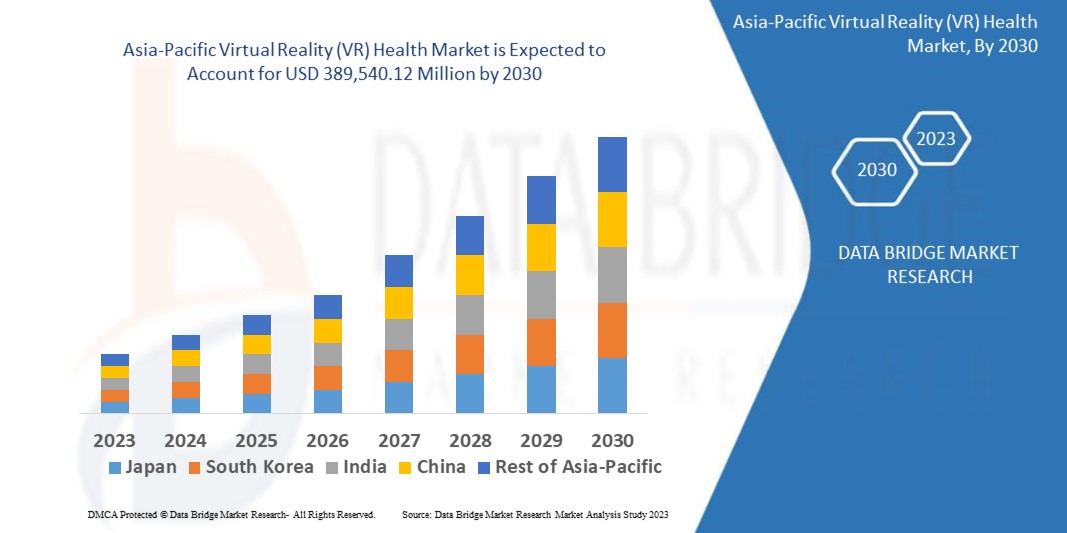
Asia-Pacific Virtual Reality (VR) Health Market Analysis and Size
Virtual reality has brought a new change to digitalization. It has become easier to experience the real world by setting different environmental conditions. Augmented reality & mixed reality has a wide range of applications. The market's growth increased as the use of augmented reality, and mixed reality became popular in driving simulators. The augmented reality and mixed reality provide the driver with a real sense of the road, driving conditions, car manuals, and road traffic that helps avoid accidents at an initial stage of learning and prepares the drivers for various situations. These attributes have also led to an increased usage of virtual reality in defense and aerospace. The army personnel used it for training in various conditions such as parachute jumping, submarine, combat situations, and driving in various environmental conditions.
Data Bridge Market Research analyses that the Asia-Pacific virtual reality (VR) health market is expected to grow at a CAGR of 51.6% during the forecast period of 2023 to 2030, at a USD 50,518.45 million in 2022 and is further estimated to reach USD 389,540.12 million by 2030.
The hardware segment accounts for the largest component segment in the Asia-Pacific virtual reality (VR) health market. The Asia-Pacific virtual reality (VR) healthmarket report also comprehensively covers pricing, patent, and technological advancements.
Asia-Pacific Virtual Reality (VR) Health Market Scope and Segmentation
|
Report Metric |
Details |
|
Forecast Period |
2023 to 2030 |
|
Base Year |
2022 |
|
Historic Years |
2021 (Customizable to 2015-2020) |
|
Quantitative Units |
Revenue in USD Million, Volumes in Units, Pricing in USD |
|
Segments Covered |
Product (Hardware, Software And Services), Technology (Head-Mounted Technology, Gesture-Tracking Technology, Projector & Display Walls Technology, Mobile Device-Based And Others), Application (Medical Training And Education, Virtual Reality Exposure Therapy, Surgery, Patient Care Management, Rehabilitation, Pain Management And Others), Therapeutic Area (Craniofacial, Cardiovascular, Ophthalmology, Pulmonary, Neurological, Sleep Disorders, Phobias, Addictions, Posttraumatic Stress Disorder (PTSD) And Others), End User (Hospitals, Clinics, Surgical Centres, Ambulatory Surgical Centers, Diagnostic Centers, Rehabilitation Centers, Long-Term Care Facilities, Mental Health Institutions And Others), Distribution Channel (Direct Tenders, Retail Sales And Third Party Distributor) |
|
Countries Covered |
Japan, China, India, South Korea, Australia, Singapore, Malaysia, Thailand, Indonesia, Philippines, Rest of Asia-Pacific |
|
Market Players Covered |
SyncThink Inc., AppliedVR, Koninklijke Philips N.V., EchoPixel, Psious, Firsthand Technology Inc, MindMaze Inc, Augmedix, Inc, VirtaMed AG, Vivid Vision, Inc, Virtually Better Inc, Osso VR, Inc, ImmersiveTouch, Inc, CAE Inc, Google (A Subsidiary of Alphabet Inc), Microsoft, General Electric, Medical Realities Ltd, Siemens |
|
Market Opportunities |
|
Market Definition
Virtual reality can be defined as a technology that creates a simulated environment through computer technology. Virtual reality provides an immersed 3D environment to the user by simulating various senses such as vision, touch, hearing, and even smell. Virtual reality uses devices such as head-mounted displays, projectors, and display walls to generate realistic visuals and sounds to provide a real-world experience in the virtual environment. The person using virtual reality can view the artificial world 360 degrees and even sense the virtual environment with highly advanced gears. This technology is being widely used in various industrial applications, especially for training and research purposes. The defense and aerospace industry uses it for training the army personnel by providing various environmental conditions, this aids in reducing the overall cost of the training. The gaming sector provides virtual reality directly to the users by enhancing their gaming experience; people are getting more accustomed to virtual reality through their experience in the gaming and entertainment industry. Virtual reality has also aided in driving simulators by providing a real-life experience in an artificial environment helping the users to adapt to the driving conditions and know how to react in various situations without actually taking the driving lessons directly on the road.
Asia-Pacific Virtual Reality (VR) Health Market Dynamics
Drivers
- Growing demand for HMD in the gaming and entertainment industry
Head-mounted displays (HMDs) have been high in the gaming and entertainment sector. The gaming industry has had a technological evolution with the emergence of VR and 3D technology. The use of HMDs has helped achieve a fully immersive experience for users and has taken the gaming experience to the next level. The flawless transition conducted with VR HMDs has helped bring a unique and enhanced user experience. HMDs have a high penetration rate in the video gaming sector, and video game users prefer them for enriching experiences and entertainment. HMDs project digital images, enabling a 3D view, which enhances the user experience. Therefore, the growing gaming sector would drive the market for HMDs and, in turn, virtual reality.
- Increasing demand for VR technology due to the COVID-19 pandemic
The world is going through different phases of physical lockdown, and social get-togethers are still not allowed in most countries. Hence, AR and VR technology during COVID-19 are emerging as superheroes by enabling people to feel connected to each other. Augmented reality adds digital elements to the physical world, and Virtual Reality gives an immersive experience to the viewers. VR devices such as Google Cardboard, HTC Vive, or Oculus Rift transport users to experience several real-world and imaginary environments with the help of devices.
Opportunity
- Increased deployment of VR technology in aerospace & defense and architecture & planning sector
The 3D design has enabled significant gains in the aerospace and defense equipment manufacturing processes. This has also positively impacted both performances of the aircraft as well as the manufacturing processes. The advancements in new 3D technologies bring new market opportunities to optimize production time and cost in the aerospace and defense industry. 3D technology has been a continuous trend, specifically in the aerospace industry. Recent developments in virtual reality technology have promised new applications in the aerospace and defense domain, impacting the growth of virtual reality in the aerospace and defense market. 3D visualization abilities incorporated with digital mock-ups of physical objects, virtual assembly lines, tighter integration, and a seamless design process would drive the market shortly.
Restraint/Challenge
- Emerging risks and threats to data integrity
Virtual reality is being highly used for training and education purposes in defense and aerospace and is also used in telemedicine in the healthcare industry. Virtual reality uses computing technologies, cloud usage, and internet services to work, making it highly prone to cyber-attacks, threatening data integrity, and increasing the risk of data being leaked. Proper security and privacy are not being given much importance, posing a significant challenge for the virtual reality market.
Recent Development
- In August 2021, Koninklijke Philips N.V. announced launch of digital experience during the virtual European Society of Cardiology (ESC) 2021 Congress. Under this, the company spotlights smart diagnostic and treatment solutions for the customers. This will help the company to enhance their offerings and to grow in the market.
- In April 2021, VirtaMed AG announced strategic partnership with ESG Elektroniksystem- und Logistik-GmbH. Under this partnership, both the companies will jointly offer innovative, customer-specific and virtual reality-based simulation solutions for the training and continuing education of physicians and medical service personnel. This will help the company to enhance their sales and to grow in the market.
Asia-Pacific Virtual Reality (VR) Health Market Scope
Asia-Pacific virtual reality (VR) health market is segmented based on product, technology, application, therapeutic area, end user and distribution channel. The growth amongst these segments will help you analyze meager growth segments in the industries and provide the users with a valuable market overview and market insights to help them make strategic decisions for identifying core market applications.
Product
- Hardware
- Software
- Services
Technology
- Head-Mounted Technology
- Gesture-Tracking Technology
- Projector & Display Walls Technology
- Mobile Device-Based
- Others
Application
- Medical Training And Education
- Virtual Reality Exposure Therapy
- Surgery
- Patient Care Management
- Rehabilitation
- Pain Management
- Others
Therapeutic Area
- Craniofacial
- Cardiovascular
- Ophthalmology
- Pulmonary
- Neurological
- Sleep Disorders
- Phobias
- Addictions
- Posttraumatic Stress Disorder (PTSD)
- Others
End User
- Hospitals
- Clinics
- Surgical Centres
- Ambulatory Surgical Centers
- Diagnostic Centers
- Rehabilitation Centers
- Long-Term Care Facilities
- Mental Health Institutions
- Others
Distribution Channel
- Direct Tenders
- Retail Sales
- Third Party Distributor
Asia-Pacific Virtual Reality (VR) Health Market Region Analysis/Insights
Asia-Pacific virtual reality (VR) health market is analyzed, and market size insights and trends are provided by the country, product, technology, application, therapeutic area, end user and distribution channelas referenced above.
Asia-Pacific virtual reality (VR) health market covers countries such as Japan, China, India, South Korea, Australia, Singapore, Malaysia, Thailand, Indonesia, Philippines, Rest of Asia-Pacific.
China is expected to dominate the Asia-Pacific virtual reality (VR) health market to the rise in the adoption of virtual reality devices for education training solutions and emerging potential markets.
The country section of the Asia-Pacific virtual reality (VR) health market report also provides individual market impacting factors and changes in regulations in the market domestically that impact the current and future trends of the market. Data points such as new sales, replacement sales, country demographics, disease epidemiology, and import-export tariffs are some of the significant pointers used to forecast the market scenario for individual countries. Also, the presence and availability of Asia-Pacific brands and their challenges faced due to large or scarce competition from local and domestic brands and the impact of sales channels are considered while providing forecast analysis of the country data.
Competitive Landscape and Asia-Pacific Virtual Reality (VR) Health Makret Share Analysis
Asia-Pacific virtual reality (VR) health market competitive landscape provides details of the competitor. Details include company overview, company financials, revenue generated, market potential, investment in research and development, new market initiatives, Asia-Pacific presence, production sites and facilities, production capacities, company strengths and weaknesses, solution launch, product width and breadth, application dominance. The above data points are only related to the companies' focus on the Asia-Pacific virtual reality (VR) health market.
The major players covered in the Asia-Pacific virtual reality (VR) health market report are
- SyncThink Inc.
- AppliedVR
- Koninklijke Philips N.V.
- EchoPixel
- Psious
- Firsthand Technology Inc
- MindMaze Inc
- Augmedix, Inc
- VirtaMed AG
- Vivid Vision, Inc
- Virtually Better Inc
- Osso VR, Inc
- ImmersiveTouch, Inc
- CAE Inc
- Google (A Subsidiary of Alphabet Inc)
- Microsoft
- General Electric
- Medical Realities Ltd
- Siemens
SKU-
Obtenha acesso online ao relatório sobre a primeira nuvem de inteligência de mercado do mundo

- Painel interativo de análise de dados
- Painel de análise da empresa para oportunidades de elevado potencial de crescimento
- Acesso de analista de pesquisa para personalização e customização. consultas
- Análise da concorrência com painel interativo
- Últimas notícias, atualizações e atualizações Análise de tendências
- Aproveite o poder da análise de benchmark para um rastreio abrangente da concorrência
Metodologia de Investigação
A recolha de dados e a análise do ano base são feitas através de módulos de recolha de dados com amostras grandes. A etapa inclui a obtenção de informações de mercado ou dados relacionados através de diversas fontes e estratégias. Inclui examinar e planear antecipadamente todos os dados adquiridos no passado. Da mesma forma, envolve o exame de inconsistências de informação observadas em diferentes fontes de informação. Os dados de mercado são analisados e estimados utilizando modelos estatísticos e coerentes de mercado. Além disso, a análise da quota de mercado e a análise das principais tendências são os principais fatores de sucesso no relatório de mercado. Para saber mais, solicite uma chamada de analista ou abra a sua consulta.
A principal metodologia de investigação utilizada pela equipa de investigação do DBMR é a triangulação de dados que envolve a mineração de dados, a análise do impacto das variáveis de dados no mercado e a validação primária (especialista do setor). Os modelos de dados incluem grelha de posicionamento de fornecedores, análise da linha de tempo do mercado, visão geral e guia de mercado, grelha de posicionamento da empresa, análise de patentes, análise de preços, análise da quota de mercado da empresa, normas de medição, análise global versus regional e de participação dos fornecedores. Para saber mais sobre a metodologia de investigação, faça uma consulta para falar com os nossos especialistas do setor.
Personalização disponível
A Data Bridge Market Research é líder em investigação formativa avançada. Orgulhamo-nos de servir os nossos clientes novos e existentes com dados e análises que correspondem e atendem aos seus objetivos. O relatório pode ser personalizado para incluir análise de tendências de preços de marcas-alvo, compreensão do mercado para países adicionais (solicite a lista de países), dados de resultados de ensaios clínicos, revisão de literatura, mercado remodelado e análise de base de produtos . A análise de mercado dos concorrentes-alvo pode ser analisada desde análises baseadas em tecnologia até estratégias de carteira de mercado. Podemos adicionar quantos concorrentes necessitar de dados no formato e estilo de dados que procura. A nossa equipa de analistas também pode fornecer dados em tabelas dinâmicas de ficheiros Excel em bruto (livro de factos) ou pode ajudá-lo a criar apresentações a partir dos conjuntos de dados disponíveis no relatório.











