


Europe Spinal Allografts and Xenograft Market, By Product Type (Allograft, Xenograft, Bone Graft Supplements), Approaches (Anterior Lumbar Interbody Fusion (ALIF), Transforaminal Lumbar Interbody Fusion (TLIF), Posterior Lumbar Interbody Fusion (PLIF), Surgery Type (Open Spine Surgery and Minimally Invasive Spine Surgery), Indication (Degenerative Diseases, Spinal Trauma or Fractures, Spinal Tumors, Revision Surgeries, Spinal Infections (Osteomyelitis or Discitis), Spinal Deformities, Congenital Spinal Abnormalities, and Others), Age Group (Adult, Geriatric, and Pediatric), End User (Hospital, Speciality Clinic, Ambulatory Surgical Centers, and Others) - Industry Trends and Forecast to 2030.
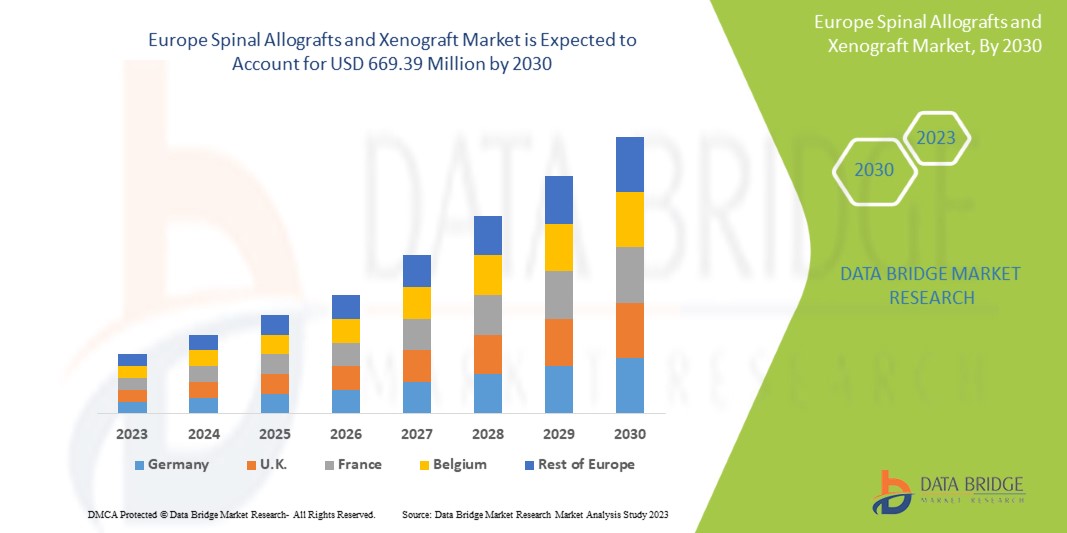
Europe Spinal Allografts and Xenograft Market Analysis and Size
Europe has a significant aging population, and spinal conditions, such as degenerative disc disease and spinal fractures, become more common with age. As the elderly population increases, there is a higher demand for spinal procedures and grafts, driving market growth. Spinal disorders, including degenerative disc disease, spinal stenosis, and vertebral fractures, are relatively common in Europe. These conditions often require spinal grafts as part of surgical treatments, contributing to market growth. Advancements in spinal surgery techniques, such as minimally invasive procedures and robotic-assisted surgery, have increased the demand for graft materials that can support these innovative approaches.
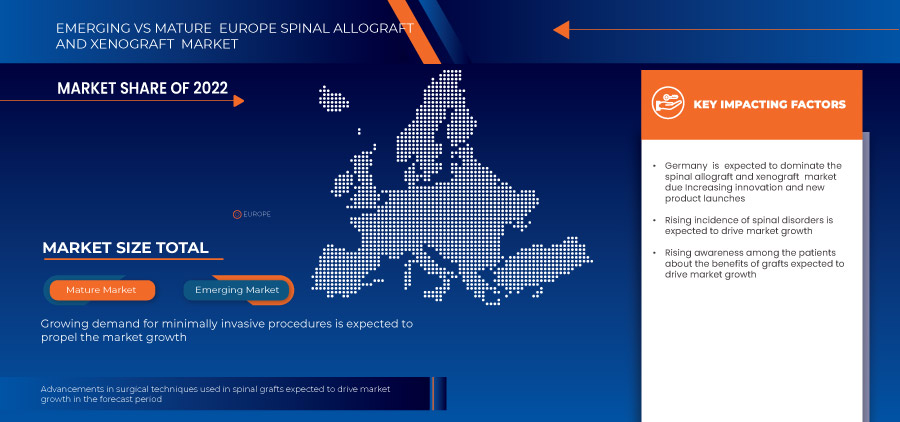
Data Bridge Market Research analyzes that the Europe spinal allografts and xenograft market is expected to reach the value of USD 669.39 million by 2030, at a CAGR of 5.6% during the forecast period. This market report also covers pricing analysis and technological advancements in depth.
|
Report Metric |
Details |
|
Forecast Period |
2023 to 2030 |
|
Base Year |
2022 |
|
Historic Years |
2021 (Customizable to 2015 - 2020) |
|
Quantitative Units |
Revenue in USD Million |
|
Segments Covered |
Product Type (Allograft, Xenograft, Bone Graft Supplements), Approaches (Anterior Lumbar Interbody Fusion (ALIF), Transforaminal Lumbar Interbody Fusion (TLIF), Posterior Lumbar Interbody Fusion (PLIF), Surgery Type (Open Spine Surgery and Minimally Invasive Spine Surgery), Indication (Degenerative Diseases, Spinal Trauma or Fractures, Spinal Tumors, Revision Surgeries, Spinal Infections (Osteomyelitis or Discitis), Spinal Deformities, Congenital Spinal Abnormalities, and Others), Age Group (Adult, Geriatric, and Pediatric), End User (Hospital, Speciality Clinic, Ambulatory Surgical Centers, and Others) |
|
Countries Covered |
Germany, France, U.K., Italy, Spain, Russia, Switzerland, Netherlands, Turkey, Poland, Sweden, Belgium, Denmark, Finland, Norway, and Rest of Europe |
|
Market Players Covered |
Medtronic, Arthrex, Inc., Stryker, ZimVie Inc., and Medical Devices Business Services, Inc., RTI Surgical, Integra LifeSciences, Orthofix US LLC., ATEC Spine, Inc, Globus Medical, Exactech, Inc., Regenity, Cerapedics.Inc, Bioventus and among others |
Market Definition
A spinal allograft is a biological graft material used in spinal surgery. It is obtained from a human donor, typically a cadaver, and is processed to remove cells and antigens, reducing the risk of graft rejection and disease transmission. The processed allograft bone is used to promote bone growth and fusion in spinal procedures, such as spinal fusion surgeries, to treat various spinal conditions. A spinal xenograft is a graft material used in spinal surgery, sourced from a non-human species, usually an animal such as a cow (bovine xenograft) or a pig (porcine xenograft). Xenografts are processed to reduce the risk of immune rejection and disease transmission. They are employed in spinal surgeries as an alternative to human allografts when suitable human donors are not available or when the surgeon and patient prefer a non-human bone source. The Europe spinal allografts and xenograft market refers to the segment of the medical industry that involves the production, distribution, and utilization of spinal allograft and xenograft materials for surgical procedures related to the spine.
Europe Spinal Allografts and Xenograft Market Dynamics
This section deals with understanding the market drivers, advantages, opportunities, restraints, and challenges. All of this is discussed in detail below:
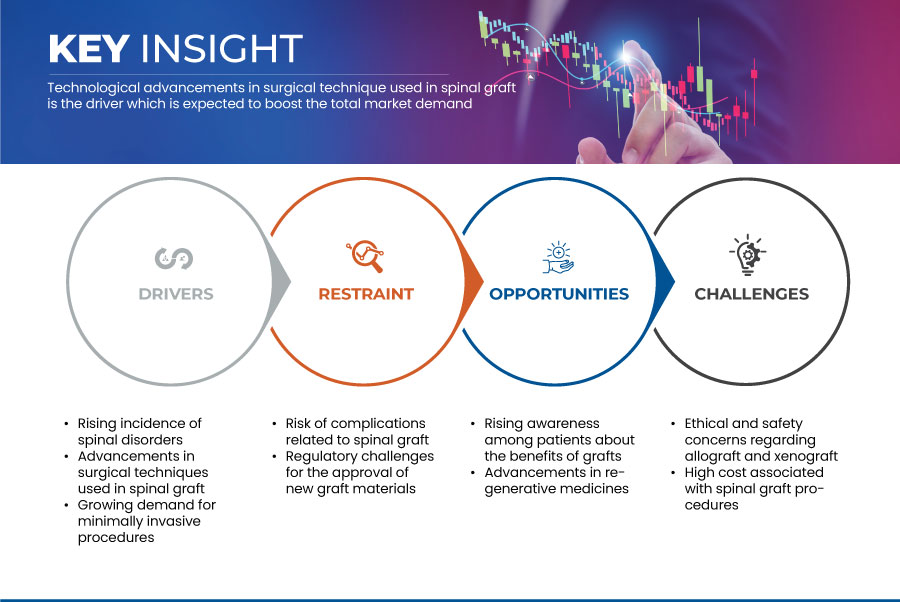
Drivers
- Rising Incidence of Spinal Disorders
Spinal disorders encompass a wide range of conditions affecting the vertebral column, spinal cord, and associated structures. Several factors contribute to the increasing incidence of spinal disorders and, in turn, the demand for spinal graft materials. Modern lifestyles, which may involve prolonged sitting, reduced physical activity, and poor posture, can contribute to the development of spinal disorders. These factors can accelerate the wear and tear on spinal structures and increase the risk of conditions such as herniated discs and lumbar degeneration. Traumatic injuries, such as motor vehicle accidents, falls, and sports-related injuries, can result in spinal fractures, dislocations, and other severe spinal disorders. These injuries often necessitate surgical interventions and the use of graft materials for spinal reconstruction.
- Advancements in Surgical Techniques Used in Spinal Graft
The integration of robotics in spinal surgery has improved surgical precision, accuracy, and outcomes. Surgeons can perform complex procedures with greater confidence. Robotic-assisted surgeries often require advanced graft materials that can be used in conjunction with robotic systems. This drives the need for grafts compatible with robotic surgery, contributing to market expansion. Navigation systems and intraoperative imaging tools assist surgeons in planning and executing spinal procedures more effectively. Precise navigation helps surgeons determine the optimal placement of graft materials, enhancing their effectiveness in promoting spinal fusion and stability. Advances in tissue engineering and regenerative medicine have opened up new possibilities for developing graft materials with enhanced biocompatibility and fusion properties. The emergence of innovative graft materials, such as tissue-engineered constructs and biologically active grafts, offers improved options for spinal surgeons and patients, which is expected to drive market growth.
Opportunity
- Rising Awareness among the Patients about the Benefits of Grafts
Patients are becoming open to considering graft-based surgical interventions. Informed patients are more likely to actively participate in their healthcare decision-making process. Patients who understand the benefits of allografts and xenografts may be more receptive to surgical procedures that involve these materials, increasing the demand for graft-based surgeries. Patients are increasingly seeking treatments that offer better outcomes, faster recovery, and reduced pain. Graft materials are integral to achieving spinal fusion and orthopaedic stabilization, which can lead to improved patient outcomes. Patients are more likely to request graft-based surgeries to achieve these benefits. Patients are often motivated to choose procedures that result in reduced postoperative pain and faster recovery. Graft materials play a crucial role in spinal fusion and stabilization, contributing to shorter recovery times and less pain. Patients' preference for these benefits can drive the demand for graft-based procedures.
Rising patient awareness about the advantages of grafts in spinal and orthopedic surgeries is creating opportunities for market growth. Patients who are well-informed about these benefits are more likely to consider graft-based surgical interventions, leading to increased demand for graft materials and procedures.
Restraint / Challenge
- Risk of Complications Related to Spinal Graft
While these graft materials are essential for achieving spinal fusion and stability, complications associated with their use can have implications for both patients and healthcare providers. In some cases, the recipient's immune system may recognize the graft material as foreign tissue and mount an immune response, leading to graft rejection. The risk of graft rejection can deter surgeons and patients from using allografts and xenografts, leading to a preference for synthetic or autograft options. Infection is a potential complication of any surgical procedure, including spinal surgeries. Graft materials can serve as a site for infection to develop. The risk of postoperative infection may make healthcare providers and patients cautious about the use of graft materials, impacting the market's growth. Complications or issues with graft integration can lead to delayed or failed spinal fusion, necessitating additional surgeries. Surgeons and patients may be concerned about the potential for delayed fusion, leading to a cautious approach to graft material selection.
Healthcare providers prioritize patient assessments, preoperative planning, and postoperative care to minimize complications associated with Spinal Allografts and Xenografts to address these risks. In addition, ongoing R&D efforts focus on improving graft materials and surgical techniques to enhance patient safety and outcomes.
Hence, the risk of complications related to spinal grafts is expected to restrain market growth.
Europe Spinal Allografts and Xenograft Market Scope
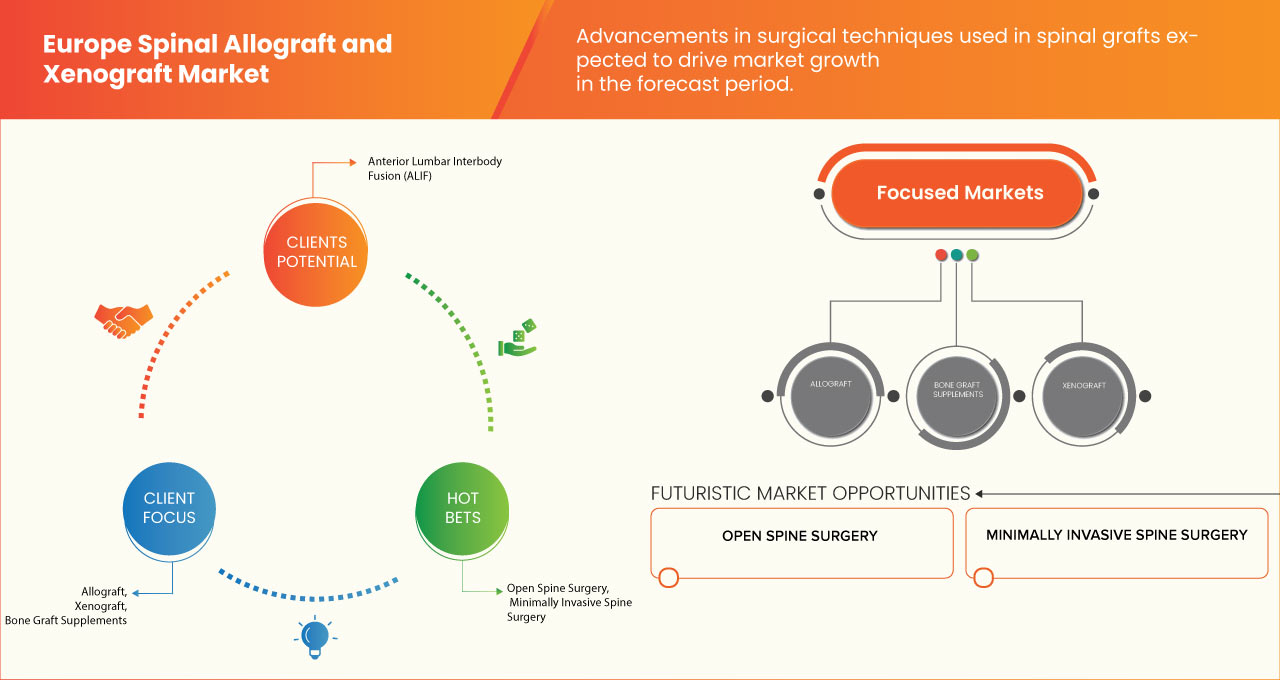
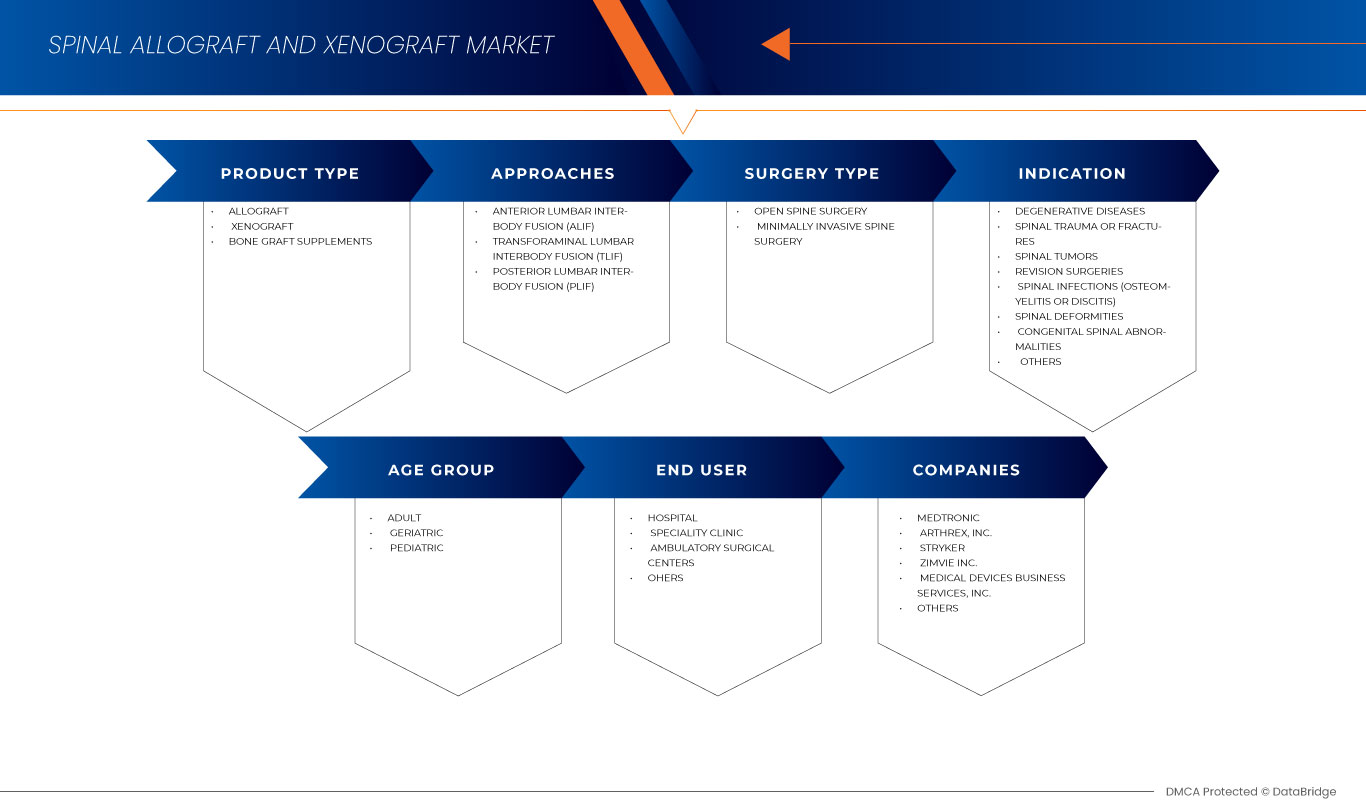
The Europe spinal allografts and xenograft market is segmented into six notable segments based on product type, approaches, surgery type, indication, age group, and end user. The growth amongst these segments will help you analyze meager growth segments in the industries and provide the users with a valuable market overview and market insights to help them make strategic decisions for identifying core market applications.
Product Type
- Allograft
- Xenograft
- Bone Graft Supplements
On the basis of product type, the Europe spinal allografts and xenograft market is segmented into allograft, xenograft, and bone graft supplements.
Approaches
- Anterior Lumbar Interbody Fusion (ALIF)
- Transforaminal Lumbar Interbody Fusion (TLIF)
- Posterior Lumbar Interbody Fusion (PLIF)
On the basis of approaches, the Europe spinal allografts and xenograft market is segmented into anterior lumbar interbody fusion (ALIF), transforaminal lumbar interbody fusion (TLIF), and posterior lumbar interbody fusion (PLIF).
Surgery Type
- Open Spine Surgery
- Minimally Invasive Spine Surgery
On the basis of surgery type, the Europe spinal allografts and xenograft market is segmented into open spine surgery and minimally invasive spine surgery.
Indication
- Degenerative Diseases
- Spinal Trauma or Fractures
- Spinal Tumors
- Revision Surgeries
- Spinal Infections (Osteomyelitis Or Discitis)
- Spinal Deformities
- Congenital Spinal Abnormalities
- Others
On the basis of indication, the Europe spinal allografts and xenograft market is segmented into degenerative diseases, spinal trauma or fractures, spinal tumors, revision surgeries, spinal infections (osteomyelitis or discitis), spinal deformities, congenital spinal abnormalities, and others.
Age Group
- Adult
- Geriatric
- Pediatric
On the basis of age group, the Europe spinal allografts and xenograft market is segmented into adult, geriatric, and pediatric.
End User
- Hospital
- Specialty Clinic
- Ambulatory Surgical Centers
- Others
On the basis of end user, the Europe spinal allografts and xenograft market is segmented into hospital, speciality clinic, ambulatory surgical centers, and others.
Europe Spinal Allografts and Xenograft Market Regional Analysis/Insights
The Europe spinal allografts and xenograft market is segmented into six notable segments based on product type, approaches, surgery type, indication, age group, and end user.
The countries covered in this market report are Germany, France, U.K., Italy, Spain, Russia, Switzerland, Netherlands, Turkey, Poland, Sweden, Belgium, Denmark, Finland, Norway, and Rest of Europe.
Germany is expected to dominate the market with the largest market share due to growing demand for spinal grafts.
The country section of the report also provides individual market-impacting factors and changes in market regulation that impact the current and future trends of the market. Data points like downstream and upstream value chain analysis, technical trends, porter's five forces analysis, and case studies are some of the pointers used to forecast the market scenario for individual countries. Also, the presence and availability of Europe brands and the challenges faced due to large or scarce competition from local and domestic brands, the impact of domestic tariffs, and trade routes are considered while providing forecast analysis of the country data.
Competitive Landscape and Europe Spinal Allografts and Xenograft Market Share Analysis
The Europe spinal allografts and xenograft market competitive landscape provides details of the competitors. Details included are company overview, company financials, revenue generated, market potential, new market initiatives, global presence, production sites and facilities, production capacities, company strengths and weaknesses, product launch, product width and breadth, and application dominance. The above data points provided are only related to the companies' focus related to the market.
Some of the major market players operating in the Europe spinal allografts and xenograft market are Medtronic, Arthrex, Inc., Stryker, ZimVie Inc., and Medical Devices Business Services, Inc., RTI Surgical, Integra LifeSciences, Orthofix US LLC., ATEC Spine, Inc, Globus Medical, Exactech, Inc., Regenity, Cerapedics.Inc, Bioventus and among others.
SKU-
Obtenha acesso online ao relatório sobre a primeira nuvem de inteligência de mercado do mundo

- Painel interativo de análise de dados
- Painel de análise da empresa para oportunidades de elevado potencial de crescimento
- Acesso de analista de pesquisa para personalização e customização. consultas
- Análise da concorrência com painel interativo
- Últimas notícias, atualizações e atualizações Análise de tendências
- Aproveite o poder da análise de benchmark para um rastreio abrangente da concorrência
Metodologia de Investigação
A recolha de dados e a análise do ano base são feitas através de módulos de recolha de dados com amostras grandes. A etapa inclui a obtenção de informações de mercado ou dados relacionados através de diversas fontes e estratégias. Inclui examinar e planear antecipadamente todos os dados adquiridos no passado. Da mesma forma, envolve o exame de inconsistências de informação observadas em diferentes fontes de informação. Os dados de mercado são analisados e estimados utilizando modelos estatísticos e coerentes de mercado. Além disso, a análise da quota de mercado e a análise das principais tendências são os principais fatores de sucesso no relatório de mercado. Para saber mais, solicite uma chamada de analista ou abra a sua consulta.
A principal metodologia de investigação utilizada pela equipa de investigação do DBMR é a triangulação de dados que envolve a mineração de dados, a análise do impacto das variáveis de dados no mercado e a validação primária (especialista do setor). Os modelos de dados incluem grelha de posicionamento de fornecedores, análise da linha de tempo do mercado, visão geral e guia de mercado, grelha de posicionamento da empresa, análise de patentes, análise de preços, análise da quota de mercado da empresa, normas de medição, análise global versus regional e de participação dos fornecedores. Para saber mais sobre a metodologia de investigação, faça uma consulta para falar com os nossos especialistas do setor.
Personalização disponível
A Data Bridge Market Research é líder em investigação formativa avançada. Orgulhamo-nos de servir os nossos clientes novos e existentes com dados e análises que correspondem e atendem aos seus objetivos. O relatório pode ser personalizado para incluir análise de tendências de preços de marcas-alvo, compreensão do mercado para países adicionais (solicite a lista de países), dados de resultados de ensaios clínicos, revisão de literatura, mercado remodelado e análise de base de produtos . A análise de mercado dos concorrentes-alvo pode ser analisada desde análises baseadas em tecnologia até estratégias de carteira de mercado. Podemos adicionar quantos concorrentes necessitar de dados no formato e estilo de dados que procura. A nossa equipa de analistas também pode fornecer dados em tabelas dinâmicas de ficheiros Excel em bruto (livro de factos) ou pode ajudá-lo a criar apresentações a partir dos conjuntos de dados disponíveis no relatório.











