


What is the Osteomyelitis Market Size and Overview ?
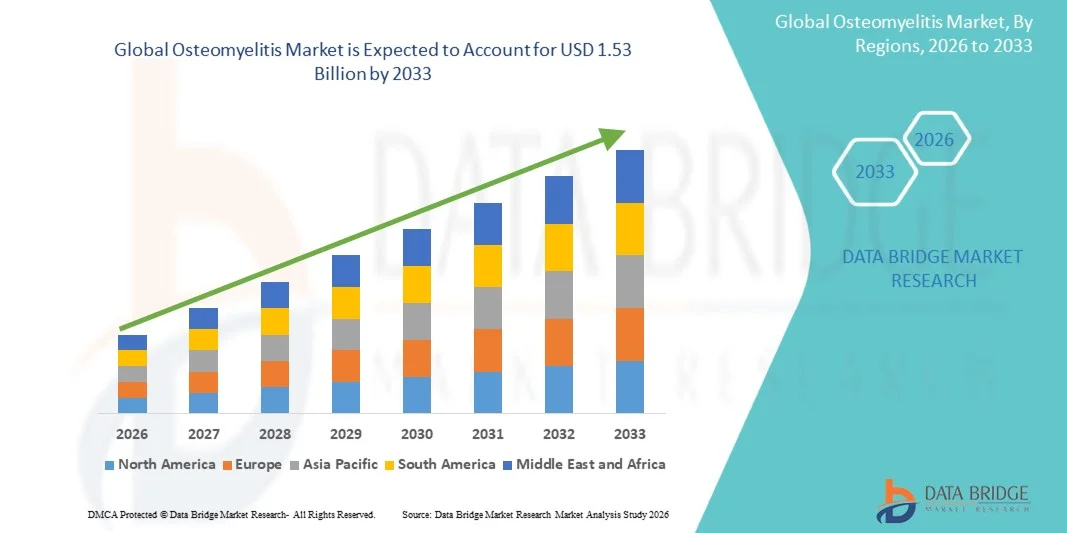
As per Data Bridge Market Research Analysis the Osteomyelitis Market was valued at USD 1.06 billion in 2025 and is projected to reach USD 1.53 billion by 2033, growing at a CAGR of 4.70% from 2026 to 2033. The market is witnessing steady growth driven by the rising prevalence of bone infections, increasing incidence of diabetic foot ulcers, trauma-related infections, and post-surgical complications, along with growing awareness regarding early diagnosis and long-term infection management strategies.
The increasing burden of chronic diseases such as diabetes and peripheral vascular disorders, combined with a growing aging population, is significantly contributing to the incidence of osteomyelitis worldwide. In addition, advancements in diagnostic imaging techniques, microbiological testing, and targeted antibiotic therapies are improving treatment outcomes and supporting market expansion. Hospitals and specialty clinics are increasingly adopting multidisciplinary treatment approaches that combine surgical debridement with long-term antimicrobial therapy, thereby improving patient recovery rates and reducing recurrence.
Key Market Trends & Insights
- North America dominated the Osteomyelitis Market with the largest revenue share of 38.40% in 2025, supported by advanced healthcare infrastructure, high diabetes prevalence, strong hospital networks, and widespread adoption of advanced diagnostic imaging and antimicrobial therapies.
- The Medullary Osteomyelitis segment led the market with a 50.55% share in 2025, driven by its high prevalence in long bone infections and frequent association with hematogenous spread.
- Asia-Pacific is expected to be the fastest-growing region at a CAGR of 6.0% from 2026 to 2033, fueled by rising diabetes burden, improving healthcare access, expanding hospital infrastructure, and growing awareness of early infection diagnosis in countries such as China and India.
- Superficial Osteomyelitis are the fastest-growing type, projected to register a CAGR of 5.3%, reflecting the surge in rising cases of diabetic foot ulcers and soft tissue infections progressing to bone involvement.
- The Antibiotics segment dominated the treatment category with a 60.65% revenue share in 2025, led by the antimicrobial therapy remains the first-line treatment for both acute and chronic osteomyelitis.
- Adults accounted for 70.75% of the market, preferred by the higher incidence of diabetes, trauma-related infections, and post-surgical complications in the adult population.
- The Surgery segment is the fastest-growing treatment category, with a CAGR of 6.5%, driven by increasing need for debridement, bone removal, and reconstructive procedures in severe and chronic cases.
Market Size & Forecast
- Global Market Value (2025): USD 1.06 Billion
- Expected Market Value (2033): USD 1.53 Billion
- Forecast CAGR (2026–2033): 4.70%
- Leading Region in 2025: North America
- Fastest Growing Region: Asia Pacific
Report Scope and Osteomyelitis Market Segmentation
|
Attributes |
Osteomyelitis Key Market Insights |
|
Segments Covered |
|
|
Countries Covered |
North America · U.S. · Canada · Mexico Europe · Germany · France · U.K. · Netherlands · Switzerland · Belgium · Russia · Italy · Spain · Turkey · Rest of Europe Asia-Pacific · China · Japan · India · South Korea · Singapore · Malaysia · Australia · Thailand · Indonesia · Philippines · Rest of Asia-Pacific Middle East and Africa · Saudi Arabia · U.A.E. · South Africa · Egypt · Israel · Rest of Middle East and Africa South America · Brazil · Argentina · Rest of South America |
|
Key Market Players |
· Pfizer Inc. (U.S.) · Merck & Co., Inc. (U.S.) · Johnson & Johnson Services, Inc. (U.S.) · Bristol-Myers Squibb Company (U.S.) · AbbVie Inc. (U.S.) · Gilead Sciences, Inc. (U.S.) · Abbott (U.S.) · BD (U.S.) · Stryker (U.S.) · Zimmer Biomet (U.S.) · Smith & Nephew plc (U.K.) · GSK plc (U.K.) · AstraZeneca (U.K.) · Sanofi (France) · Roche Holding AG (Switzerland) · Novartis AG (Switzerland) · Bayer AG (Germany) · B. Braun SE Germany) · Teva Pharmaceutical Industries Ltd. (Israel) · Fresenius Kabi AG (Germany) |
|
Market Opportunities |
· Growing demand for advanced biomarker-based and molecular diagnostic tools · Rising adoption of localized drug delivery systems such as antibiotic-loaded bone cement and biodegradable implants · Expansion of outpatient and home-based intravenous antibiotic therapy programs |
|
Value Added Data Infosets |
In addition to the insights on market scenarios such as market value, growth rate, segmentation, geographical coverage, and major players, the market reports curated by the Data Bridge Market Research also include in-depth expert analysis, patient epidemiology, pipeline analysis, pricing analysis, and regulatory framework. |
What is the Key Trend in the Osteomyelitis Market ?
Trend: Growth in Advanced Diagnostic Imaging & Molecular Testing Adoption
Healthcare systems are increasingly adopting MRI, CT, and molecular diagnostic techniques for early and accurate detection of osteomyelitis, improving identification of bone involvement and infection severity. The integration of advanced imaging with microbiological culture and biomarker-based testing is enhancing diagnostic precision and enabling faster treatment initiation, particularly in chronic and post-surgical infection cases. Hospitals and diagnostic centers are increasingly shifting toward early-stage detection protocols to reduce complications and long-term hospitalization burden. For instance, hospitals are using MRI-based protocols combined with CRP and ESR biomarker testing to detect early-stage diabetic foot osteomyelitis in high-risk patients.
Osteomyelitis Market Dynamics
Key Market Driver: Rising Prevalence of Diabetes-Related Bone Infections
The growing global burden of diabetes and associated complications such as diabetic foot ulcers is significantly increasing the incidence of osteomyelitis cases worldwide. This is further supported by rising geriatric populations, higher rates of orthopedic surgeries, and increased susceptibility to post-traumatic bone infections, all of which are driving demand for long-term antimicrobial and surgical treatment solutions. Healthcare providers are increasingly focusing on integrated care pathways combining antibiotics and surgical debridement to improve clinical outcomes. For instance, diabetic patients undergoing foot ulcer management often require prolonged intravenous antibiotic therapy combined with surgical debridement to prevent progression into chronic osteomyelitis.
Key Restraint/Challenge: Long Treatment Duration and Antibiotic Resistance Issues
A major challenge in the Osteomyelitis Market is the prolonged treatment duration required for effective infection control, often involving weeks to months of intravenous antibiotics and repeated surgical interventions. This is further complicated by the rising incidence of antibiotic-resistant bacterial strains, which reduces treatment effectiveness and increases healthcare costs. Limited patient adherence to long-term therapy and repeated hospital visits also negatively impact treatment success rates, particularly in resource-constrained healthcare systems.
For instance, methicillin-resistant Staphylococcus aureus (MRSA)-related osteomyelitis cases often require extended hospital stays and combination antibiotic regimens due to reduced drug responsiveness.
Key Market Opportunity: Advancements in Localized Drug Delivery and Bone Regeneration Therapies
The development of localized antibiotic delivery systems and regenerative bone therapies presents a significant growth opportunity in the osteomyelitis market. Technologies such as antibiotic-loaded bone cement, biodegradable scaffolds, and bioactive implants are improving targeted infection control while supporting bone regeneration. In addition, increasing research into stem cell-based therapies and bioengineered bone grafts is expected to enhance recovery outcomes and reduce recurrence rates in severe infection cases.
For instance, orthopedic surgeons are increasingly using antibiotic-impregnated calcium sulfate beads during surgical debridement procedures to deliver high local drug concentrations directly at the infection site.
How is the Osteomyelitis Market Segmented ?
The osteomyelitis market is segmented on the basis of type, treatment, patient type, end-users, and distribution channel.
- By Type
On the basis of type, the Osteomyelitis Market is segmented into medullary osteomyelitis, superficial osteomyelitis, and others. The Medullary Osteomyelitis segment dominated the market, accounting for a significant share of 50.55% in 2025, due to its high prevalence in long bone infections and frequent association with hematogenous spread. This form is commonly observed in both pediatric and adult populations, particularly in cases involving bloodstream infections. Increasing incidence of post-traumatic and post-surgical bone infections is further reinforcing its dominance. Hospitals prefer aggressive antibiotic and surgical management for medullary cases due to deeper bone involvement. Rising use of MRI-based early detection techniques is improving diagnosis rates for this segment. The complexity and severity of medullary infections continue to drive higher treatment demand compared to other types.
The Superficial Osteomyelitis segment is expected to be the fastest growing, registering a CAGR of 5.3% from 2026 to 2033, driven by rising cases of diabetic foot ulcers and soft tissue infections progressing to bone involvement. This type is increasingly detected in outpatient and wound care settings due to improved screening protocols. Growing diabetic population and peripheral vascular disease burden are key contributing factors. Early-stage detection and outpatient treatment options are supporting faster diagnosis and intervention. Increasing adoption of advanced wound care therapies is improving clinical identification rates. Expanding homecare monitoring and follow-up care services are further supporting segment growth.
- By Treatment
On the basis of treatment, the market is segmented into antibiotics, surgery, and others. The Antibiotics segment dominated the market, holding 60.65% share in 2025, as antimicrobial therapy remains the first-line treatment for both acute and chronic osteomyelitis. Long-term intravenous and oral antibiotic regimens are widely used to control infection and prevent recurrence. Increasing prevalence of bacterial infections such as Staphylococcus aureus is reinforcing dependency on antibiotic-based treatment. Hospitals frequently combine antibiotics with surgical debridement for better outcomes. Advancements in targeted and combination antibiotic therapies are improving treatment effectiveness. Despite resistance concerns, antibiotics remain the backbone of osteomyelitis management globally.
The Surgery segment is expected to be the fastest growing, registering a CAGR of 6.5% from 2026 to 2033, driven by increasing need for debridement, bone removal, and reconstructive procedures in severe and chronic cases. Rising antibiotic resistance is pushing greater reliance on surgical intervention. Growing number of orthopedic procedures and post-traumatic infections is further supporting demand. Hospitals are increasingly adopting minimally invasive surgical techniques to reduce recovery time. Improved surgical tools and imaging guidance are enhancing precision in infection removal. Combination of surgery with local antibiotic delivery systems is expanding clinical adoption.
- By Patient Type
On the basis of patient type, the market is segmented into adults and pediatrics. The Adults segment dominated the market, accounting for 70.75% share in 2025, primarily due to higher incidence of diabetes, trauma-related infections, and post-surgical complications in the adult population. Age-related decline in immunity and higher exposure to orthopedic procedures contribute significantly to infection risk. Adults undergoing joint replacements and fracture repairs are highly susceptible to chronic osteomyelitis. Increasing prevalence of lifestyle diseases is further strengthening this segment. Hospitals manage a large proportion of adult cases requiring long-term antibiotic therapy. Continuous rise in geriatric population is also supporting sustained dominance.
The Pediatrics segment is expected to be the fastest growing, registering a CAGR of 5.0% from 2026 to 2033, driven by rising incidence of hematogenous osteomyelitis in children. Improved pediatric diagnostics and early infection detection are increasing reported cases. Greater awareness among parents and healthcare providers is supporting timely treatment initiation. Pediatric cases often require specialized care pathways, increasing hospital-based management. Advances in imaging techniques are improving early detection in children. Rising focus on pediatric orthopedic care is further supporting segment expansion.
- By End-Users
On the basis of end-users, the market is segmented into hospitals, homecare, specialty clinics, and others. The Hospitals segment dominated the market, holding 55.60% share in 2025, due to availability of advanced diagnostic tools, surgical facilities, and intravenous antibiotic administration capabilities. Most severe and chronic osteomyelitis cases require inpatient care and multidisciplinary treatment approaches. Hospitals also manage post-surgical infections and trauma-related bone infections. Availability of skilled orthopedic surgeons and infectious disease specialists supports dominance. High patient inflow and emergency care services further strengthen this segment. Integration of imaging, microbiology, and surgical departments enhances treatment efficiency.
The Homecare segment is expected to be the fastest growing, registering a CAGR of 6.0% from 2026 to 2033, driven by increasing adoption of long-term intravenous antibiotic therapy at home. Rising healthcare costs are encouraging shift from hospital-based to home-based care models. Portable infusion devices and remote monitoring technologies are supporting this transition. Patients prefer homecare due to comfort and reduced hospitalization burden. Expanding post-acute care services are improving treatment continuity. Healthcare systems are increasingly supporting outpatient antimicrobial therapy programs.
- By Distribution Channel
On the basis of distribution channel, the market is segmented into hospital pharmacy, online pharmacy, and retail pharmacy. The Hospital Pharmacy segment dominated the market, accounting for 65.70% share in 2025, due to the high volume of inpatient treatments requiring intravenous antibiotics and surgical care. Most prescriptions for severe osteomyelitis are fulfilled directly within hospital settings. Hospitals ensure controlled drug dispensing and adherence to treatment protocols. Availability of specialized antimicrobial drugs further strengthens this channel. Integration with inpatient care systems ensures timely medication supply. Continuous monitoring of drug administration supports clinical effectiveness.
The Online Pharmacy segment is expected to be the fastest growing, registering a CAGR of 7.5% from 2026 to 2033, driven by increasing digitalization of healthcare and rising demand for home-based treatment support. Patients undergoing long-term antibiotic therapy are increasingly relying on online platforms for medication refills. Expansion of e-pharmacy regulations and logistics networks is supporting accessibility. Growing adoption of telemedicine is further strengthening online prescription fulfillment. Convenience, cost savings, and doorstep delivery are key growth drivers. Increasing smartphone penetration is also accelerating adoption in both urban and semi-urban regions.
Which Region Holds the Largest Share of the Osteomyelitis Market ?
North America dominated the Osteomyelitis Market with the largest revenue share of 38.40% in 2025, supported by advanced healthcare infrastructure, high diabetes prevalence, strong hospital networks, and widespread adoption of advanced diagnostic imaging and antimicrobial therapies. The region also benefits from well-established hospital networks, high awareness of early infection diagnosis, and widespread availability of MRI, CT, and molecular testing facilities. Increasing incidence of orthopedic surgeries and post-operative infections further strengthens market demand. Strong reimbursement frameworks and rapid adoption of advanced antimicrobial therapies continue to reinforce North America’s leadership position in the global market.
U.S. Osteomyelitis Market Insight
The U.S. osteomyelitis market is experiencing significant growth due to a high burden of diabetes, obesity, and post-surgical bone infections, which are major risk factors for chronic osteomyelitis. The country’s advanced healthcare infrastructure, strong hospital network, and widespread availability of cutting-edge diagnostic technologies are supporting early disease detection and effective treatment. Increasing use of long-term intravenous antibiotic therapies and advanced surgical interventions is further driving market demand. In addition, strong clinical research activity and rapid adoption of innovative infection management protocols are reinforcing the country’s leadership in the Osteomyelitis Market.
Europe Osteomyelitis Market Insight
The Europe osteomyelitis market remains a major contributor to global revenue, driven by advanced healthcare systems, strong infection control policies, and high adoption of standardized treatment guidelines. The region benefits from increasing use of advanced imaging technologies and multidisciplinary care approaches combining surgery and long-term antibiotic therapy. Growing prevalence of diabetes and aging population is further contributing to higher disease burden. In addition, strong hospital infrastructure and focus on early diagnosis and antimicrobial stewardship are supporting sustained market growth across Europe.
U.K. Osteomyelitis Market Insight
The U.K. osteomyelitis market is experiencing steady growth, supported by well-structured public healthcare services, rising cases of diabetic foot infections, and increasing adoption of advanced diagnostic imaging. Hospitals and specialty clinics are increasingly using MRI-based early detection methods to improve treatment outcomes. Growing emphasis on reducing hospital-acquired infections and improving surgical care standards is also contributing to market demand. Furthermore, integration of advanced antibiotic protocols and improved post-surgical care pathways is enhancing overall disease management in the country.
Germany Osteomyelitis Market Insight
The Germany osteomyelitis market is expanding steadily due to the country’s strong clinical research base, advanced orthopedic care infrastructure, and high adoption of precision diagnostic technologies. Increasing prevalence of post-surgical infections and trauma-related bone infections is driving demand for effective long-term treatment strategies. Hospitals are increasingly focusing on combined surgical and antibiotic approaches to improve patient outcomes. Continuous advancements in imaging systems and infection control practices, along with strong healthcare funding, are further supporting market growth in Germany.
Asia-Pacific Osteomyelitis Market Insight
The Asia-Pacific osteomyelitis market is expected to witness rapid growth, driven by rising diabetes prevalence, improving healthcare infrastructure, and increasing awareness of bone infection management in countries such as China, India, and Japan. Expanding access to diagnostic facilities and growing hospital investments are supporting early disease detection. Rising adoption of advanced antibiotic therapies and surgical procedures is further strengthening regional market growth. In addition, increasing healthcare expenditure and expanding rural healthcare access are accelerating treatment adoption across the region.
Japan Osteomyelitis Market Insight
The Japan osteomyelitis market is witnessing consistent growth due to rising geriatric population, increasing orthopedic procedures, and strong focus on advanced medical technologies. Hospitals and research institutions are increasingly adopting high-precision imaging and microbiological testing for early diagnosis. The country’s emphasis on infection control and advanced wound care management is further supporting treatment efficiency. In addition, integration of advanced surgical techniques and long-term antibiotic regimens is enhancing clinical outcomes in complex osteomyelitis cases.
China Osteomyelitis Market Insight
The China osteomyelitis market is growing rapidly, driven by rising incidence of diabetes-related complications, expanding hospital infrastructure, and increasing access to advanced diagnostic tools. Growing awareness of chronic bone infections and improved healthcare insurance coverage are supporting higher treatment adoption. Hospitals are increasingly adopting combined surgical and antibiotic treatment approaches to manage severe cases. In addition, rapid urbanization, expanding elderly population, and continuous improvements in medical technology are positioning China as one of the fastest-growing osteomyelitis markets globally.
Which are the Top Companies in Osteomyelitis Market ?
The osteomyelitis industry is primarily led by well-established companies, including:
- Pfizer Inc. (U.S.)
- Merck & Co., Inc. (U.S.)
- Johnson & Johnson Services, Inc. (U.S.)
- Bristol-Myers Squibb Company (U.S.)
- AbbVie Inc. (U.S.)
- Gilead Sciences, Inc. (U.S.)
- Abbott (U.S.)
- BD (U.S.)
- Stryker (U.S.)
- Zimmer Biomet (U.S.)
- Smith & Nephew plc (U.K.)
- GSK plc (U.K.)
- AstraZeneca (U.K.)
- Sanofi (France)
- Roche Holding AG (Switzerland)
- Novartis AG (Switzerland)
- Bayer AG (Germany)
- Braun SE Germany)
- Teva Pharmaceutical Industries Ltd. (Israel)
- Fresenius Kabi AG (Germany)
What are Latest Developments in Osteomyelitis Market ?
- In February 2025, the U.S. FDA supported expanded use of novel antibiotics for multidrug-resistant Gram-negative infections impacting bone and joint infection management. The approval and expansion of advanced antibiotic combinations are strengthening treatment options for complex osteomyelitis cases, particularly in patients who show poor response to conventional therapies due to antimicrobial resistance. These developments are improving clinical outcomes in severe bone infections and supporting the adoption of combination antibiotic regimens in hospitals. The move also reflects the growing global focus on combating resistant pathogens in deep tissue infections such as osteomyelitis
- In April 2024, Pfizer and AbbVie received EU approval for Emblaveo (aztreonam-avibactam) for multidrug-resistant infections. This approval introduced a significant advancement in the treatment of complicated Gram-negative bacterial infections, which are increasingly linked to severe and refractory osteomyelitis cases. The therapy provides an important option for patients with limited treatment alternatives and enhances hospital protocols for managing resistant infections. Its introduction strengthens the antimicrobial pipeline for severe bone-related infections
- In April 2023, clinical practice trends increasingly shifted toward oral antibiotic therapy for bone and joint infections including osteomyelitis. Healthcare systems began adopting early transition protocols from intravenous to oral antibiotics for stable patients, reducing hospital stay duration and lowering treatment costs. This approach is supported by growing clinical evidence demonstrating comparable effectiveness in selected osteomyelitis cases. It is also contributing to the expansion of outpatient antimicrobial therapy programs and improving patient convenience
- In August 2021, the Pediatric Infectious Diseases Society (PIDS) and Infectious Diseases Society of America (IDSA) released joint guidelines for pediatric osteomyelitis management. These guidelines standardized the diagnosis and treatment approach for acute hematogenous osteomyelitis in children, emphasizing early imaging, microbiological testing, and timely antibiotic therapy. They also supported transition from intravenous to oral antibiotics after clinical improvement. This has significantly influenced pediatric infection management practices worldwide
- In June 2021, increasing adoption of antibiotic-loaded bone cement improved surgical outcomes in osteomyelitis management. Orthopedic surgeons increasingly utilized antibiotic-loaded cement in revision surgeries and chronic infection cases to deliver high local antibiotic concentrations directly at infection sites. This approach reduced systemic toxicity while improving infection control in complex bone reconstruction procedures. It continues to play a key role in managing post-surgical and chronic osteomyelitis cases globally

- Interactive Data Analysis Dashboard
- Company Analysis Dashboard for high growth potential opportunities
- Research Analyst Access for customization & queries
- Competitor Analysis with Interactive dashboard
- Latest News, Updates & Trend analysis
- Harness the Power of Benchmark Analysis for Comprehensive Competitor Tracking
Data collection and base year analysis are done using data collection modules with large sample sizes. The stage includes obtaining market information or related data through various sources and strategies. It includes examining and planning all the data acquired from the past in advance. It likewise envelops the examination of information inconsistencies seen across different information sources. The market data is analysed and estimated using market statistical and coherent models. Also, market share analysis and key trend analysis are the major success factors in the market report. To know more, please request an analyst call or drop down your inquiry.
The key research methodology used by DBMR research team is data triangulation which involves data mining, analysis of the impact of data variables on the market and primary (industry expert) validation. Data models include Vendor Positioning Grid, Market Time Line Analysis, Market Overview and Guide, Company Positioning Grid, Patent Analysis, Pricing Analysis, Company Market Share Analysis, Standards of Measurement, Global versus Regional and Vendor Share Analysis. To know more about the research methodology, drop in an inquiry to speak to our industry experts.
Data Bridge Market Research is a leader in advanced formative research. We take pride in servicing our existing and new customers with data and analysis that match and suits their goal. The report can be customized to include price trend analysis of target brands understanding the market for additional countries (ask for the list of countries), clinical trial results data, literature review, refurbished market and product base analysis. Market analysis of target competitors can be analyzed from technology-based analysis to market portfolio strategies. We can add as many competitors that you require data about in the format and data style you are looking for. Our team of analysts can also provide you data in crude raw excel files pivot tables (Fact book) or can assist you in creating presentations from the data sets available in the report.












