



Global Amusement Parks Market, By Type (Theme Park, Water Park, and Amusement Arcades), Rides (Mechanical Rides, Water Rides, and Others), Gender (Female and Male), Age Group (Up to 18 Years, 19-35 Years, 36-50 Years, 51-65 Years, and More than 65 Years), Revenue Sources (Ticket, Food & Beverages, Hotels/Resorts, Merchandise and Others) - Industry Trends and Forecast to 2031.
Amusement Parks Market Analysis and Insights
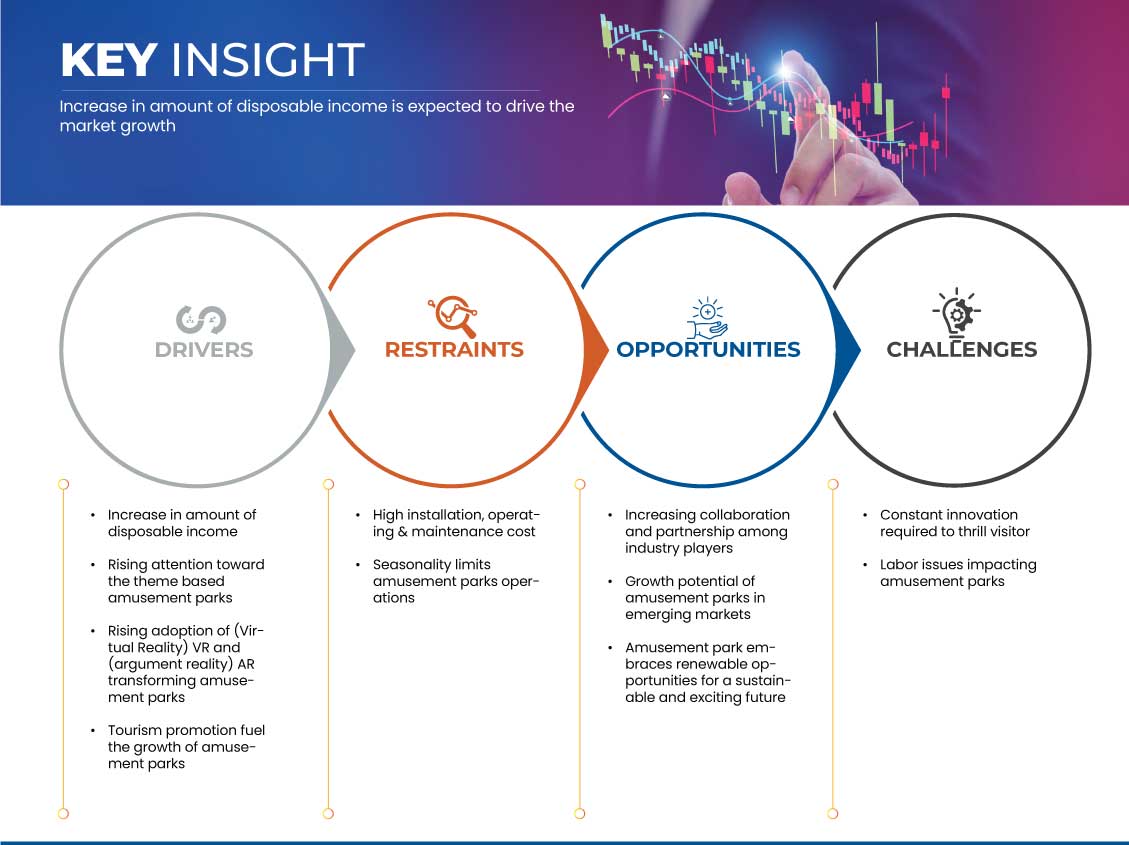
The global amusement parks market is experiencing robust growth, driven by an increase in the amount of disposable income. In addition, there is rising attention toward theme-based amusement parks. One notable opportunity within this landscape is the increasing collaboration and partnership among market players. However, high installation, operating, and maintenance costs are hampering the market growth.
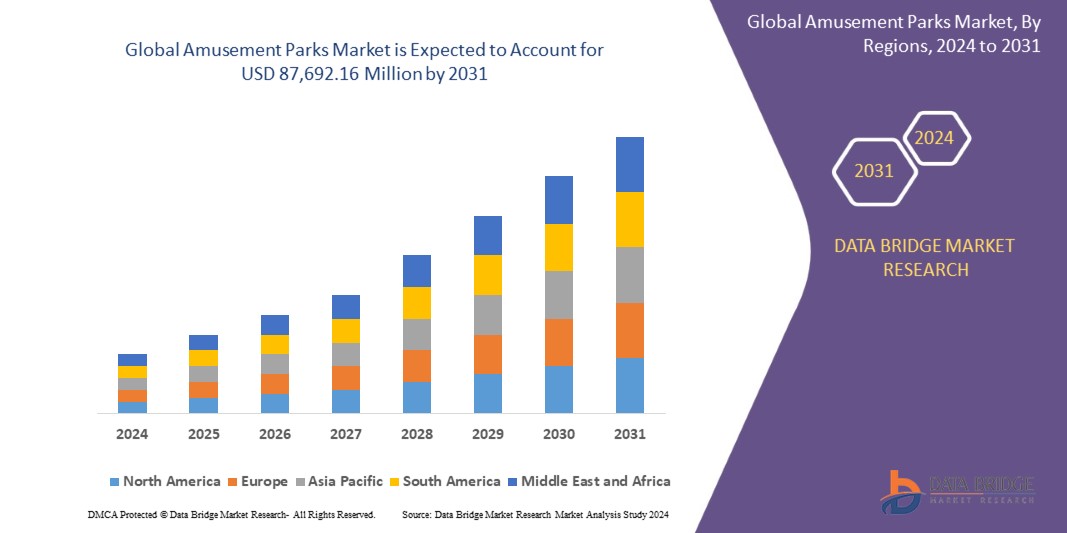
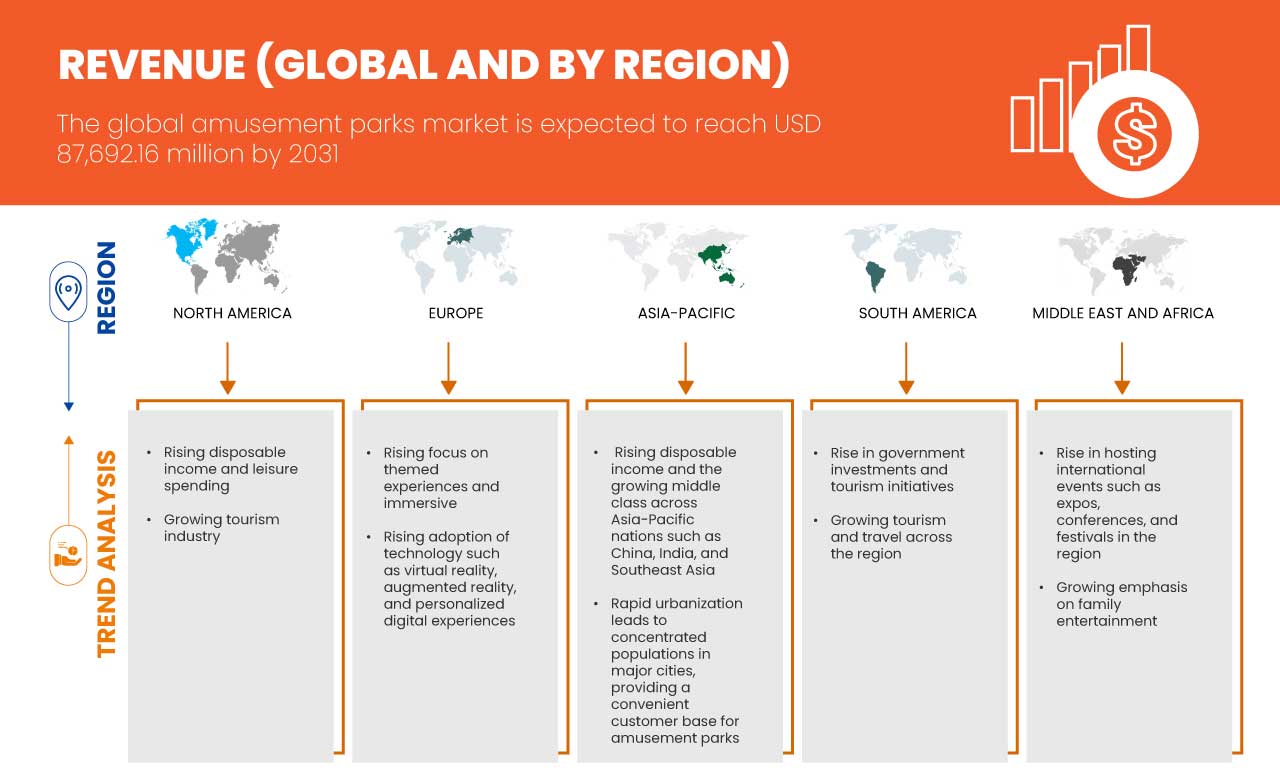
Data Bridge Market Research analyzes that the global amusement parks market is expected to reach USD 87,692.16 million by 2031 from USD 63,593.26 million in 2023, growing with a substantial CAGR of 4.1% in the forecast period of 2024 to 2031.
|
Report Metric |
Details |
|
Forecast Period |
2024 to 2031 |
|
Base Year |
2023 |
|
Historic Years |
2022 (Customizable to 2016–2021) |
|
Quantitative Units |
Revenue in USD Million |
|
Segments Covered |
Type (Theme Park, Water Park, and Amusement Arcades), Rides (Mechanical Rides, Water Rides, and Others), Gender (Female and Male), Age Group (Up to 18 Years, 19-35 Years, 36-50 Years, 51-65 Years, and More than 65 Years), Revenue Sources (Ticket, Food & Beverages, Hotels/Resorts, Merchandise and Others) |
|
Countries Covered |
U.S., Canada, Mexico, Germany, U.K., France, Italy, Spain, Russia, Netherlands, Switzerland, Belgium, Turkey, Rest of Europe, China, Japan, India, Australia & New Zealand, South Korea, Indonesia, Philippines, Thailand, Malaysia, Singapore, Rest of Asia-Pacific, Brazil, Argentina, Rest of South America, South Africa, Saudi Arabia, U.A.E., Egypt, Israel, and Rest of Middle East and Africa |
|
Market Players Covered |
Disney, Universal Studios, Merlin Entertainments, SeaWorld Parks & Entertainment, Inc, Cedar Fair Entertainment Company, Six Flags Entertainment Corporation, The Lego Group, Samsung C&T Corporation (Everland), LOTTEWORLD, Universal Studios Singapore a Subsidiary of (Universal Studios), Universal Beijing Resort, IMG Worlds of Adventure, Coast Entertainment Holdings Limited, NAGASHIMA RESORT, Universal Studios Hollywood a Subsidiary of (Universal Studios), Universal Studios Japan a Subsidiary of (Universal Studios), Hong Kong Disneyland (a Subsidiary of Disney), Shanghai Disney Resort (a Subsidiary of Disney), Tokyo Disneyland (a Subsidiary of Disney), Tokyo DisneySea (a Subsidiary of Disney), and Walt Disney World Theme Magic Kingdom (a Subsidiary of Disney) among others |
Global Amusement Parks Market Definition
The amusement parks refer to the collective industry encompassing a diverse array of entertainment venues and attractions designed to provide recreational experiences for visitors. These parks typically feature a combination of thrilling rides, themed areas, shows, and various amenities, creating an immersive and entertaining environment. Traditional amusement parks drive the market and include water parks, theme parks, and family entertainment centers. Its scope extends across regions, catering to a broad demographic ranging from children and families to thrill-seekers and tourists.
Global Amusement Parks Market Dynamics
This section deals with understanding the market drivers, opportunities, restraints, and challenges. All of this is discussed in detail below:
Drivers
- Increase in Amount of Disposable Income
The growing per capita income increases the disposable income of consumers, which is expected to drive the market’s current boom, changing the dynamics of the sector as of this phenomenon, customers are spending a greater percentage of their income on leisure and entertainment. The surge in disposable income has led to an increase in the number of visitors to amusement parks and influenced consumer behavior in these places. The positive correlation between rising disposable income and heightened attendance rates at amusement parks is undeniable. Thus, an increase in the amount of disposable income drives market growth.
- Rising Attention Toward the Theme Based Amusement Parks
Amusement parks have long been a source of joy and entertainment for people of all ages, offering various attractions and activities. In recent years, the market has experienced a significant surge in the popularity of theme parks, which serves as a significant driver.
The rise of theme entertainment is reshaping the market landscape, making it imperative for industry players to embrace thematic elements to stay relevant and competitive. Amusement park theme-based attractions are driving the market growth as this phenomenon, and customers are spending a greater percentage of their income on leisure and entertainment.
Opportunity
- Increasing Collaboration and Partnership Among Industry Players
The market has witnessed remarkable growth in recent years, fueled by an increasing demand for immersive entertainment experiences. Collaboration and partnership among industry players emerge as a strategic opportunity for sustained growth and innovation as the industry continues to evolve.
Collaboration and partnership among industry players represent a golden opportunity for the market. Companies can navigate the challenges of the evolving entertainment landscape, drive innovation, and create immersive experiences that capture the hearts and minds of audiences worldwide by leveraging each other's strengths and resources. Hence, increasing collaboration and partnership among market players is expected to create an opportunity for market growth.
Restraints/Challenges
- High Installation, Operating, & Maintenance Cost
Amusement parks offer thrill rides, immersive experiences, and family-friendly attractions and have been an integral part of the entertainment industry, drawing millions of visitors each year. However, amidst their popularity, the industry faces significant restraints in high installation, operating, and maintenance costs. This restraint impacts the growth and sustainability of the market. Establishing an amusement park involves substantial initial investment, primarily driven by the cost of acquiring land, constructing infrastructure, and installing attractions. Creating innovative, high-tech rides and themed environments further amplifies these expenses.
- Constant Innovation is Required to Thrill Visitor
The market is a vibrant, constantly changing sector that serves millions of tourists annually with entertainment. Since humans have a habit of losing interest in things after repletion, this creates a significant challenge for amusement park operators. Constant innovation is not just a choice but a necessity to captivate and thrill visitors to stay ahead in this competitive market.
Amusement parks face particular difficulties because of our innate desire for variety and excitement. Something that might excite people now might not be so exciting tomorrow, which would make people less interested in visiting, resulting in decreased footfall and the growing impact of technology along with shifting customer preferences make this problem worse.
Recent Developments
- In December 2023, Disney Cruise Line inaugurated a new cruise terminal at Port Everglades. Additionally, the company revealed new community investments in Junior Achievement South Florida and Boys & Girls Clubs of Broward County. These strategic collaborations underline the significance of community partners, such as Disney Cruise Line, in empowering today's youth. Their support extends beyond financial contributions, representing an investment in the next generation. The Collaboration also opens avenues for Disney Cruise Line cast and crew, on land and at sea, to volunteer as mentors and engage with local students through educational programs
- In November 2023, Disney unveiled its 'Zootopia' themed land in China last December. The new attraction, featuring rides and restaurants, is part of Disney's USD 60 billion investment in global theme parks and resorts. The move aims to capitalize on China's growing appetite for domestic travel. Among the highlights is the thrilling 'Hot Pursuit' ride, where visitors join Officer Judy Hopps and Nick Wilde on a police chase to rescue kidnapped pop star Gazelle at Shanghai Disneyland Resort
Global Amusement Parks Market Scope
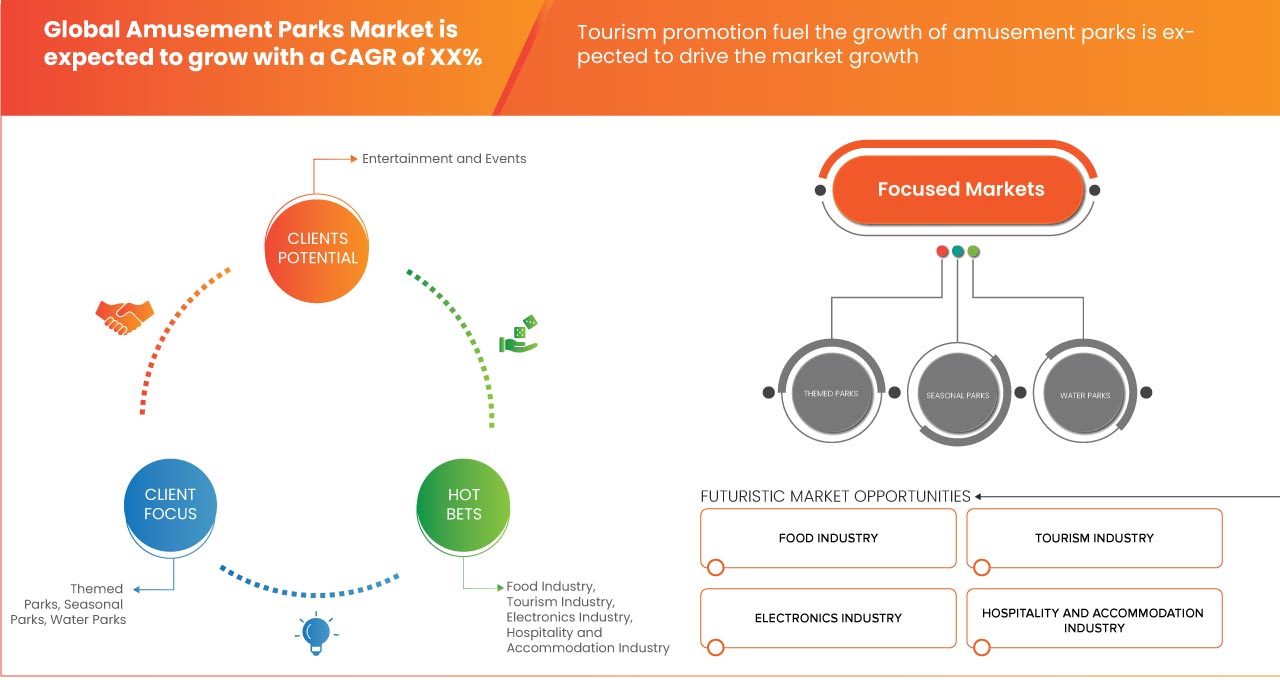
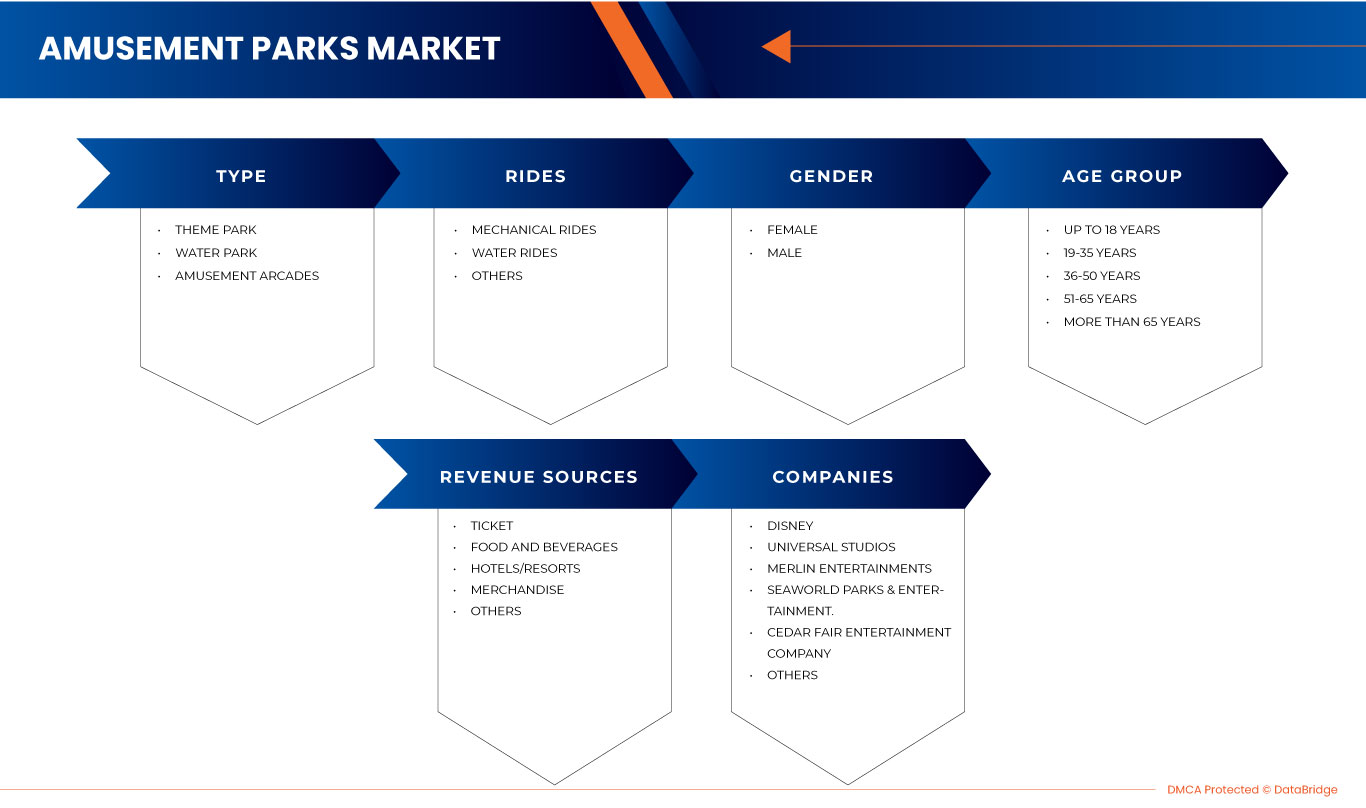
The global amusement parks market is segmented into five notable segments, which are on the basis of type, rides, gender, age group, and revenue sources. The growth among segments helps you analyze niche pockets of growth and strategies to approach the market and determine your core application areas and the differences in your target markets.
Type
- Theme Park
- Water Park
- Amusement Arcades
On the basis of type, the market is segmented into theme park, water park, and amusement arcades.
Rides
- Mechanical Rides
- Water Rides
- Others
On the basis of rides, the market is segmented into mechanical rides, water rides, and others.
Gender
- Female
- Male
On the basis of gender, the market is segmented into female and male.
Age Group
- Up to 18 Years
- 19-35 Years
- 36-50 Years
- 51-65 Years
- More than 65 Years
On the basis of age group, the market is segmented into up to 18 years,19-35 years, 36-50 years, 51-65 years, and more than 65 years.
Revenue Sources
- Ticket
- Food & Beverages
- Hotels/Resorts
- Merchandise
- Others
On the basis of revenue sources, the market is segmented into ticket, food & beverages, hotels/resorts, merchandise, and others.
Global Amusement Parks Market: Regional Analysis/Insights
The global amusement parks market is segmented into five notable segments, which are on the basis of type, rides, gender, age group, and revenue sources.
The countries covered in this market report are U.S., Canada, Mexico, Germany, U.K., France, Italy, Spain, Russia, Netherlands, Switzerland, Belgium, Turkey, Rest of Europe, China, Japan, India, Australia & New Zealand, South Korea, Indonesia, Philippines, Thailand, Malaysia, Singapore, Rest of Asia-Pacific, Brazil, Argentina, Rest of South America, South Africa, Saudi Arabia, U.A.E., Egypt, Israel, and Rest of Middle East and Africa.
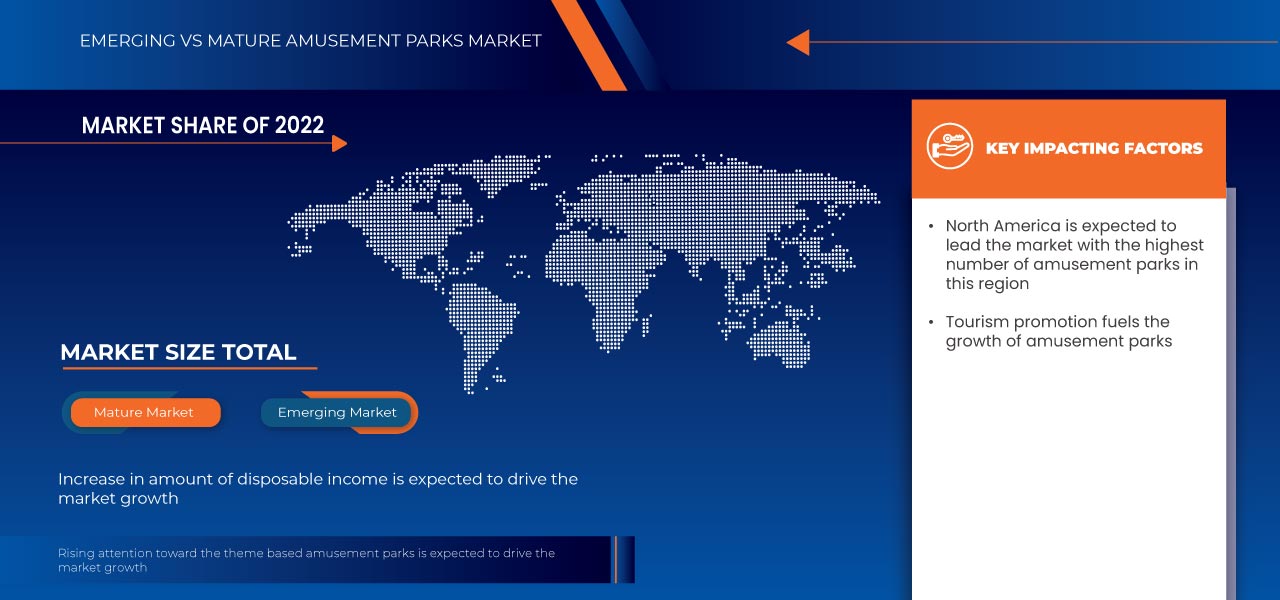
The U.S. is expected to dominate in the North America region due to high disposable income, long family car trips and iconic theme parks built by industry giants. France is expected to dominate in the Europe region due to the early adoption and cultural embrace of theme parks and its focus on immersive storytelling and world-building. China is expected to dominate the Asia-Pacific region due to China's massive population and rising middle class fueling an exploding demand for leisure experiences such as theme parks and government support through infrastructure investment and favorable.
The country section of the report also provides individual market-impacting factors and changes in regulation in the market domestically that impact the current and future trends of the market. Data points such as new sales, replacement sales, country demographics, regulatory acts, and import-export tariffs are some of the major pointers used to forecast the market scenario for individual countries. Also, the presence and availability of global brands and their challenges faced due to large or scarce competition from local and global brands and the impact of sales channels are considered while providing forecast analysis of the country data.
Competitive Landscape and Share Analysis: Global Amusement Parks Market
The global amusement parks market competitive landscape provides details of competitors. Details included are company overview, company financials, revenue generated, market potential, investment in R&D, new market initiatives, production sites and facilities, company strengths and weaknesses, product launch, product approvals, product width and breadth, application dominance, and product type lifeline curve. The above data points provided are only related to the company’s focus on the market.
Some of the major players operating in the market are Disney, Universal Studios, Merlin Entertainments, SeaWorld Parks & Entertainment, Inc, Cedar Fair Entertainment Company, Six Flags Entertainment Corporation, The Lego Group, Samsung C&T Corporation (Everland), LOTTEWORLD, Universal Studios Singapore a Subsidiary of (Universal Studios), Universal Beijing Resort, IMG Worlds of Adventure, Coast Entertainment Holdings Limited, NAGASHIMA RESORT, Universal Studios Hollywood a Subsidiary of (Universal Studios), Universal Studios Japan a Subsidiary of (Universal Studios), Hong Kong Disneyland (a Subsidiary of Disney), Shanghai Disney Resort (a Subsidiary of Disney), Tokyo Disneyland (a Subsidiary of Disney), Tokyo DisneySea (a Subsidiary of Disney), and Walt Disney World Theme Magic Kingdom (a Subsidiary of Disney) among others.
SKU-
Obtenha acesso online ao relatório sobre a primeira nuvem de inteligência de mercado do mundo

- Painel interativo de análise de dados
- Painel de análise da empresa para oportunidades de elevado potencial de crescimento
- Acesso de analista de pesquisa para personalização e customização. consultas
- Análise da concorrência com painel interativo
- Últimas notícias, atualizações e atualizações Análise de tendências
- Aproveite o poder da análise de benchmark para um rastreio abrangente da concorrência
Metodologia de Investigação
A recolha de dados e a análise do ano base são feitas através de módulos de recolha de dados com amostras grandes. A etapa inclui a obtenção de informações de mercado ou dados relacionados através de diversas fontes e estratégias. Inclui examinar e planear antecipadamente todos os dados adquiridos no passado. Da mesma forma, envolve o exame de inconsistências de informação observadas em diferentes fontes de informação. Os dados de mercado são analisados e estimados utilizando modelos estatísticos e coerentes de mercado. Além disso, a análise da quota de mercado e a análise das principais tendências são os principais fatores de sucesso no relatório de mercado. Para saber mais, solicite uma chamada de analista ou abra a sua consulta.
A principal metodologia de investigação utilizada pela equipa de investigação do DBMR é a triangulação de dados que envolve a mineração de dados, a análise do impacto das variáveis de dados no mercado e a validação primária (especialista do setor). Os modelos de dados incluem grelha de posicionamento de fornecedores, análise da linha de tempo do mercado, visão geral e guia de mercado, grelha de posicionamento da empresa, análise de patentes, análise de preços, análise da quota de mercado da empresa, normas de medição, análise global versus regional e de participação dos fornecedores. Para saber mais sobre a metodologia de investigação, faça uma consulta para falar com os nossos especialistas do setor.
Personalização disponível
A Data Bridge Market Research é líder em investigação formativa avançada. Orgulhamo-nos de servir os nossos clientes novos e existentes com dados e análises que correspondem e atendem aos seus objetivos. O relatório pode ser personalizado para incluir análise de tendências de preços de marcas-alvo, compreensão do mercado para países adicionais (solicite a lista de países), dados de resultados de ensaios clínicos, revisão de literatura, mercado remodelado e análise de base de produtos . A análise de mercado dos concorrentes-alvo pode ser analisada desde análises baseadas em tecnologia até estratégias de carteira de mercado. Podemos adicionar quantos concorrentes necessitar de dados no formato e estilo de dados que procura. A nossa equipa de analistas também pode fornecer dados em tabelas dinâmicas de ficheiros Excel em bruto (livro de factos) ou pode ajudá-lo a criar apresentações a partir dos conjuntos de dados disponíveis no relatório.











