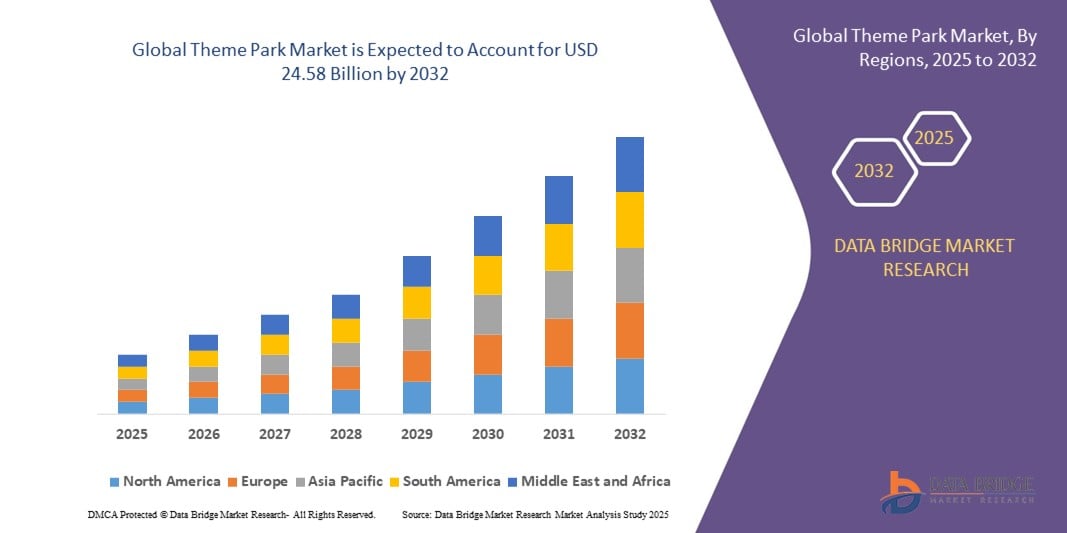
Theme Park Market Size
- The global theme park market size was valued at USD 17.55 billion in 2024 and is expected to reach USD 24.58 billion by 2032, at a CAGR of 4.3% during the forecast period
- The market growth is largely fueled by increasing consumer demand for entertainment and leisure experiences, supported by rising disposable incomes, urbanization, and growing domestic and international tourism
- Furthermore, investments in immersive attractions, advanced ride technologies, and themed entertainment experiences are enhancing visitor engagement and repeat attendance. These factors are accelerating the development of new parks and expansions, thereby significantly boosting the industry’s growth
Theme Park Market Analysis
- Theme parks are recreational destinations offering rides, shows, themed environments, and immersive experiences for families, children, and tourists. They integrate entertainment, hospitality, and retail services, creating multi-faceted revenue streams for operators
- The escalating demand for theme parks is primarily driven by the growing popularity of branded and culturally themed attractions, technological advancements in rides and experiences, and an increasing preference for family-oriented leisure activities
- North America dominated theme park market with a share of 37.4% in 2024, due to high consumer spending on leisure and entertainment, coupled with the presence of globally renowned theme parks
- Asia-Pacific is expected to be the fastest growing region in the theme park market during the forecast period due to rapid urbanization, rising disposable incomes, and expanding middle-class populations in countries such as China, Japan, and India
- Mechanical rides segment dominated the market with a market share of 47% in 2024, due to the widespread popularity of roller coasters, carousels, and thrill rides that cater to a broad audience. Mechanical rides are often considered the centerpiece attractions, drawing large visitor crowds and generating significant ticket revenue. Their continuous innovation in design and technology ensures repeat visits, while their ability to appeal to both children and adults further strengthens their market position. Parks prioritize mechanical rides for their scalability, safety enhancements, and adaptability to different park layouts, making them a core driver of overall revenue
Report Scope and Theme Park Market Segmentation
|
Attributes |
Theme Park Key Market Insights |
|
Segments Covered |
|
|
Countries Covered |
North America
Europe
Asia-Pacific
Middle East and Africa
South America
|
|
Key Market Players |
|
|
Market Opportunities |
|
|
Value Added Data Infosets |
In addition to the insights on market scenarios such as market value, growth rate, segmentation, geographical coverage, and major players, the market reports curated by the Data Bridge Market Research also include in-depth expert analysis, pricing analysis, brand share analysis, consumer survey, demography analysis, supply chain analysis, value chain analysis, raw material/consumables overview, vendor selection criteria, PESTLE Analysis, Porter Analysis, and regulatory framework. |
Theme Park Market Trends
Rising Popularity of Immersive and Themed Experiences
- Increasing consumer demand for immersive, story-driven, and highly themed attractions is transforming theme parks into experiential destinations that blend technology, entertainment, and storytelling to enhance visitor engagement and satisfaction
- For instance, major operators such as Disney Parks & Resorts, Universal Studios, and Merlin Entertainments are investing heavily in immersive attractions featuring augmented reality (AR), virtual reality (VR), animatronics, and interactive rides that create personalized and memorable guest experiences
- Growth in intellectual property (IP)-based themed areas leveraging popular movies, franchises, and cultural icons drives attendance and brand loyalty
- Expansion of nighttime spectaculars, parades, and live shows with thematic narratives supports extended visitor stays and increased spending
- Increased integration of mobile apps and wearable technologies enhances visitor navigation, customization, and queuing experiences, fostering seamless interaction with thematic elements
- Rising emphasis on sustainability and "green" theme park operations encourages design innovations that deliver immersive experiences while reducing environmental impact
Theme Park Market Dynamics
Driver
Rising Attention Toward the Theme-Based Amusement Parks
- Growing consumer preference for comprehensive, narrative-rich entertainment options is boosting demand for theme-based amusement parks that offer cohesive storytelling, branded experiences, and themed environments beyond traditional rides
- For instance, emerging markets in Asia-Pacific and the Middle East are developing large-scale themed parks such as Shanghai Disneyland and Dubai Parks and Resorts to attract regional and international tourists, supported by partnerships with global entertainment companies
- Expansion of family-oriented and multi-generational entertainment formats drives development of attractions that appeal to diverse age groups and interests
- Marketing efforts highlight unique themed experiences as primary differentiators to increase park visitation and guest loyalty
- Increased investments in themed hospitality, dining, and retail venues augment overall park ecosystem revenues. Cross-promotional strategies with media franchises and merchandise create synergistic brand amplification and enhance immersion
Restraint/Challenge
High Installation, Operating, and Maintenance Cost
- The substantial capital expenditure required for the design, installation, and upkeep of immersive themed attractions presents key barriers, particularly for smaller or mid-sized parks aiming to compete with global leaders
- For instance, costly investment in cutting-edge technology, specialized labor, and frequent maintenance of complex ride systems escalate operational expenses and impact profitability
- Energy consumption, staffing, and safety compliance add ongoing financial pressures to theme park operators
- Economic volatility and shifting consumer spending patterns may delay new project launches or reduce discretionary visits, affecting revenue streams needed to sustain high operating costs
- Competition for skilled technical talent and maintenance personnel exacerbates operational challenges and may increase labor costs. Long development lead times and risk of technological obsolescence introduce financial uncertainty and planning complexities for park owners
Theme Park Market Scope
The market is segmented on the basis of rides, gender, age group, and revenue sources.
- By Rides
On the basis of rides, the theme park market is segmented into mechanical rides, water rides, and others. The mechanical rides segment dominated the largest market revenue share of 47% in 2024, driven by the widespread popularity of roller coasters, carousels, and thrill rides that cater to a broad audience. Mechanical rides are often considered the centerpiece attractions, drawing large visitor crowds and generating significant ticket revenue. Their continuous innovation in design and technology ensures repeat visits, while their ability to appeal to both children and adults further strengthens their market position. Parks prioritize mechanical rides for their scalability, safety enhancements, and adaptability to different park layouts, making them a core driver of overall revenue.
The water rides segment is anticipated to witness the fastest growth rate from 2025 to 2032, fueled by increasing investments in themed water parks and resorts. Water rides offer interactive, family-friendly experiences and provide relief in hot climates, enhancing visitor satisfaction. The growing popularity of multi-sensory experiences and immersive water attractions is attracting both domestic and international tourists. Water rides also contribute to higher per-visitor spending on food, beverages, and souvenirs, creating additional revenue streams for operators.
- By Gender
On the basis of gender, the theme park market is segmented into female and male visitors. The male segment dominated the largest market share in 2024, primarily due to higher participation in thrill-based rides and adventure-oriented attractions. Male visitors are often the primary audience for roller coasters, simulators, and other high-intensity experiences, which contribute to increased ticket sales and longer park dwell times. Theme parks often design specialized promotions, competitions, and exclusive experiences targeting male demographics, reinforcing their dominance. Marketing campaigns highlighting adrenaline, adventure, and technological innovation further boost male engagement and repeat visits.
The female segment is expected to witness the fastest CAGR from 2025 to 2032, driven by the rising inclusion of family-friendly rides, themed attractions, and immersive experiences appealing to women. Increased safety measures, convenience-focused amenities, and curated experiences for group visits are encouraging more female participation. Parks are also introducing interactive shows, shopping zones, and wellness-focused areas to attract female visitors, which boosts ancillary revenue through food, merchandise, and photography services.
- By Age Group
On the basis of age group, the theme park market is segmented into up to 18 years, 19–35 years, 36–50 years, 51–65 years, and more than 65 years. The up to 18 years segment dominated the largest market share in 2024, driven by a high engagement with rides, games, and interactive attractions targeted at children and teenagers. Parents often plan family visits around children’s preferences, which increases attendance and overall revenue. The segment benefits from birthday packages, educational tours, and themed experiences, making parks a preferred recreational choice. Marketing campaigns, loyalty programs, and school tie-ups further strengthen this age group’s dominance in attendance and revenue.
The 19–35 years segment is anticipated to witness the fastest growth from 2025 to 2032, fueled by growing interest in adventure rides, VR experiences, nightlife events, and themed entertainment zones. Young adults often spend more on premium experiences, dining, and merchandise, contributing to higher per capita revenue. The influence of social media, travel trends, and group tourism is increasing participation in this age group, encouraging parks to design experiences specifically targeting millennials and Gen Z
- By Revenue Sources
On the basis of revenue sources, the theme park market is segmented into ticket, food & beverages, hotels/resorts, merchandise, and others. The ticket segment dominated the largest market revenue share in 2024, as admission fees form the primary revenue stream for theme parks worldwide. Ticket sales are influenced by ride popularity, seasonal promotions, and bundled packages, ensuring a stable and recurring income base. Parks also leverage dynamic pricing, special passes, and membership models to maximize ticket revenue. High-quality rides and immersive experiences directly impact ticket demand, making it the most critical source of revenue for operators.
The hotels/resorts segment is expected to witness the fastest growth rate from 2025 to 2032, driven by the increasing adoption of integrated resort and entertainment destinations. On-site hotels encourage multi-day visits and higher spending on food, merchandise, and premium experiences. Growing international tourism and domestic leisure travel are boosting demand for themed accommodations linked to park experiences. Luxury amenities, package deals, and family-friendly resorts are enhancing visitor engagement, making lodging a rapidly expanding revenue segment.
Theme Park Market Regional Analysis
- North America dominated the theme park market with the largest revenue share of 37.4% in 2024, driven by high consumer spending on leisure and entertainment, coupled with the presence of globally renowned theme parks
- Visitors in the region highly value immersive experiences, advanced ride technologies, and themed attractions, which continue to boost attendance levels
- This dominance is further reinforced by strong tourism inflows, rising disposable incomes, and the integration of digital technologies such as mobile ticketing and virtual reality, establishing North America as a leading hub for theme park entertainment
U.S. Theme Park Market Insight
The U.S. theme park market captured the largest revenue share in 2024 within North America, fueled by the concentration of top global operators such as Disney, Universal, and Six Flags. The growing popularity of seasonal events, branded attractions, and immersive storytelling has been instrumental in attracting repeat visitors. Strong domestic tourism, combined with increasing international arrivals, continues to strengthen the market. Moreover, strategic investments in advanced ride technologies and large-scale expansions are further propelling the U.S. theme park industry.
Europe Theme Park Market Insight
The Europe theme park market is projected to expand at a substantial CAGR during the forecast period, primarily driven by a rich mix of historic cultural attractions and modern entertainment parks. Growing urban tourism, coupled with rising family-oriented travel, is fueling market growth. European consumers are drawn to immersive experiences, themed resorts, and seasonal festivities offered by leading parks. The region is witnessing growth across both established destinations such as Disneyland Paris and newer attractions, with investments in sustainable and eco-friendly park developments gaining traction.
U.K. Theme Park Market Insight
The U.K. theme park market is anticipated to grow at a noteworthy CAGR during the forecast period, driven by rising domestic tourism and family leisure activities. Concerns around affordability have encouraged parks to adopt flexible pricing, seasonal passes, and bundled experiences to attract a wider consumer base. The presence of globally recognized parks such as Alton Towers and Legoland Windsor, along with continuous investment in ride upgrades and immersive experiences, is set to sustain market growth in the U.K.
Germany Theme Park Market Insight
The Germany theme park market is expected to expand at a considerable CAGR during the forecast period, fueled by strong consumer demand for leisure and a preference for innovative attractions. Germany’s emphasis on engineering excellence and sustainability is reflected in its theme parks, which focus on advanced rides and environmentally conscious operations. Parks such as Europa-Park continue to attract international visitors, supported by the country’s robust travel infrastructure and reputation for high-quality experiences.
Asia-Pacific Theme Park Market Insight
The Asia-Pacific theme park market is poised to grow at the fastest CAGR from 2025 to 2032, driven by rapid urbanization, rising disposable incomes, and expanding middle-class populations in countries such as China, Japan, and India. Government-backed tourism initiatives and heavy investments from global operators are fueling growth across the region. The increasing appeal of large-scale entertainment destinations and family-friendly attractions is propelling demand, while APAC’s role as a hub for new park developments enhances accessibility for wider audiences.
Japan Theme Park Market Insight
The Japan theme park market is gaining momentum due to the country’s strong tourism industry, advanced technology adoption, and cultural preference for entertainment experiences. High attendance at parks such as Tokyo Disneyland and Universal Studios Japan highlights strong consumer demand. Integration of digital ticketing, AI-driven guest management, and themed collaborations with global franchises are enhancing market growth. In addition, Japan’s aging population is expected to increase demand for accessible, family-oriented entertainment experiences.
China Theme Park Market Insight
The China theme park market accounted for the largest revenue share in Asia-Pacific in 2024, supported by the country’s growing middle class, rising urbanization, and booming domestic tourism. With leading parks such as Shanghai Disney Resort and Chimelong Paradise, China is emerging as a global theme park powerhouse. The rapid expansion of domestic operators, government investments in tourism, and rising demand for family leisure activities are fueling strong market momentum. Furthermore, the popularity of branded attractions and integration with retail and hospitality offerings continue to strengthen China’s leadership in the APAC theme park industry.
Theme Park Market Share
The theme park industry is primarily led by well-established companies, including:
- Cedar Fair Entertainment Company (U.S.)
- Universal Studios (U.S.)
- Disney (U.S.)
- Comcast (U.S.)
- Chimelong Group Co., Ltd. (China)
- Ardent Leisure Group Limited (Australia)
- Fantawild Holdings Inc. (China)
- IMG Worlds of Adventure (U.A.E.)
- Merlin Entertainments (U.K.)
- SeaWorld Parks & Entertainment, Inc. (U.S.)
- Warner Media, LLC. (U.S.)
Latest Developments in Global Theme Park Market
- In May 2025, The Walt Disney Company partnered with Miral to develop a flagship Disney theme park resort on Yas Island, Abu Dhabi. This development is set to strengthen Disney’s presence in the Middle East, tapping into the growing regional demand for large-scale, immersive entertainment experiences. The resort’s blend of Disney characters and local cultural elements is expected to attract visitors from the Middle East, India, Africa, Asia, and Europe, boosting tourism and contributing significantly to the regional theme park market
- In May 2024, Qiddiya Investment Company announced the launch of its first water-themed amusement park, Aquarabia, in Saudi Arabia. This expansion marks a key milestone in the country’s entertainment and leisure industry, offering diverse attractions that cater to both domestic and international visitors. The park is anticipated to enhance Saudi Arabia’s theme park market, driving visitor footfall, increasing revenue from leisure activities, and supporting the broader vision of developing large-scale entertainment destinations
- In May 2024, Merlin Entertainments partnered with SignLive to provide video interpreting services across all its amusement parks in the U.K. This initiative improves accessibility for deaf and hard-of-hearing visitors, enhancing the inclusivity and appeal of Merlin’s parks. By addressing accessibility needs, Merlin strengthens customer satisfaction, broadens its audience base, and reinforces its market position as a socially responsible operator in the U.K. theme park industry
- In October 2024, Fantawild Holdings Inc. opened Boonie Bears Bay in Ningbo, China, expanding the Ningbo Fantawild Tourism Resort. Centered on the popular Boonie Bears franchise, the park enhances the regional theme park market by attracting families and young audiences with interactive, themed experiences. The inclusion of innovative attractions such as the dynamic dome theater boosts engagement, increases visitor spending, and positions Fantawild as a leading player in China’s fast-growing domestic entertainment sector
- In November 2023, Disney unveiled its 'Zootopia' themed land at Shanghai Disneyland Resort, featuring new rides and restaurants. This expansion supports Disney’s strategy to capitalize on China’s rising domestic tourism and consumer appetite for immersive entertainment. Signature attractions such as the 'Hot Pursuit' ride drive higher attendance, enhance visitor experiences, and reinforce Disney’s dominance in the Chinese theme park market while encouraging repeat visits and increased ancillary spending

- Interactive Data Analysis Dashboard
- Company Analysis Dashboard for high growth potential opportunities
- Research Analyst Access for customization & queries
- Competitor Analysis with Interactive dashboard
- Latest News, Updates & Trend analysis
- Harness the Power of Benchmark Analysis for Comprehensive Competitor Tracking
Data collection and base year analysis are done using data collection modules with large sample sizes. The stage includes obtaining market information or related data through various sources and strategies. It includes examining and planning all the data acquired from the past in advance. It likewise envelops the examination of information inconsistencies seen across different information sources. The market data is analysed and estimated using market statistical and coherent models. Also, market share analysis and key trend analysis are the major success factors in the market report. To know more, please request an analyst call or drop down your inquiry.
The key research methodology used by DBMR research team is data triangulation which involves data mining, analysis of the impact of data variables on the market and primary (industry expert) validation. Data models include Vendor Positioning Grid, Market Time Line Analysis, Market Overview and Guide, Company Positioning Grid, Patent Analysis, Pricing Analysis, Company Market Share Analysis, Standards of Measurement, Global versus Regional and Vendor Share Analysis. To know more about the research methodology, drop in an inquiry to speak to our industry experts.
Data Bridge Market Research is a leader in advanced formative research. We take pride in servicing our existing and new customers with data and analysis that match and suits their goal. The report can be customized to include price trend analysis of target brands understanding the market for additional countries (ask for the list of countries), clinical trial results data, literature review, refurbished market and product base analysis. Market analysis of target competitors can be analyzed from technology-based analysis to market portfolio strategies. We can add as many competitors that you require data about in the format and data style you are looking for. Our team of analysts can also provide you data in crude raw excel files pivot tables (Fact book) or can assist you in creating presentations from the data sets available in the report.