



Segmentação do mercado global de chá azul, por produto (Folhas soltas, pó, e outros), Tipo (Convencional e Orgânico), Canal de distribuição (Off-trade e On-Trade) - Tendências da indústria e previsão para 2033
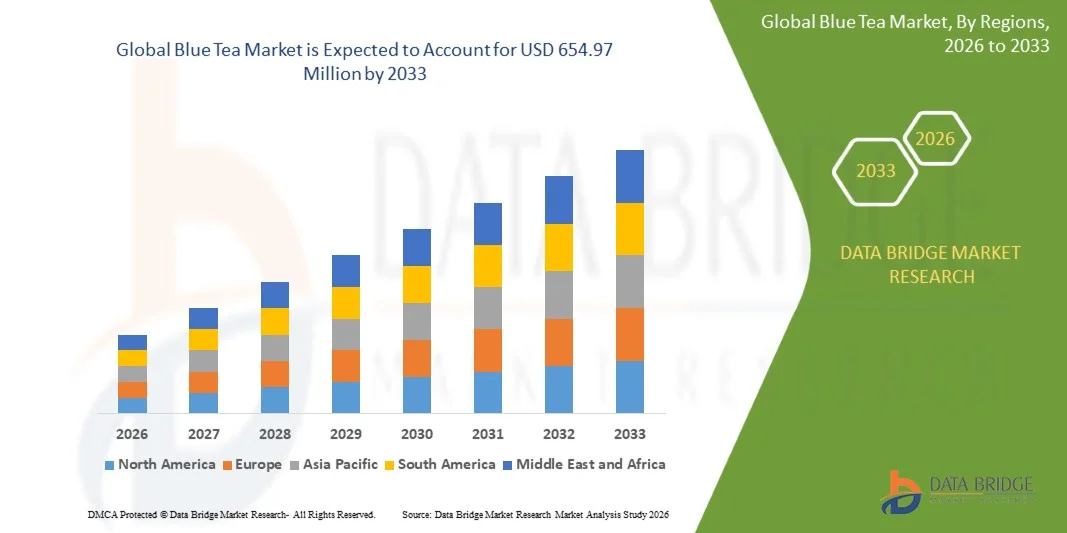
Tamanho do mercado de chá azul
- O tamanho global do mercado de chá azul foi avaliado emUSD 275,16 milhões em 2025e espera-se alcançar654,97 milhões de USD até 2033, em umaCAGR de 11,45%durante o período de previsão
- O crescimento do mercado é em grande parte impulsionado pelo aumento da consciência do consumidor sobre os benefícios de saúde e bem-estar associados com chás de ervas e funcionais, especialmente bebidas ricas em antioxidantes e sem cafeína, como chá azul
- Além disso, a crescente preferência por bebidas de rótulo limpo, naturais e visualmente atraentes, juntamente com a crescente influência das mídias sociais e as tendências de bem-estar, está acelerando a adoção de chá azul entre os canais de varejo, serviço de alimentos e bebidas especiais, apoiando assim a expansão global do mercado
Análise do mercado de chá azul
- Chá azul é uma infusão de ervas derivada principalmente de flor de ervilha borboleta, conhecido por sua cor azul natural, propriedades antioxidantes e efeitos calmantes, e é amplamente consumido como uma bebida de bem-estar em formulações tradicionais e modernas
- A crescente demanda por chá azul é apoiada principalmente pela mudança de estilo de vida dos consumidores para cuidados de saúde preventivos, aumento do interesse em ingredientes funcionais e botânicos, e ampliação da disponibilidade de chás de ervas premium através de plataformas de distribuição offline e online
- América do Norte dominado o mercado de chá azul com uma quota de 27%em 2025, devido à crescente conscientização do consumidor sobre as bebidas funcionais e ao aumento da preferência por chás naturais, ricos em antioxidantes
- Asia-Pacific é esperado para ser a região de crescimento mais rápido no mercado de chá azul durante o período de previsão, devido ao aumento da consciência de saúde, aumento de renda disponível, e uma forte tradição de consumo de chá de ervas
- O segmento de folhas soltas dominou o mercado com uma quota de mercado de 58,5% em 2025, devido à preferência do consumidor pela qualidade premium, sabor autêntico e práticas tradicionais de cerveja. Os consumidores frequentemente associam produtos de folha solta com aroma e frescura superiores, apoiando sua adoção generalizada em famílias e canais de varejo especializados
Alcance do relatório e Segmentação do mercado de chá azul
| Atributos | Blue Tea Key Market Insights |
| Segmentos Cobertos |
|
| Países abrangidos | América do Norte
Europa
Ásia- Pacífico
Médio Oriente e África
América do Sul
|
| Jogadores do mercado chave |
|
| Oportunidades de Mercado |
|
| Informações sobre o Valor Adicionado | Além dos insights sobre cenários de mercado, como valor de mercado, taxa de crescimento, segmentação, cobertura geográfica e principais atores, os relatórios de mercado curados pela Data Bridge Market Research também incluem análise de especialistas em profundidade, análise de preços, análise de compartilhamento de marca, inquérito ao consumidor, análise demografia, análise da cadeia de suprimentos, análise da cadeia de valor, visão geral da matéria-prima/consumíveis, critérios de seleção de fornecedores, Análise de PESTLE, Análise de Porter e marco regulatório. |
Tendências do mercado de chá azul
“Crescimento da Popularidade de Bebidas de Ervas Funcionais e Cor-Changing”
- Uma tendência significativa no mercado de chá azul é a crescente popularidade de bebidas herbais funcionais e visualmente distintas, impulsionado pelo crescente interesse do consumidor em bebidas de bem-estar natural com valor experiencial adicionado. Chá azul, derivado principalmente de flor de ervilha borboleta, está ganhando atenção por suas propriedades antioxidantes e sua capacidade natural de mudança de cor quando misturado com ingredientes cítricos ou ácidos, o que aumenta o engajamento do consumidor e diferenciação do produto
- Por exemplo, Teabox e Vahdam Índia introduziram produtos de chá azul à base de flor de ervilha borboleta posicionados em torno de bem-estar, ingredientes naturais e apelo visual, visando consumidores de chá consciente da saúde e premium. Estas ofertas reforçaram o posicionamento da marca, combinando benefícios funcionais à saúde com uma experiência sensorial única que apela aos consumidores de bebidas modernas
- A demanda por alternativas sem cafeína e ervas está contribuindo para a adoção de chá azul entre os consumidores que buscam relaxamento, redução de estresse e hidratação melhorada sem estimulantes. Esta tendência está reforçando o papel do chá azul dentro do segmento de chá de ervas funcional mais amplo
- Operadores de serviços alimentares e cafés estão incorporando chá azul em bebidas especiais, mocktails e bebidas de bem-estar para atrair consumidores que buscam ofertas inovadoras e amigáveis ao Instagram. Esta integração está a aumentar a visibilidade e a incentivar o ensaio demográfico entre os mais jovens
- E-commerce e plataformas de bem-estar especiais estão apoiando a expansão do mercado, promovendo chá azul como um produto de ervas premium com cor natural e atributos antioxidantes. Isso está permitindo que as marcas alcancem grupos de consumidores de nicho interessados em bebidas limpas e funcionais
- O mercado está testemunhando crescente alinhamento entre apelo visual, posicionamento de saúde e fornecimento natural, que está fortalecendo a aceitação do chá azul em categorias globais de bebidas à base de ervas. Esta convergência apoia o interesse sustentado e reforça a posição do chá azul como uma opção de bebida funcional distinta
Dinâmica do mercado de chá azul
Controlador
“Crescer o foco do consumidor na saúde, bem-estar e ingredientes naturais”
- O crescente foco do consumidor na saúde preventiva e bem-estar holístico está impulsionando a demanda de chá azul devido ao seu conteúdo antioxidante natural e benefícios percebidos para o alívio do estresse e bem-estar geral. Os consumidores procuram activamente bebidas à base de plantas feitas a partir de ingredientes à base de plantas que se alinham com as tendências do rótulo limpo e do consumo natural
- Por exemplo, a Índia Orgânica expandiu seu portfólio de chá de ervas para incluir chá de flor de ervilha borboleta, enfatizando sua origem natural e benefícios de bem-estar. Esse posicionamento ressoa com os consumidores que priorizam o abastecimento orgânico e as alegações funcionais de saúde em suas escolhas diárias de bebida
- Aumentar a consciência de aditivos artificiais e corantes sintéticos está incentivando os consumidores a preferir bebidas de cor natural, como chá azul. Sua pigmentação derivada de plantas suporta seu apelo entre as categorias de bebida limpa e naturalmente formuladas
- A crescente popularidade de chás de ervas dentro yoga, atenção plena, e bem-estar comunidades está acelerando ainda mais a adoção de chá azul. Esses segmentos de consumo associam chá azul com calma, desintoxicação e equilíbrio de estilo de vida
- A mudança sustentada para bebidas naturais e funcionais está reforçando este motorista e posicionando chá azul como uma opção preferencial para os consumidores que procuram bebidas de ervas orientadas para a saúde e visualmente atraentes
Restrição/Desafio
“Consciência limitada e restrições de preços premium”
- O mercado de chá azul enfrenta desafios relacionados à consciência limitada do consumidor, particularmente em mercados de massa onde os chás tradicionais dominam o comportamento de compra. Muitos consumidores permanecem desconhecidos com chá de flor de ervilha borboleta e seus atributos funcionais, o que restringe a adoção mais ampla
- Por exemplo, marcas como Tealyra, que oferecem chá de flor de ervilha borboleta em mercados internacionais, muitas vezes dependem de marketing educacional para explicar os benefícios do produto e uso. Este requisito aumenta os custos de comercialização e retarda a penetração em comparação com variedades de chá mais estabelecidas
- Os preços premium associados ao abastecimento orgânico, regiões de cultivo limitadas e métodos de processamento cuidadosos funcionam como uma barreira para os consumidores sensíveis aos preços. Esta lacuna de preços limita o alcance do chá azul além nicho e segmentos de consumo premium
- Limitações da cadeia de suprimentos ligadas ao cultivo de flores de ervilha borboleta pode afetar a disponibilidade consistente e estabilidade de custos. Essas restrições desafiam os fabricantes visando escalar a produção mantendo padrões de qualidade
- A combinação de baixa conscientização e posicionamento de preços mais elevados continua a conter o rápido crescimento do mercado, criando pressão sobre os fabricantes para equilibrar educação, acessibilidade e eficiência de custos para expandir a adoção do consumidor
Escopo do mercado de chá azul
O mercado é segmentado com base no produto, tipo e canal de distribuição.
• Por Produto
Com base no produto, o mercado é segmentado em folhas soltas, pó e outros. O segmento de folhas soltas representou a maior quota de receita de mercado de 58,5% em 2025, impulsionada pela forte preferência do consumidor pela qualidade premium, sabor autêntico e práticas tradicionais de cerveja. Os consumidores frequentemente associam produtos de folhas soltas com aroma e frescura superiores, apoiando sua adoção generalizada em famílias e canais de varejo especializados.
Espera-se que o segmento de pó testemunhe um crescimento mais rápido ao longo do período de previsão, apoiado pela sua conveniência, maior prazo de validade e adequação para preparação instantânea. Os formatos em pó são cada vez mais preferidos nos padrões de consumo urbano e em curso, enquanto os outros segmentos mantêm a demanda constante através de nichos e ofertas de produtos misturados.
• Por tipo
Com base no tipo, o mercado é segmentado em convencional e orgânico. O segmento convencional dominou a quota de receita de mercado, atribuída à sua ampla disponibilidade, custo-eficácia e cadeias de abastecimento estabelecidas nas principais regiões produtoras. Os produtos convencionais continuam a ter uma forte procura devido à qualidade e acessibilidade consistentes nos canais de distribuição de massa.
O segmento orgânico é projetado para registrar um crescimento significativo durante o período de previsão, impulsionado pelo aumento da consciência do consumidor sobre a saúde, sustentabilidade e práticas de cultivo sem químicos. A crescente preferência por produtos orgânicos certificados apoia a expansão da adoção deste segmento em grupos de consumidores premium e focados na saúde.
• Por Canal de Distribuição
Com base no canal de distribuição, o mercado é segmentado em off-trade e no-trade. O segmento off-trade detinha a maior quota de receita, apoiada por vendas fortes através de supermercados, lojas especializadas e plataformas de varejo online. Os consumidores favorecem canais off-trade para variedade de produtos, comparação de preços e facilidade de acesso, contribuindo para sua posição dominante.
O segmento on-trade é esperado para experimentar um crescimento constante ao longo do período de previsão, impulsionado pelo aumento do consumo entre cafés, restaurantes e ambientes de hospitalidade. O aumento do foco no consumo experiencial e ofertas premium continua a apoiar a demanda através de canais de comércio.
Análise regional do mercado de chá azul
- América do Norte dominou o mercado de chá azul com a maior parte de receita de 27% em 2025, impulsionado pela crescente consciência do consumidor de bebidas funcionais e crescente preferência por chás naturais, ricos em antioxidantes
- Os consumidores da região valorizam fortemente os benefícios para a saúde do chá azul, incluindo alívio do estresse, bem-estar cognitivo e posicionamento de rótulo limpo, alinhando-se com a mudança mais ampla para hábitos alimentares focados no bem-estar
- Esta demanda é ainda apoiada por altos rendimentos disponíveis, forte penetração de marcas de chá especiais, e crescente disponibilidade de chás de ervas premium em todos os canais de varejo e on-line, posicionando chá azul como uma escolha popular entre consumidores conscientes da saúde
U.S. Blue Tea Market Insight
O mercado de chá azul dos EUA representou a maior parte de receita na América do Norte em 2025, apoiado pela crescente popularidade de chás de ervas e botânicos entre millennials e consumidores focados no bem-estar. Aumentar o interesse em bebidas naturais e antioxidantes está incentivando a adoção de chá azul em famílias e cafés. A expansão de marcas de chá especiais, forte penetração no comércio eletrônico, e a conscientização orientada pelas mídias sociais em torno de bebidas que mudam de cor estão acelerando ainda mais o crescimento do mercado nos EUA.
Europa Blue Tea Market Insight
O mercado europeu de chá azul é projetado para crescer em um CAGR estável durante o período de previsão, impulsionado pela forte demanda por bebidas orgânicas, sem cafeína, e funcionais. A crescente consciência de saúde, juntamente com uma cultura bem estabelecida de beber chá, apoia a adoção de chá azul em toda a região. Os consumidores europeus estão cada vez mais inclinados para chás de ervas premium e eticamente fontes, aumentando as vendas através de lojas de especialidade e plataformas on-line.
U.K. Blue Tea Market Insight
O mercado de chá azul do Reino Unido é esperado para testemunhar um crescimento notável ao longo do período de previsão, impulsionado pela cultura de chá de raiz profunda do país e crescente abertura para variantes de chá novo e funcional. Os consumidores estão mostrando maior interesse em bebidas orientadas para o bem-estar que oferecem apelo visual e benefícios para a saúde. A expansão de cafés especiais e redes de distribuição de varejo forte continua a apoiar o crescimento do mercado no Reino Unido.
Alemanha Blue Tea Market Insight
Prevê-se que o mercado alemão do chá azul se expanda a um considerável CAGR, apoiado pela crescente procura de bebidas orgânicas e à base de plantas. Os consumidores alemães colocam forte ênfase na qualidade, sustentabilidade e benefícios de saúde, tornando chá azul uma opção atraente dentro do segmento de chá de ervas. O crescimento é ainda incentivado pelo aumento da disponibilidade através de lojas de alimentos saudáveis e canais de varejo premium.
Ásia-Pacífico Blue Tea Market Insight
O mercado de chá azul Ásia-Pacífico é esperado para crescer no CAGR mais rápido durante o período de previsão, impulsionado pelo aumento da consciência de saúde, aumento de renda disponível, e uma forte tradição de consumo de chá de ervas. A rápida urbanização e o crescente interesse em bebidas funcionais em países como China, Japão e Índia estão acelerando a adoção do mercado. A região também se beneficia da disponibilidade local de flor de ervilha borboleta, apoiando a acessibilidade do produto e a acessibilidade.
Japão Blue Tea Market Insight
O mercado de chá azul do Japão está ganhando tração devido à forte preferência do país por bebidas funcionais e esteticamente atraentes. Os consumidores japoneses valorizam as propriedades calmantes e antioxidantes do chá azul, alinhando-se às práticas tradicionais de bem-estar. A integração do chá azul em cafés, formatos prontos para beber e embalagens premium está apoiando ainda mais a expansão do mercado.
China Blue Tea Market Insight
O mercado de chá azul da China manteve a maior parte de receita na Ásia Pacífico em 2025, impulsionado pela crescente demanda por ingredientes tradicionais à base de plantas combinadas com tendências modernas de bem-estar. A grande base de consumo do país, o aumento dos rendimentos disponíveis e o forte ecossistema de comércio electrónico estão a facilitar a adopção generalizada de chá azul. O crescente interesse em produtos naturais de saúde e bebidas visualmente distintas continua a impulsionar o crescimento do mercado nos centros urbanos.
Blue Tea Market Share
A indústria do chá azul é liderada principalmente por empresas bem estabelecidas, incluindo:
- Numi Organic Tea (EUA)
- Chá de Salgueiro Azul (EUA)
- Chá Sancha (Índia)
- Asheville Tea Company (EUA)
- Chá Octavius (Índia)
- Lake Missoula Tea Company (EUA)
- Rishi Tea & Botanicals (EUA)
- Empresa Yum Cha Tea (Austrália)
- Chá Bigelow (EUA)
- Noble Roots Urban Garden LLC (EUA)
- Chá azul (Índia)
- The Hale Tea Company (EUA)
- Tucson Tea Company (EUA)
- Companhia de Chá Revival (EUA)
Mais recentes desenvolvimentos no mercado global de chá azul
- Em outubro de 2024, Bigelow Tea expandiu seu portfólio de ervas, introduzindo dois chás de flor de ervilha borboleta sem cafeína, Sapphire Bay e Vanilla Midnight, fortalecendo sua presença no segmento de chá funcional e visualmente atraente. Este lançamento apoia o crescimento do mercado, aumentando a exposição do consumidor a chás de ervas que mudam de cor, reforçando a demanda por ingredientes de origem ética através de parcerias com fazendas de mulheres na Tailândia
- Em outubro de 2024, Octavius lançou Butterfly Blue Flower Tea, marcando um movimento estratégico para capitalizar o crescente interesse do consumidor em bebidas ricas em antioxidantes e de alívio de estresse. Esta introdução melhora o mercado de chá azul na Índia, alinhar o posicionamento do chá premium com tendências de consumo focadas no bem-estar e rotinas de saúde diárias
- Em maio de 2024, Numi Organic Tea introduziu sua linha de chá de suplemento de ervas relaxante e regenerado com flor de ervilha borboleta dentro de sua gama de chá Damiana, reforçando a convergência de chás de ervas e suplementação funcional. Este desenvolvimento apoia a expansão do mercado, posicionando chá azul como um produto de melhoria de bem-estar apoiado por credenciais de compras orgânicas e de comércio justo
- Em março de 2023, a Rishi’s Sparkling Botanicals lançou Blue Tea Jasmine, uma bebida espumante pronta para beber infundida com flor de ervilha borboleta, ampliando as aplicações de chá azul além dos formatos tradicionais de cerveja. Transformação vibrante da cor do produto e fornecimento de ingredientes premium ajudou a estimular o interesse em chá azul dentro do segmento funcional de bebidas RTD
- Em março de 2023, a Sparkling Botanicals by Rishi apresentou Blue Tea Jasmine na Natural Products Expo West, aumentando a visibilidade do chá azul entre varejistas e consumidores focados na saúde. Esta introdução desempenhou um papel na aceleração da consciência do mercado, destacando o apelo estético do chá azul, o fornecimento natural e a versatilidade em formulações de bebidas inovadoras
SKU-
Obtenha acesso online ao relatório sobre a primeira nuvem de inteligência de mercado do mundo

- Painel interativo de análise de dados
- Painel de análise da empresa para oportunidades de elevado potencial de crescimento
- Acesso de analista de pesquisa para personalização e customização. consultas
- Análise da concorrência com painel interativo
- Últimas notícias, atualizações e atualizações Análise de tendências
- Aproveite o poder da análise de benchmark para um rastreio abrangente da concorrência
Metodologia de Investigação
A recolha de dados e a análise do ano base são feitas através de módulos de recolha de dados com amostras grandes. A etapa inclui a obtenção de informações de mercado ou dados relacionados através de diversas fontes e estratégias. Inclui examinar e planear antecipadamente todos os dados adquiridos no passado. Da mesma forma, envolve o exame de inconsistências de informação observadas em diferentes fontes de informação. Os dados de mercado são analisados e estimados utilizando modelos estatísticos e coerentes de mercado. Além disso, a análise da quota de mercado e a análise das principais tendências são os principais fatores de sucesso no relatório de mercado. Para saber mais, solicite uma chamada de analista ou abra a sua consulta.
A principal metodologia de investigação utilizada pela equipa de investigação do DBMR é a triangulação de dados que envolve a mineração de dados, a análise do impacto das variáveis de dados no mercado e a validação primária (especialista do setor). Os modelos de dados incluem grelha de posicionamento de fornecedores, análise da linha de tempo do mercado, visão geral e guia de mercado, grelha de posicionamento da empresa, análise de patentes, análise de preços, análise da quota de mercado da empresa, normas de medição, análise global versus regional e de participação dos fornecedores. Para saber mais sobre a metodologia de investigação, faça uma consulta para falar com os nossos especialistas do setor.
Personalização disponível
A Data Bridge Market Research é líder em investigação formativa avançada. Orgulhamo-nos de servir os nossos clientes novos e existentes com dados e análises que correspondem e atendem aos seus objetivos. O relatório pode ser personalizado para incluir análise de tendências de preços de marcas-alvo, compreensão do mercado para países adicionais (solicite a lista de países), dados de resultados de ensaios clínicos, revisão de literatura, mercado remodelado e análise de base de produtos . A análise de mercado dos concorrentes-alvo pode ser analisada desde análises baseadas em tecnologia até estratégias de carteira de mercado. Podemos adicionar quantos concorrentes necessitar de dados no formato e estilo de dados que procura. A nossa equipa de analistas também pode fornecer dados em tabelas dinâmicas de ficheiros Excel em bruto (livro de factos) ou pode ajudá-lo a criar apresentações a partir dos conjuntos de dados disponíveis no relatório.











