


Segmentação Global do Mercado de Fibra Eco, Por Tipo (Organic, Manmade/Regenerado, Reciclado, Natural), Fonte (Pele de Animais, Celulose de Plantas, Outros), Produto (Fibra de Liocélulas, Fibra de Ácido Poliláctico, Fibra de Soja, Fibra de Proteínas Regeneradas, Fibra de Bambu), Indústria de Uso Final (Textiles, Domicílios e Furnishing, Indústria Manufacturing, Médico, Automóvel, Outros) - Tendências e Previsão da Indústria para 2033
Qual é o tamanho e a taxa de crescimento do mercado de fibras ecológicas
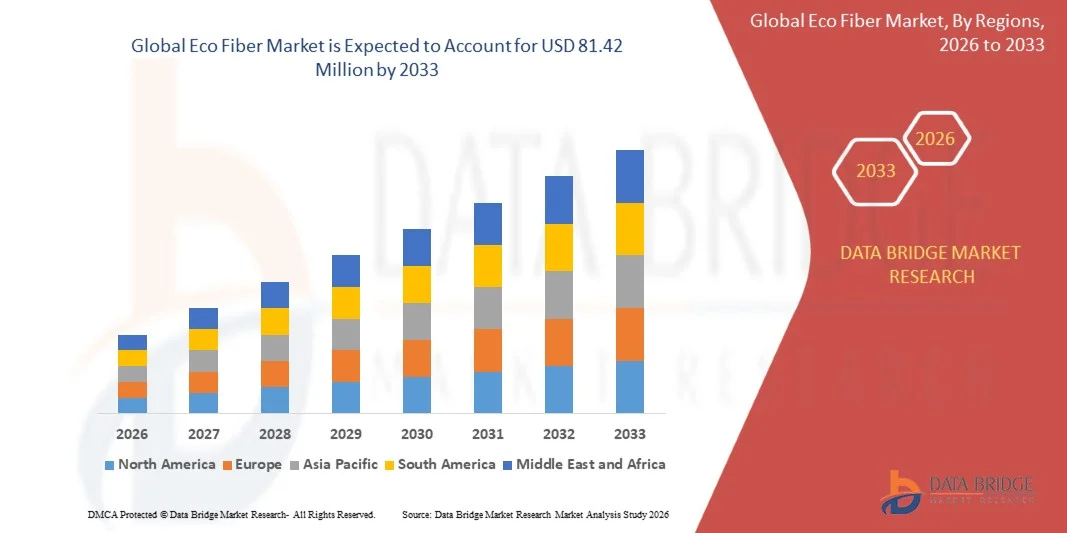
- De acordo com a análise da Data Bridge Market Research, o mercado global de fibras ecológicas foi avaliado emUSD 54,69 Milhões em 2025e é projetado para alcançarUSD 81,42 Milhões por 2033, crescendo emCAGR de 5,10% de 2026 a 2033.
- O mercado está a assistir a um crescimento impulsionado pelo aumento da procura de materiais sustentáveis e de baixo impacto, pelo aumento da sensibilização ambiental, por regulamentações rigorosas relacionadas com a sustentabilidade têxtil e pela adopção crescente de práticas de economia circular. Fibras ecológicas estão sendo cada vez mais utilizadas em têxteis e vestuário, aplicações industriais, domésticos e móveis, e outros setores de uso final, como fabricantes e marcas procuram reduzir as emissões de carbono, resíduos têxteis e dependência do convencionalfibras sintéticas.
- Aumento da adoção de fibras recicladas e regeneradas, expansão da moda sustentável, aumento dos investimentos em infraestrutura de reciclagem têxtil e crescente demanda pormateriais biobaseadosestão a criar novas oportunidades de crescimento. Avanços em tecnologias de processamento de fibras, fabricação de circuito fechado, métodos de produção de baixo impacto e desenvolvimento de materiais inovadores, como bio-based eFibras derivadas de resíduos agrícolasapoiar o desenvolvimento do mercado nas economias desenvolvidas e emergentes.
Tamanho e previsão do mercado
- Valor de mercado (2025): 54,69 milhões de USD
- Valor de mercado esperado (2033): 81,42 milhões de USD
- Previsões CAGR (2026-2033): 5,10%
- Região líder em 2025: Ásia Pacífico
- Região de crescimento mais rápido: Ásia-Pacífico
Quais são os principais destinos do mercado de fibras ecológicas
- A Ásia-pacífico dominou o mercado global de fibras ecológicas, representando uma quota de mercado de 36,20% em 2025, apoiada pela sua forte base de fabricação têxtil, disponibilidade de matérias-primas naturais, capacidades de produção eficientes em termos de custos, e crescente demanda por têxteis sustentáveis em todos os países, como China, Índia, Bangladesh e Vietnã.
- Espera-se que a Ásia-pacífico testemunhe um crescimento significativo no mercado global de fibras ecológicas, crescendo em um CAGR de 12,30% de 2026 para 2033, apoiado pelo aumento da demanda por vestuário sustentável, expansão da fabricação têxtil, adoção crescente de materiais eco-friendly e crescentes iniciativas de sustentabilidade em toda a região.
- Manmade/regenerado representou o principal segmento de produtos, representando uma quota de mercado de 56,30% em 2025, apoiada pela sua ampla adoção em vestuário, têxteis domésticos, interiores automotivos e aplicações industriais, juntamente com a escalabilidade e desempenho consistente oferecido por materiais de fibra regenerada e reciclada.
- Espera-se que o segmento de produto orgânico seja o mais rápido de crescimento, registrando um CAGR de 12,60% de 2026 a 2033, impulsionado pelo aumento da demanda por materiais livres de produtos químicos, biodegradáveis e eticamente de origem, juntamente com a adoção crescente de fibras orgânicas de algodão, cânhamo e bambu.
- Têxteis/aparelho representaram o segmento de aplicação líder, representando 47,00% de market share em 2025, apoiado pela rápida mudança para a moda sustentável, aumentando a adoção de fibras regeneradas e recicladas, e crescente demanda por fornecimento ambientalmente responsável entre fabricantes e marcas de vestuário.
- Espera-se que a indústria testemunhe um crescimento significativo no mercado de fibras ecológicas, registrando um CAGR de 10,90% de 2026 a 2033, impulsionado pelo aumento da adoção de fibras sustentáveis em todo o setor automotivo, construção, filtração, isolamento e outras aplicações industriais, juntamente com a crescente pressão para reduzir as emissões e substituir materiais sintéticos convencionais.
Segmentação do Mercado de Fibra Eco
|
Atributos |
Perspectivas do mercado chave da fibra ecológica |
|
Segmentos Cobertos |
|
|
Países abrangidos |
América do Norte
Europa
Ásia- Pacífico
Médio Oriente e África
América do Sul
|
|
Jogadores do mercado chave |
|
|
Oportunidades de Mercado |
|
|
Informações sobre o Valor Adicionado |
Além dos insights sobre cenários de mercado, como valor de mercado, taxa de crescimento, segmentação, cobertura geográfica e principais atores, os relatórios de mercado curados pela Data Bridge Market Research também incluem análise de importação, visão geral da capacidade de produção, análise do consumo de produção, análise de tendências de preços, cenário de mudança climática, análise da cadeia de suprimentos, análise da cadeia de valor, visão geral da matéria-prima/consumíveis, critérios de seleção de fornecedores, Análise de PESTLE, Análise de Porter e quadro regulatório. |
Qual é a tendência chave no mercado de fibras ecológicas
- A adoção crescente de fibras recicladas e circulares está surgindo como uma tendência chave no mercado global de fibras ecológicas. Os fabricantes de têxteis, marcas de moda e produtores de fibras estão cada vez mais mudando para poliéster reciclado, algodão reciclado, fibras de celulose regenerada e soluções de reciclagem têxtil-têxtil para reduzir a dependência de materiais virgens, minimizar os resíduos têxteis e apoiar modelos de produção circular.
- A tendência está sendo reforçada por crescentes compromissos de sustentabilidade, regulamentos ambientais e crescente demanda por materiais rastreáveis e de menor impacto.
- Por exemplo, em junho de 2025, a recuperação e a gênese têxtil lançaram uma colaboração piloto para rastrear digitalmente materiais reciclados de algodão e algodão em toda a cadeia de valor têxtil. A iniciativa utiliza a rastreabilidade digital para rastrear materiais reciclados da produção de fibras através de vestuário acabado e suporta a verificação de conteúdo reciclado e integridade da cadeia de suprimentos. A colaboração aborda igualmente os requisitos crescentes em matéria de rastreabilidade e conformidade regulamentar, incluindo a preparação para o passaporte de produtos digitais da UE.
- A tendência é particularmente relevante para aplicações têxteis e de vestuário, onde as marcas estão aumentando o uso de fibras recicladas e regeneradas, buscando maior rastreabilidade da cadeia de suprimentos. A reciclagem têxtil-têxtil está ganhando atenção à medida que os fabricantes procuram converter resíduos têxteis pós-consumo e pós-industrial em novas fibras.
Quais são os Principais Drivers do Mercado de Fibra Eco
- O aumento da procura de materiais têxteis sustentáveis e respeitadores do ambiente está a surgir como um motor chave no mercado global de fibras ecológicas. A crescente conscientização do consumidor sobre as emissões de carbono, resíduos têxteis, poluição microplástica e o impacto ambiental das fibras sintéticas convencionais está incentivando as marcas de vestuário e fabricantes têxteis a aumentar o uso de algodão orgânico, cânhamo, bambu, lyocell, poliéster reciclado e outras fibras ecológicas. A crescente adoção de práticas de moda sustentável e de fornecimento responsável está apoiando ainda mais a expansão do mercado.
- A crescente adoção de modelos de reciclagem têxtil e economia circular está acelerando ainda mais a demanda por fibras ecológicas. Os fabricantes estão investindo em tecnologias que convertem resíduos têxteis pós-consumo e pós-industrial em fibras recicladas, reduzindo a dependência de matérias-primas virgens e apoiando a produção de malha fechada.
- Essa tendência é particularmente importante para fibras recicladas de poliéster e de celulose regenerada, onde melhorias nas tecnologias de reciclagem e processamento estão aumentando a viabilidade comercial e o desempenho de produtos de fibra sustentáveis.
- Por exemplo, em março de 2025, as tecnologias de reciclagem de puma e RE&UP anunciaram uma colaboração de vários anos para escalar uma solução têxtil circular que converte resíduos têxteis em fibras de algodão reciclado e chips de poliéster reciclado. A colaboração foi destinada a expandir o programa de re puma para as Américas, enquanto o puma visava 30% de fibra a fibra reciclado tecido de poliéster em seus produtos de vestuário até 2030. O desenvolvimento demonstra o aumento do investimento das marcas globais de vestuário na reciclagem têxtil-têxtil e nas cadeias de abastecimento de fibras recicladas.
- Os avanços tecnológicos no processamento de fibras e o desenvolvimento de materiais sustentáveis da próxima geração estão criando um impulso adicional no mercado. Inovações na fabricação de loop fechado, produção de lyocell de baixo impacto, reciclagem têxtil avançada, fibras derivadas de resíduos agrícolas e materiais bio-baseados estão melhorando o desempenho das fibras, reduzindo o consumo de recursos.
Que fatores estão desafiando o crescimento do mercado de fibras ecológicas
- Os maiores custos de produção e processamento de fibras ecológicas continuam a ser um desafio fundamental no mercado global de fibras ecológicas. Fibras sustentáveis podem exigir cultivo especializado, certificação, coleta, triagem, infraestrutura de reciclagem e tecnologias de processamento ambientalmente amigáveis, resultando em maiores custos de produção em comparação com fibras convencionais. O custo mais elevado pode limitar a adopção entre os fabricantes e consumidores de têxteis sensíveis aos preços.
- A disponibilidade limitada e o fornecimento inconsistente de matérias-primas sustentáveis estão criando desafios para os fabricantes que buscam escalar a produção de fibras ecológicas. A disponibilidade de resíduos têxteis reciclados adequados e de matérias-primas sustentáveis certificadas pode variar segundo a geografia, enquanto sistemas inadequados de recolha e triagem podem restringir o acesso a matérias-primas de alta qualidade.
- A complexidade na reciclagem de têxteis misturados e tratados quimicamente é outro grande desafio. Muitas roupas contêm combinações de algodão, poliéster, elastano, corantes, acabamentos e outros componentes que são difíceis e caros de separar. Essas complexidades podem reduzir a eficiência de reciclagem e afetar a qualidade das fibras recicladas. O escritório de responsabilidade do governo dos EUA identificou a complexidade material, infraestrutura limitada e custos como importantes obstáculos à reciclagem generalizada de têxteis.
- Por exemplo, em agosto de 2025, pesquisadores da IJT delhi destacaram a dificuldade de reciclagem de resíduos têxteis pós-consumo devido às variações nas misturas de cor e fibra, juntamente com a perda de resistência e comprimento das fibras durante a reciclagem mecânica. Os pesquisadores desenvolveram um método para converter resíduos de denim em roupas de malha, minimizando danos às propriedades das fibras, demonstrando os esforços contínuos da indústria para enfrentar desafios de qualidade e escalabilidade.
- A infraestrutura de reciclagem limitada e os sistemas de coleta continuam a ser um desafio para o desenvolvimento em larga escala do mercado de fibras ecológicas. Os sistemas existentes de recolha, triagem e reciclagem de têxteis não estão suficientemente equipados para lidar com os crescentes volumes de resíduos têxteis, enquanto a triagem automatizada e as tecnologias avançadas de reciclagem requerem um investimento substancial.
Como o mercado de fibras ecológicas é segmentado
O mercado é segmentado com base no tipo, fonte, produto e indústria de utilização final.
- Por Tipo
Com base no tipo, o mercado global de fibra ecológica é segmentado em orgânico, artificial/regenerado, reciclado e natural. Espera-se que o segmento artificial/regenerado represente uma categoria de tipo líder, representando uma quota de mercado de 56,30% em 2025, apoiada pela adoção generalizada de celulose regenerada, poliéster reciclado e lyocell em todo o vestuário, têxteis domésticos, interiores automotivos e aplicações industriais. Essas fibras oferecem qualidade, escalabilidade e desempenho consistentes, apoiando iniciativas de sustentabilidade e economia circular.
Espera-se que o segmento orgânico testemunhe um crescimento significativo durante o período previsto, crescendo em um CAGR de 12,60% de 2026 para 2033, apoiado pela crescente demanda por materiais livres de produtos químicos e biodegradáveis, aumentando a adoção de fibras orgânicas de algodão, cânhamo e bambu, e crescentes exigências de sustentabilidade entre fabricantes e marcas têxteis.
- Por Fonte
Com base na fonte, o mercado global de fibras ecológicas é segmentado em pele animal, celulose vegetal, entre outros. Espera-se que o segmento de celulose vegetal represente uma categoria de origem líder com participação de marca de 44,11% em 2025, apoiada pela ampla disponibilidade de matérias-primas à base de celulose e pela crescente utilização de polpa de madeira, bambu e outras matérias-primas derivadas de plantas na produção sustentável de fibras. A crescente demanda por materiais biodegradáveis e renováveis está apoiando ainda mais a adoção de fibras à base de celulose vegetal em aplicações têxteis e de vestuário.
Espera-se que o segmento de celulose vegetal testemunhe crescimento significativo durante o período de previsão com CAGR de 11,12% de 2026 a 2033, apoiado pelo aumento da demanda por fibras de celulose regeneradas, expansão da fabricação têxtil sustentável e ênfase crescente em matérias-primas renováveis e biodegradáveis.
- Por Produto
Com base no produto, o mercado global de fibra ecológica é segmentado em fibra de lyocell, fibra de ácido poliláctico, fibra de soja, fibra de proteína regenerada e fibra de bambu. Espera-se que o segmento de fibra de lyocell represente uma significativa categoria de produtos com participação de mercado de 39,11% em 2025, apoiada pelo aumento da demanda por fibras biodegradáveis e fabricadas de forma sustentável, propriedades favoráveis de gerenciamento de umidade e adoção crescente de vestuário e aplicações textil.
Espera-se que o segmento de fibras de bambu testemunhe crescimento significativo durante o período de previsão com CAGR de 9,11% de 2026 a 2033, apoiado pela natureza renovável do bambu, aumento da demanda por materiais à base de plantas e crescente utilização de fibras sustentáveis em vestuário, têxteis domésticos e outras aplicações de consumo.
- Por Indústria de Uso Final
Com base na indústria de uso final, o mercado global de fibras ecológicas é segmentado em têxteis, casa e mobiliário, indústria de fabricação, medicina, automóveis e outros. espera-se que o segmento têxtil represente uma das principais categorias de uso final, representando 47,00% de market share em 2025, apoiado pelo aumento da adoção da moda sustentável, crescente demanda por fibras recicladas e regeneradas, e aumento dos compromissos de sustentabilidade entre fabricantes têxteis e marcas de vestuário.
espera-se que o segmento da indústria transformadora testemunhe um crescimento significativo durante o período de previsão, crescendo em um CAGR de 10,90% de 2026 a 2033, apoiado pelo aumento da adoção de fibras sustentáveis em automotivos, construção, filtração, isolamento e outras aplicações industriais. a transição para materiais leves, reciclados e bio-baseados vem apoiando ainda mais o uso de fibras ecológicas em aplicações de fabricação.
Qual região detém a maior parte do mercado de fibras ecológicas
- A Ásia-pacífico dominou o mercado global de fibras ecológicas, representando uma quota de mercado de 36,20% em 2025, apoiada pela sua forte base de fabricação têxtil, disponibilidade de matérias-primas naturais, capacidades de produção eficientes em termos de custos, e crescente demanda por têxteis sustentáveis em todos os países, como China, Índia, Bangladesh e Vietnã.
- Espera-se que a Ásia-pacífico testemunhe um crescimento significativo no mercado global de fibras ecológicas, crescendo em um CAGR de 12,30% de 2026 para 2033, apoiado pelo aumento da demanda por vestuário sustentável, expansão da fabricação têxtil, adoção crescente de materiais eco-friendly e crescentes iniciativas de sustentabilidade em toda a região.
U.S. Eco Fiber Market Insight
O mercado de fibras Eco dos EUA está testemunhando crescimento constante, apoiado pelo aumento da preferência do consumidor por têxteis sustentáveis, aumento da conscientização ambiental e adoção crescente de materiais reciclados e bio-baseados em vestuário, mobiliário doméstico e aplicações industriais. Iniciativas firmes de sustentabilidade e compromissos crescentes dos fabricantes de têxteis e marcas de moda para reduzir as emissões de carbono e os resíduos têxteis apoiam ainda mais o desenvolvimento do mercado. Os crescentes investimentos em reciclagem têxtil, avanços nas tecnologias de processamento de fibras e a crescente demanda por materiais biodegradáveis e de origem responsável estão criando oportunidades para os fabricantes de fibras ecológicas. Espera-se que a expansão das práticas de moda sustentável e de economia circular fortaleça ainda mais a adoção do mercado.
Perspectiva sobre o mercado de fibras ecológicas da Europa
O mercado europeu das fibras ecológicas é apoiado pelo aumento da procura de têxteis sustentáveis, por regulamentações ambientais mais rigorosas e pela crescente preferência dos consumidores por materiais de baixo impacto. Países como Alemanha, França, Itália e Reino Unido estão assistindo à adoção crescente de fibras recicladas, orgânicas e bio-baseadas em vestuário, têxteis domésticos e aplicações industriais. As marcas europeias estão cada vez mais a integrar as fibras ecológicas em carteiras de produtos para reduzir a dependência de materiais convencionais à base de petróleo e melhorar as credenciais de sustentabilidade. Avanços na reciclagem de fibras, sistemas têxteis circulares e tecnologias de materiais de base biológica estão apoiando ainda mais o desenvolvimento do mercado. Prevê-se que os investimentos crescentes em produção sustentável e cadeias de abastecimento rastreáveis criem oportunidades adicionais em toda a região.
U.K. Eco Fiber Market Insight
O mercado de fibras Eco do Reino Unido está experimentando um crescimento constante, impulsionado pelo aumento da demanda por materiais de fibra sustentáveis, biodegradáveis e reciclados nas indústrias de embalagens, têxteis, automóveis e bens de consumo. O aumento da conscientização ambiental e as iniciativas destinadas a reduzir os resíduos plásticos estão incentivando os fabricantes a adotarem alternativas de fibra vegetal e reciclada. O mercado é ainda apoiado por compromissos de sustentabilidade empresarial e pela expansão de práticas de economia circular. O aumento dos investimentos em tecnologias inovadoras de processamento de fibras está melhorando o desempenho do material e ampliando as aplicações. Além disso, espera-se que a preferência do consumidor por produtos ambientalmente responsáveis crie novas oportunidades para os fabricantes de fibras ecológicas em todo o Reino Unido.
Alemanha Eco Fiber Market Insight
O mercado de fibras ecológicas da Alemanha está a assistir a um crescimento constante, apoiado pelo aumento da procura de têxteis sustentáveis, materiais recicláveis e práticas de fabrico ambientalmente responsáveis. A crescente conscientização dos consumidores sobre a poluição plástica e o impacto ambiental das fibras convencionais está incentivando as marcas a adotarem alternativas de fibras recicladas e bio-baseadas. O forte ecossistema de fabricação têxtil da Alemanha, os regulamentos de sustentabilidade e a ênfase nos princípios da economia circular apoiam ainda mais o desenvolvimento do mercado. A demanda está se expandindo em todo o vestuário, têxteis domésticos, aplicações automotivas e industriais, onde os fabricantes estão buscando materiais com pegadas ambientais mais baixas. Os avanços tecnológicos na reciclagem de fibras e na produção de materiais bio-baseados devem criar oportunidades adicionais.
Visão do mercado de fibras ecológicas Ásia-Pacífico
O mercado de fibra ecológica asiática-pacífica está testemunhando crescimento constante, impulsionado pelo aumento da consciência ambiental, expansão da moda sustentável e crescente demanda por materiais têxteis biodegradáveis e reciclados. Países como China, Índia, Japão, Coreia do Sul e Austrália estão fortalecendo os investimentos em iniciativas sustentáveis de produção têxtil e economia circular. As crescentes preocupações com os resíduos têxteis, o consumo de água e as emissões de carbono estão a incentivar os fabricantes a adoptarem fibras vegetais, recicladas e regeneradas. Além disso, iniciativas governamentais de apoio, a evolução das preferências dos consumidores e a adoção crescente de materiais sustentáveis em aplicações de vestuário, têxteis domésticos, automotivas e embalagens devem criar novas oportunidades de mercado em toda a região.
Japão Eco Fiber Market Insight
O mercado de fibras ecológicas do Japão é apoiado pelo aumento da demanda por têxteis sustentáveis, práticas de produção circular e materiais ambientalmente responsáveis em todo o vestuário, têxteis domésticos e aplicações industriais. Os fabricantes estão cada vez mais adotando poliéster reciclado, nylon reciclado, algodão orgânico, bambu e outras fibras bio-baseadas para reduzir a dependência de materiais convencionais à base de petróleo e menor impacto ambiental. Iniciativas de sustentabilidade do governo, compromissos corporativos com a redução de carbono e crescente conscientização do consumidor estão incentivando a adoção de fibras ecológicas. Além disso, avanços tecnológicos na reciclagem de fibras e processamento de materiais estão melhorando a qualidade do produto, escalabilidade e eficiência de custo, apoiando a expansão do mercado no Japão.
China Eco Fiber Market Insight
O mercado de fibras ecológicas da China está experimentando crescimento constante, apoiado pelo aumento da demanda por têxteis sustentáveis, aumento da conscientização ambiental e iniciativas governamentais que promovem práticas econômicas circulares. Os fabricantes estão expandindo o uso de poliéster reciclado, algodão reciclado, bambu, cânhamo e outras fibras bio-baseadas para reduzir a dependência de materiais sintéticos convencionais e minimizar o impacto ambiental. A crescente adoção de moda sustentável, de têxteis domésticos ecológicos e de práticas de fabricação verde está apoiando ainda mais a expansão do mercado. Além disso, os investimentos em tecnologias de reciclagem de fibras e avanços no processamento de materiais sustentáveis devem fortalecer a posição da China como um grande produtor e consumidor de fibras ecológicas.
Quais são as principais empresas no mercado de fibras ecológicas
A indústria do mercado de fibras ecológicas é liderada principalmente por empresas bem estabelecidas, incluindo:
- Vrijesh Natural Fibre & Tecidos Pvt. Ltd. (Índia)
- Trex Company Inc. (EUA)
- Fibra(EUA)
- Têxteis OECO(EUA)
- Barnhardt Manufacturing Company(EUA)
- Tecnologias Avançadas de Reciclagem Ambiental, Inc.
- BComp Ltd (Suíça)
- A Companhia de Fibra Natural (U.K.)
- UPM (Finlândia)
- TECNARO GMBH (Alemanha)
- Procotex (França)
- FlexForm SpA (EUA)
- China National Cotton Group Corp (China)
- Grasim Industries Limited (Nagda)
- Shandong Ruyi Technology Group Co, Ltd (China)
- COFCO (China)
- Ananas Anam (U.K.)
- BASF SE (Alemanha)
- Bast Fiber Technologies Inc. (Canadá)
- Kelheim Fibras GmbH (Alemanha)
- Sistemas circulares (EUA)
- Evrnu SPC (EUA)
- Soldadura de Fibra Natural Inc. (EUA)
Quais são as últimas evoluções no mercado de fibras ecológicas
- Em agosto de 2026, a Circ entrou em parceria com a Shenghong Chemical Fiber New Material para expandir o acesso às fibras recicladas e apoiar a integração da reciclagem têxtil-textil na produção de fibras em larga escala.
- Em maio de 2026, Syre expandiu sua colaboração com a Target para acelerar a adoção de poliéster reciclado têxtil-textil em vestuário e aplicações texteis. A colaboração visa o uso de 70.000 toneladas métricas de poliéster reciclado feitas de têxteis em fim de vida.
- Em junho de 2026, o Recover Yarns foi introduzido, um portfólio de soluções de fio de algodão reciclado prontas para usar projetadas para simplificar a adoção de fibras recicladas através de jeans, roupas de trabalho, camisa, lã e aplicações têxteis tecidas.
- Em julho de 2026, Rieter, Säntis Textiles e Valvan estabeleceram a Recycling Powerhouse Ltd. para industrializar e padronizar a reciclagem têxtil através de um modelo baseado em franquia para produzir fios reciclados certificados.
- Em janeiro de 2026, a Indorama Ventures expandiu seu portfólio de fibra sustentável, oferecendo fibras de retardador de chama Trevira e fios de filamentos contendo 50% de material têxtil reciclado, visando aplicações têxteis em casa e no espaço público.
SKU-
Obtenha acesso online ao relatório sobre a primeira nuvem de inteligência de mercado do mundo

- Painel interativo de análise de dados
- Painel de análise da empresa para oportunidades de elevado potencial de crescimento
- Acesso de analista de pesquisa para personalização e customização. consultas
- Análise da concorrência com painel interativo
- Últimas notícias, atualizações e atualizações Análise de tendências
- Aproveite o poder da análise de benchmark para um rastreio abrangente da concorrência
Metodologia de Investigação
A recolha de dados e a análise do ano base são feitas através de módulos de recolha de dados com amostras grandes. A etapa inclui a obtenção de informações de mercado ou dados relacionados através de diversas fontes e estratégias. Inclui examinar e planear antecipadamente todos os dados adquiridos no passado. Da mesma forma, envolve o exame de inconsistências de informação observadas em diferentes fontes de informação. Os dados de mercado são analisados e estimados utilizando modelos estatísticos e coerentes de mercado. Além disso, a análise da quota de mercado e a análise das principais tendências são os principais fatores de sucesso no relatório de mercado. Para saber mais, solicite uma chamada de analista ou abra a sua consulta.
A principal metodologia de investigação utilizada pela equipa de investigação do DBMR é a triangulação de dados que envolve a mineração de dados, a análise do impacto das variáveis de dados no mercado e a validação primária (especialista do setor). Os modelos de dados incluem grelha de posicionamento de fornecedores, análise da linha de tempo do mercado, visão geral e guia de mercado, grelha de posicionamento da empresa, análise de patentes, análise de preços, análise da quota de mercado da empresa, normas de medição, análise global versus regional e de participação dos fornecedores. Para saber mais sobre a metodologia de investigação, faça uma consulta para falar com os nossos especialistas do setor.
Personalização disponível
A Data Bridge Market Research é líder em investigação formativa avançada. Orgulhamo-nos de servir os nossos clientes novos e existentes com dados e análises que correspondem e atendem aos seus objetivos. O relatório pode ser personalizado para incluir análise de tendências de preços de marcas-alvo, compreensão do mercado para países adicionais (solicite a lista de países), dados de resultados de ensaios clínicos, revisão de literatura, mercado remodelado e análise de base de produtos . A análise de mercado dos concorrentes-alvo pode ser analisada desde análises baseadas em tecnologia até estratégias de carteira de mercado. Podemos adicionar quantos concorrentes necessitar de dados no formato e estilo de dados que procura. A nossa equipa de analistas também pode fornecer dados em tabelas dinâmicas de ficheiros Excel em bruto (livro de factos) ou pode ajudá-lo a criar apresentações a partir dos conjuntos de dados disponíveis no relatório.











