



Segmentação do mercado global de produtos de terapia gênica, por produto (Yescarta, Kymriah, Luxturna, Strimvelis e Gendicine), aplicação (distúrbios oncológicos, doenças raras, doenças cardiovasculares, distúrbios neurológicos, doenças infecciosas e outras doenças), canal de distribuição (farmácia hospitalar, farmácia online, farmácia de varejo e outros) - Tendências e previsões do setor até 2033
Qual é o tamanho do mercado e taxa de crescimento dos produtos de terapia genética
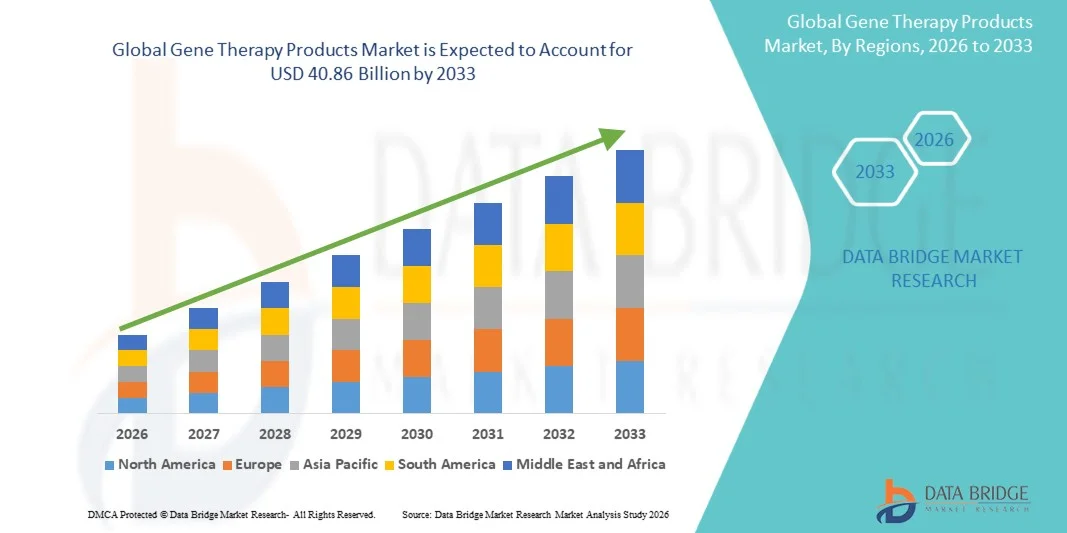
- De acordo com Data Bridge Market Research Analysis, o tamanho global dos produtos de terapia genética foi avaliado emUSD 8,24 mil milhões em 2025e espera-se alcançar40,86 mil milhões de USD até 2033, em umaCAGR de 22,15%durante o período de previsão
- O crescimento do mercado é amplamente impulsionado por rápidos avanços na engenharia genética, tecnologias vetoriais virais e não virais, e abordagens personalizadas da medicina, permitindo terapias mais eficazes e direcionadas para doenças raras e crônicas
- Além disso, o aumento da prevalência dealterações genéticas, quadros regulamentares de apoio e aumento do investimentobiofarmacêuticoas empresas estão impulsionando a adoção de produtos de terapia genética. Esses fatores convergentes estão acelerando o desenvolvimento e a comercialização de terapias gênicas inovadoras, aumentando significativamente o crescimento da indústria.
Tamanho e previsão do mercado
- Valor de mercado global (2025): 8,24 milhões de dólares
- Valor de mercado previsto (2033): 40,86 milhões de dólares
- Previsões CAGR (2026-2033): 22.15%
Análise de mercado de produtos de terapia genética
- Produtos de terapia genética, oferecendo intervenções genéticas direcionadas para tratar ou prevenir doenças, são componentes cada vez mais vitais das modernas estratégias de cuidados de saúde e medicina personalizada devido à sua capacidade de abordar a causa raiz de distúrbios genéticos e melhorar os resultados do paciente
- A crescente demanda por produtos de terapia genética é principalmente alimentada por avanços em tecnologias vetoriais virais e não virais, prevalência crescente de doenças genéticas raras e crônicas e aprovação regulatória crescente para terapias inovadoras.
- A América do Norte dominou o mercado de produtos de terapia genética com a maior parcela de receita de 42,5% em 2025, caracterizada por forte infraestrutura de P&D, alto gasto em saúde e presença robusta de atores biofarmacêuticos-chave, com os EUA experimentando um crescimento substancial em ensaios clínicos e lançamentos comerciais, impulsionados por inovações de empresas de biotecnologia estabelecidas e startups emergentes.
- Asia-Pacific é esperado para ser a região de crescimento mais rápido no mercado de produtos de terapia genética durante o período de previsão devido ao aumento dos investimentos em saúde, aumento da conscientização de distúrbios genéticos e iniciativas governamentais de apoio para terapias avançadas
- Yescarta dominou o mercado com uma participação de 39,8% em 2025, impulsionada pela sua eficácia estabelecida no tratamento de certas neoplasias hematológicas e sua adoção crescente em protocolos de tratamento oncológico.
Relatar escopo e produtos de terapia genética Segmentação de mercado
|
Atributos |
Produtos de Terapia Geneica Principais Insights do Mercado |
|
Segmentos Cobertos |
|
|
Países abrangidos |
América do Norte
Europa
Ásia- Pacífico
Médio Oriente e África
América do Sul
|
|
Jogadores do mercado chave |
|
|
Oportunidades de Mercado |
|
|
Informações sobre o Valor Adicionado |
Além dos insights sobre cenários de mercado, como valor de mercado, taxa de crescimento, segmentação, cobertura geográfica e principais atores, os relatórios de mercado curados pela Data Bridge Market Research também incluem análise de especialistas em profundidade, epidemiologia do paciente, análise de pipelines, análise de preços e marco regulatório |
Qual é a tendência chave no mercado de produtos de terapia genética
“Incrementar o foco nas terapias personalizadas e direcionadas”
- Uma tendência significativa e acelerada no mercado global de produtos de terapia genética é o desenvolvimento de terapias personalizadas adaptadas à genética individual do paciente, aumentando a eficácia do tratamento e minimizando os efeitos adversos
- Por exemplo, Kymriah é projetado para cânceres hematológicos específicos com base em modificações de células T específicas do paciente, oferecendo resultados de tratamento altamente direcionados
- Avanços em engenharia vetorial e tecnologias baseadas em CRISPR permitem edição de genes mais precisa, permitindo terapias para lidar com doenças genéticas raras e anteriormente intratáveis com taxas de sucesso mais elevadas
- A integração da IA ebioinformáticano desenho terapêutico facilita a modelagem preditiva das respostas ao tratamento, otimizando estratégias terapêuticas e a seleção de pacientes para melhores resultados
- Esta tendência para terapias genéticas personalizadas e orientadas por dados está fundamentalmente transformando as expectativas clínicas, com empresas como Novartis e Gilead investindo fortemente em plataformas de terapia genética de próxima geração
- A procura de terapias genéticas específicas para os doentes está a crescer rapidamente nos segmentos da oncologia e das doenças raras, uma vez que os prestadores de cuidados de saúde procuram tratamentos com melhores perfis de eficácia e segurança.
- Por exemplo, empresas como a Spark Therapeutics estão expandindo programas de acesso à Luxturna para facilitar a adoção precoce entre pacientes com distúrbios de retina herdados
- Colaborações entre institutos de pesquisa e empresas farmacêuticas estão permitindo o desenvolvimento clínico mais rápido e a comercialização de novas terapias genéticas, criando um gasoduto robusto para o crescimento futuro
Dinâmica de mercado de produtos de terapia genética
Controlador
“Prevalência crescente de transtornos genéticos e inovação biofarmacêutico”
- A crescente prevalência de doenças genéticas e cânceres, combinada com avanços nos sistemas de liberação viral e não viral, é um fator importante para o crescimento do mercado de terapia genética.
- Por exemplo, em março de 2025, Novartis anunciou a expansão da capacidade de produção de Kymriah para atender à crescente demanda global por terapias CAR-T, impulsionando o crescimento do mercado
- À medida que a incidência de doenças raras se torna mais bem documentada e a consciência do paciente aumenta, a terapia genética oferece potencial curativo onde os tratamentos tradicionais são limitados ou ineficazes.
- Além disso, incentivos regulamentares e aprovações rápidas para terapias inovadoras estão acelerando o desenvolvimento de produtos e a entrada no mercado, apoiando a expansão da indústria
- A crescente colaboração entre startups de biotecnologia e empresas farmacêuticas estabelecidas está promovendo a inovação rápida, resultando em um gasoduto mais amplo de terapias genéticas para oncologia, doenças raras e outras aplicações críticas
- Aumentar a consciência entre os profissionais de saúde e os pacientes sobre o potencial transformador da terapia gênica está impulsionando a adoção em ambientes clínicos e hospitalares em todo o mundo
- Por exemplo, parcerias em andamento entre Gileade e várias instituições acadêmicas estão avançando novos testes de terapia genética para doenças cardiovasculares e neurológicas
- Aumento do financiamento público e subsídios para a investigação em terapia genética em regiões como a América do Norte e a Europa estão a acelerar os prazos de desenvolvimento e a apoiar o crescimento do mercado
Restrição/Desafio
“Paisagem Regulatória Complexo e de Alto Custo”
- O alto custo dos produtos de terapia genética e a complexidade dos processos de aprovação regulatória representam desafios significativos para a adoção mais ampla do mercado.
- Por exemplo, terapias caras como Luxturna ou Zolgensma podem exceder centenas de milhares de dólares por tratamento, limitando a acessibilidade para muitos pacientes
- Quadros regulatórios rigorosos em diferentes regiões exigem extensos ensaios clínicos, longos prazos de aprovação e vigilância pós-comercialização, o que pode atrasar o lançamento do produto
- A fabricação e o controle de qualidade para terapias genéticas são altamente complexos, exigindo instalações especializadas e pessoal altamente treinado, aumentando os custos operacionais
- Embora os programas de cobertura e reembolso de seguros estejam em expansão, a carga financeira percebida ainda pode dificultar a captação, particularmente nos mercados em desenvolvimento
- Enfrentar esses desafios através de estratégias de redução de custos, vias regulatórias simplificadas e programas de acesso ao paciente é crucial para o crescimento sustentado no mercado global de terapia genética
- Por exemplo, diferenças nas diretrizes regulatórias entre EUA, UE e Ásia-Pacífico complicam ensaios clínicos multinacionais e aprovações de produtos
- Desafios na monitorização da segurança a longo prazo e potenciais respostas imunitárias aos vetores virais requerem rigorosa vigilância pós-comercialização, o que pode retardar as taxas de adoção
Âmbito de mercado dos produtos de terapia genética
O mercado é segmentado com base no produto, aplicação e canal de distribuição.
- Por Produto
Com base no produto, o mercado de produtos de terapia genética é segmentado em Yescarta, Kymriah, Luxturna, Strimvelis e Gendicine. O segmento Yescarta dominou o mercado com a maior parcela de receita de 39,8% em 2025, impulsionada pela sua eficácia estabelecida no tratamento de certas neoplasias hematológicas e pela sua crescente adoção em protocolos de tratamento oncológico. Os profissionais de saúde geralmente preferem Yescarta devido ao seu sucesso clínico na terapia CAR-T e o apoio robusto da Novartis para programas de gestão de pacientes. O segmento se beneficia de pesquisas clínicas em andamento, aprovações regulatórias para novas indicações e sensibilização dos oncologistas para seu potencial terapêutico. Além disso, as taxas de segurança e resposta comprovadas de Yescarta reforçaram a sua posição como um produto de terapia gênica preferencial, tanto no hospital quanto nas clínicas especializadas.
Prevê-se que o segmento Luxturna testemunhe a taxa de crescimento mais rápida de 23,4% entre 2026 e 2033, alimentada pelo aumento da consciência de distúrbios herdados da retina e pela expansão do apoio ao reembolso na América do Norte e na Europa. Luxturna oferece um tratamento único para pacientes com doença hereditária da retina mediada pela PSE65, tornando-a atraente para os que adotam precocemente em busca de resultados a longo prazo. O aumento das parcerias entre empresas de biotecnologia e clínicas de oftalmologia está facilitando o acesso mais amplo e o registro de pacientes. O crescente foco em doenças oftalmológicas raras, juntamente com avanços na tecnologia de entrega de vetores, é esperado para acelerar ainda mais a adoção da Luxturna globalmente.
- Por Aplicação
Com base na aplicação, o mercado de produtos de terapia genética é segmentado em doenças oncológicas, doenças raras, doenças cardiovasculares, doenças neurológicas, doenças infecciosas e outras doenças. O segmento de doenças oncológicas representou o maior market share de 44,1% em 2025, devido à crescente incidência de tumores hematológicos e sólidos e ao sucesso clínico demonstrado do CAR-T e outras terapias gênicas direcionadas. Hospitais e clínicas especializadas adotam ativamente essas terapias devido à sua capacidade de fornecer tratamento personalizado e melhorar as taxas de sobrevivência. O segmento é ainda apoiado pelo aumento dos investimentos em I&D, ensaios clínicos em curso para novas indicações e colaborações entre empresas de biotecnologia e instituições acadêmicas.
Espera-se que o segmento de distúrbios neurológicos testemunhe o CAGR mais rápido de 25,1% de 2026 a 2033, impulsionado pela crescente prevalência de doenças neurodegenerativas, como a atrofia muscular espinhal (AMS) e doença de Parkinson. Avanços na entrega de terapia genética ao sistema nervoso central estão ampliando as possibilidades de tratamento para pacientes com condições previamente intratáveis. O aumento da sensibilização dos pacientes, juntamente com incentivos regulatórios para terapias de doenças órfãs, está incentivando a adoção precoce. Colaborações entre empresas de biotecnologia e clínicas de neurologia também estão facilitando o recrutamento rápido de ensaios clínicos e a comercialização de terapia.
- Por Canal de Distribuição
Com base no canal de distribuição, o mercado de produtos de terapia genética é segmentado em farmácia hospitalar, farmácia on-line, farmácia de varejo, entre outros. O segmento de farmácia hospitalar teve o maior market share de 49,3% em 2025, refletindo seu papel crítico na administração de terapias gênicas complexas que requerem supervisão clínica e condições especializadas de armazenamento. Os hospitais fornecem suporte de ponta a ponta para avaliação do paciente, administração de tratamento e cuidados de acompanhamento, tornando-os o canal preferido para produtos de terapia genética. A presença de pessoal médico treinado e a infraestrutura necessária garantem o fornecimento seguro e eficaz de terapias.
Prevê-se que o segmento de farmácia on-line testemunhe a taxa de crescimento mais rápida de 27,6% de 2026 a 2033, impulsionada pelo aumento da adoção de e-commerce, integração de telemedicina e opções de entrega domiciliar para medicamentos especializados. Plataformas on-line oferecem aos pacientes conveniência, maior acesso ao produto e maior privacidade ao encomendar terapias genéticas raras ou especializadas. Parcerias estratégicas entre empresas de biotecnologia e provedores digitais de saúde estão facilitando a gestão segura da cadeia de suprimentos e programas de educação de pacientes. Espera-se que o segmento se expanda ainda mais com a adoção de plataformas de saúde digitais e ferramentas de monitoramento remoto do paciente.
Produtos de Terapia Genética Mercado Análise Regional
- A América do Norte dominou o mercado de produtos de terapia genética com a maior parcela de receita de 42,5% em 2025, caracterizada por forte infraestrutura de P&D, alto gasto em saúde e presença robusta de atores biofarmacêuticos-chave, com os EUA experimentando um crescimento substancial em ensaios clínicos e lançamentos comerciais, impulsionados por inovações de empresas de biotecnologia estabelecidas e startups emergentes.
- Os prestadores de cuidados de saúde e os doentes da região valorizam muito a eficácia, a natureza personalizada e os métodos inovadores de entrega de terapias genéticas, especialmente em oncologia e doenças raras
- Esta adoção generalizada é ainda apoiada por elevados gastos com cuidados de saúde, aumento da conscientização sobre distúrbios genéticos e atividades de ensaios clínicos rápidos, estabelecendo produtos de terapia genética como uma opção de tratamento preferencial em ambientes hospitalares e especializados da clínica
U.S. Gene Therapy Products Market Insight
O mercado de produtos de terapia genética dos EUA capturou a maior parcela de receita de 79% em 2025 na América do Norte, alimentada por um ecossistema biofarmacêutico robusto e infraestrutura de pesquisa clínica avançada. Pacientes e profissionais de saúde priorizam cada vez mais terapias inovadoras e direcionadas para a oncologia e doenças genéticas raras. O número crescente de ensaios clínicos, juntamente com incentivos regulamentares, tais como aprovações rápidas e designações de medicamentos órfãos, impulsiona ainda mais o crescimento do mercado. Além disso, crescentes colaborações entre startups de biotecnologia e empresas farmacêuticas estabelecidas estão acelerando o desenvolvimento de produtos e a comercialização, contribuindo significativamente para a expansão do mercado.
Europa Gene Therapy Products Market Insight
Projeta-se que o mercado europeu de produtos de terapia genética se expanda em um CAGR substancial ao longo do período de previsão, impulsionado principalmente por políticas de saúde favoráveis, crescentes investimentos em I&D e crescente conscientização sobre doenças genéticas. A presença de instalações médicas avançadas e estruturas de reembolso de apoio favorece a adoção de terapias genéticas. Pacientes e clínicos europeus estão cada vez mais adotando terapia genética para aplicações em oncologia e doenças raras. Além disso, a integração de terapias inovadoras em programas nacionais de saúde está impulsionando o crescimento do mercado em grandes países, como Alemanha, França e Itália.
U.K. Gene Therapy Products Market Insight
O mercado de produtos de terapia genética do Reino Unido está previsto para crescer em um CAGR notável durante o período de previsão, impulsionado pelo aumento do investimento em medicina personalizada e biológicos avançados. O aumento da sensibilização dos pacientes e a adoção de terapias direcionadas para doenças raras e cânceres são encorajadores para a captação. Espera-se que a forte infraestrutura de saúde do país, juntamente com iniciativas colaborativas entre empresas de biotecnologia e instituições de pesquisa, continue a estimular o crescimento do mercado. Além disso, o apoio governamental aos medicamentos de terapia avançada (ATMPs) promove ainda mais a adoção clínica.
Alemanha Gene Therapy Products Market Insight
Espera-se que o mercado de produtos de terapia genética da Alemanha expanda em um CAGR considerável durante o período de previsão, alimentado pelo aumento do financiamento governamental para a pesquisa em biotecnologia e fortes capacidades de I&D. Os prestadores de cuidados de saúde alemães estão a adoptar terapias genéticas para a oncologia e doenças raras devido a resultados clínicos comprovados e à infra-estrutura hospitalar avançada. A ênfase na inovação e qualidade nos tratamentos médicos promove a adoção de terapias de próxima geração. Além disso, colaborações entre instituições acadêmicas e empresas farmacêuticas estão apoiando a rápida comercialização de novos produtos de terapia genética.
Visão de mercado de produtos de terapia genética Ásia-Pacífico
O mercado de produtos de terapia genética Ásia-Pacífico está preparado para crescer no CAGR mais rápido de 26% durante o período de previsão de 2026 a 2033, impulsionado pelo aumento dos investimentos em saúde, aumento da prevalência de distúrbios genéticos e avanços tecnológicos em países como China, Japão e Índia. A crescente sensibilização para as terapias avançadas e as iniciativas governamentais de apoio ao tratamento das doenças raras estão a conduzir a adopção. Além disso, como o APAC emerge como um centro de fabricação e ensaio clínico para terapias genéticas, a acessibilidade e acessibilidade estão melhorando, ampliando o mercado para uma população de pacientes mais ampla.
Japão Gene Therapy Products Market Insight
O mercado de produtos de terapia genética do Japão está ganhando impulso devido à infraestrutura avançada de saúde do país, alto investimento em P&D e crescente demanda por tratamentos inovadores. A adoção é impulsionada pelo aumento de casos de doenças genéticas raras e cânceres, com hospitais e clínicas especializadas oferecendo terapias avançadas ativamente. A integração da terapia genética com medicina de precisão e plataformas de saúde digitais está alimentando o crescimento. Além disso, o envelhecimento da população do Japão é como estimular a procura de terapias eficazes e orientadas para gerir as condições genéticas relacionadas com a idade, tanto em ambientes clínicos como hospitalares.
Índia Gene Therapy Products Market Insight
O mercado de produtos de terapia genética da Índia representou a maior parte de receita de mercado na Ásia-Pacífico em 2025, atribuída ao aumento dos gastos com saúde, urbanização rápida e crescente conscientização sobre doenças genéticas. A Índia está emergindo como um centro chave para ensaios clínicos e pesquisas em biotecnologia, com a adoção crescente de terapias inovadoras em hospitais e clínicas especializadas. As iniciativas governamentais que apoiam soluções avançadas de saúde e a disponibilidade de opções de terapia genética de custo-efetivo são fatores fundamentais que impulsionam o crescimento do mercado. Além disso, as colaborações entre empresas nacionais de biotecnologia e empresas farmacêuticas globais estão acelerando a disponibilidade de terapia em todo o país.
Quais são as principais empresas no mercado de produtos de terapia genética
A indústria de produtos de terapia genética é liderada principalmente por empresas bem estabelecidas, incluindo:
- Bristol- Myers Squibb Company (EUA)
- GSK plc (UK)
- Merck KGaA (Alemanha)
- Novartis AG (Suíça)
- Danaher (EUA)
- Illumina, Inc. (EUA)
- Thermo Fisher Scientific Inc. (EUA)
- QIAGEN (Alemanha)
- F. Hoffmann-La Roche Ltd (Suíça)
- Adaptimune (U.K.)
- Bluebird bio, Inc. (EUA)
- Alcançar as Ciências da Vida, Inc. (EUA)
- AbbVie Inc. (EUA)
- Spark Therapeutics, Inc. (EUA)
- Abeona Therapeutics Inc. (EUA)
- Adverum Biotechnologies, Inc. (EUA)
- Arbutus Biopharma (Canadá)
- Amgen Inc. (EUA)
- Audentes Therapeutics (EUA)
- Ciência de Gileade, Inc. (EUA)
Quais são os desenvolvimentos recentes no mercado global de produtos de terapia genética
- Em novembro de 2025, o Itvisma (onasemnogene abeparvovec-brve) foi aprovado pela Food and Drug Administration (FDA) dos EUA para tratamento da Atrofia Muscular Espinal (SMA) em crianças com dois anos ou mais, adolescentes e adultos, tornando-se a primeira terapia de substituição genética disponível para esta população de pacientes com SMA mais ampla. Esta aprovação amplia o acesso da terapia genética para além dos lactentes que oferecem um tratamento único aos doentes mais velhos com AMS e potencialmente reduz a necessidade de tratamento ao longo da vida
- Em novembro de 2024, o Eladocagene exuparvovec foi aprovado pela FDA para o tratamento da deficiência de L-aminoácido Aromático descarboxilase (AADC) uma doença neurodesenvolvimental rara que expandiu o alcance da terapia genética em doenças genéticas neurológicas e metabólicas. Este desenvolvimento mostra uma diversidade crescente nas aplicações de terapia genética para além das doenças do sangue e reforça o impulso para tratar uma gama mais ampla de doenças genéticas raras
- Em janeiro de 2024, a FDA prolongou a aprovação de Casgevy para também tratar Beta Thalassemia dependente de transfusão (TDT), oferecendo uma terapia única potencialmente curativa para pacientes dependentes de transfusões de sangue frequentes. Isto alargou ainda mais o impacto das terapias baseadas em CRISPR para além das células falciformes, sublinhando a confiança regulamentar e o potencial terapêutico da edição do genoma para doenças sanguíneas herdadas
- Em dezembro de 2023, Casgevy (exagamglogene autotemcel), a primeira terapia de edição genética baseada em CRISPR/Cas9, foi aprovada pela FDA para o tratamento da doença falciforme (DCF) em pacientes com 12 anos ou mais. Isso representou um marco importante na terapia genética a primeira luz verde regulatória para uma terapia baseada em CRISPR abrindo a porta para uma nova classe de tratamentos de edição de genoma com potencial "one-and-done".
- Em junho de 2023, Roctavian (valoctocogene roxaparvovec) foi aprovado pela Food and Drug Administration (FDA) dos EUA para o tratamento de adultos com hemofilia grave A a primeira terapia genética aprovada para adultos com esta condição. Administração de Alimentos e Drogas dos EUA. Isso marca uma importante expansão da terapia gênica para além do uso pediátrico e de doenças raras, oferecendo aos adultos um tratamento único que permite que seus corpos produzam coagulação Fator VIII e potencialmente evitar infusões profiláticas ao longo da vida
SKU-
Obtenha acesso online ao relatório sobre a primeira nuvem de inteligência de mercado do mundo

- Painel interativo de análise de dados
- Painel de análise da empresa para oportunidades de elevado potencial de crescimento
- Acesso de analista de pesquisa para personalização e customização. consultas
- Análise da concorrência com painel interativo
- Últimas notícias, atualizações e atualizações Análise de tendências
- Aproveite o poder da análise de benchmark para um rastreio abrangente da concorrência
Metodologia de Investigação
A recolha de dados e a análise do ano base são feitas através de módulos de recolha de dados com amostras grandes. A etapa inclui a obtenção de informações de mercado ou dados relacionados através de diversas fontes e estratégias. Inclui examinar e planear antecipadamente todos os dados adquiridos no passado. Da mesma forma, envolve o exame de inconsistências de informação observadas em diferentes fontes de informação. Os dados de mercado são analisados e estimados utilizando modelos estatísticos e coerentes de mercado. Além disso, a análise da quota de mercado e a análise das principais tendências são os principais fatores de sucesso no relatório de mercado. Para saber mais, solicite uma chamada de analista ou abra a sua consulta.
A principal metodologia de investigação utilizada pela equipa de investigação do DBMR é a triangulação de dados que envolve a mineração de dados, a análise do impacto das variáveis de dados no mercado e a validação primária (especialista do setor). Os modelos de dados incluem grelha de posicionamento de fornecedores, análise da linha de tempo do mercado, visão geral e guia de mercado, grelha de posicionamento da empresa, análise de patentes, análise de preços, análise da quota de mercado da empresa, normas de medição, análise global versus regional e de participação dos fornecedores. Para saber mais sobre a metodologia de investigação, faça uma consulta para falar com os nossos especialistas do setor.
Personalização disponível
A Data Bridge Market Research é líder em investigação formativa avançada. Orgulhamo-nos de servir os nossos clientes novos e existentes com dados e análises que correspondem e atendem aos seus objetivos. O relatório pode ser personalizado para incluir análise de tendências de preços de marcas-alvo, compreensão do mercado para países adicionais (solicite a lista de países), dados de resultados de ensaios clínicos, revisão de literatura, mercado remodelado e análise de base de produtos . A análise de mercado dos concorrentes-alvo pode ser analisada desde análises baseadas em tecnologia até estratégias de carteira de mercado. Podemos adicionar quantos concorrentes necessitar de dados no formato e estilo de dados que procura. A nossa equipa de analistas também pode fornecer dados em tabelas dinâmicas de ficheiros Excel em bruto (livro de factos) ou pode ajudá-lo a criar apresentações a partir dos conjuntos de dados disponíveis no relatório.











