



Segmentação do mercado global de dispositivos microfluídicos por produto (dispositivos baseados em microfluídica e componentes microfluídicos), aplicações (diagnóstico in vitro, produtos farmacêuticos, pesquisa em ciências da vida e manufatura) e usuários finais (testes no local de atendimento, pesquisa farmacêutica e em ciências da vida, administração de medicamentos, dispositivos analíticos, diagnóstico clínico e veterinário, meio ambiente e indústria) - Tendências e previsões do setor até 2033.
Tamanho e taxa de crescimento do mercado de dispositivos microfluídicos
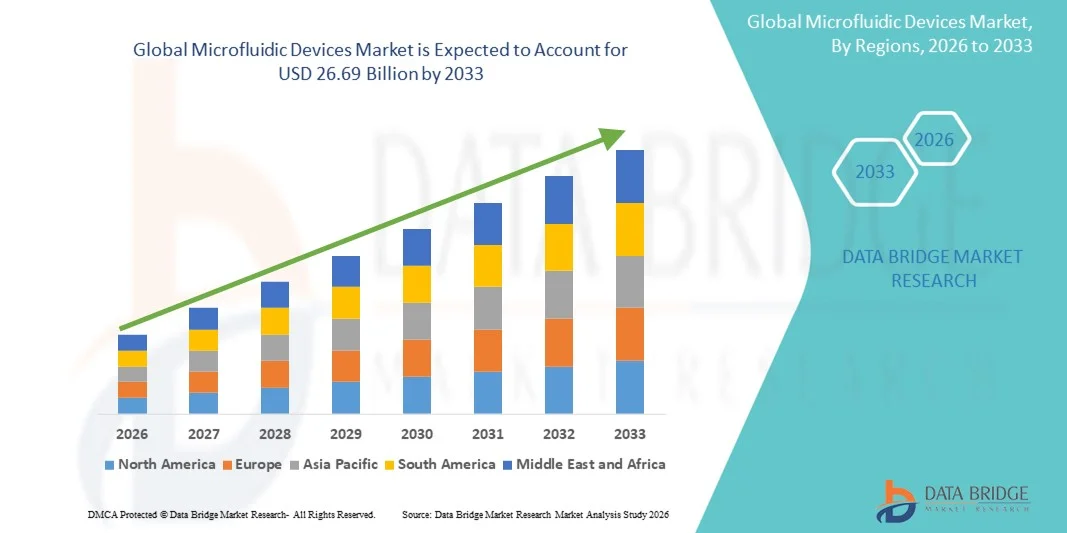
- Conforme a Data Bridge Market Research Analysis, o tamanho global do mercado de dispositivos microfluídicos foi avaliado em7,68 mil milhões de dólares em 2025e espera-se alcançar26,69 mil milhões de USD até 2033, em umaCAGR de 16,85%durante o período de previsão
- O crescimento do mercado é amplamente impulsionado pela crescente adoção de tecnologias de laboratório-sobre-um-chip, avanços nos diagnósticos de ponto-de-cuidado, e crescente integração de microfluídicos no desenvolvimento de drogas e pesquisa biomédica
- Além disso, a crescente demanda por soluções analíticas e diagnósticas miniaturizadas, precisas e econômicas em saúde, fármacos ebiotecnologiaestá a conduzir a adopção de dispositivos microfluídicos. Esses fatores convergentes estão acelerando a utilização de tecnologias microfluídicas, aumentando significativamente o crescimento da indústria.
Tamanho do mercado e previsão:
- Valor de mercado global (2025):7,68 mil milhões de USD
- Valor de mercado previsto (2033):26,69 mil milhões de USD
- Previsões CAGR (2026-2033):16.85%
Análise de mercado de dispositivos microfluídicos
- Dispositivos microfluídicos, permitindo a manipulação precisa de pequenos volumes de fluidos em chips ou plataformas lab-on-a-chip, são ferramentas cada vez mais críticas na área de saúde, diagnóstico, descoberta de drogas e pesquisa em biotecnologia devido à sua alta precisão, miniaturização e automação.
- A crescente procura de dispositivos microfluídicos é principalmente alimentada pela crescente adopção dediagnóstico do ponto de cuidado, o crescimento da medicina personalizada e a necessidade de soluções analíticas rápidas, econômicas e de alto rendimento em ambientes clínicos e de pesquisa
- A América do Norte dominou o mercado de dispositivos microfluídicos com a maior parcela de receita de 39,2% em 2025, caracterizada por infraestrutura avançada de saúde, forte financiamento de pesquisa e presença de atores-chave da indústria, com os EUA liderando na adoção de diagnósticos, análise de células únicas e aplicações de rastreamento de drogas de alto rendimento impulsionadas por inovações de empresas estabelecidas e startups especializadas
- Espera-se que a Ásia-Pacífico seja a região de crescimento mais rápido no mercado de dispositivos microfluídicos durante o período de previsão, devido ao aumento dos investimentos em infraestrutura de saúde, aumento das atividades de I&D em biotecnologia e ampliação da adoção de tecnologias ponto-de-cuidado e laboratório-em-um-chip em países como China, Japão e Índia
- O segmento de dispositivos baseados em microfluídicos dominou o mercado global de dispositivos microfluídicos com uma quota de mercado de 44,6% em 2025, impulsionado pelo seu papel crítico em aplicações centrais, como diagnóstico de doenças, análise celular e desenvolvimento de sistemas lab-on-chip
Escopo de relatório e Segmentação de Mercado de Dispositivos Microfluídicos
|
Atributos |
Perspectivas do mercado chave dos dispositivos microfluídicos |
|
Segmentos Cobertos |
|
|
Países abrangidos |
América do Norte
Europa
Ásia- Pacífico
Médio Oriente e África
América do Sul
|
|
Jogadores do mercado chave |
|
|
Oportunidades de Mercado |
|
|
Informações sobre o Valor Adicionado |
Além dos insights sobre cenários de mercado, como valor de mercado, taxa de crescimento, segmentação, cobertura geográfica e principais atores, os relatórios de mercado curados pela Data Bridge Market Research também incluem análise de especialistas em profundidade, epidemiologia do paciente, análise de pipelines, análise de preços e marco regulatório |
Tendências de mercado de dispositivos microfluídicos
Integração com o ponto de cuidado e diagnósticos de uso
- Uma tendência significativa e acelerada no mercado global de dispositivos microfluídicos é a crescente integração com testes ponto de cuidado e sistemas de diagnóstico wearable, permitindo monitoramento em tempo real e análise rápida
- Por exemplo, o sistema i-STAT Alinity incorpora cartuchos microfluídicos para análise de sangue à beira do leito, permitindo aos clínicos obter resultados imediatos sem equipamentos de laboratório centralizados
- A integração microfluídica com dispositivos portáteis permite a miniaturização de ensaios complexos, reduzindo volumes de amostra, tempo de retorno e custos operacionais, melhorando assim a acessibilidade em ambientes clínicos e remotos
- A incorporação contínua de dispositivos microfluídicos com smartphones e plataformas baseadas em nuvem facilita o monitoramento remoto, compartilhamento de dados e gerenciamento centralizado de saúde para pacientes e prestadores de cuidados de saúde
- Essa tendência para soluções diagnósticas compactas, rápidas e conectadas está transformando fundamentalmente os fluxos de trabalho de prestação e pesquisa em saúde. Consequentemente, empresas como Fluidigm e Bio-Rad estão avançando plataformas microfluídicas com recursos integrados de detecção e conectividade
- A demanda por dispositivos microfluídicos com maior portabilidade, precisão e conectividade está crescendo rapidamente nos setores de saúde, farmacêutica e biotecnologia, pois os stakeholders priorizam cada vez mais soluções analíticas eficientes e precisas
- Colaborações crescentes entre fornecedores de tecnologia microfluídica e empresas farmacêuticas estão permitindo o desenvolvimento de dispositivos especializados para a descoberta e triagem de medicamentos de alto rendimento
- O surgimento de sistemas híbridos microfluídicos combinando tecnologias digitais e de fluxo contínuo está permitindo aplicações mais versáteis e escaláveis em diagnósticos, monitoramento ambiental e pesquisa em biotecnologia
Dinâmica de Mercado de Dispositivos Microfluídicos
Controlador
Adoção crescente em diagnóstico, desenvolvimento de drogas e pesquisa biomédica
- A crescente dependência em tecnologias microfluídicas em diagnósticos, triagem de drogas de alto rendimento e pesquisa biomédica é um fator importante para a expansão do mercado
- Por exemplo, em março de 2025, a Dolomite Microfluidics lançou uma plataforma microfluídica avançada que permite testes automatizados de formulação de medicamentos, destacando o papel da tecnologia na aceleração da P&D farmacêutica
- À medida que os sistemas de saúde exigem testes mais rápidos, precisos e de baixo volume, os dispositivos microfluídicos oferecem características como ensaios multiplexados, uso reduzido de reagentes e retorno rápido, proporcionando uma solução convincente sobre métodos de laboratório convencionais
- Além disso, o crescimento da medicina personalizada, genômica e análise de células únicas está impulsionando a adoção de microfluidics como uma ferramenta crítica para cuidados de saúde de precisão e terapêutica direcionada
- A integração de microfluídicos com sistemas robóticos e plataformas de rastreamento de alto rendimento está aumentando a eficiência, precisão de dados e reprodutibilidade em laboratórios de pesquisa, impulsionando o crescimento do mercado
- Expansão do financiamento público e privado para projetos de diagnóstico e pesquisa baseados em microfluidics está apoiando atividades de I&D e acelerando a comercialização de dispositivos inovadores
- Aumento da adoção em mercados emergentes devido ao aumento dos investimentos em infraestrutura de saúde e a demanda por soluções diagnósticas econômicas está abrindo novas avenidas de crescimento para fabricantes de dispositivos microfluídicos
Restrição/Desafio
Complexidade técnica e altos custos de fabricação
- Os requisitos sofisticados de design e fabricação de dispositivos microfluídicos representam desafios significativos para a escalabilidade e penetração mais ampla no mercado. Arquiteturas complexas de microcanais e seleção precisa de materiais podem aumentar o tempo de desenvolvimento e os custos de produção
- Por exemplo, fotolitografia de alta resolução ou litografia suave usada na fabricação de chips microfluídicos muitas vezes requer equipamento especializado e pessoal qualificado, limitando a adoção de massa
- Garantir reprodutibilidade, confiabilidade do dispositivo e integração com sistemas de detecção a jusante é crucial, mas tecnicamente exigente, o que pode dificultar a comercialização e adoção por laboratórios menores
- Além disso, a conformidade regulatória e a padronização para aplicações clínicas podem ser rigorosas, exigindo ampla validação e aprovações que aumentam o tempo e a carga de custos para os fabricantes
- Embora as inovações reduzam gradualmente os custos, o prémio percebido para dispositivos microfluídicos de alta precisão pode ainda limitar a adopção, particularmente em mercados emergentes ou em ambientes de investigação sensíveis aos custos
- Superar esses desafios através de técnicas de fabricação escaláveis, projetos simplificados e suporte regulatório será vital para o crescimento sustentado do mercado
- O conhecimento limitado e a experiência técnica dos utilizadores finais relativamente aos sistemas microfluídicos podem atrasar a adopção, especialmente em instituições de investigação mais pequenas ou em regiões em desenvolvimento
- Potenciais problemas de compatibilidade de materiais e incrustação de dispositivos em ensaios biológicos ou químicos permanecem obstáculos técnicos, exigindo inovação contínua em materiais de dispositivos e tratamentos de superfície
Escopo de mercado de dispositivos microfluídicos
O mercado é segmentado com base em produtos, aplicações e usuários finais.
- Por Produto
Com base no produto, o mercado é segmentado em dispositivos microfluídicos e componentes microfluídicos. Os dispositivos baseados em microfluídicos dominaram o mercado com a maior parcela de receita de 44,6% em 2025, impulsionada pelo seu uso extensivo em sistemas de diagnóstico, fluxos de trabalho de descoberta de drogas e pesquisa em ciências da vida. Estes dispositivos formam as unidades funcionais do núcleo que permitem a manipulação de fluidos, análise celular e ensaios bioquímicos em microescala de precisão. A sua capacidade de integrar múltiplas funções laboratoriais em plataformas compactas e portáteis torna-as cada vez mais essenciais nos ecossistemas de saúde e biotecnologia. O segmento beneficia fortemente da adoção crescente de testes de ponto de cuidado, que se baseia fortemente em cartuchos e consumíveis habilitados para microfluídicos. Avanços contínuos em tecnologias lab-on-chip e crescentes investimentos em rápido desenvolvimento diagnóstico reforçam ainda mais a dominância desta categoria. Além disso, sua compatibilidade com sistemas analíticos automatizados e soluções de triagem de alto desempenho contribuem significativamente para a liderança sustentada do mercado.
Os componentes microfluídicos são esperados para testemunhar a taxa de crescimento mais rápida durante 2026-2033, impulsionado pela demanda rapidamente crescente de bombas, válvulas, sensores, chips e conectores usados no manuseio de fluidos em micro-escala. O crescimento é alimentado pela expansão de aplicações em sequenciamento de próxima geração, triagem de células, imunoensaios e sistemas de entrega de drogas de precisão. A inovação em nível de componente está acelerando devido à necessidade de maior precisão, redução do volume de amostra e melhoria das capacidades de integração com plataformas digitais e automatizadas. Pesquisadores e fabricantes dependem cada vez mais de componentes microfluídicos personalizáveis, permitindo um design flexível do sistema através de pesquisas, diagnósticos clínicos e automação industrial. A crescente adoção de plataformas microfluídicas modulares também está acelerando a demanda de componentes. Além disso, a expansão da produção comercial de chips microfluídicos à base de polímeros e vidros está impulsionando forte dinâmica de crescimento nos mercados globais.
- Por Aplicações
Com base em aplicações, o mercado é segmentado em In-Vitro Diagnostics (IVD), farmacêuticas, pesquisa de ciências da vida e fabricação. Os diagnósticos in vitro dominaram o mercado em 2025, apoiados pelo uso generalizado de plataformas microfluídicas em testes rápidos, rastreamento de doenças e diagnósticos descentralizados. O segmento se beneficia da forte demanda por ferramentas de diagnóstico compactas e de baixo custo, especialmente em áreas como testes de doenças infecciosas, detecção de biomarcadores de câncer e monitoramento de doenças crônicas. A microfluidics está sendo cada vez mais integrada em dispositivos do ponto-de-cuidado, apoiando a tomada de decisão mais rápida em hospitais, clínicas, e configurações do home-care. A pandemia de COVID-19 acelerou a adoção global de cartuchos de diagnóstico microfluídico, e esse momento continua devido a uma mudança sustentada para testes rápidos e confiáveis. As vantagens de miniaturização, automação e precisão tornam as ferramentas de IVD microfluídicas vitais para laboratórios clínicos. Além disso, o impulso para a medicina personalizada impulsiona a dependência significativa em tecnologias de testes genômicos e proteômicos habilitados para microfluídicos.
Prevê-se que o segmento farmacêutico testemunhe o crescimento mais rápido de 2026 a 2033, impulsionado pelo aumento do uso de microfluídicos na descoberta, formulação, triagem e análise de toxicidade de fármacos. Dispositivos microfluídicos permitem uma rápida experimentação com consumo mínimo de reagentes, acelerando a linha do tempo do desenvolvimento de drogas em fase inicial. As empresas farmacêuticas estão adotando plataformas órgão-em-chip e tecido-em-chip para modelagem mais precisa das respostas fisiológicas humanas. A capacidade dos microfluídicos para suportar o rastreamento de alto rendimento aumenta significativamente a produtividade da pesquisa. O crescente investimento em testes automatizados de drogas e terapêutica de precisão continua a aumentar o segmento. Além disso, sistemas microfluídicos suportam pesquisas avançadas de entrega de medicamentos, permitindo dosagem controlada e formulação de nanopartículas, contribuindo para a forte trajetória de crescimento do segmento.
- Por Usuários Finais
Com base nos usuários finais, o mercado é segmentado em POCT, pesquisa farmacêutica e ciência da vida, entrega de medicamentos, dispositivos analíticos, diagnóstico clínico e veterinário, e meio ambiente e industrial. A POCT dominou o mercado com a maior participação em 2025, impulsionada pela alta demanda de ferramentas diagnósticas rápidas e precisas que utilizam cartuchos microfluídicos e sistemas integrados. O segmento se beneficia substancialmente da tendência global de descentralização da assistência à saúde e do teste domiciliar. Os dispositivos Microfluidic POCT fornecem resultados rápidos ao usar volumes amostrais mínimos, tornando-os ideais para atendimento de emergência, locais remotos e ambientes limitados por recursos. A crescente prevalência de doenças infecciosas, diabetes e condições cardiovasculares continua a impulsionar a adoção. As inovações tecnológicas, tais como leitores conectados com smartphones e plataformas de diagnóstico ligadas à nuvem, reforçam ainda mais a posição de mercado do segmento. Espera-se que o aumento dos investimentos governamentais e privados em soluções de diagnóstico rápido mantenha a dominância do POCT ao longo do período de previsão.
O segmento de pesquisa farmacêutica e de ciências da vida é projetado para crescer mais rápido durante 2026-2033, apoiado pelo uso crescente de microfluídicos para análise celular, amplificação de DNA, fluxos de trabalho de sequenciamento e estudos bioquímicos de alta precisão. Pesquisadores dependem fortemente de chips microfluídicos e dispositivos modulares para realizar experimentos controlados em volumes de micro-escala. O segmento se beneficia de avanços contínuos nas plataformas microfluídicas de seleção de células, gotículas e órgão-em-chip. A microfluídica aumenta significativamente a reprodutibilidade e a produtividade em experimentos de pesquisa, tornando-a uma ferramenta essencial para laboratórios acadêmicos e industriais. O aumento do financiamento das iniciativas de biotecnologia e medicina de precisão a nível mundial está a acelerar a adopção. A integração de microfluídicos com a imagem melhorada por IA e sistemas laboratoriais automatizados impulsiona ainda mais o rápido crescimento do segmento.
Análise regional do mercado de dispositivos microfluídicos
- A América do Norte dominou o mercado de dispositivos microfluídicos com a maior parcela de receita de 39,2% em 2025, caracterizada por infraestrutura avançada de saúde, forte financiamento de pesquisa e presença de atores-chave da indústria, com os EUA liderando na adoção de diagnósticos, análise de células únicas e aplicações de rastreamento de drogas de alto rendimento impulsionadas por inovações de empresas estabelecidas e startups especializadas
- Pesquisadores e clínicos na região valorizam muito a precisão, miniaturização e capacidades analíticas rápidas oferecidas por dispositivos microfluídicos, que podem se integrar perfeitamente com sistemas de laboratório automatizados e plataformas de ponto de cuidado
- Esta adoção generalizada é ainda apoiada por um financiamento robusto para I&D, a presença de fornecedores de tecnologia microfluídica líderes, e crescente implementação de medicina personalizada, estabelecendo dispositivos microfluídicos como uma solução preferencial para aplicações clínicas, farmacêuticas e acadêmicas.
U.S. Microfluidic Devices Market Insight
O mercado de dispositivos microfluídicos dos EUA capturou a maior parcela de receita de 78% em 2025 na América do Norte, impulsionada pela forte ênfase do país em cuidados de saúde de precisão, infraestrutura de pesquisa avançada e alta adoção de diagnósticos de ponto de cuidado. A presença de empresas líderes em biotecnologia e farmacêutica, juntamente com investimentos contínuos em tecnologias lab-on-a-chip, está alimentando o crescimento do mercado. Além disso, a integração de dispositivos microfluídicos com plataformas automatizadas e sistemas de diagnóstico wearable está expandindo aplicações em pesquisas clínicas, farmacêuticas e acadêmicas. As iniciativas governamentais que apoiam diagnósticos inovadores e a medicina personalizada estão acelerando ainda mais a adoção de tecnologias microfluídicas.
Informação sobre o mercado de dispositivos microfluídicos da Europa
Projeta-se que o mercado europeu de dispositivos microfluídicos se expanda em um CAGR substancial ao longo do período de previsão, impulsionado principalmente pelo aumento dos investimentos em pesquisa biomédica, rigorosos padrões regulatórios para precisão diagnóstica e crescente demanda por soluções miniaturizadas de laboratório em chip. Aumentar a consciência sobre diagnósticos rápidos, particularmente em oncologia e doenças infecciosas, está impulsionando a adoção em hospitais, laboratórios e instituições de pesquisa. Além disso, as colaborações entre universidades europeias e empresas de biotecnologia apoiam o desenvolvimento de plataformas microfluídicas de nova geração. O mercado está testemunhando o crescimento de diagnósticos clínicos, de P&D farmacêutica e de aplicações de monitoramento ambiental.
U.K. Microfluidic Devices Market Insight
O mercado de dispositivos microfluídicos do Reino Unido está previsto para crescer em um CAGR notável durante o período de previsão, impulsionado pelo crescente foco na medicina de precisão, análise de células únicas e triagem de drogas de alto rendimento. Além disso, a crescente adoção de plataformas microfluídicas automatizadas em pesquisas acadêmicas e clínicas está impulsionando a demanda do mercado. A forte infraestrutura de saúde do Reino Unido, juntamente com o apoio governamental à inovação em tecnologias de diagnóstico, está facilitando a comercialização de soluções microfluídicas avançadas. Colaborações entre startups e empresas de biotecnologia estabelecidas estão aumentando ainda mais as ofertas de produtos e a penetração no mercado.
Alemanha Microfluidic Devices Market Insight
Espera-se que o mercado de dispositivos microfluídicos da Alemanha se expanda em um CAGR considerável durante o período de previsão, alimentado por crescentes investimentos em I&D, avanços tecnológicos em sistemas lab-on-a-chip e uma forte ênfase em diagnósticos de precisão. A bem estabelecida infraestrutura de saúde e pesquisa da Alemanha, aliada ao apoio governamental à inovação e à saúde digital, promove a adoção de dispositivos microfluídicos. A integração de microfluídicos com plataformas analíticas automatizadas está ganhando força, particularmente em pesquisas farmacêuticas e diagnósticos clínicos. Os materiais ecológicos e sustentáveis na fabricação de dispositivos também estão alinhados com as expectativas locais de regulação e de consumo.
Visão do mercado de dispositivos microfluídicos Ásia-Pacífico
O mercado de dispositivos microfluídicos Ásia-Pacífico está preparado para crescer no CAGR mais rápido de 26% durante o período de previsão de 2026 a 2033, impulsionado pelo aumento dos investimentos em biotecnologia, urbanização rápida e aumento da infraestrutura de saúde em países como China, Japão e Índia. A adoção crescente de diagnósticos de ponto de cuidado, sistemas de teste wearable e plataformas lab-on-a-chip está impulsionando a expansão do mercado. Além disso, as iniciativas governamentais para promover a inovação em saúde e biotecnologia estão acelerando a adoção de dispositivos microfluídicos. A região também está emergindo como um centro de fabricação de componentes microfluídicos, tornando os dispositivos mais acessíveis e econômicos para pesquisas e aplicações clínicas.
Japão Microfluidic Devices Market Insight
O mercado de dispositivos microfluídicos do Japão está ganhando impulso devido ao foco do país em tecnologias avançadas de saúde, envelhecimento populacional e crescente demanda por diagnósticos de precisão. A adoção é alimentada pelo aumento da implementação de testes ponto de cuidado, dispositivos lab-on-a-chip, e integração comSistemas de monitorização utilizáveis.Instituições de pesquisa e hospitais japoneses estão investindo fortemente em tecnologias microfluídicas para aplicações clínicas e biomédicas. A ênfase nas soluções diagnósticas miniaturizadas, automatizadas e conectadas está impulsionando a inovação, particularmente no desenvolvimento de drogas, medicina personalizada e monitoramento da saúde.
Índia Microfluidic Devices Market Insight
O mercado de dispositivos microfluídicos da Índia representou a maior parte de receita de mercado na Ásia Pacífico em 2025, atribuída ao setor de biotecnologia em expansão do país, aumento da infraestrutura de saúde e adoção crescente de tecnologias de diagnóstico inovadoras. A Índia está assistindo a um rápido crescimento nos testes de ponto de cuidado, pesquisa farmacêutica e laboratórios clínicos utilizando plataformas microfluídicas. Iniciativas governamentais de apoio à saúde inteligente, diagnósticos acessíveis e inovação em pesquisa estão impulsionando o crescimento do mercado. A disponibilidade de soluções microfluídicas e colaborações custo-efetivas entre fabricantes nacionais e fornecedores internacionais de tecnologia estão aumentando ainda mais a adoção em aplicações de pesquisa clínica, farmacêutica e acadêmica.
Mercado de dispositivos microfluídicos
A indústria de dispositivos microfluídicos é liderada principalmente por empresas bem estabelecidas, incluindo:
- Standard BioTools Inc.(EUA)
- Bio-Rad Laboratories, Inc.(EUA)
- Thermo Fisher Scientific Inc. (EUA)
- Agilent Technologies, Inc.. (EUA)
- PerkinElmer(EUA)
- Illumina, Inc. (EUA)
- Abbott (EUA)
- Danaher (EUA)
- Fluigent SA (França)
- Micronit Microtecnologias B.V. (Países Baixos)
- Sphere Fluidics Limited (U.K.)
- Elveflow (França)
- uFluidix Inc. (Canadá)
- Microfluidic ChipShop GmbH (Alemanha)
- Cellix Ltd. (Irlanda)
- ALine Inc. (EUA)
- Parker Hannifin Corporation (EUA)
- SMC Corporation (Japão)
- Camozzi Automation Spa Società Unipersonale (Itália)
- Blacktrace Holdings Ltd.
Quais são os recentes desenvolvimentos no mercado global de dispositivos microfluídicos
- Em setembro de 2025, pesquisadores do Instituto Terasaki de Inovação Biomédica (em colaboração com a Universidade do Texas San Antonio) desvelaram uma nova plataforma de biossensoria baseada em microfluídicos que permite o rastreamento em tempo real e livre de etiquetas de secreção de anticorpos monoclonais de células potencialmente transformando biomanufatura, acelerando a triagem e reduzindo os custos de produção
- Em novembro de 2024, a Parallel Fluidics encerrou uma rodada de financiamento de US$ 7 milhões para acelerar o desenvolvimento de sua plataforma de projeto e fabricação microfluídica sob demanda, incluindo a comercialização de seu novo produto de microválvula “MV-2”, com o objetivo de possibilitar aplicações clínicas e de atendimento fora dos laboratórios tradicionais
- Em fevereiro de 2024, um estudo publicado sob Microfluidics and Organ-on-a-Chip for Disease Modeling and Drug Screening destacou avanços significativos na combinação de dispositivos microfluidic com sistemas de organi-on-a-chip (OoC) para a modelagem de doenças e a triagem de medicamentos sublinhando a adoção crescente de plataformas microfluidic em pesquisa pré-clínica e medicina personalizada
- Em agosto de 2023, Cytovale lançou o Teste IntelliSep® um teste microfluídico rápido e claro para detecção de sepse que avalia deformabilidade de células brancas, fornecendo resultados de estratificação de risco de sepse em 8-10 minutos. Desde então, tem sido adotado nos serviços de emergência hospitalar para melhorar a detecção precoce e triagem do paciente
- Em maio de 2023, CellFE, Inc. anunciou o lançamento comercial de sua plataforma de engenharia celular "Infinity MtxTM" um sistema baseado em microfluídicos que usa rápida compressão celular e re-expansão para introduzir cargas úteis em células de forma eficiente, prometendo maiores rendimentos e fabricação de terapia celular mais rápida
SKU-
Obtenha acesso online ao relatório sobre a primeira nuvem de inteligência de mercado do mundo

- Painel interativo de análise de dados
- Painel de análise da empresa para oportunidades de elevado potencial de crescimento
- Acesso de analista de pesquisa para personalização e customização. consultas
- Análise da concorrência com painel interativo
- Últimas notícias, atualizações e atualizações Análise de tendências
- Aproveite o poder da análise de benchmark para um rastreio abrangente da concorrência
Metodologia de Investigação
A recolha de dados e a análise do ano base são feitas através de módulos de recolha de dados com amostras grandes. A etapa inclui a obtenção de informações de mercado ou dados relacionados através de diversas fontes e estratégias. Inclui examinar e planear antecipadamente todos os dados adquiridos no passado. Da mesma forma, envolve o exame de inconsistências de informação observadas em diferentes fontes de informação. Os dados de mercado são analisados e estimados utilizando modelos estatísticos e coerentes de mercado. Além disso, a análise da quota de mercado e a análise das principais tendências são os principais fatores de sucesso no relatório de mercado. Para saber mais, solicite uma chamada de analista ou abra a sua consulta.
A principal metodologia de investigação utilizada pela equipa de investigação do DBMR é a triangulação de dados que envolve a mineração de dados, a análise do impacto das variáveis de dados no mercado e a validação primária (especialista do setor). Os modelos de dados incluem grelha de posicionamento de fornecedores, análise da linha de tempo do mercado, visão geral e guia de mercado, grelha de posicionamento da empresa, análise de patentes, análise de preços, análise da quota de mercado da empresa, normas de medição, análise global versus regional e de participação dos fornecedores. Para saber mais sobre a metodologia de investigação, faça uma consulta para falar com os nossos especialistas do setor.
Personalização disponível
A Data Bridge Market Research é líder em investigação formativa avançada. Orgulhamo-nos de servir os nossos clientes novos e existentes com dados e análises que correspondem e atendem aos seus objetivos. O relatório pode ser personalizado para incluir análise de tendências de preços de marcas-alvo, compreensão do mercado para países adicionais (solicite a lista de países), dados de resultados de ensaios clínicos, revisão de literatura, mercado remodelado e análise de base de produtos . A análise de mercado dos concorrentes-alvo pode ser analisada desde análises baseadas em tecnologia até estratégias de carteira de mercado. Podemos adicionar quantos concorrentes necessitar de dados no formato e estilo de dados que procura. A nossa equipa de analistas também pode fornecer dados em tabelas dinâmicas de ficheiros Excel em bruto (livro de factos) ou pode ajudá-lo a criar apresentações a partir dos conjuntos de dados disponíveis no relatório.











