Global Obesity Hypoventilation Syndrome Treatment Market Segmentation, By Treatment (Diet, Exercise, Oxygen Therapy, Surgery, Pharmacotherapy, and Others), Diagnosis (Lung function test, Polysomnography, X-ray, CT scan, Echocardiogram, and Others), End-Users (Clinic, Hospital, and Others), Distribution Channel (Hospital Pharmacy, Retail Pharmacy, and Online Pharmacy) – Industry Trends and Forecast to 2032
Obesity Hypoventilation Syndrome Treatment Market Analysis
The global obesity hypoventilation syndrome (OHS) treatment market is experiencing steady growth driven by increasing awareness, advancements in medical technologies, and rising investments in research and development. OHS, a condition often seen in individuals with obesity, is characterized by chronic hypoventilation, leading to oxygen deficiency and severe complications such as sleep apnea. The treatment approaches include the use of non-invasive positive pressure ventilation (NIPPV), such as CPAP (continuous positive airway pressure) and bilevel positive airway pressure (BiPAP), which are commonly used to manage symptoms. The growing prevalence of obesity and associated comorbidities, along with the expansion of healthcare infrastructure, further propel market demand. Other treatment methods such as pharmacotherapy, oxygen therapy, and in some cases, bariatric surgery, are also gaining traction. The rise in personalized care and improved diagnostic techniques, including sleep studies and pulmonary function tests, are allowing for more accurate and timely treatment interventions. These factors contribute to a promising outlook for the market, with key players investing in innovative therapies to cater to the growing global burden of obesity and OHS.
Obesity Hypoventilation Syndrome Treatment Market Size
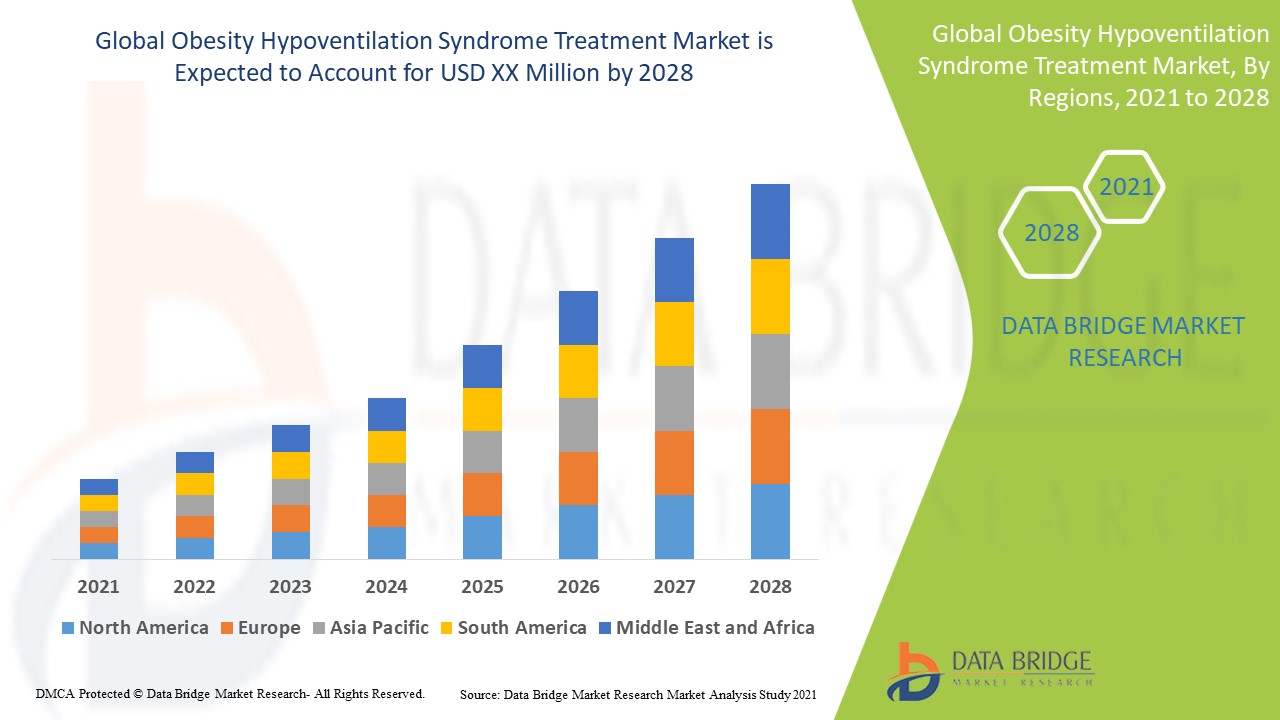
The global obesity hypoventilation syndrome treatment market size was valued at USD 803.88 million in 2024 and is projected to reach USD 1375.03 million by 2032, with a CAGR of 6.94% during the forecast period of 2025 to 2032. In addition to the insights on market scenarios such as market value, growth rate, segmentation, geographical coverage, and major players, the market reports curated by the Data Bridge Market Research also include depth expert analysis, patient epidemiology, pipeline analysis, pricing analysis, and regulatory framework.
Obesity Hypoventilation Syndrome Treatment Market Trends
“Growing Use of Non-Invasive Positive Pressure Ventilation (NIPPV) Therapies”
The obesity hypoventilation syndrome (OHS) treatment market is expanding due to the rising prevalence of obesity and respiratory disorders. One notable trend is the growing use of non-invasive positive pressure ventilation (NIPPV) therapies, such as CPAP (continuous positive airway pressure) and BiPAP (bilevel positive airway pressure). These devices are increasingly preferred due to their effectiveness in improving oxygen levels and patient compliance. For instance, CPAP therapy has become a standard treatment for OHS patients, helping prevent the progression of respiratory failure and other complications associated with obesity-related hypoventilation. Another significant advancement is the development of more sophisticated, personalized treatment options. Providers are increasingly incorporating tailored approaches, including pharmacotherapy, lifestyle changes, and even bariatric surgery, to address the individual needs of OHS patients. The market growth is also driven by innovations in diagnostic tools, such as sleep studies and pulmonary function tests, allowing for earlier detection and better management of the condition. As healthcare infrastructure improves, especially in emerging markets, the demand for OHS treatment options continues to rise.
Report Scope and Obesity Hypoventilation Syndrome Treatment Market Segmentation
|
Attributes |
Obesity Hypoventilation Syndrome Treatment Key Market Insights |
|
Segments Covered |
|
|
Countries Covered |
U.S., Canada and Mexico in North America, Germany, France, U.K., Netherlands, Switzerland, Belgium, Russia, Italy, Spain, Turkey, Rest of Europe in Europe, China, Japan, India, South Korea, Singapore, Malaysia, Australia, Thailand, Indonesia, Philippines, Rest of Asia-Pacific (APAC) in the Asia-Pacific (APAC), Saudi Arabia, U.A.E., South Africa, Egypt, Israel, Rest of Middle East and Africa (MEA) as a part of Middle East and Africa (MEA), Brazil, Argentina and Rest of South America as part of South America |
|
Key Market Players |
Accord Healthcare US (U.S.), Teva Pharmaceutical Industries Ltd. (Israel), Avet Pharmaceuticals Inc. (U.S.), Nostrum Laboratories Inc. (U.S.), Lannett (U.S.), Zydus Cadila (India), Strides Pharma Science Limited (India), XGen Pharmaceuticals DJB, Inc. (U.S.), Emcure Pharmaceuticals (India), Viatris Inc. (U.S.), Sun Pharmaceutical Industries Ltd. (India), Hikma Pharmaceuticals PLC (U.K.), Lupin (India), Cipla Inc. (India), Glenmark Pharmaceuticals Ltd. (India), Alkem Laboratories (India), Estrellas Life Sciences Private Limited (India), BioPharma (Canada), Sofgen (Switzerland), Virtus Pharma (U.S.), and Blubellpharma (India) |
|
Market Opportunities |
|
|
Value Added Data Infosets |
In addition to the insights on market scenarios such as market value, growth rate, segmentation, geographical coverage, and major players, the market reports curated by the Data Bridge Market Research also include depth expert analysis, patient epidemiology, pipeline analysis, pricing analysis, and regulatory framework. |
Obesity Hypoventilation Syndrome Treatment Market Definition
Obesity Hypoventilation Syndrome (OHS) is a condition in which individuals with obesity experience respiratory insufficiency during sleep, leading to inadequate ventilation and oxygen levels in the blood. Treatment for OHS typically involves non-invasive ventilation therapies, such as CPAP (Continuous Positive Airway Pressure) or BiPAP (Bilevel Positive Airway Pressure), which help maintain airway patency and improve oxygenation.
Obesity Hypoventilation Syndrome Treatment Market Dynamics
Drivers
- Increasing Global Prevalence of Obesity
The increasing global prevalence of obesity is a primary driver for the growth of the obesity hypoventilation syndrome (OHS) treatment market. As obesity rates rise, so does the incidence of OHS, a serious complication of excess body weight that affects respiratory function. According to the World Health Organization (WHO), more than 650 million adults worldwide were obese in 2016, and this number continues to grow. Obesity is closely linked with various health complications, including OHS, which leads to reduced lung function and hypoventilation. With the rise in obesity-related conditions such as sleep apnea and respiratory failure, the demand for treatments such as non-invasive ventilation devices, pharmacotherapy, and bariatric surgery has surged. The global burden of obesity and its associated health risks is prompting healthcare systems to focus on more effective OHS management, which in turn is driving the expansion of the treatment market. This increasing prevalence directly correlates with a growing need for specialized therapies, highlighting the market's potential for further growth.
- Rising Incidence of Comorbidities
The rising incidence of comorbidities associated with obesity, such as type 2 diabetes, hypertension, and cardiovascular diseases, significantly contributes to the growing demand for comprehensive treatment solutions for Obesity Hypoventilation Syndrome (OHS). OHS often occurs in individuals with these coexisting conditions, which exacerbate respiratory symptoms, making it more challenging to manage. According to the Centers for Disease Control and Prevention (CDC), over 30% of adults in the U.S. suffer from hypertension, and nearly 11% live with type 2 diabetes, many of whom also struggle with obesity. These comorbidities can worsen the effects of OHS, leading to more severe outcomes such as heart failure and pulmonary hypertension, which necessitate integrated care approaches that address both respiratory and metabolic conditions. As a result, healthcare providers are increasingly adopting multi-disciplinary strategies, combining weight management, pharmacotherapy, and advanced ventilation therapies, thus driving market growth. The increasing prevalence of these obesity-related comorbidities underscores the urgent need for comprehensive OHS treatments, further expanding the treatment market
Opportunities
- Growing Technological Advancements in Diagnostic Tools
Technological advancements in diagnostic tools have created significant opportunities for the OHS treatment market by enabling earlier and more accurate detection, leading to improved patient outcomes. Enhanced methods such as home sleep studies, polysomnography, and advanced pulmonary function tests have revolutionized the way OHS is diagnosed. These tools allow healthcare providers to identify OHS even in the early stages when symptoms might be less severe or easily overlooked. For instance, home sleep studies, which can be conducted in the comfort of a patient’s home, are gaining popularity for their convenience and accuracy in detecting sleep-disordered breathing associated with OHS. Early detection is crucial because it allows for timely interventions such as CPAP therapy or lifestyle changes, which can prevent severe complications such as heart failure or pulmonary hypertension. As a result, the ability to diagnose OHS more accurately is driving demand for treatment solutions, presenting a market opportunity for companies offering diagnostic technologies and therapies that can be integrated into personalized care plans.
- Increasing Government Initiatives and Healthcare Investments
Government initiatives and healthcare investments are significant drivers of the OHS treatment market, especially as governments in both developed and emerging markets focus more on combating obesity and improving respiratory health. For instance, programs aimed at promoting obesity prevention, weight loss, and managing respiratory disorders have gained traction worldwide. In the U.S., the Centers for Disease Control and Prevention (CDC) has increased funding for initiatives targeting obesity, with the goal of reducing obesity-related health issues such as OHS. Similarly, governments in countries such as India and China are investing in expanding healthcare infrastructure and promoting awareness of sleep disorders, including OHS. These investments also support research and innovation in treatments for obesity-related hypoventilation and sleep apnea. The growing governmental support, coupled with increasing public health initiatives to fight obesity, represents a market opportunity for the OHS treatment sector. Companies involved in OHS treatments, from diagnostic devices to therapeutic interventions, can benefit from these initiatives, which contribute to a larger patient pool and greater demand for effective management options
Restraints/Challenges
- High Cost of Treatment
The high cost of treatment for Obesity Hypoventilation Syndrome (OHS) is a significant market challenge, as it limits accessibility and affordability for many patients. Treatment options, including non-invasive ventilation devices such as BiPAP or CPAP machines, often come with high upfront costs for both the equipment and ongoing maintenance. For instance, a BiPAP machine can cost several thousand dollars, and patients may require long-term follow-up care, including frequent doctor visits, respiratory therapy, and sometimes hospitalization. Additionally, bariatric surgery, which is recommended for some patients to address underlying obesity, can cost tens of thousands of dollars. These high costs create barriers, particularly in lower-income or resource-limited settings, and may result in patients opting for less effective or delayed treatments. Moreover, limited insurance coverage for such devices and treatments exacerbates the issue, reducing the overall market potential. As a result, the high cost of OHS treatment presents a substantial challenge to both patients and healthcare providers, hindering widespread access and delaying timely intervention, which could improve patient outcomes and reduce long-term healthcare costs.
- Underdiagnosis and Misdiagnosis
Underdiagnosis and misdiagnosis of Obesity Hypoventilation Syndrome (OHS) pose a significant market challenge by delaying appropriate treatment and management. OHS is often mistaken for other respiratory or sleep disorders, such as obstructive sleep apnea (OSA) or chronic obstructive pulmonary disease (COPD), due to overlapping symptoms such as daytime fatigue, shortness of breath, and snoring. As a result, many patients with OHS remain undiagnosed or are misdiagnosed, which leads to ineffective treatments or no treatment at all. For instance, a patient with OHS may receive a CPAP device meant for OSA, which does not address the hypoventilation aspect of OHS and may worsen their condition. This diagnostic oversight delays the initiation of appropriate interventions, such as non-invasive ventilation (NIV) or bariatric surgery, resulting in worsened health outcomes and higher long-term healthcare costs. Furthermore, the lack of awareness among general practitioners regarding OHS compounds this issue, leading to significant diagnostic delays. This underdiagnosis and misdiagnosis reduce the overall market for specialized treatments and care, as patients remain untreated or mismanaged, and healthcare providers may be hesitant to adopt newer diagnostic technologies or therapies without clear indications of efficacy.
This market report provides details of new recent developments, trade regulations, import-export analysis, production analysis, value chain optimization, market share, impact of domestic and localized market players, analyses opportunities in terms of emerging revenue pockets, changes in market regulations, strategic market growth analysis, market size, category market growths, application niches and dominance, product approvals, product launches, geographic expansions, technological innovations in the market. To gain more info on the market contact Data Bridge Market Research for an Analyst Brief, our team will help you take an informed market decision to achieve market growth.
Obesity Hypoventilation Syndrome Treatment Market Scope
The market is segmented on the basis of treatment, diagnosis, end-users, and distribution channel. The growth amongst these segments will help you analyse meagre growth segments in the industries and provide the users with a valuable market overview and market insights to help them make strategic decisions for identifying core market applications.
Treatment
- Diet
- Exercise
- Oxygen Therapy
- Surgery
- Pharmacotherapy
- Others
Diagnosis
- Lung Function Test
- Polysomnography
- X-ray
- CT Scan
- Echocardiogram
- Others
End-Users
- Clinic
- Hospital
- Others
Distribution Channel
- Hospital Pharmacy
- Retail Pharmacy
- Online Pharmacy
Obesity Hypoventilation Syndrome Treatment Market Regional Analysis
The market is analysed and market size insights and trends are provided by country, treatment, diagnosis, end-users, and distribution channel as referenced above.
The countries covered in the market report are U.S., Canada and Mexico in North America, Germany, France, U.K., Netherlands, Switzerland, Belgium, Russia, Italy, Spain, Turkey, Rest of Europe in Europe, China, Japan, India, South Korea, Singapore, Malaysia, Australia, Thailand, Indonesia, Philippines, Rest of Asia-Pacific (APAC) in the Asia-Pacific (APAC), Saudi Arabia, U.A.E., South Africa, Egypt, Israel, Rest of Middle East and Africa (MEA) as a part of Middle East and Africa (MEA), Brazil, Argentina and Rest of South America as part of South America.
North America leads the obesity hypoventilation syndrome treatment market, driven by several key factors. The region benefits from the presence of major pharmaceutical and healthcare companies actively involved in advancing treatment options. Additionally, the growing prevalence of obesity hypoventilation syndrome, coupled with substantial investments in research and development, fuels market growth. A well-established healthcare infrastructure further supports the adoption of innovative therapies and ensures widespread access to care.
Asia-Pacific is anticipated to experience significant growth in the obesity hypoventilation syndrome treatment market during the forecast period of 2025-2032. This growth is attributed to increasing research and development activities aimed at improving diagnostic and therapeutic options. Emerging markets within the region are witnessing rising investments in healthcare infrastructure, supported by growing government initiatives to enhance public health. These factors, combined with an expanding focus on addressing the burden of respiratory disorders, are expected to drive market expansion in the coming years.
The country section of the report also provides individual market impacting factors and changes in regulation in the market domestically that impacts the current and future trends of the market. Data points such as down-stream and upstream value chain analysis, technical trends and porter's five forces analysis, case studies are some of the pointers used to forecast the market scenario for individual countries. Also, the presence and availability of global brands and their challenges faced due to large or scarce competition from local and domestic brands, impact of domestic tariffs and trade routes are considered while providing forecast analysis of the country data.
Obesity Hypoventilation Syndrome Treatment Market Share
The market competitive landscape provides details by competitor. Details included are company overview, company financials, revenue generated, market potential, investment in research and development, new market initiatives, global presence, production sites and facilities, production capacities, company strengths and weaknesses, product launch, product width and breadth, application dominance. The above data points provided are only related to the companies' focus related to market.
Obesity Hypoventilation Syndrome Treatment Market Leaders Operating in the Market Are:
- Accord Healthcare US (U.S.)
- Teva Pharmaceutical Industries Ltd. (Israel)
- Avet Pharmaceuticals Inc. (U.S.)
- Nostrum Laboratories Inc. (U.S.)
- Lannett (U.S.)
- Zydus Cadila (India)
- Strides Pharma Science Limited (India)
- XGen Pharmaceuticals DJB, Inc. (U.S.)
- Emcure Pharmaceuticals (India)
- Viatris Inc. (U.S.)
- Sun Pharmaceutical Industries Ltd. (India)
- Hikma Pharmaceuticals PLC (U.K.)
- Lupin (India)
- Cipla Inc. (India)
- Glenmark Pharmaceuticals Ltd. (India)
- Alkem Laboratories (India)
- Estrellas Life Sciences Private Limited (India)
- BioPharma (Canada)
- Sofgen (Switzerland)
- Virtus Pharma (U.S.)
- Blubellpharma (India)
SKU-
Obtenha acesso online ao relatório sobre a primeira nuvem de inteligência de mercado do mundo
- Painel interativo de análise de dados
- Painel de análise da empresa para oportunidades de elevado potencial de crescimento
- Acesso de analista de pesquisa para personalização e customização. consultas
- Análise da concorrência com painel interativo
- Últimas notícias, atualizações e atualizações Análise de tendências
- Aproveite o poder da análise de benchmark para um rastreio abrangente da concorrência
Metodologia de Investigação
A recolha de dados e a análise do ano base são feitas através de módulos de recolha de dados com amostras grandes. A etapa inclui a obtenção de informações de mercado ou dados relacionados através de diversas fontes e estratégias. Inclui examinar e planear antecipadamente todos os dados adquiridos no passado. Da mesma forma, envolve o exame de inconsistências de informação observadas em diferentes fontes de informação. Os dados de mercado são analisados e estimados utilizando modelos estatísticos e coerentes de mercado. Além disso, a análise da quota de mercado e a análise das principais tendências são os principais fatores de sucesso no relatório de mercado. Para saber mais, solicite uma chamada de analista ou abra a sua consulta.
A principal metodologia de investigação utilizada pela equipa de investigação do DBMR é a triangulação de dados que envolve a mineração de dados, a análise do impacto das variáveis de dados no mercado e a validação primária (especialista do setor). Os modelos de dados incluem grelha de posicionamento de fornecedores, análise da linha de tempo do mercado, visão geral e guia de mercado, grelha de posicionamento da empresa, análise de patentes, análise de preços, análise da quota de mercado da empresa, normas de medição, análise global versus regional e de participação dos fornecedores. Para saber mais sobre a metodologia de investigação, faça uma consulta para falar com os nossos especialistas do setor.
Personalização disponível
A Data Bridge Market Research é líder em investigação formativa avançada. Orgulhamo-nos de servir os nossos clientes novos e existentes com dados e análises que correspondem e atendem aos seus objetivos. O relatório pode ser personalizado para incluir análise de tendências de preços de marcas-alvo, compreensão do mercado para países adicionais (solicite a lista de países), dados de resultados de ensaios clínicos, revisão de literatura, mercado remodelado e análise de base de produtos . A análise de mercado dos concorrentes-alvo pode ser analisada desde análises baseadas em tecnologia até estratégias de carteira de mercado. Podemos adicionar quantos concorrentes necessitar de dados no formato e estilo de dados que procura. A nossa equipa de analistas também pode fornecer dados em tabelas dinâmicas de ficheiros Excel em bruto (livro de factos) ou pode ajudá-lo a criar apresentações a partir dos conjuntos de dados disponíveis no relatório.