



Segmentação de Mercado do Simulador Global de Operador, Por Componente (Hardware, Software, Serviço), Tipo de Operador (Formação de Operador de Console, Treinamento de Operador de Campo), Uso Final (Automotivo, Aeroespacial e Defesa, Energia e Energia, Petróleo e Gás, Médico e Saúde, Outros) - Tendências e Previsão da Indústria para 2033
O que é o Simulador de Treinamento de Operador tamanho do mercado e taxa de crescimento
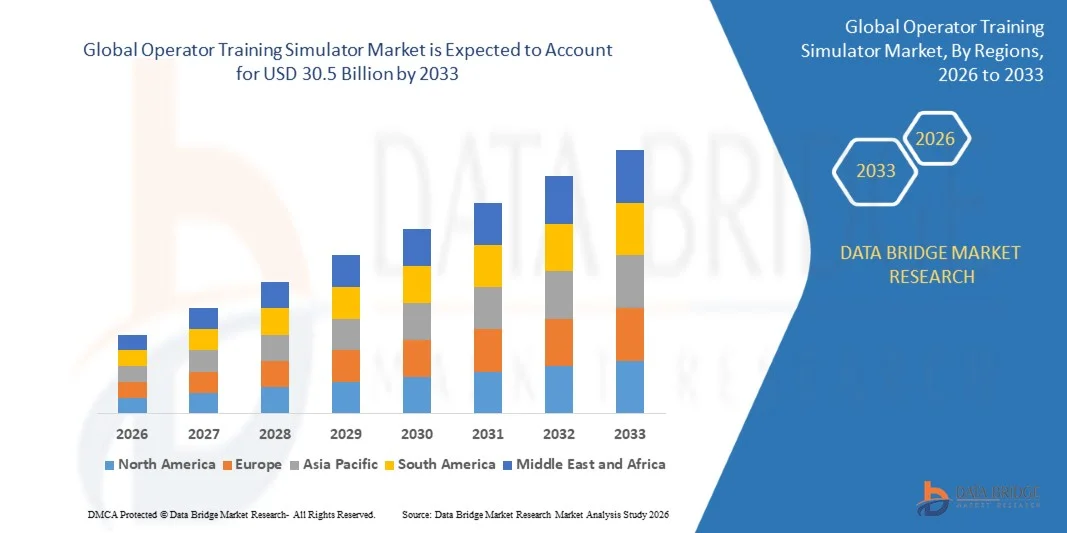
- Segundo a análise de mercado, o mercado global de simuladores de treinamento de operadores foi avaliado em aproximadamenteUSD 12,6 mil milhões em 2025e é projetado para alcançar30 500 milhões de USD até 2033, crescendo emCAGR de 11,9% de 2026 a 2033.
- O mercado está a assistir a um crescimento impulsionado pelo aumento da procura de operadores qualificados e competentes, por uma ênfase crescente na segurança no local de trabalho, por regulamentações de segurança rigorosas e pela necessidade de reduzir os erros humanos e os riscos operacionais em ambientes industriais complexos. Simuladores de treinamento de operador fornecem ambientes controlados onde o pessoal pode praticar operações de rotina, situações de emergência e decisões críticas sem expor trabalhadores ou equipamentos a riscos do mundo real.
- Aumento da adoção de inteligência artificial, simulação 3D imersiva,realidade virtual, e tecnologias avançadas de simulação de processos está criando novas oportunidades de crescimento. Indústrias como petróleo e gás, energia e energia, aeroespacial e defesa, automotivo e saúde estão adotando cada vez mais treinamento baseado em simulação para melhorar a preparação da força de trabalho, eficiência operacional e desempenho de segurança.
Tamanho e previsão do mercado
- Valor de mercado (2025): 12,6 mil milhões de USD
- Valor de mercado esperado (2033): USD 30.5 milhões
- Previsões CAGR (2026-2033): 11,9%
- Região líder em 2025: América do Norte
- Região de crescimento mais rápido: Ásia-Pacífico
Quais são as principais takeaways do mercado de simuladores de treinamento de operador
- A América do Norte dominou o mercado global de simuladores de treinamento de operadores com uma quota de mercado de 32,9% em 2025, apoiada por infraestrutura industrial avançada, requisitos rigorosos de segurança no local de trabalho e forte adoção de treinamento de força de trabalho baseado em simulação em petróleo e gás, energia e energia, fabricação, aeroespacial e defesa, e outras indústrias. A presença de fornecedores de tecnologia de automação e simulação estabelecidos e o aumento dos investimentos em digitalização estão apoiando ainda mais o desenvolvimento regional do mercado.
- Espera-se que a Ásia-Pacífico testemunhe um forte crescimento no mercado global de simuladores de treinamento de operadores durante o período de previsão, apoiado pela rápida industrialização, expansão da infraestrutura de fabricação e energia, aumento do foco na segurança da força de trabalho e adoção crescente de tecnologias de simulação digital. Aumentar os investimentos em automação e treinamento de operadores em toda a China, Índia, Japão, Coreia do Sul e outras economias asiáticas estão contribuindo ainda mais para a expansão regional.
- O hardware representou o segmento líder do mercado global de simuladores de treinamento de operadores com uma quota de mercado de 47,7% em 2025, apoiado pelo papel crítico dos processadores, sistemas gráficos, dispositivos de entrada/saída e periféricos especializados na criação de ambientes de treinamento realistas e imersivos. O aumento da demanda por sistemas de simulação de alta fidelidade e tecnologias avançadas de visualização está apoiando ainda mais a adoção de hardware.
- O operador de console representou o maior segmento de operador do mercado global de simuladores de treinamento de operador em 2025, apoiado pela necessidade de treinar pessoal responsável pelo monitoramento e controle de processos industriais complexos a partir de salas de controle centralizadas. Aumentar a ênfase na preparação de resposta de emergência, segurança operacional e tomada de decisão em condições críticas é mais uma exigência de suporte para simulação do operador de console.
- Oil & Gas representou o principal segmento de uso final do mercado global de simuladores de treinamento de operador em 2025, impulsionado pelas complexas e de alto risco condições operacionais associadas à exploração, produção, processamento, refino e atividades relacionadas. A necessidade de melhorar a preparação do operador, reduzir o erro humano, reforçar a segurança do processo e fornecer treinamento realista para cenários anormais e de emergência está apoiando a adoção de simuladores em toda a indústria.
- Espera-se que o mercado global de simuladores de treinamento de operadores cresça em um CAGR de 11,9% de 2026 para 2033, impulsionado pelo aumento da demanda por operadores qualificados, rigorosos requisitos de segurança, aumento dos custos associados a erros operacionais e tempo de inatividade de equipamentos e avanços tecnológicos na simulação. A integração de simulação imersiva, modelagem de processos avançados, ambientes virtuais e tecnologias digitais está criando oportunidades para a expansão do mercado.
Relatório Escopo Operador Treinamento Simulador Mercado Segmentação
|
Atributos |
Simulador de Treinamento de Operador Principais Insights do Mercado |
|
Segmentos Cobertos |
|
|
Países abrangidos |
América do Norte
Europa
Ásia- Pacífico
Médio Oriente e África
América do Sul
|
|
Jogadores do mercado chave |
|
|
Oportunidades de Mercado |
|
|
Informações sobre o Valor Adicionado |
Além dos insights de mercado, como valor de mercado, taxa de crescimento, segmentos de mercado, cobertura geográfica, atores de mercado e cenário de mercado, o relatório de mercado curado pela equipe de Pesquisa do Mercado da Ponte de Dados inclui análise de especialistas em profundidade, análise de importação/exportação, análise de preços, análise de consumo de produção e análise de pilão. |
Qual é a tendência chave no mercado de simuladores de treinamento de operador
- Os provedores de simuladores de treinamento de operador estão cada vez mais focados emgémeo digitalTecnologias de simulação imersivas e de alta fidelidade que replicam operações de plantas do mundo real, sistemas de controle, comportamento de equipamentos e condições operacionais anormais. A integração de modelos de processos dinâmicos com interfaces de controle replicadas permite que os operadores pratiquem procedimentos de rotina, respostas de emergência, solução de problemas e tomada de decisões em ambientes realistas sem afetar as operações de produção reais.
- O desenvolvimento de plataformas de treinamento de operadores imersivos, baseados em nuvem e habilitados para IA está ganhando força de tração, já que as organizações industriais buscam melhorar a competência da força de trabalho, resolver lacunas de habilidades e fornecer treinamento escalável em instalações distribuídas geograficamente. A integração da realidade virtual (VR), realidade mista (RM), gêmeos digitais e implantação em nuvem está apoiando treinamento mais flexível, permitindo que as organizações padronizem experiências de aprendizagem e avaliem a competência do operador.
- Por exemplo, em 21 de fevereiro de 2024, Honeywell aprimorou seu Immersive Field Simulator (IFS) adicionando capacidades de realidade aumentada, introduzindo Immersive Equipment Views que combinam ambientes do mundo real com conteúdo digital. A solução usa um gêmeo digital de uma instalação física para fornecer treinamento direcionado, sob demanda e estender a aprendizagem baseada em simulação além do treinamento convencional de sala de controle.
- A integração de gêmeos digitais com ambientes de realidade virtual e mista também está apoiando treinamento colaborativo para operadores de sala de controle, operadores de campo e pessoal de manutenção. Essas tecnologias permitem aos usuários praticar a operação de equipamentos, situações anormais, solução de problemas e procedimentos de segurança em ambientes livres de risco, mantendo conexões entre a planta física simulada, modelos de processo e sistemas de controle.
- A adoção de aprendizagem baseada em simuladores remotos e escaláveis está surgindo como uma tendência importante, com plataformas em nuvem que permitem aos operadores acessar programas de treinamento independentemente da localização. O Treinamento Interativo de Processos da Honeywell, por exemplo, fornece aprendizagem e desenvolvimento baseados em simuladores através da implantação em nuvem, apoiando o desenvolvimento de competências de força de trabalho em sites individuais e organizações mais amplas.
Quais são os Principais Drivers do Mercado de Simulador de Treinamento de Operadores
- Os provedores de simuladores de treinamento de operador estão cada vez mais focados em tecnologias de simulação imersiva, orientadas a dados e habilitados para IA que permitem aos operadores praticar procedimentos operacionais complexos, cenários de emergência e respostas de equipamentos em ambientes realistas e controlados. A integração de inteligência artificial, análise avançada, simulação de alta fidelidade e ambientes imersivos 3D está melhorando a eficácia do treinamento, reduzindo os riscos associados ao treinamento em equipamentos industriais vivos.
- A crescente ênfase na segurança no local de trabalho, competência do operador e conformidade regulatória está aumentando a adoção de simuladores de treinamento de operador em indústrias críticas à segurança. Organizações que operam em petróleo e gás, energia e energia, aeroespacial e defesa, fabricação e outros setores intensivos em processos estão usando treinamento baseado em simulação para preparar operadores para condições operacionais anormais, falhas de equipamentos e situações de emergência sem expor pessoal ou ativos de produção a riscos operacionais. Os regulamentos de segurança Stringent estão incentivando as empresas a implementar programas de treinamento estruturados e repetitivos de operadores.
- Por exemplo, em 20 de agosto de 2026, a Nuclearn e a GSE Solutions anunciaram uma colaboração estratégica para integrar capacidades de inteligência artificial com simuladores de usina nuclear de alta fidelidade da GSE. A colaboração é projetada para fornecer aos instrutores de treinamento ferramentas para criação de cenários em linguagem natural, resumos automatizados de desempenho pós-cenário, avaliações adaptativas e explicações físicas específicas de plantas, demonstrando a crescente integração de IA em plataformas de simuladores de treinamento de operadores.
- A integração da realidade virtual (VR), realidade aumentada (AR), gêmeos digitais, plataformas baseadas em nuvem e análises avançadas de simulação também está apoiando o desenvolvimento de ambientes de treinamento de operadores mais realistas e escaláveis. Essas tecnologias permitem que os operadores pratiquem procedimentos de alto risco e complexos remotamente ou sem interromper operações ao vivo, ao mesmo tempo que apoiam a capacitação mais rápida da força de trabalho, avaliação de desempenho e treinamento padronizado em várias instalações industriais.
Que fatores estão desafiando o crescimento do mercado de simuladores de treinamento de operador
- Altos custos iniciais de investimento e implementação estão desafiando a adoção de simuladores de treinamento de operadores, particularmente entre organizações com orçamentos de treinamento limitados. Soluções OTS de alta fidelidade requerem investimento substancial em hardware especializado, software, modelos de simulação personalizados, integração do sistema, instalação e manutenção contínua. Estes requisitos em matéria de custos podem limitar a adopção em indústrias sensíveis aos custos e em economias em desenvolvimento.
- A falta de conhecimentos técnicos e profissionais especializados em simulação está criando desafios para a implantação e utilização eficaz de sistemas avançados de simuladores de treinamento de operadores. As plataformas OTS exigem conhecimento especializado em modelagem de processos, sistemas de controle, software de simulação, configuração do sistema e manutenção. A escassez de profissionais com essas capacidades interfuncionais pode aumentar a dependência de prestadores de serviços externos e estender prazos de implementação.
- A complexidade associada à integração e interoperabilidade do sistema está também a restringir a adopção do mercado. Simuladores de treinamento de operadores muitas vezes precisam ser integrados com sistemas de controle distribuído, plataformas SCADA, sistemas de segurança, bases de dados de plantas e outras tecnologias de automação industrial. Diferenças entre infraestrutura existente e plataformas de simuladores podem aumentar os requisitos de personalização e criar desafios técnicos e de implementação adicionais.
- Altos requisitos de personalização e atualizações contínuas do sistema podem aumentar ainda mais o custo e a complexidade da implantação do OTS. A simulação precisa requer modelos de processo e cenários de treinamento para refletir configurações reais da planta e condições operacionais. Manter esses modelos como equipamentos, processos, sistemas de controle e mudanças de procedimentos operacionais requer suporte técnico contínuo e investimento, o que pode afetar a adoção entre organizações com recursos limitados.
Como o simulador de treinamento de operador é segmentado
O mercado é segmentado com base no componente, tipo de operador e uso final.
- Por Componente
Com base no componente, o mercado de simuladores de treinamento do operador é segmentado em Hardware, Software e Serviços. O segmento Hardware dominou o mercado com uma quota de receita de 47,7% em 2025, apoiada pela importância de processadores, placas gráficas, dispositivos de entrada/saída, periféricos especializados e outros componentes de hardware no desenvolvimento de ambientes de treinamento realistas e imersivos de operadores. Avanços contínuos na potência de processamento, capacidades gráficas e miniaturização de hardware estão apoiando ainda mais a adoção de sistemas de simulação sofisticados em aplicações industriais.
Espera-se que o segmento Serviços testemunhe um forte crescimento durante o período de previsão de 5,35% de 2026 a 2033, apoiado pelo aumento da demanda por integração e implantação de simuladores, suporte e manutenção do sistema, treinamento e consultoria e assistência técnica. À medida que os simuladores de treinamento de operadores se tornam mais sofisticados e exigem integração com sistemas industriais existentes, as organizações estão cada vez mais contando com provedores de serviços especializados para maximizar o desempenho e a utilização do simulador.
- Por Tipo de Operador
Com base no tipo de operador, o mercado de simuladores de treinamento de operador é segmentado em Treinamento de Operador Console e Treinamento de Operador de Campo. O segmento Console Operator Training dominou a quota de mercado de 45,54% em 2025, apoiada pela exigência de operadores altamente qualificados para gerenciar sistemas industriais complexos e processos que envolvem tomada de decisão avançada e proficiência técnica. A adoção de treinamento baseado em simuladores em indústrias de energia, aeroespacial, manufatura e outras indústrias sensíveis à segurança está apoiando a demanda por soluções de treinamento de operador de console.
Espera-se que o segmento de Treinamento de Operadores de Campo testemunhe um forte crescimento durante o período de previsão CAGR de 5,43% de 2026 a 2033, apoiado pela crescente ênfase na segurança no local de trabalho, crescente complexidade de máquinas industriais e pela necessidade de preparar pessoal de campo para condições de operação perigosas e de emergência. Os simuladores de treinamento de operadores fornecem ambientes controlados em que os operadores de campo podem desenvolver habilidades práticas e responder a cenários operacionais simulados sem exposição a riscos do mundo real.
- Por Usuário Final
Com base no uso final, o mercado de simuladores de treinamento de operador é segmentado em Automotivo, Aeroespacial e Defesa, Energia e Energia, Petróleo e Gás, Médico e Saúde, e Outros. O segmento Petróleo e Gás dominou a quota de mercado de 65,34% em 2025, apoiada pela natureza complexa e de alto risco das operações de petróleo e gás e pela necessidade crescente de treinamento rigoroso dos operadores para melhorar a segurança no local de trabalho, eficiência operacional e proteção ambiental. Os regulamentos ambientais e de segurança rigorosos estão incentivando as empresas de petróleo e gás a implantar soluções de treinamento baseadas em simulação para resposta de emergência e preparação operacional.
Espera-se que o segmento de Medicina e Saúde testemunhe forte crescimento durante o período de previsão com CAGR de 7,46% de 2026 a 2033, apoiado pelo aumento da adoção de treinamento baseado em simulação para profissionais de saúde, crescentes exigências de treinamento prático livre de risco, e pela expansão de tecnologias avançadas de simulação em ambientes de educação médica e saúde. A aplicação mais ampla de soluções de treinamento e simulação de operadores para além dos setores industriais tradicionais está contribuindo para a expansão deste segmento.
Qual a região que detém a maior parte do mercado de simuladores de treinamento de operador
- A América do Norte dominou o mercado de simuladores de treinamento de operador com uma quota de mercado de 32,9% em 2025, apoiada pela presença de infraestrutura de automação industrial estabelecida, aumentando a adoção de treinamento de força de trabalho baseado em simulação e crescente demanda por segurança e competência de operador em energia e energia, petróleo e gás, aeroespacial e defesa, manufatura e outros setores industriais. O forte foco da região na digitalização industrial, automação de processos e desenvolvimento de força de trabalho está apoiando ainda mais a adoção de soluções avançadas de simuladores de treinamento de operadores.
- Espera-se que a Ásia-Pacífico testemunhe um crescimento significativo durante o período previsto de 5,45% de 2026 para 2033, apoiado pela rápida industrialização, expansão da energia e infraestrutura de fabricação, crescente adoção de automação industrial e crescentes requisitos para treinamento de operadores qualificados em toda a China, Índia, Japão, Coreia do Sul e outras economias emergentes. Aumentar os investimentos em transformação digital, simulação de processos, segurança no local de trabalho e automação estão apoiando ainda mais a expansão regional do mercado.
U.S. Operator Training Simulator market Insight
O mercado de simuladores de treinamento de operadores dos EUA teve a maior participação no mercado norte-americano em 2025, apoiado pela infraestrutura industrial avançada do país, forte presença de atividades aeroespaciais e de defesa, e crescente demanda por operadores qualificados em energia, fabricação e outras indústrias sensíveis à segurança. A formação baseada em simuladores é cada vez mais utilizada para melhorar a eficiência operacional, a competência da força de trabalho e a segurança, reduzindo simultaneamente os riscos associados à formação no mundo real. A adoção de tecnologias avançadas de simulação, incluindo ambientes imersivos 3D e plataformas habilitadas para IA, está apoiando ainda mais o desenvolvimento do mercado norte-americano.
Simulador de Formação de Operadores da Europa
O mercado europeu de simuladores de formação de operadores é apoiado pelo aumento da automatização industrial, por requisitos rigorosos de segurança no local de trabalho e pela crescente ênfase na competência da mão-de-obra nas indústrias de energia e energia, petróleo e gás, indústria transformadora, automóvel e aeroespacial e defesa. Países como Alemanha, Reino Unido, França e Itália estão adotando tecnologias avançadas de simulação para melhorar a preparação dos operadores e reduzir os riscos operacionais. A integração de gêmeos digitais, simulação de processos, ambientes virtuais de treinamento e tecnologias de automação está fortalecendo ainda mais a demanda regional. Prevê-se que o aumento dos investimentos na digitalização e modernização industriais crie oportunidades adicionais para os fornecedores de simuladores de formação de operadores em toda a Europa.
Informação sobre o mercado do simulador de treinamento de operador do Reino Unido
O mercado de simuladores de treinamento de operadores do Reino Unido é apoiado pela base industrial estabelecida pelo país, aumentando a adoção de automação de processos e crescente ênfase na segurança da força de trabalho e eficiência operacional. Indústrias como petróleo e gás, energia e energia, fabricação, aeroespacial e defesa e saúde estão adotando cada vez mais treinamento baseado em simulação para melhorar a competência do operador e preparar pessoal para cenários complexos de operação e emergência. A integração de tecnologias digitais avançadas, simulação de processos e ambientes de treinamento imersivos está apoiando ainda mais o desenvolvimento do mercado, à medida que as organizações buscam reduzir os riscos operacionais e melhorar a preparação da força de trabalho.
Germany Operator Training Simulator Market Insight
O mercado de simuladores de treinamento de operadores da Alemanha é apoiado pela base industrial avançada do país, forte adoção de automação e crescente digitalização entre indústrias de manufatura, indústria automobilística, energia e processos. A crescente ênfase na segurança da força de trabalho, eficiência operacional e redução de erros humanos está incentivando as organizações a adotar treinamento de operador baseado em simulação. As capacidades de engenharia estabelecidas pela Alemanha e o ecossistema Indústria 4.0 apoiam ainda mais a integração de simulação avançada, ambientes de treinamento virtual e tecnologias digitais com sistemas de controle industrial. Prevê-se que os requisitos crescentes para os operadores qualificados e o desenvolvimento contínuo da mão-de-obra contribuam para a expansão do mercado nos principais sectores industriais.
Simulador de mercado de treinamento de operador Ásia-Pacífico
A Ásia-Pacífico está testemunhando a adoção crescente de simuladores de treinamento de operadores devido à rápida industrialização, expansão da infraestrutura de manufatura e energia e crescentes investimentos em automação industrial e transformação digital. Países como China, Índia, Japão e Coreia do Sul estão reforçando a demanda de treinamento baseado em simulação para melhorar a competência do operador, segurança no local de trabalho e eficiência operacional. A expansão de petróleo e gás, energia e energia, automotiva, aeroespacial e defesa, e outras indústrias intensivas em processos, está apoiando ainda mais o crescimento regional. Espera-se que a adoção crescente de simulação avançada de processos, ambientes virtuais de treinamento e tecnologias de automação criem novas oportunidades em toda a região.
Japão Operador Training Simulator market Insight
O mercado de simuladores de treinamento de operadores do Japão é apoiado pela infraestrutura avançada de automação industrial do país, base de fabricação forte e adoção crescente de tecnologias de simulação digital para o desenvolvimento da força de trabalho. A presença de indústrias automotivas, eletrônicas, energéticas e industriais está criando demanda por ambientes realistas de treinamento de operadores que melhorem a segurança operacional e a competência da força de trabalho. Aumentar a integração de automação, sistemas de controle de processos e tecnologias digitais encoraja ainda mais as organizações a adotar treinamento baseado em simuladores. O crescente foco na redução de erros humanos e na preparação de operadores para cenários operacionais e de emergência complexos deve apoiar a expansão do mercado no Japão.
China operador de treinamento Simulador mercado Insight
O mercado de simuladores de treinamento de operadores da China é apoiado pela automação industrial rápida, expansão da capacidade de fabricação e adoção crescente de tecnologias digitais entre indústrias de energia, energia, petróleo e gás, produtos químicos e outras indústrias intensivas em processos. A ênfase crescente na segurança da força de trabalho, eficiência operacional e desenvolvimento de habilidades técnicas está incentivando as organizações a adotar treinamento baseado em simulação. A expansão da infraestrutura industrial do país e os investimentos em manufatura inteligente estão criando ainda mais demanda por soluções avançadas de simulação. O aumento da integração de simuladores de processos com sistemas de automação e controle também está apoiando a adoção de plataformas de treinamento de operadores para ambientes de treinamento realistas e sem risco.
Quais são as principais empresas no mercado de simuladores de treinamento de operador
A indústria de mercado do simulador de formação de operadores é liderada principalmente por empresas bem estabelecidas, incluindo:
- ABB Ltd.(Suíça)
- Siemens AG (Alemanha)
- Honeywell InternationalInc. (EUA)
- Schneider Electric SE (França)
- Emerson Electric Co. (EUA)
- Yokogawa Electric Corporation (Japão)
- ANDRITZ AG (Áustria)
- Aspen Technology, Inc. (EUA)
- AVEVA Group Limited (U.K.)
- CORYS(França)
- DNV AS (Noruega)
- Grupo ESI (França)
- FLSmidth & Co. A/S (Dinamarca)
- SimGenics, LLC(EUA)
- Associados de Pesquisa Aplicada, Inc. (EUA)
Quais são as últimas evoluções no mercado de simuladores de treinamento de operador
- Em outubro de 2025, a ABB destacou suas soluções de modernização de automação incorporando simulação de treinamento de operador, permitindo que os operadores pratiquem em um ambiente seguro usando um simulador com a mesma aparência e sensação do sistema de controle ao vivo. A solução é projetada para apoiar a preparação do operador, reduzindo os riscos operacionais durante o treinamento.
- Em fevereiro de 2025, a Yokogawa assegurou um contrato da GDF SUEZ E&P UK Ltd. que incluía o fornecimento de um sistema de treinamento de operador (OTS) como parte da solução de automação. O desenvolvimento demonstra a implantação continuada de treinamento de operadores baseados em simuladores em operações de petróleo e gás.
- Em janeiro de 2026, Yokogawa continuou a expandir suas capacidades de simulação e operação digital, com seu portfólio OpreX, incluindo soluções Operator Training Simulator ao lado de gêmeas digitais de processo e outras tecnologias operacionais. Isto apoia a integração da formação dos operadores com iniciativas de digitalização industrial mais amplas.
- Em abril de 2025, a AVEVA continuou a promover simulação dinâmica de alta fidelidade para treinamento de operadores, especialmente para indústrias de processos e energia. Seu portfólio de simulação suporta ambientes de treinamento realistas e estudos de engenharia, fortalecendo o papel da simulação dinâmica no desenvolvimento da força de trabalho industrial.
- Em junho de 2025, Emerson continuou avançando as capacidades de simulação dinâmica DeltaV Mimic, que fornecem aplicações de indústria de processo para testes de sistema de controle, treinamento de operador e manutenção contínua do sistema. A tecnologia suporta treinamento e validação sem perturbar ambientes de produção ao vivo.
- Em maio de 2026, a CORYS continuou a expandir suas atividades dinâmicas de simulação nas indústrias de processo, energia e transporte, incluindo aplicações de treinamento de operadores. A empresa combina modelagem dinâmica, ambientes gerados por computador, tecnologias de nuvem e inteligência artificial para desenvolver simuladores de treinamento e engenharia personalizados para operações críticas à segurança.
SKU-
Obtenha acesso online ao relatório sobre a primeira nuvem de inteligência de mercado do mundo

- Painel interativo de análise de dados
- Painel de análise da empresa para oportunidades de elevado potencial de crescimento
- Acesso de analista de pesquisa para personalização e customização. consultas
- Análise da concorrência com painel interativo
- Últimas notícias, atualizações e atualizações Análise de tendências
- Aproveite o poder da análise de benchmark para um rastreio abrangente da concorrência
Metodologia de Investigação
A recolha de dados e a análise do ano base são feitas através de módulos de recolha de dados com amostras grandes. A etapa inclui a obtenção de informações de mercado ou dados relacionados através de diversas fontes e estratégias. Inclui examinar e planear antecipadamente todos os dados adquiridos no passado. Da mesma forma, envolve o exame de inconsistências de informação observadas em diferentes fontes de informação. Os dados de mercado são analisados e estimados utilizando modelos estatísticos e coerentes de mercado. Além disso, a análise da quota de mercado e a análise das principais tendências são os principais fatores de sucesso no relatório de mercado. Para saber mais, solicite uma chamada de analista ou abra a sua consulta.
A principal metodologia de investigação utilizada pela equipa de investigação do DBMR é a triangulação de dados que envolve a mineração de dados, a análise do impacto das variáveis de dados no mercado e a validação primária (especialista do setor). Os modelos de dados incluem grelha de posicionamento de fornecedores, análise da linha de tempo do mercado, visão geral e guia de mercado, grelha de posicionamento da empresa, análise de patentes, análise de preços, análise da quota de mercado da empresa, normas de medição, análise global versus regional e de participação dos fornecedores. Para saber mais sobre a metodologia de investigação, faça uma consulta para falar com os nossos especialistas do setor.
Personalização disponível
A Data Bridge Market Research é líder em investigação formativa avançada. Orgulhamo-nos de servir os nossos clientes novos e existentes com dados e análises que correspondem e atendem aos seus objetivos. O relatório pode ser personalizado para incluir análise de tendências de preços de marcas-alvo, compreensão do mercado para países adicionais (solicite a lista de países), dados de resultados de ensaios clínicos, revisão de literatura, mercado remodelado e análise de base de produtos . A análise de mercado dos concorrentes-alvo pode ser analisada desde análises baseadas em tecnologia até estratégias de carteira de mercado. Podemos adicionar quantos concorrentes necessitar de dados no formato e estilo de dados que procura. A nossa equipa de analistas também pode fornecer dados em tabelas dinâmicas de ficheiros Excel em bruto (livro de factos) ou pode ajudá-lo a criar apresentações a partir dos conjuntos de dados disponíveis no relatório.











