


Segmentação de Mercado de Fibras Para Aramid Globais, por Forma de Produto (fios de Filamento, Fibras Curtas, Celulose e Outros), Aplicação (Materiais Friccionais, Proteção, Isolamento Elétrico, Garment de Segurança, Reforço de Borracha, Reforço de Pneus, Filtração Industrial, Fibras Ópticas, e Outros), Nível de Proteção (Proteção Balística, Proteção de Cortes, Proteção de Calor, Proteção de Chamas, Proteção de Abrasão, Proteção de Impacto e Proteção Elétrica), Usuário Final (Automotivo, Aeroespacial e Defesa, Eletrônica e Telecomunicações, Elétrica e Outros)- Tendências e Previsão da Indústria para 2033
O que é o tamanho e a taxa de crescimento do mercado de fibras para Aramid
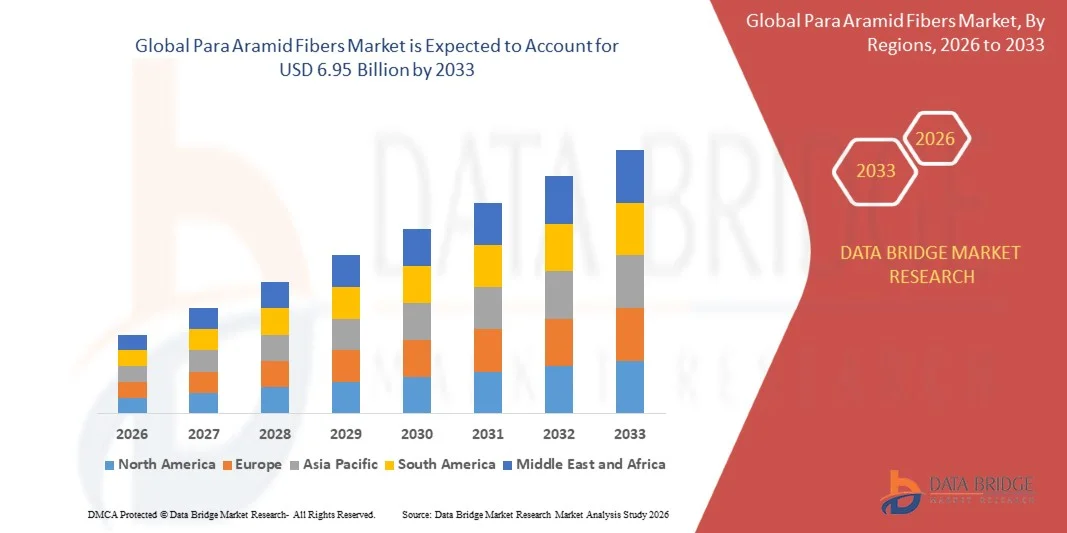
- De acordo com a análise da Data Bridge Market Research, o mercado de fibras para aramidas foi avaliado emUSD 4,02 mil milhões em 2025e é projetado para alcançar6,95 mil milhões de USD até 2033, crescendo emCAGR de 7,10% de 2026 a 2033.
- O mercado está experimentando um crescimento consistente impulsionado pelo aumento da demanda por materiais leves e de alta resistência, aumentando a adoção em aplicações de segurança e proteção, e expandindo o uso em todo o setor aeroespacial, automotivo,telecomunicações,e sectores industriais.
- A crescente ênfase na segurança do pessoal, proteção balística, componentes leves de veículos e materiais de reforço de alto desempenho está incentivando os fabricantes a adotar fibras para aramidas. Sua alta resistência à tração, resistência ao calor, baixo peso e durabilidade estão apoiando a substituição de materiais convencionais em aplicações como vestuário protetor, reforço de fibra óptica, pneus, materiais de fricção e compósitos industriais.
Tamanho e previsão do mercado
- Valor de Mercado Global (2025): USD 4,02 bilhões
- Valor de mercado esperado (2033): USD 6,95 Bilhões
- Previsões CAGR (2026-2033): 7,10%
- Região líder em 2025: América do Norte
- Região de crescimento mais rápido: Ásia Pacífico
Quais são os principais destinos do mercado de fibras Para Aramid
- A América do Norte dominou o mercado de fibras para aramidas com a maior parcela de receita de 30% em 2025, apoiada por gastos robustos em defesa, inovação aeroespacial, regulamentação de segurança industrial e demanda estabelecida por proteção balística e compósitos reforçados.
- Espera-se que a Ásia-Pacífico seja a região de crescimento mais rápido em um CAGR de 8,9% de 2026 a 2033, alimentada por rápida industrialização, expansão da infraestrutura de telecomunicações, aumento dos requisitos de segurança e proteção e crescente demanda da China e Índia.
- O segmento de fios de filamento liderou o mercado com uma participação de 59% em 2025, impulsionado pelo seu uso extensivo em têxteis de proteção, reforço de pneus,fibra ópticacabos e outras aplicações de alta resistência.
- Fibras curtas são o tipo de forma de produto de crescimento mais rápido, projetada para registrar um CAGR de 7,0%, refletindo o aumento na utilização de materiais friccionais, compósitos e aplicações de reforço projetadas.
- O segmento de proteção dominou a categoria de aplicação com uma receita de 37,8% em 2025, liderada pela ampla utilização de fibras para-aramidas em proteção balística, vestuário protetor, capacetes, luvas e outros produtos de segurança.
- A proteção balística representou 35% do market share em 2025, preferida pelo uso extensivo de fibras para-aramidas em armaduras, capacetes, painéis balísticos, escudos protetores e equipamentos militares
- O segmento de proteção de corte é a categoria de proteção de maior crescimento, com um CAGR de 8,5%, impulsionado pelo aumento da demanda por luvas, mangas e vestuário protetor resistentes ao corte.
Alcance do relatório e Segmentação do Mercado de Fibras Para Aramid
|
Atributos |
Para Aramid Fibras Principais Insights do Mercado |
|
Segmentos Cobertos |
|
|
Países abrangidos |
América do Norte
Europa
Ásia- Pacífico
Médio Oriente e África
América do Sul
|
|
Jogadores do mercado chave |
|
|
Oportunidades de Mercado |
|
|
Informações sobre o Valor Adicionado |
Além dos insights sobre cenários de mercado, como valor de mercado, taxa de crescimento, segmentação, cobertura geográfica e principais atores, os relatórios de mercado curados pela Data Bridge Market Research também incluem análise de importação, visão geral da capacidade de produção, análise do consumo de produção, análise de tendências de preços, cenário de mudança climática, análise da cadeia de suprimentos, análise da cadeia de valor, visão geral da matéria-prima/consumíveis, critérios de seleção de fornecedores, Análise de PESTLE, Análise de Porter e quadro regulatório. |
Qual é a tendência chave no mercado de fibras Para Aramida
- Fibras para-aramidas estão cada vez mais sendo incorporadas em materiais compósitos leves e de alto desempenho para aplicações automotivas, aeroespaciais, de defesa e industriais, substituindo materiais de reforço mais pesados, mantendo resistência e durabilidade.
- Por exemplo, em abril de 2025, uma revisão do Alexandria Engineering Journal destacou o papel crescente de compósitos reforçados com fibras, incluindo fibras de aramida, na engenharia automotiva, enquanto os fabricantes perseguem veículos leves, melhor eficiência e melhor desempenho estrutural.
- Os fabricantes estão cada vez mais desenvolvendo fibras para-aramidas avançadas com maior resistência à tração, estabilidade térmica, resistência química e desempenho interfacial para atender aos exigentes requisitos aeroespaciais, de defesa, de telecomunicações e industriais.
- Soluções para-aramidas sustentáveis e circulares estão ganhando atenção quando os fabricantes buscam reduzir os resíduos de materiais, as emissões de carbono e a dependência de matérias-primas virgens, mantendo as características de desempenho necessárias em aplicações exigentes.
- Por exemplo, em novembro de 2025, Teijin Aramida introduziu Twaron Next, uma fibra para-aramida incorporando matérias-primas circulares e bio-baseadas, com sua variante de conteúdo circular relatada para reduzir as emissões de carbono em até 7% em comparação com a virgem Twaron.
- À medida que as indústrias priorizam cada vez mais a construção leve, o alto desempenho mecânico e o menor impacto ambiental, espera-se que as fibras para-aramidas ganhem maior adoção em compósitos avançados, sistemas de proteção, produtos de reforço e infraestrutura de próxima geração.
Quais são os Principais Drivers do Mercado de Fibras Para Aramida
- A crescente demanda por equipamentos leves de proteção balística e de proteção de alto desempenho está aumentando significativamente o uso de fibras para-aramidas em aplicações militares, policiais e de segurança.
- Por exemplo, em fevereiro de 2024, o Exército dos EUA acampou seu Sistema Integrado de Proteção de Cabeças de Próxima Geração para aproximadamente 2.000 soldados, destacando a modernização contínua de equipamentos de proteção leves.
- A crescente modernização da defesa, os requisitos de segurança industrial e a demanda de materiais de alta resistência estão incentivando os fabricantes a usar fibras para-aramidasarmadura, capacetes, vestuário de proteção, componentes aeroespaciais, e estruturas reforçadas.
- Por exemplo, em janeiro de 2025, Teijin Aramid destacou sua colaboração com a SAFECO Industries para desenvolver armaduras avançadas para veículos balísticos usando Twaron para-aramida, enfatizando a proteção leve para ambientes de alto risco.
- Com a modernização da defesa, desenvolvimento de veículos leves, expansão de telecomunicações e demanda de materiais de reforço duráveis continuando a aumentar, as fibras para-aramidas continuarão a ser importantes para proteção de alto desempenho e aplicações estruturais.
Que fatores estão desafiando o crescimento do mercado de fibras para aramidas
- Fibras para-aramidas envolvem altos custos de produção e processamento, pois a fabricação requer química polímero especializada, tecnologia de fiação sofisticada, condições de processamento controladas e investimento substancial em infraestrutura de produção.
- Por exemplo, em outubro de 2024, a ChemAnalyst relatou que os preços das fibras de aramida asiáticas aumentaram em meio a maiores custos de produção, com os preços da para-fenilenodiamina (PPD) subindo 2,6% na China, destacando o impacto dos aumentos de custo de matérias-primas sobre os gastos de produção de fibras para-aramidas.
- Esses custos de materiais mais elevados podem limitar a adoção em aplicações automotivas, de construção, de consumo e industriais sensíveis aos preços, onde os fabricantes podem favorecer fibras de vidro de menor custo ou outros materiais de reforço convencionais.
- Por exemplo, em junho de 2024, o European Rubber Journal informou que o negócio de fibra de aramida da Teijin foi afetado por ajustes de estoque na cadeia de suprimentos, enquanto a empresa continuou a enfrentar desafios na estabilização da produção, destacando restrições de cadeia de suprimentos e de estabilidade de produção para fibras para-aramidas.
- O alto custo de produção, os requisitos especializados de processamento e a concorrência de materiais de reforço de baixo custo continuam a restringir a adoção mais ampla de para-aramidas, particularmente em aplicações de mercado de massa, apesar da relação força-peso superior do material e do desempenho térmico.
Como é o mercado de fibras para aramidas segmentado
O mercado de fibras para aramidas é segmentado com base na forma do produto, aplicação, nível de proteção e usuário final.
- Por Forma de Produto
Com base na forma do produto, o mercado de fibras para-aramidas é segmentado em fios de filamentos, fibras curtas, polpa, entre outros. O segmento de fios de filamentos dominou o mercado com 59% de participação em 2025, devido ao seu amplo uso em têxteis protetores, reforço de pneus, cabos de fibra óptica e outras aplicações de alta resistência. O fio de filamento proporciona reforço contínuo e desempenho de tração consistente, tornando-o adequado para aplicações que exigem alta resistência e estabilidade dimensional. Suas características leves também suportam seu uso em produtos onde a redução de peso é importante sem comprometer o desempenho mecânico. O material oferece excelente resistência ao calor, abrasão e produtos químicos, o que aumenta sua adequação para ambientes industriais exigentes. A crescente demanda por proteção balística e materiais de reforço de alto desempenho está apoiando o consumo de fios de filamentos.
O segmento de fibras curtas é projetado para registrar o crescimento mais rápido no CAGR de 7,0% de 2026 a 2033, impulsionado pelo aumento da utilização em materiais friccionais, compósitos e aplicações de reforço projetadas. Fibras curtas podem ser incorporadas em diferentes formulações de materiais para melhorar a resistência, resistência ao desgaste e desempenho térmico. Sua capacidade de dispersão dentro de sistemas de fricção e compósitos os torna adequados para aplicações industriais especializadas. A crescente demanda por materiais leves está incentivando os fabricantes a substituir materiais de reforço convencionais por fibras de alto desempenho. Componentes de freio automotivo e produtos de fricção industrial são áreas de aplicação importantes para fibras para-aramidas curtas. O desenvolvimento contínuo de comprimentos e graus de fibra específicos para aplicações está apoiando maior adoção.
- Por Aplicação
Com base na aplicação, o mercado de fibras para-aramidas é segmentado em materiais friccionais, proteção, isolamento elétrico, vestuário de segurança, reforço de borracha, reforço de pneus, filtração industrial, fibras ópticas, entre outros. O segmento de proteção dominou o mercado com 37,8% de participação em 2025, apoiado pela ampla utilização de fibras para-aramidas em proteção balística, vestuário protetor, capacetes, luvas e outros produtos de segurança. As fibras para-aramidas fornecem alta resistência à tração, mantendo um peso relativamente baixo, tornando-as adequadas para aplicações de proteção ao pessoal. Sua resistência ao calor, chama e abrasão aumentam ainda mais seu desempenho em ambientes exigentes. As aplicações de defesa, aplicação da lei e segurança industrial representam importantes fontes de demanda por materiais para-aramidas protetores. O aumento da ênfase nos equipamentos de segurança e proteção do pessoal está apoiando a adoção continuada.
O segmento de fibras ópticas é projetado para registrar o crescimento mais rápido no CAGR de 8,8% de 2025 para 2033, impulsionado pelo aumento da implantação da infraestrutura de telecomunicações de fibra óptica. As fibras para-aramidas são usadas como elementos de resistência em cabos de fibra óptica porque fornecem alta resistência à tração sem adicionar peso substancial. A expansão da conectividade de banda larga e das redes de comunicação de alta velocidade está aumentando a demanda por cabos ópticos reforçados. A implantação contínua de infraestruturas avançadas de telecomunicações está criando oportunidades adicionais para fornecedores de fibras para-aramidas. Sua flexibilidade e resistência ao estresse mecânico ajudam a proteger as fibras ópticas durante a instalação e operação. O aumento dos requisitos de transmissão de dados incentiva a implantação mais ampla de redes de fibra óptica.
- Por Nível de Proteção
Com base no nível de proteção, o mercado de fibras para-aramidas é segmentado emprotecção balística,protecção contra cortes, protecção contra calor, protecção contra chama, protecção contra abrasão, protecção contra impacto e protecção eléctrica. O segmento de proteção balística dominou o mercado com 35% de participação em 2025, devido ao uso extensivo de fibras para-aramidas em armaduras, capacetes, painéis balísticos, escudos protetores e equipamentos militares. A elevada relação força-peso das fibras para-aramidas permite que os fabricantes desenvolvam sistemas de proteção leves. Sua capacidade de absorver e dissipar energia os torna adequados para aplicações balísticas que exigem materiais de alto desempenho. A aquisição de defesa e aplicação da lei continua a ser uma importante fonte de procura de produtos para-aramida de grau balístico. O aumento da modernização dos equipamentos de proteção está incentivando o uso de materiais avançados à base de fibras.
O segmento de proteção de corte é projetado para registrar o crescimento mais rápido em um CAGR de 8,5% de 2026 a 2033, apoiado pela crescente demanda por luvas, mangas e vestuário de proteção resistentes a cortes. As fibras para-aramidas proporcionam alta resistência ao corte e à abrasão, mantendo flexibilidade e peso relativamente baixo. Essas características as tornam adequadas para os trabalhadores expostos a metais afiados, vidro, máquinas e outros materiais perigosos. O aumento dos requisitos de segurança no local de trabalho encoraja as indústrias a adoptarem equipamentos de protecção de desempenho superior. Aplicações automotivas, de fabricação, construção, processamento de metais e logística estão contribuindo para a demanda de materiais resistentes ao corte. Os fabricantes também estão focando em produtos de proteção mais leves e confortáveis para melhorar a usabilidade.
- Por Usuário Final
Com base no usuário final, o mercado de fibras para-aramidas é segmentado em automotivo, aeroespacial e defesa, eletrônica e telecomunicações, elétrica, entre outros. O segmento automotivo dominou o mercado com 30% de participação em 2025, apoiado pelo uso extensivo de fibras para-aramidas em reforço de pneus, materiais de fricção, correias, mangueiras e outros componentes automotivos. A alta relação força-peso das fibras para-aramidas permite que os fabricantes melhorem o desempenho dos componentes enquanto controlam o peso. Sua resistência ao calor, abrasão e estresse mecânico é particularmente valiosa em aplicações automotivas exigentes. Os materiais de reforço e atrito de pneus representam importantes áreas de consumo no setor automotivo. O aumento dos requisitos de leveza do veículo está apoiando ainda mais a adoção de fibras de reforço de alto desempenho. A expansão da mobilidade elétrica também está criando aplicações adicionais para componentes reforçados com fibras leves e duráveis.
O segmento de eletrônica e telecomunicações é projetado para registrar o crescimento mais rápido CAGR de 7,1% de 2026 a 2033, impulsionado pelo aumento da implantação de redes de fibra óptica e infraestrutura avançada de telecomunicações. As fibras para-aramidas fornecem alta resistência à tração e flexibilidade, tornando-as adequadas para reforço em cabos de comunicação óptica. A expansão da conectividade de alta velocidade está aumentando a demanda por sistemas de cabo de fibra óptica duráveis. A crescente implantação de infraestrutura 5G e banda larga está criando oportunidades adicionais para o reforço de cabos baseados em para-aramida. A expansão do Data-center também está apoiando a demanda por conectividade óptica confiável e de alto desempenho. O material ajuda os cabos a suportar tensões de instalação, protegendo as fibras ópticas dentro da estrutura do cabo.
Qual é a região que detém a maior parte do mercado de fibras Para Aramid
- A América do Norte dominou o mercado de fibras para aramidas com a maior parcela de receita de 30% em 2025, apoiada por gastos robustos em defesa, inovação aeroespacial, regulamentação de segurança industrial e demanda estabelecida por proteção balística e compósitos reforçados.
- A região também se beneficia de gastos substanciais em defesa, capacidade de fabricação aeroespacial e automotiva estabelecida, exigências rigorosas de segurança ocupacional e crescente adoção de materiais leves e de alta resistência. A crescente demanda por proteção balística, roupas de proteção avançadas, reforço de pneus e infraestrutura de fibra óptica reforça ainda mais a posição da América do Norte no mercado global de fibras para-aramidas.
U.S. Para Aramid Fibers Market Insight
O mercado de fibras para-aramidas dos EUA está testemunhando forte crescimento devido à crescente demanda de materiais de alto desempenho em aplicações aeroespacial e de defesa, automotivo, de equipamentos de proteção e de telecomunicações. O avançado ecossistema aeroespacial e de defesa do país, juntamente com a adoção crescente de materiais leves e de alta resistência, está impulsionando a demanda através da proteção balística, reforço de pneus e aplicações industriais. Além disso, investimentos crescentes em sistemas avançados de proteção, infraestrutura de fibra óptica e leveza de veículos estão acelerando a adoção de fibras para-aramidas em diversas indústrias.
Visão do mercado de fibras para-aramidas Ásia-Pacífico
Espera-se que o mercado de fibras para-aramidas Ásia-Pacífico testemunhe rápido crescimento, impulsionado pela expansão da produção automotiva, infraestrutura de telecomunicações e fabricação industrial em países como China, Índia e Japão. A crescente demanda por materiais leves de reforço, equipamentos de proteção e fibras de alto desempenho está apoiando a expansão regional do mercado. Além disso, crescentes investimentos em recursos aeroespaciais e de defesa, redes de fibra óptica e componentes automotivos avançados estão acelerando a adoção de fibras para-aramidas em setores industriais e comerciais.
Japão Para-Aramid Fibers Market Insight
O mercado de fibras para-aramidas do Japão está testemunhando um crescimento consistente devido à crescente demanda de materiais avançados em aplicações automotivas, eletrônicas, de telecomunicações e industriais. Fabricantes automotivos e empresas industriais estão cada vez mais utilizando fibras para-aramidas para reforço de pneus, materiais de fricção, reforço de borracha e componentes leves. Além disso, a crescente demanda por materiais de proteção de alto desempenho e cabos de fibra óptica, juntamente com o foco do Japão em tecnologias avançadas de fabricação, está contribuindo ainda mais para o crescimento do mercado.
China Para-Aramid Fibers Market Insight
O mercado de fibras para-aramidas da China está crescendo rapidamente, impulsionado pela expansão da fabricação automotiva, infraestrutura de telecomunicações e demanda por materiais de proteção avançados. A crescente utilização de fibras para-aramidas em reforço de pneus, cabos de fibra óptica, equipamentos de proteção e aplicações industriais está aumentando significativamente a demanda do mercado. Além disso, os investimentos crescentes em capacidades aeroespaciais e de defesa, expansão de redes de comunicação de alta velocidade e crescente foco em materiais leves e de alta resistência estão posicionando a China como um grande mercado de crescimento de fibras para-aramidas globalmente.
Por Dentro do Mercado de Fibras Para-Aramid do Reino Unido
O mercado de fibras para-aramidas do Reino Unido está experimentando crescimento constante, apoiado pela crescente demanda por materiais avançados de proteção, aplicações aeroespaciais e de defesa, componentes automotivos e infraestrutura de telecomunicações. O aumento da utilização de fibras para-aramidas em proteção balística, vestuário de segurança, cabos de fibra óptica e aplicações de reforço de alto desempenho está contribuindo para o crescimento do mercado. Além disso, o desenvolvimento contínuo de materiais leves e a crescente demanda por soluções de alta resistência em aplicações industriais e de defesa estão apoiando a adoção de fibras para-aramidas no Reino Unido.
Alemanha Para-Aramid Fibers Market Insight
O mercado de fibras para-aramidas da Alemanha está se expandindo constantemente devido à forte base de fabricação automotiva do país, capacidades industriais avançadas e crescente demanda por materiais de reforço de alto desempenho. Empresas automotivas e fabricantes industriais estão cada vez mais utilizando fibras para-aramidas em reforço de pneus, materiais de fricção, componentes de borracha e aplicações leves. Avanços contínuos nas tecnologias automotivas, crescente demanda por equipamentos de proteção e crescente implantação de infraestrutura de fibra óptica, juntamente com o foco da Alemanha na fabricação avançada, estão impulsionando o crescimento do mercado.
Quais são as principais empresas do mercado de fibras para Aramid
A indústria de fibras para aramidas é liderada principalmente por empresas bem estabelecidas, incluindo:
- TEIJIN LIMITADO(Japão)
- DuPont(EUA)
- Yantai Tayho Advanced Materials Co., Ltd.. (China)
- Kolon Industries, Inc.. (Coreia do Sul)
- HIOSUNG MATERIAIS AVANÇADOS(Coreia do Sul)
- TAEKWANG Industrial Co., Ltd. (Coreia do Sul)
- HUVIS (Coreia do Sul)
- Kermel S.A. (França)
- China National Bluestar (Grupo) Co., Ltd. (China)
- SuZhou Hayxan Protection Technology Co., Ltd. (China)
- Jiangsu Yabang Dyestuff Co., Ltd. (China)
- Guangzhou Green New Materials Co., Ltd. (China)
- Davy Textiles Ltd. (U.K.)
- Artec (China)
- AFCHINA (China)
- Toray Industries, Inc. (Japão)
- China National Petroleum Corporation (China)
- Sinopec Yizheng Chemical Fibre Company Limited (China)
- Jiangsu Zhongxing Chemical Fiber Co., Ltd. (China)
- Shandong Vicome Import & Export Co., Ltd. (China)
Quais são as últimas evoluções no mercado de fibras Para Aramida
- Em agosto de 2025, a DuPont anunciou um acordo com a Arclin para alienar seu negócio Aramids, que inclui as marcas Kevlar e Nomex. A transação destina-se a transferir o negócio de fibra de aramida de alto desempenho para Arclin, permitindo que o negócio expanda seu alcance global e capacidades de desenvolvimento de aplicativos, permitindo ao mesmo tempo que DuPont agilizar ainda mais seu portfólio. O desenvolvimento representa uma mudança estrutural significativa envolvendo um dos principais fornecedores globais de fibras de aramida
- Em janeiro de 2024, a DuPont e a Point Blank Enterprises anunciaram uma parceria exclusiva para oferecer armaduras feitas com Kevlar EXO aramid fiber para os departamentos estaduais e locais norte-americanos. A colaboração combina a tecnologia de fibra de aramida de nova geração da DuPont com as capacidades de fabricação de armor corporal da Point Blank para desenvolver soluções de proteção leves e flexíveis. A parceria também visava os requisitos das normas de proteção balística atualizadas do Instituto Nacional de Justiça (NIJ).
- Em abril de 2023, a DuPont lançou a Kevlar EXO, uma fibra de aramida de última geração desenvolvida para aplicações de proteção exigentes. A nova fibra foi projetada para fornecer uma combinação de proteção balística, desempenho leve, flexibilidade e resistência térmica, com militares e policiais identificados como usuários iniciais através de aplicações de armas leves. O desenvolvimento representou uma grande expansão da plataforma de tecnologia Kevlar da DuPont e foi produzido na nova fábrica da empresa na Virgínia.
- Em abril de 2023, Teijin Aramid realizou sua primeira produção em escala industrial usando sua tecnologia física de reciclagem de fibras para fibras de aramida. A iniciativa focou na reciclagem de produtos de aramida de fim de vida em novos materiais de fibra e representou um importante desenvolvimento para um processo de produção circular de fibras de aramida de Twaron. Posteriormente, Teijin continuou avançando a tecnologia, incluindo outra produção industrial em abril de 2024 e desenvolvimento de tecnologias de reciclagem química.
- Em dezembro de 2021, DuPont anunciou o vencedor do seu Prêmio de Inovação Kevlar da América do Norte, reconhecendo a manga HyFlex 11-290 de Ansell incorporando Kevlar Comfort Engineered Yarn. A manga protetora combinou fibra de Kevlar com um design ergonômico para proporcionar corte e proteção térmica, melhorando o conforto e mobilidade do usuário. O desenvolvimento destacou a contínua inovação em aplicações de fibra para-aramida para equipamentos de proteção individual industrial e demonstrou a expansão de Kevlar® em produtos de proteção especializada.
SKU-
Obtenha acesso online ao relatório sobre a primeira nuvem de inteligência de mercado do mundo

- Painel interativo de análise de dados
- Painel de análise da empresa para oportunidades de elevado potencial de crescimento
- Acesso de analista de pesquisa para personalização e customização. consultas
- Análise da concorrência com painel interativo
- Últimas notícias, atualizações e atualizações Análise de tendências
- Aproveite o poder da análise de benchmark para um rastreio abrangente da concorrência
Metodologia de Investigação
A recolha de dados e a análise do ano base são feitas através de módulos de recolha de dados com amostras grandes. A etapa inclui a obtenção de informações de mercado ou dados relacionados através de diversas fontes e estratégias. Inclui examinar e planear antecipadamente todos os dados adquiridos no passado. Da mesma forma, envolve o exame de inconsistências de informação observadas em diferentes fontes de informação. Os dados de mercado são analisados e estimados utilizando modelos estatísticos e coerentes de mercado. Além disso, a análise da quota de mercado e a análise das principais tendências são os principais fatores de sucesso no relatório de mercado. Para saber mais, solicite uma chamada de analista ou abra a sua consulta.
A principal metodologia de investigação utilizada pela equipa de investigação do DBMR é a triangulação de dados que envolve a mineração de dados, a análise do impacto das variáveis de dados no mercado e a validação primária (especialista do setor). Os modelos de dados incluem grelha de posicionamento de fornecedores, análise da linha de tempo do mercado, visão geral e guia de mercado, grelha de posicionamento da empresa, análise de patentes, análise de preços, análise da quota de mercado da empresa, normas de medição, análise global versus regional e de participação dos fornecedores. Para saber mais sobre a metodologia de investigação, faça uma consulta para falar com os nossos especialistas do setor.
Personalização disponível
A Data Bridge Market Research é líder em investigação formativa avançada. Orgulhamo-nos de servir os nossos clientes novos e existentes com dados e análises que correspondem e atendem aos seus objetivos. O relatório pode ser personalizado para incluir análise de tendências de preços de marcas-alvo, compreensão do mercado para países adicionais (solicite a lista de países), dados de resultados de ensaios clínicos, revisão de literatura, mercado remodelado e análise de base de produtos . A análise de mercado dos concorrentes-alvo pode ser analisada desde análises baseadas em tecnologia até estratégias de carteira de mercado. Podemos adicionar quantos concorrentes necessitar de dados no formato e estilo de dados que procura. A nossa equipa de analistas também pode fornecer dados em tabelas dinâmicas de ficheiros Excel em bruto (livro de factos) ou pode ajudá-lo a criar apresentações a partir dos conjuntos de dados disponíveis no relatório.











