



Segmentação do mercado global de interferência de RNA (RNAi), por tipo (dsRNA, siRNA e miRNA), aplicação (descoberta e desenvolvimento de fármacos, terapêutica e outras aplicações) - Tendências e previsões do setor até 2033
Tamanho do mercado de interferência de ácido ribonucleico (RNA)
- O mercado global de interferência de ácido ribonucleico (RNA) foi avaliado em US$ 7,69 bilhões em 2025 e deverá atingir US$ 31,65 bilhões até 2033 , com uma taxa de crescimento anual composta (CAGR) de 19,35% durante o período de previsão.
- O crescimento do mercado é impulsionado principalmente pelo foco crescente em tecnologias de silenciamento gênico e pela adoção cada vez maior de terapias baseadas em RNAi no tratamento de distúrbios genéticos , câncer e doenças infecciosas , o que gera avanços significativos na medicina de precisão e na pesquisa biotecnológica .
- Além disso, o crescente investimento no desenvolvimento de fármacos baseados em RNA, a expansão dos ensaios clínicos e as contínuas inovações tecnológicas em sistemas de administração, como nanopartículas lipídicas e plataformas de conjugados, estão consolidando a interferência de RNA (RNAi) como uma ferramenta poderosa para a regulação gênica direcionada. Esses fatores convergentes estão acelerando a adoção de terapias e aplicações de pesquisa baseadas em RNAi, impulsionando significativamente o crescimento do setor.
Análise de mercado de interferência do ácido ribonucleico (RNA)
- A interferência do ácido ribonucleico (RNA), um mecanismo biológico que regula a expressão gênica por meio de pequenas moléculas de RNA, é cada vez mais crucial na pesquisa biotecnológica e farmacêutica devido à sua precisão no silenciamento gênico e ao seu papel no avanço de terapias direcionadas.
- A crescente demanda por soluções de interferência de RNA é impulsionada principalmente pela prevalência cada vez maior de distúrbios genéticos e doenças crônicas, pela ênfase crescente em terapias baseadas em RNA e pelo aumento da pesquisa e desenvolvimento na descoberta de medicamentos e genômica funcional.
- A América do Norte dominou o mercado de interferência de RNA (RNAi) com a maior participação na receita, de 41,3% em 2025, impulsionada por uma infraestrutura biotecnológica robusta, investimentos substanciais em P&D e a presença de empresas líderes em biotecnologia e farmacêuticas. Os EUA lideraram os ensaios clínicos baseados em RNAi e o desenvolvimento terapêutico, apoiados por instalações de pesquisa avançadas.
- A região Ásia-Pacífico deverá ser a de crescimento mais rápido no mercado de interferência de RNA durante o período de previsão, devido à expansão da pesquisa biotecnológica, ao aumento do financiamento governamental e ao rápido crescimento da capacidade de pesquisa e fabricação farmacêutica em países como China, Japão e Índia.
- O segmento de siRNA dominou o mercado de interferência de RNA com uma participação de 46,8% em 2025, impulsionado por sua alta especificidade no silenciamento gênico e amplas aplicações na descoberta de fármacos e no desenvolvimento de terapias.
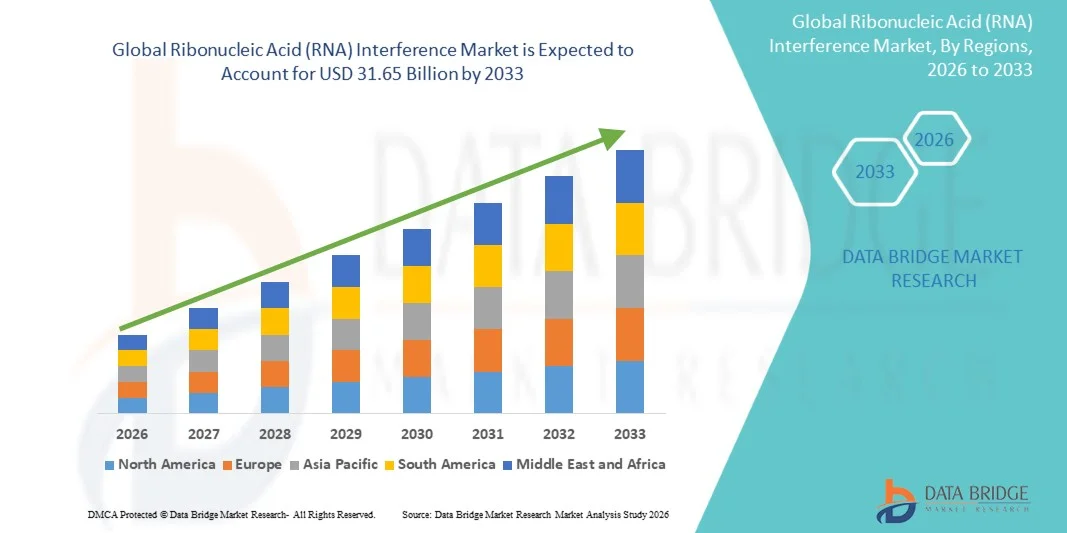
Escopo do relatório e segmentação do mercado de interferência de ácido ribonucleico (RNA)
|
Atributos |
Interferência do Ácido Ribonucleico (RNA): Principais Insights de Mercado |
|
Segmentos abrangidos |
|
|
Países abrangidos |
América do Norte
Europa
Ásia-Pacífico
Oriente Médio e África
Ámérica do Sul
|
|
Principais participantes do mercado |
|
|
Oportunidades de mercado |
|
|
Conjuntos de informações de dados de valor agregado |
Além das informações sobre cenários de mercado, como valor de mercado, taxa de crescimento, segmentação, cobertura geográfica e principais players, os relatórios de mercado elaborados pela Data Bridge Market Research também incluem análises aprofundadas de especialistas, epidemiologia de pacientes, análise de projetos em desenvolvimento, análise de preços e estrutura regulatória. |
Tendências do mercado de interferência do ácido ribonucleico (RNA)
“Expansão das terapias de RNAi na medicina de precisão”
- Uma tendência significativa e crescente no mercado global de interferência de RNA é a aplicação cada vez maior de terapias baseadas em RNAi para medicina de precisão, visando genes específicos responsáveis por doenças como câncer, infecções virais e distúrbios genéticos raros.
- Por exemplo, o patisiran, um siRNA terapêutico aprovado pela FDA, silencia seletivamente o gene da transtirretina, oferecendo um tratamento direcionado para a amiloidose hereditária mediada pela transtirretina.
- Os avanços nas tecnologias de administração, incluindo nanopartículas lipídicas e sistemas conjugados, estão permitindo uma absorção celular mais eficiente e o direcionamento específico para tecidos das moléculas de RNA, aumentando assim a eficácia e a segurança das terapias de RNAi.
- A integração de plataformas de RNAi com ferramentas genômicas e bioinformáticas permite que pesquisadores desenvolvam tratamentos de silenciamento gênico altamente específicos, otimizando os resultados terapêuticos e minimizando os efeitos fora do alvo.
- Essa tendência em direção a terapias de RNAi mais direcionadas, eficazes e personalizadas está impulsionando as expectativas para as terapias gênicas de próxima geração. Consequentemente, empresas como a Alnylam Pharmaceuticals estão expandindo seus portfólios de RNAi com terapias direcionadas a diversas condições genéticas e crônicas.
- A demanda por soluções baseadas em RNAi que oferecem precisão, efeitos colaterais reduzidos e potencial tratamento para doenças antes intratáveis está crescendo rapidamente nos setores farmacêutico e de pesquisa.
- A crescente colaboração entre empresas de biotecnologia, instituições acadêmicas e farmacêuticas para pesquisa em RNAi e desenvolvimento terapêutico está acelerando a inovação e a adoção pelo mercado.
Dinâmica do mercado de interferência do ácido ribonucleico (RNA)
Motorista
“Crescente foco em distúrbios genéticos e tratamentos de doenças crônicas”
- A crescente prevalência de distúrbios genéticos, câncer e doenças crônicas, combinada com a ênfase cada vez maior em terapias direcionadas, é um fator significativo para a maior adoção de tecnologias de interferência de RNA.
- Por exemplo, a Alnylam Pharmaceuticals relatou a expansão de ensaios clínicos para múltiplos medicamentos baseados em siRNA direcionados a doenças genéticas raras e doenças hepáticas, demonstrando o potencial terapêutico do RNAi.
- À medida que pesquisadores e profissionais de saúde buscam tratamentos de precisão, o RNAi oferece alta especificidade e eficácia no silenciamento de genes causadores de doenças, proporcionando uma alternativa atraente às terapias convencionais.
- Além disso, o crescente investimento da indústria farmacêutica na descoberta de fármacos baseados em RNAi e a integração dessa tecnologia nos processos de desenvolvimento de medicamentos estão tornando a interferência de RNA uma ferramenta essencial tanto para a inovação terapêutica quanto para a pesquisa em genômica funcional.
- A capacidade de desenvolver novas terapias baseadas em RNAi, juntamente com a expansão das aplicações na descoberta de fármacos, genômica e medicina personalizada, está impulsionando o crescimento do mercado tanto em regiões desenvolvidas quanto emergentes.
- A crescente adoção da RNAi em biotecnologia agrícola e aplicações veterinárias está abrindo novas fontes de receita e expandindo o potencial de mercado para além da terapêutica humana.
- O financiamento governamental e as subvenções que apoiam a pesquisa de RNAi para doenças raras e iniciativas de saúde pública estão impulsionando a inovação e acelerando as oportunidades de comercialização.
Restrição/Desafio
“Desafios de Entrega e Obstáculos à Conformidade Regulatória”
- Os desafios relacionados à administração segura e eficiente de moléculas de RNAi, juntamente com os rigorosos requisitos regulatórios, representam barreiras significativas para uma adoção mais ampla no mercado.
- Por exemplo, as dificuldades em garantir a administração direcionada ao tecido e em evitar a degradação por nucleases têm limitado a eficácia de algumas terapias de RNAi em ensaios clínicos iniciais.
- Abordar essas questões de administração e estabilidade por meio de formulações de nanopartículas lipídicas, métodos de conjugação e modificações químicas aprimoradas é fundamental para maximizar o potencial terapêutico. Além disso, navegar pelos complexos processos de aprovação regulatória para medicamentos baseados em RNAi acarreta custos e tempo adicionais para os desenvolvedores.
- Embora tecnologias promissoras estejam surgindo, o alto custo das terapias de RNAi e o conhecimento limitado sobre seus benefícios clínicos podem dificultar a adoção, principalmente em regiões com recursos limitados ou sensíveis a preços.
- Superar esses desafios por meio de plataformas de administração avançadas, validação clínica robusta e vias regulatórias claras será vital para o crescimento sustentado do mercado e para uma maior aceitação das tecnologias de interferência de RNA.
- A escassez de dados de segurança a longo prazo para terapias de RNAi em humanos gera preocupação entre médicos e órgãos reguladores, podendo atrasar a adoção e os prazos de aprovação.
- Complexidades de propriedade intelectual e disputas de patentes relacionadas a sequências de RNAi e tecnologias de administração podem dificultar a comercialização e o investimento em novas terapias.
Escopo do mercado de interferência do ácido ribonucleico (RNA)
O mercado está segmentado com base no tipo e na aplicação.
- Por tipo
Com base no tipo, o mercado de interferência de RNA é segmentado em dsRNA, siRNA e miRNA. O segmento de siRNA dominou o mercado com a maior participação na receita, de 46,8% em 2025, impulsionado por sua alta especificidade no silenciamento de genes-alvo e suas extensas aplicações terapêuticas. O siRNA é amplamente utilizado em pesquisas clínicas para o tratamento de distúrbios genéticos, cânceres e infecções virais, tornando-se uma escolha preferencial para empresas farmacêuticas. O segmento também se beneficia de plataformas de administração já estabelecidas, como nanopartículas lipídicas e sistemas conjugados, que aumentam a estabilidade e a absorção celular. Os pesquisadores preferem o siRNA por seu mecanismo de ação previsível e capacidade de atingir uma ampla gama de genes causadores de doenças. Além disso, o crescente número de terapias de siRNA aprovadas pelo FDA, como o patisiran, fortaleceu a confiança nessa tecnologia, impulsionando sua adoção clínica e comercial. Sua compatibilidade com ferramentas genômicas e análises bioinformáticas reforça ainda mais sua dominância em pesquisas e no desenvolvimento de novos fármacos.
Prevê-se que o segmento de microRNAs (miRNAs) apresente a taxa de crescimento mais rápida, de 23,1%, entre 2026 e 2033, impulsionado pela crescente compreensão do papel dos microRNAs na regulação de vias biológicas complexas e mecanismos de doenças. Os miRNAs estão emergindo como biomarcadores e alvos terapêuticos cruciais para oncologia, doenças cardiovasculares e neurológicas. O desenvolvimento de terapias e diagnósticos baseados em miRNAs está se acelerando devido aos avanços nos sistemas de administração e aos métodos aprimorados para direcionamento estável e específico para tecidos. Pesquisadores estão explorando a modulação de miRNAs para complementar as terapias convencionais, particularmente em casos onde a regulação multigênica é necessária. Além disso, as colaborações entre empresas de biotecnologia e instituições acadêmicas estão expandindo as aplicações de pesquisa clínica dos miRNAs, aumentando sua adoção. Seu potencial na medicina personalizada, combinado com o crescente investimento em terapias baseadas em RNA, torna o miRNA um dos segmentos de crescimento mais rápido do mercado.
- Por meio de aplicação
Com base na aplicação, o mercado de interferência de RNA (RNAi) é segmentado em descoberta e desenvolvimento de fármacos, terapêutica e outras aplicações. O segmento de terapêutica dominou o mercado com a maior participação na receita, de 49,5% em 2025, impulsionado pelo crescente número de fármacos baseados em RNAi entrando em ensaios clínicos e em processos de aprovação regulatória. As terapias de interferência de RNA oferecem opções de tratamento direcionadas para doenças genéticas raras, cânceres e infecções virais, apresentando vantagens sobre os fármacos tradicionais de pequenas moléculas ou biológicos. As empresas farmacêuticas estão investindo ativamente no desenvolvimento de fármacos de RNAi para aproveitar sua alta especificidade, baixos efeitos fora do alvo e potencial para terapia combinada. O segmento também se beneficia da crescente disponibilidade de tecnologias avançadas de administração que melhoram a segurança e a eficácia dos tratamentos baseados em RNAi. Além disso, a demanda dos pacientes por medicina de precisão e soluções terapêuticas personalizadas reforça o domínio das terapias de RNAi no mercado.
O segmento de Descoberta e Desenvolvimento de Fármacos deverá apresentar a taxa de crescimento anual composta (CAGR) mais rápida, de 22,4%, entre 2026 e 2033, impulsionado pela crescente adoção da RNAi como ferramenta de pesquisa para genômica funcional, validação de alvos e triagem de alto rendimento. Pesquisadores utilizam a interferência de RNA para identificar genes causadores de doenças e avaliar novos alvos terapêuticos, acelerando a descoberta de terapias inovadoras. As tecnologias de RNAi facilitam a triagem genômica em larga escala, permitindo que cientistas estudem sistematicamente a função gênica e as redes regulatórias. O aumento das colaborações entre instituições acadêmicas, empresas de biotecnologia e farmacêuticas impulsiona ainda mais a adoção da RNAi na pesquisa pré-clínica. Além disso, a crescente integração da RNAi com bioinformática e análises baseadas em inteligência artificial aprimora a eficiência da descoberta de fármacos, permitindo a identificação mais rápida de candidatos terapêuticos viáveis. A expansão do financiamento para pesquisa e as iniciativas governamentais em genômica e biologia molecular também contribuem para o rápido crescimento desse segmento.
Análise Regional do Mercado de Interferência no Ácido Ribonucleico (RNA)
- A América do Norte dominou o mercado de interferência de RNA com a maior participação na receita, de 41,3% em 2025, impulsionada por uma infraestrutura biotecnológica robusta, investimentos substanciais em P&D e a presença de empresas líderes em biotecnologia e farmacêuticas.
- Pesquisadores e profissionais de saúde da região priorizam as tecnologias de RNAi para medicina de precisão, desenvolvimento de terapia gênica e estudos de genômica funcional, contribuindo para a ampla adoção da interferência de RNA em aplicações clínicas e de pesquisa.
- Essa dominância é ainda mais reforçada por estruturas regulatórias favoráveis, instalações de pesquisa avançadas e alto financiamento governamental e privado para o desenvolvimento de terapias baseadas em RNA, estabelecendo a América do Norte como um polo de inovação e comercialização no mercado de RNAi.
Análise do Mercado de Interferência de Ácido Ribonucleico (RNA) nos EUA
O mercado de interferência de RNA (RNAi) nos EUA detinha a maior participação de receita, com 78% em 2025, na América do Norte, impulsionado por investimentos robustos em pesquisa biotecnológica e pela alta concentração de empresas farmacêuticas e biotecnológicas. Pesquisadores e clínicos estão priorizando cada vez mais as terapias baseadas em RNAi para o tratamento de distúrbios genéticos, cânceres e infecções virais. O crescente número de ensaios clínicos focados em RNAi, aliado ao financiamento público e privado para o desenvolvimento de medicamentos inovadores, impulsiona ainda mais o mercado. Além disso, a integração de tecnologias avançadas de administração, como nanopartículas lipídicas e conjugados, contribui significativamente para a adoção de terapias de RNAi. Os EUA também se beneficiam de estruturas regulatórias favoráveis e da colaboração entre instituições acadêmicas e empresas do setor, fortalecendo sua liderança na pesquisa e comercialização de RNAi.
Análise do Mercado Europeu de Interferência no Ácido Ribonucleico (RNA)
Prevê-se que o mercado europeu de interferência de RNA (RNAi) expanda a uma taxa de crescimento anual composta (CAGR) substancial durante o período de previsão, impulsionado principalmente pelo aumento do investimento em pesquisa genômica e pela crescente demanda por terapias direcionadas. A crescente prevalência de doenças genéticas e cânceres, juntamente com o foco na medicina personalizada, está fomentando a adoção de tecnologias de RNAi. Os países europeus estão testemunhando um crescimento significativo em aplicações farmacêuticas, acadêmicas e biotecnológicas, com a RNAi sendo incorporada à descoberta de fármacos, ao desenvolvimento terapêutico e a estudos de genômica funcional. A ênfase da região na conformidade regulatória, na inovação e na infraestrutura de pesquisa apoia o crescimento das aplicações de RNAi.
Análise do Mercado de Interferência de Ácido Ribonucleico (RNA) no Reino Unido
Prevê-se que o mercado de interferência de RNA (RNAi) no Reino Unido cresça a uma taxa composta de crescimento anual (CAGR) notável durante o período de previsão, impulsionado pelo aumento do investimento em pesquisa em ciências da vida e pela crescente tendência da medicina de precisão. A crescente preocupação com distúrbios genéticos e a necessidade de terapias direcionadas estão incentivando tanto instituições acadêmicas quanto empresas farmacêuticas a adotarem tecnologias de RNAi. O forte ecossistema de pesquisa do Reino Unido, aliado à sua indústria colaborativa de biotecnologia e farmacêutica, deverá continuar a estimular o crescimento do mercado. Além disso, as iniciativas governamentais de apoio à pesquisa genômica e à inovação em medicina molecular estão impulsionando a adoção.
Análise do Mercado de Interferência de Ácido Ribonucleico (RNA) na Alemanha
O mercado alemão de interferência de RNA (RNAi) deverá expandir a uma taxa de crescimento anual composta (CAGR) considerável durante o período de previsão, impulsionado pela crescente conscientização sobre doenças genéticas e pela demanda por terapias avançadas. A sólida infraestrutura farmacêutica e biotecnológica da Alemanha, aliada ao amplo financiamento para pesquisa, promove a adoção de tecnologias de RNAi tanto em ambientes acadêmicos quanto comerciais. A integração da interferência de RNA em genômica funcional e em processos de descoberta de fármacos está se tornando cada vez mais comum, com uma forte preferência por soluções de tratamento seguras, eficazes e direcionadas. Além disso, a colaboração entre instituições de pesquisa e empresas do setor impulsiona a inovação e a comercialização de terapias de RNAi.
Análise do Mercado de Interferência de Ácido Ribonucleico (RNA) na Região Ásia-Pacífico
O mercado de interferência de RNA (RNAi) na região Ásia-Pacífico está preparado para crescer à taxa composta de crescimento anual (CAGR) mais rápida, de 25%, durante o período de previsão de 2026 a 2033, impulsionado pelo aumento da pesquisa em biotecnologia, pelo crescente investimento em saúde e pela expansão da produção farmacêutica em países como China, Japão e Índia. O foco crescente da região em medicina de precisão, apoiado por iniciativas governamentais que promovem a pesquisa em ciências da vida, está impulsionando a adoção de tecnologias de RNAi. Além disso, à medida que a região Ásia-Pacífico se consolida como um polo de pesquisa clínica e desenvolvimento de terapias de RNAi, a acessibilidade e a disponibilidade de soluções de RNAi estão se expandindo para uma gama mais ampla de instituições de pesquisa e empresas farmacêuticas.
Análise do Mercado Japonês de Interferência no Ácido Ribonucleico (RNA)
O mercado japonês de interferência de RNA (RNAi) está ganhando impulso devido ao forte ecossistema biotecnológico do país, à ênfase na inovação e à crescente demanda por terapias direcionadas. O Japão concentra-se significativamente no tratamento de distúrbios genéticos e doenças crônicas, e a adoção da RNAi é impulsionada pelo número crescente de ensaios clínicos e programas de pesquisa. A integração das tecnologias de RNAi com plataformas avançadas de administração de medicamentos e ferramentas genômicas está impulsionando o crescimento. Além disso, o financiamento governamental e as colaborações público-privadas estão apoiando o desenvolvimento de terapias de RNAi mais seguras e eficazes em aplicações clínicas e de pesquisa.
Análise do Mercado de Interferência de Ácido Ribonucleico (RNA) na Índia
O mercado de interferência de RNA (RNAi) na Índia representou a maior fatia de receita na região Ásia-Pacífico em 2025, devido à expansão do setor de pesquisa biotecnológica e farmacêutica do país, ao aumento do financiamento governamental e à crescente adoção da RNAi na descoberta de fármacos e na genômica funcional. A Índia está se consolidando como um importante polo de pesquisa e desenvolvimento em RNAi, com instituições acadêmicas e empresas de biotecnologia nacionais investindo em terapias baseadas em RNAi. O crescente foco em medicina de precisão e soluções terapêuticas com boa relação custo-benefício impulsiona a adoção do mercado. Além disso, as colaborações com empresas farmacêuticas internacionais e a disponibilidade de pesquisadores qualificados fortalecem a posição da Índia no mercado de interferência de RNA.
Participação de mercado na interferência do ácido ribonucleico (RNA)
O setor de Interferência de Ácido Ribonucleico (RNA) é liderado principalmente por empresas consolidadas, incluindo:
- Alnylam Pharmaceuticals, Inc. (EUA)
- Arrowhead Pharmaceuticals, Inc. (EUA)
- Silence Therapeutics PLC (Reino Unido)
- Sirnaomics Ltda. (EUA)
- (EUA)
- Arbutus Biopharma Corporation (Canadá)
- Arcturus Therapeutics Holdings Inc. (EUA)
- Phio Pharmaceuticals Inc. (EUA)
- SanegeneBio USA Inc. (EUA)
- siRNAgen Therapeutics (Coreia do Sul)
- OliX Pharmaceuticals, Inc. (Coreia do Sul)
- ProQR Therapeutics (Países Baixos)
- Ciências de Genebra (Canadá)
- Quark Pharmaceuticals, Inc. (EUA)
- Regulus Therapeutics (EUA)
- Mirimus, Inc. (EUA)
- City Therapeutics (EUA)
- Sanofi (França)
- Novartis AG (Suíça)
- Moderna, Inc. (EUA)
Quais são os desenvolvimentos recentes no mercado global de interferência de ácido ribonucleico (RNA)?
- Em novembro de 2025, a Food and Drug Administration (FDA) dos EUA aprovou o Redemplo (plozasiran), uma nova terapia com RNA de interferência pequeno (siRNA) desenvolvida para reduzir os triglicerídeos em adultos com síndrome da quilomicronemia familiar (SQF), marcando o primeiro medicamento siRNA aprovado pela FDA para essa rara doença genética e expandindo significativamente as aplicações clínicas da RNAi.
- Em setembro de 2025, a Arrowhead Pharmaceuticals firmou um acordo global de licenciamento e colaboração com a Novartis para avançar com sua terapia pré-clínica de RNAi, ARO-SNCA, que tem como alvo o gene da alfa-sinucleína, implicado na doença de Parkinson e outras sinucleinopatias, potencialmente acelerando o desenvolvimento de RNAi para doenças neurodegenerativas.
- Em setembro de 2025, a Novartis firmou um acordo estratégico de até US$ 5,2 bilhões com a Argo Biopharma, sediada em Xangai, para adquirir os direitos globais de comercialização de múltiplos candidatos a medicamentos cardiovasculares em estágio inicial, desenvolvidos com a tecnologia de RNA de interferência pequeno (siRNA) da Argo. Isso reforça o grande investimento da indústria farmacêutica em inovação e expansão terapêutica baseada em RNAi.
- Em agosto de 2025, a Alnylam Pharmaceuticals expandiu seu portfólio de terapias de RNAi com novos alvos focados em doenças genéticas e metabólicas raras nos EUA, refletindo o crescente investimento e o progresso em P&D na descoberta de medicamentos de interferência de RNA.
- Em janeiro de 2024, a Alnylam Pharmaceuticals anunciou a conclusão do recrutamento de pacientes para o estudo de Fase 3 HELIOS-A, com o siRNA terapêutico vutrisiran para amiloidose hereditária mediada por transtirretina (hATTR), um marco importante no avanço dos tratamentos de doenças crônicas baseados em RNAi.
SKU-
Obtenha acesso online ao relatório sobre a primeira nuvem de inteligência de mercado do mundo

- Painel interativo de análise de dados
- Painel de análise da empresa para oportunidades de elevado potencial de crescimento
- Acesso de analista de pesquisa para personalização e customização. consultas
- Análise da concorrência com painel interativo
- Últimas notícias, atualizações e atualizações Análise de tendências
- Aproveite o poder da análise de benchmark para um rastreio abrangente da concorrência
Metodologia de Investigação
A recolha de dados e a análise do ano base são feitas através de módulos de recolha de dados com amostras grandes. A etapa inclui a obtenção de informações de mercado ou dados relacionados através de diversas fontes e estratégias. Inclui examinar e planear antecipadamente todos os dados adquiridos no passado. Da mesma forma, envolve o exame de inconsistências de informação observadas em diferentes fontes de informação. Os dados de mercado são analisados e estimados utilizando modelos estatísticos e coerentes de mercado. Além disso, a análise da quota de mercado e a análise das principais tendências são os principais fatores de sucesso no relatório de mercado. Para saber mais, solicite uma chamada de analista ou abra a sua consulta.
A principal metodologia de investigação utilizada pela equipa de investigação do DBMR é a triangulação de dados que envolve a mineração de dados, a análise do impacto das variáveis de dados no mercado e a validação primária (especialista do setor). Os modelos de dados incluem grelha de posicionamento de fornecedores, análise da linha de tempo do mercado, visão geral e guia de mercado, grelha de posicionamento da empresa, análise de patentes, análise de preços, análise da quota de mercado da empresa, normas de medição, análise global versus regional e de participação dos fornecedores. Para saber mais sobre a metodologia de investigação, faça uma consulta para falar com os nossos especialistas do setor.
Personalização disponível
A Data Bridge Market Research é líder em investigação formativa avançada. Orgulhamo-nos de servir os nossos clientes novos e existentes com dados e análises que correspondem e atendem aos seus objetivos. O relatório pode ser personalizado para incluir análise de tendências de preços de marcas-alvo, compreensão do mercado para países adicionais (solicite a lista de países), dados de resultados de ensaios clínicos, revisão de literatura, mercado remodelado e análise de base de produtos . A análise de mercado dos concorrentes-alvo pode ser analisada desde análises baseadas em tecnologia até estratégias de carteira de mercado. Podemos adicionar quantos concorrentes necessitar de dados no formato e estilo de dados que procura. A nossa equipa de analistas também pode fornecer dados em tabelas dinâmicas de ficheiros Excel em bruto (livro de factos) ou pode ajudá-lo a criar apresentações a partir dos conjuntos de dados disponíveis no relatório.











