


Ribonucleic Acid (RNA) Interference Market Size
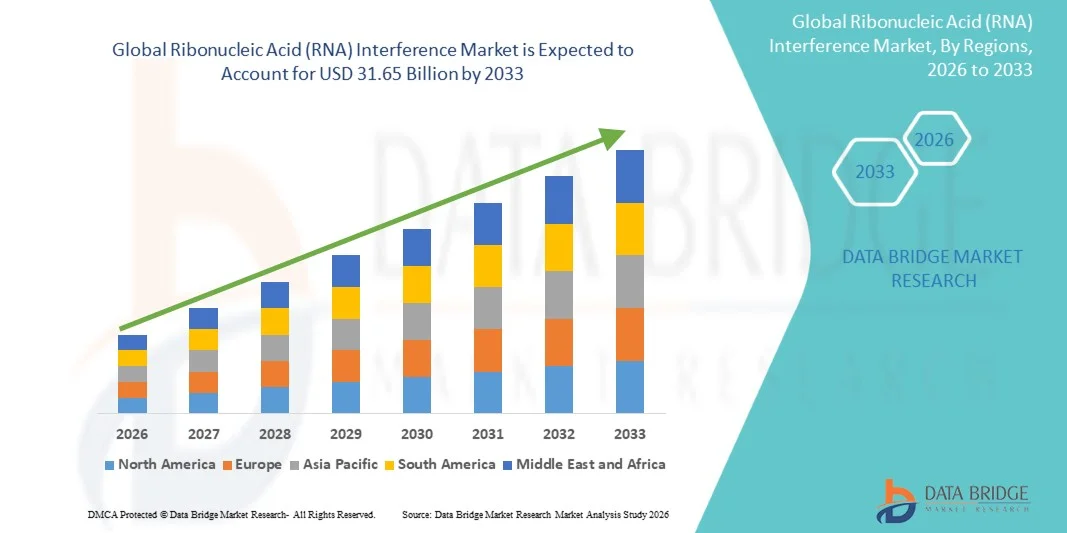
- The global Ribonucleic Acid (RNA) interference market size was valued at USD 7.69 billion in 2025 and is expected to reach USD 31.65 billion by 2033, at a CAGR of 19.35% during the forecast period
- The market growth is largely fueled by the increasing focus on gene-silencing technologies and the rising adoption of RNAi-based therapeutics in the treatment of genetic disorders, cancer, and infectious diseases, driving significant advancements in precision medicine and biotechnology research
- Furthermore, growing investments in RNA-based drug development, expanding clinical pipelines, and continuous technological innovations in delivery systems such as lipid nanoparticles and conjugate platforms are establishing RNA interference as a powerful tool for targeted gene regulation. These converging factors are accelerating the adoption of RNAi therapeutics and research applications, thereby significantly boosting the industry's growth
Ribonucleic Acid (RNA) Interference Market Analysis
- Ribonucleic Acid (RNA) interference, a biological mechanism that regulates gene expression through small RNA molecules, is increasingly critical in biotechnology and pharmaceutical research due to its precision in gene silencing and its role in advancing targeted therapeutics
- The escalating demand for RNA interference solutions is primarily fueled by the rising prevalence of genetic disorders and chronic diseases, the growing emphasis on RNA-based therapeutics, and increased research and development in drug discovery and functional genomics
- North America dominated the RNA interference market with the largest revenue share of 41.3% in 2025, driven by robust biotechnology infrastructure, substantial R&D investments, and the presence of leading biotech and pharmaceutical companies, with the U.S. leading in RNAi-based clinical trials and therapeutic development supported by advanced research facilities
- Asia-Pacific is expected to be the fastest-growing region in the RNA interference market during the forecast period due to expanding biotechnology research, growing government funding, and the rapid growth of pharmaceutical manufacturing and research capabilities across countries such as China, Japan, and India
- siRNA segment dominated the RNA interference market with a market share of 46.8% in 2025, driven by its high specificity in gene silencing and extensive applications in drug discovery and therapeutic development
Report Scope and Ribonucleic Acid (RNA) Interference Market Segmentation
|
Attributes |
Ribonucleic Acid (RNA) Interference Key Market Insights |
|
Segments Covered |
|
|
Countries Covered |
North America
Europe
Asia-Pacific
Middle East and Africa
South America
|
|
Key Market Players |
|
|
Market Opportunities |
|
|
Value Added Data Infosets |
In addition to the insights on market scenarios such as market value, growth rate, segmentation, geographical coverage, and major players, the market reports curated by the Data Bridge Market Research also include in-depth expert analysis, patient epidemiology, pipeline analysis, pricing analysis, and regulatory framework |
Ribonucleic Acid (RNA) Interference Market Trends
“Expansion of RNAi Therapeutics in Precision Medicine”
- A significant and accelerating trend in the global RNA interference market is the growing application of RNAi-based therapeutics for precision medicine, targeting specific genes responsible for diseases such as cancer, viral infections, and rare genetic disorders
- For instance, patisiran, an FDA-approved siRNA therapeutic, selectively silences the transthyretin gene, offering a targeted treatment for hereditary transthyretin-mediated amyloidosis
- Advances in delivery technologies, including lipid nanoparticles and conjugate systems, are enabling more efficient cellular uptake and tissue-specific targeting of RNA molecules, thereby increasing the efficacy and safety of RNAi therapies
- The integration of RNAi platforms with genomic and bioinformatics tools allows researchers to design highly specific gene-silencing treatments, optimizing therapeutic outcomes while minimizing off-target effects
- This trend towards more targeted, effective, and personalized RNAi therapeutics is driving expectations for next-generation gene therapies. Consequently, companies such as Alnylam Pharmaceuticals are expanding their RNAi pipelines with therapies targeting diverse genetic and chronic conditions
- The demand for RNAi-based solutions that offer precision, reduced side effects, and potential treatment for previously untreatable diseases is growing rapidly across both pharmaceutical and research sectors
- Growing collaborations between biotech firms, academic institutions, and pharmaceutical companies for RNAi research and therapeutic development are accelerating innovation and speeding up market adoption
Ribonucleic Acid (RNA) Interference Market Dynamics
Driver
“Rising Focus on Genetic Disorders and Chronic Disease Treatments”
- The increasing prevalence of genetic disorders, cancer, and chronic diseases, combined with the growing emphasis on targeted therapeutics, is a significant driver for the heightened adoption of RNA interference technologies
- For instance, Alnylam Pharmaceuticals reported expanding clinical trials for multiple siRNA-based drugs targeting rare genetic conditions and hepatic diseases, demonstrating RNAi’s therapeutic potential
- As researchers and healthcare providers seek precision treatments, RNAi offers high specificity and efficacy in silencing disease-causing genes, providing a compelling alternative to conventional therapies
- In addition, the growing pharmaceutical investment in RNAi drug discovery and the integration of RNAi into drug development pipelines are making RNA interference an essential tool for both therapeutic innovation and functional genomics research
- The ability to develop novel RNAi-based therapeutics, alongside expanding applications in drug discovery, genomics, and personalized medicine, is propelling the market growth across both developed and emerging regions
- Increasing adoption of RNAi in agricultural biotechnology and veterinary applications is opening new revenue streams and expanding market potential beyond human therapeutics
- Government funding and grants supporting RNAi research for rare diseases and public health initiatives are fueling innovation and accelerating commercialization opportunities
Restraint/Challenge
“Delivery Challenges and Regulatory Compliance Hurdles”
- Challenges related to the safe and efficient delivery of RNAi molecules, along with stringent regulatory requirements, pose significant barriers to broader market adoption
- For instance, difficulties in ensuring targeted tissue delivery and avoiding degradation by nucleases have limited the effectiveness of some RNAi therapeutics in early clinical trials
- Addressing these delivery and stability issues through lipid nanoparticle formulations, conjugation methods, and improved chemical modifications is critical for maximizing therapeutic potential. In addition, navigating complex regulatory approval processes for RNAi-based drugs adds time and cost burdens for developers
- While promising technologies are emerging, the high cost of RNAi therapeutics and limited awareness of their clinical benefits can hinder adoption, particularly in price-sensitive or resource-limited regions
- Overcoming these challenges through advanced delivery platforms, robust clinical validation, and clear regulatory pathways will be vital for sustained market growth and wider acceptance of RNA interference technologies
- Limited long-term safety data for RNAi therapeutics in humans raises concerns among clinicians and regulators, potentially slowing adoption and approval timelines
- Intellectual property complexities and patent disputes related to RNAi sequences and delivery technologies can impede commercialization and investment in new therapies
Ribonucleic Acid (RNA) Interference Market Scope
The market is segmented on the basis of type and application.
- By Type
On the basis of type, the RNA interference market is segmented into dsRNA, siRNA, and miRNA. The siRNA segment dominated the market with the largest market revenue share of 46.8% in 2025, driven by its high specificity in silencing target genes and extensive therapeutic applications. siRNA is widely used in clinical research for treating genetic disorders, cancers, and viral infections, making it a preferred choice for pharmaceutical companies. The segment also benefits from established delivery platforms such as lipid nanoparticles and conjugate systems that enhance stability and cellular uptake. Researchers favor siRNA for its predictable mechanism of action and ability to target a broad range of disease-causing genes. Moreover, the growing number of FDA-approved siRNA therapeutics, such as patisiran, has strengthened confidence in this technology, fueling both clinical and commercial adoption. Its compatibility with genomic tools and bioinformatics analysis further supports its dominance in research and drug discovery pipelines.
The miRNA segment is anticipated to witness the fastest growth rate of 23.1% from 2026 to 2033, fueled by increasing understanding of microRNA’s role in regulating complex biological pathways and disease mechanisms. miRNAs are emerging as critical biomarkers and therapeutic targets for oncology, cardiovascular, and neurological disorders. The development of miRNA-based therapies and diagnostics is accelerating due to advancements in delivery systems and improved methods for stable, tissue-specific targeting. Researchers are exploring miRNA modulation to complement conventional therapies, particularly in cases where multi-gene regulation is needed. In addition, collaborations between biotech firms and academic institutions are expanding the clinical research applications of miRNAs, enhancing their adoption. Their potential in personalized medicine, combined with growing investment in RNA-based therapeutics, makes miRNA one of the fastest-growing segments in the market.
- By Application
On the basis of application, the RNA interference market is segmented into drug discovery and development, therapeutics, and other applications. The Therapeutics segment dominated the market with the largest revenue share of 49.5% in 2025, driven by the increasing number of RNAi-based drugs entering clinical trials and regulatory approval pipelines. RNA interference therapeutics provide targeted treatment options for rare genetic disorders, cancers, and viral infections, offering advantages over traditional small-molecule or biologic drugs. Pharmaceutical companies are actively investing in RNAi drug development to leverage its high specificity, low off-target effects, and potential for combination therapy. The segment also benefits from the growing availability of advanced delivery technologies that improve the safety and efficacy of RNAi-based treatments. Furthermore, patient demand for precision medicine and personalized therapeutic solutions reinforces the dominance of RNAi therapeutics in the market.
The Drug Discovery and Development segment is expected to witness the fastest CAGR of 22.4% from 2026 to 2033, driven by the rising adoption of RNAi as a research tool for functional genomics, target validation, and high-throughput screening. Researchers leverage RNA interference to identify disease-causing genes and evaluate novel drug targets, accelerating the discovery of innovative therapeutics. RNAi technologies facilitate genome-wide screening, allowing scientists to systematically study gene function and regulatory networks. Increasing collaborations between academic institutions, biotech firms, and pharmaceutical companies further enhance the adoption of RNAi in preclinical research. In addition, the growing integration of RNAi with bioinformatics and AI-driven analytics improves drug discovery efficiency, supporting faster identification of viable therapeutic candidates. The expansion of research funding and government initiatives in genomics and molecular biology further fuels the rapid growth of this segment.
Ribonucleic Acid (RNA) Interference Market Regional Analysis
- North America dominated the RNA interference market with the largest revenue share of 41.3% in 2025, driven by robust biotechnology infrastructure, substantial R&D investments, and the presence of leading biotech and pharmaceutical companies
- Researchers and healthcare providers in the region prioritize RNAi technologies for precision medicine, gene therapy development, and functional genomics studies, contributing to the widespread adoption of RNA interference in both clinical and research applications
- This dominance is further supported by favorable regulatory frameworks, advanced research facilities, and high government and private funding for RNA-based therapeutic development, establishing North America as a hub for innovation and commercialization in the RNAi market
U.S. Ribonucleic Acid (RNA) Interference Market Insight
The U.S. RNA interference market captured the largest revenue share of 78% in 2025 within North America, fueled by robust investment in biotechnology research and a high concentration of pharmaceutical and biotech companies. Researchers and clinicians are increasingly prioritizing RNAi-based therapeutics for the treatment of genetic disorders, cancers, and viral infections. The growing number of RNAi-focused clinical trials, combined with government and private funding for innovative drug development, further propels the market. Moreover, the integration of advanced delivery technologies such as lipid nanoparticles and conjugates is significantly contributing to the adoption of RNAi therapeutics. The U.S. also benefits from supportive regulatory frameworks and collaborations between academic institutions and industry players, strengthening its leadership in RNA interference research and commercialization.
Europe Ribonucleic Acid (RNA) Interference Market Insight
The Europe RNA interference market is projected to expand at a substantial CAGR throughout the forecast period, primarily driven by increasing investment in genomics research and growing demand for targeted therapeutics. Rising prevalence of genetic disorders and cancers, coupled with the focus on personalized medicine, is fostering the adoption of RNAi technologies. European countries are witnessing significant growth across pharmaceutical, academic, and biotechnology applications, with RNAi being incorporated into drug discovery, therapeutic development, and functional genomics studies. The region’s emphasis on regulatory compliance, innovation, and research infrastructure supports the growth of RNAi applications.
U.K. Ribonucleic Acid (RNA) Interference Market Insight
The U.K. RNA interference market is anticipated to grow at a noteworthy CAGR during the forecast period, driven by increasing investment in life sciences research and the growing trend of precision medicine. Rising concerns about genetic disorders and the need for targeted therapeutics are encouraging both academic institutions and pharmaceutical companies to adopt RNAi technologies. The U.K.’s strong research ecosystem, coupled with its collaborative biotech and pharmaceutical industry, is expected to continue to stimulate market growth. In addition, government initiatives supporting genomic research and innovation in molecular medicine are boosting adoption.
Germany Ribonucleic Acid (RNA) Interference Market Insight
The Germany RNA interference market is expected to expand at a considerable CAGR during the forecast period, fueled by growing awareness of genetic diseases and the demand for advanced therapeutics. Germany’s strong pharmaceutical and biotechnology infrastructure, combined with extensive research funding, promotes the adoption of RNAi technologies in both academic and commercial settings. The integration of RNA interference into functional genomics and drug discovery pipelines is becoming increasingly prevalent, with a strong preference for safe, effective, and targeted treatment solutions. Furthermore, collaborations between research institutions and industry players enhance innovation and commercialization of RNAi therapeutics.
Asia-Pacific Ribonucleic Acid (RNA) Interference Market Insight
The Asia-Pacific RNA interference market is poised to grow at the fastest CAGR of 25% during the forecast period of 2026 to 2033, driven by increasing biotechnology research, rising healthcare investment, and expanding pharmaceutical manufacturing in countries such as China, Japan, and India. The region's growing focus on precision medicine, supported by government initiatives promoting life sciences research, is driving the adoption of RNAi technologies. Furthermore, as APAC emerges as a hub for clinical research and RNAi therapeutic development, affordability and accessibility of RNAi solutions are expanding to a wider range of research institutions and pharmaceutical companies.
Japan Ribonucleic Acid (RNA) Interference Market Insight
The Japan RNA interference market is gaining momentum due to the country’s strong biotech ecosystem, emphasis on innovation, and growing demand for targeted therapeutics. Japan places significant focus on treating genetic disorders and chronic diseases, and RNAi adoption is driven by the increasing number of clinical trials and research programs. Integration of RNAi technologies with advanced drug delivery platforms and genomic tools is fueling growth. Moreover, government funding and public-private collaborations are supporting the development of safer and more effective RNAi therapeutics across clinical and research applications.
India Ribonucleic Acid (RNA) Interference Market Insight
The India RNA interference market accounted for the largest market revenue share in Asia Pacific in 2025, attributed to the country’s expanding biotechnology and pharmaceutical research sector, rising government funding, and increasing adoption of RNAi in drug discovery and functional genomics. India is emerging as a key hub for RNAi research and development, with both academic institutions and domestic biotech companies investing in RNAi-based therapeutics. The growing focus on precision medicine and cost-effective therapeutic solutions is propelling market adoption. Furthermore, collaborations with international pharmaceutical companies and the availability of skilled researchers strengthen India’s position in the RNA interference market.
Ribonucleic Acid (RNA) Interference Market Share
The Ribonucleic Acid (RNA) Interference industry is primarily led by well-established companies, including:
- Alnylam Pharmaceuticals, Inc. (U.S.)
- Arrowhead Pharmaceuticals, Inc. (U.S.)
- Silence Therapeutics PLC (U.K.)
- Sirnaomics Ltd. (U.S.)
- Ionis Pharmaceuticals, Inc. (U.S.)
- Arbutus Biopharma Corporation (Canada)
- Arcturus Therapeutics Holdings Inc. (U.S.)
- Phio Pharmaceuticals Inc. (U.S.)
- SanegeneBio USA Inc. (U.S.)
- siRNAgen Therapeutics (South Korea)
- OliX Pharmaceuticals, Inc. (South Korea)
- ProQR Therapeutics (Netherlands)
- Genevant Sciences (Canada)
- Quark Pharmaceuticals, Inc. (U.S.)
- Regulus Therapeutics (U.S.)
- Mirimus, Inc. (U.S.)
- City Therapeutics (U.S.)
- Sanofi (France)
- Novartis AG (Switzerland)
- Moderna, Inc. (U.S.)
What are the Recent Developments in Global Ribonucleic Acid (RNA) Interference Market?
- In November 2025, the U.S. Food and Drug Administration (FDA) approved Redemplo (plozasiran), a novel small interfering RNA (siRNA) therapeutic designed to lower triglycerides in adults with familial chylomicronemia syndrome (FCS), marking the first-ever FDA‑cleared siRNA drug for this rare genetic disorder and significantly expanding clinical RNAi applications
- In September 2025, Arrowhead Pharmaceuticals entered a global licensing and collaboration agreement with Novartis to advance its preclinical RNAi therapy ARO‑SNCA, which targets the alpha‑synuclein gene implicated in Parkinson’s disease and other synucleinopathies, potentially accelerating RNAi development for neurodegenerative diseases
- In September 2025, Novartis struck a strategic deal worth up to USD 5.2 billion with Shanghai‑based Argo Biopharma to acquire global commercialization rights for multiple early‑stage cardiovascular drug candidates developed using Argo’s small interfering RNA (siRNA) technology, underscoring major pharma investment in RNAi‑based therapeutic innovation and expansion
- In August 2025, Alnylam Pharmaceuticals expanded its RNAi therapeutics pipeline with new targets focused on rare genetic and metabolic diseases in the U.S., reflecting growing investment and R&D progress in RNA interference drug discovery
- In January 2024, Alnylam Pharmaceuticals announced completion of patient enrolment in the Phase 3 HELIOS‑A trial of the siRNA therapeutic vutrisiran for hereditary transthyretin‑mediated amyloidosis (hATTR), an important milestone in advancing RNAi-based chronic disease treatments

- Interactive Data Analysis Dashboard
- Company Analysis Dashboard for high growth potential opportunities
- Research Analyst Access for customization & queries
- Competitor Analysis with Interactive dashboard
- Latest News, Updates & Trend analysis
- Harness the Power of Benchmark Analysis for Comprehensive Competitor Tracking
Data collection and base year analysis are done using data collection modules with large sample sizes. The stage includes obtaining market information or related data through various sources and strategies. It includes examining and planning all the data acquired from the past in advance. It likewise envelops the examination of information inconsistencies seen across different information sources. The market data is analysed and estimated using market statistical and coherent models. Also, market share analysis and key trend analysis are the major success factors in the market report. To know more, please request an analyst call or drop down your inquiry.
The key research methodology used by DBMR research team is data triangulation which involves data mining, analysis of the impact of data variables on the market and primary (industry expert) validation. Data models include Vendor Positioning Grid, Market Time Line Analysis, Market Overview and Guide, Company Positioning Grid, Patent Analysis, Pricing Analysis, Company Market Share Analysis, Standards of Measurement, Global versus Regional and Vendor Share Analysis. To know more about the research methodology, drop in an inquiry to speak to our industry experts.
Data Bridge Market Research is a leader in advanced formative research. We take pride in servicing our existing and new customers with data and analysis that match and suits their goal. The report can be customized to include price trend analysis of target brands understanding the market for additional countries (ask for the list of countries), clinical trial results data, literature review, refurbished market and product base analysis. Market analysis of target competitors can be analyzed from technology-based analysis to market portfolio strategies. We can add as many competitors that you require data about in the format and data style you are looking for. Our team of analysts can also provide you data in crude raw excel files pivot tables (Fact book) or can assist you in creating presentations from the data sets available in the report.













