Global Rotator Cuff Injury Treatment Market Segmentation, By Type (Impingement Syndrome, Rotator Cuff Tear, Overuse Tendinitis, and Others), Tear Type (Partial Tear, Full-Thickness Tear, and Others), Causes (Acute and Degenerative), Diagnosis (X-Ray, Ultrasound, Magnetic Resonance Imaging (MRI), and Others), Treatment (Medication, Physical Therapy, Surgery, and Others), End Users (Hospitals, Specialty Clinics, and Others), Distribution Channel (Direct Tender, Hospital Pharmacy, Retail Pharmacy, Online Pharmacy, and Others) – Industry Trends and Forecast to 2032
Rotator Cuff Injury Treatment Market Analysis
The rotator cuff injury treatment market has seen significant advancements, particularly in minimally invasive surgical techniques and rehabilitation therapies. One notable method is arthroscopic surgery, which allows for smaller incisions, faster recovery, and reduced risk of complications. The adoption of robotic-assisted surgery has further enhanced precision and outcomes in rotator cuff repair procedures. These technologies provide real-time imaging, enabling surgeons to perform repairs more accurately with reduced tissue damage.
In addition, the use of biologic therapies, such as platelet-rich plasma (PRP) therapy and stem cell therapy, has gained traction. These treatments promote healing and tissue regeneration, offering alternative options for patients with severe injuries who may not be candidates for traditional surgery.
The growth in the rotator cuff injury treatment market is also driven by an aging population and increased sports participation, particularly among older adults. This trend has led to a rise in the incidence of rotator cuff injuries, boosting demand for innovative treatment options. Advancements in post-surgery rehabilitation, including virtual physical therapy, are also contributing to market growth.
Rotator Cuff Injury Treatment Market Size
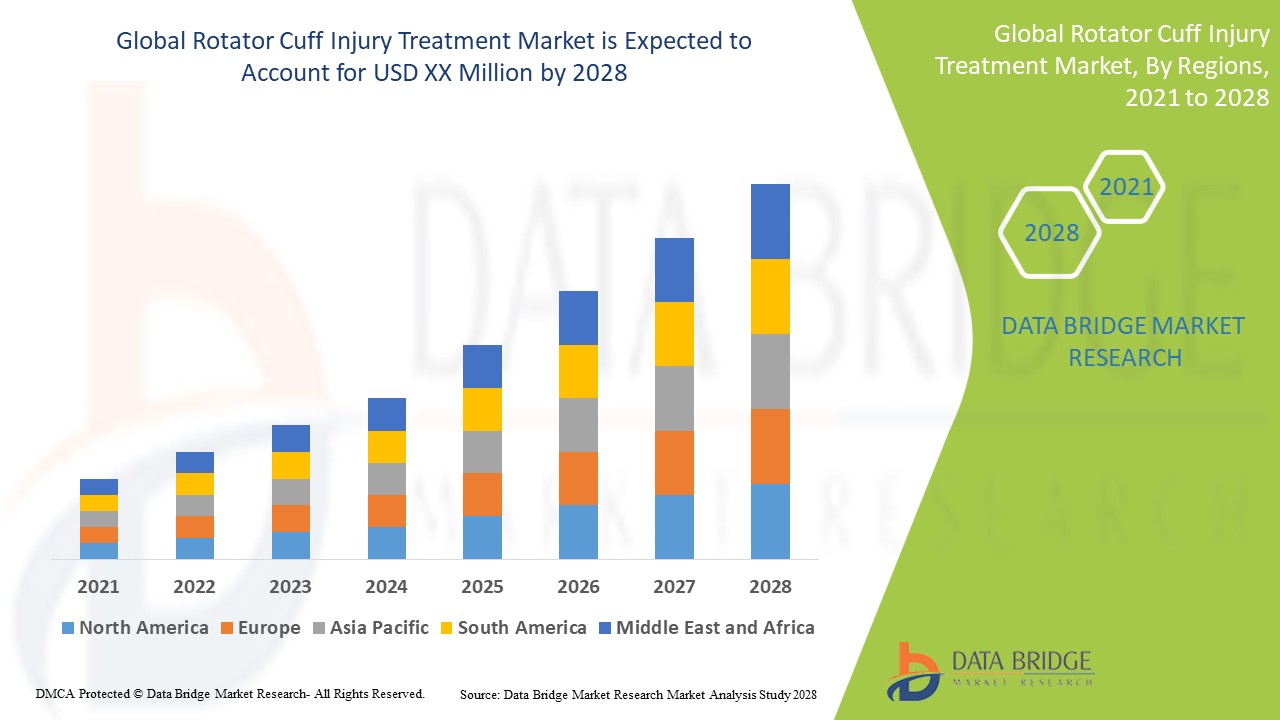
The global rotator cuff injury treatment market size was valued at USD 1.15 billion in 2024 and is projected to reach USD 1.73 billion by 2032, with a CAGR of 5.20% during the forecast period of 2025 to 2032. In addition to the insights on market scenarios such as market value, growth rate, segmentation, geographical coverage, and major players, the market reports curated by the Data Bridge Market Research also include depth expert analysis, patient epidemiology, pipeline analysis, pricing analysis, and regulatory framework.
Rotator Cuff Injury Treatment Market Trends
“Advancements in Minimally Invasive Surgery for Rotator Cuff Injury Treatment”
A key trend driving growth in the rotator cuff injury treatment market is the increasing adoption of minimally invasive surgical techniques. These procedures, such as arthroscopic rotator cuff repair, offer benefits such as smaller incisions, reduced recovery times, and less post-operative pain compared to traditional open surgeries. For instance, the development of advanced arthroscopic tools, such as high-definition cameras and robotic-assisted systems, has improved precision and outcomes. These innovations are particularly popular in treating sports-related rotator cuff injuries, as athletes can return to their activities faster. As more healthcare providers adopt these minimally invasive approaches, the market continues to expand with a growing focus on patient-centered care and quicker rehabilitation.
Report Scope and Rotator Cuff Injury Treatment Market Segmentation
|
Attributes |
Rotator Cuff Injury Treatment Key Market Insights |
|
Segments Covered |
|
|
Countries Covered |
U.S., Canada and Mexico in North America, Germany, France, U.K., Netherlands, Switzerland, Belgium, Russia, Italy, Spain, Turkey, Rest of Europe in Europe, China, Japan, India, South Korea, Singapore, Malaysia, Australia, Thailand, Indonesia, Philippines, Rest of Asia-Pacific (APAC) in the Asia-Pacific (APAC), Saudi Arabia, U.A.E, South Africa, Egypt, Israel, Rest of Middle East and Africa (MEA) as a part of Middle East and Africa (MEA), Brazil, Argentina and Rest of South America as part of South America |
|
Key Market Players |
Integra LifeSciences Corporation (U.S.), EVOLUTIS INDIA PVT. LTD. (India), Johnson & Johnson Private Limited (U.S.), Arthrex, Inc. (U.S.), Zimmer Biomet (U.S.), Stryker (U.S.), KARL STORZ (Germany), Pfizer Inc. (U.S.), GSK plc (U.K.), Bayer AG (Germany), Sun Pharmaceutical Industries Ltd. (India), Boehringer Ingelheim International GmbH (Germany), Horizon Therapeutics plc (Ireland), Sanofi (France), Assertio Holdings, Inc. (U.S.), Reckitt Benckiser Group PLC (U.K.), Novartis AG (Switzerland), AstraZeneca (U.K.), CONMED Corporation (U.S.) |
|
Market Opportunities |
|
|
Value Added Data Infosets |
In addition to the insights on market scenarios such as market value, growth rate, segmentation, geographical coverage, and major players, the market reports curated by the Data Bridge Market Research also include depth expert analysis, patient epidemiology, pipeline analysis, pricing analysis, and regulatory framework. |
Rotator Cuff Injury Treatment Market Definition
Rotator cuff injury treatment typically starts with conservative measures such as rest, ice, and physical therapy to reduce pain and improve mobility. Nonsteroidal anti-inflammatory drugs (NSAIDs) may be used for pain relief. In cases of mild to moderate tears, strengthening exercises and stretching are crucial for recovery. Corticosteroid injections can help reduce inflammation in more severe cases. If the injury is more severe, or if conservative treatments fail, surgical intervention may be necessary. Surgical options include arthroscopic repair or open surgery, depending on the extent of the tear. Post-surgery rehabilitation is essential for optimal recovery and regaining shoulder function.
Rotator Cuff Injury Treatment Market Dynamics
Drivers
- Increasing Prevalence of Rotator Cuff Injuries
The increasing prevalence of rotator cuff injuries, particularly among aging populations and athletes, is a significant driver of the market for treatment solutions. As individuals age, the rotator cuff undergoes natural degeneration, leading to a higher incidence of injuries. Athletes in sports such as baseball, tennis, and swimming are also at greater risk due to repetitive overhead motions. For instance, in the United States, over 2 million people seek medical care for rotator cuff injuries annually. This growing number of cases fuels the demand for both surgical interventions, such as arthroscopic repairs, and conservative treatments such as physiotherapy, rehabilitation, and anti-inflammatory medications, thus driving the market for rotator cuff injury treatments.
- Growth of Orthopedic Rehabilitation Centers
The expansion of orthopedic rehabilitation centers has significantly contributed to the growth of the rotator cuff injury treatment market. These centers specialize in providing targeted treatments, including physical therapy, strength training, and post-surgery rehabilitation. As a result, they improve patient outcomes and increase the availability of non-surgical treatment options. For instance, the rise of physiotherapy clinics in regions such as North America and Europe has facilitated quicker recovery and enhanced accessibility for patients. Such centers are especially beneficial for individuals seeking non-invasive options or recovery following arthroscopic surgeries. This shift toward rehabilitation-focused care has led to higher patient volumes and, consequently, boosted the demand for treatments for rotator cuff injuries.
Opportunities
- Adoption of Biologics and Regenerative Medicine
The increasing use of biologics, such as platelet-rich plasma (PRP) therapy and stem cell injections, presents a significant opportunity in the rotator cuff injury treatment market. These non-surgical treatments promote healing by utilizing the body’s natural healing mechanisms, reducing the need for invasive surgeries and minimizing recovery time. PRP, for instance, has gained popularity for its ability to enhance tissue repair, offering patients a less painful and quicker recovery alternative. Regenerative medicine is also transforming patient care by improving the long-term outcomes of treatments. As these therapies become more mainstream and accessible, they are expected to drive market growth, with more healthcare providers adopting these innovative solutions.
- Rising Participation in Sports
The growing participation in sports and physical activities, such as baseball, tennis, and weightlifting, is contributing to an increased risk of rotator cuff injuries. As more individuals engage in these high-impact and repetitive motion activities, the such likelihood of shoulder injuries rises, creating a significant opportunity for the rotator cuff injury treatment market. For instance, in baseball, pitchers frequently suffer from rotator cuff strains due to overuse, prompting increased demand for surgical procedures and physiotherapy. In addition, tennis players and weightlifters often experience rotator cuff tears, further driving the need for specialized treatments, rehabilitation, and minimally invasive surgical options. This trend fosters market growth by expanding the patient pool.
Restraints/Challenges
- High Treatment Costs
High treatment costs for rotator cuff injuries present a significant challenge to the market. Surgical treatments, including arthroscopic procedures, and advanced therapies such as stem cell injections or platelet-rich plasma (PRP) therapy, can be prohibitively expensive. The financial burden of both the initial treatment and the prolonged rehabilitation process can deter patients from seeking care, particularly in regions with limited access to healthcare or inadequate insurance coverage. This financial strain often results in delayed or inadequate treatment, worsening outcomes and hindering overall market growth. In addition, the high costs of cutting-edge treatments further exacerbate inequality in access, limiting the potential patient base and slowing market expansion.
- Risk of Complications
Post-surgical complications, such as infections, re-tears, or delayed healing, pose significant challenges in the rotator cuff injury treatment market. These complications not only hinder the recovery process but also increase the overall treatment burden, leading to extended recovery times, additional medical interventions, and rising healthcare costs. The fear of such risks can discourage patients from opting for surgical treatments, opting instead for conservative methods that may not be as effective in the long term. This hesitancy negatively impacts the adoption of surgical procedures, restricting market growth and limiting the overall potential of advanced treatment options for rotator cuff injuries.
This market report provides details of new recent developments, trade regulations, import-export analysis, production analysis, value chain optimization, market share, impact of domestic and localized market players, analyses opportunities in terms of emerging revenue pockets, changes in market regulations, strategic market growth analysis, market size, category market growths, application niches and dominance, product approvals, product launches, geographic expansions, technological innovations in the market. To gain more info on the market contact Data Bridge Market Research for an Analyst Brief, our team will help you take an informed market decision to achieve market growth.
Rotator Cuff Injury Treatment Market Scope
The market is segmented on the basis of type, tear type, causes, diagnosis, treatment, end-users and distribution channel. The growth amongst these segments will help you analyze meagre growth segments in the industries and provide the users with a valuable market overview and market insights to help them make strategic decisions for identifying core market applications.
Type
- Impingement Syndrome
- Rotator Cuff Tear
- Overuse Tendinitis
- Others
Tear Type
- Partial Tear
- Full-Thickness Tear
- Others
Causes
- Acute
- Degenerative
- Repetitive Stress
- Lack of Blood Supply
- Bone Spurs
- Others
Diagnosis
- X-Ray
- Ultrasound
- Magnetic Resonance Imaging (MRI)
- Others
Treatment
- Medication
- Nonsteroidal Anti-Inflammatory Drugs (NSAIDs)
- Corticosteroid Injection
- Others
- Physical Therapy
- Surgery
- Arthroscopic Tendon Repair
- Open Tendon Repair
- Tendon Transfer
- Shoulder Replacement
- Others
- Others
End Users
- Hospitals
- Specialty Clinics
- Others
Distribution Channel
- Direct Tender
- Hospital Pharmacy
- Retail Pharmacy
- Online Pharmacy
- Others
Rotator Cuff Injury Treatment Market Regional Analysis
The market is analysed and market size insights and trends are provided by country, type, tear type, causes, diagnosis, treatment, end-users and distribution channel as referenced above.
The countries covered in the market report are U.S., Canada, Mexico in North America, Germany, Sweden, Poland, Denmark, Italy, U.K., France, Spain, Netherland, Belgium, Switzerland, Turkey, Russia, Rest of Europe in Europe, Japan, China, India, South Korea, New Zealand, Vietnam, Australia, Singapore, Malaysia, Thailand, Indonesia, Philippines, Rest of Asia-Pacific (APAC) in Asia-Pacific (APAC), Brazil, Argentina, Rest of South America as a part of South America, U.A.E, Saudi Arabia, Oman, Qatar, Kuwait, South Africa, Rest of Middle East and Africa (MEA) as a part of Middle East and Africa (MEA).
North America is expected to dominate the rotator cuff injury treatment market due to high healthcare expenditure, advanced medical infrastructure, and robust research and development activities. The region’s focus on innovative treatment solutions, coupled with increasing awareness and rising prevalence of musculoskeletal disorders, drives the demand for effective rotator cuff injury treatments.
Europe is expected to show significant growth in the rotator cuff injury treatment market due to the rising geriatric population. As the elderly are more prone to such injuries, demand for effective treatments is increasing. Advancements in minimally invasive surgical techniques and rehabilitation therapies further fuel market expansion in the region.
The country section of the report also provides individual market impacting factors and changes in regulation in the market domestically that impacts the current and future trends of the market. Data points such as down-stream and upstream value chain analysis, technical trends and porter's five forces analysis, case studies are some of the pointers used to forecast the market scenario for individual countries. Also, the presence and availability of global brands and their challenges faced due to large or scarce competition from local and domestic brands, impact of domestic tariffs and trade routes are considered while providing forecast analysis of the country data.
Rotator Cuff Injury Treatment Market Share
The market competitive landscape provides details by competitor. Details included are company overview, company financials, revenue generated, market potential, investment in research and development, new market initiatives, global presence, production sites and facilities, production capacities, company strengths and weaknesses, product launch, product width and breadth, application dominance. The above data points provided are only related to the companies' focus related to market.
Rotator Cuff Injury Treatment Market Leaders Operating in the Market Are:
- Integra LifeSciences Corporation (U.S.)
- EVOLUTIS INDIA PVT. LTD. (India)
- Johnson & Johnson Private Limited (U.S.)
- Arthrex, Inc. (U.S.)
- Zimmer Biomet (U.S.)
- Stryker (U.S.)
- KARL STORZ (Germany)
- Pfizer Inc. (U.S.)
- GSK plc (U.K.)
- Bayer AG (Germany)
- Sun Pharmaceutical Industries Ltd. (India)
- Boehringer Ingelheim International GmbH (Germany)
- Horizon Therapeutics plc (Ireland)
- Sanofi (France)
- Assertio Holdings, Inc. (U.S.)
- Reckitt Benckiser Group PLC (U.K.)
- Novartis AG (Switzerland)
- AstraZeneca (U.K.)
- CONMED Corporation (U.S.)
Latest Developments in Rotator Cuff Injury Treatment Market
- In March 2024, a research team led by Dr. Stavros Thomopoulos, a biomechanics professor at Columbia University, developed a novel device inspired by the unique structure of python teeth. This innovation enhances the strength of tendon-to-bone attachment during rotator cuff repair, minimizing the risk of re-tears and improving recovery outcomes for patients
- In May 2022, Embody, Inc. received FDA approval for its TAPESTRY RC device, a groundbreaking medical implant designed to treat rotator cuff injuries. This approval introduces an advanced treatment option, providing better tendon-to-bone healing, reduced complications, and a more effective pathway for patients to achieve improved recovery outcomes from rotator cuff injuries
- In May 2022, DePuy Synthes gained FDA 510(k) clearance for the INHANCE Shoulder System, a key innovation in the field of reverse total shoulder arthroplasty. This system offers surgeons enhanced tools to treat complex shoulder conditions, including rotator cuff damage, leading to improved patient mobility and long-term functional outcomes after surgery
- In January 2021, Stryker acquired OrthoSpace, Ltd., expanding its sports medicine portfolio with new solutions for rotator cuff tear therapy. This acquisition allows Stryker to integrate OrthoSpace's minimally invasive technologies, such as their unique balloon-based procedure, into its product offerings, improving the range of treatment options available for patients suffering from rotator cuff injuries
SKU-
Obtenha acesso online ao relatório sobre a primeira nuvem de inteligência de mercado do mundo
- Painel interativo de análise de dados
- Painel de análise da empresa para oportunidades de elevado potencial de crescimento
- Acesso de analista de pesquisa para personalização e customização. consultas
- Análise da concorrência com painel interativo
- Últimas notícias, atualizações e atualizações Análise de tendências
- Aproveite o poder da análise de benchmark para um rastreio abrangente da concorrência
Metodologia de Investigação
A recolha de dados e a análise do ano base são feitas através de módulos de recolha de dados com amostras grandes. A etapa inclui a obtenção de informações de mercado ou dados relacionados através de diversas fontes e estratégias. Inclui examinar e planear antecipadamente todos os dados adquiridos no passado. Da mesma forma, envolve o exame de inconsistências de informação observadas em diferentes fontes de informação. Os dados de mercado são analisados e estimados utilizando modelos estatísticos e coerentes de mercado. Além disso, a análise da quota de mercado e a análise das principais tendências são os principais fatores de sucesso no relatório de mercado. Para saber mais, solicite uma chamada de analista ou abra a sua consulta.
A principal metodologia de investigação utilizada pela equipa de investigação do DBMR é a triangulação de dados que envolve a mineração de dados, a análise do impacto das variáveis de dados no mercado e a validação primária (especialista do setor). Os modelos de dados incluem grelha de posicionamento de fornecedores, análise da linha de tempo do mercado, visão geral e guia de mercado, grelha de posicionamento da empresa, análise de patentes, análise de preços, análise da quota de mercado da empresa, normas de medição, análise global versus regional e de participação dos fornecedores. Para saber mais sobre a metodologia de investigação, faça uma consulta para falar com os nossos especialistas do setor.
Personalização disponível
A Data Bridge Market Research é líder em investigação formativa avançada. Orgulhamo-nos de servir os nossos clientes novos e existentes com dados e análises que correspondem e atendem aos seus objetivos. O relatório pode ser personalizado para incluir análise de tendências de preços de marcas-alvo, compreensão do mercado para países adicionais (solicite a lista de países), dados de resultados de ensaios clínicos, revisão de literatura, mercado remodelado e análise de base de produtos . A análise de mercado dos concorrentes-alvo pode ser analisada desde análises baseadas em tecnologia até estratégias de carteira de mercado. Podemos adicionar quantos concorrentes necessitar de dados no formato e estilo de dados que procura. A nossa equipa de analistas também pode fornecer dados em tabelas dinâmicas de ficheiros Excel em bruto (livro de factos) ou pode ajudá-lo a criar apresentações a partir dos conjuntos de dados disponíveis no relatório.