



Asia-Pacific Alcoholic Beverages Market Segmentation, By Type (Beer, Distilled Spirits, Wine, Champagne, Brandy, Ciders, and Others), Packaging (Bottles, Cans, and Tetra Packs), Product Type (Flavoured and Unflavoured), Distribution Channel (Convenience Stores, Specialty Stores, Online Retailers, Hotels/Restaurants/Bars, and Others) - Industry Trends and Forecast to 2033
Каков размер и темпы роста рынка алкогольных напитков в Азиатско-Тихоокеанском регионе
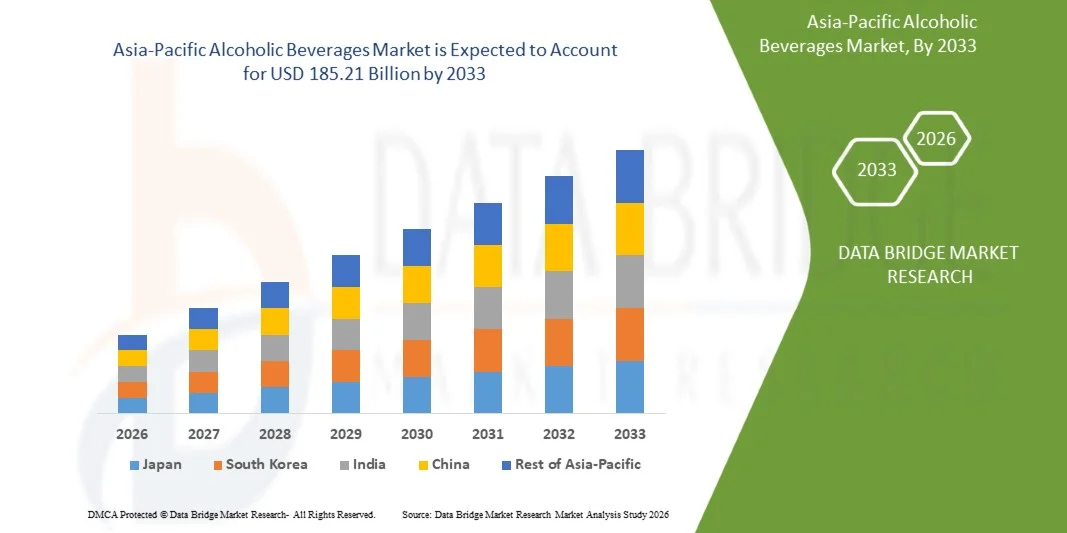
- Согласно анализу рынка Data Bridge Market Research, размер рынка алкогольных напитков в Азиатско-Тихоокеанском регионе был оценен как132,25 млрд долларов в 2025 годуОжидается, что он достигнет185,21 млрд долларов к 2033 году, вCAGR 4,3%в течение прогнозируемого периода
- Рост рынка в значительной степени подпитывается ростом располагаемых доходов, быстрой урбанизацией и развивающимся социальным принятием потребления алкогольных напитков, особенно среди более молодых демографических групп, что приводит к увеличению потребления как в развитых, так и в развивающихся странах.
- Кроме того, растет спрос на премиальные и ароматизированные алкогольные напитки, а также расширяются каналы дистрибуции.электронная торговляСовременная розничная торговля укрепляет доступность продукции и вовлеченность потребителей. Эти факторы ускоряют расширение рынка и значительно ускоряют общий рост отрасли.
Размер рынка и прогноз
- Глобальная рыночная стоимость (2025):$132,25 млрд.
- Ожидаемая рыночная стоимость (2033):$185,21 млрд.
- Прогноз CAGR (2026–2033):4.3%
Каковы основные выводы Азиатско-Тихоокеанского рынка алкогольных напитков
- Алкогольные напитки - это напитки, содержащие этанол, производимые в процессе ферментации или дистилляции, включая пиво, вино и спиртные напитки, широко потребляемые в социальных, культурных и рекреационных целях на мировых рынках.
- Растущий спрос на алкогольные напитки в первую очередь обусловлен изменением образа жизни потребителей, увеличением предпочтения премиальных и ремесленных продуктов, а также постоянными инновациями продуктов, ориентированными на вкус, упаковку и брендинг, для повышения потребительской привлекательности.
- Китай доминирует на Азиатско-Тихоокеанском рынке алкогольных напитков В 2025 году благодаря обширной потребительской базе, растущему населению среднего класса и сильному внутреннему производству пива и спиртных напитков
- Ожидается, что Индия станет самой быстрорастущей страной в Азиатско-Тихоокеанском регионе.Алкогольные напиткиРынок в течение прогнозируемого периода из-за роста располагаемых доходов, роста молодого населения и увеличения урбанизации
- Сегмент пива доминировал на рынке с долей рынка 61,12% в 2025 году из-за его широкого глобального потребления, доступности и сильного присутствия как на развитых, так и на развивающихся рынках. Потребители в разных демографических группах предпочитают пиво из-за его низкого содержания алкоголя и широкого разнообразия вкуса, что повышает его привлекательность для случайных и социальных случаев употребления алкоголя. Сильная дистрибьюторская сеть и обширные портфели брендов также поддерживают доминирование пива как в торговых, так и внебиржевых каналах.
Сфера охвата и сегментация рынка алкогольных напитков в Азиатско-Тихоокеанском регионе
|
Атрибуты |
Алкогольные напитки - ключевые идеи рынка |
|
Сегменты покрыты |
|
|
Страны, охваченные |
Азиатско-Тихоокеанский регион
|
|
Ключевые игроки рынка |
|
|
Рыночные возможности |
|
|
Информационные наборы данных с добавленной стоимостью |
В дополнение к информации о рыночных сценариях, таких как рыночная стоимость, темпы роста, сегментация, географическое покрытие и основные игроки, рыночные отчеты, курируемые Data Bridge Market Research, также включают углубленный экспертный анализ, анализ цен, анализ доли бренда, опрос потребителей, анализ демографии, анализ цепочки поставок, анализ цепочки создания стоимости, обзор сырья / расходных материалов, критерии выбора поставщиков, анализ PESTLE, анализ Porter и нормативную базу. |
Каковы основные тенденции на рынке алкогольных напитков в Азиатско-Тихоокеанском регионе
«Рост премий и потребления ремесла»
- Значительной тенденцией на Азиатско-Тихоокеанском рынке алкогольных напитков является растущий сдвиг в сторону премиальных и ремесленных продуктов, обусловленный потребителями, ищущими более высокое качество, подлинность и уникальный вкус в категориях пива, вина и спиртных напитков. Эта тенденция поднимает позиционирование алкогольных напитков от продуктов массового потребления до предложений, ориентированных на образ жизни, с сильной идентичностью бренда и привлекательностью наследия.
- Например, Diageo расширила свой премиальный портфель с такими брендами, как Johnnie Walker Blue Label и инновациями, вдохновленными ремеслом, чтобы удовлетворить потребителей высокого класса, ищущих дифференцированный опыт. Такие инициативы укрепляют ценность бренда и повышают маржу, одновременно укрепляя лояльность потребителей к премиальным предложениям.
- Растущая популярность крафтовых пивоварен и кустарных винокуренных заводов меняет динамику рынка, поскольку потребители изучают местные и мелкосерийные напитки. Это побуждает известных игроков инвестировать в ремесленные сегменты или приобретать нишевые бренды для поддержания конкурентоспособности.
- Спрос на премиальные вина и старые спиртные напитки растет из-за увеличения располагаемых доходов и растущей культуры социального питья и дарения. Эта тенденция также поддерживается изменением потребительских предпочтений в отношении качества по сравнению с количеством в потреблении напитков.
- Производители сосредоточены на инновационной упаковке, рассказывании историй и эмпирическом маркетинге, чтобы повысить привлекательность продукта и дифференцировать премиальные предложения. Эти стратегии усиливают вовлеченность потребителей и усиливают восприятие бренда на конкурентных рынках.
- Рынок постоянно расширяется в сегментах премиум-класса и ремесленного производства как в развитых, так и в развивающихся странах, что усиливает потенциал долгосрочного роста. Устойчивая склонность потребителей к высококачественным алкогольным напиткам формирует будущую траекторию развития отрасли.
Азиатско-Тихоокеанский рынок алкогольных напитков
водитель
«Увеличение располагаемого дохода и изменение образа жизни потребителей»
- Увеличение располагаемого дохода в странах с формирующейся рыночной экономикой и развитых странах приводит к увеличению расходов на алкогольные напитки, особенно в категориях премиум и супер-премиум. Потребители все чаще готовы тратить деньги на качественные продукты, которые соответствуют их предпочтениям в образе жизни и социальному опыту.
- Например, Pernod Ricard сообщил о сильном росте спроса на спиртные напитки премиум-класса на таких рынках, как Индия и Китай, чему способствовал рост населения среднего класса и тенденции урбанизации. Этот рост подчеркивает прямое влияние улучшения покупательной способности на модели потребления алкогольных напитков.
- Изменение образа жизни, особенно среди молодежи, способствует социальному потреблению и экспериментированию с новыми форматами напитков, такими как коктейли и готовые к употреблению продукты. Этот сдвиг расширяет потребительскую базу и стимулирует рост объема в нескольких сегментах продуктов.
- Урбанизация и воздействие глобальных культур потребления влияют на поведение потребителей, что приводит к увеличению принятия и принятия различных алкогольных напитков. Это усиливает спрос как на локальных, так и на внешних каналах потребления.
- Непрерывная эволюция потребительских предпочтений в сторону премиализации, удобства и разнообразия усиливает этот фактор. Ожидается, что устойчивое увеличение покупательной способности и изменение образа жизни останутся ключевым фактором, ускоряющим расширение рынка.
Сдержанность/вызов
«Строгие государственные правила и высокие налоги»
- Азиатско-Тихоокеанский рынок алкогольных напитков сталкивается со значительными проблемами из-за строгих государственных правил и политики высокого налогообложения, которые широко варьируются в разных регионах и непосредственно влияют на ценообразование, распределение и модели потребления. Эти нормативные рамки часто ограничивают расширение рынка и создают барьеры для новых участников.
- Например, Всемирная организация здравоохранения последовательно выступает за повышение налогов и ужесточение контроля за потреблением алкоголя для снижения рисков для здоровья, влияя на политические решения во многих странах. Такие меры повышают себестоимость продукции и ограничивают маркетинговую деятельность, тем самым влияя на общий спрос.
- Сложные лицензионные требования и ограничения на рекламу и продвижение еще больше ограничивают узнаваемость бренда и вовлеченность потребителей. Эти ограничения мешают компаниям эффективно дифференцировать свою продукцию на конкурентных рынках.
- Высокие акцизы и различные налоговые структуры в разных штатах и странах приводят к неравенству цен и снижению доступности, особенно в чувствительных к цене регионах. Это влияет на уровень потребления и замедляет проникновение на рынок.
- Совокупное воздействие жестких правил и налогообложения по-прежнему создает серьезные препятствия для роста рынка. Эти проблемы требуют стратегического планирования и регулирования для поддержания долгосрочного расширения отрасли.
Как сегментируется рынок алкогольных напитков в Азиатско-Тихоокеанском регионе
Рынок сегментирован на основе типа, упаковки, типа продукта и канала распределения.
• По типу
Исходя из типа, Азиатско-Тихоокеанский рынок алкогольных напитков сегментирован на пиво, дистиллированные спиртные напитки, вино, шампанское, бренди, сидр и другие. Сегмент пива доминировал на крупнейшей доле рынка в 61,12% в 2025 году, что обусловлено его широким глобальным потреблением, доступностью и сильным присутствием как на развитых, так и на развивающихся рынках. Потребители в разных демографических группах предпочитают пиво из-за его низкого содержания алкоголя и широкого разнообразия вкуса, что повышает его привлекательность для случайных и социальных случаев употребления алкоголя. Сильная дистрибьюторская сеть и обширные портфели брендов также поддерживают доминирование пива как в торговых, так и внебиржевых каналах. Непрерывные инновации в производстве крафтового пива и премиальных вариантов также способствовали устойчивому спросу на городских рынках. Доступность и культурная приемлемость пива во многих регионах продолжают укреплять его лидирующие позиции на рынке.
Ожидается, что в сегменте дистиллированных спиртных напитков будут наблюдаться самые быстрые темпы роста с 2026 по 2033 год, чему способствуют растущие тенденции премиализации и увеличение потребительских предпочтений в отношении высококачественных алкогольных напитков. Такие напитки, как виски, водка и ром, набирают популярность среди молодых потребителей из-за развивающихся вкусовых предпочтений и растущей культуры коктейлей. Расширение линейки премиальных и суперпремиальных продуктов наряду с увеличением располагаемых доходов еще больше поддерживает рост сегмента. Дистиллированные спиртные напитки также выигрывают от сильного брендинга и более высокой прибыли, поощряя производителей инвестировать в дифференциацию продуктов и увеличение прибыли.инновацииРастущее влияние западных привычек потребления алкоголя в развивающихся странах ускоряет спрос на спиртные напитки.
• Упаковка
На основе упаковки рынок алкогольных напитков Азиатско-Тихоокеанского региона разделен на бутылки, банки и пакеты тетра. Сегмент бутылок доминировал на крупнейшей доле рынка в 2025 году, что обусловлено его традиционным использованием, премиальной привлекательностью и способностью сохранять качество и вкус алкогольных напитков. Стеклянные бутылки широко предпочтительны для таких продуктов, как вино, спиртные напитки и пиво премиум-класса из-за их превосходных барьерных свойств и пригодности для вторичной переработки. Эстетическая ценность и возможности брендинга, предлагаемые стеклянной упаковкой, еще больше повышают восприятие потребителей, особенно в высококачественных категориях продуктов. Бутылки также поддерживают длительное хранение и старение, что важно для некоторых алкогольных напитков. Широкая доступность и развитая инфраструктура для бутилированных продуктов способствуют их постоянному доминированию.
Ожидается, что в сегменте банок будет самый быстрый CAGR с 2026 по 2033 год, что обусловлено растущим спросом на удобные, легкие и портативные упаковочные решения. Банки набирают популярность среди молодых потребителей и любителей активного отдыха из-за их простоты в обращении и возможностей быстрого охлаждения. Растущее внимание к устойчивости и вторичной переработке еще больше стимулирует внедрение алюминиевых банок в отрасли. Производители напитков все чаще запускают новые продукты в банках, чтобы удовлетворить текущие тенденции потребления. Расширение производства готовых к употреблению алкогольных напитков также существенно способствует росту этого сегмента.
• По типу продукции
Исходя из типа продукта, Азиатско-Тихоокеанский рынок алкогольных напитков сегментирован на ароматизированный и не ароматизированный. Непривлекательный сегмент доминировал на крупнейшей доле рынка в 2025 году, чему способствовали сильные потребительские предпочтения традиционных и классических алкогольных напитков, таких как стандартное пиво, виски и вино. Эти продукты имеют давнее присутствие на рынке и широко распространены в разных культурах и регионах. Постоянный спрос на аутентичные вкусовые профили и установленная лояльность к бренду еще больше поддерживают доминирование непривлекательных вариантов. Производители по-прежнему сосредоточены на сохранении качества и наследия, что находит отклик у зрелых групп потребителей. Широкая доступность не ароматизированных продуктов во всех ценовых диапазонах также способствует их лидирующим позициям.
Ожидается, что в сегменте ароматизаторов будут наблюдаться самые быстрые темпы роста с 2026 по 2033 год, что обусловлено изменением потребительских предпочтений в сторону инновационных и разнообразных вкусовых впечатлений. Молодых потребителей все больше привлекают ароматизированные алкогольные напитки из-за их новизны, сладости и низкой воспринимаемой интенсивности алкоголя. Растущая популярность готовых к употреблению коктейлей и крепких спиртных напитков значительно стимулирует спрос в этом сегменте. Компании по производству напитков постоянно внедряют новые сочетания вкусов, чтобы привлечь растущий интерес потребителей. Влияние социальных сетей и тенденций образа жизни также поощряет эксперименты с ароматизированными напитками.
• Распределительный канал
На основе канала дистрибуции Азиатско-Тихоокеанский рынок алкогольных напитков подразделяется на магазины, специализированные магазины, интернет-магазины, отели / рестораны / бары и другие. Сегмент отелей / ресторанов / баров доминировал на крупнейшей доле рынка в 2025 году, чему способствовало сильное локальное потребление и социальный характер потребления алкогольных напитков. Потребители часто предпочитают рестораны и развлекательные заведения для премиальных напитков, коктейлей и кураторских меню напитков. Сектор гостеприимства играет ключевую роль в продвижении новых продуктов и премиальных брендов посредством прямого вовлечения потребителей. Рост туризма и городской культуры ночной жизни также поддерживает спрос через этот канал. Наличие квалифицированных барменов и миксологов повышает общий опыт потребления, усиливая доминирование сегмента.
Ожидается, что сегмент онлайн-ритейлеров станет свидетелем самого быстрого CAGR с 2026 по 2033 год, что обусловлено растущей цифровизацией и растущим предпочтением удобных услуг доставки на дом. Платформы электронной коммерции расширяют свои предложения алкогольных напитков, предоставляя потребителям широкий спектр продуктов и конкурентоспособные цены. Интеграция безопасных платежных систем и технологий проверки возраста способствует росту онлайн-продаж. Потребители получают легкий доступ к информации о продукте, отзывам и персонализированным рекомендациям. Сдвиг в покупательском поведении, особенно после пандемических изменений, продолжает ускорять внедрение онлайн-каналов розничной торговли.
В каком регионе находится наибольшая доля Азиатско-Тихоокеанского рынка алкогольных напитков
- Китай доминировал на Азиатско-Тихоокеанском рынке алкогольных напитков с самой большой долей доходов в 2025 году, что обусловлено его обширной потребительской базой, растущим населением среднего класса и сильным внутренним производством пива и спиртных напитков.
- Рост располагаемых доходов, изменение структуры потребления и увеличение спроса на премиальные и импортные алкогольные напитки продолжают укреплять лидерство Китая на региональном рынке.
- Присутствие крупных отечественных производителей, растущие инвестиции мировых компаний по производству напитков и быстрое расширение каналов розничной торговли и электронной коммерции еще больше укрепляют доминирующее положение Китая в течение прогнозируемого периода. Растущая урбанизация и изменение социальных привычек также способствуют устойчивому росту рынка по всей стране.
Япония Азиатско-Тихоокеанский рынок алкогольных напитков
Ожидается, что японский рынок будет неуклонно расти с 2026 по 2033 год, чему будет способствовать зрелая индустрия напитков и сильная культурная склонность к потреблению алкоголя. Потребители в Японии все чаще предпочитают премиальные и ремесленные алкогольные напитки, что отражает сдвиг в сторону качества и уникальных вкусовых профилей. Спрос на слабоалкогольные и функциональные напитки также растет из-за тенденций, связанных со здоровьем. Постоянные инновации в продуктах и сильное наследие бренда среди отечественных компаний способствуют стабильному расширению рынка. Хорошо налаженная дистрибьюторская сеть Японии, ориентированная на качество продукции, обеспечивает устойчивое региональное присутствие.
Индия Азиатско-Тихоокеанский рынок алкогольных напитков
Ожидается, что Индия зарегистрирует самый быстрый CAGR на Азиатско-Тихоокеанском рынке алкогольных напитков в течение 2026–2033 годов, чему будет способствовать рост располагаемых доходов, рост молодого населения и рост урбанизации. Изменение социальных норм и более широкое признание потребления алкоголя значительно стимулируют спрос как в городских, так и в полугородских районах. Расширение организованных розничных и онлайн-платформ улучшает доступность продукта для потребителей. Спрос на премиальные и ароматизированные алкогольные напитки растет среди молодых людей, ищущих новый опыт. Правительственное регулирование и развивающаяся налоговая политика продолжают формировать рынок, поддерживая его траекторию быстрого роста.
Какие крупнейшие компании Азиатско-Тихоокеанского рынка алкогольных напитков
Индустрию алкогольных напитков в первую очередь возглавляют хорошо зарекомендовавшие себя компании, среди которых:
- Halewood Sales (Великобритания)
- Diageo (Великобритания)
- ASAHI GROUP HOLDINGS, LTD.
- Бакарди (Бермуда)
- Mike's Hard Lemonade Co. (США)
- Братья Кастель (Франция)
- СОХРАНЕНИЕ СОЛНЦЕВ (Япония)
- Anheuser-Busch Companies LLC (США)
- Браун Форман (США)
- Перно Рикар (Франция)
- Constellation Brands, Inc. (США)
- Heineken Holding N.V. (Нидерланды)
- Molson Coors Beverage Company (США)
Каковы последние тенденции на рынке алкогольных напитков в Азиатско-Тихоокеанском регионе
- В сентябре 2025 года Carabao Pattaya Beach Beer представила новое легкое пиво с 3,9% ABV с освежающим ароматом извести и первой в отрасли полностью открытой банкой, значительно повышая удобство пользователей и создавая уникальный опыт потребления. Это нововведение укрепляет позиции бренда среди молодых потребителей, которые предпочитают более легкие, простые в употреблении напитки, а также реагируют на спрос на портативность и новизну в упаковке. Развитие способствует более широкому фокусу отрасли на продуктах с низким содержанием ABV и функциональных форматах упаковки, тем самым усиливая конкуренцию и стимулируя дифференциацию продуктов в пивном сегменте.
- В июле 2025 года Ochre Spirits запустила Mango Citron Rum, наполненный сырым зеленым манго и цитрусовыми, что еще больше расширило ассортимент ароматизированных спиртных напитков и привело к росту спроса на инновационные вкусовые профили. Это введение поддерживает растущую тенденцию ароматизированных спиртных напитков премиум-класса, привлекая молодых и экспериментальных потребителей, ищущих уникальный опыт употребления алкоголя. Это также повышает узнаваемость бренда и конкурентное позиционирование в категории рома, поощряя других игроков инвестировать в диверсификацию вкуса и инновации продукта, чтобы захватить развивающиеся потребительские предпочтения.
- В июне 2025 года Diageo India представила новый односолодовый солод Godawan Triple Cask исключительно для розничной торговли, используя процесс созревания нескольких бочек для создания сложного и изысканного вкусового профиля. Этот запуск укрепляет тенденцию премиализации на Азиатско-Тихоокеанском рынке алкогольных напитков, ориентируясь на богатых потребителей и международных путешественников, ищущих эксклюзивные и высококачественные предложения. Это также усиливает дифференциацию бренда за счет ограниченной доступности и мастерства, поддерживая рост в сегменте роскошных спиртных напитков и увеличивая конкуренцию среди производителей виски премиум-класса.
- В мае 2025 года Cashmir Vodka запустила свою первую мелкосерийную роскошную водку, изготовленную из органической озимой пшеницы и ледниковой воды, при поддержке тщательного процесса дистилляции 7x, чтобы обеспечить превосходную чистоту и гладкость. Эта разработка расширяет сегмент премиальной водки, подчеркивая подлинность, региональную идентичность и методы кустарного производства. Он привлекает высококлассных потребителей, ищущих дифференцированные и высококачественные спиртные напитки, а также побуждает игроков рынка сосредоточиться на брендинге и мастерстве на основе происхождения, чтобы укрепить свои портфели продуктов премиум-класса.
- В ноябре 2022 года Bacardi представила виски Legacy в Индии, ориентированный на дисконтный сегмент, с целью захвата большей доли потребителей, чувствительных к цене, при сохранении стандартов качества бренда. Этот стратегический шаг усиливает проникновение Bacardi на развивающиеся рынки, преодолевая разрыв между доступностью и фирменными предложениями. Это также усиливает конкуренцию в ценовом сегменте, побуждая другие компании расширять свои доступные линейки продуктов и тем самым поддерживать рост объема и более широкую доступность на рынке алкогольных напитков в Азиатско-Тихоокеанском регионе.
SKU-
Получите онлайн-доступ к отчету на первой в мире облачной платформе рыночной аналитики

- Интерактивная панель анализа данных
- Панель анализа компании для возможностей с высоким потенциалом роста
- Доступ аналитика-исследователя для настройки и запросов
- Анализ конкурентов с помощью интерактивной панели
- Последние новости, обновления и анализ тенденций
- Используйте возможности сравнительного анализа для комплексного отслеживания конкурентов
Методология исследования
Сбор данных и анализ базового года выполняются с использованием модулей сбора данных с большими размерами выборки. Этап включает получение рыночной информации или связанных данных из различных источников и стратегий. Он включает изучение и планирование всех данных, полученных из прошлого заранее. Он также охватывает изучение несоответствий информации, наблюдаемых в различных источниках информации. Рыночные данные анализируются и оцениваются с использованием статистических и последовательных моделей рынка. Кроме того, анализ доли рынка и анализ ключевых тенденций являются основными факторами успеха в отчете о рынке. Чтобы узнать больше, пожалуйста, запросите звонок аналитика или оставьте свой запрос.
Ключевой методологией исследования, используемой исследовательской группой DBMR, является триангуляция данных, которая включает в себя интеллектуальный анализ данных, анализ влияния переменных данных на рынок и первичную (отраслевую экспертную) проверку. Модели данных включают сетку позиционирования поставщиков, анализ временной линии рынка, обзор рынка и руководство, сетку позиционирования компании, патентный анализ, анализ цен, анализ доли рынка компании, стандарты измерения, глобальный и региональный анализ и анализ доли поставщика. Чтобы узнать больше о методологии исследования, отправьте запрос, чтобы поговорить с нашими отраслевыми экспертами.
Доступна настройка
Data Bridge Market Research является лидером в области передовых формативных исследований. Мы гордимся тем, что предоставляем нашим существующим и новым клиентам данные и анализ, которые соответствуют и подходят их целям. Отчет можно настроить, включив в него анализ ценовых тенденций целевых брендов, понимание рынка для дополнительных стран (запросите список стран), данные о результатах клинических испытаний, обзор литературы, обновленный анализ рынка и продуктовой базы. Анализ рынка целевых конкурентов можно проанализировать от анализа на основе технологий до стратегий портфеля рынка. Мы можем добавить столько конкурентов, о которых вам нужны данные в нужном вам формате и стиле данных. Наша команда аналитиков также может предоставить вам данные в сырых файлах Excel, сводных таблицах (книга фактов) или помочь вам в создании презентаций из наборов данных, доступных в отчете.











