



Europe Poultry Diagnostics Market Segmentation, By Test Type (Enzyme Linked Sorbent Assay (ELISA), Polymerase Chain Reaction Tests (PCR), and Others), Disease Type (Avian Salmonellosis, Avian Influenza, Newcastle Disease, Avian Mycoplasmosis, Infectious Bronchitis, Infectious Bursal Disease, Avian Pasteurellosis, Avian Encephalomyelitis, Avian Reovirus, and Chicken Anemia), Service Type (Bacteriology, Parasitology and Virology) - Industry Trends and Forecast to 2033
Каков размер и темпы роста европейского рынка диагностики птицеводства
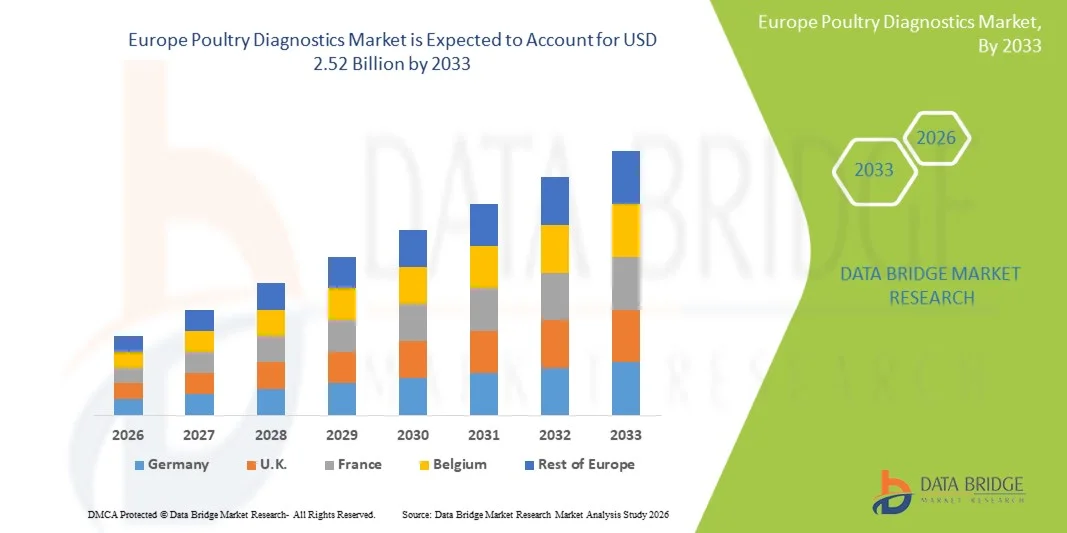
- Согласно анализу Data Bridge Market Research, в Европе был оценен размер рынка диагностики птицы.1,18 млрд долларов в 2025 годуОжидается, что он достигнет$2,52 млрд к 2033 году, вCAGR 10.00%в течение прогнозируемого периода
- Рост рынка в значительной степени обусловлен растущим спросом на эффективное выявление и мониторинг заболеваний в птицеводстве, а также постоянными достижениями в диагностических технологиях, что приводит к повышению производительности и биобезопасности в коммерческих и мелких птицеводческих операциях.
- Кроме того, растущие опасения по поводу зоонозных заболеваний, правил безопасности пищевых продуктов и необходимости быстрых, точных и удобных диагностических решений устанавливают диагностику домашней птицы в качестве важнейшего компонента современного управления домашним скотом. Эти факторы ускоряют внедрение решений для диагностики домашней птицы, тем самым значительно повышая рост отрасли.
Размер рынка и прогноз
- Глобальная рыночная стоимость (2025):1,18 млрд долларов в 2025 году
- Ожидаемая рыночная стоимость (2033):$2,52 млрд к 2033 году
- Прогноз CAGR (2026–2033):10.00%
Анализ рынка птицеводческой диагностики Европы
- Диагностика птицеводства, охватывающая ряд решений для выявления инфекционных заболеваний и мониторинга здоровья птицы, становится все более важным компонентом современных систем управления домашним скотом как на коммерческих фермах, так и в ветеринарных условиях из-за их роли в обеспечении здоровья стада, производительности и безопасности пищевых продуктов.
- Растущий спрос на диагностику птицы в первую очередь подпитывается ростом распространенности заболеваний птицы, повышением осведомленности о здоровье животных, строгими правилами безопасности пищевых продуктов и растущей потребностью в быстрых, точных и экономически эффективных диагностических решениях.
- Великобритания доминировала на европейском рынке диагностики птицеводства с самой большой долей доходов в 37,6% в 2025 году, характеризующейся передовой инфраструктурой ветеринарного здравоохранения, сильной нормативной базой и высоким внедрением диагностических технологий, в то время как США продолжают наблюдать устойчивый рост, обусловленный увеличением производства птицы и инициатив по эпиднадзору за болезнями.
- Ожидается, что Германия станет самым быстрорастущим регионом на европейском рынке диагностики птицы в течение прогнозируемого периода из-за увеличения инвестиций в здравоохранение животных, растущего внимания к безопасности пищевых продуктов и достижений в области ветеринарных диагностических технологий.
- Сегмент вирусологии доминировал на крупнейшей доле рынка в 47,8% в 2025 году, что обусловлено высокой распространенностью вирусных заболеваний, таких как вирусные заболевания.птичий гриппБолезнь Ньюкасла
Сегментация рынка диагностики птицеводства Европы и Европы
|
Атрибуты |
Диагностика птицеводства Ключевое понимание рынка |
|
Сегменты покрыты |
|
|
Страны, охваченные |
Европа
|
|
Ключевые игроки рынка |
•Zoetis Inc.(США) |
|
Рыночные возможности |
|
|
Информационные наборы данных с добавленной стоимостью |
В дополнение к информации о рыночных сценариях, таких как рыночная стоимость, темпы роста, сегментация, географическое покрытие и основные игроки, рыночные отчеты, курируемые Data Bridge Market Research, также включают углубленный экспертный анализ, эпидемиологию пациентов, анализ трубопроводов, анализ цен и нормативную базу. |
Каковы основные тенденции на европейском рынке диагностики птицеводства
"Растущее внедрение технологий быстрой и молекулярной диагностики в управлении здоровьем птицы"
- Значительной и ускоряющейся тенденцией на мировом рынке диагностики птицеводства в Европе является быстрое и быстрое внедрение новых технологий.молекулярная диагностикатехнологии раннего и точного выявления инфекционных заболеваний в популяциях домашней птицы. Эти передовые инструменты позволяют быстрее принимать решения и улучшать контроль заболеваний в коммерческих птицеводческих операциях.
- Например, диагностические тесты на основе полимеразной цепной реакции (ПЦР) и анализы иммуносорбентов, связанные с ферментами (ELISA), широко используются для выявления таких заболеваний, как птичий грипп, болезнь Ньюкасла и сальмонелла, что позволяет своевременно вмешаться и снизить риск крупномасштабных вспышек.
- Растущий акцент на биобезопасность и эпиднадзор за болезнями способствует интеграции передовых диагностических решений в практику птицеводства, обеспечивая лучший мониторинг здоровья стада и минимизируя экономические потери.
- Кроме того, разработка портативных и диагностических устройств для пунктов оказания медицинской помощи позволяет проводить тестирование на месте, уменьшая зависимость от централизованных лабораторий и улучшая время обработки результатов.
- Растущий мировой спрос на безопасную и высококачественную птицеводческую продукцию побуждает производителей внедрять эффективные диагностические решения для обеспечения соблюдения стандартов и правил безопасности пищевых продуктов.
- Эта тенденция к более быстрым, точным и доступным диагностическим технологиям трансформирует управление здоровьем птицы, уделяя особое внимание профилактическому уходу и контролю заболеваний.
- Спрос на передовую диагностику птицы растет как на развитых, так и на развивающихся рынках, чему способствует рост птицеводческой отрасли и повышение осведомленности об управлении здоровьем животных.
Динамика европейского рынка диагностики птицеводства
водитель
«Рост спроса, вызванный увеличением производства птицы и опасениями по поводу вспышки заболеваний»
- Быстрый рост мировой птицеводческой отрасли, обусловленный растущим спросом на мясо птицы и яйца, является основным фактором, стимулирующим рост европейского рынка диагностики птицы. По мере роста производства потребность в эффективном мониторинге и лечении заболеваний становится все более важной.
- Например, повторяющиеся вспышки птичьего гриппа и других инфекционных заболеваний в таких регионах, как Азия, Европа и Северная Америка, побудили правительства и производителей птицы инвестировать в передовые диагностические решения для обеспечения раннего выявления и сдерживания.
- Растущая осведомленность о зоонозных заболеваниях и их потенциальном влиянии на здоровье человека способствует внедрению надежных диагностических систем в птицеводстве.
- Правительства и регулирующие органы внедряют строгие руководящие принципы, касающиеся здоровья животных, безопасности пищевых продуктов и эпиднадзора за болезнями, что стимулирует спрос на надежные диагностические инструменты.
- Кроме того, все более широкое внедрение интенсивных методов ведения сельского хозяйства повышает риск передачи заболеваний, что требует постоянного мониторинга и своевременной диагностики.
- Технологические достижения вветеринарная диагностикаМолекулярное тестирование и автоматизированные системы повышают точность и эффективность, что способствует дальнейшему росту рынка.
- Растущее внимание к стандартам качества экспорта и требованиям международной торговли также подталкивает производителей птицы к внедрению передовых методов диагностики.
- Кроме того, увеличение инвестиций в инфраструктуру ветеринарного здравоохранения и научные исследования способствуют расширению европейского рынка диагностики птицы во всем мире.
Сдержанность/вызов
"Высокая стоимость и ограниченный доступ к современной диагностической инфраструктуре"
- Высокая стоимость, связанная с передовыми технологиями диагностики птицы, остается серьезной проблемой, особенно для мелких и средних птицеводов в развивающихся регионах.
- Например, молекулярные диагностические тесты и автоматизированное лабораторное оборудование часто требуют значительных инвестиций в инфраструктуру, квалифицированный персонал и техническое обслуживание, что делает их менее доступными для операций с ограниченными ресурсами.
- Ограниченная доступность диагностических лабораторий и неадекватная ветеринарная инфраструктура в некоторых регионах могут задержать выявление и реагирование на болезни, увеличивая риск широко распространенных вспышек.
- Кроме того, недостаточная осведомленность и техническая экспертиза среди птицеводов в отношении преимуществ и использования передовых диагностических инструментов могут препятствовать внедрению на рынок.
- Изменчивость нормативных стандартов и отсутствие согласованности в разных странах могут также создать проблемы для производителей и поставщиков услуг, работающих на мировом рынке.
- Время, необходимое для определенных лабораторных тестов и логистических проблем при транспортировке образцов, может дополнительно повлиять на эффективность диагностики заболеваний.
- Кроме того, проблемы, связанные с точностью и надежностью некоторых диагностических методов, могут повлиять на доверие пользователей и уровень принятия.
- Решение этих проблем с помощью экономически эффективных решений, расширения ветеринарной инфраструктуры, учебных программ и повышения осведомленности будет иметь важное значение для обеспечения устойчивого роста на европейском рынке диагностики птицы.
Европейский рынок диагностики птицеводства
Рынок сегментирован на основе типа теста, типа заболевания и типа обслуживания.
• Тип испытания
На основе типа теста европейский рынок диагностики птицы подразделяется на анализ сорбента, связанный с ферментами (ELISA), тесты полимеразной цепной реакции (PCR) и другие. Сегмент фермента, связанного с анализом сорбента (ELISA), доминировал на крупнейшей доле рынка в 44,5% в 2025 году, что обусловлено его широким использованием для обнаружения антител и антигенов при заболеваниях птицы. Тесты ELISA очень предпочтительны из-за их экономической эффективности, простоты использования и способности обрабатывать большие объемы выборки одновременно. Птицефабрики и диагностические лаборатории в значительной степени полагаются на ELISA для плановых программ скрининга и наблюдения. Кроме того, растущая распространенность инфекционных заболеваний у домашней птицы повышает спрос на надежные методы диагностики. Наборы ELISA широко доступны и предлагают стандартизированные результаты, что делает их пригодными для крупномасштабного тестирования. Растущее внимание к безопасности пищевых продуктов и борьбе с болезнями также поддерживает рост сегмента. Кроме того, правительственные инициативы, способствующие мониторингу заболеваний, способствуют их принятию. Относительно быстрое время оборота метода еще больше повышает его привлекательность. В целом, ELISA остается доминирующим из-за его доступности и эффективности в массовом тестировании.
Ожидается, что сегмент полимеразной цепной реакции (ПЦР) будет наблюдать самый быстрый CAGR 21,9% с 2026 по 2033 год, что обусловлено его высокой чувствительностью и точностью обнаружения патогенов на ранних стадиях. ПЦР-тестирование позволяет точно идентифицировать вирусные и бактериальные инфекции даже при низких концентрациях. Растущий спрос на быструю и надежную диагностику является ключевым фактором для этого сегмента. Кроме того, достижения в области молекулярных диагностических технологий расширяют возможности ПЦР. Производители птицы все чаще используют ПЦР для раннего выявления и профилактики заболеваний. Рост заболеваемости зоонозными заболеваниями также поддерживает рост. Кроме того, ПЦР-тесты снижают риск вспышек заболеваний, обеспечивая своевременное вмешательство. Расширение диагностических лабораторий способствует росту сегмента. Повышение осведомленности о передовых методах диагностики является еще одним ключевым фактором. В целом, ПЦР набирает обороты благодаря своей превосходной точности и надежности.
• По типу заболевания
Исходя из типа заболевания, европейский рынок диагностики птицы сегментирован на птичий сальмонеллез, птичий грипп, болезнь Ньюкасла, птичий микоплазмоз, инфекционный бронхит, инфекционную болезнь бурсаля, птичий пастереллоз, птичий энцефаломиелит, птичий реовирус и куриную анемию. Сегмент птичьего гриппа занимал самую большую долю рынка в 26,3% в 2025 году, что обусловлено высокой распространенностью и значительным экономическим воздействием заболевания. Вспышки птичьего гриппа могут привести к серьезным потерям в производстве птицы, что приведет к обширному диагностическому тестированию. Правительства и регулирующие органы внедрили строгие программы эпиднадзора для борьбы с распространением болезни. Растущая мировая торговля птицеводческой продукцией также способствует необходимости регулярного тестирования. Кроме того, повышение осведомленности о зоонозных рисках повышает спрос на диагностику. Диагностические инструменты для птичьего гриппа постоянно совершенствуются для более быстрого выявления. Участие международных организаций здравоохранения также способствует усилиям по мониторингу. Фермеры птицеводства инвестируют в профилактические меры, чтобы избежать вспышек. В целом, птичий грипп остается одной из основных областей внимания из-за его большого влияния на отрасль.
Сегмент болезни Ньюкасла, как ожидается, будет наблюдать самый быстрый CAGR 22,7% с 2026 по 2033 год, что обусловлено увеличением числа вспышек в развивающихся регионах. Болезнь Ньюкасла является очень заразной и может привести к значительной смертности среди птиц. Необходимость раннего выявления и эффективного лечения заболеваний является ключевым фактором. Правительства продвигают программы вакцинации и диагностики для борьбы с этим заболеванием. Кроме того, достижения в области диагностических технологий повышают точность обнаружения. Производители мяса птицы все чаще используют рутинное тестирование для предотвращения крупномасштабных вспышек. Расширение птицеводства на развивающихся рынках также способствует росту. Более того, растущее осознание мер по борьбе с болезнями способствует их принятию. Наличие быстрых диагностических наборов еще больше усиливает рост рынка. В целом, этот сегмент быстро растет из-за увеличения распространенности заболеваний и профилактических мер.
• Тип обслуживания
По типу обслуживания европейский рынок диагностики птицы подразделяется на бактериологию, паразитологию и вирусологию. Сегмент вирусологии доминировал на крупнейшей доле рынка в 47,8% в 2025 году, что обусловлено высокой распространенностью вирусных заболеваний, таких как птичий грипп и болезнь Ньюкасла. Вирусные инфекции представляют значительный риск для здоровья птицы и требуют передовых методов диагностики для точного обнаружения. Службы вирусологии необходимы для выявления и контроля вспышек, что делает их критическим компонентом диагностики домашней птицы. Растущая заболеваемость вирусными заболеваниями является основным фактором, поддерживающим рост. Кроме того, достижения в методах вирусологического тестирования повышают эффективность диагностики. Птицефабрики все больше полагаются на специализированные лаборатории для обнаружения вирусов. Государственные инициативы, направленные на эпиднадзор за болезнями, также способствуют росту сегмента. Кроме того, потребность в обеспечении безопасности и качества пищевых продуктов стимулирует спрос. Расширение диагностической инфраструктуры способствует дальнейшему внедрению. В целом, вирусология остается доминирующей из-за ее важности в борьбе с болезнями.
Ожидается, что в сегменте бактериологии самый быстрый CAGR составит 20,8% с 2026 по 2033 год, что обусловлено ростом распространенности бактериальных инфекций у домашней птицы. Такие заболевания, как сальмонеллез, требуют точной и своевременной диагностики для предотвращения распространения. Бактериологические услуги помогают выявлять бактериальные патогены и направлять стратегии лечения. Растущий спрос на безопасную птицеводческую продукцию является ключевым фактором. Кроме того, нормативные требования к безопасности пищевых продуктов поддерживают рост сегмента. Производители птицы инвестируют в диагностические услуги для поддержания стандартов качества. Расширение лабораторных помещений также способствует росту. Кроме того, достижения в области диагностических методов улучшают возможности обнаружения. Растущая осведомленность о профилактике заболеваний также способствует усыновлению. В целом, этот сегмент быстро расширяется за счет увеличения внимания к безопасности пищевых продуктов и борьбе с болезнями.
Региональный анализ рынка птицеводства Европы
- Европейский рынок диагностики птицеводства, по прогнозам, будет расширяться с существенным CAGR в течение прогнозируемого периода, что обусловлено растущим акцентом на управление здоровьем птицы, эпиднадзор за болезнями и стандарты безопасности пищевых продуктов.
- Растущая урбанизация и промышленное птицеводство создают спрос на быстрые и надежные диагностические решения для предотвращения вспышек птичьего гриппа, болезни Ньюкасла и сальмонеллы.
- Регулятивные рамки по всему региону также поощряют внедрение передовых диагностических технологий для обеспечения благополучия животных и соблюдения международных экспортных стандартов.
Британский рынок диагностики птицеводства
Рынок диагностики птицеводства в Европе доминировал на рынке диагностики птицеводства в Европе с самой большой долей дохода в 37,6% в 2025 году, характеризующейся передовой инфраструктурой ветеринарного здравоохранения, устоявшимися нормативными руководящими принципами и высоким внедрением диагностических технологий. Рост рынка поддерживается увеличением инвестиций в программы мониторинга заболеваний, широким использованием молекулярных и серологических диагностических инструментов и правительственными инициативами, способствующими управлению здоровьем птицы. Кроме того, растущее внимание к биобезопасности и профилактическому здравоохранению на птицефабриках стимулирует спрос на быстрые и точные диагностические решения по всей стране.
Германия Европа Рынок диагностики птицеводства
Ожидается, что в течение прогнозируемого периода рынок диагностики птицы в Германии станет самым быстрорастущим регионом в Европе, чему будет способствовать увеличение инвестиций в здравоохранение животных, повышение осведомленности о безопасности пищевых продуктов и постоянные достижения в области ветеринарных диагностических технологий. Рост также поддерживается интеграцией инновационных методологий тестирования, таких как анализы на основе ПЦР и наборы быстрой диагностики на месте. Немецкие производители птицы все чаще используют эти технологии для улучшения мониторинга здоровья стада, снижения потерь, связанных с болезнями, и соблюдения строгих правил ЕС в отношении здоровья животных и качества продуктов питания.
Какие компании являются ведущими в Европе на рынке диагностики птицеводства
Индустрия диагностики птицеводства в основном возглавляется хорошо зарекомендовавшими себя компаниями, в том числе:
Zoetis Inc. (США)
Boehringer Ingelheim Animal Health (Германия)
Elanco Animal Health (США)
Лаборатории IDEXX (США)
Neogen Corporation (США)
• Биочек (Нидерланды)
Avivet Diagnostics (Испания)
Synbiotics Corporation (США)
CEVA Santé Animale (Франция)
Диагностика FlockCheck (Великобритания)
Phibro Animal Health Corporation (США)
Animal Health International (США)
Aviagen Diagnostics (Великобритания)
• IDT Biologika (Германия)
Kemin Industries (США)
Thermo Fisher Scientific (США)
• Неовет (Франция)
• Хипра (Испания)
Phibro Animal Health Europe (Германия)
Последние события на рынке диагностики птицы в Европе
- В апреле 2022 года BioMérieux объявила о запуске своего диагностического теста GENE-UP QUANT Salmonella, настоящего количественного анализа сальмонеллы без обогащения, который обеспечивает быстрое и точное обнаружение патогенов без длительных этапов до культивирования. Тест предлагает производителям мяса птицы более быстрое время обращения и точную количественную оценку загрязнения сальмонеллой, помогая улучшить операционные процессы и уменьшить использование противомикробных препаратов и экономические потери. Этот запуск подчеркивает переход отрасли к высокочувствительным, быстрым молекулярным инструментам для укрепления протоколов наблюдения за здоровьем стада и биобезопасности.
- В августе 2024 года BioChek заключила стратегическое партнерство с Bio-X Diagnostics для расширения возможностей диагностического тестирования в секторе здравоохранения животных. Сотрудничество объединило опыт BioChek в диагностике заболеваний птицы и свиней с молекулярными диагностическими инструментами Bio-X, направленными на улучшение продуктовых портфелей и расширение предложений по лабораторным испытаниям. Эта разработка отражает растущую консолидацию и сотрудничество между диагностическими фирмами для предоставления комплексных решений по обнаружению патогенов.
- В июле 2024 года Alveo Technologies Inc. объявила о разработке своего молекулярного теста Flockscreen LAMP Avian Influenza, быстрого ручного молекулярного анализа, предназначенного для обнаружения H5N1 и связанных с ним штаммов из образцов клоакаля и орофарингея. Платформа предлагает производителям птицы и ветеринарам портативные, готовые к полевым испытаниям возможности, ускорение диагностики и реагирования во время вспышек, особенно в условиях ограниченных ресурсов или удаленных сельскохозяйственных условиях.
- В июне 2025 года BioAcumen Global запустила тестовый набор Steadfast H5-HPAI для выявления высокопатогенного птичьего гриппа H5. Этот высокочувствительный диагностический инструмент, лицензированный в Юго-Восточной Азии и разработанный в сотрудничестве с Центром развития диагностики и международными исследовательскими институтами, позволяет обнаруживать H5-HPAI в течение трех часов и поддерживает национальные системы эпиднадзора в раннем выявлении вспышек и контроле.
SKU-
Получите онлайн-доступ к отчету на первой в мире облачной платформе рыночной аналитики

- Интерактивная панель анализа данных
- Панель анализа компании для возможностей с высоким потенциалом роста
- Доступ аналитика-исследователя для настройки и запросов
- Анализ конкурентов с помощью интерактивной панели
- Последние новости, обновления и анализ тенденций
- Используйте возможности сравнительного анализа для комплексного отслеживания конкурентов
Методология исследования
Сбор данных и анализ базового года выполняются с использованием модулей сбора данных с большими размерами выборки. Этап включает получение рыночной информации или связанных данных из различных источников и стратегий. Он включает изучение и планирование всех данных, полученных из прошлого заранее. Он также охватывает изучение несоответствий информации, наблюдаемых в различных источниках информации. Рыночные данные анализируются и оцениваются с использованием статистических и последовательных моделей рынка. Кроме того, анализ доли рынка и анализ ключевых тенденций являются основными факторами успеха в отчете о рынке. Чтобы узнать больше, пожалуйста, запросите звонок аналитика или оставьте свой запрос.
Ключевой методологией исследования, используемой исследовательской группой DBMR, является триангуляция данных, которая включает в себя интеллектуальный анализ данных, анализ влияния переменных данных на рынок и первичную (отраслевую экспертную) проверку. Модели данных включают сетку позиционирования поставщиков, анализ временной линии рынка, обзор рынка и руководство, сетку позиционирования компании, патентный анализ, анализ цен, анализ доли рынка компании, стандарты измерения, глобальный и региональный анализ и анализ доли поставщика. Чтобы узнать больше о методологии исследования, отправьте запрос, чтобы поговорить с нашими отраслевыми экспертами.
Доступна настройка
Data Bridge Market Research является лидером в области передовых формативных исследований. Мы гордимся тем, что предоставляем нашим существующим и новым клиентам данные и анализ, которые соответствуют и подходят их целям. Отчет можно настроить, включив в него анализ ценовых тенденций целевых брендов, понимание рынка для дополнительных стран (запросите список стран), данные о результатах клинических испытаний, обзор литературы, обновленный анализ рынка и продуктовой базы. Анализ рынка целевых конкурентов можно проанализировать от анализа на основе технологий до стратегий портфеля рынка. Мы можем добавить столько конкурентов, о которых вам нужны данные в нужном вам формате и стиле данных. Наша команда аналитиков также может предоставить вам данные в сырых файлах Excel, сводных таблицах (книга фактов) или помочь вам в создании презентаций из наборов данных, доступных в отчете.











