Сегментация мирового рынка лечения атрезии желчных путей по лекарственным препаратам (аналоги желчных кислот, антибиотики, кортикостероиды и другие), способу введения (пероральный и парентеральный), конечным пользователям (больницы, домашний уход, специализированные клиники и другие), каналам сбыта (больничные аптеки, розничные аптеки, онлайн-аптеки и другие) — отраслевые тенденции и прогноз до 2033 года.
Каков размер рынка лечения билиарной атрезии и темпы роста
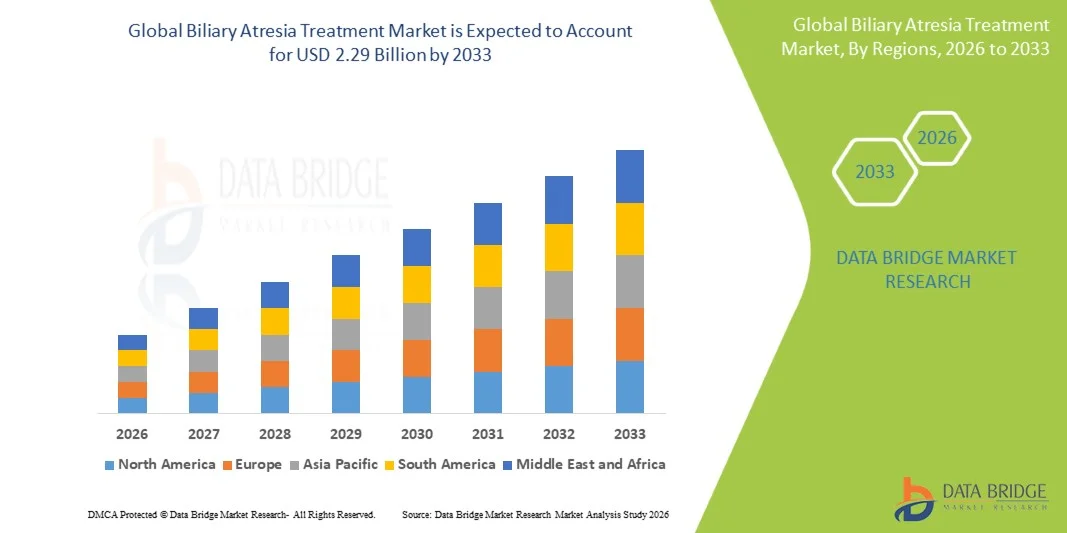
- Согласно анализу Data Bridge Market Research, глобальный размер рынка лечения билиарной атрезии был оценен как1,24 млрд долларов в 2025 годуОжидается, что он достигнет2,29 млрд долларов к 2033 году, вCAGR 8.00%в течение прогнозируемого периода
- Рост рынка в значительной степени подпитывается ростом заболеваемости билиарной атрезией у новорожденных и повышением осведомленности о ранней диагностике и своевременных хирургических и терапевтических вмешательствах, что приводит к улучшению принятия лечения в педиатрических учреждениях здравоохранения.
- Кроме того, растущие достижения в педиатрической гепатологии, включая улучшенные хирургические методы, такие как процедура Касаи и повышение доступности трансплантации печени, делают лечение билиарной атрезии одним из сегментов критической помощи. Эти сходящиеся факторы ускоряют внедрение решений для лечения билиарной атрезии, тем самым значительно повышая рост отрасли.
Размер рынка и прогноз
- Глобальная рыночная стоимость (2025):$1,24 млрд.
- Ожидаемая рыночная стоимость (2033):2,29 млрд долларов
- Прогноз CAGR (2026-2033):8.00%
Каковы основные выводы рынка лечения билиарной атрезии
- Лечение билиарной атрезии, включающее хирургические вмешательства (такие как портоэнтеростомия Касаи) и методы поддержки трансплантации печени, является критическим сегментом детской гепатологии из-за его опасного для жизни характера и срочной необходимости ранней диагностики и вмешательства для улучшения результатов выживания.
- Растущий спрос на лечение билиарной атрезии в первую очередь обусловлен повышением осведомленности о неонатальных заболеваниях печени, улучшением программ скрининга новорожденных и достижениями в педиатрической хирургической помощи и методах трансплантации, которые повышают выживаемость и доступность лечения.
- Северная Америка доминировала на рынке лечения билиарной атрезии с самой большой долей дохода в 38,6% в 2025 году, что обусловлено передовой инфраструктурой педиатрического здравоохранения, высоким уровнем осведомленности, сильным страховым покрытием и наличием специализированных центров трансплантации печени, особенно в США.
- Ожидается, что Азиатско-Тихоокеанский регион станет самым быстрорастущим регионом на рынке лечения билиарной атрезии в течение прогнозируемого периода из-за более высокой рождаемости, улучшения доступа к здравоохранению, расширения педиатрических учреждений и повышения внимания правительства к ранней диагностике и лечению врожденных расстройств.
- Сегмент Bile Acids Analogues доминировал на рынке с самой большой долей дохода в 44,6% в 2025 году, что обусловлено их критической ролью в улучшении потока желчи и уменьшении холестаза у детей, страдающих билиарной атрезией.
Сфера охвата и сегментация рынка лечения билиарной атрезии
|
Атрибуты |
Лечение билиарной атрезии Ключевые рыночные идеи |
|
Сегменты покрыты |
|
|
Страны, охваченные |
Северная Америка
Европа
Азиатско-Тихоокеанский регион
Ближний Восток и Африка
Южная Америка
|
|
Ключевые игроки рынка |
|
|
Рыночные возможности |
|
|
Информационные наборы данных с добавленной стоимостью |
В дополнение к информации о рыночных сценариях, таких как рыночная стоимость, темпы роста, сегментация, географическое покрытие и основные игроки, рыночные отчеты, курируемые Data Bridge Market Research, также включают углубленный экспертный анализ, эпидемиологию пациентов, анализ трубопроводов, анализ цен и нормативную базу. |
Каковы основные тенденции на рынке лечения билиарной атрезии
"Повышение эффективности лечения с помощью ИИ, аналитики данных и интегрированной медицинской помощи"
- Значительной и ускоряющейся тенденцией на мировом рынке лечения билиарной атрезии является растущая интеграция билиарной атрезии.искусственный интеллект(AI), прогнозная аналитика и подключенные системы здравоохранения для улучшения ранней диагностики, планирования лечения и результатов мониторинга пациентов
- Эта интеграция помогает клиницистам принимать более точные и своевременные решения, особенно при сложных педиатрических заболеваниях печени, таких как билиарная атрезия.
- Диагностические инструменты на основе искусственного интеллекта все чаще используются для анализа клинических данных, результатов визуализации и биохимических маркеров для поддержки раннего выявления билиарной атрезии, сокращения задержек в вмешательстве и улучшения результатов выживаемости посредством своевременных хирургических процедур, таких как портоэнтеростомия Касаи.
- Алгоритмы машинного обучения также изучаются для выявления моделей прогрессирования заболевания и прогнозирования результатов после операции, что позволяет более персонализировать пути лечения и улучшить долгосрочные стратегии управления пациентами.
- Кроме того, интеграция электронных медицинских карт (EHR), больничных информационных систем и телемедицинских платформ позволяет беспрепятственно обмениваться данными между специалистами, улучшая координацию медицинской помощи в многодисциплинарных лечебных средах.
- Эта тенденция к интеллектуальным, управляемым данными и связанным экосистемам здравоохранения коренным образом меняет ожидания в педиатрической гепатологии, побуждая больницы и исследовательские учреждения внедрять более передовые цифровые инструменты для улучшения принятия клинических решений.
- Спрос на системы поддержки лечения с поддержкой ИИ и цифровой интеграции неуклонно растет как на развитых, так и на развивающихся рынках здравоохранения, поскольку поставщики все чаще отдают приоритет точной медицине, эффективности и улучшению результатов лечения пациентов при лечении редких заболеваний.
Динамика рынка лечения билиарной атрезии
водитель
Повышение осведомленности о распространенности и достижения в ранних диагностических способностях
- Повышение осведомленности о редких заболеваниях печени у детей в сочетании с улучшением программ раннего диагностического скрининга является ключевым фактором, ускоряющим спрос на мировом рынке лечения атрезии желчных путей. Раннее выявление заболевания значительно улучшает результаты лечения, особенно когда хирургическое вмешательство проводится на ранней стадии.
- Например, в 2024 году несколько национальных инициатив по скринингу новорожденных в таких странах, как Япония и Тайвань, укрепили программы мониторинга ранней желтухи, что привело к более раннему выявлению случаев билиарной атрезии и улучшению показателей хирургического успеха.
- Правительства и организации здравоохранения все больше внимания уделяют программам скрининга новорожденных и кампаниям по информированию детей о заболеваниях печени, которые способствуют более ранней диагностике и улучшению доступа к лечению во многих регионах.
- Достижения в области технологий диагностической визуализации, тестирования функции печени и генетических исследований способствуют более раннему и более точному обнаружению билиарной атрезии, что позволяет своевременно проводить клиническое вмешательство.
- Кроме того, растущие инвестиции в исследования детской гепатологии и разработку улучшенных хирургических методов и протоколов послеоперационной помощи повышают выживаемость и долгосрочный прогноз.
- Растущая доступность специализированных педиатрических медицинских центров и междисциплинарных подходов к лечению способствует принятию передовых вариантов лечения билиарной атрезии во всем мире.
Сдержанность/вызов
"Высокая сложность лечения, ограниченная доступность доноров и задержки в диагностике в развивающихся регионах"
- Одной из основных проблем на рынке лечения билиарной атрезии является сложность управления заболеваниями, которая часто требует специализированного хирургического вмешательства и долгосрочного последующего ухода, ограничивая доступность в ограниченных ресурсами системах здравоохранения.
- Например, больницы в нескольких регионах Африки с низким уровнем дохода сталкиваются с нехваткой квалифицированных педиатрических гепатобилиарных хирургов, что ограничивает доступ к своевременным процедурам Касаи.
- Во многих случаях отсроченная диагностика остается критической проблемой, особенно в развивающихся регионах, где осведомленность о редких заболеваниях печени у детей низка, а доступ к передовым диагностическим инструментам ограничен, что приводит к более плохим клиническим результатам.
- Трансплантация печени, которая часто требуется в запущенных случаях, ограничивается ограниченной доступностью подходящих донорских органов, создавая значительные узкие места в лечении и длительные периоды ожидания для пострадавших пациентов.
- Например, в реестрах трансплантаций в таких странах, как Индия, сообщается о длительном ожидании доноров печени у детей, что значительно влияет на показатели выживаемости.
- Высокая стоимость, связанная с долгосрочным лечением, хирургическими процедурами и послеоперационным уходом, также представляет собой финансовое бремя для семей и систем здравоохранения, особенно в странах с низким и средним уровнем дохода.
Как сегментируется рынок лечения билиарной атрезии
Рынок сегментирован на основе лекарственных препаратов, маршрута введения, конечных пользователей и канала распределения.
• Наркотики
На основе лекарств рынок лечения билиарной атрезии сегментирован на аналоги желчных кислот, антибиотики, кортикостероиды и другие. Сегмент Bile Acids Analogues доминировал на рынке с самой большой долей дохода в 44,6% в 2025 году, что обусловлено их критической ролью в улучшении потока желчи и уменьшении холестаза у детей, страдающих билиарной атрезией. Препараты, такие как урсодезоксихолевая кислота, широко используются в качестве поддерживающей терапии первой линии для управления прогрессированием повреждения печени. Увеличение распространенности неонатальных заболеваний печени значительно способствует спросу. Врачи предпочитают терапию желчной кислотой из-за ее хорошо установленного профиля безопасности и эффективности у педиатрических пациентов. Активное внедрение в больничных отделениях неонатальной и педиатрической помощи поддерживает доминирование на рынке. Повышение осведомленности о ранней диагностике и лечении еще больше усиливает использование. Наличие руководящих принципов поддерживающей терапии усиливает клиническое принятие. Растущая инфраструктура здравоохранения для редких педиатрических заболеваний расширяет доступ. В целом, аналоги желчных кислот остаются доминирующим сегментом лекарств.
Ожидается, что сегмент кортикостероидов будет наблюдать самый быстрый CAGR в 15,8% с 2026 по 2033 год, что обусловлено увеличением использования в качестве дополнительной терапии для уменьшения воспаления и улучшения послеоперационных результатов. Кортикостероиды помогают управлять иммуноопосредованной травмой желчных протоков и улучшить дренаж желчи. Растущее внедрение комбинированной терапии с хирургическими процедурами, такими как портоэнтеростомия Касаи, поддерживает спрос. Растущие клинические исследования, изучающие улучшенные результаты, повышают доверие врача. Увеличение госпитализации неонатальных случаев заболевания печени еще больше стимулирует использование. Расширение услуг детской гепатологии способствует доступности. Усовершенствованные протоколы лечения в развитых системах здравоохранения ускоряют внедрение. Кортикостероиды являются самым быстрорастущим сегментом класса лекарств.
• По маршруту администрации
На основе маршрута администрирования рынок сегментирован на устный и парентеральный. Сегмент ротовой полости доминировал на рынке с долей выручки 63,2% в 2025 году, чему способствовало широкое использование пероральных методов лечения желчных кислот и антибиотиков в долгосрочном управлении билиарной атрезией. Пероральное введение предпочтительнее из-за простоты дозирования у младенцев и педиатрических пациентов. Высокое соответствие и неинвазивный характер поддерживают его доминирование. Наличие жидких пероральных составов повышает удобство использования в педиатрии. Врачи предпочитают пероральные препараты для поддерживающей терапии после хирургического вмешательства. Широкое распространение через больницы и розничные аптеки поддерживает доступ. Повышение осведомленности о ранней стадии лечения заболеваний способствует усыновлению. Экономическая эффективность по сравнению с инъекционной терапией еще больше усиливает использование. В целом, пероральное введение остается доминирующим сегментом.
Ожидается, что в сегменте парентеральной терапии будет наблюдаться самый быстрый CAGR в 16,3% с 2026 по 2033 год, что обусловлено увеличением использования в больницах для тяжелых или послеоперационных случаев. Инъекционные кортикостероиды и антибиотики обеспечивают быстрый терапевтический ответ в критических условиях. Рост числа неонатальных госпитализаций поддерживает спрос. Больницы предпочитают парентеральное введение для точного дозирования и более быстрого действия. Достижения в педиатрических инъекционных препаратах улучшают профиль безопасности. Увеличение распространенности сложных случаев билиарной атрезии еще больше ускоряет усыновление. Расширение больниц третичного ухода повышает доступность. В целом, парентеральное введение является самым быстрорастущим сегментом.
• Конечными пользователями
На базе конечных пользователей рынок сегментирован на больницы, домашнюю помощь, специализированные клиники и другие. Сегмент госпиталей доминировал на рынке с долей выручки 58,7% в 2025 году, что обусловлено высокой потребностью в специализированной неонатальной и педиатрической помощи при лечении билиарной атрезии. Больницы являются основными центрами диагностики, хирургического вмешательства и послеоперационного управления. Наличие передовых отделений интенсивной терапии новорожденных поддерживает эффективное лечение. Сильное присутствие педиатрических гепатологов улучшает результаты лечения пациентов. Увеличение распространенности врожденных заболеваний печени поддерживает спрос. Государственное финансирование лечения редких заболеваний укрепляет инфраструктуру больниц. Больницы также служат реферальными центрами для сложных случаев. В целом, больницы остаются доминирующим сегментом конечного пользователя.
Ожидается, что сегмент специализированных клиник будет наблюдать самый быстрый CAGR в 15,9% с 2026 по 2033 год, что обусловлено увеличением внимания к специализированной педиатрической помощи печени. Растущее создание специализированных клиник гепатологии и гастроэнтерологии поддерживает усыновление. Пациенты предпочитают специализированную помощь для улучшения лечения заболеваний и последующего наблюдения. Повышение осведомленности о ранней диагностике и вмешательстве способствует посещению клиники. Расширение частных медицинских учреждений способствует дальнейшему росту. Наличие передовых диагностических инструментов повышает точность лечения. Расширение сотрудничества с больницами улучшает системы направления пациентов. В целом, специализированные клиники являются самым быстрорастущим сегментом конечного пользователя.
• Распределительный канал
На основе канала дистрибуции рынок сегментирован в Больничную аптеку, Розничную аптеку, Онлайн-аптеку и другие. Сегмент Hospital Pharmacy доминировал на рынке с долей выручки 52,9% в 2025 году, что обусловлено высокой зависимостью от стационарного лечения билиарной атрезии. Больничные аптеки обеспечивают немедленную доступность критических педиатрических препаратов. Сильная интеграция с неонатальными и педиатрическими отделениями поддерживает эффективное распространение лекарств. Комплексные системы закупок повышают эффективность затрат для учреждений здравоохранения. Врачи предпочитают больничные аптеки для контролируемого введения лекарств у младенцев. Увеличение числа госпитализаций для хирургических вмешательств поддерживает спрос. Строгий регулирующий надзор обеспечивает безопасное обращение с наркотиками. В целом, больничная аптека остается доминирующим сегментом распределительного канала.
Сегмент онлайн-аптек, как ожидается, продемонстрирует самый быстрый CAGR в 17,4% с 2026 по 2033 год, что обусловлено растущим внедрением цифрового здравоохранения и улучшением доступа к педиатрическим лекарствам. Онлайн-платформы предлагают удобную доставку на дом и пополнение рецептов. Рост проникновения Интернета и интеграции телемедицины поддерживают рост. Родители предпочитают онлайн-каналы для доступности и экономии средств. Расширение логистической инфраструктуры обеспечивает безопасную доставку лекарств. Достижения в области регулирования в системах электронной аптеки повышают доверие. Растущая осведомленность о цифровых медицинских услугах ускоряет их внедрение. В целом, онлайн-аптека является самым быстрорастущим сегментом каналов распространения.
В каком регионе находится наибольшая доля рынка лечения билиарной атрезии
- Северная Америка доминировала на рынке лечения билиарной атрезии с самой большой долей дохода в 38,6% в 2025 году, что обусловлено передовой инфраструктурой педиатрического здравоохранения, высоким уровнем осведомленности о врожденных заболеваниях печени, сильным страховым покрытием и наличием специализированных центров трансплантации печени, особенно в США. Регион продолжает извлекать выгоду из хорошо зарекомендовавших себя программ скрининга новорожденных, возможностей ранней диагностики и все более широкого внедрения междисциплинарных подходов к лечению детских заболеваний печени.
- Пациенты и поставщики медицинских услуг в Северной Америке все больше полагаются на стратегии раннего вмешательства, улучшенные диагностические пути и доступ к передовой хирургической помощи, которая поддерживает более высокий охват лечением и лучшие клинические результаты в управлении билиарной атрезией.
- Этот рост также поддерживается сильной клинической исследовательской деятельностью в области детской гепатологии, благоприятными рамками возмещения и постоянными улучшениями в технологиях трансплантации и послеоперационном уходе, что делает Северную Америку ведущим регионом, предоставляющим доход на мировом рынке лечения билиарной атрезии.
Американский рынок лечения билиарной атрезии Insight
Американский рынок лечения билиарной атрезии захватил доминирующую долю доходов в Северной Америке в 2025 году, поддерживаемую передовыми системами скрининга новорожденных, высокой осведомленностью о редких заболеваниях печени у детей и широким доступом к специализированным педиатрическим центрам гепатологии и трансплантации. Страна выигрывает от надежного страхового покрытия, хорошо зарекомендовавших себя больничных сетей и растущего принятия ранних диагностических протоколов, которые позволяют своевременно проводить хирургическое вмешательство, такое как процедура Касаи. Например, ведущие педиатрические больницы в США все чаще используют стандартизированные методы скрининга желтухи новорожденных для выявления подозрительных случаев ранее, улучшая результаты выживаемости. Кроме того, сильные клинические исследовательские инициативы и постоянные инновации в области детской трансплантации печени продолжают повышать эффективность и доступность лечения в крупных медицинских центрах.
Европейский рынок лечения билиарной атрезии Insight
Прогнозируется, что европейский рынок лечения билиарной атрезии будет расширяться на стабильном уровне CAGR в течение прогнозируемого периода, чему будет способствовать повышение осведомленности о редких врожденных нарушениях печени и улучшение доступа к специализированной педиатрической помощи. Сильная нормативно-правовая база и хорошо зарекомендовавшие себя системы общественного здравоохранения способствуют стандартизации протоколов диагностики и лечения в регионе. Например, несколько европейских стран усилили рекомендации по скринингу новорожденных для улучшения раннего выявления осложнений желтухи у младенцев. Расширяющаяся экспертиза в области детской гепатологии и растущие инвестиции в инфраструктуру трансплантации способствуют стабильному росту рынка как в развитых, так и в развивающихся странах.
Британский рынок лечения билиарной атрезии Insight
Ожидается, что рынок лечения билиарной атрезии в Великобритании будет неуклонно расти в течение прогнозируемого периода, что обусловлено сильным доступом к здравоохранению, поддерживаемым NHS, повышением осведомленности о детских заболеваниях печени и улучшением систем направления для педиатрической помощи специалистам. Например, больницы в рамках NHS расширили программы мониторинга желтухи на ранних стадиях, чтобы ускорить идентификацию подозреваемых случаев билиарной атрезии. Растущее сотрудничество между педиатрической гастроэнтерологией и отделениями трансплантации еще больше улучшает координацию лечения и результаты лечения пациентов.
Германия Biliary Atresia Treatment Market Insight
Ожидается, что рынок лечения билиарной атрезии в Германии в течение прогнозируемого периода будет расширяться при значительном CAGR, поддерживаемом передовой инфраструктурой здравоохранения, сильным педиатрическим хирургическим опытом и высокой осведомленностью о врожденных заболеваниях печени. Например, специализированные детские больницы в Германии все чаще используют методы ранней диагностики для повышения точности обнаружения. Акцент страны на прецизионной медицине и структурированных путях здравоохранения еще больше повышает показатели успеха лечения и долгосрочного лечения пациентов.
Азиатско-Тихоокеанский рынок лечения билиарной атрезии
Ожидается, что рынок лечения билиарной атрезии в Азиатско-Тихоокеанском регионе будет самым быстрорастущим регионом в течение прогнозируемого периода, что обусловлено более высокими показателями рождаемости, улучшением доступа к здравоохранению, расширением педиатрических учреждений и увеличением внимания правительства к ранней диагностике и лечению врожденных расстройств. Например, поддерживаемые правительством инициативы по скринингу новорожденных в таких странах, как Китай и Индия, постепенно улучшают показатели раннего выявления заболеваний печени у детей. Расширение инфраструктуры больниц и расширение доступности специализированных педиатрических услуг еще больше ускоряют рост регионального рынка.
Японский рынок лечения билиарной атрезии
Японский рынок лечения билиарной атрезии набирает обороты благодаря своей передовой системе здравоохранения, сильному акценту на раннее выявление заболеваний и высоким стандартам в педиатрической помощи. Например, японские больницы широко внедряют протоколы скрининга ранней желтухи для выявления заболеваний печени на более ранней стадии. Хорошо разработанные в стране программы трансплантации и многопрофильные модели ухода еще больше улучшают показатели выживаемости и результаты лечения пациентов с билиарной атрезией.
Китайский рынок лечения билиарной атрезии
Китайский рынок лечения билиарной атрезии составил значительную долю доходов в Азиатско-Тихоокеанском регионе в 2025 году, чему способствовала быстрая урбанизация, расширение инфраструктуры педиатрического здравоохранения и повышение осведомленности о врожденных заболеваниях печени. Например, крупные третичные больницы в городских центрах все чаще принимают стандартизированные диагностические пути для неонатальных заболеваний печени. Сильные правительственные инициативы в области здравоохранения, расширение страхового покрытия и растущие инвестиции в педиатрические трансплантационные учреждения еще больше повышают доступность и доступность лечения по всей стране.
Каковы основные компании на рынке лечения билиарной атрезии
Индустрия лечения билиарной атрезии в основном возглавляется хорошо зарекомендовавшими себя компаниями, в том числе:
- Орфанная терапия(США)
- Рош (Швейцария)
- Новарс(Швейцария)
- Pfizer(США)
- Санофи(Франция)
- AbbVie (США)
- Бристол Майерс Сквибб(США)
- Takeda Pharmaceutical Company (Япония)
- GlaxoSmithKline (Великобритания)
- AstraZeneca (Великобритания)
- Merck & Co. (США)
- Johnson & Johnson (США)
- Ипсен (Франция)
- Редкие заболевания (Италия)
- Соби (Швеция)
- Люпин (Индия)
- Sun Pharmaceutical Industries (Индия)
- Лаборатории доктора Редди (Индия)
- Ципла (Индия)
- Bayer (Германия)
Каковы последние события на мировом рынке лечения билиарной атрезии
- В июле 2021 года одевиксибат, препарат, первоначально разработанный для лечения редких холестатических заболеваний печени, включая желчевыводящую атрезию, получил назначение орфанного препарата регулирующими органами, поддерживая стимулы развития для лечения редких педиатрических заболеваний печени.
- В феврале 2025 года Американская академия педиатрии (AAP) опубликовала обновленное руководство, рекомендующее более ранний и более систематический скрининг новорожденных на билиарную атрезию с использованием простых клинических вопросов при посещениях детей с хорошим здоровьем, с целью сокращения задержек в диагностике и улучшения результатов лечения.
- В июне 2025 года европейские эксперты по гепатологии призвали улучшить программы скрининга новорожденных на билиарную атрезию по всей Европе, подчеркнув комбинированную цветную карту стула и тестирование билирубина, чтобы обеспечить раннее выявление и направление на лечение.
- В ноябре 2025 года новый лапароскопический хирургический подход к билиарной атрезии у новорожденных был освещен в клинических новостях, показывая снижение кровопотери и более быстрое восстановление желтухи по сравнению с традиционной открытой хирургией, что представляет собой заметное процедурное продвижение в практике лечения.
- В марте 2026 года клинические комментарии усилили критическую важность раннего гепатопортоэнтеростомии (процедура Касаи), отметив, что задержки после первых 60 дней жизни значительно влияют на результаты.
SKU-
Получите онлайн-доступ к отчету на первой в мире облачной платформе рыночной аналитики
- Интерактивная панель анализа данных
- Панель анализа компании для возможностей с высоким потенциалом роста
- Доступ аналитика-исследователя для настройки и запросов
- Анализ конкурентов с помощью интерактивной панели
- Последние новости, обновления и анализ тенденций
- Используйте возможности сравнительного анализа для комплексного отслеживания конкурентов
Методология исследования
Сбор данных и анализ базового года выполняются с использованием модулей сбора данных с большими размерами выборки. Этап включает получение рыночной информации или связанных данных из различных источников и стратегий. Он включает изучение и планирование всех данных, полученных из прошлого заранее. Он также охватывает изучение несоответствий информации, наблюдаемых в различных источниках информации. Рыночные данные анализируются и оцениваются с использованием статистических и последовательных моделей рынка. Кроме того, анализ доли рынка и анализ ключевых тенденций являются основными факторами успеха в отчете о рынке. Чтобы узнать больше, пожалуйста, запросите звонок аналитика или оставьте свой запрос.
Ключевой методологией исследования, используемой исследовательской группой DBMR, является триангуляция данных, которая включает в себя интеллектуальный анализ данных, анализ влияния переменных данных на рынок и первичную (отраслевую экспертную) проверку. Модели данных включают сетку позиционирования поставщиков, анализ временной линии рынка, обзор рынка и руководство, сетку позиционирования компании, патентный анализ, анализ цен, анализ доли рынка компании, стандарты измерения, глобальный и региональный анализ и анализ доли поставщика. Чтобы узнать больше о методологии исследования, отправьте запрос, чтобы поговорить с нашими отраслевыми экспертами.
Доступна настройка
Data Bridge Market Research является лидером в области передовых формативных исследований. Мы гордимся тем, что предоставляем нашим существующим и новым клиентам данные и анализ, которые соответствуют и подходят их целям. Отчет можно настроить, включив в него анализ ценовых тенденций целевых брендов, понимание рынка для дополнительных стран (запросите список стран), данные о результатах клинических испытаний, обзор литературы, обновленный анализ рынка и продуктовой базы. Анализ рынка целевых конкурентов можно проанализировать от анализа на основе технологий до стратегий портфеля рынка. Мы можем добавить столько конкурентов, о которых вам нужны данные в нужном вам формате и стиле данных. Наша команда аналитиков также может предоставить вам данные в сырых файлах Excel, сводных таблицах (книга фактов) или помочь вам в создании презентаций из наборов данных, доступных в отчете.