


Global Cardiac Ablation Devices Market Segmentation, By Product Type (Radiofrequency (RF) Ablation, Electrical Ablation, Ultrasound Ablators, Microwave Ablators, and Cryoablation Devices), Function (Automated and Conventional), Application (Cardiac Rhythm Management, Open surgery, and Others), End User (Hospitals, Ambulatory Surgical Centers, Clinics, and Others) – Industry Trends and Forecast to 2032
Cardiac Ablation Devices Market Analysis
The cardiac ablation devices market is experiencing rapid growth, driven by advancements in technology and the rising prevalence of cardiac arrhythmias, particularly atrial fibrillation. Cardiac ablation is a minimally invasive procedure that uses energy sources such as radiofrequency, cryotherapy, or pulsed fields to destroy abnormal heart tissue causing irregular heart rhythms. Recent innovations, such as the development of pulsed field ablation systems such as Johnson & Johnson’s VARIPULSE platform and Medtronic’s PulseSelect system, have enhanced procedural safety and efficiency, offering more precise and predictable energy delivery. These devices cater to the increasing demand for minimally invasive treatments, reducing recovery time and improving patient outcomes. The market is further bolstered by increasing investments in research and development, resulting in novel technologies such as Abbott’s TactiFlex catheter, which features a flexible tip and contact force technology to optimize ablation procedures. Moreover, favorable regulatory approvals and the expanding adoption of these devices in emerging economies are widening market prospects. With strong demand across hospitals, ambulatory surgical centers, and specialized clinics, the global cardiac ablation devices market is poised for sustained growth, addressing a critical need in cardiovascular care.
Cardiac Ablation Devices Market Size
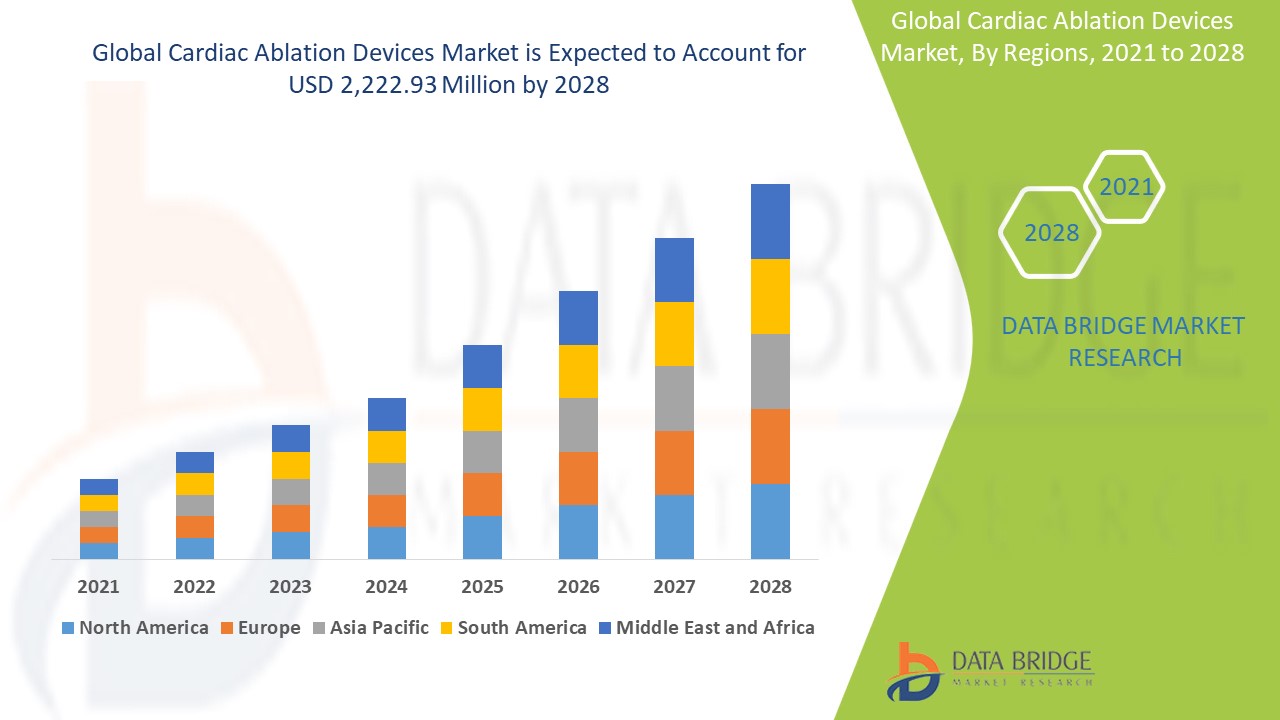
The global cardiac ablation devices market size was valued at USD 1.40 billion in 2024 and is projected to reach USD 3.52 billion by 2032, with a CAGR of 12.21% during the forecast period of 2025 to 2032. In addition to the insights on market scenarios such as market value, growth rate, segmentation, geographical coverage, and major players, the market reports curated by the Data Bridge Market Research also include depth expert analysis, patient epidemiology, pipeline analysis, pricing analysis, and regulatory framework.
Cardiac Ablation Devices Market Trends
“Growing Adoption of Pulsed Field Ablation (PFA) Technology”
One significant trend in the cardiac ablation devices market is the growing adoption of pulsed field ablation (PFA) technology, which offers a safer and more efficient approach to treating cardiac arrhythmias such as atrial fibrillation. Unlike traditional methods such as radiofrequency or cryotherapy, PFA selectively targets heart tissue without causing damage to surrounding structures, such as the esophagus or blood vessels, significantly reducing complications. For instance, Medtronic’s PulseSelect PFA System and Johnson & Johnson’s VARIPULSE platform have received regulatory approvals, highlighting their potential to revolutionize ablation procedures by providing precise, real-time energy delivery with enhanced safety profiles. This innovation aligns with the rising demand for minimally invasive cardiac treatments and the increasing prevalence of atrial fibrillation globally. As healthcare providers seek advanced solutions to improve patient outcomes and reduce recovery times, the adoption of PFA technology is expected to drive substantial growth in the cardiac ablation devices market.
Report Scope and Cardiac Ablation Devices Market Segmentation
|
Attributes |
Cardiac Ablation Devices Key Market Insights |
|
Segments Covered |
|
|
Countries Covered |
U.S., Canada and Mexico in North America, Germany, France, U.K., Netherlands, Switzerland, Belgium, Russia, Italy, Spain, Turkey, Rest of Europe in Europe, China, Japan, India, South Korea, Singapore, Malaysia, Australia, Thailand, Indonesia, Philippines, Rest of Asia-Pacific (APAC) in the Asia-Pacific (APAC), Saudi Arabia, U.A.E., South Africa, Egypt, Israel, Rest of Middle East and Africa (MEA) as a part of Middle East and Africa (MEA), Brazil, Argentina and Rest of South America as part of South America |
|
Key Market Players |
Abbott (U.S.), AngioDynamics (U.S.), ATRICURE, INC. (U.S.), Johnson & Johnson Services, Inc. (U.S.), Boston Scientific Corporation (U.S.), Medtronic (Ireland), OLYMPUS CORPORATION (Japan), Stryker (U.S.), Stereotaxis, Inc. (U.S.), Novartis AG (Switzerland), Acutus Medical, Inc. (U.S.), Biomerics (U.S.), and Biotronik (Germany) |
|
Market Opportunities |
|
|
Value Added Data Infosets |
In addition to the insights on market scenarios such as market value, growth rate, segmentation, geographical coverage, and major players, the market reports curated by the Data Bridge Market Research also include depth expert analysis, patient epidemiology, pipeline analysis, pricing analysis, and regulatory framework. |
Cardiac Ablation Devices Market Definition
Cardiac ablation devices are medical instruments used to treat heart rhythm disorders, particularly arrhythmias, by destroying or modifying small areas of heart tissue that cause irregular electrical signals. These devices use different energy sources, such as radiofrequency (RF), cryoablation, or pulsed field ablation, to create lesions in the heart tissue, thereby restoring normal heart rhythm.
Cardiac Ablation Devices Market Dynamics
Drivers
- Rising Prevalence of Cardiac Arrhythmias
The rising prevalence of cardiac arrhythmias, particularly atrial fibrillation (AF), is a major market driver for cardiac ablation devices. AF is the most common type of arrhythmia, affecting approximately 33.5 million people worldwide, with its prevalence expected to increase as the global population ages. In the U.S., about 2.7–6.1 million people are diagnosed with AF, and the number is projected to rise to 12 million by 2030. Factors such as sedentary lifestyles, obesity, and other cardiovascular conditions such as hypertension are contributing to this upward trend. As the demand for effective treatments to manage AF grows, there is a significant surge in the adoption of cardiac ablation procedures. These procedures are increasingly seen as effective alternatives to drug therapies, providing long-term solutions for patients with atrial fibrillation and other arrhythmias. The growing need for reliable treatment options and the rising number of patients requiring care directly support the expansion of the cardiac ablation devices market.
- Growing Preference for Minimally Invasive Treatments
The growing preference for minimally invasive treatments is driving the demand for cardiac ablation devices, as they offer significant advantages over traditional open-heart surgery. Procedures such as catheter ablation for atrial fibrillation (AF) involve smaller incisions, which result in shorter recovery times, reduced risk of complications, and minimal scarring, making them highly appealing to both patients and healthcare providers. For instance, studies show that catheter-based ablation for AF can lead to faster hospital discharge times compared to surgical alternatives. This trend towards minimally invasive approaches is expected to continue growing as patients increasingly prioritize faster recovery and lower risk, making cardiac ablation a popular choice in the treatment of arrhythmias. This shift is improving patient outcomes and expanding the market for cardiac ablation devices, as more hospitals and clinics adopt these procedures to meet rising demand.
Opportunities
- Increasing Technological Innovations in Cardiac Ablation Devices
Technological advancements in cardiac ablation devices are driving significant market growth by improving the efficiency and effectiveness of treatments. Innovations such as the development of next-generation catheters, enhanced imaging systems, and more effective energy sources, such as radiofrequency and cryoablation, have revolutionized the procedure. For instance, the use of 3D mapping and imaging technologies allows for more precise targeting of problematic tissue, reducing the risk of complications and improving procedure success rates. In addition, advancements in cryoablation techniques, which use extreme cold to freeze abnormal heart tissue, offer an effective alternative to traditional radiofrequency methods, providing better patient outcomes with fewer side effects. These innovations are contributing to faster, more accurate procedures with shorter recovery times, making cardiac ablation an increasingly attractive option for both patients and healthcare providers. As technology continues to evolve, it opens up new opportunities for the market, particularly in expanding access to these advanced treatments and improving their long-term efficacy.
- Growing Awareness of Heart Diseases
The growing awareness of heart diseases, coupled with advancements in diagnostic techniques, is creating a significant market opportunity for cardiac ablation devices. As more people recognize the symptoms of arrhythmias and heart-related issues, early detection has become more common, enabling timely intervention. For instance, technologies such as wearable heart monitors and advanced ECG systems are allowing for earlier identification of conditions such as atrial fibrillation, which is one of the most common arrhythmias. This increased detection is driving demand for effective treatment options such as cardiac ablation. As patients seek quicker, less invasive solutions to manage their conditions, the market for ablation devices is expanding. The growing focus on preventative healthcare and early diagnosis is encouraging healthcare providers to adopt newer, more efficient ablation technologies, ensuring better patient outcomes and reducing the long-term impact of arrhythmias. This trend improves patient quality of life and drives the need for advanced and accessible cardiac ablation solutions.
Restraints/Challenges
- Risk of Complications Associated with Cardiac Ablation Procedures
The risk of complications associated with cardiac ablation procedures poses a significant challenge to the growth of the cardiac ablation devices market. While the procedure is generally safe and effective for treating arrhythmias, it carries potential risks, including bleeding, infection, cardiac tamponade (pressure on the heart), and pulmonary vein stenosis (narrowing of blood vessels). For instance, in some cases, the ablation catheter may inadvertently damage surrounding tissues, leading to severe complications. These risks are particularly concerning for patients with multiple comorbidities or complex arrhythmias, making healthcare providers more cautious about recommending the procedure. The fear of complications can result in patients opting for alternative treatments, such as medication or implantable devices such as pacemakers, rather than undergoing ablation. This hesitancy, driven by the potential for adverse outcomes, reduces the widespread adoption of cardiac ablation technologies, ultimately acting as a challenge for the market’s expansion.
- High Treatment Costs
High treatment costs represent a significant barrier to the widespread adoption of cardiac ablation procedures, particularly in emerging markets where healthcare spending is often limited. The cost of the procedure, including the cardiac ablation devices, catheters, and associated healthcare services, can be prohibitively expensive. For instance, the cost of a single cardiac ablation procedure in developed countries can be extremely high, varying based on factors such as the complexity of the case and the type of technology used. In contrast, many emerging economies may not have the financial resources or healthcare infrastructure to support such high-cost treatments. This financial burden puts strain on healthcare systems and limits access to advanced ablation technologies for patients, resulting in delays in treatment or reliance on less effective alternatives. Consequently, the high cost of cardiac ablation remains a critical challenge to market growth, preventing many patients—particularly in low- and middle-income countries—from accessing this potentially life-saving treatment.
This market report provides details of new recent developments, trade regulations, import-export analysis, production analysis, value chain optimization, market share, impact of domestic and localized market players, analyses opportunities in terms of emerging revenue pockets, changes in market regulations, strategic market growth analysis, market size, category market growths, application niches and dominance, product approvals, product launches, geographic expansions, technological innovations in the market. To gain more info on the market contact Data Bridge Market Research for an Analyst Brief, our team will help you take an informed market decision to achieve market growth.
Cardiac Ablation Devices Market Scope
The market is segmented on the basis of product type, function, application, and end user. The growth amongst these segments will help you analyse meagre growth segments in the industries and provide the users with a valuable market overview and market insights to help them make strategic decisions for identifying core market applications.
Product Type
- Radiofrequency (RF) Ablation
- Electrical Ablation
- Ultrasound Ablators
- Microwave Ablators
- Cryoablation Devices
Function
- Automated
- Conventional
Application
- Cardiac Rhythm Management
- Open Surgery
- Others
End User
- Hospitals
- Ambulatory Surgical Centers
- Clinics
- Others
Cardiac Ablation Devices Market Regional Analysis
The market is analysed and market size insights and trends are provided by country, product type, function, application, and end user as referenced above.
The countries covered in the market report are U.S., Canada and Mexico in North America, Germany, France, U.K., Netherlands, Switzerland, Belgium, Russia, Italy, Spain, Turkey, Rest of Europe in Europe, China, Japan, India, South Korea, Singapore, Malaysia, Australia, Thailand, Indonesia, Philippines, Rest of Asia-Pacific (APAC) in the Asia-Pacific (APAC), Saudi Arabia, U.A.E., South Africa, Egypt, Israel, Rest of Middle East and Africa (MEA) as a part of Middle East and Africa (MEA), Brazil, Argentina and Rest of South America as part of South America.
North America dominates the cardiac ablation devices market, driven by the rising prevalence of cardiac arrhythmias and a strong, well-established healthcare infrastructure. The region benefits from advanced medical facilities and a significant increase in catheterization procedures for surgical interventions. In addition, ongoing technological advancements and robust investment in healthcare further contribute to its market leadership. This growth is further supported by the widespread availability of skilled professionals and cutting-edge cardiac treatment options.
The Asia-Pacific region is anticipated to witness highest growth in the cardiac ablation devices market during the forecast period of 2025 to 2032. This growth is primarily driven by the region's expanding population, which increases the prevalence of cardiac-related conditions. In addition, rising patient awareness about cardiovascular diseases and their treatment options has significantly boosted the demand for advanced medical devices. The region's rapidly improving healthcare infrastructure and growing adoption of modern technologies further support this upward trajectory.
The country section of the report also provides individual market impacting factors and changes in regulation in the market domestically that impacts the current and future trends of the market. Data points such as down-stream and upstream value chain analysis, technical trends and porter's five forces analysis, case studies are some of the pointers used to forecast the market scenario for individual countries. Also, the presence and availability of global brands and their challenges faced due to large or scarce competition from local and domestic brands, impact of domestic tariffs and trade routes are considered while providing forecast analysis of the country data.
Cardiac Ablation Devices Market Share
The market competitive landscape provides details by competitor. Details included are company overview, company financials, revenue generated, market potential, investment in research and development, new market initiatives, global presence, production sites and facilities, production capacities, company strengths and weaknesses, product launch, product width and breadth, application dominance. The above data points provided are only related to the companies' focus related to market.
Cardiac Ablation Devices Market Leaders Operating in the Market Are:
- Abbott (U.S.)
- AngioDynamics (U.S.)
- ATRICURE, INC. (U.S.)
- Johnson & Johnson Services, Inc. (U.S.)
- Boston Scientific Corporation (U.S.)
- Medtronic (Ireland)
- OLYMPUS CORPORATION (Japan)
- Stryker (U.S.)
- Stereotaxis, Inc. (U.S.)
- Novartis AG (Switzerland)
- Acutus Medical, Inc. (U.S.)
- Biomerics (U.S.)
- Biotronik (Germany)
Latest Developments in Cardiac Ablation Devices Market
- In February 2024, Johnson & Johnson (US) received CE mark approval for the VARIPULSE Pulse Field Ablation Platform, designed to enhance workflow and provide real-time visualization
- In December 2023, Medtronic announced FDA approval for its PulseSelect Pulsed Field Ablation (PFA) System, developed to treat paroxysmal and persistent atrial fibrillation (AF) with advanced safety features, efficient pulmonary vein isolation (PVI), and precise catheter maneuverability
- In May 2023, Abbott received FDA approval for its TactiFlex Ablation Catheter, Sensor Enabled, the first catheter with a flexible tip and contact force technology. The device is used for atrial fibrillation (AFib) ablation, offering shorter procedure times and improved safety
- In October 2022, PENTAX Medical launched the C2 CryoBalloon Ablation System in Canada to address Barrett's Esophagus treatment needs effectively
- In March 2022, Quantum Surgical secured 510(k) clearance from the FDA for its Epione robot, a system capable of planning, targeting, delivering, and confirming tumor ablation for cancer treatment
SKU-
Получите онлайн-доступ к отчету на первой в мире облачной платформе рыночной аналитики

- Интерактивная панель анализа данных
- Панель анализа компании для возможностей с высоким потенциалом роста
- Доступ аналитика-исследователя для настройки и запросов
- Анализ конкурентов с помощью интерактивной панели
- Последние новости, обновления и анализ тенденций
- Используйте возможности сравнительного анализа для комплексного отслеживания конкурентов
Методология исследования
Сбор данных и анализ базового года выполняются с использованием модулей сбора данных с большими размерами выборки. Этап включает получение рыночной информации или связанных данных из различных источников и стратегий. Он включает изучение и планирование всех данных, полученных из прошлого заранее. Он также охватывает изучение несоответствий информации, наблюдаемых в различных источниках информации. Рыночные данные анализируются и оцениваются с использованием статистических и последовательных моделей рынка. Кроме того, анализ доли рынка и анализ ключевых тенденций являются основными факторами успеха в отчете о рынке. Чтобы узнать больше, пожалуйста, запросите звонок аналитика или оставьте свой запрос.
Ключевой методологией исследования, используемой исследовательской группой DBMR, является триангуляция данных, которая включает в себя интеллектуальный анализ данных, анализ влияния переменных данных на рынок и первичную (отраслевую экспертную) проверку. Модели данных включают сетку позиционирования поставщиков, анализ временной линии рынка, обзор рынка и руководство, сетку позиционирования компании, патентный анализ, анализ цен, анализ доли рынка компании, стандарты измерения, глобальный и региональный анализ и анализ доли поставщика. Чтобы узнать больше о методологии исследования, отправьте запрос, чтобы поговорить с нашими отраслевыми экспертами.
Доступна настройка
Data Bridge Market Research является лидером в области передовых формативных исследований. Мы гордимся тем, что предоставляем нашим существующим и новым клиентам данные и анализ, которые соответствуют и подходят их целям. Отчет можно настроить, включив в него анализ ценовых тенденций целевых брендов, понимание рынка для дополнительных стран (запросите список стран), данные о результатах клинических испытаний, обзор литературы, обновленный анализ рынка и продуктовой базы. Анализ рынка целевых конкурентов можно проанализировать от анализа на основе технологий до стратегий портфеля рынка. Мы можем добавить столько конкурентов, о которых вам нужны данные в нужном вам формате и стиле данных. Наша команда аналитиков также может предоставить вам данные в сырых файлах Excel, сводных таблицах (книга фактов) или помочь вам в создании презентаций из наборов данных, доступных в отчете.











