


Сегментация рынка глобальных кофейных концентратов по типу (кофеинизированные и декофеинизированные), упаковке (бутылки, банки, мешочки и другие), каналу распределения (B2B и B2C) - отраслевые тенденции и прогноз до 2033 года
Каков размер мирового рынка кофе и темпы роста
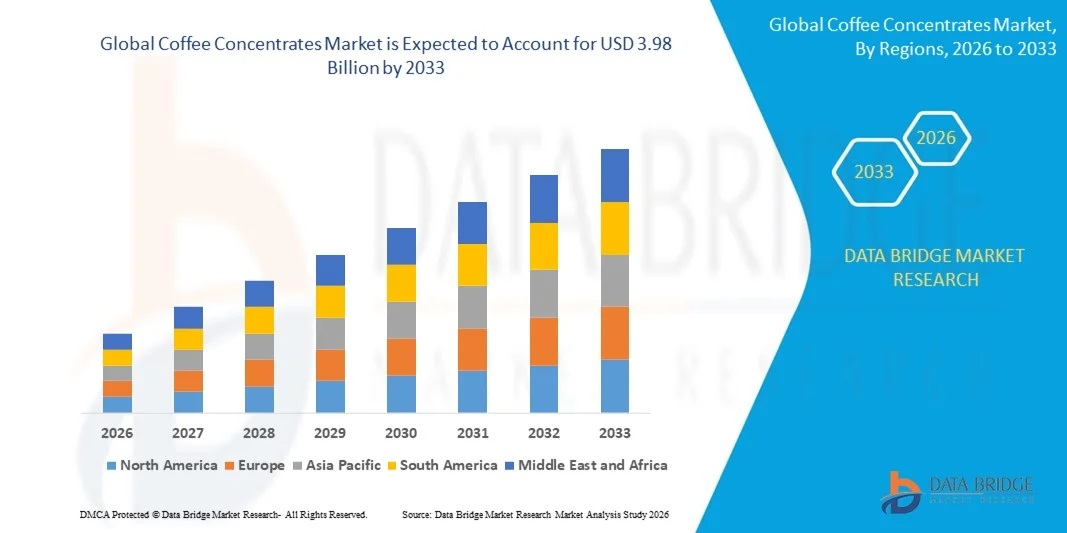
- Согласно анализу Data Bridge Market Research, размер мирового рынка концентратов кофе был оценен как2,47 млрд долларов в 2025 годуОжидается, что он достигнет3,98 млрд долларов к 2033 году, вCAGR 6,14%в течение прогнозируемого периода
- Рост потребления готовых к употреблению напитков (RTD), увеличение предпочтения удобных и экономящих время форматов кофе, растущий спрос со стороны кафе и сетей общественного питания, расширение использования кофейных концентратов в холодном варе и специальных напитках, а также быстрая урбанизация с изменением образа жизни являются ключевыми факторами, которые, как ожидается, будут стимулировать рост рынка кофейных концентратов.
Размер рынка и прогноз
- Глобальная рыночная стоимость (2025):2,47 млрд долларов
- Ожидаемая рыночная стоимость (2033):$3,98 млрд.
- Прогноз CAGR (2026–2033):6.14%
Каковы основные особенности рынка концентратов кофе
- Растущая популярность премиального и специализированного кофе, расширение культуры кафе в развивающихся странах и увеличение инноваций в ароматизаторах, упаковке и чистых рецептурах создают значительные возможности для роста рынка кофейных концентратов.
- Ожидается, что колебания цен на сырые кофейные зерна, ограниченная осведомленность потребителей в развивающихся регионах и проблемы с сроком хранения и хранением будут выступать в качестве ключевых сдерживающих факторов, влияющих на рост рынка в течение прогнозируемого периода.
- Азиатско-Тихоокеанский регион доминировал на рынке концентратов кофе с долей выручки около 41,6% в 2025 году, что обусловлено быстрым ростом потребления кофе, растущей культурой кафе и растущим распространением готовых к употреблению и холодных напитков в Китае, Японии, Южной Корее, Индии и Юго-Восточной Азии.
- Ожидается, что в Европе будет зарегистрирован самый быстрый CAGR в 7,64% с 2026 по 2033 год, что обусловлено растущим спросом на специализированный кофе, органические и чистые напитки и премиальный домашний кофе в таких странах, как Германия, Франция, Италия и Великобритания.
- TheкофеинСегмент доминировал на рынке с долей около 72,4% в 2025 году, что обусловлено сильными предпочтениями потребителей в отношении напитков, повышающих потребление энергии, ростом потребления среди работающих специалистов, студентов и потребителей, ориентированных на фитнес, а также растущей популярностью холодного пива и готовых к употреблению форматов кофе.
Сфера охвата и концентрация кофе на рынке
|
Атрибуты |
Кофе концентрирует ключевые идеи рынка |
|
Сегменты покрыты |
|
|
Страны, охваченные |
Северная Америка
Европа
Азиатско-Тихоокеанский регион
Ближний Восток и Африка
Южная Америка
|
|
Ключевые игроки рынка |
|
|
Рыночные возможности |
|
|
Информационные наборы данных с добавленной стоимостью |
В дополнение к информации о рыночных сценариях, таких как рыночная стоимость, темпы роста, сегментация, географическое покрытие и основные игроки, рыночные отчеты, курируемые Data Bridge Market Research, также включают углубленный экспертный анализ, анализ цен, анализ доли бренда, опрос потребителей, анализ демографии, анализ цепочки поставок, анализ цепочки создания стоимости, обзор сырья / расходных материалов, критерии выбора поставщиков, анализ PESTLE, анализ Porter и нормативную базу. |
Каковы основные тенденции на рынке кофе
Растущее предпочтение готовых к употреблению напитков, премиальных и функциональных концентратов кофе
- Рынок кофейных концентратов демонстрирует высокий спрос на готовые к употреблению, стабильные и легко разбавляемые форматы кофе, которые отвечают быстро меняющемуся образу жизни и постоянному потреблению.
- Производители все чаще внедряют премиальные концентраты на основе холодного пива и специализированные кофейные концентраты с улучшенными вкусовыми профилями, натуральными ингредиентами и чистым позиционированием этикеток.
- Растущий интерес потребителей к кастомизации, позволяющей пользователям контролировать силу, сладость и альтернативы молоку, стимулирует принятие в домашних хозяйствах, кафе и магазинах общественного питания.
- Например, такие компании, как Starbucks, Nestlé, Wandering Bear Coffee и J.M. Smucker, расширили свои портфели концентратов холодным пивом, несладким и функциональным вариантами.
- Растущая популярность напитков в домашнем кафе и продуктов на основе подписки ускоряет переход к жидким и замороженным концентратам кофе.
- По мере сохранения тенденций потребления и премиализации, ориентированных на удобство, ожидается, что концентраты кофе останутся ключевым сегментом роста в мировой кофейной индустрии.
Каковы основные драйверы рынка концентратов кофе
- Растущий спрос на удобные, экономящие время решения для напитков среди городских потребителей, работающих специалистов и молодежи
- Например, в течение 2024-2025 годов несколько глобальных и региональных брендов запустили готовые к употреблению и многоцелевые кофейные концентраты для решения проблемы растущего внутреннего потребления.
- Растущая популярность холодного кофе, специальных напитков и напитков, вдохновленных кафе, способствует распространению через розничные каналы и каналы общественного питания.
- Расширение электронной коммерции, платформ прямого доступа к потребителю и моделей подписки улучшает доступность продукта и повторные покупки.
- Растущее внимание к функциональным преимуществам, таким как повышение энергии, низкий уровень сахара, растительные и органические составы, усиливает дифференциацию продуктов.
- Ожидается, что благодаря изменению образа жизни, культуре кофе премиум-класса и инновациям в области упаковки рынок кофеконцентратов будет устойчиво расти в долгосрочной перспективе.
Какой фактор влияет на рост рынка кофе
- Более высокие цены на премиальный и специализированный кофеконцентратыПо сравнению с традиционным наземным или растворимым кофе, потребление кофе ограничивается чувствительными к цене потребителями.
- Волатильность цен на кофейные зерна, сбои в цепочке поставок и растущие затраты на упаковку увеличивают производственные расходы для производителей.
- Более короткий срок хранения и проблемы с хранением некоторых жидких и холодных концентратов создают логистические ограничения.
- Ограниченная осведомленность потребителей на развивающихся рынках относительно универсальности использования и ценностного предложения концентратов кофе замедляет проникновение на рынок.
- Интенсивная конкуренция со стороны готовых к употреблению кофе, растворимых кофе и одноразовых стручков создает ценовое давление и проблемы дифференциации бренда.
- Чтобы преодолеть эти проблемы, компании сосредотачиваются на экономически эффективных источниках, расширенных составах сроков хранения, образовании потребителей и инновационной упаковке для расширения глобального внедрения концентратов кофе.
Как сегментируется рынок кофе
Рынок сегментирован на основеТип, упаковка и канал распределения.
- По типу
В зависимости от типа, рынок концентратов кофе подразделяется на кофеиносодержащие и декофеинированные. Сегмент кофеина доминировал на рынке с долей около 72,4% в 2025 году, что обусловлено сильными предпочтениями потребителей в отношении напитков, повышающих потребление энергии, растущим потреблением среди работающих специалистов, студентов и потребителей, ориентированных на фитнес, а также растущей популярностью холодного пива и готовых к употреблению кофейных форматов. Концентраты с кофеином широко используются в кафе, магазинах общественного питания и домашних хозяйствах из-за их смелых вкусовых профилей, универсальности и способности обеспечивать настраиваемую прочность.
Ожидается, что сегмент декофеинизированных продуктов будет расти самыми быстрыми темпами с 2026 по 2033 год, чему будет способствовать повышение осведомленности о здоровье, рост спроса со стороны пожилых потребителей и растущее принятие среди людей, чувствительных к кофеину. Расширение доступности премиальных концентратов без кофеина с улучшенными вкусовыми профилями еще больше ускоряет рост сегмента.
- Упаковка
На основе упаковки рынок кофейных концентратов подразделяется на бутылки, банки, мешочки и другие. Сегмент бутылок доминировал на рынке с долей почти 46,8% в 2025 году благодаря их удобству, герметичности, продлению срока хранения и пригодности для жидких концентратов кофе. Стеклянные и ПЭТ-бутылки широко предпочтительны для премиального позиционирования, видимости бренда и домашнего потребления.
Сегмент Pouches, по прогнозам, будет расти самыми быстрыми темпами в течение 2026–2033 годов, что обусловлено растущим спросом на легкие, экономичные и экологически чистые упаковочные решения. Сумки предлагают снижение транспортных расходов, гибкий размер порций и привлекательность для потребителей, ориентированных на устойчивое развитие. Растущее внедрение измельченных и перерабатываемых мешочков новыми брендами еще больше поддерживает быстрый рост этого сегмента.
- Дистрибьюторский канал
На основе канала распределения рынок концентратов кофе сегментирован на B2B и B2C. Сегмент B2C доминировал на рынке с долей около 58,9% в 2025 году, чему способствовали рост потребления кофе на дому, рост платформ электронной коммерции и увеличение доступности концентратов кофе в супермаркетах, специализированных магазинах и каналах прямого потребления. Потребители предпочитают каналы B2C для удобства, разнообразия продуктов и предложений на основе подписки.
Ожидается, что сегмент B2B будет расти самыми быстрыми темпами с 2026 по 2033 год, что обусловлено расширением сетей кафе, ресторанов, отелей и операторов общественного питания, стремящихся к постоянному качеству, экономической эффективности и более быстрой подготовке напитков. Растущий спрос со стороны офисов, коворкинг-пространств и коммерческих учреждений способствует внедрению B2B.
В каком регионе находится наибольшая доля рынка кофе
- Азиатско-Тихоокеанский регион доминировал на рынке концентратов кофе с долей выручки около 41,6% в 2025 году, чему способствовали быстро растущее потребление кофе, растущая культура кафе и растущее распространение готовых к употреблению и холодных напитков в Китае, Японии, Южной Корее, Индии и Юго-Восточной Азии. Урбанизация, расширение населения среднего класса и изменение образа жизни ускоряют спрос на удобные форматы кофе, в том числе жидкие концентраты кофе для дома и общественного питания.
- Ведущие бренды и местные производители в Азиатско-Тихоокеанском регионе инвестируют в инновационные продукты, диверсификацию вкуса и премиальные кофейные рецептуры, укрепляя региональную конкурентоспособность. Растущее проникновение электронной коммерции, магазинов и специализированных кафе также поддерживает расширение рынка.
- Сильный рост сетей общественного питания, молодая демография потребителей и растущее предпочтение функциональных и премиальных напитков укрепляют лидерство на рынке Азиатско-Тихоокеанского региона.
Китайский кофе концентрирует внимание рынка
Китай является крупнейшим поставщиком в Азиатско-Тихоокеанском регионе, чему способствует быстрое расширение сетей кафе, растущее влияние западного кофе и высокий спрос на готовые к смешиванию кофейные напитки. Рост популярности среди молодых потребителей и профессионалов способствует устойчивому росту.
Японский кофе концентрирует внимание рынка
Япония демонстрирует устойчивый рост, обусловленный высоким потреблением кофе на душу населения, высоким спросом на премиальные и консервированные кофейные продукты и развитой розничной инфраструктурой, поддерживающей кофейные концентраты.
Индийский кофе концентрирует внимание рынка
Индия становится быстрорастущим рынком, подпитываемым растущим проникновением кафе, расширением городского населения и растущим предпочтением удобных кофейных решений среди миллениалов и потребителей поколения Z.
Кофейный рынок Европы
Ожидается, что в Европе будет зарегистрирован самый быстрый CAGR в 7,64% с 2026 по 2033 год, что обусловлено растущим спросом на специализированный кофе, органические и чистые напитки и премиальный домашний кофе в таких странах, как Германия, Франция, Италия и Великобритания. Повышение внимания к устойчивости, этическим источникам и инновационным форматам упаковки способствует внедрению концентратов кофе.
Кофе в Германии концентрирует внимание рынка
Германия лидирует в региональном росте благодаря сильной кофейной культуре, высокому потреблению холодного и специального кофе, а также широкой доступности премиальных концентратов.
Кофе концентрирует внимание рынка
В Великобритании наблюдается быстрое внедрение, обусловленное расширением тенденций готового к употреблению кофе, сильными сетями кафе и растущим спросом на удобные, премиальные кофейные продукты.
Французский кофе концентрирует внимание рынка
Франция вносит устойчивый вклад, поддерживаемый тенденциями премиализации, растущим интересом к кустарному кофе и увеличением потребления домашних хозяйств кофейных концентратов.
Какие компании занимают лидирующие позиции на рынке концентратов кофе
Индустрия концентратов кофе в основном возглавляется хорошо зарекомендовавшими себя компаниями, в том числе:
- Allegro Coffee Company (США)
- Кофейные концентраты Джима (США)
- Кофе контркультуры (США)
- Death Wish Coffee Co. (США)
- Starbucks Corporation (США)
- Блуждающий медвежий кофе (США)
- The J.M. Smucker Company (США)
- Keurig Dr Pepper Inc. (США)
- Nestlé S.A. (Швейцария)
- «Холодное пиво Грэди» (США)
Каковы последние тенденции на мировом рынке кофе
- В августе 2025 года Nestlé запустила первую производственную линию NESCAFÉ Espresso Concentrate в Азии на своем заводе в Шри-Муде в Шах-Аламе, Малайзия, для удовлетворения растущего спроса на холодный кофе по всей Азии, ориентируясь на внутренние и экспортные рынки, включая Сингапур, Океанию, Ближний Восток и Северную Африку, с потенциальной экспансией в Европу, укрепляя глобальное присутствие концентратов кофе Nestlé.
- В июле 2025 года Red Diamond Coffee & Tea представила свой Fitz Cold Brew Coffee Concentrate для удовлетворения быстро растущего спроса на холодное пиво в секторах общественного питания и гостеприимства, что позволяет операторам легко готовить премиальное холодное пиво без специализированного оборудования, тем самым повышая операционную эффективность и согласованность продукта.
- В мае 2025 года Moccona запустила Liquid Espresso Coffee Sachets в Австралии, жидкий концентрат кофе, доступный в ароматах Medium Roast, Dark Roast и Caramel, обслуживающий потребителей на ходу и усиливающий растущее предпочтение удобных премиальных форматов кофе.
- В январе 2025 года NESCAFÉ расширила свое портфолио в США с запуском NESCAFÉ Espresso Concentrate, своей первой линии жидкого концентрата, изготовленной из 100% бобов арабики в вариантах Black и Sweet Vanilla, поддерживая переход к настраиваемому домашнему кофе в стиле кафе без необходимости дорогостоящего оборудования.
- В январе 2024 года компания Torr Industries представила систему ульевого кафе для коммерческих кофеен, позволяющую быстро готовить концентраты в стиле эспрессо и холодного варева в течение 15-20 минут, позволяя баристам экспериментировать с методами извлечения и создавать дифференцированные кофейные предложения, повышая инновационность продуктов на уровне кафе.
SKU-
Получите онлайн-доступ к отчету на первой в мире облачной платформе рыночной аналитики

- Интерактивная панель анализа данных
- Панель анализа компании для возможностей с высоким потенциалом роста
- Доступ аналитика-исследователя для настройки и запросов
- Анализ конкурентов с помощью интерактивной панели
- Последние новости, обновления и анализ тенденций
- Используйте возможности сравнительного анализа для комплексного отслеживания конкурентов
Методология исследования
Сбор данных и анализ базового года выполняются с использованием модулей сбора данных с большими размерами выборки. Этап включает получение рыночной информации или связанных данных из различных источников и стратегий. Он включает изучение и планирование всех данных, полученных из прошлого заранее. Он также охватывает изучение несоответствий информации, наблюдаемых в различных источниках информации. Рыночные данные анализируются и оцениваются с использованием статистических и последовательных моделей рынка. Кроме того, анализ доли рынка и анализ ключевых тенденций являются основными факторами успеха в отчете о рынке. Чтобы узнать больше, пожалуйста, запросите звонок аналитика или оставьте свой запрос.
Ключевой методологией исследования, используемой исследовательской группой DBMR, является триангуляция данных, которая включает в себя интеллектуальный анализ данных, анализ влияния переменных данных на рынок и первичную (отраслевую экспертную) проверку. Модели данных включают сетку позиционирования поставщиков, анализ временной линии рынка, обзор рынка и руководство, сетку позиционирования компании, патентный анализ, анализ цен, анализ доли рынка компании, стандарты измерения, глобальный и региональный анализ и анализ доли поставщика. Чтобы узнать больше о методологии исследования, отправьте запрос, чтобы поговорить с нашими отраслевыми экспертами.
Доступна настройка
Data Bridge Market Research является лидером в области передовых формативных исследований. Мы гордимся тем, что предоставляем нашим существующим и новым клиентам данные и анализ, которые соответствуют и подходят их целям. Отчет можно настроить, включив в него анализ ценовых тенденций целевых брендов, понимание рынка для дополнительных стран (запросите список стран), данные о результатах клинических испытаний, обзор литературы, обновленный анализ рынка и продуктовой базы. Анализ рынка целевых конкурентов можно проанализировать от анализа на основе технологий до стратегий портфеля рынка. Мы можем добавить столько конкурентов, о которых вам нужны данные в нужном вам формате и стиле данных. Наша команда аналитиков также может предоставить вам данные в сырых файлах Excel, сводных таблицах (книга фактов) или помочь вам в создании презентаций из наборов данных, доступных в отчете.











