


Global Commercial Lighting Market Segmentation, By Offering (Hardware, Software, and Services), Installation Type (New and Retrofit), Application (Indoor Lighting and Outdoor Lighting), End-User (Industrial and Commercial)- Industry Trends and Forecast to 2033
Каков размер рынка коммерческого освещения и темпы роста
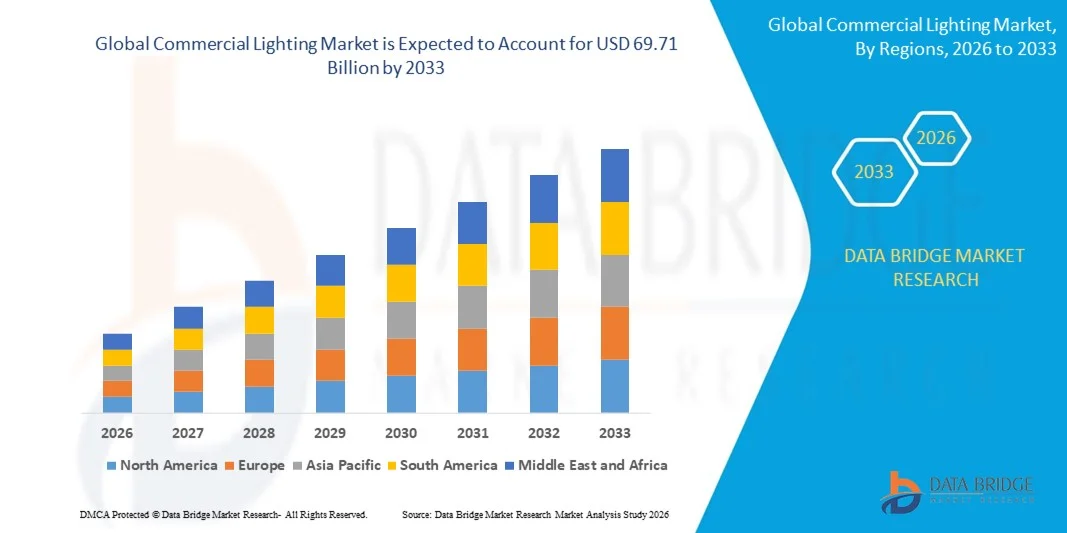
- По данным Data Bridge Market Research Analysis Объем мирового рынка коммерческого освещения оценивается в16,10 млрд долларов в 2025 годуОжидается, что он достигнет$69,71 млрд к 2033 году, вCAGR 20.10%в течение прогнозируемого периода
- Рост рынка в значительной степени обусловлен растущим внедрением энергоэффективных световых решений, таких как:светодиодСистемы для снижения потребления электроэнергии и эксплуатационных расходов
- Растущее строительство коммерческой инфраструктуры, такой как офисы, торговые площади, больницы и учебные заведения, ускоряет спрос на передовые системы освещения.
Размер рынка и прогноз
- Глобальная рыночная стоимость (2025):$16,10 млрд.
- Ожидаемая рыночная стоимость (2033):$69,71 млрд.
- Прогноз CAGR (2026–2033):20.10%
Анализ рынка коммерческого освещения
- Рынок демонстрирует сильный рост благодаря переходу от традиционного освещения к энергоэффективным и экологически устойчивым технологиям освещения.
- Повышение осведомленности об энергосбережении и правительственных нормативных актах, способствующих эффективному освещению, способствует принятию новых правил.
- Северная Америка доминировала на рынке коммерческого освещения с самой большой долей доходов в 2025 году, что обусловлено сильным присутствием коммерческой инфраструктуры и быстрым внедрением энергоэффективных систем освещения.
- Ожидается, что в Азиатско-Тихоокеанском регионе будут наблюдаться самые высокие темпы роста в мире.коммерческое освещениерынок, обусловленный крупномасштабным развитием инфраструктуры, растущими инвестициями в коммерческую недвижимость, растущей осведомленностью об энергоэффективном освещении и растущим развертыванием интеллектуальных систем освещения в развивающихся странах, таких как Китай, Индия и Юго-Восточная Азия
- Сегмент оборудования занимал самую большую долю рынка в 2025 году, чему способствовал высокий спрос на осветительные приборы, такие как светодиодные светильники, лампы, драйверы и компоненты управления на коммерческих объектах. Аппаратное обеспечение является основой инфраструктуры освещения и имеет важное значение как для новых проектов строительства, так и для модернизации, что делает его основным источником дохода. Растущая замена обычного освещения светодиодными светильниками еще больше укрепила рост этого сегмента.
Сфера охвата и сегментация рынка коммерческого освещения
|
Атрибуты |
Коммерческое освещение Ключевые рыночные идеи |
|
Сегменты покрыты |
|
|
Страны, охваченные |
Северная Америка
Европа
Азиатско-Тихоокеанский регион
Ближний Восток и Африка
Южная Америка
|
|
Ключевые игроки рынка |
|
|
Рыночные возможности |
|
|
Информационные наборы данных с добавленной стоимостью |
|
Каковы основные тенденции на рынке коммерческого освещения
Использование интеллектуальных и энергоэффективных технологий освещения
- Растущее внимание к энергоэффективности и интеллектуальной инфраструктуре значительно формирует рынок коммерческого освещения, поскольку предприятия все чаще предпочитают системы освещения, которые снижают потребление энергии и эксплуатационные расходы. Коммерческие осветительные решения, такие как светодиодное и интеллектуальное освещение, набирают обороты благодаря своей способности обеспечивать повышенное освещение, автоматизацию и длительный срок службы, поддерживая при этом цели устойчивого развития. Эта тенденция усиливает внедрение в офисах, торговых помещениях, медицинских учреждениях и учебных заведениях, побуждая производителей разрабатывать передовые и подключенные системы освещения, которые соответствуют современным требованиям к строительству.
- Повышение осведомленности об энергосбережении, сокращении выбросов углерода и операционной эффективности ускорило спрос на коммерческое освещение в коммерческих зданиях и общественной инфраструктуре. Владельцы и операторы объектов активно инвестируют в передовые системы освещения, которые обеспечивают улучшенную яркость, снижение технического обслуживания и автоматизированное управление, что побуждает производителей внедрять инновационные и экономически эффективные решения. Это также привело к сотрудничеству между производителями освещения и поставщиками технологий для повышения производительности, подключения и общей эффективности системы.
- Тенденции в области энергоэффективности и умного строительства влияют на решения о покупке, при этом компании подчеркивают интеллектуальный контроль, совместимость с автоматизацией и экологически ответственные решения в области освещения. Эти факторы помогают компаниям улучшить управление энергопотреблением и достичь целей устойчивого развития, а также способствуют внедрению подключенных осветительных платформ. Компании все чаще продвигают преимущества экономии энергии и автоматизации за счет маркетинговых инициатив по укреплению позиционирования продукции и привлечению коммерческих покупателей.
- Например, в 2024 году Signify в Нидерландах и Acuity Brands в США расширили свои коммерческие портфели интеллектуального освещения с подключенными светодиодными системами для офисов и торговых сред. Эти решения были внедрены для удовлетворения растущего спроса на интеллектуальное и энергоэффективное освещение, доступное через дистрибьюторов и партнеров по проектам. Системы также позиционировались как устойчивые решения, улучшающие принятие клиентов и долгосрочную операционную экономию.
- В то время как спрос на коммерческое освещение растет, устойчивый рост рынка зависит от постоянных инноваций, оптимизации затрат и интеграции с интеллектуальными строительными платформами. Производители сосредоточены на улучшении взаимодействия систем, масштабируемости и энергоэффективности, обеспечивая надежность и доступность для поддержки широкого внедрения в коммерческих секторах.
Динамика рынка коммерческого освещения
водитель
Расширение использования энергоэффективных и интеллектуальных световых решений
- Растущий спрос на энергоэффективные системы освещения является основным драйвером для коммерческого рынка освещения. Компании все чаще заменяют традиционное освещение светодиодными и интеллектуальными решениями для снижения потребления электроэнергии, затрат на техническое обслуживание и воздействия на окружающую среду. Эта тенденция также поощряет инвестиции в интеллектуальные осветительные технологии, которые улучшают управление энергией и эффективность работы, поддерживая долгосрочную экономию затрат и цели устойчивого развития.
- Расширение строительства коммерческой инфраструктуры, такой как офисы, торговые центры, больницы и образовательные учреждения, влияет на рост рынка. Коммерческое освещение играет решающую роль в обеспечении надлежащей видимости, комфорта и энергоэффективности, позволяя операторам оборудования улучшать эксплуатационные характеристики и соответствовать нормативным стандартам. Растущее внедрение интеллектуальных зданий во всем мире еще больше усиливает спрос на передовые системы освещения.
- Производители и поставщики технологий освещения активно продвигают передовые решения в области освещения посредством инновационных продуктов, партнерских отношений и цифровой интеграции. Эти усилия поддерживаются растущим акцентом на автоматизацию, устойчивость и оптимизацию энергии, а также поощряют сотрудничество между осветительными компаниями и поставщиками автоматизации зданий для повышения возможностей системы.
- Например, в 2023 году OSRAM в Германии и Zumtobel Group в Австрии сообщили об увеличении развертывания светодиодных и подключенных систем освещения на коммерческих объектах. Это расширение последовало за более высоким спросом на эффективные и интеллектуальные решения для освещения, улучшая экономию энергии и эффективность работы. Обе компании также подчеркнули интеллектуальные функции освещения для укрепления своих позиций на рынке и привлечения клиентов.
- Хотя более широкое внедрение эффективного освещения поддерживает рост рынка, более широкое внедрение зависит от доступности, технологической совместимости и осведомленности. Инвестиции в передовые технологии, повышение производительности продукции и системную интеграцию будут иметь важное значение для удовлетворения растущего коммерческого спроса и сохранения конкурентных преимуществ.
Сдержанность/вызов
Высокая начальная инвестиционно-интеграционная сложность
- Относительно высокая первоначальная стоимость передовых коммерческих систем освещения по сравнению с традиционным освещением остается ключевой проблемой, ограничивая внедрение среди предприятий, чувствительных к затратам. Первоначальные расходы, связанные с интеллектуальным освещением, установкой и системами управления, могут быть значительными. Кроме того, дополнительные расходы, связанные с настройкой и интеграцией системы, могут дополнительно повлиять на решения о покупке и возврат инвестиций.
- Осведомленность и технические знания остаются неравномерными, особенно среди малых и средних предприятий с ограниченными бюджетами и инфраструктурой. Ограниченное понимание долгосрочных выгод и сбережений ограничивает принятие в определенных коммерческих секторах. Это также приводит к более медленному внедрению в помещениях, где традиционные системы освещения по-прежнему широко используются.
- Проблемы интеграции и совместимости также влияют на рост рынка, поскольку передовые системы освещения часто требуют подключения к существующей автоматизации и электрической инфраструктуре. Технические сложности и требования к модернизации увеличивают время установки и эксплуатационные сбои. Компании должны инвестировать в квалифицированных специалистов, совместимые системы и надлежащее планирование для обеспечения успешной реализации.
- Например, в 2024 году операторы коммерческих объектов в Юго-Восточной Азии, работающие с поставщиками освещения, такими как Cree LED в США и Panasonic в Японии, сообщили о замедлении внедрения из-за высоких затрат на установку и проблем интеграции с устаревшими системами. Бюджетные и технические ограничения также повлияли на сроки реализации проектов и инвестиционные решения, что привело к снижению скорости принятия решений некоторыми предприятиями.
- Преодоление этих проблем потребует снижения затрат, упрощения процессов установки и повышения осведомленности о долгосрочных преимуществах. Сотрудничество между производителями, подрядчиками и поставщиками технологий может помочь улучшить доступность и внедрение. Кроме того, разработка экономически эффективных и простых в интеграции осветительных решений будет иметь важное значение для поддержки долгосрочного роста мирового рынка коммерческого освещения.
Сфера коммерческого рынка освещения
Рынок сегментирован на основе предложения, типа установки, приложения и конечного пользователя.
- Предлагая
На основе предложения рынок коммерческого освещения сегментирован на аппаратное обеспечение, программное обеспечение и услуги. Сегмент оборудования занимал самую большую долю рынка в 2025 году, чему способствовал высокий спрос на осветительные приборы, такие как светодиодные светильники, лампы, драйверы и компоненты управления на коммерческих объектах. Аппаратное обеспечение является основой инфраструктуры освещения и имеет важное значение как для новых проектов строительства, так и для модернизации, что делает его основным источником дохода. Растущая замена обычного освещения светодиодными светильниками еще больше укрепила рост этого сегмента.
Ожидается, что в сегменте программного обеспечения будут наблюдаться самые быстрые темпы роста с 2026 по 2033 год, обусловленные растущим внедрением интеллектуальных систем управления освещением и платформ автоматизации. Программное обеспечение освещения позволяет осуществлять удаленный мониторинг, управление энергопотреблением, планирование и интеграцию с системами управления зданием, повышая операционную эффективность. Компании все чаще внедряют программные решения для оптимизации производительности освещения и снижения энергопотребления, поддерживая рост сегмента.
- Тип установки
На основе типа установки рынок коммерческого освещения сегментирован на новый и модернизированный. Новый сегмент занимал самую большую долю рынка в 2025 году благодаря быстрому строительству коммерческих зданий, таких как офисы, торговые комплексы, больницы и учебные заведения. Новые строительные проекты позволяют напрямую интегрировать современные и энергоэффективные системы освещения, повысить производительность и снизить долгосрочные эксплуатационные расходы. Растущее внедрение технологий интеллектуального строительства также способствовало доминированию этого сегмента.
Ожидается, что в сегменте модернизации будут наблюдаться самые высокие темпы роста с 2026 по 2033 год, что обусловлено растущей потребностью в модернизации существующих систем освещения до энергоэффективных альтернатив. Ремонтные установки помогают организациям снизить потребление электроэнергии, затраты на техническое обслуживание и выбросы углерода, не требуя полной замены инфраструктуры. Правительственные правила и инициативы по энергосбережению еще больше побуждают предприятия внедрять модернизированные решения для освещения.
- С помощью приложения
На основе применения коммерческий рынок освещения сегментирован на внутреннее освещение и наружное освещение. Сегмент Indoor Lighting занимал самую большую долю рынка в 2025 году благодаря широкому использованию в офисах, розничных магазинах, медицинских учреждениях и учебных заведениях. Освещение в помещении играет важную роль в обеспечении надлежащей видимости, комфорта и производительности, что делает его важным компонентом коммерческой инфраструктуры. Растущее внедрение светодиодных и интеллектуальных систем внутреннего освещения еще больше поддержало рост сегмента.
Ожидается, что в сегменте наружного освещения будут наблюдаться самые быстрые темпы роста с 2026 по 2033 год, что обусловлено растущим спросом на освещение в парковочных зонах, фасадах зданий, кампусах и общественной инфраструктуре. Наружное освещение повышает безопасность, безопасность и видимость, одновременно улучшая общий внешний вид коммерческих объектов. Принятие энергоэффективных и автоматизированных систем наружного освещения еще больше ускоряет расширение сегмента.
- конечным пользователем
На базе конечного пользователя рынок коммерческого освещения сегментирован на промышленный и коммерческий. Коммерческий сегмент занимал самую большую долю рынка в 2025 году, чему способствовало широкое использование освещения в офисах, торговых центрах, гостиничных и медицинских учреждениях. Коммерческие учреждения требуют эффективного и надежного освещения для поддержки повседневной работы, повышения качества обслуживания клиентов и повышения производительности на рабочем месте. Растущее внедрение интеллектуальных и энергоэффективных световых решений еще больше укрепило этот сегмент.
Ожидается, что в промышленном сегменте будут наблюдаться самые быстрые темпы роста с 2026 по 2033 год, обусловленные растущим спросом на высокопроизводительное освещение на производственных объектах, складах и производственных единицах. Промышленное освещение имеет важное значение для обеспечения безопасности работников, операционной эффективности и соблюдения нормативных требований. Переход к светодиодным и автоматизированным системам освещения еще больше способствует росту этого сегмента.
Региональный анализ рынка коммерческого освещения
- Северная Америка доминировала на рынке коммерческого освещения с самой большой долей доходов в 2025 году, что обусловлено сильным присутствием коммерческой инфраструктуры и быстрым внедрением энергоэффективных систем освещения.
- Предприятия в регионе уделяют первоочередное внимание передовым световым решениям, которые обеспечивают экономию энергии, автоматизацию и повышение производительности труда, поддерживая широкое развертывание в офисах, торговых помещениях и медицинских учреждениях.
- Это широкое внедрение дополнительно поддерживается высоким инвестиционным потенциалом, сильной технологической осведомленностью и растущим внедрением интеллектуальных строительных систем, устанавливая передовое коммерческое освещение в качестве предпочтительного решения в нескольких отраслях промышленности.
Американский рынок коммерческого освещения Insight
Американский рынок коммерческого освещения занял самую большую долю доходов в 2025 году в Северной Америке, чему способствовало растущее внедрение светодиодного освещения и интеллектуальных систем управления освещением. Предприятия все больше сосредотачиваются на сокращении эксплуатационных расходов и повышении энергоэффективности с помощью передовых технологий освещения. Растущая тенденция интеллектуальных зданий в сочетании с высоким спросом на автоматизированные и подключенные системы освещения еще больше стимулирует рынок. Кроме того, присутствие крупных производителей освещения и продолжающаяся коммерческая строительная деятельность вносят значительный вклад в расширение рынка.
Европейский рынок коммерческого освещения Insight
Ожидается, что европейский рынок коммерческого освещения будет наблюдать самые быстрые темпы роста с 2026 по 2033 год, в первую очередь благодаря строгим правилам энергоэффективности и инициативам в области устойчивого развития. Растущее внимание к сокращению выбросов углерода и улучшению управления энергопотреблением побуждает предприятия внедрять современные системы освещения. Европейские организации также делают акцент на развитии умной инфраструктуры, поддерживая интеграцию технологий подключенного освещения. Рынок переживает значительный рост в офисах, розничной торговле и государственных инфраструктурных проектах, с модернизацией освещения и новыми установками, поддерживающими спрос.
Коммерческий световой рынок Великобритании Insight
Ожидается, что на рынке коммерческого освещения в Великобритании будут наблюдаться самые быстрые темпы роста с 2026 по 2033 год, что обусловлено растущим внедрением энергоэффективных решений для освещения и интеллектуальных зданий. Расширение коммерческих строительных и ремонтных работ способствует внедрению современных систем освещения. Кроме того, растущая осведомленность в отношении устойчивости и операционной эффективности способствует принятию. Ожидается, что сильный коммерческий сектор страны и усилия по модернизации инфраструктуры будут способствовать дальнейшему ускорению роста рынка.
Немецкий рынок коммерческого освещения Insight
Ожидается, что на рынке коммерческого освещения Германии будут наблюдаться самые быстрые темпы роста с 2026 по 2033 год, чему способствует высокий спрос на передовые и энергоэффективные технологии освещения. Акцент Германии на устойчивость, инновации и промышленную эффективность способствует внедрению современных систем освещения на коммерческих объектах. Растущая интеграция интеллектуального освещения с системами автоматизации зданий также способствует расширению рынка. Кроме того, текущие инициативы по модернизации инфраструктуры и повышению энергоэффективности усиливают спрос.
Азиатско-Тихоокеанский рынок коммерческого освещения Insight
Ожидается, что на Азиатско-Тихоокеанском рынке коммерческого освещения будут наблюдаться самые быстрые темпы роста с 2026 по 2033 год, обусловленные быстрой урбанизацией, расширением коммерческой инфраструктуры и растущим внедрением светодиодного освещения. Увеличение инвестиций в умные города и коммерческие разработки поддерживают спрос на современные системы освещения. Кроме того, сильная производственная база региона и улучшение экономических условий делают коммерческое освещение более доступным, способствуя росту рынка.
Японский рынок коммерческого освещения Insight
Ожидается, что на японском рынке коммерческого освещения будут наблюдаться самые быстрые темпы роста с 2026 по 2033 год из-за технологического прогресса страны и сильного внимания к энергоэффективности. Компании все чаще внедряют интеллектуальные и автоматизированные системы освещения для повышения эффективности работы и снижения энергопотребления. Растущее число проектов по модернизации интеллектуальных зданий и инфраструктуры способствует росту рынка. Кроме того, упор на устойчивое развитие способствует внедрению передовых технологий освещения.
Китайский рынок коммерческого освещения Insight
Китайский рынок коммерческого освещения составил самую большую долю рынка в Азиатско-Тихоокеанском регионе в 2025 году, что объясняется быстрым коммерческим строительством, расширением городов и высоким внедрением светодиодного освещения. Китай представляет собой один из крупнейших рынков коммерческой инфраструктуры, с высоким спросом со стороны офисов, торговых центров и промышленных объектов. Растущее внимание к энергосбережению и развитию умных городов, наряду с присутствием крупных отечественных производителей, стимулирует рынок коммерческого освещения в Китае.
Какие компании являются лучшими на рынке коммерческого освещения
Индустрия коммерческого освещения в основном возглавляется хорошо зарекомендовавшими себя компаниями, в том числе:
- Signify Holding (Нидерланды)
- Легран (Франция)
- Acuity Brands Lighting, Inc (США)
- GE Current (США)
- Leviton Manufacturing Co., Inc. (США)
- Lutron Electronics Co., Inc. (США)
- Хаббелл (США)
- LEDVANCE (Германия)
- Schneider Electric (Франция)
- Идеальные отрасли, INC (США)
- Группа Zumtobel (Австрия)
- Dialight (Великобритания)
- OSRAM GmbH (Германия)
Последние события на мировом рынке коммерческого освещения
- В октябре 2025 года Signify объявила о расширении, инвестируя 120 миллионов евро (128 миллионов долларов США) в свой завод по производству светодиодных модулей в Сучжоу, чтобы добавить автоматизированные производственные линии, которые позволят снизить затраты на сборку на 22%, повысить операционную эффективность и повысить конкурентоспособность своих затрат, тем самым ускоряя доступное внедрение светодиодов и увеличивая проникновение на рынок во всем мире.
- В сентябре 2025 года Acuity Brands завершила сделку по приобретению подразделения программного обеспечения для интеграции освещения Distech Controls за 215 миллионов долларов США для интеграции возможностей BACnet и Modbus в свою платформу Atrius, улучшения подключения к интеллектуальному строительству, расширения портфеля интеллектуального освещения и укрепления своего лидерства в интегрированных решениях для автоматизации освещения и зданий.
- В августе 2025 года Wipro Lighting получила сертификацию, получив сертификацию WELL для своей серии осветительных приборов MediLux для больниц, охватывающей 12 SKU, которая подтверждает свою ориентацию на оздоровительное освещение, укрепляет свое позиционирование в проектах инфраструктуры здравоохранения и поддерживает растущий спрос на оздоровительные коммерческие осветительные решения.
- В июле 2025 года Zumtobel объявила о партнерстве, сотрудничая с Fraunhofer IPMS для разработки светильников с поддержкой Li-Fi для операционных театров с 8 миллионами евро (8,5 миллиона долларов США) в федеральном финансировании, обеспечивая высокоскоростную безопасную передачу данных через системы освещения и развитие инфраструктуры умных больниц следующего поколения.
- В июне 2025 года Hubbell запустила продукт, представив облачную платформу управления освещением Litecontrol Synapse, развернутую в 250 офисах в Северной Америке, которая улучшает удаленный мониторинг, энергоэффективность и централизованное управление освещением, поддерживая расширение коммерческих систем освещения с поддержкой IoT и цифровую трансформацию здания.
SKU-
Получите онлайн-доступ к отчету на первой в мире облачной платформе рыночной аналитики

- Интерактивная панель анализа данных
- Панель анализа компании для возможностей с высоким потенциалом роста
- Доступ аналитика-исследователя для настройки и запросов
- Анализ конкурентов с помощью интерактивной панели
- Последние новости, обновления и анализ тенденций
- Используйте возможности сравнительного анализа для комплексного отслеживания конкурентов
Методология исследования
Сбор данных и анализ базового года выполняются с использованием модулей сбора данных с большими размерами выборки. Этап включает получение рыночной информации или связанных данных из различных источников и стратегий. Он включает изучение и планирование всех данных, полученных из прошлого заранее. Он также охватывает изучение несоответствий информации, наблюдаемых в различных источниках информации. Рыночные данные анализируются и оцениваются с использованием статистических и последовательных моделей рынка. Кроме того, анализ доли рынка и анализ ключевых тенденций являются основными факторами успеха в отчете о рынке. Чтобы узнать больше, пожалуйста, запросите звонок аналитика или оставьте свой запрос.
Ключевой методологией исследования, используемой исследовательской группой DBMR, является триангуляция данных, которая включает в себя интеллектуальный анализ данных, анализ влияния переменных данных на рынок и первичную (отраслевую экспертную) проверку. Модели данных включают сетку позиционирования поставщиков, анализ временной линии рынка, обзор рынка и руководство, сетку позиционирования компании, патентный анализ, анализ цен, анализ доли рынка компании, стандарты измерения, глобальный и региональный анализ и анализ доли поставщика. Чтобы узнать больше о методологии исследования, отправьте запрос, чтобы поговорить с нашими отраслевыми экспертами.
Доступна настройка
Data Bridge Market Research является лидером в области передовых формативных исследований. Мы гордимся тем, что предоставляем нашим существующим и новым клиентам данные и анализ, которые соответствуют и подходят их целям. Отчет можно настроить, включив в него анализ ценовых тенденций целевых брендов, понимание рынка для дополнительных стран (запросите список стран), данные о результатах клинических испытаний, обзор литературы, обновленный анализ рынка и продуктовой базы. Анализ рынка целевых конкурентов можно проанализировать от анализа на основе технологий до стратегий портфеля рынка. Мы можем добавить столько конкурентов, о которых вам нужны данные в нужном вам формате и стиле данных. Наша команда аналитиков также может предоставить вам данные в сырых файлах Excel, сводных таблицах (книга фактов) или помочь вам в создании презентаций из наборов данных, доступных в отчете.











