



Global Continuous Integration (CI) Tools Market Segmentation, By Deployment Mode (On-Premises and Cloud), Organization Size (Small and Medium Enterprises and Large Enterprises), Vertical (Banking, Financial Services and Insurance, Retail and E-Commerce, Telecommunication, Education, Media and Entertainment, Healthcare, Manufacturing, and Others) - Industry Trends and Forecast to 2033
Каков размер рынка инструментов глобальной непрерывной интеграции (CI) и темпы роста
- Согласно анализу рынка Data Bridge Market Research, размер рынка инструментов глобальной непрерывной интеграции (CI) был оценен как2,33 млрд долларов в 2025 годуОжидается, что он достигнет8,09 млрд долларов к 2033 году, вCAGR 16,80%в течение прогнозируемого периода
- Рынок инструментов непрерывной интеграции (CI) обусловлен растущим спросом на автоматизацию в процессе разработки программного обеспечения. Рост спроса на инструменты непрерывной интеграции (CI) среди всех отраслевых вертикалей является основным фактором роста рынка. Повышение производительности наряду с помощью инструментов непрерывной интеграции (CI) стимулирует спрос на рынок инструментов непрерывной интеграции (CI).
Размер рынка и прогноз
- Глобальная рыночная стоимость (2025):$2,33 млрд.
- Ожидаемая рыночная стоимость (2033):USD 8,09 млрд.
- Прогноз CAGR (2026–2033):16.80%
Каковы основные выводы рынка инструментов непрерывной интеграции (CI)
- Высокий спрос на передовую интеграцию данных, а также инструменты управления и значительный сдвиг в сторону таких технологий, как машинное обучение и искусственный интеллект, будут влиять на рынок инструментов непрерывной интеграции (CI) в течение прогнозируемого периода, упомянутого выше.
- Кроме того, увеличение темпов внедрения решений для облачных вычислений и растущий спрос на автоматизированные инструменты среди предприятий повысят благоприятные возможности для роста рынка инструментов непрерывной интеграции.
- Северная Америка доминировала на рынке инструментов непрерывной интеграции (CI) с долей выручки 41,95% в 2025 году, что обусловлено сильным внедрением методов DevOps, быстрой миграцией в облака, модернизацией корпоративного программного обеспечения и растущим спросом на автоматизированные конвейеры доставки программного обеспечения в США и Канаде.
- Ожидается, что Азиатско-Тихоокеанский регион зарегистрирует самый быстрый CAGR в 10,72% с 2026 по 2033 год, что обусловлено быстрым расширением центров разработки программного обеспечения, растущим внедрением облаков и растущей цифровой трансформацией в Китае, Индии, Японии, Южной Корее и Юго-Восточной Азии.
- Сегмент облачных вычислений доминировал на рынке с долей 61,4% в 2025 году, поскольку он остается предпочтительной моделью развертывания для предприятий, стремящихся к масштабируемости, удаленной доступности, более быстрой реализации и снижению затрат на инфраструктуру.
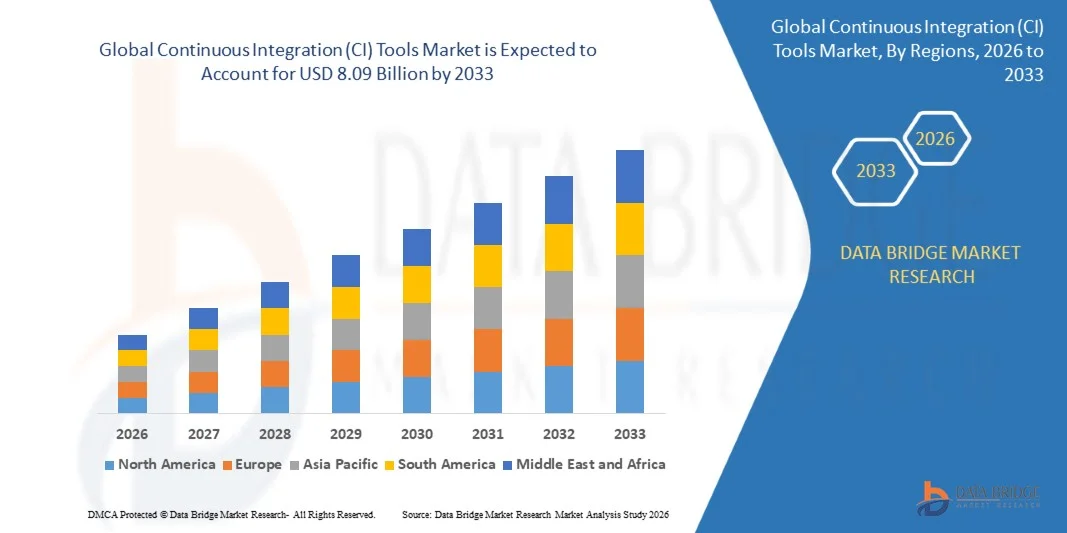
Сфера охвата и непрерывная интеграция (CI) Сегментация рынка инструментов
|
Атрибуты |
Инструменты непрерывной интеграции (CI) Key Market Insights |
|
Сегменты покрыты |
|
|
Страны, охваченные |
Северная Америка
Европа
Азиатско-Тихоокеанский регион
Ближний Восток и Африка
Южная Америка
|
|
Ключевые игроки рынка |
|
|
Рыночные возможности |
|
|
Информационные наборы данных с добавленной стоимостью |
В дополнение к информации о рыночных сценариях, таких как рыночная стоимость, темпы роста, сегментация, географическое покрытие и основные игроки, рыночные отчеты, курируемые Data Bridge Market Research, также включают углубленный экспертный анализ, анализ цен, анализ доли бренда, опрос потребителей, анализ демографии, анализ цепочки поставок, анализ цепочки создания стоимости, обзор сырья / расходных материалов, критерии выбора поставщиков, анализ PESTLE, анализ Porter и нормативную базу. |
Каковы основные тенденции на рынке инструментов непрерывной интеграции (CI)
"Увеличение перехода к облачным, с поддержкой ИИ и DevOps-интегрированным платформам CI"
- Рынок инструментов непрерывной интеграции (CI) демонстрирует сильное внедрение облачных, масштабируемых и автоматизированных платформ, предназначенных для поддержки более быстрых сборок программного обеспечения, тестирования и развертывания в гибких средах разработки.
- Продавцы внедряют оптимизацию трубопроводов с поддержкой ИИ, автоматизированные рамки тестирования и интеграции DevSecOps, которые повышают скорость развертывания, качество кода и эффективность выпуска.
- Растущий спрос на непрерывную доставку программного обеспечения, архитектуру микросервисов и контейнерные приложения стимулирует использование на предприятиях, в SaaS-провайдерах и в цифровых организациях.
- Например, такие компании, как Microsoft, Atlassian, CloudBees, AWS и GitHub расширяют возможности CI с улучшенной оркестровкой, мониторингом в реальном времени и облачными интеграциями.
- Растущая потребность в быстром цикле выпуска, сотрудничестве между распределенными командами и автоматическом обеспечении качества ускоряет переход к интегрированным платформам CI.
- Поскольку программные экосистемы становятся более гибкими и сложными, инструменты CI будут оставаться жизненно важными для более быстрых выпусков, автоматизированного тестирования и непрерывных инноваций в продуктах.
Каковы основные драйверы рынка инструментов непрерывной интеграции (CI)
- Растущий спрос на более быстрые циклы разработки программного обеспечения и автоматизированную проверку кода является основным драйвером роста для предприятий и стартапов.
- Например, в 2025–2026 годах ведущие поставщики расширили свои платформы с помощью отладки, автоматизации тестирования и анализа трубопроводов с помощью ИИ.
- Растущее внедрение DevOps, Agile, Kubernetes, облачных вычислений и удаленных инженерных команд повышает спрос в США, Европе и Азиатско-Тихоокеанском регионе.
- Достижения в области оркестровки CI/CD, интеграции API, поддержки контейнеров и рабочих процессов развертывания на основе облачных вычислений повысили производительность и масштабируемость платформы
- Растущее использование приложений ИИ, корпоративных продуктов SaaS, финтех-платформ и мобильных приложений создает сильный спрос на надежные инструменты CI.
- Ожидается, что благодаря устойчивым инвестициям в цифровую трансформацию, корпоративное программное обеспечение и облачную инфраструктуру рынок инструментов CI будет свидетелем сильного долгосрочного роста.
Какой фактор препятствует росту рынка инструментов непрерывной интеграции
- Высокие затраты, связанные с корпоративными платформами CI, интеграциями премиум-класса и крупномасштабными облачными развертываниями, ограничивают внедрение среди МСП и стартапов на ранних этапах.
- Например, в течение 2024-2025 годов рост расходов на облачную инфраструктуру и расходы на лицензирование программного обеспечения увеличили бюджеты развертывания для нескольких организаций.
- Сложность управления многооблачными трубопроводами, унаследованная интеграция систем и рабочие процессы по обеспечению соответствия требованиям безопасности увеличивают потребность в квалифицированных специалистах и обучении DevOps.
- Ограниченная осведомленность на развивающихся рынках относительно лучших практик CI/CD и зрелости автоматизации замедляет принятие решений.
- Конкуренция со стороны альтернатив с открытым исходным кодом, интегрированных пакетов DevOps и внутренних рамок развертывания создает ценовое давление и снижает дифференциацию продуктов.
- Для решения этих проблем компании сосредотачиваются на оптимизированных по стоимости подписках, автоматизации на основе искусственного интеллекта и упрощенной интеграции для увеличения глобального внедрения инструментов непрерывной интеграции (CI).
Как сегментируется рынок инструментов непрерывной интеграции (CI)
Рынок сегментирован на основеРежим развертывания, размер организации и вертикаль.
• в режиме развертывания
На основе режима развертывания рынок инструментов непрерывной интеграции (CI) сегментирован на On-Premises и Cloud. Сегмент облачных вычислений доминировал на рынке с долей 61,4% в 2025 году, поскольку он остается предпочтительной моделью развертывания для предприятий, стремящихся к масштабируемости, удаленной доступности, более быстрой реализации и более низким затратам на инфраструктуру. Облачные инструменты CI широко используются для автоматизированных конвейеров сборки, тестирования кода, интеграции управления версиями и совместной работы DevOps в распределенных командах. Их способность поддерживать обновления в режиме реального времени, бесшовную интеграцию с третьими сторонами и более быстрые циклы выпуска программного обеспечения продолжает стимулировать широкое внедрение в стартапах и крупных предприятиях. Расширение использования сред разработки на основе SaaS и растущий спрос на гибкую доставку программного обеспечения еще больше укрепляют доминирование сегмента.
Ожидается, что сегмент On-Premiess будет расти самыми быстрыми темпами с 2026 по 2033 год, что обусловлено растущим спросом со стороны регулируемых отраслей, таких как BFSI, здравоохранение и правительство, где контроль данных, соответствие требованиям безопасности и индивидуальная инфраструктура остаются критически важными.
• По размеру организации
Исходя из размера организации, рынок сегментирован на малые и средние предприятия и крупные предприятия. Сегмент крупных предприятий доминировал на рынке с долей 57,8% в 2025 году, чему способствовали обширные операции по разработке программного обеспечения, более высокие бюджеты DevOps и высокий спрос на конвейеры автоматизации корпоративного уровня. Крупные организации все чаще используют инструменты CI для оптимизации интеграции кода, автоматизации тестирования, улучшения качества выпуска и сокращения времени простоя развертывания в нескольких командах и бизнес-единицах. Интеграция с корпоративными инструментами, такими как оркестровка контейнеров, тестирование безопасности и платформы мониторинга производительности, также поддерживает внедрение.
Сегмент малых и средних предприятий, по прогнозам, будет расти самыми быстрыми темпами с 2026 по 2033 год, что обусловлено ростом цифровой трансформации, ростом внедрения SaaS и растущей осведомленностью о практике DevOps среди стартапов и компаний среднего размера.
• Вертикальный
На основе вертикальной непрерывной интеграции (CI) Рынок инструментов сегментирован на банковское дело, финансовые услуги и страхование, розничную и электронную торговлю, телекоммуникации, образование, средства массовой информации и развлечения, здравоохранение, производство и другие. Сегмент ИТ и телекоммуникаций доминировал на рынке с долей 34,6% в 2025 году, чему способствовали непрерывные выпуски программного обеспечения, разработка облачных приложений и высокий спрос на гибкие рабочие процессы DevOps. Поставщики телекоммуникационных услуг и компании-разработчики программного обеспечения широко используют инструменты CI для более быстрого обновления приложений, тестирования сетевого программного обеспечения и повышения надежности обслуживания.
Сегмент банковских, финансовых услуг и страхования, как ожидается, будет расти самыми быстрыми темпами с 2026 по 2033 год, чему будет способствовать увеличение оцифровки финансовых услуг, быстрые потребности в развертывании приложений и сильный акцент на безопасные автоматизированные конвейеры доставки программного обеспечения.
В каком регионе находится наибольшая доля рынка инструментов непрерывной интеграции
- Северная Америка доминировала на рынке инструментов непрерывной интеграции (CI) с долей выручки 41,95% в 2025 году, что обусловлено сильным внедрением методов DevOps, быстрой миграцией в облака, модернизацией корпоративного программного обеспечения и растущим спросом на автоматизированные конвейеры доставки программного обеспечения в США и Канаде. Высокое проникновение разработки облачных приложений, архитектуры микросервисов, контейнеризации и гибких рабочих процессов продолжает стимулировать спрос на инструменты CI на предприятиях программного обеспечения, в учреждениях BFSI, поставщиках телекоммуникационных услуг, ИТ-системах здравоохранения и крупных цифровых платформах.
- Ведущие компании в Северной Америке внедряют передовые платформы CI / CD с тестированием кода на основе ИИ, автоматизированными рабочими процессами развертывания, интеграцией контейнерной оркестровки и возможностями мониторинга в режиме реального времени, укрепляя технологическое лидерство региона. Постоянные инвестиции в инновации в области разработки программного обеспечения, кибербезопасность и цифровую трансформацию способствуют долгосрочному расширению рынка.
- Высокая концентрация технологических талантов, зрелые экосистемы стартапов и устойчивые ИТ-инвестиции предприятий еще больше укрепляют лидерство на региональном рынке.
Непрерывная интеграция США (CI) Инструменты анализа рынка
США являются крупнейшим вкладчиком в Северной Америке, поддерживаемым присутствием крупных поставщиков облачных услуг, фирм по разработке программного обеспечения и корпоративных технологических компаний. Растущее внедрение трубопроводов DevOps, рабочих процессов на основе Git, автоматизированных систем тестирования и платформ автоматизации выпуска усиливает спрос на передовые инструменты CI в секторах BFSI, SaaS, здравоохранения, розничной торговли и телекоммуникаций. Сильный спрос на более быстрые выпуски продуктов, снижение ошибок развертывания и расширение сотрудничества между командами разработчиков и операторов продолжает ускорять рост рынка.
Канада Непрерывная интеграция (CI) Инструменты анализа рынка
Канада вносит значительный вклад в региональный рост, чему способствуют растущие инвестиции в цифровую инфраструктуру, растущие стартапы SaaS и растущее внедрение корпоративного облака. Организации все чаще используют инструменты CI для автоматизированных сборок, проверки кода и эффективности развертывания. Поддерживаемые правительством инновационные инициативы и высокая доступность программного обеспечения продолжают укреплять внедрение по всей стране.
Азиатско-Тихоокеанский рынок инструментов непрерывной интеграции (CI)
Ожидается, что Азиатско-Тихоокеанский регион зарегистрирует самый быстрый CAGR в 10,72% с 2026 по 2033 год, что обусловлено быстрым расширением центров разработки программного обеспечения, растущим внедрением облаков и растущей цифровой трансформацией в Китае, Индии, Японии, Южной Корее и Юго-Восточной Азии. Растущий спрос на более быстрое развертывание приложений, разработку мобильных приложений и автоматизацию предприятий продолжает ускорять внедрение инструментов CI в стартапах и крупных предприятиях.
Китайская непрерывная интеграция (CI) Инструменты анализа рынка
Китай является крупнейшим участником Азиатско-Тихоокеанского региона из-за сильного роста корпоративных ИТ, облачной инфраструктуры и крупномасштабных экосистем разработки программного обеспечения. Быстрая цифровизация в области финансов, розничной торговли, телекоммуникаций и производства стимулирует высокий спрос на платформы CI.
Япония Непрерывная интеграция (CI) Инструменты рыночного понимания
Япония демонстрирует устойчивый рост, поддерживаемый модернизацией корпоративного программного обеспечения, сильной телекоммуникационной инфраструктурой и растущей автоматизацией корпоративных ИТ-систем.
Индия Непрерывная интеграция (CI) Инструменты анализа рынка
Индия становится крупным центром роста благодаря расширению ИТ-услуг, экосистемам стартапов, компаниям SaaS и растущему внедрению DevOps.
Южная Корея Непрерывная интеграция (CI) Инструменты анализа рынка
Южная Корея вносит значительный вклад благодаря быстрой цифровой трансформации, передовой телекоммуникационной инфраструктуре и сильным инновациям корпоративного программного обеспечения.
Каковы основные компании на рынке инструментов непрерывной интеграции (CI)
Индустрия инструментов непрерывной интеграции (CI) в основном управляется хорошо зарекомендовавшими себя компаниями, в том числе:
- Broadcom Inc. (США)
- Amazon Web Services, Inc. (США)
- Microsoft Corporation (США)
- IBM (США)
- Корпорация Oracle (США)
- CloudBees, Inc. (США)
- Red Hat, Inc. (США)
- Circle Internet Services, Inc. (CircleCI)
- JetBrains s.r.o. (Чехия)
- Buildkite Pty Ltd. (Австралия)
- TRAVIS CI GmbH (Германия)
- Bitrise Limited (Венгрия)
- Nevercode Ltd. (Великобритания)
- SmartBear Software (США)
- Атласский (Австралия)
- Micro Focus (Великобритания)
- Кукла (США)
- VSoft Technologies Pvt. Ltd. (Индия)
- JFrog Ltd. (Израиль)
- AutoRABIT (США)
- AppVeyor Systems Inc. (Канада)
- Harness Inc. (США)
- Rendered Text (Сербия)
Каковы последние события на рынке инструментов глобальной непрерывной интеграции
- В январе 2026 года CloudBees представила унифицированное многоплатформенное решение для управления DevOps, предназначенное для оптимизации корпоративных инструментальных цепочек, позволяя централизованное управление на таких платформах, как GitHub, GitLab и Jenkins, через единую плоскость управления на основе SaaS, тем самым усиливая видимость рабочего процесса, эффективность управления и возможности оркестровки CI / CD в масштабе предприятия.
- В декабре 2025 года JetBrains обновил TeamCity с помощью встроенной интеграции Docker и расширенных функций визуализации трубопроводов, упростив установку CI / CD для МСП с помощью редакторов перетаскивания и встроенной поддержки контейнеров, тем самым повысив эффективность развертывания, удобство использования и принятие среди команд разработчиков среднего размера.
- В ноябре 2025 года GitHub Actions внедрила значительные архитектурные усовершенствования, включая якоря YAML, шаблоны частных рабочих процессов, более глубокие возможности многоразовых рабочих процессов и расширенные возможности кэша, тем самым повышая гибкость, производительность и масштабируемость для крупномасштабных сред CI / CD.
- В марте 2024 года JetBrains запустила TeamCity Pipelines, которая позже была интегрирована в корпоративное издание, чтобы упростить управление трубопроводами CI / CD с более интуитивным интерфейсом и улучшенной масштабируемостью для более крупных команд, тем самым поддерживая лучшую совместную работу, более быстрые выпуски и более сильные рабочие процессы DevOps.
SKU-
Получите онлайн-доступ к отчету на первой в мире облачной платформе рыночной аналитики

- Интерактивная панель анализа данных
- Панель анализа компании для возможностей с высоким потенциалом роста
- Доступ аналитика-исследователя для настройки и запросов
- Анализ конкурентов с помощью интерактивной панели
- Последние новости, обновления и анализ тенденций
- Используйте возможности сравнительного анализа для комплексного отслеживания конкурентов
Методология исследования
Сбор данных и анализ базового года выполняются с использованием модулей сбора данных с большими размерами выборки. Этап включает получение рыночной информации или связанных данных из различных источников и стратегий. Он включает изучение и планирование всех данных, полученных из прошлого заранее. Он также охватывает изучение несоответствий информации, наблюдаемых в различных источниках информации. Рыночные данные анализируются и оцениваются с использованием статистических и последовательных моделей рынка. Кроме того, анализ доли рынка и анализ ключевых тенденций являются основными факторами успеха в отчете о рынке. Чтобы узнать больше, пожалуйста, запросите звонок аналитика или оставьте свой запрос.
Ключевой методологией исследования, используемой исследовательской группой DBMR, является триангуляция данных, которая включает в себя интеллектуальный анализ данных, анализ влияния переменных данных на рынок и первичную (отраслевую экспертную) проверку. Модели данных включают сетку позиционирования поставщиков, анализ временной линии рынка, обзор рынка и руководство, сетку позиционирования компании, патентный анализ, анализ цен, анализ доли рынка компании, стандарты измерения, глобальный и региональный анализ и анализ доли поставщика. Чтобы узнать больше о методологии исследования, отправьте запрос, чтобы поговорить с нашими отраслевыми экспертами.
Доступна настройка
Data Bridge Market Research является лидером в области передовых формативных исследований. Мы гордимся тем, что предоставляем нашим существующим и новым клиентам данные и анализ, которые соответствуют и подходят их целям. Отчет можно настроить, включив в него анализ ценовых тенденций целевых брендов, понимание рынка для дополнительных стран (запросите список стран), данные о результатах клинических испытаний, обзор литературы, обновленный анализ рынка и продуктовой базы. Анализ рынка целевых конкурентов можно проанализировать от анализа на основе технологий до стратегий портфеля рынка. Мы можем добавить столько конкурентов, о которых вам нужны данные в нужном вам формате и стиле данных. Наша команда аналитиков также может предоставить вам данные в сырых файлах Excel, сводных таблицах (книга фактов) или помочь вам в создании презентаций из наборов данных, доступных в отчете.











