



Global Critical Infrastructure Protection Market Segmentation, By Component (Solutions and Services), Solution (Physical Safety and Security and Cyber Security), Vertical (Financial Institutions, Government, Defense, Transport and Logistics, Energy and Power, Commercial Sector, Telecom, Chemicals and Manufacturing, Oil and Gas, and Others) - Industry Trends and Forecast to 2033
Каков размер и темпы роста глобального рынка защиты критической инфраструктуры
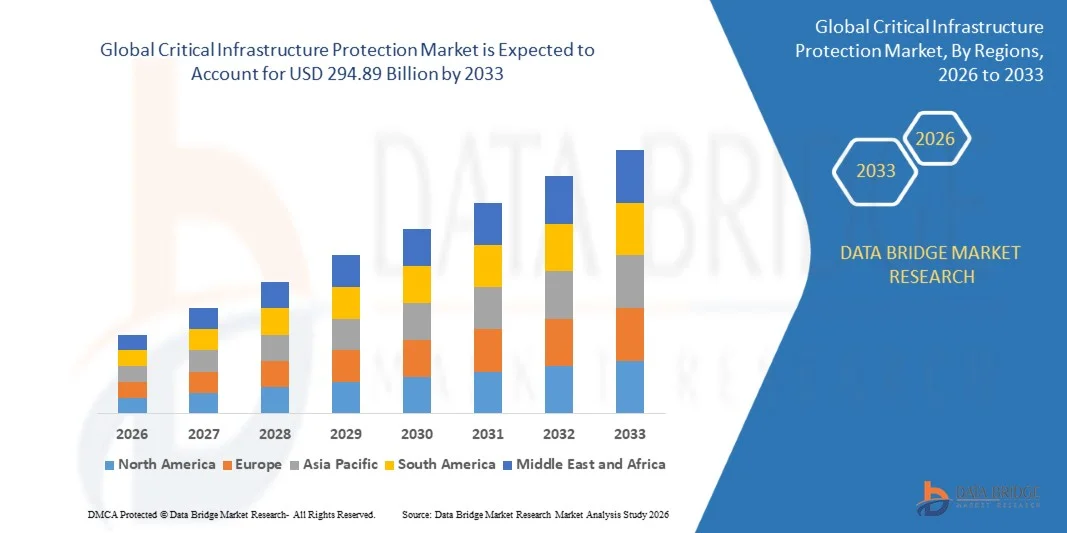
- Согласно анализу рынка Data Bridge Market Research, объем рынка защиты критически важной инфраструктуры был оценен как161,70 млрд долларов в 2025 годуОжидается, что он достигнет294,89 млрд долларов к 2033 году, вCAGR 7,8%в течение прогнозируемого периода
- Рост потребности в защите сетей ОТ по всему миру является одним из основных факторов, стимулирующих рост рынка защиты критически важной инфраструктуры.
- Резкий рост внедрения строгих правительственных правил для увеличения принятия решений CIP и широкое внедрение технологии для предотвращения совершения террористических атак с высокой отдачей ускоряют рост рынка.
Размер рынка и прогноз
Глобальная рыночная стоимость (2025):$161,70 млрд.
Ожидаемая рыночная стоимость (2033):$294,89 млрд.
Прогноз CAGR (2026–2033):7.8%
Каковы основные факторы рынка защиты критической инфраструктуры
- Увеличение случаев нарушений безопасности и кибератак, которые представляют угрозу для развития инфраструктуры, и правительства, уделяющие особое внимание улучшению инфраструктуры, такие как транспорт, энергия и вода, еще больше влияют на рынок.
- Кроме того, быстрая оцифровка, рост тренда Bring-Your-Own-Devices (BYOD) во всех отраслях и опасения по поводу безопасности правительственной информации положительно влияют на рынок защиты критически важной инфраструктуры. Кроме того, рост внедрения облачных технологий и устройств IoT и инвестиции правительств и предприятий в разработку надежных решений CIP расширяют выгодные возможности для игроков рынка.
- Северная Америка доминировала на рынке защиты критической инфраструктуры с долей дохода 38,6% в 2025 году, чему способствовало сильное внедрение передовых систем кибербезопасности, систем наблюдения, технологий контроля физического доступа и крупномасштабные инвестиции в защиту критически важных активов в США и Канаде.
- Ожидается, что Азиатско-Тихоокеанский регион зарегистрирует самый быстрый CAGR в 6,7% с 2025 по 2033 год, что обусловлено быстрой индустриализацией, расширением инициатив «умного города», сильным ростом автоматизации производства и увеличением инвестиций в инфраструктуру коммунальной, телекоммуникационной и транспортной безопасности в Китае, Японии, Индии, Южной Корее и Юго-Восточной Азии.
- Сегмент решений доминировал на рынке с долей 66,4% в 2025 году, поскольку он остается предпочтительным выбором для правительств, коммунальных предприятий и предприятий, ищущих интегрированные платформы для наблюдения, контроля доступа, мониторинга угроз и реагирования на инциденты.
Сфера охвата и сегментация рынка защиты критической инфраструктуры
|
Атрибуты |
Защита критической инфраструктуры Ключевые идеи рынка |
|
Сегменты покрыты |
|
|
Страны, охваченные |
Северная Америка
Европа
Азиатско-Тихоокеанский регион
Ближний Восток и Африка
Южная Америка
|
|
Ключевые игроки рынка |
|
|
Рыночные возможности |
|
|
Информационные наборы данных с добавленной стоимостью |
В дополнение к информации о рыночных сценариях, таких как рыночная стоимость, темпы роста, сегментация, географическое покрытие и основные игроки, рыночные отчеты, курируемые Data Bridge Market Research, также включают углубленный экспертный анализ, анализ цен, анализ доли бренда, опрос потребителей, анализ демографии, анализ цепочки поставок, анализ цепочки создания стоимости, обзор сырья / расходных материалов, критерии выбора поставщиков, анализ PESTLE, анализ Porter и нормативную базу. |
Каковы основные тенденции на рынке защиты критической инфраструктуры
"Растущий переход к решениям по безопасности инфраструктуры, управляемым ИИ, интегрированным и в режиме реального времени"
- Рынок защиты критической инфраструктуры демонстрирует сильное внедрение платформ мониторинга на основе ИИ, систем наблюдения с поддержкой IoT и интегрированных рамок кибербезопасности, предназначенных для защиты критически важных активов в области энергетики, транспорта, телекоммуникаций, обороны и коммунальных услуг.
- Участники рынка внедряют многоуровневые решения безопасности, которые сочетают физическую безопасность, сетевую защиту, видеоаналитику, контроль доступа и разведку угроз для комплексного снижения рисков.
- Растущий спрос на экономически эффективные, масштабируемые системы обнаружения угроз в режиме реального времени стимулирует развертывание в умных городах, аэропортах, нефтегазовых объектах, электросетях и государственной инфраструктуре.
- Например, такие компании, как BAE Systems, Honeywell, Thales и Lockheed Martin, расширяют свои портфели защиты инфраструктуры с помощью аналитики на основе ИИ, синтеза датчиков и передовых систем управления и управления.
- Растущая потребность в быстром обнаружении угроз, прогностическом обслуживании и автоматическом реагировании на инциденты ускоряет переход к облачным платформам защиты с поддержкой ИИ.
- По мере того, как инфраструктурные системы становятся все более взаимосвязанными и цифровыми, критически важные решения по защите инфраструктуры будут оставаться жизненно важными для устойчивости, непрерывности работы и национальной безопасности.
Каковы основные движущие силы рынка защиты критической инфраструктуры
- Растущий спрос на передовые решения для защиты электростанций, телекоммуникационных сетей, транспортных систем и водоочистных сооружений от физических и киберугроз
- Например, в 2025 году ведущие компании, такие как Raytheon, Honeywell и Hexagon AB, обновили свои портфели с расширенными возможностями наблюдения, обнаружения угроз и анализа рисков.
- Растущее внедрение IoT-устройств, технологий интеллектуальных сетей, промышленной автоматизации и цифровых систем управления повышает спрос на решения для защиты критически важной инфраструктуры в США, Европе и Азиатско-Тихоокеанском регионе.
- Достижения в области аналитики на основе ИИ, мониторинга в реальном времени, сенсорных технологий и облачных архитектур безопасности повысили эффективность и возможности реагирования.
- Рост геополитических рисков, кибератаки на основные услуги и увеличение инвестиций в национальную безопасность создают сильный рыночный спрос.
- Ожидается, что благодаря устойчивым инвестициям в модернизацию обороны, общественную безопасность и интеллектуальную инфраструктуру рынок защиты критически важной инфраструктуры будет свидетелем сильного долгосрочного роста.
Какие факторы препятствуют росту рынка защиты объектов инфраструктуры
- Высокие затраты, связанные с передовыми системами наблюдения, инфраструктурой кибербезопасности и интегрированными платформами управления угрозами, ограничивают внедрение среди небольших государственных учреждений и развивающихся регионов.
- Например, в течение 2024-2025 годов рост затрат на компоненты, расходы на лицензирование программного обеспечения и сложности интеграции увеличили затраты на развертывание для нескольких глобальных поставщиков.
- Сложность управления гибридными киберфизическими средами, устаревшими инфраструктурными системами и потоками данных в режиме реального времени увеличивает потребность в квалифицированных специалистах и специализированной подготовке.
- Ограниченная осведомленность и бюджетные ограничения в странах с развивающейся экономикой в отношении современных методов обеспечения безопасности инфраструктуры замедляют внедрение.
- Конкуренция со стороны фрагментированных автономных решений безопасности и проблем взаимодействия создает ценовое давление и снижает стандартизацию.
- Для решения этих проблем компании сосредотачиваются на оптимизированных по стоимости платформах, автоматизации искусственного интеллекта, учебных ресурсах и расширенной системной интеграции для повышения глобального внедрения решений по защите критически важных инфраструктур.
Как сегментируется рынок защиты критической инфраструктуры
Рынок сегментирован на основекомпонент, решение и вертикаль.
• по компонентам
На основе компонента рынок защиты критически важной инфраструктуры сегментирован на решения и услуги. Сегмент решений доминировал на рынке с долей 66,4% в 2025 году, поскольку он остается предпочтительным выбором для правительств, коммунальных предприятий и предприятий, ищущих интегрированные платформы для наблюдения, контроля доступа, мониторинга угроз и реагирования на инциденты. Эти решения обеспечивают централизованную видимость, аналитику в режиме реального времени и автоматические оповещения, что делает их высокоэффективными в защите критически важных активов, таких как электрические сети, транспортные системы, телекоммуникационные сети и промышленные объекты. Их масштабируемость, совместимость с устаревшей инфраструктурой и способность сочетать как физические, так и цифровые функции безопасности продолжают поддерживать сильное внедрение на мировых рынках.
Сегмент услуг, как ожидается, будет расти самыми быстрыми темпами с 2026 по 2033 год, что обусловлено растущим спросом на консультации, оценку рисков, управляемые службы безопасности, поддержку соответствия, системную интеграцию и обслуживание. Растущие киберугрозы и потребность в специализированных экспертных знаниях еще больше увеличивают спрос на услуги по защите от внешних источников.
• Решение
На основе решения рынок сегментирован на физическую безопасность и кибербезопасность. Сегмент кибер-безопасности доминировал на рынке с долей 57,8% в 2025 году, чему способствовали растущая частота атак вымогателей, вторжений вредоносных программ, уязвимостей SCADA и кибер-угроз, нацеленных на базовую инфраструктуру. Растущее развертывание брандмауэров, систем обнаружения вторжений, платформ SIEM, средств защиты конечных точек и мониторинга сети продолжает активно внедряться на электростанциях, в аэропортах, центрах обработки данных и государственных учреждениях. Рост интеллектуальных сетей, промышленного IoT и инфраструктуры, подключенной к облаку, еще больше усиливает потребность в передовых структурах кибербезопасности.
Сегмент физической безопасности, по прогнозам, будет расти самыми быстрыми темпами с 2026 по 2033 год, что обусловлено ростом инвестиций в видеонаблюдение, биометрические системы доступа, обнаружение вторжений по периметру и интеллектуальные сенсорные технологии в общественной инфраструктуре и оборонных объектах.
• Вертикальный
На вертикальной основе рынок защиты критической инфраструктуры сегментирован на финансовые учреждения, правительство, оборону, транспорт и логистику, энергетику и энергетику, коммерческий сектор, телекоммуникации, химию и производство, нефть и газ и другие. Правительственный сегмент доминировал на рынке с долей 24,9% в 2025 году, чему способствовали растущие инвестиции в национальную безопасность, инфраструктуру умных городов, системы общественной безопасности и национальные системы кибербезопасности. Правительства продолжают уделять приоритетное внимание защите государственных активов, систем обороны и сетей реагирования на чрезвычайные ситуации с помощью передовых интегрированных решений безопасности.
Сегмент энергетики и энергетики, как ожидается, будет расти самыми быстрыми темпами с 2026 по 2033 год, чему способствуют растущие кибератаки на интеллектуальные сети, подстанции, активы возобновляемых источников энергии и системы управления коммунальными услугами. Растущая модернизация энергетической инфраструктуры и растущий акцент на непрерывности работы стимулируют устойчивый спрос на критически важные решения для защиты инфраструктуры в этом сегменте.
В каком регионе находится наибольшая доля рынка защиты объектов инфраструктуры
- Северная Америка доминировала на рынке защиты критической инфраструктуры с долей дохода 38,6% в 2025 году, чему способствовало сильное внедрение передовых систем кибербезопасности, систем наблюдения, технологий контроля физического доступа и крупномасштабные инвестиции в защиту критически важных активов в США и Канаде. Рост киберугроз, направленных на энергетические сети, телекоммуникационные сети, государственную инфраструктуру и транспортные системы, продолжает стимулировать спрос на рынке по всему региону.
- Ведущие компании в Северной Америке внедряют платформы обнаружения угроз с поддержкой ИИ, передовое видеонаблюдение, обнаружение вторжений по периметру и решения по безопасности OT, укрепляя технологическое преимущество региона. Постоянные инвестиции в национальную безопасность, инфраструктуру умных городов и промышленную кибербезопасность способствуют долгосрочному расширению рынка.
- Сильная нормативно-правовая база, высокие оборонные бюджеты и установленное государственно-частное партнерство еще больше укрепляют лидерство на региональном рынке.
Обзор рынка критической защиты инфраструктуры США
США являются крупнейшим вкладчиком в Северную Америку, чему способствуют сильные инвестиции в модернизацию обороны, национальные инициативы в области кибербезопасности и критические программы устойчивости инфраструктуры в энергетическом, транспортном, нефтегазовом и государственном секторах. Растущие кибератаки на основные сервисы, наряду с развертыванием передовых SIEM, IAM и платформ сетевой безопасности, продолжают усиливать спрос на критически важные решения для защиты инфраструктуры. Присутствие крупных оборонных подрядчиков, поставщиков технологий и сильных механизмов сотрудничества между государственным и частным секторами еще больше стимулирует рост рынка.
Канадский рынок защиты критической инфраструктуры
Канада вносит значительный вклад в региональный рост, что обусловлено увеличением инвестиций в защиту коммунальных услуг, телекоммуникационную безопасность, мониторинг транспорта и инфраструктуру общественной безопасности. Растущее внимание к защите интеллектуальных сетей, киберустойчивости и поддерживаемым правительством программам модернизации безопасности продолжает укреплять принятие по всей стране.
Азиатско-Тихоокеанский рынок защиты критической инфраструктуры
Ожидается, что Азиатско-Тихоокеанский регион зарегистрирует самый быстрый CAGR в 6,7% с 2025 по 2033 год, что обусловлено быстрой индустриализацией, расширением инициатив «умного города», сильным ростом автоматизации производства и увеличением инвестиций в инфраструктуру коммунальной, телекоммуникационной и транспортной безопасности в Китае, Японии, Индии, Южной Корее и Юго-Восточной Азии. Рост киберрисков и масштабные инфраструктурные проекты продолжают ускорять расширение регионального рынка.
Китайский рынок защиты критической инфраструктуры
Китай является крупнейшим вкладчиком в Азиатско-Тихоокеанский регион благодаря массовым инвестициям в промышленную инфраструктуру, развитие умных городов, модернизацию электросетей и систем общественного наблюдения. Растущий спрос на решения для мониторинга на основе ИИ, промышленной кибербезопасности и защиты транспортной инфраструктуры продолжает стимулировать сильный рост рынка.
Японский рынок защиты критической инфраструктуры
Япония демонстрирует устойчивый рост, поддерживаемый развитой телекоммуникационной инфраструктурой, планированием устойчивости к стихийным бедствиям и непрерывной модернизацией транспортных и промышленных систем управления. Упор на высоконадежные системы безопасности и решения в области общественной безопасности способствует долгосрочному расширению рынка.
Обзор рынка критической защиты инфраструктуры Индии
Индия становится крупным центром роста, что обусловлено расширением проектов умных городов, ростом инвестиций в цифровую инфраструктуру и поддерживаемыми правительством инициативами в области кибербезопасности в транспортном, коммунальном и телекоммуникационном секторах. Увеличение развертывания платформ наблюдения, контроля доступа и безопасности OT еще больше ускоряет проникновение на рынок.
Обзор рынка критической инфраструктуры Южной Кореи
Южная Корея вносит значительный вклад благодаря высокому спросу на передовую телекоммуникационную безопасность, интеллектуальную защиту производства и критически важные системы мониторинга коммунальных услуг. Быстрая разработка управляемых ИИ экосистем наблюдения, интеллектуального транспорта и промышленной автоматизации поддерживает устойчивый рост рынка.
Какие компании занимают лидирующие позиции на рынке защиты критической инфраструктуры
Индустрия защиты критически важной инфраструктуры в основном возглавляется хорошо зарекомендовавшими себя компаниями, в том числе:
- BAE Systems (Великобритания)
- Lockheed Martin (США)
- General Dynamics (США)
- Honeywell (США)
- Airbus (Нидерланды)
- Raytheon Technologies (RTX) (США)
- Фалес (Франция)
- Hexagon AB (Швеция)
- Johnson Controls (Ирландия)
- Huawei (Китай)
- Teltronic (Испания)
- Ролта (Индия)
- SCADAfence (Израиль)
- Tyco International (Ирландия)
- Optasense (Великобритания)
- 3xLOGIC (США)
Каковы последние события на мировом рынке защиты критически важной инфраструктуры
- В июне 2025 года Lockheed Martin завершила приобретение бизнеса Amentum Rapid Solutions за 360 миллионов долларов США наличными, в результате чего передовые радиолокационные системы, технологии полезной нагрузки и высококвалифицированная рабочая сила из около 230 специалистов вошли в его подразделение Space. Этот стратегический шаг значительно укрепляет возможности компании в области национальной безопасности, наблюдения и критически важной оборонной инфраструктуры, тем самым укрепляя долгосрочные перспективы роста на рынке защиты критической инфраструктуры.
- В ноябре 2024 года BAE Systems заключила с National Highways трехлетний контракт на сумму до 25 миллионов долларов США на предоставление услуг кибербезопасности, разведки угроз, защиты данных и информационной безопасности в рамках крупных проектов дорожной инфраструктуры в Великобритании, тем самым подчеркивая растущую важность киберустойчивости в критически важной общественной инфраструктуре.
- В октябре 2024 года Northrop Grumman Corporation и Terma A/S заключили стратегическое сотрудничество в рамках Меморандума о взаимопонимании, ориентированного на передовые оборонные технологии, такие как системы F-35, радар, радиоэлектронная война, противоракетная оборона и беспилотные системы, тем самым ускоряя инновации и укрепляя критически важные возможности оборонной инфраструктуры.
- В июне 2024 года General Dynamics через подразделение GDIT получила от армии США заказ на выполнение задач комплексной поддержки оборонного обеспечения базы для поддержания глобальных систем защиты сил, включая радары, камеры и датчики, оптимизируя логистику с помощью цифровых инструментов с поддержкой ИИ, тем самым поддерживая постоянную оперативную готовность и безопасность инфраструктуры.
- В апреле 2024 года Axis Communications запустила купольную камеру AXIS Q9307-LV, оснащенную передовой аналитикой, обнаружением голосового стресса, двусторонним звуком и надежными функциями кибербезопасности для расширенного наблюдения и реагирования на инциденты, тем самым укрепив развертывание интеллектуальных инфраструктур безопасности на критически важных объектах.
SKU-
Получите онлайн-доступ к отчету на первой в мире облачной платформе рыночной аналитики

- Интерактивная панель анализа данных
- Панель анализа компании для возможностей с высоким потенциалом роста
- Доступ аналитика-исследователя для настройки и запросов
- Анализ конкурентов с помощью интерактивной панели
- Последние новости, обновления и анализ тенденций
- Используйте возможности сравнительного анализа для комплексного отслеживания конкурентов
Методология исследования
Сбор данных и анализ базового года выполняются с использованием модулей сбора данных с большими размерами выборки. Этап включает получение рыночной информации или связанных данных из различных источников и стратегий. Он включает изучение и планирование всех данных, полученных из прошлого заранее. Он также охватывает изучение несоответствий информации, наблюдаемых в различных источниках информации. Рыночные данные анализируются и оцениваются с использованием статистических и последовательных моделей рынка. Кроме того, анализ доли рынка и анализ ключевых тенденций являются основными факторами успеха в отчете о рынке. Чтобы узнать больше, пожалуйста, запросите звонок аналитика или оставьте свой запрос.
Ключевой методологией исследования, используемой исследовательской группой DBMR, является триангуляция данных, которая включает в себя интеллектуальный анализ данных, анализ влияния переменных данных на рынок и первичную (отраслевую экспертную) проверку. Модели данных включают сетку позиционирования поставщиков, анализ временной линии рынка, обзор рынка и руководство, сетку позиционирования компании, патентный анализ, анализ цен, анализ доли рынка компании, стандарты измерения, глобальный и региональный анализ и анализ доли поставщика. Чтобы узнать больше о методологии исследования, отправьте запрос, чтобы поговорить с нашими отраслевыми экспертами.
Доступна настройка
Data Bridge Market Research является лидером в области передовых формативных исследований. Мы гордимся тем, что предоставляем нашим существующим и новым клиентам данные и анализ, которые соответствуют и подходят их целям. Отчет можно настроить, включив в него анализ ценовых тенденций целевых брендов, понимание рынка для дополнительных стран (запросите список стран), данные о результатах клинических испытаний, обзор литературы, обновленный анализ рынка и продуктовой базы. Анализ рынка целевых конкурентов можно проанализировать от анализа на основе технологий до стратегий портфеля рынка. Мы можем добавить столько конкурентов, о которых вам нужны данные в нужном вам формате и стиле данных. Наша команда аналитиков также может предоставить вам данные в сырых файлах Excel, сводных таблицах (книга фактов) или помочь вам в создании презентаций из наборов данных, доступных в отчете.











