Global Dystonia Drug Market Segmentation, By Classification Type (Age, Body, and Causes), Therapy Type (Physical Therapy, Speech Therapy, and Sensory Manoeuvres), Treatment Type (Medication and Surgery), Mechanism of Class Type (Anticholinergic, Benzodiazepines, Dopaminergic Agents, Muscle Relaxants, and Others), Route of Administration (Oral and injectable), End-Users (Hospitals, Homecare, Specialty Clinics, and Others) – Industry Trends and Forecast to 2032
Dystonia Drug Market Analysis
The dystonia drug market has seen significant advancements in treatment methods, particularly with the development of targeted therapies and gene therapy approaches. Recent breakthroughs in botulinum toxin injections, such as Botox, have proven highly effective in managing symptoms by blocking nerve signals that cause muscle contractions. In addition, oral medications such as anticholinergics, dopamine-depleting agents, and muscle relaxants continue to see expanded usage.
A major technology advancement includes the increasing use of deep brain stimulation (DBS), which is being refined with enhanced precision and real-time monitoring, improving the efficacy of treatments. The integration of artificial intelligence in diagnosing and customizing treatments for dystonia is gaining momentum, allowing for more personalized care and faster drug development processes.
In terms of growth, the dystonia drug market is expanding due to a better understanding of the disease and the increasing number of research initiatives to develop novel therapies. Increased investments in biotechnology and the growing demand for non-invasive treatments are propelling the market's expansion. With more treatments entering the pipeline, the future of dystonia management looks promising.
Dystonia Drug Market Size
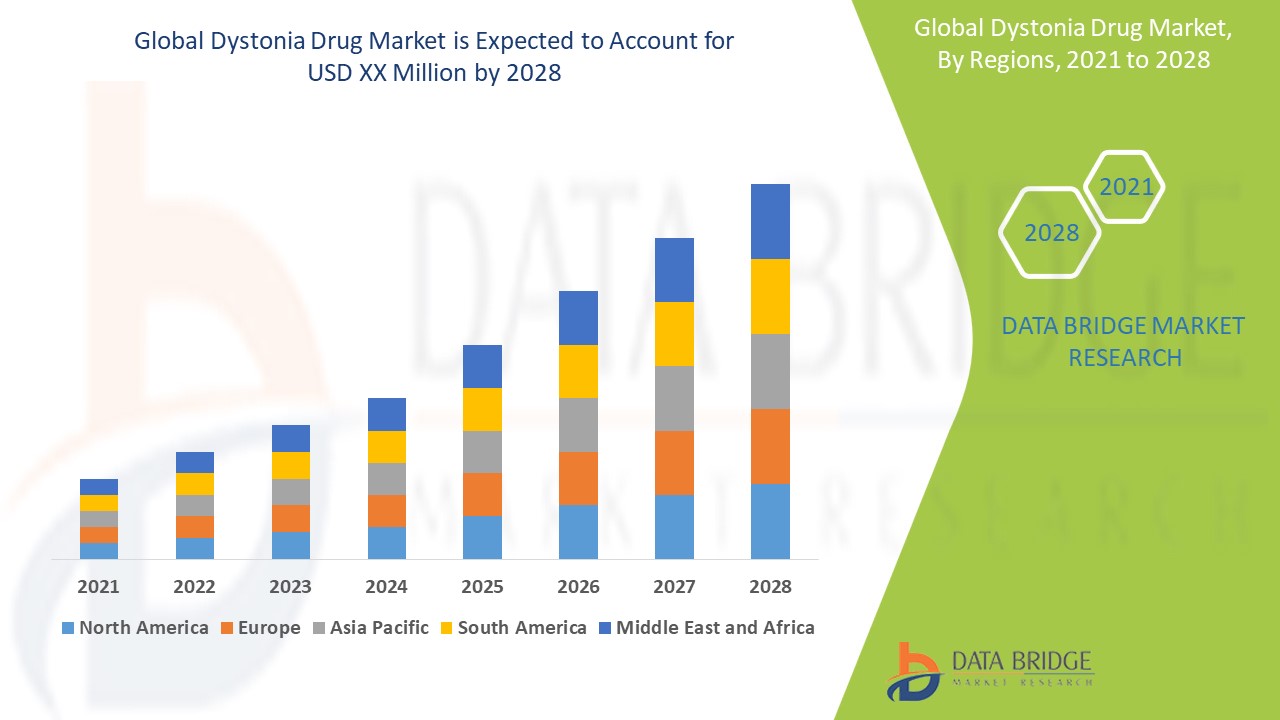
The global dystonia drug market size was valued at USD 849.70 million in 2024 and is projected to reach USD 1,294.17 million by 2032, with a CAGR of 5.40% during the forecast period of 2025 to 2032. In addition to the insights on market scenarios such as market value, growth rate, segmentation, geographical coverage, and major players, the market reports curated by the Data Bridge Market Research also include depth expert analysis, patient epidemiology, pipeline analysis, pricing analysis, and regulatory framework.
Dystonia Drug Market Trends
“Advancements in Botulinum Toxin Treatments”
One specific trend driving growth in the dystonia drug market is the increasing use of botulinum toxin (Botox) treatments. Botulinum toxin is widely used to manage various forms of dystonia, including cervical dystonia, where muscles in the neck contract uncontrollably. The treatment helps reduce muscle spasms and improve patients' quality of life. This trend is supported by FDA-approved products such as Botox, which have demonstrated significant efficacy in clinical trials. As more healthcare providers adopt botulinum toxin treatments for dystonia, the market is expected to see continued expansion. In addition, new formulations and increased awareness are contributing to higher demand and market growth.
Report Scope and Dystonia Drug Market Segmentation
|
Attributes |
Dystonia Drug Key Market Insights |
|
Segments Covered |
|
|
Countries Covered |
U.S., Canada and Mexico in North America, Germany, France, U.K., Netherlands, Switzerland, Belgium, Russia, Italy, Spain, Turkey, Rest of Europe in Europe, China, Japan, India, South Korea, Singapore, Malaysia, Australia, Thailand, Indonesia, Philippines, Rest of Asia-Pacific (APAC) in the Asia-Pacific (APAC), Saudi Arabia, U.A.E, South Africa, Egypt, Israel, Rest of Middle East and Africa (MEA) as a part of Middle East and Africa (MEA), Brazil, Argentina and Rest of South America as part of South America |
|
Key Market Players |
Pfizer Inc. (U.S.), Novartis AG (Switzerland), Sanofi (France), Merck & Co. (U.S.), Aspen Holdings (South Africa), China Shineway Pharmaceutical Group Limited (China), Boston Scientific Corporation (U.S.), Ipsen Pharma (France), Revance Therapeutics, Inc. (U.S.), Merz Pharma (Germany), US WorldMeds, LLC (U.S.), Medytox (South Korea), Allergan (U.S.), Taro Pharmaceutical Industries Ltd (Israel), Mentor Worldwide LLC (U.S.), and Eisai Co., Ltd (Japan) |
|
Market Opportunities |
|
|
Value Added Data Infosets |
In addition to the insights on market scenarios such as market value, growth rate, segmentation, geographical coverage, and major players, the market reports curated by the Data Bridge Market Research also include depth expert analysis, patient epidemiology, pipeline analysis, pricing analysis, and regulatory framework. |
Dystonia Drug Market Definition
Dystonia drugs are medications used to manage the symptoms of dystonia, a neurological movement disorder characterized by involuntary muscle contractions and abnormal postures. Common classes of drugs for dystonia include anticholinergics, such as trihexyphenidyl, which help reduce muscle spasms, and dopamine-depleting agents such as tetrabenazine, which is used for conditions such as tardive dystonia. Muscle relaxants, such as baclofen, may also be prescribed to ease muscle tightness. In some cases, botulinum toxin injections are used to target specific muscles, providing temporary relief from dystonia. These drugs help improve movement control and quality of life for individuals affected by the disorder.
Dystonia Drug Market Dynamics
Drivers
- Increasing Prevalence of Dystonia
The increasing prevalence of dystonia, particularly among older populations, significantly drives the demand for treatment options. As awareness about neurological disorders improves and diagnostic methods advance, more individuals are being diagnosed with various forms of dystonia. For instance, cervical dystonia, a common form, is particularly prevalent in the elderly, affecting around 10-20 people per 100,000 globally. With a growing aging population and better detection capabilities, more patients are seeking therapeutic options, including botulinum toxin injections and oral medications. This heightened awareness and diagnosis directly stimulate the demand for effective dystonia drugs, contributing to the overall growth of the dystonia drug market.
- Rising Focus on Personalized Medicine
The growing focus on personalized medicine is significantly driving the dystonia drug market. Tailored treatments that consider genetic, environmental, and lifestyle factors are enabling more precise management of dystonia. For instance, genetic testing helps identify mutations linked to specific dystonia types, allowing for customized therapies that improve efficacy and minimize side effects. Companies such as Ipsen are developing personalized botulinum toxin injections for patients with cervical dystonia, a common form of the disorder, ensuring optimal dosage and treatment outcomes. This trend enhances the precision of therapies, boosts patient adherence, and increases market demand as more effective, individualized treatment options become available for dystonia patients.
Opportunities
- Increased Investment in Rare Disease Research
Increased investment in rare disease research presents significant opportunities in the dystonia drug market. Governments and private entities are dedicating more resources to understanding and developing treatments for rare neurological disorders such as dystonia. For instance, the U.S. National Institutes of Health (NIH) and private biotech firms have allocated funds to investigate gene therapies and novel drug formulations for dystonia. This influx of funding accelerates clinical trials and attracts partnerships between pharmaceutical companies and research institutions, creating a robust pipeline of innovative therapies. As a result, the market sees a rise in specialized treatment options, improving patient outcomes and driving overall market growth.
- Growing Awareness of Neurological Disorders
Increased awareness of dystonia and other neurological disorders is a significant driver for the dystonia drug market. As healthcare professionals and the general public become more educated about the symptoms and early signs of dystonia, early diagnosis rates improve. This leads to timely treatments, preventing disease progression and improving patient outcomes. For instance, initiatives such as the Dystonia Medical Research Foundation’s campaigns have raised awareness, prompting more patients to seek medical attention. Early intervention results in higher demand for medications, particularly botulinum toxin injections and oral drugs. As awareness continues to grow, more individuals are diagnosed and treated, thus creating a growing opportunity in the dystonia drug market.
Restraints/Challenges
- High Development Costs
High development costs are a significant restraint for the dystonia drug market. Developing treatments for neurological disorders such as dystonia requires extensive research, clinical trials, and specialized expertise, all of which contribute to substantial financial burdens. The complexity of these conditions increases the difficulty in identifying effective therapies, leading to prolonged development timelines. As a result, the drugs that do make it to market are often priced higher to recover the costs of development. This limits patient access to treatments and discourages investment in the market, as the return on investment may not justify the high financial risk involved in bringing these drugs to market.
- Side Effects and Safety Concerns
Side effects and safety concerns associated with dystonia treatments, particularly botulinum toxin injections, pose significant challenges for market growth. While effective for many patients, botulinum toxin can cause adverse reactions such as muscle weakness, difficulty swallowing, and breathing issues. These risks often lead to hesitance among patients and healthcare providers in opting for this treatment. Furthermore, the potential for long-term side effects, including antibody formation that may reduce the treatment's effectiveness, contributes to a lack of patient adherence. Such safety concerns hinder the widespread acceptance of newer treatments, limiting their market potential and slowing the overall adoption of advanced dystonia therapies.
This market report provides details of new recent developments, trade regulations, import-export analysis, production analysis, value chain optimization, market share, impact of domestic and localized market players, analyses opportunities in terms of emerging revenue pockets, changes in market regulations, strategic market growth analysis, market size, category market growths, application niches and dominance, product approvals, product launches, geographic expansions, technological innovations in the market. To gain more info on the market contact Data Bridge Market Research for an Analyst Brief, our team will help you take an informed market decision to achieve market growth.
Dystonia Drug Market Scope
The market is segmented on the basis of category, form, product type, and end user. The growth amongst these segments will help you analyze meagre growth segments in the industries and provide the users with a valuable market overview and market insights to help them make strategic decisions for identifying core market applications.
Classification Type
- Age
- Childhood Onset
- 0 to Age 12
- Adolescent Onset
- Age 13 to 20
- Adult Onset
- Older than Age 20
- Body
- Spasmodic Dysphonia
- Lower Limb Dystonia
- Focal Dystonia
- Cervical Dystonia
- Blepharospasm
- Causes
- Dopa-Responsive Dystonia
- Myoclonus-Dystonia
- Paroxysmal Dyskinesias
- Rapid-Onset Dystonia Parkinsonism
- Heredodegenerative Dystonia
- Others
Therapy Type
- Physical Therapy
- Speech Therapy
- Sensory Manoeuvres
Treatment Type
- Medication
- Surgery
Mechanism of Class Type
- Anticholinergic
- Trihexyphenidyl
- Benztropine
- Ethopropazine
- Benzodiazepines
- Diazepam
- Clonazepam
- Lorazepam
- Dopaminergic Agents
- Levodopa
- Bromocriptine
- Muscle Relaxants
- Others
- Anticonvulsants
- Dopamine-Depleting Agents
Route of Administration
- Oral
- Injectable
End-Users
- Hospitals
- Homecare
- Specialty Clinics
- Others
Dystonia Drug Market Regional Analysis
The market is analysed and market size insights and trends are provided by country, category, form, product type, and end user as referenced above.
The countries covered in the market report are U.S., Canada, Mexico in North America, Germany, Sweden, Poland, Denmark, Italy, U.K., France, Spain, Netherland, Belgium, Switzerland, Turkey, Russia, Rest of Europe in Europe, Japan, China, India, South Korea, New Zealand, Vietnam, Australia, Singapore, Malaysia, Thailand, Indonesia, Philippines, Rest of Asia-Pacific (APAC) in Asia-Pacific (APAC), Brazil, Argentina, Rest of South America as a part of South America, U.A.E, Saudi Arabia, Oman, Qatar, Kuwait, South Africa, Rest of Middle East and Africa (MEA) as a part of Middle East and Africa (MEA)
North America is expected to dominate the dystonia drug market due to its well-established healthcare infrastructure, comprehensive insurance coverage, and high levels of awareness regarding the condition. These factors drive early diagnosis and treatment adoption, contributing to the region’s significant market share, supported by ongoing advancements in therapeutic options.
Asia-Pacific is expected to expand at a significant growth rate in the dystonia drug market due to the increasing prevalence of dystonia and other neurological disorders. Factors such as a robust healthcare infrastructure, high purchasing power, improved diagnosis and treatment, unmet healthcare needs, and a favorable regulatory environment are driving market growth.
The country section of the report also provides individual market impacting factors and changes in regulation in the market domestically that impacts the current and future trends of the market. Data points such as down-stream and upstream value chain analysis, technical trends and porter's five forces analysis, case studies are some of the pointers used to forecast the market scenario for individual countries. Also, the presence and availability of global brands and their challenges faced due to large or scarce competition from local and domestic brands, impact of domestic tariffs and trade routes are considered while providing forecast analysis of the country data.
Dystonia Drug Market Share
The market competitive landscape provides details by competitor. Details included are company overview, company financials, revenue generated, market potential, investment in research and development, new market initiatives, global presence, production sites and facilities, production capacities, company strengths and weaknesses, product launch, product width and breadth, application dominance. The above data points provided are only related to the companies' focus related to market.
Dystonia Drug Market Leaders Operating in the Market Are:
- Pfizer Inc. (U.S.)
- Novartis AG (Switzerland)
- Sanofi (France)
- Merck & Co. (U.S.)
- Aspen Holdings (South Africa)
- China Shineway Pharmaceutical Group Limited (China)
- Boston Scientific Corporation (U.S.)
- Ipsen Pharma (France)
- Revance Therapeutics, Inc. (U.S.)
- Merz Pharma (Germany)
- US WorldMeds, LLC (U.S.)
- Medytox (South Korea)
- Allergan (U.S.)
- Taro Pharmaceutical Industries Ltd (Israel)
- Mentor Worldwide LLC (U.S.)
- Eisai Co., Ltd (Japan)
Latest Developments in Dystonia Drug Market
- In December 2023, Neurocrine Biosciences received Breakthrough Therapy designation from the FDA for its crinecerfont treatment aimed at congenital adrenal hyperplasia (CAH). This designation acknowledges the promising potential of crinecerfont in treating CAH, a rare endocrine disorder affecting hormone production. The FDA's recognition accelerates its development, facilitating faster access to critical treatments for patients suffering from this genetic disorder, which can lead to severe hormonal imbalances
- In March 2023, Oregon State University College of Engineering introduced a handheld sensor capable of testing cortisol levels in perspiration within just eight minutes. This development marks a significant leap in hormone monitoring, offering a non-invasive, rapid method to assess stress hormone levels. Such technology could revolutionize medical diagnostics by providing real-time, convenient monitoring for conditions such as Addison's disease and Cushing's syndrome, improving patient care and management
- In April 2022, Diurnal Group expanded its distribution agreement with Er-Kim to include Greece, Cyprus, and Malta. The expanded agreement involves the marketing and distribution of Alkindi and Efmody, medications used to treat Addison's disease. This strategic move aims to improve patient access to these critical treatments in the region, addressing the need for effective therapies for adrenal insufficiency and supporting patients with lifelong hormonal disorders
- In January 2022, Antares Pharma received Fast Track designation from the FDA for ATRS-1902, a medication designed for adrenal crisis rescue in both adults and adolescents. The drug, delivered via the Vai auto-injector platform, is a stable liquid hydrocortisone formulation that offers a more efficient solution for managing adrenal crises. This designation highlights the urgent need for accessible treatments and speeds up ATRS-1902's development to meet this critical healthcare gap
- In November 2020, Spruce Biosciences announced positive Phase 2 trial results for tildacerfont, a treatment under evaluation for congenital adrenal hyperplasia (CAH), a condition often linked with Addison's disease. The trial’s success offers hope for expanding treatment options for CAH, a rare disorder that impairs adrenal function. The results suggest tildacerfont could become a valuable therapeutic option, potentially providing better hormonal regulation for individuals affected by CAH
- In April 2020, The FDA approved Recorlev (levoketoconazole) for the treatment of endogenous Cushing's syndrome, a disorder that can sometimes overlap with Addison's disease. This approval marks a significant advancement in treating adrenal dysfunctions by offering a new option for patients with Cushing’s syndrome, which involves excessive cortisol production. Recorlev’s approval provides an essential alternative for patients managing overlapping symptoms of both Cushing’s syndrome and Addison’s disease
SKU-
Получите онлайн-доступ к отчету на первой в мире облачной платформе рыночной аналитики
- Интерактивная панель анализа данных
- Панель анализа компании для возможностей с высоким потенциалом роста
- Доступ аналитика-исследователя для настройки и запросов
- Анализ конкурентов с помощью интерактивной панели
- Последние новости, обновления и анализ тенденций
- Используйте возможности сравнительного анализа для комплексного отслеживания конкурентов
Методология исследования
Сбор данных и анализ базового года выполняются с использованием модулей сбора данных с большими размерами выборки. Этап включает получение рыночной информации или связанных данных из различных источников и стратегий. Он включает изучение и планирование всех данных, полученных из прошлого заранее. Он также охватывает изучение несоответствий информации, наблюдаемых в различных источниках информации. Рыночные данные анализируются и оцениваются с использованием статистических и последовательных моделей рынка. Кроме того, анализ доли рынка и анализ ключевых тенденций являются основными факторами успеха в отчете о рынке. Чтобы узнать больше, пожалуйста, запросите звонок аналитика или оставьте свой запрос.
Ключевой методологией исследования, используемой исследовательской группой DBMR, является триангуляция данных, которая включает в себя интеллектуальный анализ данных, анализ влияния переменных данных на рынок и первичную (отраслевую экспертную) проверку. Модели данных включают сетку позиционирования поставщиков, анализ временной линии рынка, обзор рынка и руководство, сетку позиционирования компании, патентный анализ, анализ цен, анализ доли рынка компании, стандарты измерения, глобальный и региональный анализ и анализ доли поставщика. Чтобы узнать больше о методологии исследования, отправьте запрос, чтобы поговорить с нашими отраслевыми экспертами.
Доступна настройка
Data Bridge Market Research является лидером в области передовых формативных исследований. Мы гордимся тем, что предоставляем нашим существующим и новым клиентам данные и анализ, которые соответствуют и подходят их целям. Отчет можно настроить, включив в него анализ ценовых тенденций целевых брендов, понимание рынка для дополнительных стран (запросите список стран), данные о результатах клинических испытаний, обзор литературы, обновленный анализ рынка и продуктовой базы. Анализ рынка целевых конкурентов можно проанализировать от анализа на основе технологий до стратегий портфеля рынка. Мы можем добавить столько конкурентов, о которых вам нужны данные в нужном вам формате и стиле данных. Наша команда аналитиков также может предоставить вам данные в сырых файлах Excel, сводных таблицах (книга фактов) или помочь вам в создании презентаций из наборов данных, доступных в отчете.