


Сегментация рынка глобальной системы терморегулирования электромобилей по типу движения (батареи электромобиль (BEV), гибридный электромобиль (HEV), подключаемый гибридный электромобиль (PHEV) и электромобиль топливных элементов (FCEV), технология (жидкое охлаждение и отопление, охлаждение воздуха, охлаждение на основе хладагента, охлаждение на основе хладагента и термоэлектрическое охлаждение), тип батареи (традиционное и твердотельное охлаждение), тип транспортного средства (пассажирский и коммерческий), тип системы (система термоуправления аккумулятора (BTMS), система термоуправления кабины, система термоуправления силового агрегата и система рекуперации тепла) - Отраслевые тенденции и прогноз до 2033 года
Какова рыночная величина и темпы роста системы терморегулирования электромобилей
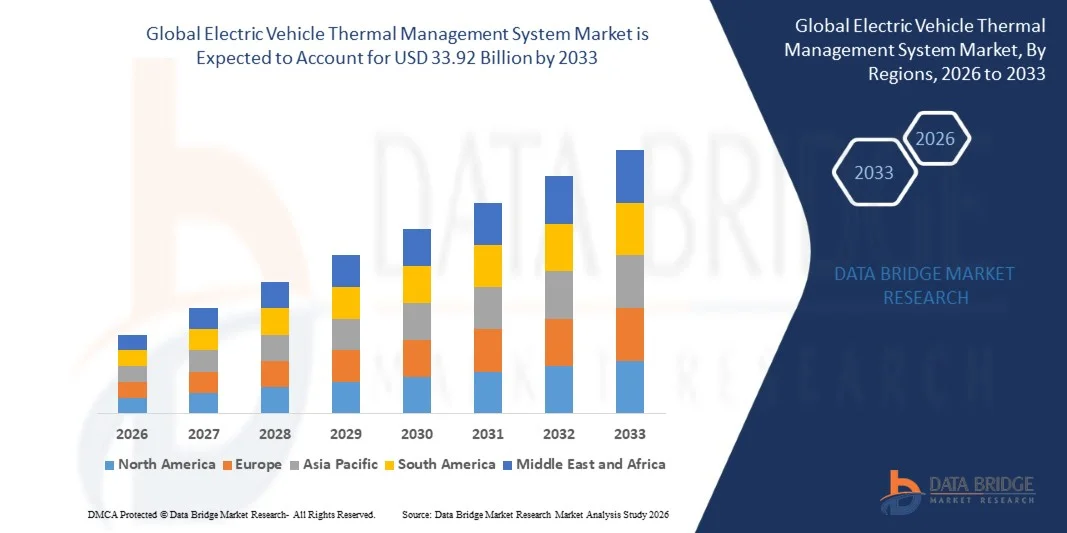
- Согласно анализу Data Bridge Market Research, рынок тепловых систем управления электромобилем был оценен как лучший.$6,03 млрд. в 2025 годуи, по прогнозам, достигнет33,92 млрд долларов к 2033 годуРастущий в aCAGR 24,1% с 2026 по 2033 год.
- Рынок переживает последовательный рост, обусловленный растущим внедрением электромобилей, растущим спросом на эффективный контроль температуры батареи, быстрыми достижениями в технологиях теплового насоса и жидкостного охлаждения, а также растущей интеграцией систем управления теплом в электрических трансмиссиях и системах кабины.
- Растущее развертывание аккумуляторов высокой емкости и технологий быстрой зарядки в сочетании с необходимостью улучшения дальности движения, срока службы батареи и эффективности зарядки вынуждает автопроизводителей внедрять передовые решения для управления температурой. Жидкостное охлаждение, тепловые насосы и интегрированные системы управления теплом заменяют традиционные подходы к охлаждению на многих рынках, предлагая улучшенную энергоэффективность, контроль температуры и общую производительность электромобилей.
Размер рынка и прогноз
- Глобальная рыночная стоимость (2025) $6,03 млрд.
- Ожидаемая рыночная стоимость (2033): $33,92 млрд
- Прогноз CAGR (2026–2033): 24,1%
- Ведущий регион в 2025 году: Северная Америка
- Самый быстрорастущий регион: Азиатско-Тихоокеанский регион
Каковы основные выводы рынка тепловой системы управления электромобилями
- Северная Америка доминировала на рынке систем теплового управления электромобилями с самой большой долей выручки в 38,5% в 2025 году, чему способствовало быстрое внедрение электромобилей, расширение инфраструктуры зарядки и сильные инвестиции в технологии управления аккумуляторами и тепловой энергией.
- Азиатско-Тихоокеанский регион, как ожидается, будет самым быстрорастущим регионом с CAGR 11,2% с 2026 по 2033 год, чему способствуют рост производства электромобилей, расширение мощностей по производству аккумуляторов, увеличение государственной поддержки и растущее внедрение в Китае, Индии, Японии и Южной Корее.
- Сегмент электромобилей с аккумуляторными батареями (BEV) возглавил рынок с долей 71,28% в 2025 году, что обусловлено быстрым расширением производства и продаж электромобилей по всему миру.
- Электромобиль на топливных элементах (FCEV) является самым быстрорастущим типом двигателя, по прогнозам, регистрирующим CAGR в 16,06%, что отражает всплеск интереса к мобильности с нулевым уровнем выбросов водорода.
- Сегмент жидкостного охлаждения и отопления доминировал в технологической категории с долей дохода 45% в 2025 году, во главе с его высокой эффективностью теплопередачи и пригодностью для батарей с высокой емкостью EV.
- Обычные батареи составляли 75% доли рынка в 2025 году, что предпочтительнее широкого использования технологии литий-ионных аккумуляторов в современных электромобилях.
- Коммерческий сегмент является самой быстрорастущей категорией транспортных средств с CAGR 17%, что обусловлено растущей электрификацией автобусов, грузовых автомобилей и других транспортных средств.
Сфера охвата и сегментация рынка тепловой системы управления электромобилями
|
Атрибуты |
Теплосистема управления электромобилем - ключевые идеи рынка |
|
Сегменты покрыты |
|
|
Страны, охваченные |
Северная Америка
Европа
Азиатско-Тихоокеанский регион
Ближний Восток и Африка
Южная Америка
|
|
Ключевые игроки рынка |
|
|
Рыночные возможности |
|
|
Информационные наборы данных с добавленной стоимостью |
В дополнение к рыночным идеям, таким как рыночная стоимость, темпы роста, сегменты рынка, географический охват, игроки рынка и рыночный сценарий, отчет о рынке, курируемый командой Data Bridge Market Research, включает углубленный экспертный анализ, анализ импорта / экспорта, анализ цен, анализ потребления продукции и анализ пестле. |
Каковы основные тенденции на рынке тепловых систем управления электромобилями
- Автопроизводители все чаще интегрируют тепловые насосы, охлаждение батареи, охлаждение трансмиссии и климат-контроль кабины в унифицированные архитектуры управления теплом для повышения эффективности транспортного средства, дальности движения и быстрой зарядки.
- Например, в феврале 2025 года BMW Group представила свою технологию eDrive шестого поколения для Neue Klasse, подчеркнув высокоинтегрированное управление температурой, которое регулирует температуру электродвигателя, силовой электроники и высоковольтной батареи при поддержке быстрой зарядки.
- Прогнозное управление температурой позволяет транспортным средствам регулировать температуру батареи, двигателя и электроники в соответствии с условиями вождения, температурой окружающей среды и предстоящими требованиями к зарядке.
- Автопроизводители все чаще используют тепловые насосы с несколькими источниками, которые восстанавливают отработанное тепло от систем электропривода и батарей, а также используют тепло окружающей среды для снижения потребления энергии для отопления кабины.
- Например, в марте 2025 года Hyundai и Kia подчеркнули продолжающееся применение технологии тепловых насосов для электромобилей, которая восстанавливает отработанное тепло от электродвигателей, инверторов, бортовых зарядных устройств и батарей для повышения эффективности HVAC и дальности движения.
- Поскольку производители электромобилей продолжают уделять приоритетное внимание дальности вождения, быстрой зарядке, долговечности аккумуляторов и энергоэффективности, ожидается, что внедрение интегрированных и прогнозных технологий управления температурой ускорится, что сделает расширенный тепловой контроль основным компонентом электромобилей следующего поколения.
Каковы основные драйверы рынка тепловых систем управления электромобилями
- Быстрый рост аккумуляторов высокой емкости и электромобилей с быстрой зарядкой значительно увеличил спрос на передовые системы управления температурой, способные поддерживать батареи в оптимальных температурных диапазонах во время зарядки и работы с высокой мощностью.
- Например, в октябре 2024 года Mercedes-Benz объявил, что его новый электрический CLA использует передовую концепцию управления теплом с тепловым насосом в качестве стандарта, помогая восстанавливать отработанное тепло от электропривода и батареи для повышения энергоэффективности и дальности движения.
- Производители автомобильных OEM-производителей и аккумуляторов интегрируют жидкостное охлаждение, тепловые насосы, интеллектуальные клапаны и прогностические элементы управления в платформы EV для повышения производительности батареи, скорости зарядки, дальности автомобиля и долговечности компонентов.
- Например, в апреле 2024 года BMW Group выделила интегрированную технологию тепловых насосов BMW i5 для отопления и охлаждения интерьера, системы привода и высоковольтной батареи, продемонстрировав растущую важность интегрированного теплового управления для повышения эффективности и дальности электромобилей.
- Благодаря тому, что платформы EV все чаще включают в себя более высокую емкость аккумуляторов, более быстрые скорости зарядки и более мощные электрические трансмиссии, расширенное управление температурой останется незаменимым для поддержания безопасности батареи, оптимизации энергоэффективности и поддержки электромобильности следующего поколения.
Какие факторы препятствуют росту рынка тепловых систем управления электромобилями
- Передовые системы терморегулирования электромобилей требуют комплексной интеграции насосов, клапанов, датчиков, теплообменников, компрессоров, схем охлаждения и электронных органов управления, что повышает сложность системы и требования к разработке.
- Например, в июле 2024 года Automotive IQ сообщила, что производители теплового менеджмента и поставщики Tier-1 определили стоимость, производительность и сложность среди ключевых приоритетов и проблем, стоящих перед развитием автомобильного теплового менеджмента.
- Эти сложные архитектуры могут увеличить затраты на компоненты, требования к упаковке, потребности в разработке программного обеспечения и сложность производства, особенно для автопроизводителей, разрабатывающих экономичные электромобили.
- Растущая интеграция нескольких тепловых схем и высоковольтных компонентов также создает проблемы, связанные с надежностью системы, калибровкой теплового управления, обслуживанием и эффективным распределением тепла в различных условиях эксплуатации транспортного средства.
- Например, в октябре 2025 года ATS Industrial Automation задокументировала проблему автопроизводителя с достижением последовательного применения материала термоинтерфейса на пластинах охлаждения аккумуляторов EV, демонстрируя точность и проблемы производства, связанные с системами термоуправления аккумуляторами.
- Технические требования к сложности и интеграции, связанные с передовыми системами управления теплом, продолжают бросать вызов производителям, особенно по мере того, как платформы EV движутся к более высокой мощности зарядки, большей плотности энергии батареи и все более сложным архитектурам термоконтроля.
Как сегментируется рынок тепловой системы управления электромобилем
Рынок систем теплового управления электромобилем сегментирован на основе типа двигателя, технологии, типа батареи, типа транспортного средства и типа системы.
- По типу движения
На основе типа двигателя рынок систем управления тепловыми системами электромобилей сегментирован на электромобиль с аккумуляторной батареей (BEV), гибридный электромобиль (HEV), подключаемый гибридный электромобиль (PHEV) и электромобиль на топливных элементах (FCEV). Сегмент аккумуляторных электромобилей (BEV) доминировал на рынке с долей 71,28% в 2025 году, благодаря быстрому расширению производства и продаж полностью электрических транспортных средств во всем мире. BEV полностью полагаются на электрические силовые агрегаты, что делает эффективное управление температурой батареи и электроники необходимым. Растущее внедрение аккумуляторов высокой емкости еще больше увеличивает спрос на сложную термическую регуляцию. Охлаждение батареи особенно важно во время быстрой зарядки и работы с высокой нагрузкой для поддержания безопасности и производительности. Увеличение инвестиций автопроизводителей в специализированные платформы BEV также усиливает спрос в сегменте.
Сегмент электромобилей на топливных элементах (FCEV), по прогнозам, зарегистрирует самый быстрый рост с CAGR 16,06% до 2033 года, что обусловлено растущим интересом к мобильности с нулевым уровнем выбросов водорода. FCEV требуют управления температурой для стеков топливных элементов, батарей, силовой электроники и электродвигателей. Поддержание соответствующих рабочих температур имеет решающее значение для эффективности топливных элементов, долговечности и стабильности выхода. Инициативы по мобильности водорода побуждают производителей разрабатывать более сложные многоконтурные тепловые архитектуры. Приложения для коммерческих перевозок, включая автобусы и тяжелые транспортные средства, предоставляют дополнительные возможности для тепловых систем топливных элементов. Ожидается, что увеличение инвестиций в водородную инфраструктуру и технологии топливных элементов будет способствовать быстрому расширению сегмента.
- По технологии
На основе технологии рынок систем теплового управления электромобилем сегментирован на жидкостное охлаждение и отопление, воздушное охлаждение и отопление, охлаждение хладагента, охлаждение на основе материала с фазовым изменением и термоэлектрическое охлаждение. Сегмент жидкостного охлаждения и отопления доминировал на рынке с долей 45% в 2025 году из-за высокой эффективности теплопередачи и пригодности для высокопроизводительных аккумуляторов EV. Жидкие системы обеспечивают более эффективный и последовательный контроль температуры, чем обычные системы на основе воздуха. Они все чаще используются в батареях EV, потому что высокие скорости зарядки создают значительные тепловые нагрузки. Жидкое охлаждение также поддерживает компактные конструкции батарей и более высокую плотность мощности. Таким образом, все более широкое внедрение систем быстрой зарядки и высокоэнергетической плотности аккумуляторов усиливает спрос на термическое управление на основе жидкости.
Сегмент охлаждения на основе материалов с фазовым изменением, по прогнозам, зафиксирует самый быстрый рост на уровне CAGR 18% в течение прогнозируемого периода, чему будет способствовать растущий спрос на передовые решения для пассивного и гибридного охлаждения аккумуляторов. Материалы фазового изменения поглощают и хранят избыточное тепло во время изменения рабочей температуры. Эта технология может помочь поддерживать аккумуляторные батареи в соответствующих тепловых диапазонах без постоянной зависимости от активных компонентов охлаждения. Его компактная конструкция также может поддерживать гибкую интеграцию в аккумуляторные батареи. Расширение исследований в области аккумуляторов высокой плотности энергии создает возможности для передовых технологий термобуферизации. Ожидается, что растущий интерес к энергоэффективным и легким тепловым решениям ускорит их внедрение.
- По типу батареи
Исходя из типа батареи, рынок систем терморегулирования электромобилей сегментирован на обычные и твердотельные батареи. Сегмент традиционных аккумуляторов доминировал на рынке с долей 75% в 2025 году, что отражает широкое использование технологии литий-ионных аккумуляторов в современных электромобилях. Обычные аккумуляторы создали производственные экосистемы и широкое распространение среди пассажирских и коммерческих электромобилей. Их зрелые цепочки поставок поддерживают крупномасштабное производство автомобилей. Однако литий-ионные элементы требуют тщательного управления температурой, чтобы предотвратить перегрев и ухудшение производительности. Поэтому продолжающееся расширение производства электромобилей поддерживает значительный спрос на системы управления температурой, совместимые с обычными батареями.
Сегмент твердотельных батарей, по прогнозам, зафиксирует самый быстрый рост на уровне CAGR 15% в течение прогнозируемого периода, что обусловлено увеличением инвестиций в технологии батарей следующего поколения. Твердотельные батареи привлекают внимание из-за их потенциала для более высокой плотности энергии, повышения безопасности и большей дальности движения. Ожидается, что их коммерциализация создаст новые требования к термическому управлению, поскольку автопроизводители переходят к новым архитектурам батарей. Хотя твердотельные элементы могут обеспечить улучшенную термостабильность, контроль температуры остается важным для производительности зарядки и долговечности батареи. Производители автомобилей и разработчики аккумуляторов инвестируют в тепловые решения, совместимые с новыми твердотельными химическими веществами. Ожидается, что увеличение исследований, пилотного производства и коммерциализации ускорит рост этого сегмента.
- Тип транспортного средства
В зависимости от типа транспортного средства рынок тепловых систем управления электрическим транспортным средством сегментирован на пассажирские и коммерческие транспортные средства. Пассажирский сегмент доминировал на рынке с долей 65% в 2025 году, чему способствовал значительно более высокий объем производства и продаж пассажирских электромобилей во всем мире. Пассажирские электромобили все чаще включают в себя сложные тепловые системы для аккумуляторных батарей, электродвигателей, силовой электроники и климат-контроля кабины. Быстрое расширение доступности моделей электромобилей создает более широкую базу для технологий термического управления. Растущий спрос потребителей на более длинные диапазоны движения и более быструю зарядку также побуждает автопроизводителей внедрять передовые системы охлаждения и отопления. Пассажирские платформы EV Кроме того, выиграют от значительных инвестиций в развитие технологий батарей и трансмиссии.
Ожидается, что в течение прогнозируемого периода коммерческий сегмент зафиксирует самый быстрый рост на уровне 17%, чему будет способствовать увеличение электрификации автобусов, грузовых автомобилей и других транспортных средств. Коммерческие электромобили обычно работают в течение более длительных периодов времени и при более тяжелых нагрузках, создавая большие тепловые нагрузки, чем многие пассажирские приложения. Большие аккумуляторные батареи также требуют сложных систем охлаждения для поддержания производительности во время непрерывной работы и быстрой зарядки. Операторы флота все чаще используют электромобили для снижения эксплуатационных расходов и соблюдения правил выбросов. Растущее развертывание электрических автобусов и автопарков создает спрос на более мощные системы управления тепловыми потоками. Ожидается, что увеличение электрификации тяжелых коммерческих автомобилей еще больше ускорит рост сегмента.
- Тип системы
На основе типа системы рынок тепловой системы управления электромобилем сегментирован в систему управления температурой батареи (BTMS), систему управления теплом кабины, систему управления теплом трансмиссии и систему рекуперации отработанного тепла. Сегмент системы управления температурой батареи (BTMS) доминировал на рынке с долей 42% в 2025 году, поскольку температура батареи напрямую влияет на безопасность автомобиля, скорость зарядки, дальность движения и срок службы батареи. Увеличение емкости батареи и возможность быстрой зарядки повышают важность точного контроля температуры на уровне ячейки. Решения BTMS включают охлаждающие пластины, насосы, датчики, чиллеры и программное обеспечение для термоконтроля. Автопроизводители все чаще интегрируют эти системы в специализированные аккумуляторные платформы EV. Критическая роль управления температурой батареи в предотвращении деградации и теплового разряда продолжает поддерживать доминирование сегмента.
Сегмент систем рекуперации отработанного тепла, по прогнозам, зафиксирует самый быстрый рост на уровне CAGR в 19% в течение прогнозируемого периода, что обусловлено увеличением внимания к повышению общей энергоэффективности электромобилей. Системы рекуперации отработанного тепла захватывают тепловую энергию, генерируемую электродвигателями, силовой электроникой, батареями и другими компонентами для полезных применений. Восстановленное тепло может поддерживать отопление кабины и кондиционирование батареи, уменьшая энергию, получаемую от батареи. Такой подход может помочь сохранить дальность движения, особенно в условиях холодной погоды. Автопроизводители все чаще разрабатывают интегрированные тепловые архитектуры, которые сочетают рекуперацию тепла с тепловыми насосами и другими тепловыми технологиями. Ожидается, что растущий спрос на энергоэффективные платформы электромобилей ускорит внедрение систем рекуперации отработанного тепла.
В каком регионе находится наибольшая доля рынка систем теплоснабжения электромобилей
- Северная Америка доминировала на рынке систем теплового управления электромобилями с самой большой долей выручки в 38,5% в 2025 году, чему способствовало быстрое внедрение электромобилей, расширение инфраструктуры зарядки и сильные инвестиции в технологии управления аккумуляторами и тепловой энергией.
- Регион также выигрывает от растущего внедрения передовых технологий охлаждения и отопления аккумуляторов, государственной поддержки отечественного производства электромобилей и аккумуляторов, а также растущего спроса на высокоэффективные тепловые системы для пассажирских и коммерческих электромобилей. Расширение производственных мощностей электромобилей и инвестиции в технологии аккумуляторов следующего поколения продолжают укреплять позиции Северной Америки на мировом рынке.
Американская система термоуправления электромобилей Insight
Рынок тепловых систем управления электромобилями в США демонстрирует сильный рост из-за растущего внедрения электромобилей, расширения производственных мощностей аккумуляторов и увеличения инвестиций в передовые тепловые технологии. Зрелая автомобильная экосистема страны, наряду с растущим внедрением жидкостного охлаждения, тепловых насосов и интегрированных систем управления теплом, стимулирует спрос на пассажирские и коммерческие электромобили. Кроме того, повышенное внимание к быстрой зарядке, безопасности аккумуляторов, дальности движения и энергоэффективности ускоряет внедрение передовых решений по управлению температурой среди производителей транспортных средств.
Азиатско-тихоокеанская система терморегулирования электромобилей Market Insight
Ожидается, что рынок систем теплового управления электромобилями в Азиатско-Тихоокеанском регионе будет быстро расти за счет расширения производства электромобилей, увеличения производства аккумуляторов и увеличения инвестиций в инфраструктуру электрической мобильности в таких странах, как Китай, Индия, Япония и Южная Корея. Растущее внедрение аккумуляторов высокой емкости, технологий быстрой зарядки и систем жидкостного охлаждения способствует расширению регионального рынка. Кроме того, сильное присутствие автопроизводителей и поставщиков аккумуляторов ускоряет разработку и внедрение передовых технологий управления температурой в пассажирских и коммерческих электромобилях.
Японский рынок тепловых систем управления электромобилями
Рынок тепловых систем управления электромобилями в Японии неуклонно растет благодаря растущим инвестициям в электрическую мобильность, аккумуляторные технологии и энергоэффективные автомобильные системы. Автопроизводители все чаще внедряют передовые решения по охлаждению аккумуляторов, тепловые насосы и интегрированные решения по управлению температурой для повышения эффективности автомобиля и дальности движения. Кроме того, растущий акцент на безопасности аккумуляторов, быстрой зарядке и компактной тепловой архитектуре, наряду с сильными автомобильными технологиями Японии, также способствует росту рынка.
Китайская электромобильная система термоуправления Market Insight
Рынок тепловых систем управления электромобилями в Китае быстро растет, что обусловлено широким производством электромобилей, расширением производственных мощностей аккумуляторов и сильной государственной поддержкой электромобильности. Растущее внедрение аккумуляторов высокой плотности энергии, систем быстрой зарядки и технологий жидкостного охлаждения в пассажирских и коммерческих электромобилях значительно повышает спрос на рынке. Кроме того, растущие инвестиции в аккумуляторные технологии, электрические силовые агрегаты и отечественное производство электромобилей позиционируют Китай как один из крупнейших и наиболее быстро развивающихся рынков для систем управления тепловой энергией электромобилей во всем мире.
Британская система терморегулирования электромобилей Market Insight
Рынок тепловых систем управления электромобилями в Великобритании переживает устойчивый рост, поддерживаемый ростом внедрения электромобилей, увеличением инвестиций в технологии батарей и растущим спросом на энергоэффективные тепловые решения. Производители автомобилей и технологические компании все чаще используют тепловые насосы, системы охлаждения аккумуляторов и интегрированные тепловые архитектуры для улучшения дальности движения автомобиля и эффективности зарядки. Кроме того, повышенное внимание к электрификации транспортных средств, производительности аккумуляторов и снижению энергопотребления поддерживает разработку и внедрение передовых технологий управления тепловой энергией в Великобритании.
Немецкий рынок тепловых систем управления электромобилями
Рынок тепловых систем управления электромобилями в Германии неуклонно расширяется благодаря сильной производственной базе в стране, передовым возможностям исследований аккумуляторов и растущему внедрению технологий электромобилей следующего поколения. Автомобильные компании и поставщики все чаще используют жидкостное охлаждение, тепловые насосы, предварительную кондиционирование аккумуляторов и интегрированные тепловые системы для электромобилей. Непрерывные достижения в области эффективности аккумуляторов, технологий быстрой зарядки и систем термоконтроля, наряду с сильным акцентом Германии на электрификацию транспортных средств и энергоэффективность, способствуют дальнейшему росту рынка.
Каковы основные компании на рынке тепловых систем управления электромобилями
Индустрия тепловых систем управления электромобилями в основном возглавляется хорошо зарекомендовавшими себя компаниями, в том числе:
- Компания Modine Manufacturing(США)
- Системы Hanon(Южная Корея)
- MAHLE GmbH(Германия)
- BorgWarner Inc.(США)
- Valeo SE(Франция)
- Schaeffler AG (Германия)
- DENSO CORPORATION (Япония)
- Robert Bosch GmbH (Германия)
- Gentherm Incorporated (США)
- Garrett Motion Inc. (США)
- LG Electronics Inc. (Южная Корея)
- Marelli Holdings Co., Ltd (Япония)
- Sanden Corporation (Япония)
- Brose Fahrzeugteile SE & Co. KG (Германия)
- Dana Incorporated (США)
- SUBROS Limited (Индия)
- Webasto SE (Германия)
- Eberspächer Gruppe GmbH & Co. KG (Германия)
- Dürr AG (Германия)
- Continental AG (Германия)
Каковы последние достижения на рынке систем теплоснабжения электромобилей
- В октябре 2025 года Porsche анонсировала новый Cayenne Electric с передовой высоковольтной системой с аккумулятором 113 кВтч, двухсторонним охлаждением батареи и прогнозным управлением температурой. Система связывает схемы отопления и охлаждения автомобиля и использует навигацию, топографию, трафик и данные о движении, чтобы активно управлять температурой батареи, поддерживая более быструю зарядку, более низкое потребление энергии и согласованный диапазон движения.
- В августе 2024 года Hanon Systems объявила о разработке своей системы тепловых насосов четвертого поколения, которая использует отработанное тепло от электродвигателя и батареи вместе с теплом от внешнего воздуха. Интегрированная система поддерживает отопление и охлаждение кабины, а также управление температурой батареи, демонстрируя дальнейшие достижения в энергоэффективном управлении температурой для электромобилей.
- В июне 2023 года Hyundai Motor представила IONIQ 5 N с усовершенствованной системой управления температурой батареи, предназначенной для высокопроизводительного вождения. Система включает в себя увеличенную зону охлаждения, улучшенный охладитель моторного масла, охладитель батареи и независимые радиаторы для батареи и двигателя, в то время как предварительная кондиционирование батареи позволяет довести ячейки до соответствующей температуры, прежде чем требовать вождения.
- В апреле 2022 года Toyota объявила о деталях аккумуляторного электромобиля bZ4X, подчеркнув новые технологии безопасности аккумуляторов и термоменеджмента. Транспортное средство включало избыточный мониторинг напряжения, тока и температуры батареи для обнаружения ненормального нагрева вместе с недавно разработанным охлаждающим веществом с высокой устойчивостью, предназначенным для снижения риска коротких замыканий, вызванных утечкой охлаждающей жидкости.
- В декабре 2021 года BMW выделила интегрированную систему отопления и охлаждения BMW i4, которая использует функцию теплового насоса для управления пассажирским салоном, высоковольтной батареей и системой привода. Его упреждающее управление температурой предварительно обуславливает высоковольтную батарею перед остановкой быстрой зарядки для оптимизации эффективности зарядки.
SKU-
Получите онлайн-доступ к отчету на первой в мире облачной платформе рыночной аналитики

- Интерактивная панель анализа данных
- Панель анализа компании для возможностей с высоким потенциалом роста
- Доступ аналитика-исследователя для настройки и запросов
- Анализ конкурентов с помощью интерактивной панели
- Последние новости, обновления и анализ тенденций
- Используйте возможности сравнительного анализа для комплексного отслеживания конкурентов
Методология исследования
Сбор данных и анализ базового года выполняются с использованием модулей сбора данных с большими размерами выборки. Этап включает получение рыночной информации или связанных данных из различных источников и стратегий. Он включает изучение и планирование всех данных, полученных из прошлого заранее. Он также охватывает изучение несоответствий информации, наблюдаемых в различных источниках информации. Рыночные данные анализируются и оцениваются с использованием статистических и последовательных моделей рынка. Кроме того, анализ доли рынка и анализ ключевых тенденций являются основными факторами успеха в отчете о рынке. Чтобы узнать больше, пожалуйста, запросите звонок аналитика или оставьте свой запрос.
Ключевой методологией исследования, используемой исследовательской группой DBMR, является триангуляция данных, которая включает в себя интеллектуальный анализ данных, анализ влияния переменных данных на рынок и первичную (отраслевую экспертную) проверку. Модели данных включают сетку позиционирования поставщиков, анализ временной линии рынка, обзор рынка и руководство, сетку позиционирования компании, патентный анализ, анализ цен, анализ доли рынка компании, стандарты измерения, глобальный и региональный анализ и анализ доли поставщика. Чтобы узнать больше о методологии исследования, отправьте запрос, чтобы поговорить с нашими отраслевыми экспертами.
Доступна настройка
Data Bridge Market Research является лидером в области передовых формативных исследований. Мы гордимся тем, что предоставляем нашим существующим и новым клиентам данные и анализ, которые соответствуют и подходят их целям. Отчет можно настроить, включив в него анализ ценовых тенденций целевых брендов, понимание рынка для дополнительных стран (запросите список стран), данные о результатах клинических испытаний, обзор литературы, обновленный анализ рынка и продуктовой базы. Анализ рынка целевых конкурентов можно проанализировать от анализа на основе технологий до стратегий портфеля рынка. Мы можем добавить столько конкурентов, о которых вам нужны данные в нужном вам формате и стиле данных. Наша команда аналитиков также может предоставить вам данные в сырых файлах Excel, сводных таблицах (книга фактов) или помочь вам в создании презентаций из наборов данных, доступных в отчете.











