



Global Embolic Protection Devices Market Segmentation, By Product (Distal Filter Devices, Distal Occlusion Devices, and Proximal Occlusion Devices), Material (Nitinol and Polyurethane), Usage (Disposable Devices and Re-Usable Devices), Application (Cardiovascular Diseases, Neurovascular Diseases and Peripheral Vascular Diseases), Indication (Percutaneous Coronary, Carotid Artery, Saphenous Vein Graft Diseases, Transcather Aortic Valve Replacement, and Others), End Users (Hospital, Ambulatory Surgical Centers, and Others)- Industry Trends and Forecast to 2033
Каков размер рынка устройств эмболической защиты и темпы роста
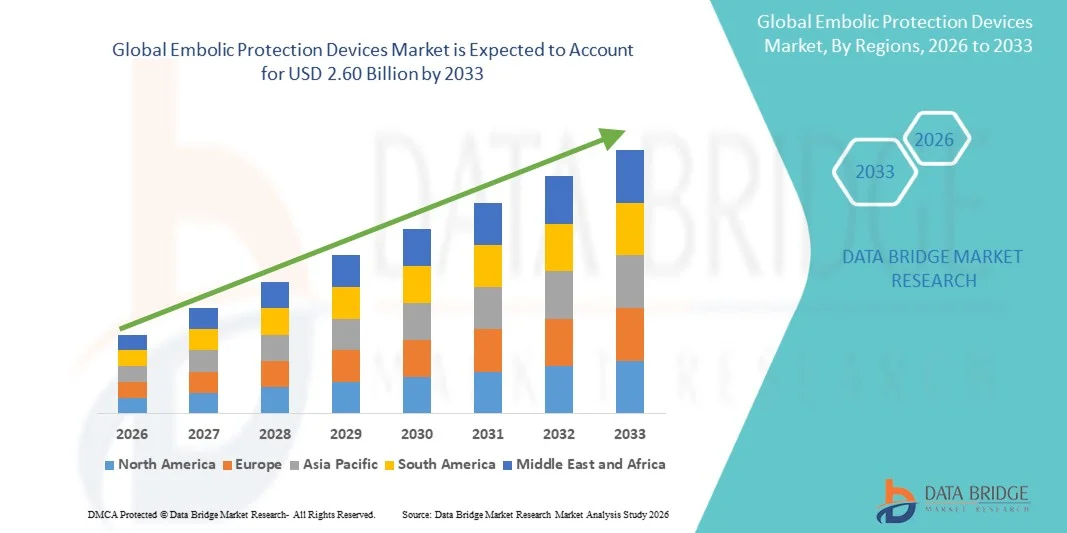
- Согласно анализу рынка Data Bridge Market Research, размер рынка устройств эмболической защиты был оценен как$1,34 млрд в 2025 годуОжидается, что он достигнет2,60 млрд долларов к 2033 году, вCAGR 8,65%в течение прогнозируемого периода
- Рост рынка в значительной степени подпитывается ростом распространенности сердечно-сосудистых заболеваний, таких как:болезнь коронарных артерийзаболевания периферических артерий, наряду с увеличением числа минимально инвазивных процедурангиопластикаиТранскатетерные вмешательстваЭто приводит к более широкому принятию решений для эмболической защиты в клинической практике.
- Кроме того, растущая осведомленность врачей о связанных с процедурой осложнениях, таких как дистальная эмболизация, в сочетании с растущим спросом на передовые, надежные и безопасные для пациента интервенционные устройства, устанавливает устройства эмболической защиты в качестве критического компонента в современных сердечно-сосудистых процедурах. Эти факторы ускоряют внедрение технологий эмболической защиты, тем самым значительно повышая траекторию роста рынка.
Размер рынка и прогноз
Глобальная рыночная стоимость (2025):$1,34 млрд.
Ожидаемая рыночная стоимость (2033):$2,60 млрд.
Прогноз CAGR (2026–2033):8.65%
Каковы основные выводы рынка устройств эмболической защиты
- Устройства эмболической защиты, предназначенные для захвата и удаления мусора, образующегося во время интервенционных сердечно-сосудистых и сосудистых процедур, становятся все более важными компонентами в современных минимально инвазивных методах лечения как в больничных, так и в амбулаторных хирургических условиях из-за их способности снижать риск осложнений, связанных с процедурой, и улучшать результаты лечения пациентов.
- Растущий спрос на устройства для эмболической защиты в первую очередь подпитывается растущим глобальным бременем сердечно-сосудистых заболеваний, таких как болезнь коронарных артерий и инсульт, увеличением принятия минимально инвазивных процедур и растущим акцентом на безопасность пациентов и процедурную эффективность среди поставщиков медицинских услуг.
- Северная Америка доминировала на рынке устройств для эмболической защиты с самой большой долей дохода в 41,2% в 2025 году, характеризующейся развитой инфраструктурой здравоохранения, высоким внедрением интервенционных кардиологических процедур и сильным присутствием ключевых игроков рынка, причем Соединенные Штаты стали свидетелями значительного роста, обусловленного благоприятной политикой возмещения и непрерывными технологическими достижениями в сосудистых устройствах.
- Ожидается, что Азиатско-Тихоокеанский регион станет самым быстрорастущим регионом на рынке устройств для эмболической защиты в течение прогнозируемого периода из-за увеличения расходов на здравоохранение, повышения осведомленности о сердечно-сосудистых заболеваниях и улучшения доступа к передовым медицинским технологиям в развивающихся странах, таких как Китай и Индия.
- Сегмент устройств дистального фильтра доминировал на рынке устройств эмболической защиты с долей рынка 45,6% в 2025 году, что обусловлено их широким использованием в стентировании сонной артерии и их эффективностью в захвате эмболического мусора при сохранении непрерывного кровотока во время процедур.
Сегментация рынка устройств для измерения объема и эмболической защиты
|
Атрибуты |
Устройства эмболической защиты - ключевые идеи рынка |
|
Сегменты покрыты |
|
|
Страны, охваченные |
Северная Америка
Европа
Азиатско-Тихоокеанский регион
Ближний Восток и Африка
Южная Америка
|
|
Ключевые игроки рынка |
|
|
Рыночные возможности |
|
|
Информационные наборы данных с добавленной стоимостью |
В дополнение к информации о рыночных сценариях, таких как рыночная стоимость, темпы роста, сегментация, географический охват и основные игроки, рыночные отчеты, курируемые Data Bridge Market Research, также включают углубленный экспертный анализ, эпидемиологию пациентов, анализ трубопроводов, анализ цен и нормативную базу. |
Каковы основные тенденции на рынке устройств эмболической защиты
«Растущая интеграция с передовыми технологиями интервенции и визуализации»
- Значительной и ускоряющейся тенденцией на мировом рынке устройств эмболической защиты является растущая интеграция с передовыми методами интервенционной кардиологии и технологиями визуализации, такими как внутрисосудистое ультразвуковое исследование и системы наведения в режиме реального времени, что значительно повышает процессуальную точность и безопасность пациентов.
- Например, системы эмболической защиты, используемые во время процедур замены транскатетерного аортального клапана, все чаще интегрируются с руководством по визуализации для обеспечения оптимального размещения и эффективного захвата мусора, улучшая клинические результаты у пациентов с высоким риском.
- Технологические достижения в устройствах эмболической защиты позволяют повысить эффективность захвата, уменьшить профили пересечений и повысить производительность в сложных анатомиях. Например, новые дистальные фильтрующие устройства предназначены для поддержания непрерывного кровотока при эффективном улавливании эмболического мусора, снижая риск осложнений, таких как инсульт во время процедур.
- Бесшовная интеграция устройств эмболической защиты с минимально инвазивными сердечно-сосудистыми вмешательствами способствует улучшению процедурных показателей успеха и сокращению времени восстановления. Благодаря улучшенной совместимости с системами на основе катетера врачи могут выполнять сложные вмешательства с большей уверенностью и безопасностью, создавая более эффективную экосистему лечения.
- Эта тенденция к более точным, эффективным и ориентированным на пациента интервенционным решениям коренным образом меняет клиническую практику сердечно-сосудистой помощи. Следовательно, такие компании, как Boston Scientific, разрабатывают устройства эмболической защиты следующего поколения с улучшенной гибкостью, улучшенными механизмами захвата и совместимостью с передовыми интервенционными платформами.
- Спрос на устройства для эмболической защиты, которые обеспечивают высокую процедурную эффективность и бесшовную интеграцию с современными интервенционными технологиями, быстро растет в больницах и специализированных кардиоцентрах, поскольку медицинские работники все чаще отдают приоритет улучшению результатов лечения пациентов и снижению частоты осложнений.
- Разработка миниатюрных и низкопрофильных устройств эмболической защиты, подходящих для небольших сосудов и сложных анатомий, позволяет расширить ранее сложные процедуры, создавая новые клинические применения и рыночные возможности.
Устройства эмболической защиты Динамика рынка
водитель
Растущий спрос из-за растущего бремени сердечно-сосудистых заболеваний и минимально инвазивных процедур
- Растущая распространенность сердечно-сосудистых заболеваний и растущее принятие минимально инвазивных интервенционных процедур являются значительными факторами повышенного спроса на устройства эмболической защиты.
- Например, в марте 2025 года компания Medtronic отметила достижения в области решений для эмболической защиты, предназначенных для комплексных сердечно-сосудистых вмешательств, уделяя особое внимание повышению процедурной безопасности и снижению эмболических осложнений, которые, как ожидается, будут стимулировать рост рынка в течение прогнозируемого периода.
- По мере того, как поставщики медицинских услуг становятся все более сосредоточенными на снижении осложнений, связанных с процедурами, устройства эмболической защиты предлагают расширенные функции, такие как эффективный захват мусора и непрерывное поддержание кровотока, обеспечивая критическое преимущество перед процедурами без систем защиты.
- Кроме того, растущее внедрение минимально инвазивных методов и растущее число вмешательств на основе катетера делают устройства эмболической защиты неотъемлемым компонентом современных сердечно-сосудистых процедур, обеспечивая более безопасные и эффективные процедуры.
- Растущая осведомленность об осложнениях, таких как эмболизация дистальных органов, в сочетании с необходимостью улучшения результатов лечения пациентов и сокращения госпитализации, являются ключевыми факторами, способствующими внедрению устройств эмболической защиты как на развитых, так и на развивающихся рынках здравоохранения. Тенденция к технологически продвинутым интервенционным решениям и растущая доступность квалифицированных специалистов способствуют росту рынка.
- Расширение структурных вмешательств при сердечных заболеваниях, включая транскатетерные митральные и трикуспидальные клапанные процедуры, стимулирует дополнительный спрос на устройства эмболической защиты для предотвращения процедурных эмболических событий.
- Расширение сотрудничества между производителями устройств и больницами для обеспечения обучения и процедурной поддержки повышает доверие врачей, ускоряет принятие и поддерживает общий рост рынка.
Сдержанность/вызов
«Высокая стоимость и процедурная сложность, ограничивающие усыновление»
- Проблемы, связанные с высокой стоимостью устройств эмболической защиты и сложностью их использования, представляют собой серьезную проблему для более широкого проникновения на рынок. Поскольку эти устройства требуют специальной подготовки и опыта, их использование может быть ограничено в определенных медицинских учреждениях.
- Например, требование о дополнительных процедурных шагах и расходах на устройства во время вмешательств заставило некоторых поставщиков медицинских услуг колебаться в принятии устройств эмболической защиты, особенно на чувствительных к затратам рынках.
- Решение этих проблем с помощью экономически эффективной разработки продуктов, упрощенных конструкций устройств и расширенных программ обучения имеет решающее значение для более широкого внедрения. Такие компании, как Abbott Laboratories, подчеркивают простоту использования и улучшенную эффективность устройств в своих инновациях продуктов, чтобы стимулировать принятие среди врачей.
- Кроме того, ограничения на возмещение и изменчивость в разных регионах могут выступать в качестве барьера для принятия, особенно в развивающихся странах, где бюджеты здравоохранения ограничены. В то время как современные системы эмболической защиты предлагают значительные клинические преимущества, их более высокая стоимость по сравнению со стандартными инструментами вмешательства может ограничить доступность.
- В то время как инвестиции в здравоохранение постепенно увеличиваются, воспринимаемое бремя затрат и сложность процедур все еще могут препятствовать широкому распространению, особенно в учреждениях с ограниченными ресурсами или меньшими процедурными объемами.
- Преодоление этих проблем путем совершенствования системы возмещения расходов, подготовки врачей-клиницистов и разработки более доступных и удобных для пользователя решений для эмболической защиты будет иметь жизненно важное значение для устойчивого роста рынка.
- Ограниченная осведомленность и принятие среди небольших больниц и клиник, особенно в развивающихся регионах, ограничивает проникновение на рынок и подчеркивает необходимость более широких образовательных инициатив.
- Строгое одобрение регулирующих органов и необходимость клинической валидации могут задержать запуск продукта и увеличить затраты на разработку, что создает дополнительные проблемы для расширения рынка.
Как сегментируется рынок устройств эмболической защиты
Рынок сегментируется на основе продукта, материала, использования, применения, указания и конечного пользователя.
- По продукту
На основе продукта рынок устройств эмболической защиты подразделяется на устройства дистального фильтра, устройства дистальной окклюзии и устройства проксимальной окклюзии. Устройства дистального фильтра доминировали на рынке с самой большой долей дохода в 45,6% в 2025 году, чему способствовало их широкое внедрение в стентирование сонной артерии и чрескожные коронарные вмешательства. Эти устройства обеспечивают непрерывный кровоток при захвате эмболического мусора, снижая риск инсульта и других осложнений, связанных с процедурой. Кардиологи часто предпочитают дистальные фильтрующие устройства для удобства развертывания, установленной клинической эффективности и совместимости с несколькими катетерными вмешательствами. Спрос также подтверждается обширными клиническими исследованиями, демонстрирующими их эффективность в предотвращении дистальной эмболизации. Больницы и специализированные сердечные центры вкладывают значительные средства в устройства дистального фильтра для пациентов с высоким риском, а такие инновации, как низкопрофильные фильтры и улучшенные сетчатые конструкции, повышают эффективность захвата и процедурную безопасность.
Ожидается, что устройства с проксимальной окклюзией будут наблюдать самый быстрый темп роста в 9,8% с 2026 по 2033 год, чему способствует их растущее использование в сложных вмешательствах, таких как замена транскатетерного аортального клапана (TAVR) и процедуры трансплантата подкожной вены. Устройства проксимальной окклюзии временно останавливают кровоток вверх по течению для предотвращения эмболических событий во время процедур высокого риска, обеспечивая повышенную безопасность у пациентов со сложной анатомией. Их растущее принятие обусловлено повышением осведомленности среди интервенционных кардиологов о рисках эмболизации в группах высокого риска. Достижения в гибкости устройства, доставляемости и простоте использования побуждают больницы и хирургические центры интегрировать эти системы в стандартные процедурные протоколы.
- По материалам
На основе материала рынок устройств эмболической защиты сегментирован на нитинол и полиуретан. Нитинол доминировал на рынке с самой большой долей в 2025 году благодаря своим превосходным свойствам памяти формы, гибкости и биосовместимости. Устройства с нитинолом облегчают навигацию по извилистым сосудам и обеспечивают точное развертывание, что имеет решающее значение для нейрососудистых и коронарных вмешательств. Кардиологи предпочитают устройства на основе нитинола, потому что они соответствуют сложным анатомиям сосудов, не вызывая травм или препятствий, тем самым улучшая процедурные результаты. Кроме того, долговечность нитинола и устойчивость к усталости делают его пригодным как для дистальных, так и для проксимальных применений эмболической защиты. Непрерывные материальные инновации повышают производительность устройства, повышают доверие врачей и расширяют его применение в крупных сердечных центрах.
Ожидается, что в течение прогнозируемого периода полиуретан продемонстрирует самый быстрый рост, обусловленный его экономической эффективностью и растущим использованием в одноразовых устройствах для эмболической защиты. Фильтры на основе полиуретана и устройства для окклюзии являются легкими, гибкими и совместимыми с различными системами доставки, что делает их привлекательными как для больниц, так и для амбулаторных хирургических центров. Кроме того, полиуретановые устройства поддерживают масштабируемое производство для развивающихся рынков, где доступность является ключевым фактором, способствующим более широкому внедрению. Универсальность материала также позволяет интегрировать его с инновационными конструкциями, которые повышают эффективность захвата мусора и процедурную безопасность.
- Используя
На основе использования рынок сегментирован на одноразовые устройства и многоразовые устройства. Одноразовые устройства доминировали на рынке с самой большой долей выручки в 52,3% в 2025 году из-за растущего предпочтения одноразовых устройств, которые минимизируют риск заражения и устраняют необходимость стерилизации между процедурами. Больницы все больше полагаются на одноразовые устройства эмболической защиты для вмешательств с высоким риском для обеспечения безопасности пациентов, эффективности процедур и соблюдения нормативных требований. Клиницисты ценят эти устройства за их постоянную производительность, простоту обработки и снижение требований к техническому обслуживанию. Рост числа чрескожных коронарных и каротидных вмешательств также способствует росту спроса на одноразовые решения как на развитых, так и на развивающихся рынках.
Ожидается, что в течение прогнозируемого периода самыми быстрыми темпами будут развиваться устройства многоразового использования, что обусловлено стремлением больниц оптимизировать процедурные расходы в центрах большого объема. Многоразовые устройства эмболической защиты могут быть стерилизованы и использованы в нескольких процедурах, предлагая преимущества по стоимости по сравнению с одноразовыми альтернативами. Технологические улучшения в долговечности устройств, простоте очистки и соблюдении требований безопасности также способствуют внедрению многоразовых систем. Кроме того, устройства многоразового использования особенно привлекательны на развивающихся рынках, где поставщики медицинских услуг уравновешивают экономическую эффективность с безопасностью пациентов и клиническими результатами.
- С помощью приложения
На основе применения рынок устройств эмболической защиты сегментирован на сердечно-сосудистые заболевания, нейрососудистые заболевания и периферические сосудистые заболевания. Сердечно-сосудистые заболевания доминировали на рынке с наибольшей долей 48,5% в 2025 году, что обусловлено высокой распространенностью заболеваний коронарных артерий и увеличением числа чрескожных коронарных вмешательств. Эти устройства имеют решающее значение для предотвращения дистальной эмболизации во время процедур стентирования и ангиопластики, уменьшая связанные с процедурой осложнения, такие как инфаркт миокарда или инсульт. Кардиологи полагаются на устройства эмболической защиты для пациентов с высоким риском, особенно в сложных анатомиях поражения и вмешательствах подкожного трансплантата. Постоянные технологические достижения, такие как меньшие профили пересечений и улучшенная эффективность захвата, еще больше усиливают внедрение в сердечно-сосудистые приложения.
Ожидается, что нейрососудистые заболевания станут свидетелями самого быстрого роста в течение прогнозируемого периода, обусловленного ростом заболеваемости ишемическими инсультами и растущим использованием устройств эмболической защиты во время стентирования сонной артерии. Принятие систем нейрососудистой защиты подпитывается растущей осведомленностью неврологов и интервенционных кардиологов о профилактике инсульта во время нейрососудистых процедур высокого риска. Миниатюрные низкопрофильные устройства, предназначенные для извилистых сосудов головного мозга, обеспечивают более широкое клиническое применение, особенно у пожилых пациентов и пациентов с высоким риском. Увеличение инвестиций больниц в нейроинтервенционные учреждения и правительственные инициативы по снижению заболеваемости и смертности, связанных с инсультом, также способствуют быстрому росту.
- По показаниям
На основании показаний рынок устройств эмболической защиты сегментирован на чрескожную коронарную, сонную артерию, болезни подкожных вен, транскатетерную замену аортального клапана (TAVR) и другие. На рынке преобладает чрескожная коронария с наибольшей долей 44,7% в 2025 году, что обусловлено большим объемом коронарных вмешательств, выполняемых во всем мире, и критической необходимостью предотвращения дистальной эмболизации во время этих процедур. Кардиологи предпочитают устройства эмболической защиты при чрескожных коронарных вмешательствах (PCI), включающих подкожные вены и сложные поражения, чтобы снизить риск инфаркта миокарда и улучшить процедурные результаты. Постоянные достижения в дизайне устройств, такие как улучшенные профили пересечения и улучшенный захват мусора, все чаще принимаются. Большой пул пациентов в сочетании с благоприятной политикой возмещения на развитых рынках еще больше укрепляет доминирование этого сегмента. Например, пациенты с высоким риском ИППП все чаще полагаются на дистальные фильтрующие устройства для обеспечения безопасности пациентов и процедурной эффективности.
Ожидается, что замена аортального клапана (TAVR) станет свидетелем самого быстрого роста с 2026 по 2033 год, чему способствует рост распространенности стеноза аорты и растущее внедрение минимально инвазивных процедур TAVR, особенно у пожилых пациентов. Устройства эмболической защиты имеют решающее значение во время TAVR для предотвращения эмболизации головного мозга и инсульта, что делает их важным дополнением к вмешательствам высокого риска. Технологические инновации, такие как компактные фильтры, которые могут перемещаться по извилистой сосудистой системе, поддерживают быстрый рост. Растущее число структурных сердечно-сосудистых программ в больницах по всему миру и клинические данные, свидетельствующие о снижении инсульта с помощью эмболической защиты, еще больше ускоряют освоение рынка. Например, больницы в Северной Америке и Европе все чаще внедряют процедуры TAVR с интегрированными системами эмболической защиты для улучшения результатов лечения пациентов.
- Конечными пользователями
На базе конечных пользователей рынок устройств эмболической защиты сегментирован на больницы, амбулаторные хирургические центры (АСЦ) и другие. Госпитали доминировали на рынке с наибольшей долей 65,8% в 2025 году, благодаря высокому объему сложных интервенционных процедур, выполняемых в этих условиях, и наличию развитой инфраструктуры. Больницы предпочитают устройства эмболической защиты для пациентов с высоким риском, проходящих процедуры PCI, стентирования сонной артерии и TAVR, поскольку эти устройства повышают процедурную безопасность и клинические результаты. Наличие квалифицированных интервенционных кардиологов, надежных процедурных систем поддержки и доступа к передовым технологиям визуализации способствует дальнейшему внедрению в больницах. Например, третичные кардиоцентры в США и Европе широко используют дистальный фильтр и проксимальную окклюзию в обычной интервенционной практике. Кроме того, больницы инвестируют в учебные программы и модернизацию технологий для обеспечения оптимального использования устройств и безопасности пациентов.
Ожидается, что амбулаторные хирургические центры станут свидетелями самого быстрого роста в течение прогнозируемого периода, чему способствует растущая тенденция к минимально инвазивным сердечно-сосудистым процедурам, выполняемым за пределами традиционных больничных учреждений. ASC предлагают экономически эффективный и эффективный уход за пациентами с низким риском, обеспечивая доступ к устройствам эмболической защиты для рутинных интервенционных процедур. Принятие этих устройств в ASC поддерживается технологическими усовершенствованиями, которые упрощают развертывание, сокращают время процедуры и повышают безопасность. Например, АСК в странах с формирующейся рыночной экономикой и развитых регионах все чаще осуществляют ИПК и периферийные вмешательства с помощью одноразовых дистальных фильтрующих устройств, что способствует быстрому росту сегмента. Кроме того, благоприятная нормативно-правовая база и растущее предпочтение пациентов амбулаторным процедурам способствуют ускоренному внедрению устройств эмболической защиты в АСК.
В каком регионе находится наибольшая доля рынка средств защиты от эмболии
- Северная Америка доминировала на рынке устройств для эмболической защиты с самой большой долей дохода в 41,2% в 2025 году, характеризующейся развитой инфраструктурой здравоохранения, высоким внедрением интервенционных кардиологических процедур и сильным присутствием ключевых игроков рынка.
- Поставщики медицинских услуг в регионе уделяют первостепенное внимание безопасности пациентов и процедурной эффективности, что делает устройства эмболической защиты стандартным компонентом в вмешательствах высокого риска, таких как чрескожные коронарные вмешательства (PCI), стентирование сонной артерии и замена транскатетерного аортального клапана (TAVR).
- Это широкое распространение также поддерживается благоприятной политикой возмещения расходов, устоявшимися сетями больниц и присутствием ведущих производителей устройств, инвестирующих в непрерывные инновации и программы обучения врачей.
Устройства эмболической защиты США Market Insight
Рынок эмболических защитных устройств в США занял самую большую долю дохода в 79% в 2025 году в Северной Америке, что обусловлено высокой распространенностью сердечно-сосудистых заболеваний и растущим внедрением минимально инвазивных интервенционных процедур. Больницы и специализированные сердечные центры отдают приоритет безопасности пациентов, делая устройства эмболической защиты стандартом при чрескожных коронарных вмешательствах (PCI), стентировании сонной артерии и замене транскатетерного аортального клапана (TAVR). Растущее внимание к снижению осложнений, связанных с процедурами, в сочетании с благоприятной политикой возмещения, передовой клинической инфраструктурой и постоянными инновациями от ведущих производителей, способствует дальнейшему расширению рынка. Кроме того, американские кардиологи все чаще внедряют устройства следующего поколения с улучшенной эффективностью захвата мусора и низкопрофильными конструкциями, улучшая процедурные результаты и поддерживая более широкое внедрение.
Европейские устройства эмболической защиты Market Insight
По прогнозам, рынок устройств для эмболической защиты в Европе будет расширяться с существенным CAGR в течение прогнозируемого периода, в первую очередь за счет сильного внимания к лечению сердечно-сосудистых заболеваний и растущего числа интервенционных процедур. Внедрение устройств эмболической защиты стимулируется хорошо оборудованными больницами, ранним внедрением передовых интервенционных технологий и растущей осведомленностью кардиологов о процедурной безопасности. В таких странах, как Германия, Франция и Италия, наблюдается все более широкое применение как новых, так и сложных сердечно-сосудистых процедур, что подтверждается клиническими данными, демонстрирующими снижение риска инсульта и дистальной эмболизации. Кроме того, благоприятная политика здравоохранения и инвестиции в инфраструктуру кардиологической помощи ускоряют внедрение как в больничных, так и в амбулаторных хирургических условиях.
Британские устройства эмболической защиты Market Insight
Ожидается, что рынок устройств для эмболической защиты в Великобритании будет расти с заметным CAGR в течение прогнозируемого периода, что обусловлено увеличением числа чрескожных вмешательств и повышением осведомленности о профилактике инсульта и сердечно-сосудистых осложнений. Больницы и специализированные сердечные центры используют устройства эмболической защиты для снижения процедурных рисков во время ИППП и сонной артерии. Сильная система здравоохранения Великобритании в сочетании с правительственными инициативами по улучшению сердечно-сосудистой помощи и клинических результатов поддерживает рост высококачественных интервенционных устройств. Кроме того, сотрудничество между производителями устройств и больницами в области профессиональной подготовки и процедурного руководства еще больше стимулирует освоение рынка.
Немецкие устройства эмболической защиты Market Insight
Ожидается, что в течение прогнозируемого периода рынок устройств для эмболической защиты в Германии будет расширяться на значительном CAGR, чему будет способствовать растущее понимание процедурной безопасности и технологических инноваций в сердечно-сосудистых вмешательствах. Хорошо развитая больничная инфраструктура Германии и сосредоточенность на передовых решениях в области здравоохранения способствуют внедрению устройств эмболической защиты, особенно для процедур PCI и TAVR высокого риска. Клинические данные, демонстрирующие снижение дистальной эмболизации и риска инсульта, также поощряют принятие среди кардиологов. Интеграция с современными интервенционными платформами, акцент на безопасность пациентов и присутствие ведущих мировых и отечественных производителей устройств способствуют устойчивому росту рынка.
Азиатско-тихоокеанские устройства эмболической защиты Market Insight
Рынок устройств для эмболической защиты в Азиатско-Тихоокеанском регионе будет расти на самом быстром CAGR 11,5% в течение прогнозируемого периода с 2026 по 2033 год, что обусловлено ростом распространенности сердечно-сосудистых заболеваний, увеличением расходов на здравоохранение и расширением доступа к минимально инвазивным интервенционным процедурам в таких странах, как Китай, Индия и Япония. Правительственные инициативы, способствующие развитию кардиологической помощи в сочетании с растущей осведомленностью кардиологов об эмболической защите, способствуют внедрению в больницах и хирургических центрах. Появление региональных производственных центров для сердечно-сосудистых устройств улучшает доступность и снижает затраты, позволяя шире использовать технологии эмболической защиты. Кроме того, увеличение объемов процедур и увеличение инвестиций в сердечную инфраструктуру стимулируют рост рынка в Азиатско-Тихоокеанском регионе.
Японские устройства эмболической защиты Market Insight
Японский рынок устройств для эмболической защиты набирает обороты благодаря развитой инфраструктуре здравоохранения страны, высокой распространенности пожилых пациентов с сердечно-сосудистыми заболеваниями и растущему спросу на минимально инвазивные вмешательства. Японские больницы подчеркивают безопасность пациентов и снижение осложнений, связанных с процедурами, увеличивая зависимость от устройств эмболической защиты во время PCI, стентирования сонной артерии и процедур TAVR. Интеграция этих устройств с системами визуализации и катетера повышает точность процедур и клинические результаты. Кроме того, стареющее население Японии, вероятно, будет стимулировать спрос на более безопасные и эффективные сердечно-сосудистые вмешательства как в больничных, так и в амбулаторных условиях, поддерживая расширение рынка.
Индийские устройства эмболической защиты Market Insight
Рынок устройств эмболической защиты в Индии составил самую большую долю доходов в Азиатско-Тихоокеанском регионе в 2025 году, что связано с растущим бременем сердечно-сосудистых заболеваний в стране, быстрой урбанизацией и улучшением инфраструктуры здравоохранения. Больницы и специализированные сердечные центры используют устройства эмболической защиты для снижения риска дистальной эмболизации во время процедур PCI и TAVR. Стремление к созданию передовых медицинских учреждений, наряду с доступностью экономически эффективных и местных устройств, ускоряет рост рынка. Кроме того, повышение осведомленности кардиологов и пациентов о процедурной безопасности и улучшении клинических результатов способствует широкому распространению в жилых и коммерческих медицинских учреждениях Индии.
Какие компании являются ведущими на рынке устройств эмболической защиты
Индустрия Embolic Protection Devices в основном управляется хорошо зарекомендовавшими себя компаниями, в том числе:
- Эбботт (США)
- Бостонская научная корпорация (США)
- Medtronic (Ирландия)
- Cardinal Health, Inc. (США)
- Terumo Corporation (Япония)
- Contego Medical, LLC (США)
- Кук. (США)
- Cordis Corporation (США)
- Edwards Lifesciences Corporation (США)
- Emboline, Inc. (США)
- InspireMD, Inc. (США)
- Merit Medical Systems, Inc. (США)
- MicroPort Scientific Corporation (Китай)
- Nipro Medical Corp. (Япония)
- Transverse Medical, Inc. (США)
- W. L. Gore & Associates, Inc. (США)
- Claret Medical, Inc. (США)
- Инновационные сердечно-сосудистые решения, LLC (США)
- Keystone Heart Ltd. (Швейцария)
- Allium Medical Solutions Ltd. (Израиль)
Каковы последние события на мировом рынке устройств для защиты эмболии
- В октябре 2025 года Emboline, Inc. объявила о завершении регистрации пациентов в своем ключевом клиническом исследовании IDE в США (ProtectH2H), оценивающем катетер эмболической защиты Emboliner® у пациентов, проходящих TAVR, что подчеркивает продвижение компании к потенциальному нормативному представлению и расширенным клиническим доказательствам.
- В марте 2025 года крупное клиническое исследование (BHF PROTECT-TAVI), представленное на ежегодной научной сессии Американского колледжа кардиологии, показало, что широко используемое устройство эмболической защиты головного мозга не значительно снижает риск инсульта при регулярном использовании во время процедур TAVR, стимулируя дебаты о клинической полезности и разработке будущих технологий эмболической защиты.
- В октябре 2024 года EMBLOKTM объявила о включении первых 50 пациентов в свое клиническое испытание для системы эмболической защиты EmblokTM, а также о назначении научного и стратегического консультативного совета для поддержки разработки этого устройства эмболической защиты следующего поколения, направленного на снижение инсульта и других осложнений во время TAVR.
- В марте 2024 года компания Emboline, Inc. объявила о том, что 100-й пациент прошел курс лечения в рамках испытания эмболического защитного катетера Emboliner®, что свидетельствует о прогрессе в клинической оценке устройства, предназначенного для захвата эмболического мусора и снижения риска процедурного инсульта во время транскатетерных сердечных процедур.
- В мае 2023 года Emboline, Inc. объявила, что первый пациент прошел лечение в клиническом испытании IDE своего катетера Emboliner® Full-Body Embolic Protection Catheter, предназначенного для минимизации риска инсульта во время замены транскатетерного аортального клапана (TAVR), что является ключевой вехой в исследованиях эмболической защиты всего тела и прокладывает путь для будущих данных о безопасности.
SKU-
Получите онлайн-доступ к отчету на первой в мире облачной платформе рыночной аналитики

- Интерактивная панель анализа данных
- Панель анализа компании для возможностей с высоким потенциалом роста
- Доступ аналитика-исследователя для настройки и запросов
- Анализ конкурентов с помощью интерактивной панели
- Последние новости, обновления и анализ тенденций
- Используйте возможности сравнительного анализа для комплексного отслеживания конкурентов
Методология исследования
Сбор данных и анализ базового года выполняются с использованием модулей сбора данных с большими размерами выборки. Этап включает получение рыночной информации или связанных данных из различных источников и стратегий. Он включает изучение и планирование всех данных, полученных из прошлого заранее. Он также охватывает изучение несоответствий информации, наблюдаемых в различных источниках информации. Рыночные данные анализируются и оцениваются с использованием статистических и последовательных моделей рынка. Кроме того, анализ доли рынка и анализ ключевых тенденций являются основными факторами успеха в отчете о рынке. Чтобы узнать больше, пожалуйста, запросите звонок аналитика или оставьте свой запрос.
Ключевой методологией исследования, используемой исследовательской группой DBMR, является триангуляция данных, которая включает в себя интеллектуальный анализ данных, анализ влияния переменных данных на рынок и первичную (отраслевую экспертную) проверку. Модели данных включают сетку позиционирования поставщиков, анализ временной линии рынка, обзор рынка и руководство, сетку позиционирования компании, патентный анализ, анализ цен, анализ доли рынка компании, стандарты измерения, глобальный и региональный анализ и анализ доли поставщика. Чтобы узнать больше о методологии исследования, отправьте запрос, чтобы поговорить с нашими отраслевыми экспертами.
Доступна настройка
Data Bridge Market Research является лидером в области передовых формативных исследований. Мы гордимся тем, что предоставляем нашим существующим и новым клиентам данные и анализ, которые соответствуют и подходят их целям. Отчет можно настроить, включив в него анализ ценовых тенденций целевых брендов, понимание рынка для дополнительных стран (запросите список стран), данные о результатах клинических испытаний, обзор литературы, обновленный анализ рынка и продуктовой базы. Анализ рынка целевых конкурентов можно проанализировать от анализа на основе технологий до стратегий портфеля рынка. Мы можем добавить столько конкурентов, о которых вам нужны данные в нужном вам формате и стиле данных. Наша команда аналитиков также может предоставить вам данные в сырых файлах Excel, сводных таблицах (книга фактов) или помочь вам в создании презентаций из наборов данных, доступных в отчете.











