



Global Enteric Disease Testing-Treatment Market Segmentation, By Disease Type (Bacterial Enteric Diseases, Viral Enteric Diseases, and Parasitic Enteric Diseases), Therapeutics (Campylobacter, Cryptosporidium, E-Coli, Enteroviruses, RhinoViruses, RotaVirus, Salmonellosis, and Shigellosis), Testing Technology (Molecular Diagnostics, Monoclonal Antibodies, Immunoassays, Differential Light Scanning, Information Technology, AI, Liposomes, Flow Cytometry, Chromatography, Diagnostic Imaging, Gel Microdroplets, and Others) - Industry Trends and Forecast to 2033
Каков размер и обзор рынка тестирования и лечения кишечных заболеваний
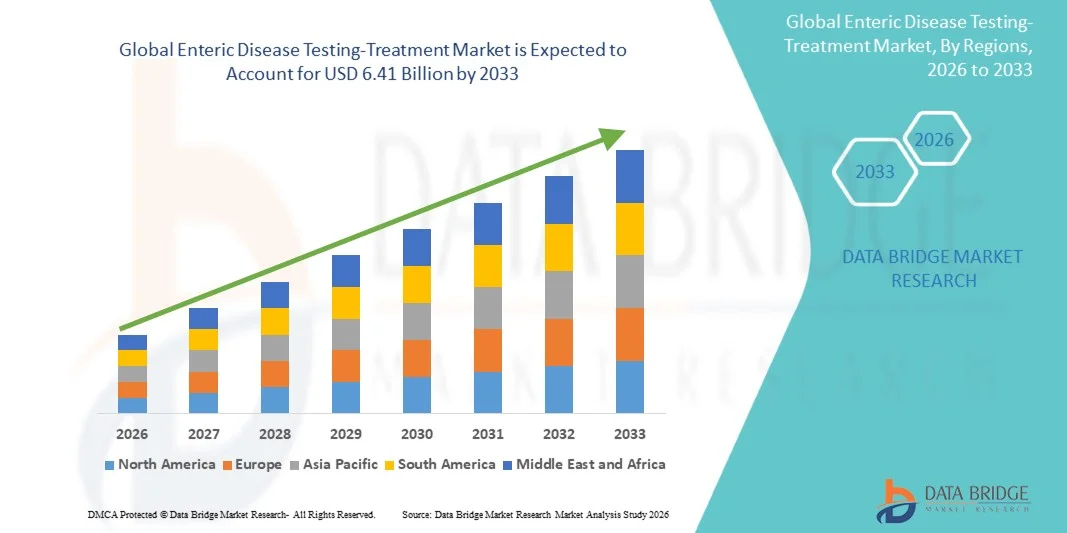
- По данным Data Bridge Market Research Analysis Глобальный рынок тестирования и лечения кишечных заболеваний оценивается в4,58 млрд долларов в 2025 годуОжидается, что он достигнет$6,41 млрд к 2033 году, вCAGR 4,30%в течение прогнозируемого периода
- Рост рынка в значительной степени подпитывается ростом распространенности кишечных заболеваний, вызванных бактериальными, вирусными и паразитарными инфекциями, а также повышением осведомленности о ранней диагностике и своевременном лечении. Достижения в области молекулярной диагностики, наборов для быстрого тестирования и улучшенной лабораторной инфраструктуры способствуют более широкому внедрению решений для тестирования и лечения кишечных заболеваний в больницах, диагностических центрах и учреждениях общественного здравоохранения.
- Кроме того, растут правительственные инициативы по борьбе с болезнями, передаваемыми через воду и продукты питания, растут расходы на здравоохранение в развивающихся странах и расширяется доступ к медицинским услугам.диагностический центрТехнологии устанавливают решения для тестирования и лечения кишечных заболеваний в качестве основных компонентов управления инфекционными заболеваниями. Эти сходящиеся факторы ускоряют внедрение решений для тестирования и лечения кишечных заболеваний, тем самым значительно повышая рост отрасли.
Размер рынка и прогноз
- Глобальная рыночная стоимость (2025):$4,58 млрд.
- Ожидаемая рыночная стоимость (2033):$6,41 млрд.
- Прогноз CAGR (2025–2033):4.30%
Тестирование энтерических заболеваний для анализа рынка лечения
- Решения для тестирования и лечения кишечных заболеваний, включая молекулярные диагностические анализы, быстрые антигенные тесты и антимикробную терапию, играют решающую роль в выявлении и лечении желудочно-кишечных инфекций, вызванных бактериями, вирусами и паразитами. Эти решения необходимы для снижения бремени болезней, предотвращения вспышек и улучшения результатов лечения пациентов как в больницах, так и в общинах.
- Растущий спрос на тестирование и лечение кишечных заболеваний в первую очередь подпитывается ростом заболеваемости болезнями пищевого и водного происхождения, повышением осведомленности о контроле инфекционных заболеваний и достижениями в технологиях быстрой диагностики. Растущие программы эпиднадзора за состоянием здоровья населения и расширение возможностей лабораторий способствуют дальнейшему росту рынка.
- Северная Америка доминировала на рынке лечения кишечных заболеваний с самой большой долей доходов.41,7% в 2025 годуЭто обусловлено развитой инфраструктурой здравоохранения, сильными системами эпиднадзора за болезнями, высокими показателями диагностического тестирования и присутствием ведущих биотехнологических и фармацевтических компаний. В США наблюдался существенный рост из-за растущего внедрения мультиплексных ПЦР-панелей и платформ быстрого тестирования в больницах и диагностических лабораториях.
- Ожидается, что Азиатско-Тихоокеанский регион станет самым быстрорастущим регионом на рынке тестирования лечения кишечных заболеваний в течение прогнозируемого периода, который, по прогнозам, будет расширяться на уровне CAGR.13.1%Это обусловлено улучшением инфраструктуры здравоохранения, ростом заболеваемости кишечными инфекциями, расширением правительственных инициатив в области санитарии и борьбы с болезнями, а также расширением доступа к недорогим диагностическим и лечебным решениям в таких странах, как Китай, Индия и Юго-Восточная Азия.
- Сегмент бактериальных энтерических заболеваний доминировал на крупнейшей доле рынка в 44,7% в 2025 году, что обусловлено высокой глобальной распространенностью таких инфекций, как сальмонеллез, шигеллез и болезни, связанные с кишечной палочкой.
Сфера охвата и сегментация рынка тестирования на кишечные заболевания
|
Атрибуты |
Тестирование энтерических заболеваний - исследование ключевых рынков |
|
Сегменты покрыты |
|
|
Страны, охваченные |
Северная Америка
Европа
Азиатско-Тихоокеанский регион
Ближний Восток и Африка
Южная Америка
|
|
Ключевые игроки рынка |
|
|
Рыночные возможности |
|
|
Информационные наборы данных с добавленной стоимостью |
|
Какова ключевая тенденция на рынке тестирования и лечения кишечных заболеваний
"Достижения в области быстрой молекулярной диагностики и комплексного лечения"
- Значительной и ускоряющейся тенденцией на мировом рынке лечения кишечных заболеваний является растущее внедрение передовых молекулярных диагностических технологий, которые позволяют быстро, точно и мультиплексно выявлять желудочно-кишечные патогены. Инновации вполимеразная цепная реакция (ПЦР)Панели, секвенирование следующего поколения и диагностические платформы для пунктов оказания медицинской помощи трансформируют способ выявления кишечных инфекций и управления ими в медицинских учреждениях.
- Например, мультиплексные желудочно-кишечные панели, способные одновременно обнаруживать бактериальные, вирусные и паразитарные патогены, широко применяются в больницах и диагностических лабораториях для сокращения времени обработки и улучшения принятия клинических решений. Эти комплексные решения для тестирования поддерживают раннюю диагностику, позволяя поставщикам медицинских услуг быстро инициировать целевое лечение и уменьшить злоупотребление антибиотиками широкого спектра действия.
- Интеграция лабораторной автоматизации, цифровых систем отчетности и инструментов анализа данных способствует дальнейшему повышению эффективности диагностики и эпиднадзора за кишечными заболеваниями. Медицинские учреждения все чаще используют платформы, основанные на данных, для мониторинга моделей вспышек, отслеживания устойчивости к противомикробным препаратам и оптимизации стратегий управления пациентами.
- Этот растущий акцент на точной диагностике и доказательном лечении меняет клинический подход к лечению кишечных заболеваний, улучшая результаты лечения пациентов, минимизируя продолжительность госпитализации и расходы на здравоохранение. В результате производители сосредоточены на разработке экономически эффективных, высокочувствительных тестовых наборов и решений для комбинированной обработки для удовлетворения меняющихся потребностей как развитых, так и развивающихся рынков.
Динамика рынка энтерального тестирования и лечения заболеваний
водитель
«Рост заболеваемости желудочно-кишечными инфекциями и растущий акцент на ранней диагностике»
- Растущее глобальное бремя желудочно-кишечных инфекций, вызванных бактериями, вирусами и паразитами, является основным фактором, стимулирующим рост рынка тестирования на кишечные заболевания. Такие факторы, как неадекватная санитария в некоторых регионах, загрязненные пищевые и водные источники и увеличение числа международных поездок, способствуют повышению уровня заболеваемости во всем мире.
- Правительства и организации здравоохранения укрепляют системы эпиднадзора за болезнями и содействуют раннему диагностическому тестированию для контроля вспышек и снижения смертности, особенно среди педиатрических и гериатрических групп населения, которые более уязвимы к серьезному обезвоживанию и осложнениям.
- Растущая осведомленность пациентов и медицинских работников о важности своевременной диагностики и соответствующей противомикробной терапии еще больше стимулирует спрос на передовые наборы для тестирования и целевые схемы лечения.
- Например, быстрые диагностические инструменты не только улучшают точность лечения, но и помогают уменьшить ненужные назначения антибиотиков, поддерживая глобальные инициативы по управлению противомикробными препаратами.
- Кроме того, увеличение расходов на здравоохранение, улучшение лабораторной инфраструктуры и расширение диагностических услуг в странах с развивающейся экономикой вносят значительный вклад в расширение рынка. Переход к профилактическому здравоохранению и улучшение доступа к медицинским учреждениям еще больше ускоряют внедрение решений для тестирования и лечения кишечных заболеваний.
Сдержанность/вызов
"Высокая диагностическая стоимость и ограниченный доступ к низкоресурсным настройкам"
- Несмотря на технологические достижения, относительно высокая стоимость современных молекулярных диагностических тестов остается ключевой проблемой, особенно в странах с низким и средним уровнем дохода, где бюджеты здравоохранения ограничены. Сложные испытательные платформы часто требуют специализированной лабораторной инфраструктуры и обученного персонала, что ограничивает их доступность в сельских и ограниченных ресурсами районах.
- Например, современные мультиплексные желудочно-кишечные панели на основе ПЦР обычно требуют специализированных анализаторов и собственных расходных материалов, что может значительно увеличить затраты на тестирование по сравнению с обычными методами культивирования стула, что делает их менее доступными для небольших или недостаточно финансируемых медицинских учреждений.
- Отсроченная диагностика из-за недостаточной осведомленности, недостаточного лабораторного потенциала и ограниченного покрытия расходов в определенных регионах может препятствовать своевременному лечению и медленному проникновению на рынок. Во многих развивающихся странах традиционные методы культивирования стула по-прежнему широко используются из-за соображений стоимости, несмотря на их более длительное время оборота и меньшую чувствительность по сравнению с современными молекулярными методами.
- Кроме того, проблемы, связанные с одобрением регулирующих органов, стандартами контроля качества и необходимостью постоянного мониторинга моделей устойчивости к противомикробным препаратам, усложняют разработку и коммерциализацию продукции. Решение этих проблем путем разработки доступных диагностических решений, расширения инициатив в области общественного здравоохранения и улучшения финансирования программ борьбы с инфекционными заболеваниями будет иметь важное значение для обеспечения устойчивого роста рынка.
Сфера охвата рынка тестирования на кишечные заболевания
Рынок сегментирован на основе типа заболевания, терапевтических средств и технологии тестирования.
• По типу заболевания
На основе типа заболевания рынок тестирования на энтеральные заболевания сегментирован на бактериальные энтерические заболевания, вирусные энтерические заболевания и паразитарные энтерические заболевания. Сегмент бактериальных энтерических заболеваний доминировал на крупнейшей доле рынка в 44,7% в 2025 году, что обусловлено высокой глобальной распространенностью таких инфекций, как сальмонеллез, шигеллез и заболевания, связанные с кишечной палочкой. Растущие случаи вспышек болезней пищевого происхождения и загрязнения воды в значительной степени способствуют спросу на быстрое тестирование и эффективное лечение антибиотиками. Больницы и диагностические лаборатории отдают приоритет бактериальному тестированию из-за тяжести и скорости передачи этих инфекций. Государственные программы надзора и правила безопасности пищевых продуктов еще больше усиливают доминирование сегмента. Повышение осведомленности о устойчивости к противомикробным препаратам привело к увеличению диагностического скрининга. Растущая инфраструктура здравоохранения в странах с развивающейся экономикой также поддерживает внедрение лечения. Наличие целевых антибиотиков и комбинированных методов лечения способствует увеличению доходов. Продолжающиеся инициативы по мониторингу со стороны учреждений общественного здравоохранения способствуют дальнейшему росту.
Ожидается, что сегмент вирусных энтерологических заболеваний будет наблюдать самый быстрый CAGR в 10,8% с 2026 по 2033 год, чему способствуют растущие вспышки ротавирусов и энтеровирусов во всем мире. Детские популяции особенно уязвимы, что стимулирует спрос на раннее диагностическое тестирование. Расширение программ информирования о вакцинации и усовершенствованные методы обнаружения способствуют росту сегмента. Технологические достижения в области быстрой вирусной диагностики повышают уровень внедрения. Больницы все чаще используют молекулярное тестирование для точной вирусной идентификации. Растущие инвестиции в профилактическое здравоохранение способствуют дальнейшему расширению. Растущие глобальные путешествия и урбанизация также способствуют распространению инфекции, ускоряя спрос. Непрерывные исследования в области противовирусной терапии и поддерживающего лечения повышают потенциал долгосрочного роста.
• По терапевтическим
На основе терапии рынок тестирования на энтеральные заболевания сегментирован на Campylobacter, Cryptosporidium, E-Coli, Enteroviruses, RhinoViruss, RotaVirus, Salmonellosis и Shigellosis. Сегмент E-Coli составил самую большую долю рынка в 21,6% в 2025 году, что обусловлено частыми вспышками пищевых продуктов и тяжелыми желудочно-кишечными осложнениями, связанными с патогенными штаммами. Медицинские работники отдают приоритет быстрой идентификации и лечению инфекций E. coli из-за потенциальных осложнений, таких как обезвоживание и гемолитический уремический синдром. Повышение внимания регулирующих органов к тестированию безопасности пищевых продуктов еще больше усиливает спрос. Наличие хорошо зарекомендовавших себя схем лечения антибиотиками способствует получению дохода. Диагностические достижения позволяют быстрее идентифицировать патоген, уменьшая пребывание в больнице. Кампании по информированию общественности о здоровье способствуют раннему тестированию и лечению. Сегмент пользуется преимуществами программ непрерывного мониторинга как в развитых, так и в развивающихся странах. Растущие объемы лабораторных испытаний еще больше усиливают доминирование.
Ожидается, что в сегменте ротавируса самый быстрый CAGR составит 11,5% с 2026 по 2033 год, что обусловлено высокими показателями заболеваемости у детей в возрасте до пяти лет. Хотя программы вакцинации сократили число тяжелых случаев в развитых регионах, в странах с развивающейся экономикой по-прежнему наблюдается высокий уровень заболеваемости. Растущее внимание к инфраструктуре педиатрического здравоохранения стимулирует тестирование и принятие лечения. Тесты быстрого обнаружения антигенов широко используются для ранней диагностики. Рост поддерживается правительственными инициативами, направленными на сокращение диарейных заболеваний. Расширение сети больниц и клиник в сельских районах еще больше ускоряет процесс их внедрения. Продолжение исследований по улучшению противовирусной и поддерживающей терапии также способствует росту сегмента.
• Тестирование технологии
На основе технологии тестирования рынок энтерального тестирования заболеваний сегментирован на молекулярную диагностику, моноклональные антитела, иммуноанализы, дифференциальное сканирование света, информационные технологии, ИИ, липосомы, циклометрию потока, хроматографию, диагностическую визуализацию, микрокапельки геля и другие. Сегмент молекулярной диагностики доминировал на рынке с наибольшей долей дохода в 36,9% в 2025 году, что обусловлено высокой точностью, быстрым временем обработки и способностью обнаруживать несколько патогенов одновременно. Анализы на основе ПЦР широко используются в больницах и диагностических лабораториях для точной идентификации патогенов. Увеличение спроса на мультиплексные испытательные панели способствует росту сегмента. Технологические достижения сократили время тестирования и улучшили чувствительность. Государственное финансирование мониторинга инфекционных заболеваний способствует дальнейшему доминированию. Интеграция с автоматизированными лабораторными системами повышает эффективность. Повышение осведомленности о раннем выявлении и профилактике вспышек усиливает спрос. Расширение внедрения в странах с развивающейся экономикой также вносит значительный вклад в доходы.
Ожидается, что сегмент диагностики на основе ИИ и информационных технологий будет наблюдать самый быстрый CAGR в 13,4% с 2026 по 2033 год, что обусловлено растущим внедрением цифровых платформ здравоохранения и прогнозной аналитики в области управления инфекционными заболеваниями. Системы на базе ИИ улучшают интерпретацию данных и возможности отслеживания вспышек. Больницы все чаще интегрируют инструменты ИИ с молекулярными диагностическими платформами для повышения эффективности. Системы наблюдения в режиме реального времени помогают органам здравоохранения в планировании быстрого реагирования. Инвестиции в цифровизацию здравоохранения способствуют дальнейшему росту. Интеграция с электронными медицинскими записями улучшает управление пациентами. Растущий спрос на автоматизированные и дистанционные диагностические решения способствует расширению. Непрерывные инновации в алгоритмах машинного обучения укрепляют долгосрочные перспективы роста.
Региональный анализ рынка энтерального тестирования заболеваний
- Северная Америка доминировала на рынке лечения кишечных заболеваний с самой большой долей дохода в 41,7% в 2025 году, что обусловлено передовой инфраструктурой здравоохранения, надежными системами эпиднадзора за заболеваниями, высокими показателями диагностического тестирования и сильным присутствием ведущих биотехнологических и фармацевтических компаний. Регион извлекает выгоду из хорошо налаженных лабораторных сетей и быстрого внедрения инновационных технологий молекулярной диагностики, позволяющих своевременно выявлять и лечить желудочно-кишечные инфекции.
- Медицинские работники в регионе подчеркивают раннее и точное обнаружение бактериальных, вирусных и паразитарных патогенов для уменьшения осложнений и предотвращения вспышек. Широкое использование мультиплексных ПЦР-панелей и платформ быстрого желудочно-кишечного тестирования в больницах и справочных лабораториях значительно улучшило время диагностики и точность лечения.
- Эта сильная рыночная позиция также поддерживается благоприятными механизмами возмещения, повышением осведомленности о болезнях пищевого и водного происхождения и постоянными инвестициями в программы мониторинга общественного здравоохранения, что делает Северную Америку ведущим регионом в диагностике и терапии кишечных заболеваний.
Тестирование кишечных заболеваний в США - исследование рынка лечения
Американский рынок лечения кишечных заболеваний получил самую большую долю дохода в 2025 году в Северной Америке, чему способствовали высокие расходы на здравоохранение и быстрое внедрение технологий в клинических лабораториях. В стране наблюдается значительный рост использования мультиплексных желудочно-кишечных панелей на основе ПЦР и автоматизированных диагностических систем в больницах и амбулаторных условиях. Растущая заболеваемость болезнями пищевого происхождения и сильный контроль за отчетностью об инфекционных заболеваниях еще больше укрепили спрос на рынке. Кроме того, растущее сотрудничество между производителями диагностических препаратов и учреждениями здравоохранения расширяет доступ к передовым испытаниям и целевым противомикробным препаратам по всей стране.
Европейское исследование рынка энтерических заболеваний
Согласно прогнозам, европейский рынок тестирования на кишечные заболевания будет расширяться при существенном CAGR в течение прогнозируемого периода, чему будут способствовать строгие правила безопасности пищевых продуктов, хорошо структурированные системы общественного здравоохранения и повышение осведомленности о контроле инфекционных заболеваний. Европейские страны сосредоточены на укреплении лабораторных возможностей и продвижении программ раннего выявления для смягчения бремени желудочно-кишечных инфекций. Растущее внедрение передовой молекулярной диагностики, наряду с улучшением практики управления противомикробными препаратами, способствует устойчивому росту рынка во всем регионе.
Тестирование кишечных заболеваний в Великобритании - исследование рынка лечения
Ожидается, что рынок тестирования на энтеральные заболевания в Великобритании вырастет в течение прогнозируемого периода, чему будут способствовать расширенные программы эпиднадзора и растущие инициативы Национальной службы здравоохранения (NHS), направленные на борьбу с инфекционными заболеваниями. Растущая потребность в сокращении госпитализаций, связанных с тяжелыми диарейными инфекциями и вспышками пищевого происхождения, стимулирует принятие решений для быстрого диагностического тестирования. Кроме того, ожидается, что усовершенствованная модернизация лабораторий и кампании по информированию общественности будут способствовать устойчивому расширению рынка.
Германия Тестирование кишечных заболеваний - исследование рынка
Ожидается, что в течение прогнозируемого периода рынок лечения кишечных заболеваний в Германии будет расширяться на значительном CAGR, чему будет способствовать сильная инфраструктура здравоохранения страны и акцент на высококачественные диагностические стандарты. Ориентация Германии на точную медицину и передовую лабораторную автоматизацию ускоряет внедрение платформ молекулярного тестирования для желудочно-кишечных патогенов. Кроме того, повышение осведомленности в отношении устойчивости к противомикробным препаратам и структурированных программ инфекционного контроля способствует развитию рынка как в больницах, так и в частных лабораториях.
Азиатско-тихоокеанское тестирование энтерических заболеваний и понимание рынка лечения
Рынок тестирования кишечных заболеваний в Азиатско-Тихоокеанском регионе будет расти на самом быстром CAGR в 13,1% в течение прогнозируемого периода, что обусловлено улучшением инфраструктуры здравоохранения, ростом заболеваемости кишечными инфекциями и увеличением правительственных инициатив по санитарии и борьбе с болезнями в таких странах, как Китай, Индия и Юго-Восточная Азия. Расширение доступа к диагностическим лабораториям и доступным решениям для лечения укрепляет раннее выявление заболеваний как в городских, так и в полугородских районах. Растущие инвестиции в здравоохранение и международное сотрудничество, направленные на снижение бремени болезней, передающихся через воду и пищу, еще больше способствуют региональному росту.
Японский рынок тестирования на энтерические заболевания
Японский рынок тестирования на кишечные заболевания набирает обороты благодаря передовым медицинским учреждениям, высоким диагностическим стандартам и сильному акценту на эпиднадзор за инфекционными заболеваниями. Старение населения страны и повышение внимания к профилактическому здравоохранению способствуют раннему тестированию и эффективному лечению желудочно-кишечных инфекций. Принятие автоматизированных лабораторных систем и высокочувствительных молекулярно-диагностических платформ способствует дальнейшему росту рынка.
Китайский рынок энтерологических тестов и лечения заболеваний
Китайский рынок тестирования на энтеральные заболевания составил самую большую долю доходов в Азиатско-Тихоокеанском регионе в 2025 году, что объясняется быстрой модернизацией здравоохранения, повышением осведомленности о инфекционных заболеваниях и расширением правительственных инициатив в области санитарии. Растущее число проблем, связанных с безопасностью пищевых продуктов и загрязнением воды, повысило спрос на надежные диагностические и лечебные решения. Растущие возможности отечественного производства и улучшенная доступность экономически эффективных комплектов для молекулярного тестирования являются ключевыми факторами, способствующими устойчивому росту рынка в Китае.
Каковы ведущие компании на рынке тестирования и лечения инфекционных заболеваний
Индустрия тестирования и лечения кишечных заболеваний в основном возглавляется хорошо известными компаниями, в том числе:
•Эбботт (США)
Thermo Fisher Scientific Inc. (США)
Danaher Corporation (США)
• BioMérieux S.A. (Франция)
Becton, Dickinson and Company (США)
•Qiagen N.V. (Германия)
• F. Hoffmann-La Roche Ltd. (Швейцария)
Merck & Co., Inc. (США)
• GlaxoSmithKline plc (Великобритания)
Pfizer Inc. (США)
• Санофи С.А. (Франция)
• AstraZeneca plc (Великобритания)
•Novartis AG (Швейцария)
Takeda Pharmaceutical Company Limited (Япония)
Bio-Rad Laboratories, Inc. (США)
Hologic, Inc. (США)
• Цефеид (США)
PerkinElmer, Inc. (США)
Siemens Healthineers AG (Германия)
•DiaSorin S.p.A. (Италия))
Последние события на мировом рынке тестирования и лечения энтерологических заболеваний
- В марте 2023 года Biomerica, Inc. объявила о запуске своего теста InFoods IBS в качестве лабораторного теста (LDT), завершив валидационное тестирование и обработку своих первых образцов пациентов. Тест определяет конкретные триггерные продукты, которые способствуют симптомам синдрома раздраженного кишечника, что позволяет более персонализировать подходы к диетическому лечению желудочно-кишечных заболеваний.
- В апреле 2023 года Всемирная организация здравоохранения (ВОЗ) координировала глобальное развертывание более 1,2 миллиона экспресс-диагностических тестов на холеру в 14 странах с высоким риском в рамках совместной программы с Гави, ЮНИСЕФ и FIND, улучшая способность систем здравоохранения обнаруживать и реагировать на вспышки холеры на ранних стадиях.
- В мае 2023 года Biomerica, Inc. объявила, что ее тест InFoods® IBS был одобрен для использования с простым методом сбора цельной крови с помощью палец-палец, что облегчает и удобнее для поставщиков медицинских услуг собирать образцы и расширять клиническую доступность.
- В октябре 2024 года Biomerica, Inc. объявила о прямой доступности своего теста InFoods IBS для потребителей, что позволяет пациентам в США заказать тест онлайн и предоставить простые образцы пальцев на дому, расширяя доступ к персонализированному управлению симптомами GI за пределами традиционных клинических условий.
- В феврале 2025 года Biomerica, Inc. объявила о публикации ключевых результатов клинических испытаний в гастроэнтерологии, показывающих, что ее тест inFoods IBS поддерживает персонализированную диетическую терапию, которая значительно уменьшает такие симптомы, как боль в животе и вздутие живота у пациентов с СРК, подчеркивая клиническую валидацию немедикаментозного энтерального подхода к лечению.
SKU-
Получите онлайн-доступ к отчету на первой в мире облачной платформе рыночной аналитики

- Интерактивная панель анализа данных
- Панель анализа компании для возможностей с высоким потенциалом роста
- Доступ аналитика-исследователя для настройки и запросов
- Анализ конкурентов с помощью интерактивной панели
- Последние новости, обновления и анализ тенденций
- Используйте возможности сравнительного анализа для комплексного отслеживания конкурентов
Методология исследования
Сбор данных и анализ базового года выполняются с использованием модулей сбора данных с большими размерами выборки. Этап включает получение рыночной информации или связанных данных из различных источников и стратегий. Он включает изучение и планирование всех данных, полученных из прошлого заранее. Он также охватывает изучение несоответствий информации, наблюдаемых в различных источниках информации. Рыночные данные анализируются и оцениваются с использованием статистических и последовательных моделей рынка. Кроме того, анализ доли рынка и анализ ключевых тенденций являются основными факторами успеха в отчете о рынке. Чтобы узнать больше, пожалуйста, запросите звонок аналитика или оставьте свой запрос.
Ключевой методологией исследования, используемой исследовательской группой DBMR, является триангуляция данных, которая включает в себя интеллектуальный анализ данных, анализ влияния переменных данных на рынок и первичную (отраслевую экспертную) проверку. Модели данных включают сетку позиционирования поставщиков, анализ временной линии рынка, обзор рынка и руководство, сетку позиционирования компании, патентный анализ, анализ цен, анализ доли рынка компании, стандарты измерения, глобальный и региональный анализ и анализ доли поставщика. Чтобы узнать больше о методологии исследования, отправьте запрос, чтобы поговорить с нашими отраслевыми экспертами.
Доступна настройка
Data Bridge Market Research является лидером в области передовых формативных исследований. Мы гордимся тем, что предоставляем нашим существующим и новым клиентам данные и анализ, которые соответствуют и подходят их целям. Отчет можно настроить, включив в него анализ ценовых тенденций целевых брендов, понимание рынка для дополнительных стран (запросите список стран), данные о результатах клинических испытаний, обзор литературы, обновленный анализ рынка и продуктовой базы. Анализ рынка целевых конкурентов можно проанализировать от анализа на основе технологий до стратегий портфеля рынка. Мы можем добавить столько конкурентов, о которых вам нужны данные в нужном вам формате и стиле данных. Наша команда аналитиков также может предоставить вам данные в сырых файлах Excel, сводных таблицах (книга фактов) или помочь вам в создании презентаций из наборов данных, доступных в отчете.











