



Global Enterprise Mobility Management Market Segmentation, By Component (Solutions and Services), Organization Size (Large Enterprises, Small and Medium-Sized Enterprises), Deployment Modes (Cloud and On-Premises), Verticals (BFSI, Retail and e-commerce, Healthcare and Life Sciences, IT and Telecom, Manufacturing, Government, Transportation and Logistics, Travel and Hospitality, and Others Verticals)- Industry Trends and Forecast to 2033
Размер рынка управления корпоративной мобильностью и темпы роста
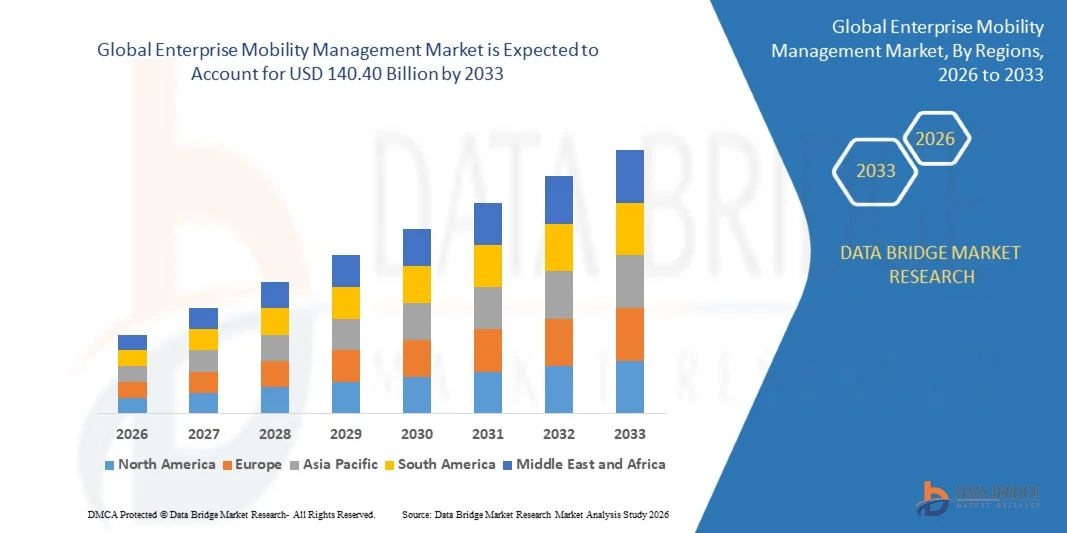
- Согласно анализу Data Bridge Market Research, размер глобального рынка управления корпоративной мобильностью был оценен как23,78 млрд долларов в 2025 годуОжидается, что он достигнет140,40 млрд долларов к 2033 году, вCAGR 24,85%в течение прогнозируемого периода
- Рост рынка в значительной степени обусловлен растущим внедрением мобильных устройств и приложений на предприятиях, растущей потребностью в безопасном удаленном доступе и спросом на повышение производительности труда.
- Растущие тенденции политики BYOD (Bring Your Own Device), облачных решений и интеграции передовых протоколов безопасности также способствуют расширению рынка.
Размер рынка и прогноз:
- Глобальная рыночная стоимость (2025):$23,78 млрд.
- Ожидаемая рыночная стоимость (2033):$140,40 млрд.
- Прогноз CAGR (2026–2033):24.85%
Анализ рынка управления мобильностью предприятий
- Рынок управления корпоративной мобильностью демонстрирует значительный рост благодаря быстрой цифровой трансформации в разных секторах, обеспечивающей бесперебойное управление устройствами и безопасный доступ к корпоративным ресурсам.
- Организации все больше сосредотачиваются на унифицированных решениях для управления конечными точками (UEM) для управления смартфонами, планшетами, ноутбуками и устройствами IoT с единой платформы, повышая операционную эффективность.
- Северная Америка доминировала на рынке управления корпоративной мобильностью с самой большой долей дохода в 38,75% в 2025 году, что обусловлено широким распространением мобильных устройств, растущей потребностью в безопасном доступе к корпоративным данным и растущими инициативами по оцифровке предприятий.
- Ожидается, что в Азиатско-Тихоокеанском регионе будут наблюдаться самые высокие темпы роста на мировом рынке управления мобильностью предприятий, обусловленные растущим спросом на решения для управления мобильными устройствами на малых и средних предприятиях, растущими проблемами кибербезопасности и расширением ИТ-инфраструктуры. Всплеск внедрения удаленной работы и мобильной рабочей силы также поддерживает быстрое расширение рынка EMM.
- Сегмент решений занимал самую большую долю рынка в 2025 году, чему способствовало растущее внедрение инструментов управления мобильными устройствами (MDM), управления мобильными приложениями (MAM) и унифицированного управления конечными точками (UEM). Решения EMM позволяют предприятиям централизовать контроль над корпоративными устройствами, обеспечивать соблюдение политик безопасности и оптимизировать управление приложениями на нескольких платформах. Организации выигрывают от повышения операционной эффективности, соблюдения правил защиты данных и снижения риска нарушений безопасности. Растущая потребность в поддержке моделей удаленной и гибридной работы еще больше усиливает спрос на интегрированные решения EMM.
Область охвата и сегментация рынка управления корпоративной мобильностью
|
Атрибуты |
Управление корпоративной мобильностью Ключевые идеи рынка |
|
Сегменты покрыты |
|
|
Страны, охваченные |
Северная Америка
Европа
Азиатско-Тихоокеанский регион
Ближний Восток и Африка
Южная Америка
|
|
Ключевые игроки рынка |
• Microsoft (США) |
|
Рыночные возможности |
Расширение облачных корпоративных мобильных решений |
|
Информационные наборы данных с добавленной стоимостью |
В дополнение к рыночным идеям, таким как рыночная стоимость, темпы роста, сегменты рынка, географический охват, игроки рынка и рыночный сценарий, отчет о рынке, курируемый командой Data Bridge Market Research, включает углубленный экспертный анализ, анализ импорта / экспорта, анализ цен, анализ потребления продукции и анализ пестле. |
Тенденции рынка управления мобильностью предприятий
«Растущее внедрение облачных и BYOD-решений»
Растущее внедрение мобильных и удаленных рабочих решений значительно формирует рынок управления мобильностью предприятия (EMM), поскольку организации стремятся повысить операционную эффективность при сохранении безопасности данных. Решения EMM позволяют ИТ-командам управлять устройствами, приложениями и контентом на нескольких платформах, обеспечивая безопасный доступ и соответствие требованиям. Эта тенденция стимулирует спрос в таких отраслях, как банковское дело, здравоохранение, ИТ и розничная торговля, побуждая поставщиков внедрять инновации с помощью интегрированных масштабируемых решений.
Растущее внимание к безопасности, соблюдению и гибкости персонала ускорило внедрение платформ управления мобильностью предприятий. Организации все чаще внедряют решения для управления мобильными устройствами (MDM), управления мобильными приложениями (MAM) и унифицированного управления конечными точками (UEM) для защиты конфиденциальных данных и оптимизации операций. Партнерские отношения между поставщиками программного обеспечения и системными интеграторами также помогают компаниям повысить функциональность и простоту развертывания.
Переход к гибридным рабочим средам и цифровой трансформации влияет на инвестиции в корпоративные технологии, при этом организации отдают приоритет централизованному управлению, мониторингу в режиме реального времени и автоматическому обеспечению соблюдения политики. Эти факторы позволяют предприятиям снизить операционные риски, повысить производительность труда сотрудников и укрепить управление данными. Продавцы подчеркивают пользовательский опыт и кросс-платформенную поддержку, чтобы дифференцировать свои предложения в конкурентной среде.
Например, в 2024 году Microsoft в США и VMware в Великобритании расширили свои портфели EMM с помощью облачных и AI-функций для удовлетворения растущих потребностей предприятий. Эти обновления улучшили безопасность устройств, облегчили бесшовное развертывание приложений и улучшили удаленное управление персоналом, тем самым укрепив доверие клиентов и принятие.
Устойчивое расширение рынка зависит от постоянных инноваций, интеграции с новыми технологиями и способности масштабироваться в глобальных операциях. Поставщики EMM сосредоточены на улучшении взаимодействия, упрощении администрирования и предоставлении экономически эффективных моделей подписки для стимулирования внедрения на крупных и средних предприятиях.
Динамика рынка управления корпоративной мобильностью
водитель
«Растущее принятие мобильных рабочих сил и политики BYOD»
Растущая зависимость от мобильных устройств и решений удаленного доступа является основным драйвером рынка EMM. Организации внедряют политику управления использованием устройств при сохранении безопасности, что повышает спрос на комплексные платформы EMM.
Растущие инициативы по цифровой трансформации в различных отраслях, включая финансы, здравоохранение и ИТ, способствуют развертыванию облачных и мобильных решений с поддержкой ИИ. EMM облегчает централизованное управление, безопасный доступ к данным и оптимизированное управление устройствами, удовлетворяя растущие потребности предприятия
Поставщики активно расширяют предложения услуг за счет обновления продуктов, интеграции аналитики ИИ и партнерских отношений с поставщиками облачных услуг. Эти усилия помогают предприятиям эффективно управлять разнородными устройствами и приложениями, улучшая пользовательский опыт и безопасность.
Например, в 2023 году IBM в США и Citrix в Великобритании улучшили свои решения по управлению мобильностью, интегрировав функции безопасности на основе ИИ, мониторинг в режиме реального времени и многоплатформенную поддержку. Это привело к более широкому внедрению, улучшению защиты данных и операционной эффективности для корпоративных клиентов.
Хотя спрос на решения EMM растет, на их внедрение могут повлиять затраты на внедрение, проблемы совместимости и требования к обучению персонала. Инвестиции в бесшовную абордаж, обучение пользователей и поддержку нескольких устройств имеют решающее значение для максимального проникновения на рынок и поддержания роста.
Сдержанность/вызов
«Безопасность данных и сложные ИТ-среды»
Опасения по поводу угроз кибербезопасности, утечек данных и соблюдения нормативных требований остаются ключевыми проблемами для предприятий, внедряющих решения по управлению мобильностью. Защита конфиденциальных корпоративных данных на различных устройствах и сетях является сложной и ресурсоемкой задачей.
Ограниченные ИТ-эксперты и инфраструктура в определенных организациях могут препятствовать внедрению и оптимизации EMM. Интеграция с устаревшими системами и обеспечение кросс-платформенной совместимости добавляет операционных проблем.
Зависимость от поставщиков и высокие затраты на подписку или лицензирование могут также ограничивать усыновление, особенно среди малых и средних предприятий. Текущее обслуживание, обновления и требования к обучению еще больше увеличивают общую стоимость владения.
Например, в 2024 году несколько средних компаний в США и Европе сообщили о задержке развертывания EMM-решений из-за высокой сложности интеграции, проблем с соблюдением требований и недостаточной ИТ-поддержки, влияющих на операционную эффективность и рентабельность инвестиций.
Преодоление этих проблем требует надежных протоколов безопасности, упрощенных инструментов управления и поддержки поставщиков для бесперебойного развертывания. Сотрудничество между поставщиками EMM, ИТ-отделами и командами по соблюдению нормативных требований имеет важное значение для повышения безопасности данных, снижения сложности и обеспечения долгосрочного роста рынка.
Сфера управления рынком корпоративной мобильности
Рынок управления корпоративной мобильностью (EMM) сегментирован на основе компонентов, размера организации, режима развертывания и вертикалей.
• по компонентам
На основе компонента рынок сегментирован на решения и услуги. Сегмент решений занимал самую большую долю рынка в 2025 году, чему способствовало растущее внедрение инструментов управления мобильными устройствами (MDM), управления мобильными приложениями (MAM) и унифицированного управления конечными точками (UEM). Решения EMM позволяют предприятиям централизовать контроль над корпоративными устройствами, обеспечивать соблюдение политик безопасности и оптимизировать управление приложениями на нескольких платформах. Организации выигрывают от повышения операционной эффективности, соблюдения правил защиты данных и снижения риска нарушений безопасности. Растущая потребность в поддержке моделей удаленной и гибридной работы еще больше усиливает спрос на интегрированные решения EMM.
Ожидается, что в сегменте услуг будут наблюдаться самые быстрые темпы роста с 2026 по 2033 год, обусловленные растущей потребностью в консалтинге, внедрении и управляемых услугах для обеспечения бесперебойного развертывания и непрерывного управления системами мобильности. Услуги помогают организациям преодолевать технические сложности, оптимизировать производительность устройств и улучшать пользовательский опыт. Управляемые услуги также обеспечивают мониторинг в режиме реального времени, устранение неполадок и отчетность, снижая нагрузку на предприятия. Растущая осведомленность малого и среднего бизнеса о преимуществах профессиональных услуг EMM также способствует их внедрению.
• По размеру организации
Исходя из размера организации, рынок сегментирован на крупные предприятия и малые и средние предприятия (МСП). На крупные предприятия приходится наибольшая доля доходов рынка в 2025 году, поддерживаемая их обширной ИТ-инфраструктурой и большим объемом мобильных конечных точек. Эти организации отдают приоритет безопасности, соблюдению нормативных требований и централизованному управлению устройствами и приложениями, что делает их основными потребителями решений EMM. Общекорпоративное внедрение помогает стандартизировать мобильную политику, повысить безопасность данных и снизить эксплуатационные расходы.
Ожидается, что в сегменте МСП будут наблюдаться самые быстрые темпы роста с 2026 по 2033 год, обусловленные повышением осведомленности о безопасности мобильных устройств и доступности облачных решений EMM. МСП быстро внедряют цифровые инструменты для поддержки удаленных сотрудников, управления политиками BYOD (Bring Your Own Device) и защиты конфиденциальных корпоративных данных. Облачные предложения EMM облегчают небольшим организациям внедрение безопасности корпоративного уровня без значительных первоначальных инвестиций. Эта тенденция также подпитывается конкурентным давлением и необходимостью операционной эффективности.
• в режиме развертывания
На основе режима развертывания рынок сегментирован в облако и локально. Сегмент облачных вычислений занимал самую большую долю рынка в 2025 году благодаря своей масштабируемости, экономической эффективности и гибкости для удаленного доступа. Облачные решения EMM позволяют организациям управлять устройствами и приложениями в режиме реального времени, мгновенно развертывать обновления и интегрироваться с другими корпоративными системами. Они также снижают затраты на техническое обслуживание и обеспечивают постоянный мониторинг угроз безопасности. Внедрение облачных платформ также поощряется увеличением проникновения мобильной рабочей силы и многоместных бизнес-операций.
Ожидается, что в сегменте локальных данных будут наблюдаться самые быстрые темпы роста с 2026 по 2033 год, обусловленные необходимостью усиления контроля, строгого соблюдения местных правил обработки данных и безопасной обработки конфиденциальной корпоративной информации. В локальном развертывании обеспечивается прямой надзор за протоколами безопасности, хранением данных и управлением приложениями. Крупные организации в сильно регулируемых секторах предпочитают локальные решения для поддержания полного контроля над критически важными активами. Постоянное внимание к конфиденциальности, конфиденциальности и внутреннему управлению ИТ будет способствовать внедрению в ближайшие годы.
• По вертикали
На основе вертикалей рынок сегментирован на BFSI, розничную и электронную торговлю, здравоохранение и науки о жизни, IT и телекоммуникации, производство, правительство, транспорт и логистику, путешествия и гостеприимство и другие вертикали. На долю BFSI приходится наибольшая доля доходов рынка в 2025 году из-за строгих нормативных требований, чувствительного характера финансовых данных и большого объема мобильных устройств, используемых сотрудниками. Решения EMM в BFSI помогают обеспечивать соблюдение требований, предотвращать нарушения данных и поддерживать безопасные удаленные операции.
Ожидается, что вертикаль здравоохранения и наук о жизни будет наблюдать самые быстрые темпы роста с 2026 по 2033 год, обусловленные инициативами цифровой трансформации, внедрением мобильных приложений для здравоохранения и растущим спросом на безопасный доступ к записям пациентов и клиническим данным. Больницы и исследовательские учреждения используют решения EMM для управления мобильными конечными точками, защиты конфиденциальных данных пациентов и повышения операционной эффективности. Кроме того, всплеск телемедицины, носимых устройств и услуг здравоохранения с поддержкой мобильных устройств еще больше ускоряет внедрение EMM в этом секторе.
Региональный анализ рынка управления мобильностью предприятий
Северная Америка доминировала на рынке управления корпоративной мобильностью с самой большой долей дохода в 38,75% в 2025 году, что обусловлено широким распространением мобильных устройств, растущей потребностью в безопасном доступе к корпоративным данным и растущими инициативами по оцифровке предприятий.
Организации в регионе высоко ценят способность управлять, контролировать и защищать мобильные конечные точки среди сотрудников и отделов, обеспечивая повышение производительности и операционной эффективности.
Высокие инвестиции в ИТ-инфраструктуру, облачные технологии и кибербезопасность в сочетании с присутствием крупных поставщиков решений EMM поддерживают быстрое внедрение на крупных предприятиях и МСП.
Обзор рынка управления корпоративной мобильностью в США
Рынок управления корпоративной мобильностью в США занял самую большую долю доходов в 2025 году в Северной Америке, чему способствовало увеличение числа мобильных сотрудников и строгие требования к корпоративной безопасности. Организации отдают приоритет безопасному доступу к корпоративным приложениям и данным через мобильные устройства. Растущие тенденции в политике BYOD, облачных решениях и интеграции с существующими ИТ-системами еще больше ускоряют рост рынка. Кроме того, значительные инвестиции в ИТ-инфраструктуру и инициативы в области кибербезопасности вносят значительный вклад в расширение решений EMM в различных отраслях.
Европейский рынок управления корпоративной мобильностью Insight
Ожидается, что на европейском рынке управления корпоративной мобильностью будут наблюдаться самые быстрые темпы роста с 2026 по 2033 год, в первую очередь благодаря растущим инициативам цифровой трансформации, строгим правилам конфиденциальности данных и необходимости безопасного управления мобильными сотрудниками. Организации все чаще внедряют решения EMM для обеспечения соответствия, защиты конфиденциальных данных и оптимизации управления мобильными устройствами. Рост также поддерживается внедрением облачных моделей развертывания и интеграцией аналитики на основе ИИ в решениях EMM в различных секторах.
Великобритания Enterprise Mobility Management Market Insight
Ожидается, что на рынке управления корпоративной мобильностью в Великобритании будут наблюдаться самые быстрые темпы роста с 2026 по 2033 год, что обусловлено растущим вниманием к кибербезопасности, соблюдению нормативных требований и созданию мобильных рабочих мест. Организации быстро внедряют облачные решения EMM для повышения операционной эффективности и защиты корпоративных данных. Ожидается, что сильная ИТ-инфраструктура страны, высокий уровень проникновения смартфонов и растущий акцент на удаленных и гибридных рабочих моделях будут способствовать принятию рынка.
Немецкий рынок управления мобильностью
Ожидается, что на немецком рынке управления мобильностью предприятий будут наблюдаться самые быстрые темпы роста с 2026 по 2033 год, чему способствует растущий спрос на безопасное управление мобильными устройствами, соблюдение требований к защите данных и цифровое преобразование рабочих мест. Немецкие предприятия активно внедряют решения EMM для повышения производительности, мониторинга использования устройств и защиты конфиденциальных бизнес-данных. Присутствие ведущих поставщиков технологий и сильные инвестиции в ИТ-инфраструктуру предприятия являются ключевыми факторами, способствующими внедрению.
Азиатско-Тихоокеанский рынок управления мобильностью предприятий
Ожидается, что на рынке управления мобильностью предприятий в Азиатско-Тихоокеанском регионе будут наблюдаться самые быстрые темпы роста с 2026 по 2033 год, обусловленные быстрой цифровизацией, растущим внедрением мобильной рабочей силы и увеличением проникновения смартфонов в таких странах, как Китай, Япония и Индия. Организации в регионе все больше сосредотачиваются на обеспечении безопасности мобильных устройств, управлении приложениями и обеспечении удаленной работы. Государственные инициативы по развитию цифровой инфраструктуры и корпоративной мобильности в сочетании с доступными облачными решениями ускоряют внедрение EMM.
Японский рынок управления мобильностью предприятий
Ожидается, что на японском рынке управления мобильностью предприятий будут наблюдаться самые быстрые темпы роста с 2026 по 2033 год из-за технологически развитого корпоративного сектора страны, высокого внедрения смартфонов и растущего акцента на мобильную рабочую силу. Предприятия внедряют решения EMM для обеспечения безопасного доступа к данным, упрощения управления устройствами и соблюдения нормативных стандартов. Интеграция EMM с другими корпоративными ИТ-системами и облачными платформами способствует дальнейшему внедрению во многих секторах.
Китайский рынок управления мобильностью предприятий
Китайский рынок управления мобильностью предприятий составил самую большую долю доходов рынка в Азиатско-Тихоокеанском регионе в 2025 году, что объясняется быстрой цифровой трансформацией страны, увеличением числа мобильных сотрудников и высоким внедрением смартфонов и планшетов на предприятиях. Организации используют решения EMM для управления устройствами, защиты приложений и защиты конфиденциальных бизнес-данных. Государственная политика по развитию цифровой инфраструктуры в сочетании с растущим внедрением облачных технологий и конкурентоспособными корпоративными инвестициями в ИТ являются ключевыми факторами роста рынка в Китае.
Лучшие компании на рынке управления корпоративной мобильностью
Индустрия управления корпоративной мобильностью в основном возглавляется хорошо зарекомендовавшими себя компаниями, в том числе:
•Microsoft(США)
•IBM(США)
•MobileIron Inc.(США)
•Корпорация Symantec(США)
•VMware, Inc.(США)
Ventraq Corporation (США)
Citrix Systems Inc. (США)
Хорошие технологии (США)
SAP SE (Германия)
SOTI Inc. (Канада)
HyperOffice (США)
MDM Solutions (Великобритания)
• MobileIRON (США)
Zoho Corp. (Индия)
FileWave (США)
V | CA Technologies (США)
Корпорация Centrify (США)
Sophos Ltd. (Великобритания)
Infosys Ltd. (Индия)
• Cisco Meraki (США)
Последние события на мировом рынке управления корпоративной мобильностью
- В мае 2025 года SAP SE, Partnership/Software Implementation, объявила о том, что VFS Global примет SAP S/4HANA Cloud Public Edition и другие решения SAP для разработки цифровых систем на базе ИИ, направленных на улучшение трансграничной мобильности и обслуживания граждан. Эта интеграция повышает операционную эффективность, укрепляет цифровую безопасность и поддерживает правительственные инициативы по цифровой трансформации, стимулируя спрос на передовые решения для мобильности предприятий.
- В ноябре 2023 года Broadcom Inc., Acquisition, завершила приобретение VMware для укрепления периферийных и облачных сервисов, включая VMware Tanzu, Advanced Security и VMware Software-Defined Edge. Этот шаг ускоряет развертывание приложений, повышает безопасность и расширяет сетевые возможности, расширяя присутствие Broadcom на рынках корпоративной мобильности и облачного управления.
- В октябре 2023 года Deloitte, стратегическое расширение, расширила свою практику SAP Business Technology Platform с помощью генеративного ИИ для предоставления отраслевых решений и инструментов производительности. Инициатива повышает операционную эффективность, снижает риски, связанные с ИИ, и укрепляет доверие потребителей, способствуя внедрению интеллектуальных решений управления предприятием в различных секторах.
- В августе 2023 года Siemens AG, Партнерство, в партнерстве с Heliox улучшит инфраструктуру зарядки электронных грузовиков и электронных автобусов в Северной Америке и Европе. Это сотрудничество укрепляет позиции Siemens в области электронной мобильности, улучшает компетенции в области силовой электроники и поддерживает инициативы по устойчивому транспорту, положительно влияя на экосистему корпоративной мобильности.
- В январе 2023 года Microsoft Corporation, Acquisition, Acquired Fungible Inc. для продвижения высокоэффективных, маломощных блоков обработки данных для центров обработки данных. Приобретение повышает производительность хранения и сетей, снижает потребление энергии и увеличивает плотность серверов, поддерживая масштабируемые решения корпоративной мобильности и стимулируя технологическое внедрение.
- В сентябре 2022 года Evergreen Coast Capital и Vista Equity Partners, Acquisition, завершили приобретение и синдицирование Citrix Systems с TIBCO Software. Платформа расширяет предложения облачного программного обеспечения, расширяет отношения с корпоративными клиентами и укрепляет критически важные возможности поддержки миссий, поддерживая долгосрочный рост на рынках управления мобильностью предприятий.
SKU-
Получите онлайн-доступ к отчету на первой в мире облачной платформе рыночной аналитики

- Интерактивная панель анализа данных
- Панель анализа компании для возможностей с высоким потенциалом роста
- Доступ аналитика-исследователя для настройки и запросов
- Анализ конкурентов с помощью интерактивной панели
- Последние новости, обновления и анализ тенденций
- Используйте возможности сравнительного анализа для комплексного отслеживания конкурентов
Методология исследования
Сбор данных и анализ базового года выполняются с использованием модулей сбора данных с большими размерами выборки. Этап включает получение рыночной информации или связанных данных из различных источников и стратегий. Он включает изучение и планирование всех данных, полученных из прошлого заранее. Он также охватывает изучение несоответствий информации, наблюдаемых в различных источниках информации. Рыночные данные анализируются и оцениваются с использованием статистических и последовательных моделей рынка. Кроме того, анализ доли рынка и анализ ключевых тенденций являются основными факторами успеха в отчете о рынке. Чтобы узнать больше, пожалуйста, запросите звонок аналитика или оставьте свой запрос.
Ключевой методологией исследования, используемой исследовательской группой DBMR, является триангуляция данных, которая включает в себя интеллектуальный анализ данных, анализ влияния переменных данных на рынок и первичную (отраслевую экспертную) проверку. Модели данных включают сетку позиционирования поставщиков, анализ временной линии рынка, обзор рынка и руководство, сетку позиционирования компании, патентный анализ, анализ цен, анализ доли рынка компании, стандарты измерения, глобальный и региональный анализ и анализ доли поставщика. Чтобы узнать больше о методологии исследования, отправьте запрос, чтобы поговорить с нашими отраслевыми экспертами.
Доступна настройка
Data Bridge Market Research является лидером в области передовых формативных исследований. Мы гордимся тем, что предоставляем нашим существующим и новым клиентам данные и анализ, которые соответствуют и подходят их целям. Отчет можно настроить, включив в него анализ ценовых тенденций целевых брендов, понимание рынка для дополнительных стран (запросите список стран), данные о результатах клинических испытаний, обзор литературы, обновленный анализ рынка и продуктовой базы. Анализ рынка целевых конкурентов можно проанализировать от анализа на основе технологий до стратегий портфеля рынка. Мы можем добавить столько конкурентов, о которых вам нужны данные в нужном вам формате и стиле данных. Наша команда аналитиков также может предоставить вам данные в сырых файлах Excel, сводных таблицах (книга фактов) или помочь вам в создании презентаций из наборов данных, доступных в отчете.











