


Global Eosinophil Driven Diseases Market Segmentation, By Type (Eosinophilic Esophagitis, Eosinophilic Granulomatosis with Polyangiitis, Hyper-eosinophilic Syndrome, Nasal Polyposis, and Others), Treatment (Corticosteroids, Monoclonal Antibodies, Anti-cytokine Drugs, Cytotoxic Drugs, and Others), Route of Administration (Oral, Parenteral, and Others), End-Users (Hospitals, Homecare, Specialty Clinics, and Others), Distribution Channel (Hospital Pharmacy, Online Pharmacy, and Retail Pharmacy)- Industry Trends and Forecast to 2033
Каковы размеры и темпы роста рынка эозинофильных заболеваний
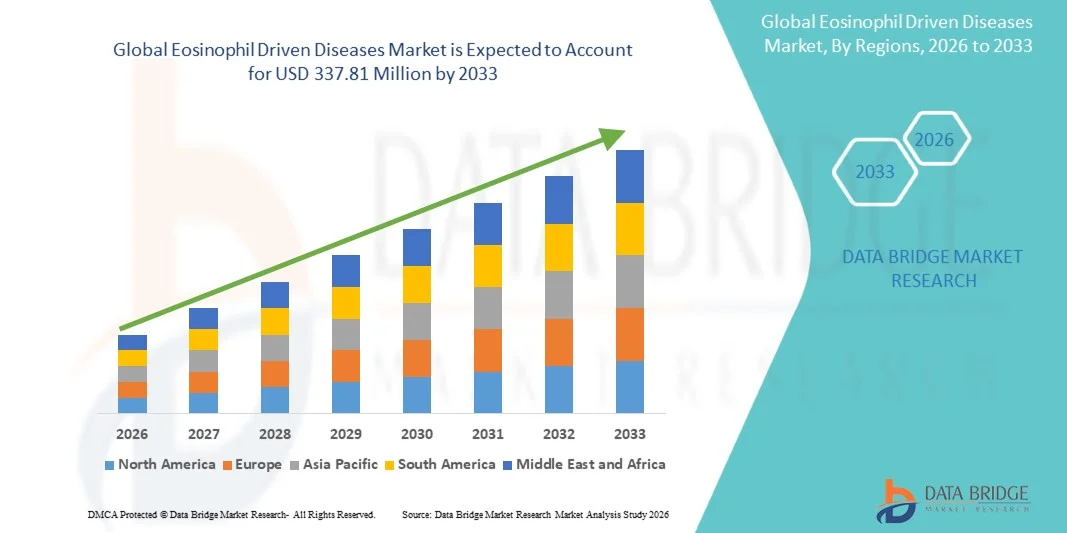
- Согласно анализу Data Bridge Market Research, глобальный объем рынка заболеваний, вызванных эозинофилами, был оценен как196,61 млн долларов США в 2025 годуОжидается, что он достигнет337,81 млн долларов США к 2033 году, вCAGR 7.00%в течение прогнозируемого периода
- Рост рынка в значительной степени подпитывается ростом распространенности связанных с эозинофилом состояний, таких как:астмаЭозинофильный эзофагит и гиперэозинофильный синдром, а также повышение осведомленности и улучшение диагностических возможностей в системах здравоохранения
- Растущий спрос на целевыеБиологическая терапияДостижения в области иммунологических исследований и увеличение инвестиций фармацевтических компаний делают лечение эозинофилами ключевым направлением в современной терапии. Эти сходящиеся факторы ускоряют принятие передовых вариантов лечения, тем самым значительно повышая рост отрасли.
Размер рынка и прогноз
- Глобальная рыночная стоимость (2025):$196,61 млн.
- Ожидаемая рыночная стоимость (2033):337,81 млн. долларов США
- Прогноз CAGR (2026–2033):7.00%
Каковы основные выводы рынка эозинофильных заболеваний
- Эозинофильные заболевания, характеризующиеся повышенным уровнем эозинофилов, ведущих кхронический воспалительныйТакие состояния, как эозинофильный эзофагит, эозинофильный гранулематоз с полиангитом и гиперэозинофильный синдром, становятся все более значимыми в глобальном здравоохранении из-за их сложной патофизиологии и растущей потребности в целевых подходах к лечению.
- Растущий спрос на терапию на этом рынке в первую очередь подпитывается ростом распространенности аллергических и воспалительных заболеваний, повышением осведомленности среди пациентов и поставщиков медицинских услуг, а также достижениями в диагностических методах, позволяющих более раннюю и более точную идентификацию заболеваний.
- Северная Америка доминировала на рынке заболеваний, вызванных эозинофилами, с самой большой долей дохода в 40,7% в 2025 году, характеризующейся сильной инфраструктурой здравоохранения, высокими показателями диагностики и присутствием ведущих фармацевтических компаний, причем в США наблюдается значительное внедрение передовых методов лечения, обусловленных постоянными инновациями и благоприятными механизмами возмещения.
- Ожидается, что Азиатско-Тихоокеанский регион станет самым быстрорастущим регионом на рынке эозинофильных заболеваний в течение прогнозируемого периода из-за улучшения доступа к здравоохранению, повышения осведомленности пациентов и увеличения инвестиций в специализированную помощь и биологическое лечение.
- Сегмент моноклональных антител доминировал на рынке эозинофильных заболеваний с долей рынка 43,9% в 2025 году, что обусловлено их целевым механизмом действия, сильной клинической эффективностью и растущим принятием для лечения тяжелых и тугоплавких эозинофильных состояний.
Сфера охвата и сегментация рынка эозинофильных заболеваний
|
Атрибуты |
Эозинофильные болезни ключевые рыночные идеи |
|
Сегменты покрыты |
|
|
Страны, охваченные |
Северная Америка
Европа
Азиатско-Тихоокеанский регион
Ближний Восток и Африка
Южная Америка
|
|
Ключевые игроки рынка |
|
|
Рыночные возможности |
|
|
Информационные наборы данных с добавленной стоимостью |
В дополнение к информации о рыночных сценариях, таких как рыночная стоимость, темпы роста, сегментация, географический охват и основные игроки, рыночные отчеты, курируемые Data Bridge Market Research, также включают углубленный экспертный анализ, эпидемиологию пациентов, анализ трубопроводов, анализ цен и нормативную базу. |
Каковы основные тенденции на рынке эозинофильных заболеваний
«Растущее применение целевой биологической терапии и точной медицины»
- Значительной и ускоряющейся тенденцией на мировом рынке эозинофильных заболеваний является растущее внедрение целевых биологических методов лечения и подходов точной медицины, ориентированных на конкретные воспалительные пути, такие как ингибирование интерлейкина. Эта эволюция в лечении значительно улучшает результаты лечения пациентов и управление заболеваниями.
- Например, методы лечения моноклональными антителами, нацеленные на пути IL-5 и IL-4/IL-13, продемонстрировали сильную клиническую эффективность при лечении таких состояний, как эозинофильная астма и эозинофильный эзофагит. Кроме того, разрабатываются новые биологические препараты, чтобы предложить более персонализированные и долгосрочные варианты лечения.
- Интеграция точной медицины при заболеваниях, вызванных эозинофилом, позволяет врачам адаптировать методы лечения на основе отдельных профилей пациентов, включая уровни биомаркеров и тяжесть заболевания. Например, биологическая терапия может более эффективно уменьшить количество эозинофилов и минимизировать вспышки заболеваний, улучшая качество жизни пациентов. Кроме того, таргетная терапия предлагает снижение побочных эффектов по сравнению с обычным системным лечением.
- Растущее внедрение передовых методов лечения в клиническую практику способствует повышению эффективности лечения.Управление болезнямипри нескольких эозинофильных состояниях. С помощью специализированных схем лечения медицинские работники могут устранить основное воспаление, одновременно улучшая долгосрочный контроль заболеваний и приверженность пациентов к терапии.
- Эта тенденция к более персонализированным, целенаправленным и эффективным решениям в области лечения коренным образом меняет терапевтические стратегии для эозинофильных заболеваний. Следовательно, такие компании, как ведущие биофармацевтические фирмы, разрабатывают передовые биологические препараты с улучшенными профилями эффективности и безопасности для долгосрочного лечения заболеваний.
- Спрос на целевые биологические методы лечения и подходы к точному лечению быстро растет как на развитых, так и на развивающихся рынках здравоохранения, поскольку пациенты и поставщики услуг все чаще отдают приоритет эффективным и индивидуальным решениям по уходу.
- Растущая активность клинических трубопроводов и продолжающееся научно-исследовательское сотрудничество между фармацевтическими компаниями и исследовательскими институтами ускоряют инновации и расширяют спектр доступных на рынке терапевтических вариантов.
Динамика рынка эозинофильных заболеваний
водитель
Растущая потребность из-за растущей распространенности аллергических и воспалительных расстройств
- Растущая распространенность заболеваний, связанных с эозинофилом, и хронических воспалительных состояний в сочетании с растущими показателями осведомленности и диагностики является значительным фактором повышенного спроса на целевую терапию.
- Например, в последние годы нормативные утверждения для новых биологических методов лечения, направленных на эозинофильные состояния, расширили варианты лечения и улучшили результаты лечения пациентов. Ожидается, что такие стратегии ключевых компаний будут стимулировать рост рынка эозинофильных заболеваний в прогнозируемый период.
- По мере того, как пациенты и медицинские работники становятся более осведомленными о долгосрочных осложнениях, связанных с нелеченными эозинофильными расстройствами, растет спрос на раннюю диагностику и эффективные вмешательства в лечение, что способствует улучшению результатов лечения заболеваний.
- Кроме того, достижения в области иммунологических исследований и идентификации биомаркеров позволяют более точно диагностировать и выбирать таргетную терапию, делая подходы к лечению более эффективными и персонализированными.
- Растущая доступность передовых методов лечения, наряду с улучшенной инфраструктурой здравоохранения и механизмами возмещения расходов в развитых регионах, способствует принятию инновационных решений в области лечения как в больницах, так и в специализированных учреждениях. Растущее внимание к управлению редкими заболеваниями и специализированной терапии также способствует росту рынка.
- Растущее финансирование правительством и частным сектором исследований редких и хронических заболеваний поддерживает инновации и ускоряет разработку новых терапевтических средств для эозинофильных заболеваний.
- Расширение программ поддержки пациентов и информационно-пропагандистских кампаний со стороны организаций здравоохранения поощряют раннюю диагностику и принятие лечения, тем самым укрепляя общий спрос на рынке.
Сдержанность/вызов
«Высокая стоимость лечения и ограниченная доступность передовых методов лечения»
- Проблемы, связанные с высокой стоимостью биологических методов лечения и ограниченной доступностью в развивающихся регионах, представляют собой серьезную проблему для более широкого проникновения на рынок. Поскольку современные методы лечения часто требуют длительного администрирования, доступность остается ключевой проблемой для пациентов и систем здравоохранения.
- Например, премиальные цены на моноклональные антитела и таргетную терапию ограничивают доступ для многих пациентов, особенно в странах с низким и средним уровнем дохода.
- Решение этих проблем, связанных с затратами, с помощью стратегий ценообразования, расширения страхового покрытия и разработки биоаналогов имеет решающее значение для улучшения доступности. Компании все больше сосредотачиваются на экономически эффективных альтернативах и программах помощи пациентам. Кроме того, сложность диагностики и ограниченная доступность специализированных медицинских работников могут задержать начало лечения и лечение заболеваний.
- В то время как осведомленность и диагностические возможности улучшаются, пробелы в медицинской инфраструктуре и опыте все еще могут препятствовать своевременной идентификации и лечению заболеваний, вызванных эозинофилом, особенно в недостаточно обслуживаемых регионах.
- Преодоление этих проблем за счет увеличения инвестиций в инфраструктуру здравоохранения, расширения политики возмещения расходов и продолжения инноваций в экономически эффективных методах лечения будет иметь жизненно важное значение для устойчивого роста рынка.
- Строгие нормативные требования и длительные сроки утверждения новых биологических препаратов могут задержать выход на рынок и увеличить затраты на разработку, создавая проблемы для фармацевтических компаний.
- Потенциальные побочные эффекты и долгосрочные проблемы безопасности, связанные с биологической терапией, могут ограничивать прием пациентов и требовать постоянного мониторинга, влияя на общие показатели принятия лечения.
Как сегментируется рынок эозинофильных заболеваний
Рынок сегментирован на основе типа, лечения, пути введения, конечных пользователей и канала распределения.
- По типу
Исходя из типа, рынок эозинофильных заболеваний сегментирован на эозинофильный эзофагит, эозинофильный гранулематоз с полиангитом, гиперэозинофильный синдром, назальный полипоз и другие. Сегмент эозинофильного эзофагита доминировал на рынке с самой большой долей доходов рынка в 2025 году, что обусловлено его растущей распространенностью и улучшенными показателями диагностики во всем мире. Растущая осведомленность среди медицинских работников и пациентов в значительной степени способствовала раннему выявлению и принятию лечения. Кроме того, наличие целевых биологических методов лечения и подходов к управлению питанием улучшило результаты лечения этого состояния. Хроническая природа эозинофильного эзофагита дополнительно стимулирует спрос на долгосрочное лечение, поддерживая устойчивый рост рынка. Увеличение фокуса исследований и клинических испытаний в этом сегменте также укрепляют его доминирование на рынке.
Ожидается, что сегмент носового полипоза будет наблюдать самые быстрые темпы роста с 2026 по 2033 год, чему способствует рост случаев, связанных с хроническим риносинуситом и аллергическими состояниями. Достижения в области биологической терапии, направленной на воспалительные пути, повышают эффективность лечения и результаты лечения пациентов. Растущее принятие минимально инвазивных вариантов лечения и растущее осознание хронических синусовых состояний также способствуют росту сегмента. Кроме того, расширение доступа к медицинской помощи и усовершенствованные диагностические инструменты позволяют лучше выявлять случаи полипоза носа. Растущее внимание к улучшению качества жизни и управлению симптомами также стимулирует спрос в этом сегменте.
- Лечение
На основе лечения рынок эозинофильных заболеваний сегментирован на кортикостероиды, моноклональные антитела, антицитокиновые препараты, цитотоксические препараты и другие. Сегмент моноклональных антител доминировал на рынке с самой большой долей рынка в 43,9% в 2025 году, что обусловлено их целевым механизмом действия и превосходной эффективностью при лечении тяжелых эозинофильных состояний. Эти методы лечения специфически ингибируют ключевые воспалительные пути, такие как IL-5 и IL-4 / IL-13, что приводит к улучшению результатов у пациентов. Увеличение одобрения регулирующих органов и сильные результаты клинических испытаний поддерживают их широкое распространение. Кроме того, снижение побочных эффектов по сравнению с традиционными методами лечения делает их предпочтительным выбором среди медицинских работников. Растущие инвестиции фармацевтических компаний в разработку биологических препаратов еще больше укрепляют доминирование этого сегмента.
Ожидается, что сегмент антицитокиновых препаратов будет наблюдать самый быстрый CAGR с 2026 по 2033 год, чему способствуют текущие исследования и разработки, направленные на новые медиаторы воспаления. Эти методы лечения предлагают многообещающие альтернативы для пациентов, которые не реагируют адекватно на существующие методы лечения. Увеличение внимания к точной медицине и выбору терапии на основе биомаркеров еще больше ускоряет рост сегмента. Кроме того, расширение клинических трубопроводов и благоприятная регуляторная поддержка способствуют быстрому развитию антицитокиновых препаратов. Ожидается, что растущий спрос на инновационные и эффективные варианты лечения значительно увеличит этот сегмент.
- По маршруту администрации
На основе пути введения рынок эозинофильных заболеваний сегментирован на оральный, парентеральный и другие. Парентеральный сегмент доминировал на рынке с самой большой долей рынка в 2025 году, чему способствовало широкое использование инъекционных биологических методов лечения для умеренных и тяжелых эозинофильных состояний. Эти методы лечения обеспечивают быстрое и целенаправленное действие, что делает их высокоэффективными для лечения заболеваний. Растущее предпочтение биопрепаратов, находящихся в больницах, и улучшение соблюдения пациентами инъекций длительного действия способствуют росту сегмента. Кроме того, достижения в системах доставки лекарств повышают безопасность и удобство парентерального введения. Сильный конвейер инъекционных методов лечения также поддерживает доминирование этого сегмента.
Ожидается, что пероральный сегмент станет свидетелем самых быстрых темпов роста с 2026 по 2033 год, чему способствует растущий спрос на удобные и неинвазивные варианты лечения. Пероральные препараты обеспечивают простоту введения и улучшение приверженности пациента, особенно для долгосрочного лечения заболеваний. Текущие исследования, направленные на разработку эффективных устных альтернатив биопрепаратам, способствуют дальнейшему расширению сегмента. Кроме того, улучшение доступности и снижение затрат по сравнению с инъекционными методами лечения способствуют внедрению на развивающихся рынках. Растущее предпочтение домашних лечебных решений также способствует быстрому росту этого сегмента.
- конечными пользователями
На основе конечных пользователей рынок эозинофильных заболеваний сегментирован на больницы, домашнюю помощь, специализированные клиники и другие. Сегмент больниц доминировал на рынке с наибольшей долей доходов рынка в 2025 году, что обусловлено наличием передовых диагностических учреждений и специализированных вариантов лечения. Больницы служат основными центрами для проведения биологической терапии и лечения тяжелых эозинофильных состояний. Наличие квалифицированных медицинских работников и многопрофильных групп по уходу еще больше повышает результаты лечения. Кроме того, в развитых регионах существуют эффективные механизмы возмещения расходов на лечение в больницах. Увеличение притока пациентов для лечения хронических заболеваний также способствует доминированию сегмента.
Ожидается, что в сегменте услуг по уходу на дому будет наблюдаться самый быстрый CAGR с 2026 по 2033 год, что обусловлено растущим предпочтением домашних решений для лечения и мониторинга. Достижения в области самостоятельного управления биологическими препаратами и технологий удаленного мониторинга пациентов позволяют пациентам более удобно управлять своими состояниями. Повышение осведомленности и доступности услуг здравоохранения на дому еще больше способствуют росту сегмента. Кроме того, экономическая эффективность и сокращение посещений больниц являются ключевыми факторами, способствующими усыновлению. Переход к ориентированным на пациента моделям ухода также ускоряет расширение этого сегмента.
- Дистрибьюторский канал
На основе канала распространения рынок эозинофильных заболеваний сегментирован в больничную аптеку, онлайн-аптеку и розничную аптеку. Сегмент больничных аптек доминировал на рынке с самой большой долей доходов рынка в 2025 году, что обусловлено большим объемом диспенсирования биологических препаратов и администрирования лечения в больницах. Больницы обеспечивают надлежащее хранение, обработку и распространение специализированных лекарств, поддерживая безопасную и эффективную терапию. Наличие подготовленных фармацевтов и интеграция с протоколами лечения в больницах еще больше укрепляют этот сегмент. Кроме того, политика возмещения часто благоприятствует отпуску в больницах дорогостоящих методов лечения. Увеличение числа госпитализаций для лечения хронических заболеваний также способствует доминированию сегмента.
Ожидается, что в сегменте онлайн-аптек будут наблюдаться самые высокие темпы роста с 2026 по 2033 год, чему способствует быстрая цифровизация медицинских услуг и растущее предпочтение потребителей удобному доступу к лекарствам. Онлайн-платформы предлагают простой заказ, доставку на дом и конкурентоспособные цены, повышая удобство для пациентов. Увеличение проникновения в Интернет и использование смартфонов еще больше поддерживают расширение сегмента. Кроме того, наличие инструментов для лечения и телеконсультационных услуг улучшает доступность лечения. Ожидается, что переход к цифровым экосистемам здравоохранения значительно ускорит рост этого сегмента.
В каком регионе находится наибольшая доля рынка эозинофильных заболеваний
- Северная Америка доминировала на рынке эозинофильных заболеваний с самой большой долей дохода в 40,7% в 2025 году, характеризующейся сильной инфраструктурой здравоохранения, высокими показателями диагностики и присутствием ведущих фармацевтических компаний.
- Пациенты и поставщики медицинских услуг в регионе высоко ценят передовые варианты лечения, улучшенные диагностические возможности и доступность целевых биологических методов лечения для эффективного управления заболеваниями.
- Это широкое распространение также поддерживается сильной инфраструктурой здравоохранения, высокими расходами на здравоохранение и присутствием ведущих фармацевтических компаний, а также благоприятной политикой возмещения, устанавливая передовые методы лечения в качестве предпочтительного решения для лечения заболеваний, вызванных эозинофилами.
Американский рынок эозинофильных заболеваний
Американский рынок эозинофильных заболеваний занял самую большую долю дохода в 81% в 2025 году в Северной Америке, чему способствовало растущее распространение аллергических и воспалительных заболеваний и растущее внедрение передовых биологических методов лечения. Пациенты все чаще отдают приоритет эффективному лечению заболеваний с помощью целевых вариантов лечения. Растущее предпочтение ранней диагностики в сочетании с высоким спросом на точную медицину и улучшенные диагностические инструменты способствуют дальнейшему росту рынка. Кроме того, растущая доступность одобренных FDA биологических препаратов и продолжающиеся клинические исследования вносят значительный вклад в расширение рынка.
Европейское исследование рынка эозинофильных заболеваний
Европейский рынок эозинофильных заболеваний, по прогнозам, будет расширяться при существенном CAGR в течение прогнозируемого периода, в первую очередь за счет повышения осведомленности о хронических воспалительных заболеваниях и растущей потребности в передовых терапевтических решениях. Увеличение расходов на здравоохранение в сочетании с улучшением диагностической инфраструктуры способствует принятию целевых методов лечения. Европейские пациенты и поставщики медицинских услуг также заинтересованы в эффективности и долгосрочных преимуществах этих методов лечения. Регион переживает значительный рост в больницах и специализированных учреждениях, где передовые методы лечения включены в новые и существующие протоколы лечения.
Британское исследование рынка эозинофилов
Ожидается, что в течение прогнозируемого периода рынок эозинофильных заболеваний в Великобритании будет расти с заметным CAGR, что обусловлено растущим бременем аллергических заболеваний и спросом на улучшенные результаты лечения и уход за пациентами. Кроме того, опасения по поводу лечения хронических заболеваний побуждают как пациентов, так и поставщиков медицинских услуг принимать передовые терапевтические варианты. Ожидается, что сильная система здравоохранения Великобритании, наряду с ее акцентом на исследования и инновации, продолжит стимулировать рост рынка.
Немецкое исследование рынка эозинофилов
Ожидается, что в течение прогнозируемого периода рынок эозинофильных заболеваний в Германии будет расширяться при значительном CAGR, чему будет способствовать повышение осведомленности о нарушениях, связанных с иммунитетом, и спрос на технологически передовые решения для лечения. Хорошо развитая инфраструктура здравоохранения Германии, в сочетании с ее акцентом на инновации и исследования, способствует принятию целевых методов лечения, особенно в специализированных медицинских центрах. Интеграция передовых биологических препаратов в схемы лечения также становится все более распространенной, при этом предпочтение отдается эффективному и долгосрочному лечению заболеваний в соответствии с местными потребностями пациентов.
Азиатско-Тихоокеанский рынок эозинофильных заболеваний
Азиатско-тихоокеанский рынок эозинофильных заболеваний будет расти с самым быстрым CAGR в 24% в течение прогнозируемого периода с 2026 по 2033 год, что обусловлено повышением осведомленности пациентов, ростом расходов на здравоохранение и улучшением диагностических возможностей в таких странах, как Китай, Япония и Индия. Растущее внимание региона к лечению хронических заболеваний, поддерживаемое правительственными инициативами в области здравоохранения, стимулирует внедрение передовых методов лечения. Кроме того, по мере того, как APAC становится ключевым регионом для расширения фармацевтики, доступность и доступность вариантов лечения расширяются до более широкой популяции пациентов.
Японский рынок эозинофильных заболеваний
Японский рынок эозинофильных заболеваний набирает обороты благодаря передовой системе здравоохранения страны, старению населения и растущему спросу на эффективные решения для лечения хронических заболеваний. Японский рынок уделяет большое внимание ранней диагностике и целенаправленному лечению, а принятие биологических методов лечения обусловлено растущей распространенностью аллергических состояний. Интеграция передовых подходов к лечению с технологиями здравоохранения способствует росту. Кроме того, стареющее население Японии, вероятно, будет стимулировать спрос на долгосрочные и эффективные решения по лечению заболеваний как в больницах, так и в учреждениях по уходу на дому.
Индийский рынок эозинофильных заболеваний
На индийский рынок эозинофильных заболеваний приходится наибольшая доля доходов рынка в Азиатско-Тихоокеанском регионе в 2025 году, что объясняется ростом населения страны, увеличением распространенности респираторных и аллергических заболеваний и улучшением доступа к здравоохранению. Индия является одним из развивающихся рынков для специализированной терапии, и лечение заболеваний, вызванных эозинофилом, становится все более доступным как в городских, так и в полугородских районах. Стремление к развитию инфраструктуры здравоохранения и повышение осведомленности о хронических заболеваниях наряду с доступностью экономически эффективных вариантов лечения являются ключевыми факторами, стимулирующими рынок в Индии.
Каковы основные компании на рынке эозинофильных заболеваний
Индустрия Eosinophil Driven Diseases в основном возглавляется хорошо зарекомендовавшими себя компаниями, в том числе:
- Merck & Co., Inc. (США)
- Bristol Myers Squibb Company (США)
- AstraZeneca PLC (Великобритания)
- Санофи (Франция)
- Regeneron Pharmaceuticals, Inc. (США)
- GSK plc (Великобритания)
- Novartis AG (Швейцария)
- F. Hoffmann-La Roche Ltd (Швейцария)
- Teva Pharmaceutical Industries Ltd. (Израиль)
- Pfizer Inc. (США)
- Eli Lilly & Company (США)
- Amgen Inc. (США)
- Takeda Pharmaceutical Company Limited (Япония)
- Bayer AG (Германия)
- AbbVie Inc. (США)
- Gilead Sciences, Inc. (США)
- Astellas Pharma Inc. (Япония)
- LEO Pharma A/S (Дания)
- Kyowa Kirin Co., Ltd. (Япония)
- DBV Technologies (Франция)
Каковы последние события на мировом рынке эозинофильных заболеваний
- В мае 2025 года Aqilion получила одобрение FDA на начало клинического испытания (ARIA-2) для AQ280, новой терапии, направленной на эозинофильный эзофагит, отражающей текущие достижения и продолжающиеся инвестиции в лечение следующего поколения эозинофильных заболеваний.
- В феврале 2024 года Такеда объявил, что FDA одобрило EOHILIA (будезонидную пероральную суспензию), первую и единственную пероральную терапию эозинофильного эзофагита, обеспечивающую неинвазивную альтернативу лечению и устранение неудовлетворенных потребностей пациентов, требующих более простых вариантов введения.
- В январе 2024 года FDA расширило одобрение дупилумаба, включив детей в возрасте от 1 до 11 лет с эозинофильным эзофагитом, значительно расширив доступ пациентов и укрепив растущую роль биологических препаратов в лечении детских эозинофильных состояний с сильными результатами клинической ремиссии.
- В январе 2024 года Revolo Biotherapeutics получила назначение FDA в качестве орфанного препарата для своей исследовательской иммунореактивной пептидной терапии эозинофильного эзофагита, подчеркивая растущую нормативную поддержку и инновации в разработке новых методов лечения редких эозинофильных расстройств.
- В мае 2022 года Управление по контролю за продуктами и лекарствами США одобрило дупилумаб (Dupixent), разработанный Sanofi и Regeneron, в качестве первого в истории лечения эозинофильного эзофагита (EoE) у взрослых и подростков, что ознаменовало крупный прорыв в целенаправленной биологической терапии эозинофильных заболеваний и устранение давней неудовлетворенной клинической потребности.
SKU-
Получите онлайн-доступ к отчету на первой в мире облачной платформе рыночной аналитики
- Интерактивная панель анализа данных
- Панель анализа компании для возможностей с высоким потенциалом роста
- Доступ аналитика-исследователя для настройки и запросов
- Анализ конкурентов с помощью интерактивной панели
- Последние новости, обновления и анализ тенденций
- Используйте возможности сравнительного анализа для комплексного отслеживания конкурентов
Методология исследования
Сбор данных и анализ базового года выполняются с использованием модулей сбора данных с большими размерами выборки. Этап включает получение рыночной информации или связанных данных из различных источников и стратегий. Он включает изучение и планирование всех данных, полученных из прошлого заранее. Он также охватывает изучение несоответствий информации, наблюдаемых в различных источниках информации. Рыночные данные анализируются и оцениваются с использованием статистических и последовательных моделей рынка. Кроме того, анализ доли рынка и анализ ключевых тенденций являются основными факторами успеха в отчете о рынке. Чтобы узнать больше, пожалуйста, запросите звонок аналитика или оставьте свой запрос.
Ключевой методологией исследования, используемой исследовательской группой DBMR, является триангуляция данных, которая включает в себя интеллектуальный анализ данных, анализ влияния переменных данных на рынок и первичную (отраслевую экспертную) проверку. Модели данных включают сетку позиционирования поставщиков, анализ временной линии рынка, обзор рынка и руководство, сетку позиционирования компании, патентный анализ, анализ цен, анализ доли рынка компании, стандарты измерения, глобальный и региональный анализ и анализ доли поставщика. Чтобы узнать больше о методологии исследования, отправьте запрос, чтобы поговорить с нашими отраслевыми экспертами.
Доступна настройка
Data Bridge Market Research является лидером в области передовых формативных исследований. Мы гордимся тем, что предоставляем нашим существующим и новым клиентам данные и анализ, которые соответствуют и подходят их целям. Отчет можно настроить, включив в него анализ ценовых тенденций целевых брендов, понимание рынка для дополнительных стран (запросите список стран), данные о результатах клинических испытаний, обзор литературы, обновленный анализ рынка и продуктовой базы. Анализ рынка целевых конкурентов можно проанализировать от анализа на основе технологий до стратегий портфеля рынка. Мы можем добавить столько конкурентов, о которых вам нужны данные в нужном вам формате и стиле данных. Наша команда аналитиков также может предоставить вам данные в сырых файлах Excel, сводных таблицах (книга фактов) или помочь вам в создании презентаций из наборов данных, доступных в отчете.











