


Global Epiglottic Abscess Market Segmentation, By Treatment (Vaccination, Medication, Supportive Care, and Others), Route of Administration (Oral, Parenteral, and Others), End-Users (Hospitals, Homecare, Speciality Centres, and Others), Distribution Channel (Hospital Pharmacy, Online Pharmacy, and Retail Pharmacy)- Industry Trends and Forecast to 2033
Каков размер рынка эпиглобального абсцесса и темпы роста
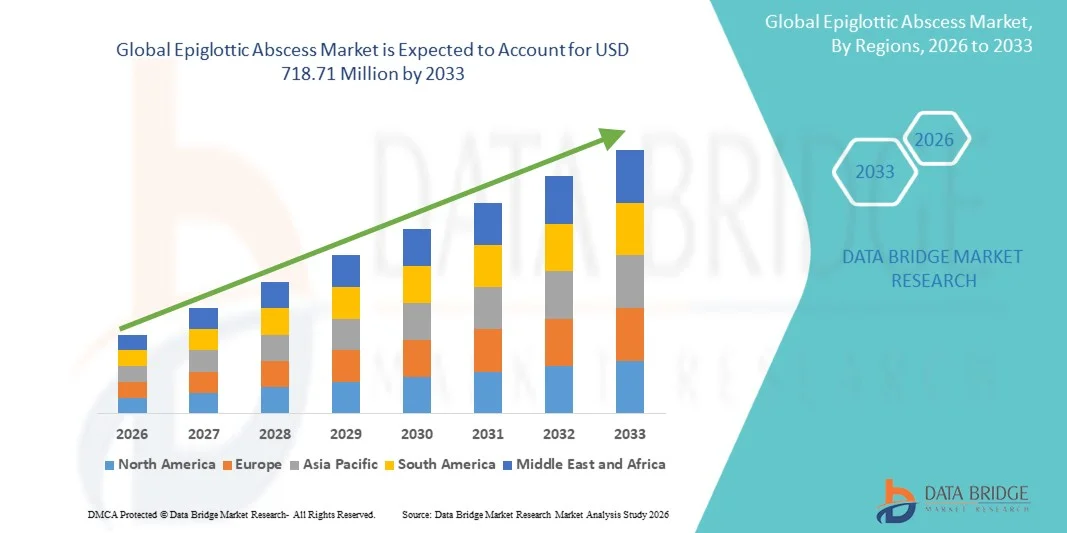
- Согласно анализу Data Bridge Market Research, глобальный размер рынка эпиглоттического абсцесса был оценен как400,00 млн долларов США в 2025 годуОжидается, что он достигнет718,71 млн долларов США к 2033 году, вCAGR 7,6%в течение прогнозируемого периода
- Рост рынка в значительной степени обусловлен увеличением заболеваемости тяжелыми инфекциями верхних дыхательных путей и осложнениями, такими как эпиглоттит, а также достижениями в области управления дыхательными путями в чрезвычайных ситуациях и диагностических технологий, что приводит к улучшению выявления и своевременного лечения в медицинских учреждениях.
- Кроме того, растущая осведомленность в области здравоохранения, расширение инфраструктуры больниц и растущий спрос на эффективные решения для лечения быстрого реагирования позиционируют управление эпиглоттическим абсцессом как критически важный компонент неотложной помощи. Эти сходящиеся факторы ускоряют принятие передовых терапевтических и поддерживающих вмешательств, тем самым значительно стимулируя рост рынка.
Размер рынка и прогноз
- Глобальная рыночная стоимость (2025):$400,00 млн.
- Ожидаемая рыночная стоимость (2033):718,71 млн. долларов США
- Прогноз CAGR (2026–2033): 7.6%
Каковы основные выводы рынка эпиглоттического абсцесса
- Эпиглоттический абсцесс, тяжелое и потенциально опасное для жизни осложнение эпиглоттита, характеризующееся накоплением гноя в эпиглотте, требует немедленного медицинского вмешательства и все чаще признается в качестве критического состояния в рамках неотложной и ЛОР-помощи из-за его воздействия на обструкцию дыхательных путей и необходимости быстрой диагностики и лечения.
- Растущий спрос на эффективные управленческие решения в первую очередь обусловлен ростом заболеваемости инфекциями верхних дыхательных путей, увеличением распространенности бактериальных инфекций и повышением осведомленности о ранней диагностике и оперативном управлении дыхательными путями в условиях неотложной помощи.
- Северная Америка доминировала на рынке эпиглоттического абсцесса с самой большой долей дохода в 38,5% в 2025 году, характеризующейся передовой инфраструктурой здравоохранения, высоким уровнем осведомленности и высокой доступностью экстренных медицинских услуг, при этом в США наблюдались значительные объемы управления случаями, поддерживаемые быстрым внедрением передовых методов диагностики и управления дыхательными путями.
- Ожидается, что Азиатско-Тихоокеанский регион станет самым быстрорастущим регионом на рынке эпиглоттического абсцесса в течение прогнозируемого периода из-за улучшения инфраструктуры здравоохранения, повышения осведомленности пациентов и роста заболеваемости инфекционными заболеваниями в густонаселенных странах.
- Сегмент лекарств доминировал на рынке эпиглоттического абсцесса с долей рынка около 47,3% в 2025 году, что обусловлено его ролью в качестве основного подхода к лечению с участием антибиотиков широкого спектра действия и вспомогательных методов лечения.
Сфера охвата и сегментация рынка эпиглоттического абсцесса
|
Атрибуты |
Эпиглоттический абсцесс ключевые рыночные идеи |
|
Сегменты покрыты |
|
|
Страны, охваченные |
Северная Америка
Европа
Азиатско-Тихоокеанский регион
Ближний Восток и Африка
Южная Америка
|
|
Ключевые игроки рынка |
|
|
Рыночные возможности |
|
|
Информационные наборы данных с добавленной стоимостью |
В дополнение к информации о рыночных сценариях, таких как рыночная стоимость, темпы роста, сегментация, географический охват и основные игроки, рыночные отчеты, курируемые Data Bridge Market Research, также включают углубленный экспертный анализ, эпидемиологию пациентов, анализ трубопроводов, анализ цен и нормативную базу. |
Каковы основные тенденции на рынке эпиглоттического абсцесса
«Достижения в области быстрой диагностики и управления аварийными воздушными путями»
- Значительной и ускоряющейся тенденцией на мировом рынке эпиглоттического абсцесса является растущее внедрение передовых методов диагностической визуализации и решений для быстрого управления дыхательными путями, таких как КТ-визуализация, волоконно-оптическая ларингоскопия и минимально инвазивные дренажные процедуры, которые значительно улучшают результаты лечения пациентов и снижают риски смертности.
- Например, современные отделения неотложной помощи в больницах все чаще используют инструменты визуализации высокого разрешения и ларингоскопии у постели, чтобы быстро выявить обструкцию дыхательных путей и начать своевременное вмешательство, тем самым повышая эффективность клинического принятия решений и лечения.
- Технологические достижения в диагностике позволяют выявлять инфекции и осложнения на ранней стадии, позволяя медицинским работникам быстро инициировать лечение.антибиотикотерапияСтабилизация дыхательных путей. Например, интеграция портативных диагностических устройств и систем мониторинга в режиме реального времени повышает точность и скорость диагностики в условиях критической помощи. Кроме того, улучшенные методы управления дыхательными путями предлагают клиницистам возможность эффективно защищать дыхательные пути, минимизируя осложнения и повышая выживаемость.
- Бесшовная интеграция передовых диагностических инструментов с протоколами неотложной помощи в больницах облегчает скоординированную помощь в междисциплинарных командах, включая специалистов по ЛОР, интенсивистов и врачей скорой помощи. Благодаря структурированным клиническим путям пациенты получают своевременное и эффективное лечение, улучшая общие результаты в области здравоохранения.
- Эта тенденция к более эффективным, точным и быстрым системам лечения коренным образом меняет клинические подходы к управлению эпиглоттическим абсцессом. Следовательно, поставщики медицинских услуг инвестируют в передовую инфраструктуру неотложной помощи с такими функциями, как инструменты быстрого доступа к дыхательным путям и интегрированные системы мониторинга для повышения безопасности пациентов.
- Спрос на улучшенные диагностические решения и решения для управления дыхательными путями неуклонно растет в больницах и отделениях неотложной помощи, поскольку системы здравоохранения все чаще отдают приоритет быстрому вмешательству и эффективности критической помощи.
- Растущее внимание к антимикробному управлению и таргетной антибиотикотерапии повышает эффективность лечения при одновременном снижении риска резистентности при лечении случаев эпиглоттического абсцесса
Динамика рынка эпиглоттического абсцесса
водитель
Растущая потребность из-за растущей частоты тяжелых респираторных инфекций и спроса на неотложную помощь
- Растущая распространенность тяжелых инфекций верхних дыхательных путей и связанных с ними осложнений в сочетании с растущим спросом на неотложную медицинскую помощь является значительным фактором роста рынка эпиглоттического абсцесса.
- Например, в последние годы больницы сообщили о росте случаев эпиглоттита у взрослых, требующих срочного управления дыхательными путями и госпитализации, что побудило поставщиков медицинских услуг укрепить возможности реагирования на чрезвычайные ситуации и протоколы лечения.
- По мере того, как среди медицинских работников и пациентов растет осведомленность об опасных для жизни состояниях дыхательных путей, растет спрос на быструю диагностику и эффективные решения для лечения, предлагая убедительную потребность в передовых медицинских вмешательствах по сравнению с традиционными подходами.
- Кроме того, расширение инфраструктуры здравоохранения и наличие передовых диагностических инструментов делают эффективное управление эпиглоттическим абсцессом более доступным, поддерживая улучшенные результаты лечения и эффективность лечения.
- Необходимость немедленной стабилизации дыхательных путей, использование парентеральных антибиотиков и интенсивный мониторинг являются ключевыми факторами, стимулирующими спрос на специализированную помощь как в развитых, так и в новых системах здравоохранения. Растущее внимание к системам готовности к критической помощи и реагирования на чрезвычайные ситуации также способствует росту рынка.
- Растущие расходы на здравоохранение как в развитых, так и в развивающихся странах обеспечивают лучший доступ к службам неотложной помощи и расширенным вариантам лечения острых респираторных заболеваний.
- Увеличение гериатрической популяции, которая более восприимчива к тяжелым инфекциям и осложнениям, еще больше стимулирует спрос на своевременную диагностику и лечение эпиглоттического абсцесса.
Сдержанность/вызов
«Ограниченная осведомленность о заболеваниях и высокая зависимость от инфраструктуры острой помощи»
- Ограниченная осведомленность о ранних симптомах эпиглоттического абсцесса и его быстром прогрессировании представляет собой серьезную проблему для своевременной диагностики и лечения, особенно в слаборазвитых и сельских медицинских учреждениях, где доступ к специализированной помощи остается ограниченным.
- Например, задержка представления пациента и неправильный диагноз в учреждениях первичной медико-санитарной помощи могут привести к серьезным осложнениям, увеличению нагрузки на отделения неотложной помощи и снижению эффективности лечения.
- Решение этих проблем требует улучшения клинической подготовки, программ повышения осведомленности и наличия диагностических инструментов для обеспечения раннего выявления. Медицинские работники все больше сосредотачиваются на образовательных инициативах и стандартизированных руководящих принципах лечения для улучшения результатов лечения пациентов. Кроме того, высокая зависимость от больничной инфраструктуры и квалифицированных специалистов может стать барьером в регионах с ограниченными ресурсами здравоохранения.
- В то время как достижения в области медицинских технологий улучшают возможности лечения, отсутствие широкого доступа к учреждениям критической помощи и квалифицированным специалистам продолжает препятствовать оптимальному лечению заболеваний, особенно в странах с низким и средним уровнем дохода.
- Преодоление этих проблем путем развития инфраструктуры здравоохранения, повышения осведомленности и улучшения доступа к экстренным медицинским услугам будет иметь жизненно важное значение для устойчивого роста рынка.
- Вариабельность клинического представления и перекрытие с другими респираторными заболеваниями могут привести к диагностической неопределенности, задерживая соответствующее вмешательство и влияя на результаты лечения.
- Ограниченная доступность стандартизированных протоколов лечения в различных системах здравоохранения может привести к непоследовательным подходам к управлению, влияющим на общее качество медицинской помощи.
Как сегментируется рынок эпиглоттического абсцесса
Рынок сегментирован на основе лечения, пути введения, конечных пользователей и канала распределения.
- Лечение
На основе лечения рынок эпиглоттического абсцесса сегментирован на вакцинацию, медикаментозное лечение, поддерживающую помощь и другие. Сегмент лекарств доминировал на рынке с самой большой долей дохода в 47,3% в 2025 году, что обусловлено его ролью в качестве основной линии лечения с участием антибиотиков широкого спектра действия и вспомогательных методов лечения для контроля инфекции и предотвращения осложнений. Клиницисты широко полагаются на лекарства для немедленного вмешательства, особенно в больницах, где быстрый инфекционный контроль имеет решающее значение. Растущая доступность передовых антибиотиков и комбинированной терапии также поддерживает доминирование сегмента. Кроме того, медикаментозное лечение снижает потребность в инвазивных процедурах на ранних стадиях. Растущее внимание к антимикробной эффективности и протоколам лечения в больницах продолжает укреплять позиции этого сегмента.
Ожидается, что в сегменте вспомогательной помощи будут наблюдаться самые быстрые темпы роста с 2026 по 2033 год, чему способствует растущая важность управления дыхательными путями и поддержки критической помощи в тяжелых случаях. Поддерживающий уход включает кислородную терапию, гидратацию и интенсивный мониторинг, которые необходимы для стабилизации пациентов с рисками обструкции дыхательных путей. Увеличение инвестиций в инфраструктуру ICU и отделения неотложной помощи стимулирует спрос на вспомогательные вмешательства. Медицинские работники подчеркивают комплексные подходы к лечению, сочетающие медикаментозное лечение и поддерживающую помощь. Растущая осведомленность о ранней стабилизации дыхательных путей также способствует росту сегмента. Кроме того, ускоряется внедрение неинвазивных технологий вентиляции и мониторинга.
- По маршруту администрации
На основе пути введения рынок эпиглоттического абсцесса сегментирован на оральный, парентеральный и другие. Парентеральный сегмент доминировал на рынке с наибольшей долей выручки в 2025 году, что обусловлено его быстрым началом действия и высокой эффективностью в чрезвычайных условиях. Внутривенное введение предпочтительно в больничных условиях для критически больных пациентов, требующих немедленного терапевтического ответа. Он обеспечивает точное дозирование и лучшую биодоступность по сравнению с пероральными альтернативами. Растущее число госпитализаций по поводу тяжелых инфекций поддерживает доминирование этого сегмента. Кроме того, парентеральные пути необходимы в тех случаях, когда пациенты не могут глотать из-за обструкции дыхательных путей. Широкое применение IV антибиотиков при острой помощи еще больше усиливает рост сегмента.
Ожидается, что пероральный сегмент будет самым быстрым CAGR с 2026 по 2033 год, что обусловлено его удобством и растущим использованием на этапах после острой и восстановительной обработки. Пероральные препараты все чаще назначаются после того, как пациент стабилизируется и выписывается из больницы. Этот маршрут поддерживает долгосрочное лечение инфекции и сокращает пребывание в больнице. Наличие эффективных пероральных антибиотиков способствует принятию среди поставщиков медицинских услуг. Пациенты также предпочитают пероральное введение из-за простоты использования и снижения затрат. Переход к амбулаторному лечению и восстановлению на дому еще больше усиливает этот сегмент.
- конечными пользователями
На базе конечных пользователей рынок эпиглоттического абсцесса сегментирован на больницы, домашнюю помощь, специализированные центры и другие. Сегмент больниц доминировал на рынке с самой большой долей доходов в 2025 году, что обусловлено необходимостью немедленной неотложной помощи, передовых диагностических учреждений и доступа к отделениям неотложной помощи. Больницы являются основным пунктом лечения из-за опасного для жизни состояния, требующего быстрого управления дыхательными путями. Наличие квалифицированных специалистов и развитой инфраструктуры поддерживает эффективные результаты лечения. Увеличение числа пациентов с тяжелыми респираторными заболеваниями еще больше стимулирует доминирование сегмента. Кроме того, больницы предоставляют комплексную помощь, включающую диагностику, лекарства и поддерживающую терапию. Постоянные инвестиции в инфраструктуру больниц способствуют росту этого сегмента.
Ожидается, что в сегменте домашних услуг будут наблюдаться самые быстрые темпы роста с 2026 по 2033 год, чему способствует растущая тенденция к восстановлению после госпитализации и амбулаторному лечению. Пациенты, выздоравливающие от эпиглоттического абсцесса, все чаще предпочитают домашний уход за удобством и экономической эффективностью. Достижения в области портативных медицинских устройств и телемедицинских услуг позволяют осуществлять эффективный мониторинг за пределами больниц. Медицинские работники способствуют раннему выписыванию с надлежащим последующим уходом. Растущий спрос на персонализированные и ориентированные на пациента модели ухода поддерживает расширение сегмента. Кроме того, повышение осведомленности об управлении инфекцией в домашних условиях ускоряет процесс принятия.
- Дистрибьюторский канал
На основе канала распространения рынок эпиглоттического абсцесса сегментирован в больничную аптеку, онлайн-аптеку и розничную аптеку. Сегмент больничных аптек доминировал на рынке с самой большой долей доходов в 2025 году, что обусловлено большим объемом стационарного лечения и немедленными требованиями к лекарствам в чрезвычайных ситуациях. Госпитальные аптеки обеспечивают доступность критических препаратов, включая внутривенные антибиотики и поддерживающие лекарства. Они играют решающую роль в лечении острых случаев, требующих быстрого вмешательства. Интеграция с протоколами лечения в больницах обеспечивает эффективное распределение лекарств. Увеличение числа госпитализаций также способствует доминированию сегмента. Кроме того, строгий нормативный контроль над неотложными лекарствами поддерживает зависимость от больничных аптек.
Ожидается, что сегмент онлайн-аптек станет свидетелем самого быстрого CAGR с 2026 по 2033 год, что обусловлено растущим внедрением цифровых платформ здравоохранения и растущим спросом на удобный доступ к лекарствам. Онлайн-аптеки позволяют пациентам легко получать назначенные лекарства на этапах восстановления. Расширениеэлектронная торговляЗдравоохранение поддерживает этот рост. Пациенты получают выгоду от доставки на порог и конкурентных цен. Увеличение проникновения интернета исмартфонИспользование еще больше способствует усыновлению. Кроме того, улучшения в области регулирования и инициативы в области цифрового здравоохранения укрепляют доверие к онлайновым аптечным услугам.
В каком регионе находится наибольшая доля рынка эпиглобального абсцесса
- Северная Америка доминировала на рынке эпиглоттического абсцесса с самой большой долей дохода в 38,5% в 2025 году, характеризующейся развитой инфраструктурой здравоохранения, высоким уровнем осведомленности и высокой доступностью экстренных медицинских услуг.
- Поставщики медицинских услуг в регионе уделяют первоочередное внимание быстрой диагностике, передовому управлению дыхательными путями и эффективным мерам инфекционного контроля, поддерживаемым широким использованием диагностических изображений и учреждений критической помощи.
- Это широкое внедрение лечения дополнительно поддерживается высокими расходами на здравоохранение, сильной клинической осведомленностью и наличием устоявшихся больничных сетей, а также растущим вниманием к раннему вмешательству и готовности к чрезвычайным ситуациям, устанавливая эффективное управление эпиглоттическим абсцессом в качестве критического компонента систем неотложной помощи.
Эпиглоттический рынок абсцесса США
Американский рынок эпиглоттического абсцесса занял самую большую долю дохода в 80,5% в 2025 году в Северной Америке, чему способствовало сильное присутствие передовой инфраструктуры здравоохранения и увеличение заболеваемости тяжелыми респираторными инфекциями, требующими неотложной помощи. Медицинские работники все чаще отдают приоритет быстрой диагностике и своевременному управлению дыхательными путями для предотвращения осложнений, связанных с эпиглоттическим абсцессом. Растущая доступность передовых диагностических изображений и отделений критической помощи также поддерживает эффективные результаты лечения. Кроме того, растущие расходы на здравоохранение и сильная клиническая осведомленность вносят значительный вклад в расширение рынка.
Эпиглоттический рынок абсцесса в Европе
По прогнозам, европейский рынок эпиглоттического абсцесса будет расширяться при существенном CAGR в течение прогнозируемого периода, в основном за счет хорошо зарекомендовавших себя систем здравоохранения и повышения осведомленности о ранней диагностике инфекций, связанных с дыхательными путями. Увеличение числа госпитализаций в сочетании со спросом на передовые диагностические и лечебные решения способствует лечению эпиглоттического абсцесса. Европейские поставщики медицинских услуг также сосредоточены на улучшении результатов лечения пациентов с помощью стандартизированных протоколов лечения. Регион переживает устойчивый рост в больницах и специализированных учреждениях, где широко применяются передовые решения для управления дыхательными путями.
Эпиглоттический абсцесс рынка Великобритании
Ожидается, что в течение прогнозируемого периода рынок эпиглоттического абсцесса в Великобритании будет расти с заметным CAGR, что обусловлено повышением осведомленности о тяжелых респираторных заболеваниях и необходимости своевременного медицинского вмешательства. Кроме того, растущее давление на службы неотложной медицинской помощи способствует принятию эффективных диагностических и лечебных решений. Ожидается, что сильная система общественного здравоохранения Великобритании, наряду с ее акцентом на раннюю диагностику и безопасность пациентов, продолжит стимулировать рост рынка.
Немецкое эпиглоттическое исследование рынка абсцесса
Ожидается, что в течение прогнозируемого периода рынок эпиглоттического абсцесса в Германии будет расширяться на значительном CAGR, чему будет способствовать уделение повышенного внимания передовым медицинским технологиям и эффективным системам неотложной помощи. Хорошо развитая инфраструктура здравоохранения Германии в сочетании с акцентом на клинические инновации и высококачественный уход способствует эффективному лечению заболеваний. Внедрение передовых методов диагностической визуализации и управления дыхательными путями также становится все более распространенным, при этом предпочтение отдается точному и своевременному вмешательству в соответствии с местными стандартами здравоохранения.
Азиатско-тихоокеанский эпиглоттический рынок абсцесса
Азиатско-тихоокеанский рынок эпиглоттического абсцесса будет расти на самом быстром CAGR 8,9% в течение прогнозируемого периода с 2026 по 2033 год, что обусловлено увеличением плотности населения, ростом заболеваемости инфекционными заболеваниями и улучшением инфраструктуры здравоохранения в таких странах, как Китай, Япония и Индия. Растущее внимание региона к укреплению систем неотложной помощи, поддерживаемое правительственными инициативами в области здравоохранения, стимулирует управление эпиглоттическим абсцессом. Кроме того, по мере того, как APAC продолжает инвестировать в инфраструктуру больниц и диагностические возможности, доступ к своевременному лечению расширяется.
Японский эпиглоттный рынок абсцесса
Японский рынок эпиглоттического абсцесса набирает обороты благодаря передовой системе здравоохранения страны, старению населения и увеличению внимания к лечению инфекций. Японский сектор здравоохранения уделяет большое внимание ранней диагностике и эффективному лечению, а управление эпиглоттическим абсцессом поддерживается широкой доступностью диагностических технологий. Интеграция передовых медицинских устройств и систем мониторинга способствует росту. Кроме того, стареющее население Японии, вероятно, будет стимулировать спрос на эффективные и своевременные решения по управлению дыхательными путями как в больницах, так и в специализированных учреждениях.
Эпиглоттическое исследование рынка абсцесса в Индии
На индийский рынок эпиглоттического абсцесса в 2025 году пришлась самая большая доля доходов рынка в Азиатско-Тихоокеанском регионе, что объясняется большой базой населения страны, увеличением заболеваемости респираторными инфекциями и улучшением доступа к медицинским услугам. Индия является быстро растущим рынком для неотложной помощи в больницах, и управление эпиглоттическим абсцессом становится все более важным как в государственных, так и в частных медицинских учреждениях. Стремление к развитию инфраструктуры здравоохранения и повышение осведомленности о раннем лечении наряду с расширением сети больниц являются ключевыми факторами, стимулирующими рынок в Индии.
Какие компании занимают ведущие позиции на рынке эпиглобального абсцесса
Индустрия Epiglottic Abscess в основном возглавляется хорошо зарекомендовавшими себя компаниями, в том числе:
- Pfizer Inc. (США)
- GSK plc (Великобритания)
- F. Hoffmann-La Roche Ltd (Швейцария)
- Novartis AG (Швейцария)
- Merck & Co., Inc. (США)
- Санофи (Франция)
- AstraZeneca (Великобритания)
- Eli Lilly & Company (США)
- Johnson & Johnson Services, Inc. (США)
- Teva Pharmaceutical Industries Ltd. (Израиль)
- AbbVie Inc. (США)
- Bayer AG (Германия)
- Gilead Sciences, Inc. (США)
- Amgen Inc. (США)
- BD (США)
- Medtronic (Ирландия)
- Smith & Nephew plc (Великобритания)
- Teleflex Incorporated (США)
- Страйкер (США)
- Olympus Corporation (Япония)
Каковы последние события на рынке эпиглобального абсцесса
- В октябре 2025 года в отчете о клиническом случае, опубликованном на Cureus, были освещены проблемы с отсроченной диагностикой эпиглоттического абсцесса у взрослых, подчеркивая, что образование абсцесса наблюдалось в 22% случаев предполагаемого эпиглоттита, что усиливает необходимость раннего выявления и улучшения диагностических протоколов в условиях неотложной помощи.
- В сентябре 2025 года крупномасштабный мета-анализ управления дыхательными путями при эпиглоттите у взрослых с участием более 10 000 пациентов сообщил о снижении, но все еще значительных темпах вмешательства в дыхательные пути (~ 15,6%), с увеличением принятия более безопасных и более селективных стратегий интубации, улучшая результаты лечения пациентов в тяжелых случаях.
- В октябре 2024 года ретроспективное исследование, опубликованное Springer, в котором анализировались 366 пациентов в Китае, сообщило о неуклонном росте заболеваемости эпиглоттитом и подчеркнуло широкое использование внутривенных антибиотиков и кортикостероидов, что указывает на развитие протоколов лечения и увеличение бремени здравоохранения.
- В августе 2023 года клиническое исследование, доступное на PubMed Central, сообщило о редком случае спонтанного эпиглоттического абсцесса, связанного с диабетом, идентифицируя метаболические расстройства как новые факторы риска и подчеркивая достижения в методах управления дыхательными путями, таких как интубация бодрствования и хирургический дренаж.
- В октябре 2021 года тематическое исследование, опубликованное в Британском журнале хирургии, задокументировало увеличение заболеваемости эпиглоттическим абсцессом у взрослых, несмотря на сокращение педиатрических случаев из-за вакцинации, что указывает на изменение демографии заболеваний и необходимость целевых стратегий лечения взрослых.
SKU-
Получите онлайн-доступ к отчету на первой в мире облачной платформе рыночной аналитики
- Интерактивная панель анализа данных
- Панель анализа компании для возможностей с высоким потенциалом роста
- Доступ аналитика-исследователя для настройки и запросов
- Анализ конкурентов с помощью интерактивной панели
- Последние новости, обновления и анализ тенденций
- Используйте возможности сравнительного анализа для комплексного отслеживания конкурентов
Методология исследования
Сбор данных и анализ базового года выполняются с использованием модулей сбора данных с большими размерами выборки. Этап включает получение рыночной информации или связанных данных из различных источников и стратегий. Он включает изучение и планирование всех данных, полученных из прошлого заранее. Он также охватывает изучение несоответствий информации, наблюдаемых в различных источниках информации. Рыночные данные анализируются и оцениваются с использованием статистических и последовательных моделей рынка. Кроме того, анализ доли рынка и анализ ключевых тенденций являются основными факторами успеха в отчете о рынке. Чтобы узнать больше, пожалуйста, запросите звонок аналитика или оставьте свой запрос.
Ключевой методологией исследования, используемой исследовательской группой DBMR, является триангуляция данных, которая включает в себя интеллектуальный анализ данных, анализ влияния переменных данных на рынок и первичную (отраслевую экспертную) проверку. Модели данных включают сетку позиционирования поставщиков, анализ временной линии рынка, обзор рынка и руководство, сетку позиционирования компании, патентный анализ, анализ цен, анализ доли рынка компании, стандарты измерения, глобальный и региональный анализ и анализ доли поставщика. Чтобы узнать больше о методологии исследования, отправьте запрос, чтобы поговорить с нашими отраслевыми экспертами.
Доступна настройка
Data Bridge Market Research является лидером в области передовых формативных исследований. Мы гордимся тем, что предоставляем нашим существующим и новым клиентам данные и анализ, которые соответствуют и подходят их целям. Отчет можно настроить, включив в него анализ ценовых тенденций целевых брендов, понимание рынка для дополнительных стран (запросите список стран), данные о результатах клинических испытаний, обзор литературы, обновленный анализ рынка и продуктовой базы. Анализ рынка целевых конкурентов можно проанализировать от анализа на основе технологий до стратегий портфеля рынка. Мы можем добавить столько конкурентов, о которых вам нужны данные в нужном вам формате и стиле данных. Наша команда аналитиков также может предоставить вам данные в сырых файлах Excel, сводных таблицах (книга фактов) или помочь вам в создании презентаций из наборов данных, доступных в отчете.











