



Global Fat Replacers Market Segmentation, By Type (Carbohydrate-Based, Protein-Based, and Fat-Based), Source (Plant and Animal), Category (Clean-Label and Conventional), Form (Liquid and Dry), Application (Bakery, Dairy Products, Sauces, Soups, & Dressings, Convenience Foods, Processed Meat, Confectionery, Beverages, Functional Food, and Others) - Industry Trends and Forecast to 2033
Каков размер рынка заменителей жира и темпы роста
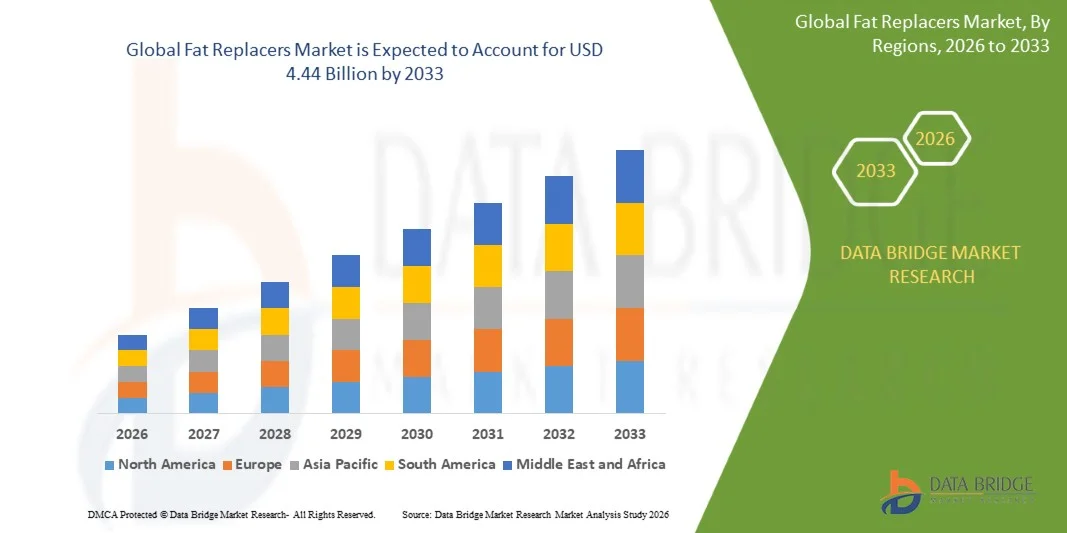
- Согласно анализу Data Bridge Market Research, размер мирового рынка заменителей жира был оценен как2,74 млрд долларов в 2025 годуОжидается, что он достигнет$4,44 млрд к 2033 году, вCAGR 6,20%в течение прогнозируемого периода
- Увеличение спроса на обезжиренные, низкокалорийные и ориентированные на здоровье пищевые продукты, рост распространенности ожирения и сердечно-сосудистых заболеваний, растущая осведомленность потребителей о здоровом питании и расширение применения заменителей жира в пекарнях, молочных продуктах, обработанных пищевых продуктах и напитках являются одними из основных факторов, стимулирующих рост рынка заменителей жира.
Размер рынка и прогноз
Глобальная рыночная стоимость (2025):$2,74 млрд.
Ожидаемая рыночная стоимость (2033):$4,44 млрд.
Прогноз CAGR (2026–2033):6.20%
Каковы основные выводы рынка заменителей жира
- Растущий спрос на функциональные продукты питания, чистые ингредиенты и растительные альтернативы в развитых и развивающихся странах создает значительные возможности для расширения рынка.
- Такие проблемы, как ограничения вкуса и текстуры, более высокие затраты на рецептуру и нормативные ограничения, могут выступать сдерживающими факторами для роста рынка заменителей жира.
- Азиатско-Тихоокеанский регион доминировал на рынке заменителей жиров с долей дохода 43,70% в 2025 году, что обусловлено сильным ростом потребления обработанных пищевых продуктов, расширением хлебобулочных и молочных отраслей и повышением осведомленности о здоровье в таких странах, как Китай, Индия, Япония и Южная Корея.
- По прогнозам, в Северной Америке будет зарегистрирован самый быстрый CAGR в 7,60% с 2026 по 2033 год, что обусловлено растущим спросом на низкокалорийные, экологически чистые и растительные продукты питания в США и Канаде.
- Сегмент на основе углеводов доминировал на рынке с долей 46,5% в 2025 году, поскольку эти заменители широко используются из-за их способности имитировать текстуру и объем жиров при одновременном снижении калорийности.
Сфера охвата и сегментация рынка заменителей жиров
|
Атрибуты |
Fat Replacers: ключевые идеи рынка |
|
Сегменты покрыты |
|
|
Страны, охваченные |
Северная Америка
Европа
Азиатско-Тихоокеанский регион
Ближний Восток и Африка
Южная Америка
|
|
Ключевые игроки рынка |
|
|
Рыночные возможности |
|
|
Информационные наборы данных с добавленной стоимостью |
В дополнение к информации о рыночных сценариях, таких как рыночная стоимость, темпы роста, сегментация, географическое покрытие и основные игроки, рыночные отчеты, курируемые Data Bridge Market Research, также включают углубленный экспертный анализ, анализ цен, анализ доли бренда, опрос потребителей, анализ демографии, анализ цепочки поставок, анализ цепочки создания стоимости, обзор сырья / расходных материалов, критерии выбора поставщиков, анализ PESTLE, анализ Porter и нормативную базу. |
Каковы основные тенденции на рынке заменителей жира
"Увеличение перехода на высокоскоростные, компактные и ПК-заменители жира"
- Рынок заменителей жиров стал свидетелем сильного внедрения чистых, растительных и натуральных заменителей жиров на основе ингредиентов, что обусловлено растущими предпочтениями потребителей в отношении более здоровых и прозрачных пищевых продуктов.
- Производители внедряют инновационные решения для замены жиров, полученные из белков, углеводов и волокон, которые воспроизводят вкус, текстуру и ощущение во рту жиров без ущерба для питательной ценности.
- Растущий спрос на низкокалорийные, обезжиренные и функциональные продукты питания стимулирует использование заменителей жира в пекарнях, молочных продуктах, обработанных продуктах и напитках.
- Например, такие компании, как Ingredion Incorporated, Cargill, Incorporated, Tate & Lyle и Kerry Group расширяют свои портфели с помощью чистых и растительных ингредиентов для замены жиров.
- Повышение внимания к снижению уровня сахара и жира, улучшению питания и функциональным инновациям в области пищевых продуктов ускоряет внедрение передовых технологий замены жиров.
- По мере того, как осведомленность потребителей о здоровье и благополучии продолжает расти, заменители жира будут играть решающую роль в пищевых составах следующего поколения.
Каковы основные драйверы рынка заменителей жира
- Растущий спрос на обезжиренные и низкокалорийные продукты питания из-за растущей распространенности ожирения, диабета и сердечно-сосудистых заболеваний является основным драйвером рынка заменителей жира.
- Например, в 2025 году ведущие компании, такие как DuPont, Corbion и Ashland, расширили свои портфели ингредиентов для поддержки более здоровых пищевых рецептур.
- Повышение осведомленности потребителей о привычках здорового питания и маркировке пищевых продуктов увеличивает спрос на заменители жиров на мировых рынках.
- Растущее внедрение растительных диет, функциональных продуктов питания и обогащенных пищевых продуктов еще больше повышает спрос на рынке.
- Достижения в области пищевых технологий улучшают вкус, текстуру и стабильность заменителей жира, повышая их признание в основных продуктах питания.
- Ожидается, что благодаря повышению осведомленности о здоровье и инновациям в пищевой промышленности рынок заменителей жиров будет устойчиво расти в долгосрочной перспективе.
Какой фактор препятствует росту рынка заменителей жира
- Проблемы с воспроизведением точного вкуса, запаха изо рта и текстуры традиционных жиров ограничивают широкое распространение заменителей жира в некоторых пищевых продуктах.
- Например, в течение 2024–2025 годов производители столкнулись с трудностями в балансировании функциональности и сенсорных атрибутов при сохранении экономической эффективности в крупном производстве.
- Высокие затраты, связанные с исследованиями, разработками и разработкой передовых заменителей жира, увеличивают общую стоимость продукта.
- Нормативно-правовые требования и стандарты маркировки пищевых ингредиентов создают дополнительную сложность для производителей.
- Ограниченное принятие потребителей в некоторых регионах из-за восприятия измененного вкуса и качества еще больше сдерживает рост рынка.
- Для решения этих проблем компании сосредоточены на инновациях продуктов, улучшении сенсорных функций и стратегиях оптимизации затрат, которые будут поддерживать долгосрочный рост рынка заменителей жира.
Как сегментируется рынок заменителей жира
Рынок сегментирован на основеТип, источник, категория, форма и применение.
• По типу
Исходя из типа, рынок заменителей жира сегментирован на углеводный, белковый и жирный. Сегмент на основе углеводов доминировал на рынке с долей 46,5% в 2025 году, поскольку эти заменители широко используются из-за их способности имитировать текстуру и объем жиров при одновременном снижении калорийности. Ингредиенты, такие как крахмалы, целлюлоза и десны, широко используются в хлебобулочных, молочных и обработанных пищевых продуктах. Их экономичность, простота формулирования и совместимость с широким спектром пищевых продуктов поддерживают сильное внедрение на рынке.
Ожидается, что сегмент продуктов на основе белка будет расти самыми быстрыми темпами с 2026 по 2033 год, что обусловлено растущим спросом на высокобелковые и функциональные продукты питания. Растущее внедрение растительных белков и улучшенные возможности улучшения текстуры еще больше поддерживают рост сегмента.
• Источник
На основе источника рынок сегментирован на растительный и животный. Сегмент растительного происхождения доминировал на рынке с долей 61,8% в 2025 году, чему способствовало увеличение потребительских предпочтений веганских, вегетарианских и экологически чистых пищевых продуктов. Ингредиенты растительного происхождения, такие как соя, гороховый белок и соединения на основе крахмала, широко используются из-за их устойчивости и пользы для здоровья.
Сегмент на основе растений, как ожидается, будет расти самыми быстрыми темпами с 2026 по 2033 год, чему способствует растущая популярность растительных диет, экологические проблемы и спрос на устойчивые пищевые ингредиенты. Непрерывные инновации в заменителях растительных жиров еще больше ускоряют рост рынка.
• по категориям
Исходя из категории, рынок заменителей жира сегментирован на Clean-Label и Conventional. Традиционный сегмент доминировал на рынке с долей 55,2% в 2025 году, поскольку он включает хорошо зарекомендовавшие себя ингредиенты, широко используемые в крупномасштабном производстве продуктов питания из-за их проверенной функциональности и экономической эффективности. Эти продукты широко используются в обработанных и упакованных пищевых приложениях.
Ожидается, что сегмент Clean-Label будет расти самыми быстрыми темпами с 2026 по 2033 год, что обусловлено растущим потребительским спросом на натуральные, минимально обработанные и прозрачные составы ингредиентов. Повышение осведомленности о безопасности и здоровье пищевых продуктов ускоряет переход к экологически чистым решениям.
• по форме
На основе формы рынок сегментирован на жидкий и сухой. Сухой сегмент доминировал на рынке с долей 57,4% в 2025 году, поскольку заменители сухих жиров предлагают более длительный срок хранения, простоту хранения и удобную обработку во время обработки пищевых продуктов. Они широко используются в хлебобулочных смесях, порошкообразных напитках и обработанных пищевых продуктах.
Сегмент жидкостей, как ожидается, будет расти самыми быстрыми темпами с 2026 по 2033 год, что обусловлено увеличением использования готовых к употреблению продуктов, соусов, повязок и молочных рецептур. Их способность легко смешиваться и обеспечивать однородную текстуру поддерживает растущий спрос.
• Подача заявки
На основе применения рынок подразделяется на пекарни, молочные продукты, соусы, супы и платья, удобные продукты питания, обработанное мясо, кондитерские изделия, напитки, функциональную пищу и другие. Сегмент пекарни доминировал на рынке с долей 28,9% в 2025 году, что обусловлено высоким спросом на нежирные хлебобулочные изделия, такие как хлеб, торты и выпечка. Жировые заменители помогают поддерживать текстуру, влажность и вкус при одновременном снижении калорийности, что делает их необходимыми в хлебобулочных составах.
Ожидается, что сегмент функциональной пищи будет расти самыми быстрыми темпами с 2026 по 2033 год, что обусловлено растущим вниманием потребителей к здоровью, питанию и здоровью. Растущий спрос на обогащенные и диетические пищевые продукты ускоряет внедрение заменителей жира в функциональных пищевых приложениях.
В каком регионе самая большая доля рынка заменителей жира
- Азиатско-Тихоокеанский регион доминировал на рынке заменителей жиров с долей дохода 43,70% в 2025 году, чему способствовал сильный рост потребления обработанных пищевых продуктов, расширение хлебобулочных и молочных отраслей и повышение осведомленности о здоровье в таких странах, как Китай, Индия, Япония и Южная Корея. Растущий спрос на обезжиренные и функциональные продукты питания, поддерживаемый быстрой урбанизацией и изменением привычек питания, продолжает стимулировать расширение рынка.
- Ведущие компании в Азиатско-Тихоокеанском регионе сосредоточены на разработке экономически эффективных, растительных и чистых заменителей жира для удовлетворения растущего потребительского спроса. Расширение пищевой промышленности, доступность сырья и поддерживающие правительственные инициативы еще больше укрепляют лидерство региона.
- Растущее население среднего класса, увеличение располагаемого дохода и растущее предпочтение более здоровых альтернативных продуктов питания продолжают укреплять долгосрочный рост рынка во всем регионе.
Китайский рынок заменит жир
Китай является крупнейшим поставщиком в Азиатско-Тихоокеанском регионе, чему способствует массовая пищевая промышленность, увеличение потребления упакованных продуктов и растущий спрос на обезжиренные диетические варианты. Расширение хлебопекарных, молочных и пищевых секторов стимулирует принятие заменителей жира. Государственная поддержка инноваций в области продовольствия и мощные производственные возможности способствуют дальнейшему росту рынка.
Японский рынок заменителей жира
Япония демонстрирует устойчивый рост, поддерживаемый высокой осведомленностью потребителей о здоровье и питании, а также высоким спросом на функциональные и низкокалорийные продукты питания. Увеличение применения заменителей жиров в обработанных пищевых продуктах и напитках стимулирует расширение рынка. Ориентация на качество и инновации способствует долгосрочному росту.
Индийский рынок заменителей жира
Индия становится крупным центром роста, обусловленным ростом осведомленности о здоровье, расширением пищевой промышленности и увеличением спроса на обезжиренные и функциональные продукты. Рост в хлебобулочных, молочных и упакованных пищевых сегментах поддерживает принятие заменителей жира. Правительственные инициативы и растущие инвестиции в производство продуктов питания еще больше ускоряют проникновение на рынок.
Южнокорейский рынок заменителей жира
Южная Корея вносит значительный вклад благодаря высокому спросу на функциональные продукты питания, диетические продукты и инновации в области здорового питания. Расширение внедрения чистых ингредиентов и передовых пищевых технологий способствует росту рынка. Высокая осведомленность потребителей и технологические достижения еще больше укрепляют позиции страны.
Рынок заменителей жира в Северной Америке
По прогнозам, в Северной Америке будет зарегистрирован самый быстрый CAGR в 7,60% с 2026 по 2033 год, что обусловлено растущим спросом на низкокалорийные, экологически чистые и растительные продукты питания в США и Канаде. Растущая распространенность ожирения и заболеваний, связанных с образом жизни, ускоряет внедрение заменителей жира в обработанных и функциональных пищевых продуктах. Широкое присутствие мировых производителей пищевых ингредиентов, расширенные возможности НИОКР и высокая осведомленность потребителей о здоровье и питании еще больше поддерживают региональный рост.
Американский рынок заменителей жира Insight
США являются крупнейшим поставщиком в Северной Америке, чему способствует высокий спрос на обезжиренные и функциональные пищевые продукты в хлебопекарной, молочной и переработанной пищевой промышленности. Увеличение внимания потребителей к здоровью, питанию и чистым ингредиентам стимулирует рост рынка. Присутствие крупных компаний по производству пищевых ингредиентов и высокие уровни инноваций еще больше усиливают расширение рынка.
Канадский рынок заменителей жира
Канада вносит значительный вклад в региональный рост, обусловленный повышением осведомленности о здоровье, увеличением спроса на растительные и низкокалорийные продукты и расширением пищевой промышленности. Поддерживающая нормативная среда и растущее внедрение чистых ингредиентов еще больше укрепляют развитие рынка.
Каковы основные компании на рынке заменителей жира
Отрасль заменителей жиров в основном возглавляют хорошо зарекомендовавшие себя компании, в том числе:
- Kerry Group (Ирландия)
- Ulrick & Short Ltd. (Великобритания)
- Ingredion Incorporated (США)
- CP Kelco U.S., Inc. (США)
- Tate & Lyle (Великобритания)
- Бенео (Германия)
- Cargill, Incorporated (США)
- Wilmar International Ltd. (Сингапур)
- JELU-WERK J. Ehrler GmbH & Co. KG (Германия)
- Epogee (США)
- Grain Processing Corporation (США)
- Корбион (Нидерланды)
- Ashland (США)
- AVEBE (Нидерланды)
- DuPont (США)
Каковы последние события на мировом рынке заменителей жиров
- В марте 2024 года Clean Food Group обеспечила финансирование в размере более 3 миллионов долларов США для разработки устойчивых альтернатив нефти и жиров, а к 2025 году планируется коммерциализировать более здоровые решения для жиров, что, как ожидается, ускорит инновации в технологиях замены устойчивых жиров.
- В марте 2023 года Shiru представила OleoPro, растительный белковый жирный ингредиент, предназначенный для альтернативных применений белка, предлагающий значительно более низкое содержание насыщенных жиров по сравнению с традиционными жирами, это нововведение, как ожидается, будет поддерживать более здоровое и функциональное развитие пищевых продуктов.
- В мае 2022 года Cubiq Foods объявила о планах по запуску своего культивируемого ингредиента на основе жиров для растительных мясных альтернатив в США при поддержке раунда финансирования в размере 5,75 млн долларов США от инвесторов, включая Cargill, Incorporated и Moira Capital Partners, эта инициатива, как ожидается, укрепит коммерциализацию заменителей жира следующего поколения.
- В январе 2022 года Mycorena разработала жирный ингредиент на основе грибов, который повторяет текстуру и вкус мяса животного происхождения, и ожидается, что этот прогресс улучшит инновации в области растительного мяса и принятие потребителей.
- В октябре 2021 года Tate & Lyle в партнерстве с IMCD расширили дистрибуцию специальных пищевых ингредиентов по всей Италии и новым географическим рынкам, это сотрудничество, как ожидается, укрепит охват рынка и возможности дистрибуции.
- В июне 2021 года компания Epogee LLC запустила EPG, растительный ингредиент для замены жира без ГМО, способный сократить до 92% жировых калорий, и сотрудничала с Gatsby Chocolate для разработки более здоровых кондитерских изделий, это нововведение, как ожидается, будет способствовать внедрению низкокалорийных заменителей жира в пищевой промышленности.
SKU-
Получите онлайн-доступ к отчету на первой в мире облачной платформе рыночной аналитики

- Интерактивная панель анализа данных
- Панель анализа компании для возможностей с высоким потенциалом роста
- Доступ аналитика-исследователя для настройки и запросов
- Анализ конкурентов с помощью интерактивной панели
- Последние новости, обновления и анализ тенденций
- Используйте возможности сравнительного анализа для комплексного отслеживания конкурентов
Методология исследования
Сбор данных и анализ базового года выполняются с использованием модулей сбора данных с большими размерами выборки. Этап включает получение рыночной информации или связанных данных из различных источников и стратегий. Он включает изучение и планирование всех данных, полученных из прошлого заранее. Он также охватывает изучение несоответствий информации, наблюдаемых в различных источниках информации. Рыночные данные анализируются и оцениваются с использованием статистических и последовательных моделей рынка. Кроме того, анализ доли рынка и анализ ключевых тенденций являются основными факторами успеха в отчете о рынке. Чтобы узнать больше, пожалуйста, запросите звонок аналитика или оставьте свой запрос.
Ключевой методологией исследования, используемой исследовательской группой DBMR, является триангуляция данных, которая включает в себя интеллектуальный анализ данных, анализ влияния переменных данных на рынок и первичную (отраслевую экспертную) проверку. Модели данных включают сетку позиционирования поставщиков, анализ временной линии рынка, обзор рынка и руководство, сетку позиционирования компании, патентный анализ, анализ цен, анализ доли рынка компании, стандарты измерения, глобальный и региональный анализ и анализ доли поставщика. Чтобы узнать больше о методологии исследования, отправьте запрос, чтобы поговорить с нашими отраслевыми экспертами.
Доступна настройка
Data Bridge Market Research является лидером в области передовых формативных исследований. Мы гордимся тем, что предоставляем нашим существующим и новым клиентам данные и анализ, которые соответствуют и подходят их целям. Отчет можно настроить, включив в него анализ ценовых тенденций целевых брендов, понимание рынка для дополнительных стран (запросите список стран), данные о результатах клинических испытаний, обзор литературы, обновленный анализ рынка и продуктовой базы. Анализ рынка целевых конкурентов можно проанализировать от анализа на основе технологий до стратегий портфеля рынка. Мы можем добавить столько конкурентов, о которых вам нужны данные в нужном вам формате и стиле данных. Наша команда аналитиков также может предоставить вам данные в сырых файлах Excel, сводных таблицах (книга фактов) или помочь вам в создании презентаций из наборов данных, доступных в отчете.











