Global Fibroblast Activation Protein Inhibitors Market Segmentation, By Indications (Interstitial Cystitis, Crohn’s, Irritable Bowel, Chronic Prostatitis, and Others), End-Users (Hospitals, Homecare, Specialty Clinics, and Others), Distribution Channel (Hospital Pharmacy, Online Pharmacy, and Retail Pharmacy)- Industry Trends and Forecast to 2033
Каков размер рынка ингибиторов активации белка фибробластов и темпы роста
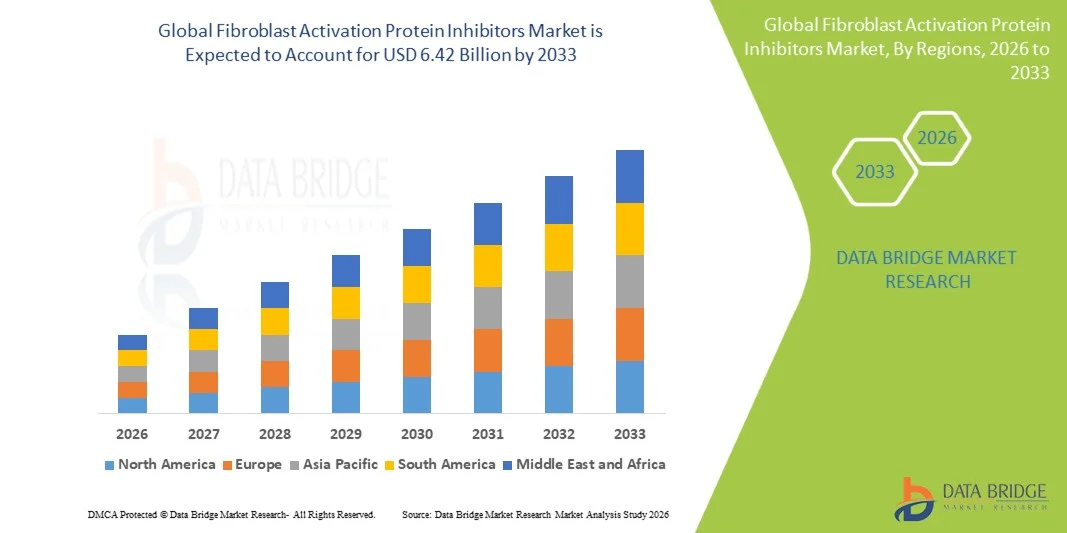
- По данным Data Bridge Market Research Analysis Глобальный объем рынка ингибиторов активации белка фибробластов оценивается в3,02 млрд долларов в 2025 годуОжидается, что он достигнет$6,42 млрд к 2033 году, вCAGR 9,9%в течение прогнозируемого периода
- Рост рынка в значительной степени обусловлен растущей распространенностью рака и фиброзных заболеваний, а также быстрыми достижениями в области целевой терапии и точной медицины, которые ускоряют разработку и внедрение диагностики и терапии на основе ингибиторов FAP.
- Кроме того, растущий спрос на высокоспецифичные подходы к лечению, основанные на биомаркерах, в сочетании с растущими инвестициями в открытие лекарств для онкологии и радиофармацевтические инновации, делает ингибиторы FAP перспективным компонентом лечения заболеваний следующего поколения. Эти сходящиеся факторы значительно стимулируют расширение глобального рынка ингибиторов FAP.
Размер рынка и прогноз
Глобальная рыночная стоимость (2025):3,02 миллиарда в 2025 году
Ожидаемая рыночная стоимость (2033):6,42 миллиарда к 2033 году
Прогноз CAGR (2026–2033):9.9%
Каковы основные выводы рынка ингибиторов белка активации фибробластов
- Ингибиторы белка активации фибробластов, используемые в целевых подходах к лечению воспалительных и фиброзных состояний, приобретают все большее значение в современной терапии из-за их способности модулировать активность фибробластов и улучшать управление заболеваниями по нескольким хроническим показаниям.
- Растущий спрос на ингибиторы белка активации фибробластов в первую очередь подпитывается растущей распространенностью хронических воспалительных заболеваний, таких как интерстициальный цистит.Болезнь Крона, Синдром раздраженного кишечникаихронический простатитНаряду с растущим вниманием к исследованиям новых целевых вариантов лечения
- Северная Америка доминировала на рынке ингибиторов активации фибробластов с самой большой долей дохода в 38,9% в 2025 году, поддерживаемой передовой инфраструктурой здравоохранения, сильной клинической исследовательской деятельностью и более высокими показателями диагностики, при этом в США наблюдался заметный рост из-за более широкого внедрения инновационных методов лечения и поддерживающих механизмов возмещения.
- Ожидается, что Азиатско-Тихоокеанский регион станет самым быстрорастущим регионом на рынке ингибиторов белка активации фибробластов в течение прогнозируемого периода из-за улучшения доступа к здравоохранению, повышения осведомленности пациентов и увеличения распространенности желудочно-кишечных и урологических расстройств.
- Сегмент Крона доминировал на рынке ингибиторов активации фибробластов с долей рынка 34,2% в 2025 году, что обусловлено высоким бременем заболеваний, растущим спросом на лечение и продолжающимся развитием целевых методов лечения, направленных на улучшение долгосрочных результатов заболевания.
Сфера охвата и ингибиторы активации белка фибробластов сегментация рынка
|
Атрибуты |
Активация белка фибробластов ингибирует ключевые идеи рынка |
|
Сегменты покрыты |
|
|
Страны, охваченные |
Северная Америка
Европа
Азиатско-Тихоокеанский регион
Ближний Восток и Африка
Южная Америка
|
|
Ключевые игроки рынка |
|
|
Рыночные возможности |
|
|
Информационные наборы данных с добавленной стоимостью |
|
Каковы основные тенденции на рынке ингибиторов белка активации фибробластов
«Растущее применение целевой точной терапии и молекулярной визуализации»
- Значительной и ускоряющейся тенденцией на мировом рынке ингибиторов активации белка фибробластов является растущая интеграция целевой терапии с передовыми технологиями молекулярной визуализации, особенно в онкологии и лечении хронических воспалительных заболеваний. Эта конвергенция повышает диагностическую точность и точность лечения в клинических условиях.
- Например, агенты PET-визуализации, направленные на активацию фибробластов, все чаще используются для выявления и постановки рака, что позволяет клиницистам визуализировать фибробласты, связанные с опухолью, с более высокой специфичностью по сравнению с обычными методами визуализации. Аналогичным образом, текущие разработки в области радиолигандной терапии на основе ингибиторов FAP расширяют терапевтические возможности.
- Интеграция ингибиторов активации белка фибробластов обеспечивает такие функции, как улучшенная локализация заболевания, улучшенный мониторинг лечения и способность идентифицировать патологические изменения, специфичные для микросреды. Например, некоторые исследуемые соединения предназначены как для обнаружения, так и для лечения опухолей, поддерживая концепцию тераностики в точной медицине.
- Бесшовное сочетание целевых ингибиторов с диагностическими платформами облегчает более персонализированный подход к лечению, позволяя поставщикам медицинских услуг адаптировать методы лечения на основе индивидуальных профилей пациентов и моделей прогрессирования заболевания, тем самым улучшая клинические результаты.
- Эта тенденция к более целенаправленным, эффективным и персонализированным терапевтическим стратегиям коренным образом меняет парадигмы лечения. Следовательно, компании инвестируют в трубопроводы ингибиторов белка активации фибробластов с такими возможностями, как двойная диагностико-терапевтическая функциональность и улучшенная эффективность таргетинга.
- Спрос на ингибиторы белка активации фибробластов, которые обеспечивают высокую специфичность, улучшенные результаты лечения пациентов и совместимость с передовыми диагностическими технологиями, быстро растет во всех системах здравоохранения, особенно в онкологии и лечении хронических заболеваний.
- Увеличение нормативной поддержки прорывных методов лечения и назначений орфанных препаратов еще больше стимулирует разработку и более быстрое одобрение методов лечения на основе ингибиторов белка активации фибробластов.
Активация белка фибробластов тормозит динамику рынка
водитель
Растущее бремя болезней и спрос на целевые подходы к лечению
- Растущая распространенность хронических воспалительных заболеваний и рака в сочетании с растущим акцентом на адресную и персонализированную медицину является значительным фактором увеличения спроса на ингибиторы белка активации фибробластов.
- Например, в последние годы было начато несколько клинических испытаний с акцентом на ингибиторы активации белка фибробластов для таких состояний, как болезнь Крона и таргетирование микросреды опухоли, что отражает сильный импульс исследований и интерес отрасли.
- По мере того, как системы здравоохранения переходят к моделям лечения на основе точности, ингибиторы белка активации фибробластов предлагают такие преимущества, как селективное нацеливание на фибробласты, связанные с болезнью, снижение побочных эффектов и улучшение терапевтических результатов по сравнению с обычными методами лечения.
- Кроме того, растущие инвестиции в исследования в области биотехнологий и расширение портфеля новых лекарственных препаратов ускоряют разработку и коммерциализацию ингибиторов активации белка фибробластов по нескольким показаниям.
- Растущий спрос на эффективные долгосрочные управленческие решения для хронических заболеваний, наряду с достижениями в области доставки лекарств и молекулярного таргетирования, способствует дальнейшему внедрению ингибиторов активации белка фибробластов как на развитых, так и на развивающихся рынках.
- Тенденция к инновационным и целенаправленным терапевтическим решениям в сочетании с ростом расходов на здравоохранение и поддерживающей нормативной базой продолжает стимулировать рост рынка ингибиторов активации белка фибробластов.
- Расширение применения ингибиторов белка активации фибробластов при фиброзных расстройствах за пределами онкологии создает дополнительный спрос в различных терапевтических областях.
- Повышение осведомленности среди медицинских работников о целевых методах лечения способствует раннему принятию и интеграции ингибиторов активации белка фибробластов в протоколы лечения.
Сдержанность/вызов
«Ограниченная клиническая валидация и высокие затраты на разработку»
- Проблемы, связанные с ограниченной крупномасштабной клинической валидацией и высокими затратами на исследования и разработки, создают значительные препятствия для широкого внедрения ингибиторов активации белка фибробластов.
- Например, большинство методов лечения ингибиторами белка активации фибробластов все еще находятся на ранней или средней стадии клинических испытаний, что создает неопределенность в отношении долгосрочной эффективности, безопасности и сроков одобрения регулирующих органов.
- Решение этих проблем требует обширного клинического тестирования, надежного соблюдения нормативных требований и значительных инвестиций в исследовательскую инфраструктуру, что может замедлить темпы выхода на рынок новых методов лечения.
- Кроме того, высокая стоимость связана с передовымитаргетная терапиядиагностические процедуры могут ограничивать доступность, особенно в регионах с низким и средним уровнем дохода, тем самым ограничивая общее проникновение на рынок;
- В то время как технологические достижения повышают эффективность разработки лекарств, сложность нацеливания на белок активации фибробластов и обеспечения точной доставки остается критическим препятствием для производителей.
- Преодоление этих проблем за счет увеличения генерации клинических данных, стратегического сотрудничества и стратегий оптимизации затрат будет иметь важное значение для поддержания долгосрочного роста на рынке ингибиторов активации белка фибробластов.
- Ограниченные рамки возмещения для новых целевых методов лечения в нескольких регионах могут еще больше ограничить доступ пациентов и замедлить темпы принятия.
- Строгие процессы одобрения регулирующих органов и изменчивость в разных регионах могут задержать запуск продукта и увеличить общее время выхода на рынок для терапии ингибиторами белка активации фибробластов.
Как сегментируется рынок ингибиторов белка активации фибробластов
Рынок сегментирован на основе показаний, конечных пользователей и канала распределения.
- По показаниям
На основании показаний рынок ингибиторов активации белка фибробластов сегментирован на интерстициальный цистит, Крона, раздражительный кишечник, хронический простатит и другие. Сегмент Крона доминировал на рынке с самой большой долей рынка в 34,2% в 2025 году, что обусловлено высокой глобальной распространенностью заболевания и растущей потребностью в целевых методах лечения, которые могут эффективно управлять хроническим воспалением. Ингибиторы белка активации фибробластов все чаще изучаются на предмет их роли в модуляции активности фибробластов, которая играет ключевую роль в кишечном фиброзе, связанном с болезнью Крона. Растущее число клинических исследований, посвященных воспалительным заболеваниям кишечника, также поддерживает доминирование сегмента. Кроме того, спрос на долгосрочные решения для лечения заболеваний и улучшение результатов лечения пациентов способствует более широкому внедрению в этом сегменте.
Ожидается, что сегмент интерстициального цистита будет наблюдать самые быстрые темпы роста с 2026 по 2033 год, чему способствует повышение осведомленности о состоянии и отсутствие высокоэффективных вариантов лечения. Ингибиторы активации белка фибробластов представляют собой новый механизм действия, который может помочь уменьшить фиброз и воспаление, связанные с расстройствами мочевого пузыря. Растущие инвестиции в исследования и достижения в области целевой терапии способствуют дальнейшему росту сегмента. Кроме того, ожидается, что рост показателей диагностики и улучшение доступа к медицинскому обслуживанию будут способствовать быстрому расширению этого сегмента в течение прогнозируемого периода.
- конечными пользователями
На основе конечных пользователей рынок ингибиторов активации белка фибробластов сегментирован на больницы, домашние учреждения, специализированные клиники и другие. Сегмент больниц доминировал на рынке с наибольшей долей доходов рынка в 2025 году, в первую очередь из-за наличия передовой диагностической инфраструктуры, квалифицированных медицинских работников и способности управлять сложными хроническими состояниями. Больницы служат основными центрами для администрирования передовых методов лечения и проведения клинических испытаний, связанных с ингибиторами активации белка фибробластов. Наличие междисциплинарных групп и доступ к передовым вариантам лечения также способствуют доминированию в этом сегменте. Кроме того, более высокий уровень охвата пациентов и улучшенные рамки возмещения поддерживают рост рынка в больницах.
Ожидается, что в сегменте специализированных клиник будут наблюдаться самые высокие темпы роста с 2026 по 2033 год, что обусловлено растущим предпочтением специализированной и адресной помощи при хронических воспалительных и фиброзных заболеваниях. Эти клиники предлагают специализированный опыт, персонализированные планы лечения и улучшенное управление пациентами, что делает их привлекательным вариантом как для пациентов, так и для поставщиков медицинских услуг. Растущее число специализированных центров и все более широкое внедрение передовых терапевтических решений способствуют дальнейшему росту сегмента. Кроме того, сокращение времени ожидания и улучшение опыта пациентов способствуют росту спроса на специализированные услуги клиники.
- Дистрибьюторский канал
На основе канала распределения рынок ингибиторов белка активации фибробластов сегментирован в больничную аптеку, онлайн-аптеку и розничную аптеку. Сегмент больничных аптек доминировал на рынке с самой большой долей рынка в 2025 году, что обусловлено прямой связью с больницами, где назначаются и вводятся самые передовые методы лечения. Больничные аптеки обеспечивают наличие специализированных препаратов, в том числе недавно разработанных ингибиторов активации фибробластов, под надлежащим медицинским наблюдением. Контролируемая распределительная среда и соблюдение нормативных стандартов еще больше укрепляют доминирование этого сегмента. Кроме того, растущее число больничных процедур способствует устойчивому спросу.
Ожидается, что в сегменте онлайн-аптек будут наблюдаться самые быстрые темпы роста с 2026 по 2033 год, чему способствует растущее внедрение цифровых платформ здравоохранения и увеличение предпочтений пациентов в отношении удобного доступа к лекарствам. Онлайн-аптеки обеспечивают простоту заказа, доставку на дом и конкурентоспособные цены, что делает их привлекательным вариантом для долгосрочных потребностей в лечении. Расширение электронной коммерции в здравоохранении и улучшение нормативно-правовой базы еще больше поддерживают рост сегмента. Кроме того, ожидается, что рост проникновения интернета и цифровой грамотности будет способствовать значительному внедрению онлайн-аптек в ближайшие годы.
В каком регионе находится наибольшая доля рынка ингибиторов белка для активации фибробластов
- Северная Америка доминировала на рынке ингибиторов активации белка фибробластов с самой большой долей дохода 38,9% в 2025 году, поддерживаемой передовой инфраструктурой здравоохранения, сильной клинической исследовательской деятельностью и более высокими показателями диагностики.
- Медицинские работники в регионе высоко ценят клинические преимущества, улучшенную диагностическую точность и возможности целенаправленного лечения, предлагаемые ингибиторами активации белка фибробластов при лечении сложных заболеваний, таких как болезнь Крона и интерстициальный цистит.
- Это широкое внедрение также поддерживается передовой инфраструктурой здравоохранения, высокими расходами на здравоохранение, сильным присутствием ведущих фармацевтических и биотехнологических компаний и растущими инвестициями в исследования и клинические испытания, устанавливая ингибиторы активации фибробластов в качестве перспективного решения в нескольких терапевтических областях.
Протеин-ингибиторы активации фибробластов в США Market Insight
Американский рынок ингибиторов активации белка фибробластов занял самую большую долю доходов в Северной Америке в 2025 году, чему способствовало сильное присутствие передовой инфраструктуры здравоохранения и увеличение внимания к точной медицине. Медицинские работники все чаще отдают приоритет целевым методам лечения хронических воспалительных заболеваний и связанных с раком состояний. Растущее число клинических испытаний в сочетании с надежными инвестициями в биотехнологии и разработку лекарств еще больше продвигает рынок. Более того, растущая интеграция передовых диагностических технологий и поддерживающей нормативно-правовой базы вносит значительный вклад в расширение рынка.
Европейские ингибиторы активации белка фибробластов Market Insight
По прогнозам, рынок ингибиторов активации белка фибробластов в Европе будет расширяться при существенном CAGR в течение прогнозируемого периода, главным образом за счет роста распространенности хронических заболеваний и увеличения акцента на инновационных подходах к лечению. Рост расходов на здравоохранение в сочетании со спросом на целевую терапию способствует принятию ингибиторов активации белка фибробластов. Европейские системы здравоохранения также сосредоточены на улучшении результатов лечения пациентов с помощью передовых методов лечения. Регион переживает устойчивый рост в больницах и специализированных клиниках, с увеличением внедрения новых решений в клиническую практику.
Британские ингибиторы белка активации фибробластов Market Insight
Ожидается, что рынок ингибиторов активации белка фибробластов в Великобритании будет расти в течение прогнозируемого периода, что обусловлено повышением осведомленности о целевых методах лечения и растущим бременем хронических воспалительных состояний. Кроме того, акцент на улучшении результатов в области здравоохранения и ранней диагностики побуждает как поставщиков, так и пациентов принимать передовые решения для лечения. Ожидается, что сильная исследовательская экосистема Великобритании, наряду с хорошо зарекомендовавшей себя системой здравоохранения, продолжит стимулировать рост рынка.
Немецкое исследование рынка ингибиторов активации белка фибробластов
Ожидается, что в течение прогнозируемого периода рынок ингибиторов активации фибробластов в Германии будет расширяться на значительном CAGR, чему будет способствовать растущий спрос на инновационные и эффективные варианты лечения. Передовая инфраструктура здравоохранения Германии в сочетании с ее сильным акцентом на исследования и разработки способствует принятию ингибиторов активации белка фибробластов. Растущий акцент на точную медицину и таргетную терапию также становится все более распространенным, с сильным предпочтением высококачественных и эффективных решений лечения, соответствующих потребностям пациентов.
Азиатско-тихоокеанская активация белка-ингибитора инсайт рынка
Рынок ингибиторов активации фибробластов в Азиатско-Тихоокеанском регионе будет расти самыми быстрыми темпами в период с 2026 по 2033 год, что обусловлено увеличением инвестиций в здравоохранение, ростом распространенности хронических заболеваний и улучшением доступа к передовым методам лечения в таких странах, как Китай, Япония и Индия. Растущее внимание региона к современным решениям в области здравоохранения, поддерживаемое правительственными инициативами, способствующими развитию инфраструктуры здравоохранения, стимулирует внедрение ингибиторов активации белка фибробластов. Кроме того, по мере того, как Азиатско-Тихоокеанский регион становится ключевым регионом для клинических исследований и фармацевтического производства, доступность и доступность передовых методов лечения расширяется.
Японские ингибиторы белка для активации фибробластов
Рынок ингибиторов активации фибробластов в Японии набирает обороты благодаря передовой системе здравоохранения страны, старению населения и растущему спросу на эффективное лечение хронических заболеваний. Японский рынок уделяет большое внимание инновациям, и внедрение ингибиторов активации белка фибробластов обусловлено продолжающимися исследованиями и интеграцией передовых терапевтических подходов. Включение целевых методов лечения в клиническую практику способствует росту. Кроме того, акцент Японии на улучшении качества жизни, вероятно, будет стимулировать спрос на эффективные и точные решения для лечения как в больницах, так и в специализированных учреждениях.
Индия Активация белка Fibroblast Inhibitors Market Insight
Рынок ингибиторов активации фибробластов в Индии составил значительную долю рынка в Азиатско-Тихоокеанском регионе в 2025 году, что объясняется расширением сектора здравоохранения страны, ростом бремени болезней и повышением осведомленности о передовых вариантах лечения. Индия является быстро растущим рынком инновационных терапевтических средств, а ингибиторы активации белка фибробластов набирают популярность в больницах и специализированных клиниках. Стремление к улучшению доступа к здравоохранению и наличие сильной фармацевтической промышленности являются ключевыми факторами, способствующими развитию рынка в Индии.
Каковы основные компании на рынке ингибиторов белка для активации фибробластов
Индустрия ингибиторов белка активации фибробластов в основном возглавляется хорошо известными компаниями, в том числе:
- Telix Pharmaceuticals Ltd. (Австралия)
- 3B Pharmaceuticals GmbH (Германия)
- Heidelberg Pharma AG (Германия)
- Fusion Pharmaceuticals Inc. (Канада)
- Компания Biopharma Global Inc. (США)
- Pentixapharm AG (Германия)
- iTheranostics (США)
- Blue Earth Diagnostics Ltd.
- SOFIE Biosciences, Inc. (США)
- Lantheus Holdings, Inc. (США)
- RadioMedix, Inc. (США)
- ImaginAb, Inc. (США)
- Theragnostics Ltd (Великобритания)
- Isotopen Technologien München AG (Германия)
- Q BioMed Inc. (США)
- Abcam plc (Великобритания)
- Sino Biological, Inc. (Китай)
- Creative Biolabs, Inc. (США)
- Bachem Holding AG (Швейцария)
Каковы последние события на мировом рынке ингибиторов белка активации фибробластов
- В августе 2025 года клиническое исследование, оценивающее новый индикатор FAP [18F]FAP-2286, продемонстрировало превосходную производительность в обнаружении метастазов в костях и мозге по сравнению с обычной ФДГ ПЭТ / КТ, подчеркивая его потенциал для значительного улучшения постановки рака и диагностической точности. Это улучшение усиливает растущую роль ингибиторов активации белка фибробластов в молекулярной визуализации следующего поколения и точной онкологии.
- В июне 2025 года исследователи представили FAP-RADS (Fibroblast Activation Protein Reporting and Data System), стандартизированную структуру, направленную на улучшение интерпретации и отчетности о FAP-таргетированной визуализации. Ожидается, что эта разработка улучшит клиническую коммуникацию и поддержит многоцентровые исследования, ускоряя внедрение ингибиторов FAP в диагностические рабочие процессы.
- В декабре 2024 года Clarity Pharmaceuticals объявила о разработке своего нового радиофармацевтического SAR-bisFAP, предназначенного как для диагностики рака, так и для терапии. Соединение продемонстрировало сильное таргетирование и удержание опухоли в доклинических исследованиях, и компания инициировала подготовку к клиническому испытанию фазы I, которое, как ожидается, начнется в конце 2025 года.
- В январе 2023 года исследование, опубликованное в Журнале ядерной медицины, сообщило, что галлий-68 ФАПИ ПЭТ-визуализация продемонстрировала значительно улучшенное обнаружение опухоли по сравнению с обычным ФДГ-ПЭТ при нескольких видах рака, включая опухоли поджелудочной железы и головного мозга. Полученные результаты подчеркнули, что FAP-таргетированная визуализация является перспективным диагностическим инструментом следующего поколения для более точной постановки опухоли и оценки заболеваний.
- В марте 2022 года было начато клиническое исследование фазы II [68Ga]FAPI-46 PET для оценки его эффективности в обнаружении экспрессии белка активации фибробластов у пациентов с раком поджелудочной железы. Исследование фокусируется на улучшении обнаружения опухоли и точности постановки по сравнению с обычными методами визуализации, демонстрируя растущую клиническую валидацию ингибиторов FAP.
SKU-
Получите онлайн-доступ к отчету на первой в мире облачной платформе рыночной аналитики
- Интерактивная панель анализа данных
- Панель анализа компании для возможностей с высоким потенциалом роста
- Доступ аналитика-исследователя для настройки и запросов
- Анализ конкурентов с помощью интерактивной панели
- Последние новости, обновления и анализ тенденций
- Используйте возможности сравнительного анализа для комплексного отслеживания конкурентов
Методология исследования
Сбор данных и анализ базового года выполняются с использованием модулей сбора данных с большими размерами выборки. Этап включает получение рыночной информации или связанных данных из различных источников и стратегий. Он включает изучение и планирование всех данных, полученных из прошлого заранее. Он также охватывает изучение несоответствий информации, наблюдаемых в различных источниках информации. Рыночные данные анализируются и оцениваются с использованием статистических и последовательных моделей рынка. Кроме того, анализ доли рынка и анализ ключевых тенденций являются основными факторами успеха в отчете о рынке. Чтобы узнать больше, пожалуйста, запросите звонок аналитика или оставьте свой запрос.
Ключевой методологией исследования, используемой исследовательской группой DBMR, является триангуляция данных, которая включает в себя интеллектуальный анализ данных, анализ влияния переменных данных на рынок и первичную (отраслевую экспертную) проверку. Модели данных включают сетку позиционирования поставщиков, анализ временной линии рынка, обзор рынка и руководство, сетку позиционирования компании, патентный анализ, анализ цен, анализ доли рынка компании, стандарты измерения, глобальный и региональный анализ и анализ доли поставщика. Чтобы узнать больше о методологии исследования, отправьте запрос, чтобы поговорить с нашими отраслевыми экспертами.
Доступна настройка
Data Bridge Market Research является лидером в области передовых формативных исследований. Мы гордимся тем, что предоставляем нашим существующим и новым клиентам данные и анализ, которые соответствуют и подходят их целям. Отчет можно настроить, включив в него анализ ценовых тенденций целевых брендов, понимание рынка для дополнительных стран (запросите список стран), данные о результатах клинических испытаний, обзор литературы, обновленный анализ рынка и продуктовой базы. Анализ рынка целевых конкурентов можно проанализировать от анализа на основе технологий до стратегий портфеля рынка. Мы можем добавить столько конкурентов, о которых вам нужны данные в нужном вам формате и стиле данных. Наша команда аналитиков также может предоставить вам данные в сырых файлах Excel, сводных таблицах (книга фактов) или помочь вам в создании презентаций из наборов данных, доступных в отчете.