



Global Functional Proteins Market Segmentation, By Source (Plant and Animals), Type (Hydrolysates, Whey-Based, Casein and Caseinate, and Soy-Based), Structure (Primary, Secondary, Tertiary, and Quaternary), Form (Liquid and Powder), Application (Functional Food and Beverages, Dietary Supplements, and Animal Nutrition) - Industry Trends and Forecast to 2033
Functional Proteins Market Size
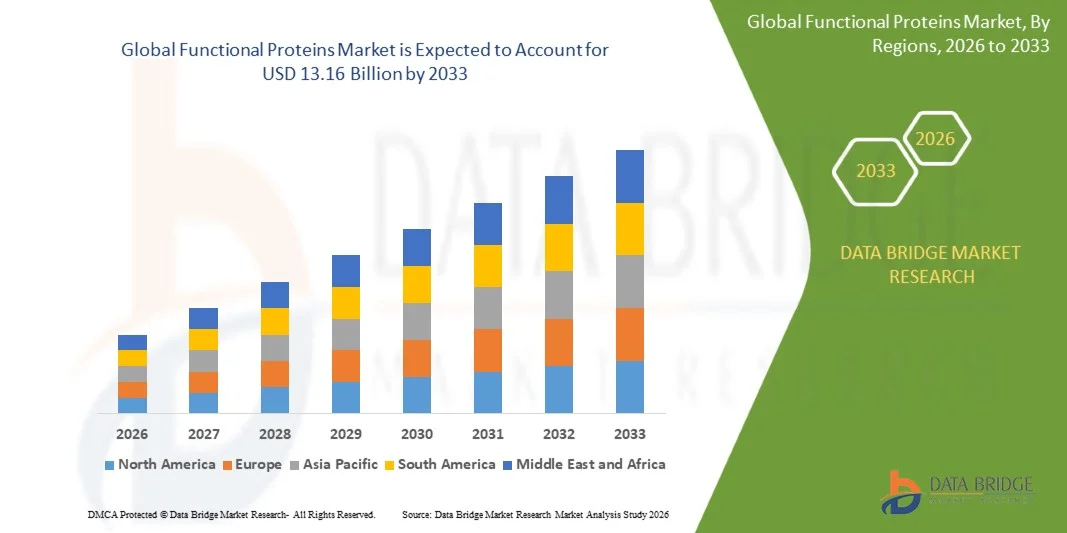
- The global functional proteins market size was valued at USD 7.95 billion in 2025 and is expected to reach USD 13.16 billion by 2033, at a CAGR of 6.50% during the forecast period
- The market growth is largely fueled by the increasing consumer focus on health, wellness, and protein-enriched diets, driving demand for functional proteins in food, beverages, and dietary supplements
- Furthermore, technological advancements in protein extraction, isolation, and fortification, combined with the rising adoption of plant-based and sustainable protein sources, are enhancing product functionality and broadening applications across the food and nutrition sectors. These factors are accelerating the integration of functional proteins into mainstream consumer products, thereby significantly boosting market growth
Functional Proteins Market Analysis
- Functional proteins are bioactive protein ingredients derived from plant or animal sources, designed to provide targeted nutritional benefits such as muscle maintenance, gut health support, or immune system enhancement. They are incorporated into a wide range of products, including functional foods, beverages, dietary supplements, and animal nutrition formulations
- The escalating demand for functional proteins is primarily fueled by increasing health awareness, the growing prevalence of lifestyle-related health issues, the shift toward plant-based and sustainable protein alternatives, and consumer preference for convenient, nutrient-rich products. These trends are driving innovation and adoption in both residential and commercial food and nutrition markets
- North America dominated the functional proteins market with a share of 41.3% in 2025, due to rising health awareness, fitness trends, and high consumer preference for protein-enriched foods and dietary supplements
- Asia-Pacific is expected to be the fastest growing region in the functional proteins market during the forecast period due to rising disposable incomes, increasing urbanization, and growing awareness of health and fitness in countries such as China, Japan, and India
- Animals segment dominated the market with a market share of 57.5% in 2025, due to its high nutritional value, complete amino acid profile, and established use in protein supplements and functional foods. Consumers often prefer animal-based proteins for their superior bioavailability and effectiveness in muscle recovery, weight management, and general wellness. The market also sees strong demand for animal-based proteins due to their integration into popular sports nutrition products and widespread awareness among fitness enthusiasts
Report Scope and Functional Proteins Market Segmentation
|
Attributes |
Functional Proteins Key Market Insights |
|
Segments Covered |
|
|
Countries Covered |
North America
Europe
Asia-Pacific
Middle East and Africa
South America
|
|
Key Market Players |
|
|
Market Opportunities |
|
|
Value Added Data Infosets |
In addition to the insights on market scenarios such as market value, growth rate, segmentation, geographical coverage, and major players, the market reports curated by the Data Bridge Market Research also include in-depth expert analysis, pricing analysis, brand share analysis, consumer survey, demography analysis, supply chain analysis, value chain analysis, raw material/consumables overview, vendor selection criteria, PESTLE Analysis, Porter Analysis, and regulatory framework. |
Functional Proteins Market Trends
“Rising Adoption of Plant-Based and Sustainable Proteins”
- A significant trend in the functional proteins market is the increasing adoption of plant-based and sustainable protein sources, driven by consumer preference for healthier, eco-friendly alternatives to traditional animal-based proteins. This shift is enhancing product diversification and expanding applications across food, beverage, and nutritional supplements industries
- For instance, companies such as Archer Daniels Midland (ADM) and Ingredion are developing plant-derived protein isolates and concentrates for use in beverages, bakery, and dairy alternatives. These proteins support cleaner labels, better digestibility, and sustainability commitments within global food supply chains
- The demand for functional proteins that offer specific health benefits, such as muscle building, immune support, and weight management, is rising rapidly. This is driving innovation in protein formulations that cater to performance nutrition and therapeutic food segments
- Functional proteins are increasingly incorporated into ready-to-eat meals, snack products, and fortified beverages, enhancing convenience while meeting nutritional goals. The trend reflects evolving consumer lifestyles and a focus on proactive wellness management
- The market is witnessing growth in protein applications for elderly nutrition, sports nutrition, and clinical dietary needs, where proteins such as whey hydrolysates and soy isolates provide targeted health benefits. This adoption strengthens the functional role of proteins beyond basic nutrition
- Rising awareness about sustainable food production and environmental impacts of animal farming is accelerating the shift toward plant-based proteins. Companies focusing on eco-conscious sourcing and processing methods are positioning functional proteins as essential components for responsible nutrition
Functional Proteins Market Dynamics
Driver
“Growing Consumer Demand for Health and Wellness Products”
- The increasing global emphasis on health and wellness is driving demand for functional proteins that support physical fitness, disease prevention, and overall well-being. Consumers are seeking products that provide specific functional benefits beyond basic nutrition, fueling market expansion
- For instance, Glanbia Nutritionals offers whey protein concentrates and plant-based protein powders enriched with amino acids and bioactive compounds for enhanced health outcomes. These products address consumer needs for performance nutrition and daily wellness support
- Rising awareness of protein’s role in maintaining muscle mass, supporting weight management, and enhancing immunity is encouraging both manufacturers and retailers to expand functional protein offerings. This is contributing to new product launches and greater market penetration
- Functional proteins are increasingly used in meal replacements, beverages, and nutritional supplements, aligning with lifestyles that demand convenience without compromising health benefits. This supports sustained growth across retail, e-commerce, and food service channels
- The rising consumer preference for clean-label, non-GMO, and allergen-friendly protein sources is reinforcing market demand. This trend is encouraging continuous development of high-quality, functional protein ingredients for mainstream adoption
Restraint/Challenge
“High Production Costs and Complex Processing Requirements”
- The functional proteins market faces challenges due to the high cost of sourcing raw materials, specialized extraction techniques, and advanced processing technologies. These factors increase operational expenses and influence pricing strategies for end products
- For instance, companies such as DuPont Nutrition & Biosciences invest heavily in precision protein extraction, hydrolysis, and purification methods to maintain consistent quality and bioactivity. These sophisticated processes elevate production complexity and cost structures
- Maintaining protein functionality, solubility, and taste in diverse formulations requires stringent quality control and formulation expertise. This adds to production timelines, labor requirements, and overall manufacturing overhead
- Dependence on high-quality plant or animal protein sources exposes manufacturers to fluctuations in raw material availability and pricing, affecting cost stability. Managing these variables is critical to sustaining profitability while meeting demand
- Scaling up production while preserving functional integrity, nutritional value, and sensory attributes presents ongoing challenges for manufacturers. These constraints collectively highlight the need for process optimization and cost-efficient technology adoption in the functional proteins market
Functional Proteins Market Scope
The market is segmented on the basis of source, type, structure, form, and application.
• By Source
On the basis of source, the functional proteins market is segmented into plant-based and animal-based proteins. The animal-based segment dominated the largest market revenue share of 57.5% in 2025, driven by its high nutritional value, complete amino acid profile, and established use in protein supplements and functional foods. Consumers often prefer animal-based proteins for their superior bioavailability and effectiveness in muscle recovery, weight management, and general wellness. The market also sees strong demand for animal-based proteins due to their integration into popular sports nutrition products and widespread awareness among fitness enthusiasts.
The plant-based segment is anticipated to witness the fastest growth rate from 2026 to 2033, fueled by increasing adoption among vegan and lactose-intolerant consumers and rising awareness about sustainability. For instance, companies such as Ingredion have introduced plant-derived protein solutions that cater to functional beverages and snack applications. Plant-based proteins offer benefits such as lower environmental impact, cholesterol-free composition, and compatibility with various functional formulations, driving their expanding market presence.
• By Type
On the basis of type, the functional proteins market is segmented into hydrolysates, whey-based, casein and caseinate, and soy-based proteins. The whey-based segment dominated the largest market revenue share in 2025, driven by its rapid digestibility, high leucine content, and strong presence in sports nutrition and clinical formulations. Whey-based proteins are favored for muscle building, weight management, and recovery products, making them a staple in functional foods and beverages. Their versatility and ease of integration into powdered supplements and ready-to-drink formulations further support market dominance.
The hydrolysates segment is expected to witness the fastest CAGR from 2026 to 2033, propelled by increasing demand for pre-digested proteins in infant nutrition, medical nutrition, and hypoallergenic formulations. For instance, FrieslandCampina’s hydrolyzed whey products are gaining traction for specialized dietary applications. Hydrolysates provide faster absorption, improved bioavailability, and reduced allergenicity, making them highly suitable for sensitive populations and premium functional protein products.
• By Structure
On the basis of structure, the functional proteins market is segmented into primary, secondary, tertiary, and quaternary proteins. The tertiary structure segment dominated the largest market revenue share in 2025, driven by its well-defined three-dimensional conformation, which supports functional applications such as enzymatic activity, emulsification, and gel formation in food and beverage products. Tertiary proteins are often preferred in nutritional formulations for their stability and functional versatility. The strong R&D focus on enhancing protein folding and maintaining bioactivity has further reinforced market dominance.
The quaternary structure segment is anticipated to witness the fastest growth rate from 2026 to 2033, driven by the increasing development of multi-subunit protein complexes for advanced functional applications. For instance, Novozymes has developed quaternary protein-based enzymes that improve texture and nutritional profiles in functional foods. Quaternary proteins provide synergistic functionality, enhanced stability, and targeted bioactivity, driving their adoption in premium and specialized formulations.
• By Form
On the basis of form, the functional proteins market is segmented into liquid and powder. The powder segment dominated the largest market revenue share in 2025, driven by its longer shelf life, ease of transport, and convenient incorporation into various food, beverage, and supplement products. Powdered proteins are widely used in protein shakes, nutrition bars, and meal replacements, making them highly accessible to consumers. The popularity of protein powders among fitness enthusiasts, athletes, and general consumers contributes to sustained market dominance.
The liquid segment is expected to witness the fastest CAGR from 2026 to 2033, fueled by the rising demand for ready-to-drink protein beverages and functional drinks. For instance, Nestlé’s liquid protein solutions are being adopted in sports nutrition and clinical nutrition markets. Liquid proteins offer quick absorption, convenience, and easy integration into functional beverages, driving their rapid adoption in modern consumer lifestyles.
• By Application
On the basis of application, the functional proteins market is segmented into functional food and beverages, dietary supplements, and animal nutrition. The dietary supplements segment dominated the largest market revenue share in 2025, driven by growing consumer awareness of health, fitness, and protein supplementation benefits. Supplements offer precise dosing, convenience, and high bioavailability, making them preferred by athletes, elderly consumers, and health-conscious populations. Strong marketing efforts and endorsement by fitness brands further reinforce the dominance of dietary supplement applications.
The functional food and beverages segment is anticipated to witness the fastest growth rate from 2026 to 2033, fueled by increasing incorporation of proteins into everyday food and drink products. For instance, Danone has launched protein-fortified yogurts and beverages targeting health-conscious consumers. Functional foods and beverages provide nutrition along with convenience and sensory appeal, encouraging adoption among a broader consumer base and expanding the market rapidly.
Functional Proteins Market Regional Analysis
- North America dominated the functional proteins market with the largest revenue share of 41.3% in 2025, driven by rising health awareness, fitness trends, and high consumer preference for protein-enriched foods and dietary supplements
- Consumers in the region increasingly seek high-quality proteins for muscle building, weight management, and wellness applications.
- This widespread adoption is further supported by high disposable incomes, strong presence of leading functional protein manufacturers, and growing demand for ready-to-drink protein beverages and nutritional bars, establishing functional proteins as a preferred solution for both individual and commercial nutrition applications
U.S. Functional Proteins Market Insight
The U.S. functional proteins market captured the largest revenue share in 2025 within North America, fueled by increasing consumption of dietary supplements and protein-fortified foods. Consumers are prioritizing high-quality whey, hydrolysates, and plant-based protein products for fitness and general health purposes. The rising trend of protein-enriched ready-to-drink beverages, meal replacements, and nutraceuticals further propels market growth. Moreover, the growing adoption of clean-label and non-GMO protein products, combined with innovative protein formulations by companies such as Glanbia Nutritionals and Ingredion, is significantly contributing to market expansion.
Europe Functional Proteins Market Insight
The Europe functional proteins market is projected to expand at a substantial CAGR throughout the forecast period, primarily driven by rising health consciousness and increasing demand for dietary supplements and functional foods. The growing popularity of sports nutrition and clinical nutrition products is fostering adoption. Consumers are also drawn to plant-based proteins and sustainable protein sources. The region is experiencing significant growth across dietary supplements, functional food, and beverage applications, with functional proteins being incorporated into both everyday nutrition products and specialized formulations.
U.K. Functional Proteins Market Insight
The U.K. functional proteins market is anticipated to grow at a noteworthy CAGR during the forecast period, driven by increasing protein consumption among health-conscious and aging populations. In addition, the growing adoption of protein-fortified beverages and meal replacements is encouraging both retail and commercial demand. The U.K.’s emphasis on clean-label and plant-based protein products, combined with robust e-commerce and retail infrastructure, is expected to continue to stimulate market growth.
Germany Functional Proteins Market Insight
The Germany functional proteins market is expected to expand at a considerable CAGR during the forecast period, fueled by rising awareness of nutrition, wellness, and functional food benefits. Germany’s strong regulatory standards, emphasis on sustainability, and focus on high-quality protein sources promote adoption. Integration of functional proteins into dairy, bakery, and nutritional products is increasingly prevalent, with consumers preferring products that offer enhanced health benefits alongside quality and safety assurance.
Asia-Pacific Functional Proteins Market Insight
The Asia-Pacific functional proteins market is poised to grow at the fastest CAGR during the forecast period of 2026 to 2033, driven by rising disposable incomes, increasing urbanization, and growing awareness of health and fitness in countries such as China, Japan, and India. The region’s preference for protein-enriched foods and dietary supplements is accelerating market adoption. Furthermore, as APAC emerges as a manufacturing hub for protein ingredients and functional nutrition products, affordability and availability of high-quality proteins are expanding to a wider consumer base.
Japan Functional Proteins Market Insight
The Japan functional proteins market is gaining momentum due to the country’s health-focused culture, aging population, and strong fitness trends. Japanese consumers emphasize high-quality proteins for wellness, clinical nutrition, and sports applications. Integration of functional proteins into ready-to-drink beverages, protein supplements, and specialty foods is driving growth. The aging population is likely to spur demand for easily digestible, high-bioavailability protein products in both residential and healthcare sectors.
China Functional Proteins Market Insight
The China functional proteins market accounted for the largest market revenue share in Asia Pacific in 2025, attributed to the country’s expanding middle class, increasing health awareness, and rapid urbanization. China is a major market for protein-fortified foods, beverages, and dietary supplements. Government initiatives promoting nutrition, combined with strong domestic production and availability of affordable protein products, are key factors driving market adoption across both residential and commercial applications.
Functional Proteins Market Share
The functional proteins industry is primarily led by well-established companies, including:
- ADM (U.S.)
- DuPont de Nemours, Inc. (U.S.)
- Kemin Industries, Inc. (U.S.)
- Tate & Lyle PLC (U.K.)
- Kerry Inc. (Ireland)
- DSM (Netherlands)
- Cargill, Incorporated (U.S.)
- BASF SE (Germany)
- Ingredion Incorporated (U.S.)
- Roquette Frères (France)
- SunOpta Inc. (Canada)
- Darling Ingredients, Inc. (U.S.)
- Omega Protein Corporation (U.S.)
- Dow Inc. (U.S.)
- InVivo (France)
- John Pointon & Sons Ltd. (U.K.)
- Glanbia Plc (Ireland)
- Herbalife International of America, Inc. (U.S.)
- Amway India Enterprises Pvt. Ltd. (India)
- Fonterra Co-operative Group Limited (New Zealand)
Latest Developments in Global Functional Proteins Market
- In March 2026, French food ingredient company Kerry Group showcased its BC30 probiotic protein at Expo West 2026, emphasizing clinical data that demonstrates improved protein absorption and bioavailability in functional food formulations. This development addresses the growing consumer demand for more effective protein products, particularly among athletes and older adults who require efficient muscle maintenance support, and strengthens Kerry’s position in high-performance nutrition ingredients
- In February 2026, global ingredient solutions provider Ingredion launched VITESSENCE Pea 100 HD, a pea protein optimized for cold-pressed bars that maintains softness and sensory quality throughout shelf life. This innovation solves formulation challenges such as grittiness, enabling manufacturers to offer better-textured, high-protein products that appeal to mainstream health-oriented consumers and expand plant-based protein adoption
- In July 2025, global nutrition and agricultural company Roquette expanded its NUTRALYS plant protein portfolio with new textured wheat and pea proteins designed to improve sensory profiles in meat alternatives. This launch supports the rising demand for high-function plant proteins in meat replacements and other textured food products, broadening the application spectrum for functional proteins and reinforcing Roquette’s competitive edge in plant-based ingredient innovation
- In May 2025, Arla Foods Ingredients introduced Milky Spark, a carbonated milk-like beverage concept leveraging high-purity whey protein that remains stable under low pH and carbonation conditions. This breakthrough allows protein-enriched carbonated drinks without traditional texture issues, opening new product categories and attracting both beverage brands and health-conscious consumers
- In December 2022, Mars introduced a high-protein version of its classic SNICKERS bar with 20 grams of added protein, providing consumers with a convenient way to increase protein intake through indulgent snacks. This development illustrates how mainstream consumer brands are integrating functional proteins into familiar formats, expanding protein adoption beyond traditional sports nutrition supplements and functional foods into everyday retail snacking
SKU-
Получите онлайн-доступ к отчету на первой в мире облачной платформе рыночной аналитики

- Интерактивная панель анализа данных
- Панель анализа компании для возможностей с высоким потенциалом роста
- Доступ аналитика-исследователя для настройки и запросов
- Анализ конкурентов с помощью интерактивной панели
- Последние новости, обновления и анализ тенденций
- Используйте возможности сравнительного анализа для комплексного отслеживания конкурентов
Методология исследования
Сбор данных и анализ базового года выполняются с использованием модулей сбора данных с большими размерами выборки. Этап включает получение рыночной информации или связанных данных из различных источников и стратегий. Он включает изучение и планирование всех данных, полученных из прошлого заранее. Он также охватывает изучение несоответствий информации, наблюдаемых в различных источниках информации. Рыночные данные анализируются и оцениваются с использованием статистических и последовательных моделей рынка. Кроме того, анализ доли рынка и анализ ключевых тенденций являются основными факторами успеха в отчете о рынке. Чтобы узнать больше, пожалуйста, запросите звонок аналитика или оставьте свой запрос.
Ключевой методологией исследования, используемой исследовательской группой DBMR, является триангуляция данных, которая включает в себя интеллектуальный анализ данных, анализ влияния переменных данных на рынок и первичную (отраслевую экспертную) проверку. Модели данных включают сетку позиционирования поставщиков, анализ временной линии рынка, обзор рынка и руководство, сетку позиционирования компании, патентный анализ, анализ цен, анализ доли рынка компании, стандарты измерения, глобальный и региональный анализ и анализ доли поставщика. Чтобы узнать больше о методологии исследования, отправьте запрос, чтобы поговорить с нашими отраслевыми экспертами.
Доступна настройка
Data Bridge Market Research является лидером в области передовых формативных исследований. Мы гордимся тем, что предоставляем нашим существующим и новым клиентам данные и анализ, которые соответствуют и подходят их целям. Отчет можно настроить, включив в него анализ ценовых тенденций целевых брендов, понимание рынка для дополнительных стран (запросите список стран), данные о результатах клинических испытаний, обзор литературы, обновленный анализ рынка и продуктовой базы. Анализ рынка целевых конкурентов можно проанализировать от анализа на основе технологий до стратегий портфеля рынка. Мы можем добавить столько конкурентов, о которых вам нужны данные в нужном вам формате и стиле данных. Наша команда аналитиков также может предоставить вам данные в сырых файлах Excel, сводных таблицах (книга фактов) или помочь вам в создании презентаций из наборов данных, доступных в отчете.











