Global Giardiasis Treatment Market Segmentation, By Drug Class (Amebicides, Anthelmintic, and Others), Drug Type (Branded and Generic), End-Users (Hospitals, Homecare, Specialty Clinics, and Others), Distribution Channel (Hospital Pharmacy, Online Pharmacy, and Retail Pharmacy) - Industry Trends and Forecast to 2033
Каков размер рынка лечения лямблиоза и темпы роста
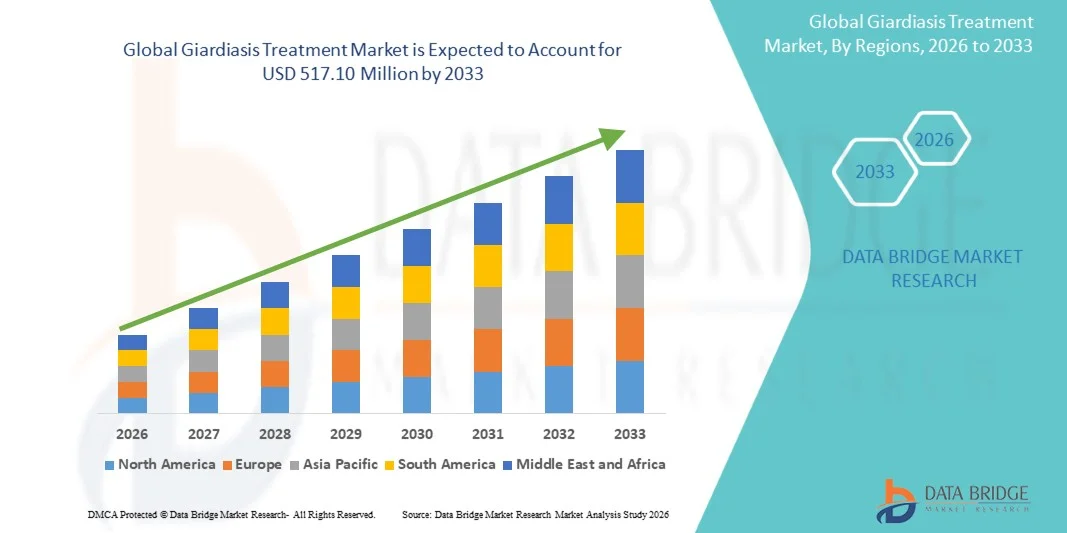
- По данным Data Bridge Market Research AnalysiseОбъем мирового рынка лечения лямблиоза был оценен305,5 млн долларов в 2025 годуОжидается, что он достигнет517,10 млн долларов США к 2033 году, вCAGR 6,80%в течение прогнозируемого периода
- Рост рынка в значительной степени обусловлен увеличением распространенности лямблиозных инфекций во всем мире, особенно в регионах с ограниченным доступом к чистой воде и санитарным услугам. Растущая осведомленность о заболеваниях, передаваемых через воду, улучшенные диагностические возможности и расширенный надзор за общественным здравоохранением способствуют росту спроса на эффективные решения для лечения.
- Кроме того, растущий акцент на раннюю диагностику и быстрое терапевтическое вмешательство, наряду с ростом расходов на здравоохранение в развивающихся регионах, стимулирует принятие антипаразитарных препаратов и поддерживающей терапии. Увеличение правительственных инициатив, направленных на улучшение инфраструктуры санитарии и борьбу с паразитарными инфекциями, ускоряет внедрение решений для лечения лямблиоза, тем самым значительно повышая общий рост рынка.
Размер рынка и прогноз
- Глобальная рыночная стоимость (2025):305,5 млн долларов
- Ожидаемая рыночная стоимость (2033):517,10 млн. долларов США
- Прогноз CAGR (2026–2033): 6.80%
Каковы основные выводы рынка лечения лямблиоза
- Решения для лечения лямблиоза, включая противопаразитарные препараты, такие как метронидазол, тинидазол и нитазоксанид, играют решающую роль в лечении инфекций Giardia lamblia как у детей, так и у взрослых. Эти методы лечения необходимы для снижения тяжести симптомов, предотвращения осложнений, таких как обезвоживание и мальабсорбция, и ограничения передачи заболеваний, особенно в регионах с неадекватной инфраструктурой санитарии.
- Растущий спрос на лечение лямблиоза в первую очередь подпитывается ростом заболеваемости паразитарными инфекциями, передаваемыми через воду, ростом осведомленности о желудочно-кишечных заболеваниях и улучшением доступа к диагностическому тестированию как в развитых, так и в развивающихся странах. Кроме того, расширение поездок в эндемичные регионы и вспышки, связанные с загрязненными источниками воды, еще больше способствуют расширению рынка.
- Северная Америка доминировала на рынке лечения лямблиоза с самой большой долей дохода в 38,6% в 2025 году, характеризующейся сильной инфраструктурой здравоохранения, высоким уровнем осведомленности и широкой доступностью рецептурных противопаразитарных препаратов. В США наблюдался значительный рост внедрения лечения, поддерживаемый передовыми диагностическими возможностями, благоприятными структурами возмещения и активными системами мониторинга общественного здравоохранения.
- Ожидается, что Азиатско-Тихоокеанский регион станет самым быстрорастущим регионом на рынке лечения лямблиоза в течение прогнозируемого периода, который, по прогнозам, увеличится на 12,8%, что обусловлено увеличением расходов на здравоохранение, ростом распространенности паразитарных инфекций, улучшением санитарных инициатив и расширением доступа к фармацевтическим препаратам в таких странах, как Китай, Индия и страны Юго-Восточной Азии.
- TheобщийСегмент доминировал над крупнейшей долей рынка62,3% в 2025 годуобусловлены доступностью и широким доступом как в развитых, так и в развивающихся странах
Сфера охвата и сегментация рынка лечения лямблиоза
|
Атрибуты |
Лечение лямблиоза Ключевые идеи рынка |
|
Сегменты покрыты |
|
|
Страны, охваченные |
Северная Америка
Европа
Азиатско-Тихоокеанский регион
Ближний Восток и Африка
Южная Америка
|
|
Ключевые игроки рынка |
|
|
Рыночные возможности |
|
|
Информационные наборы данных с добавленной стоимостью |
В дополнение к информации о рыночных сценариях, таких как рыночная стоимость, темпы роста, сегментация, географическое покрытие и основные игроки, рыночные отчеты, курируемые Data Bridge Market Research, также включают углубленный экспертный анализ, эпидемиологию пациентов, анализ трубопроводов, анализ цен и нормативную базу. |
Каковы основные тенденции на рынке лечения лямблиоза
"Растущее применение комбинированной терапии и улучшенные диагностические подходы"
- Значительной и ускоряющейся тенденцией на мировом рынке лечения лямблиоза является растущее внедрение комбинированной лекарственной терапии и передовых диагностических методологий, направленных на улучшение терапевтических результатов и снижение частоты рецидивов, связанных с инфекциями лямблиоза. По мере того, как все чаще сообщается о резистентности к лечению и рецидивах, медицинские работники переходят к более комплексному и оптимизированному протоколу лечения.
- Например, клиницисты все чаще назначают комбинированные схемы лечения, такие как метронидазол наряду с альбендазолом, в резистентных к лечению случаях для усиления искоренения паразитов, сокращения продолжительности инфекции и минимизации риска повторного заражения.
- Растущая доступность экспресс-тестов на выявление антигенов и молекулярно-диагностических анализов позволяет быстрее и точнее выявлять инфекции Giardia lamblia, облегчая раннее начало терапии и улучшая показатели клинического успеха.
- Кроме того, все большее внимание уделяется основанным на фактических данных стратегиям дозирования для снижения устойчивости к противомикробным препаратам и улучшения соответствия пациентов, особенно среди педиатрических и иммунокомпрометированных групп населения.
- Фармацевтические производители инвестируют в улучшенные составы, включая детские суспензии и терапию с уменьшенным побочным эффектом, чтобы повысить приверженность лечению.
- Этот переход к более эффективным, целенаправленным и ориентированным на пациента терапевтическим стратегиям трансформирует ландшафт клинического управления лямблиозом как в развитых, так и в развивающихся системах здравоохранения.
Динамика рынка лечения лямблиоза
водитель
«Увеличение распространенности водно-паразитических инфекций и повышение осведомленности общественности»
- Растущая глобальная распространенность паразитарных инфекций, передаваемых через воду, особенно в регионах с неадекватной инфраструктурой санитарии и ограниченным доступом к чистой питьевой воде, является основной движущей силой рынка лечения лямблиоза. Увеличение числа случаев заболевания как в эндемичных, так и в неэндемичных регионах усилило потребность в эффективных фармакологических вмешательствах.
- Например, повторяющиеся вспышки, связанные с загрязненными коммунальными водоснабжением и неочищенными поверхностными водами в некоторых частях Южной Азии и Африки к югу от Сахары, побудили органы здравоохранения расширить программы массового лечения и улучшить доступ к противопаразитарным препаратам.
- Растущая осведомленность общественности о желудочно-кишечных инфекциях, постоянной диарее и связанных с ними осложнениях, таких как мальабсорбция и потеря веса, обнадеживает более ранние медицинские консультации и диагностику.
- Руководимые правительством кампании по санитарии и международные инициативы в области здравоохранения, направленные на улучшение качества воды и эпиднадзора за болезнями, еще больше повышают спрос на лечение.
- Высокая уязвимость детей к лямблиозу, особенно в густонаселенных и слабогигиеничных условиях, продолжает стимулировать объемы педиатрического лечения.
- Расширение инфраструктуры здравоохранения, улучшение каналов распространения и увеличение доступности рецептурных и безрецептурных противопаразитарных препаратов в совокупности поддерживают устойчивый рост рынка.
Сдержанность/вызов
"Ограниченный доступ к здравоохранению и новые проблемы лекарственной устойчивости"
- Ограниченный доступ к диагностическим учреждениям и квалифицированным медицинским работникам в сельских районах и регионах с низким уровнем дохода остается значительным препятствием для своевременного выявления и эффективного лечения лямблиоза. Задержка диагноза часто приводит к длительным инфекциям и более высоким показателям передачи.
- Например, в малообеспеченных сельских общинах, не имеющих возможности лабораторного тестирования, пациенты часто полагаются на симптоматическое лечение без подтверждающего диагноза, что приводит к неполной терапии и повышенному риску рецидива.
- Растущая озабоченность по поводу снижения восприимчивости к обычно назначаемым лекарствам, таким как метронидазол, создает опасения относительно долгосрочной эффективности лечения и может потребовать альтернативных терапевтических стратегий.
- Неблагоприятные реакции на лекарства, включая тошноту, металлический вкус и желудочно-кишечный дискомфорт, могут негативно повлиять на соблюдение пациентом полных схем лечения.
- Отсутствие устойчивых методов гигиены и улучшения санитарии в эндемичных районах еще больше увеличивает показатели реинфекции, ограничивая общую эффективность терапевтических вмешательств.
- Преодоление этих проблем потребует улучшения доступности диагностики, продолжения фармацевтических инноваций, укрепления программ просвещения в области общественного здравоохранения и расширения доступа к доступным и эффективным вариантам лечения для обеспечения долгосрочной устойчивости рынка.
Как сегментируется рынок лечения лямблиоза
Рынок сегментирован на основе класса лекарств, типа лекарств, конечных пользователей и канала распределения.
•Класс наркотиков
На основе класса лекарств рынок лечения лямблиоза сегментирован на:Амебициды, Anthelmintic и другиеЭтоантигельминтныйСегмент доминировал над крупнейшей долей рынка46,8% в 2025 году,обусловлена его высокой частотой рецептов и сильной клинической эффективностью в устраненииGiardia lambliaинфекции. Антигельминтные препараты, такие как метронидазол и тинидазол, остаются терапией первой линии, рекомендованной специалистами здравоохранения. Сегмент выигрывает от широкой доступности, установленных руководящих принципов лечения и доступности как на развитых, так и на развивающихся рынках. Больницы и специализированные клиники в первую очередь назначают эти препараты из-за их доказанной эффективности и меньшей продолжительности лечения. Увеличение заболеваемости паразитарными инфекциями, передаваемыми через воду, еще больше поддерживает спрос. Инициативы в области общественного здравоохранения в развивающихся регионах также способствуют принятию. Доминирование сегмента усиливается сильным генерическим производством и благоприятными сценариями возмещения. Постоянный спрос на детское и взрослое население способствует стабильности доходов.
TheАмебицидыОжидается, что сегмент станет свидетелем самого быстрого CAGR80,9% с 2026 по 2033 год,Это обусловлено растущими исследованиями альтернативных методов лечения и растущими проблемами устойчивости, связанными с традиционными методами лечения. Растущая осведомленность о паразитарных инфекциях и улучшенные диагностические возможности поддерживают расширение сегмента. Фармацевтические компании инвестируют в улучшенные составы со сниженными побочными эффектами. Расширение доступа к здравоохранению в сельских и недостаточно обслуживаемых регионах ускоряет рост. Увеличение правительственных инициатив по борьбе с паразитарными заболеваниями способствует более высоким показателям выписывания рецептов. Комбинированные методы лечения, включая амебицидные препараты, привлекают внимание для улучшения результатов лечения. Сегмент также выигрывает от расширения фармацевтических распределительных сетей. Ожидается, что успехи в разработке лекарств и растущие клинические испытания будут стимулировать спрос в течение прогнозируемого периода.
•Тип препарата
На основе типа препарата рынок лечения лямблиоза сегментирован на:Бренд и дженерики.TheобщийСегмент доминировал над крупнейшей долей рынка62,3% в 2025 годуЭто обусловлено доступностью и широким доступом как в развитых, так и в развивающихся странах. Общие противопаразитарные препараты широко назначаются из-за экономической эффективности и сопоставимых терапевтических результатов с фирменными препаратами. Государственные программы здравоохранения и страхование часто отдают приоритет дженерикам для сокращения расходов на лечение. Сегмент выигрывает от сильной конкуренции между производителями, обеспечивая последовательное предложение. Растущий спрос со стороны государственных больниц и сельских клиник поддерживает доминирование. Повышение осведомленности о недорогих вариантах лечения еще больше подпитывает принятие. Регуляторные одобрения для генерических версий ключевых противопаразитарных препаратов также усиливают рост.
TheфирменныйОжидается, что сегмент станет свидетелем самого быстрого CAGR9,7% с 2026 по 2033 годЭто обусловлено инновациями в лекарственных препаратах и улучшением профилей безопасности. Фармацевтические компании сосредоточены на препаратах с улучшенным высвобождением и комбинированной терапии для дифференциации фирменных продуктов. Растущее предпочтение брендовых лекарств в частных медицинских учреждениях поддерживает рост. Повышение осведомленности пациентов и доверия к существующим фармацевтическим брендам способствуют их принятию. Расширение расходов на здравоохранение в развивающихся странах также приносит пользу сегменту. Маркетинговые инициативы и программы привлечения врачей еще больше усиливают проникновение брендовых лекарств. Ожидается, что инвестиции в исследования, направленные на снижение резистентности и побочных эффектов, будут поддерживать расширение сегмента.
•конечными пользователями
По мнению конечных пользователей, рынок разделен наБольницы, Homecare, специализированные клиники и ДругиеЭтоБольницыДоминирует сегментДоля рынка 48,5% в 2025 году, поддерживаемый более высоким уровнем пациентов и доступом к современным диагностическим средствам. Больницы обеспечивают комплексный уход, включая лабораторное тестирование и лечение по рецепту. Тяжелые и сложные случаи лямблиоза в основном лечатся в больницах. Государственное финансирование и политика возмещения расходов на страхование также поддерживают лечение в больницах. Сегмент использует квалифицированных специалистов в области здравоохранения и стандартизированные протоколы лечения. Увеличение числа госпитализаций в городских районах способствует росту спроса. Доступ к педиатрическим и экстренным службам еще больше усиливает доминирование.
TheДомашний уходОжидается, что сегмент станет свидетелем самого быстрого CAGR10,4% с 2026 по 2033 годЭто обусловлено растущим предпочтением амбулаторного лечения и доступностью пероральных препаратов. Большинство случаев лямблиоза от легкой до умеренной степени и могут управляться дома с помощью назначенных лекарств. Телемедицинские консультации и цифровые рецепты также поддерживают уход на дому. Повышение осведомленности о гигиене и ранней диагностике повышает показатели лечения. Экономия затрат, связанных с уходом на дому по сравнению с пребыванием в больнице, приводит к усыновлению. Растущий доступ к интернет-аптеке также способствует росту сегмента. Расширение программ охвата сельским здравоохранением ускоряет проникновение.
•Дистрибьюторский канал
На основе канала распределения рынок сегментирован наБольничная аптека, онлайн аптекаРозничная аптекаЭтоБольничная аптекаНа долю сегмента приходится наибольшая доля выручки рынка44,6% в 2025 году,Это обусловлено прямой дозой назначенных противопаразитарных препаратов во время посещения больницы. Больничные аптеки обеспечивают подлинность, правильное руководство по дозировке и мониторинг соответствия. Сегмент выигрывает от интегрированных медицинских услуг и страховых возмещений. Более высокое доверие к дозированию лекарств в больницах поддерживает доминирование. Увеличение стационарных и амбулаторных посещений еще больше увеличивает доход.
TheОнлайн ФармкозырьОжидается, что сегмент станет свидетелем самого быстрого CAGR11,2% с 2026 года 2033, подпитываемый растущим цифровым принятием и удобством доставки на пороге. Онлайн-платформы предлагают конкурентоспособные цены и легкие загрузки рецептов. Увеличение проникновения смартфонов и доступа в Интернет ускоряют рост. Потребители предпочитают интернет-аптеки для конфиденциальности и доступности, особенно в отдаленных районах. Расширение медицинских платформ для электронной коммерции повышает доступность. Рекламные скидки и модели на основе подписки улучшают повторные покупки. Регулятивная поддержка цифровых медицинских услуг также способствует быстрому расширению.
В каком регионе находится наибольшая доля рынка лечения лямблиоза
- Северная Америка доминировала на рынке лечения лямблиоза с самой большой долей дохода в 38,6% в 2025 году, характеризующейся сильной инфраструктурой здравоохранения, высоким уровнем осведомленности и широкой доступностью рецептурных противопаразитарных препаратов. Регион использует передовые диагностические лаборатории, структурированные системы наблюдения и установленные протоколы лечения, которые позволяют раннее выявление и своевременное терапевтическое вмешательство.
- Рынок испытал значительный рост в принятии лечения, поддерживаемый передовыми диагностическими возможностями, такими как тестирование антигена стула и молекулярные анализы, благоприятные структуры возмещения и проактивные системы мониторинга общественного здравоохранения, внедренные органами здравоохранения.
- Повышение осведомленности о паразитарных инфекциях, передаваемых через воду, в сочетании с улучшением стандартов санитарии и доступа к медицинским услугам продолжает поддерживать устойчивый спрос на лечение в больницах, специализированных клиниках и розничных аптеках.
Американский рынок лечения лямблиоза Insight
Рынок лечения лямблиоза в США занял самую большую долю доходов в Северной Америке в 2025 году. Рост в первую очередь обусловлен сильными программами эпиднадзора за заболеваниями, быстрым внедрением диагностики и широкой доступностью методов лечения первой линии, таких как метронидазол, тинидазол и нитазоксанид. Увеличение расходов на здравоохранение, устоявшаяся политика возмещения расходов и сильные инициативы в области общественного здравоохранения, направленные на борьбу со вспышками, передающимися через воду, еще больше усиливают расширение рынка. Кроме того, улучшение информированности пациентов и доступа к педиатрическим препаратам способствуют повышению уровня соблюдения режима лечения среди различных групп населения.
Европейский рынок лечения лямблиоза
Европейский рынок лечения лямблиоза, по прогнозам, будет расширяться при существенном CAGR в течение прогнозируемого периода, поддерживаемом надежными системами здравоохранения и увеличивающимся акцентом на борьбу с инфекционными заболеваниями. Растущие трансграничные поездки, периодические вспышки и расширенные диагностические возможности способствуют устойчивому спросу на лечение. Агентства общественного здравоохранения по всему региону сосредоточены на улучшении санитарии, раннем скрининге и мониторинге инфекций, что поддерживает объемы рецептов. В таких странах, как Германия, Франция и Великобритания, последовательно внедряются стандартизированные схемы лечения как в больницах, так и в амбулаторных условиях.
Британский рынок лечения лямблиоза
Ожидается, что рынок лечения лямблиоза в Великобритании в течение прогнозируемого периода будет расти с заметным CAGR, что обусловлено активными системами наблюдения и сильной инфраструктурой общественного здравоохранения. Увеличение числа связанных с поездками инфекций и улучшение механизмов отчетности способствуют ранней диагностике и лечению. Доступность рецептурных противопаразитарных препаратов через национальные службы здравоохранения в сочетании с высокой осведомленностью общественности о желудочно-кишечных инфекциях продолжает стимулировать устойчивый рост рынка.
Немецкий рынок лечения лямблиоза
Ожидается, что в течение прогнозируемого периода рынок лечения лямблиоза в Германии будет расширяться при значительном CAGR, поддерживаемом передовой лабораторной диагностикой и хорошо развитой сетью здравоохранения. Акцент Германии на мониторинге инфекционных заболеваний, гигиенических стандартах и программах профилактического здравоохранения способствует раннему вмешательству и надлежащему лечению. Растущая осведомленность врачей о резистентных или рецидивирующих случаях также поддерживает оптимизированные терапевтические подходы и устойчивый фармацевтический спрос.
Азиатско-Тихоокеанский рынок лечения лямблиоза
Ожидается, что рынок лечения лямблиоза в Азиатско-Тихоокеанском регионе будет самым быстрорастущим регионом, который, по прогнозам, увеличится на 12,8% в течение прогнозируемого периода. Рост обусловлен увеличением расходов на здравоохранение, ростом распространенности паразитарных инфекций, улучшением инициатив в области санитарии и расширением доступа к фармацевтическим препаратам в странах с развивающейся экономикой. Быстрая урбанизация, рост населения и повышенное внимание правительства к управлению качеством воды еще больше укрепляют спрос на очистку. Расширение инфраструктуры больниц и более широкое проникновение розничных аптек улучшают доступность лекарств во всем регионе.
Японский рынок лечения лямблиоза
Японский рынок лечения лямблиоза набирает обороты благодаря высоким стандартам общественного здравоохранения, эффективным системам санитарии и передовым диагностическим технологиям. Хотя показатели распространенности остаются относительно контролируемыми, увеличение числа международных поездок и импорта продовольствия способствуют периодическим случаям. Высокая доступность здравоохранения и структурированные клинические рекомендации обеспечивают последовательное принятие лечения и соблюдение требований пациентов.
Китайский рынок лечения лямблиоза
Китайский рынок лечения лямблиоза составил самую большую долю доходов в Азиатско-Тихоокеанском регионе в 2025 году, что объясняется его большой базой населения, расширением инфраструктуры здравоохранения и текущими реформами общественного здравоохранения. Повышение осведомленности о паразитарных инфекциях, государственные программы улучшения санитарии и более широкая доступность доступных противопаразитарных препаратов являются ключевыми факторами роста. Ожидается, что продолжающиеся инвестиции в доступ к сельскому здравоохранению и диагностическое расширение еще больше ускорят внедрение лечения по всей стране.
Каковы основные компании на рынке лечения лямблиоза
Индустрия лечения лямблиоза в основном возглавляется хорошо зарекомендовавшими себя компаниями, в том числе:
•Pfizer Inc. (США)
•GlaxoSmithKline PLC (Великобритания)
• Санофи С.А. (Франция)
• Bayer AG (Германия)
Merck & Co., Inc. (США)
Johnson & Johnson (США)
•Abbott Laboratories (США)
• Novartis AG (Швейцария)
•Cipla Ltd. (Индия)
Sun Pharmaceutical Industries Ltd. (Индия)
•Aurobindo Pharma Ltd. (Индия)
Teva Pharmaceutical Industries Ltd. (Израиль)
Mylan N.V. (США)
Zydus Lifesciences Ltd. (Индия)
Alkem Laboratories Ltd. (Индия)
Lupin Ltd. (Индия)
• Fresenius Kabi (Германия)
Hikma Pharmaceuticals plc (Великобритания)
Glenmark Pharmaceuticals Ltd. (Индия)
Torrent Pharmaceuticals Ltd. (Индия)
Каковы последние события на рынке лечения лямблиоза
- В октябре 2023 года Управление по контролю за продуктами и лекарствами США (FDA) одобрило Ayradia (метронидазол пероральная суспензия) для лечения инфекции Giardia duodenalis у собак, отметив первый одобренный FDA препарат для животных при лямблиозе, который может повлиять на динамику ветеринарного и зоонозного лечения.
- В ноябре 2023 года Dr. Reddy’s Laboratories объявила о завершении исследований биоэквивалентности своих таблеток нитазоксанида, готовясь к нормативным представлениям на основных мировых рынках, включая США и ЕС.
- В сентябре 2024 года Lupin Limited получила одобрение FDA для своей генерической версии нитазоксанида пероральной суспензии, расширяя варианты лечения детского лямблиоза и обеспечивая экономически конкурентоспособную терапию на рынке США.
- В июне 2024 года Sun Pharmaceutical Industries Ltd. запустила препарат с расширенным высвобождением метронидазола на европейских рынках, предназначенный для улучшения соответствия пациентов и поддержания терапевтической эффективности при паразитарных инфекциях, включая лямблиоз.
- В марте 2024 года Cipla Limited в партнерстве с Индийским советом медицинских исследований (ICMR) инициировала клинические исследования протоколов комбинированной терапии, направленных на лечение случаев лекарственно-устойчивого лямблиоза, что указывает на переход к более продвинутым стратегиям лечения.
- В январе 2024 года Teva Pharmaceutical Industries Ltd. получила одобрение Европейского агентства по лекарственным средствам для своих дженериковых таблеток тинидазола, расширения терапевтических возможностей и повышения конкурентных цен в сегменте лечения лямблиоза в Европе.
- В мае 2025 года опубликованное полевое клиническое исследование подтвердило эффективность, безопасность и принятие ароматизированной пероральной суспензии на основе метронидазола при лечении лямблиоза у собак, поддерживая ее клиническое использование в ветеринарной практике и потенциально информируя более широкие подходы к формулировке.
SKU-
Получите онлайн-доступ к отчету на первой в мире облачной платформе рыночной аналитики
- Интерактивная панель анализа данных
- Панель анализа компании для возможностей с высоким потенциалом роста
- Доступ аналитика-исследователя для настройки и запросов
- Анализ конкурентов с помощью интерактивной панели
- Последние новости, обновления и анализ тенденций
- Используйте возможности сравнительного анализа для комплексного отслеживания конкурентов
Методология исследования
Сбор данных и анализ базового года выполняются с использованием модулей сбора данных с большими размерами выборки. Этап включает получение рыночной информации или связанных данных из различных источников и стратегий. Он включает изучение и планирование всех данных, полученных из прошлого заранее. Он также охватывает изучение несоответствий информации, наблюдаемых в различных источниках информации. Рыночные данные анализируются и оцениваются с использованием статистических и последовательных моделей рынка. Кроме того, анализ доли рынка и анализ ключевых тенденций являются основными факторами успеха в отчете о рынке. Чтобы узнать больше, пожалуйста, запросите звонок аналитика или оставьте свой запрос.
Ключевой методологией исследования, используемой исследовательской группой DBMR, является триангуляция данных, которая включает в себя интеллектуальный анализ данных, анализ влияния переменных данных на рынок и первичную (отраслевую экспертную) проверку. Модели данных включают сетку позиционирования поставщиков, анализ временной линии рынка, обзор рынка и руководство, сетку позиционирования компании, патентный анализ, анализ цен, анализ доли рынка компании, стандарты измерения, глобальный и региональный анализ и анализ доли поставщика. Чтобы узнать больше о методологии исследования, отправьте запрос, чтобы поговорить с нашими отраслевыми экспертами.
Доступна настройка
Data Bridge Market Research является лидером в области передовых формативных исследований. Мы гордимся тем, что предоставляем нашим существующим и новым клиентам данные и анализ, которые соответствуют и подходят их целям. Отчет можно настроить, включив в него анализ ценовых тенденций целевых брендов, понимание рынка для дополнительных стран (запросите список стран), данные о результатах клинических испытаний, обзор литературы, обновленный анализ рынка и продуктовой базы. Анализ рынка целевых конкурентов можно проанализировать от анализа на основе технологий до стратегий портфеля рынка. Мы можем добавить столько конкурентов, о которых вам нужны данные в нужном вам формате и стиле данных. Наша команда аналитиков также может предоставить вам данные в сырых файлах Excel, сводных таблицах (книга фактов) или помочь вам в создании презентаций из наборов данных, доступных в отчете.