


What is the Giardiasis Treatment Market Size and Growth Rate?
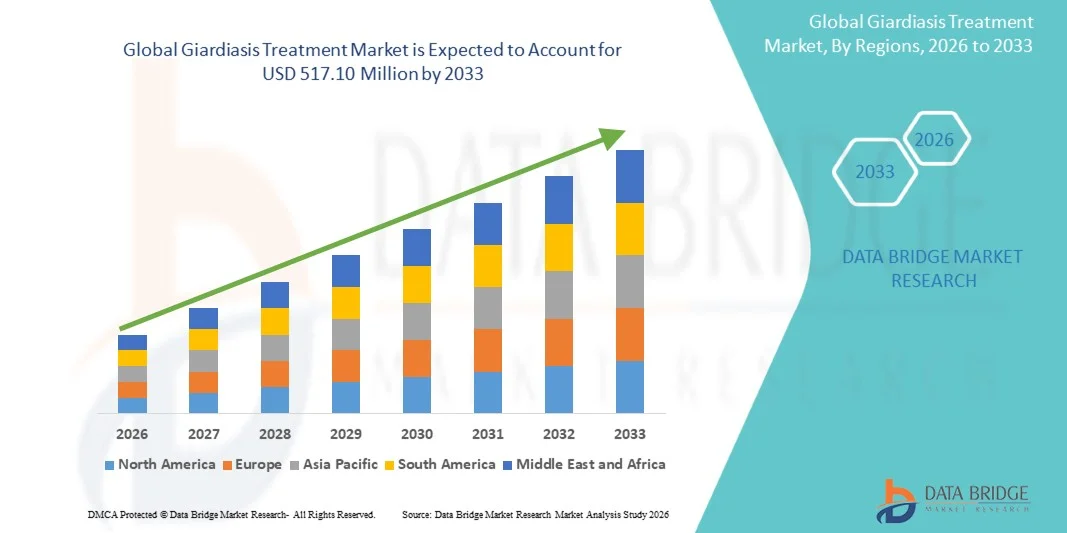
- As per Data Bridge Market Research Analysis the global giardiasis treatment market size was valued at USD 305.5 Million in 2025 and is expected to reach USD 517.10 Million by 2033, at a CAGR of 6.80% during the forecast period
- The market growth is largely fueled by the increasing prevalence of giardiasis infections worldwide, particularly in regions with limited access to clean water and sanitation facilities. Growing awareness regarding waterborne diseases, improved diagnostic capabilities, and enhanced public health surveillance are contributing to the rising demand for effective treatment solutions
- Furthermore, the growing focus on early diagnosis and prompt therapeutic intervention, along with rising healthcare expenditure in developing regions, is driving the adoption of antiparasitic medications and supportive therapies. Increasing government initiatives aimed at improving sanitation infrastructure and controlling parasitic infections are accelerating the uptake of giardiasis treatment solutions, thereby significantly boosting the overall market growth
Market Size & Forecast
- Global Market Value (2025): USD 305.5 Million
- Expected Market Value (2033): USD 517.10 Million
- Forecast CAGR (2026–2033): 6.80%
What are the Major Takeaways of Giardiasis Treatment Market?
- Giardiasis treatment solutions, including antiparasitic medications such as metronidazole, tinidazole, and nitazoxanide, play a critical role in managing Giardia lamblia infections across both pediatric and adult populations. These treatments are essential in reducing symptom severity, preventing complications such as dehydration and malabsorption, and limiting disease transmission, particularly in regions with inadequate sanitation infrastructure
- The escalating demand for giardiasis treatment is primarily fueled by the rising incidence of waterborne parasitic infections, growing awareness regarding gastrointestinal diseases, and improved access to diagnostic testing in both developed and developing economies. In addition, increased travel to endemic regions and outbreaks linked to contaminated water sources are further supporting market expansion
- North America dominated the giardiasis treatment market with the largest revenue share of 38.6% in 2025, characterized by strong healthcare infrastructure, high awareness levels, and widespread availability of prescription antiparasitic drugs. The U.S. experienced substantial growth in treatment adoption, supported by advanced diagnostic capabilities, favorable reimbursement structures, and proactive public health monitoring systems
- Asia-Pacific is expected to be the fastest growing region in the giardiasis treatment market during the forecast period, projected to expand at a CAGR of 12.8%, driven by increasing healthcare expenditure, rising prevalence of parasitic infections, improving sanitation initiatives, and expanding access to pharmaceutical treatments in countries such as China, India, and Southeast Asian nations
- The Generic segment dominated the largest market revenue share of 62.3% in 2025, driven by affordability and widespread accessibility across both developed and emerging economies
Report Scope and Giardiasis Treatment Market Segmentation
|
Attributes |
Giardiasis Treatment Key Market Insights |
|
Segments Covered |
|
|
Countries Covered |
North America
Europe
Asia-Pacific
Middle East and Africa
South America
|
|
Key Market Players |
|
|
Market Opportunities |
|
|
Value Added Data Infosets |
In addition to the insights on market scenarios such as market value, growth rate, segmentation, geographical coverage, and major players, the market reports curated by the Data Bridge Market Research also include in-depth expert analysis, patient epidemiology, pipeline analysis, pricing analysis, and regulatory framework. |
What is the Key Trend in the Giardiasis Treatment Market?
“Rising Adoption of Combination Therapies and Improved Diagnostic Approaches”
- A significant and accelerating trend in the global giardiasis treatment market is the increasing adoption of combination drug therapies and advanced diagnostic methodologies aimed at improving therapeutic outcomes and reducing recurrence rates associated with Giardia infections. As treatment resistance and relapse cases become more frequently reported, healthcare providers are shifting toward more comprehensive and optimized treatment protocol
- For instance, clinicians are increasingly prescribing combination regimens such as metronidazole alongside albendazole in treatment-resistant cases to enhance parasite eradication, shorten infection duration, and minimize the risk of reinfection
- The growing availability of rapid antigen detection tests and molecular diagnostic assays is enabling faster and more precise identification of Giardia lamblia infections, facilitating early initiation of therapy and improving clinical success rates
- There is also an increasing emphasis on evidence-based dosing strategies to reduce antimicrobial resistance and improve patient compliance, particularly among pediatric and immunocompromised populations
- Pharmaceutical manufacturers are investing in improved formulations, including pediatric-friendly suspensions and reduced-side-effect therapies, to enhance treatment adherence
- This shift toward more effective, targeted, and patient-centric therapeutic strategies is transforming the clinical management landscape of giardiasis across both developed and developing healthcare systems
Giardiasis Treatment Market Dynamics
Driver
“Increasing Prevalence of Waterborne Parasitic Infections and Rising Public Health Awareness”
- The rising global prevalence of waterborne parasitic infections, particularly in regions with inadequate sanitation infrastructure and limited access to clean drinking water, is a major driver of the Giardiasis Treatment market. Increasing cases in both endemic and non-endemic regions have heightened the need for effective pharmacological interventions
- For instance, recurring outbreaks linked to contaminated municipal water supplies and untreated surface water in parts of South Asia and Sub-Saharan Africa have prompted public health authorities to expand mass treatment programs and improve access to anti-parasitic medications
- Growing public awareness regarding gastrointestinal infections, persistent diarrhea, and associated complications such as malabsorption and weight loss is encouraging earlier medical consultation and diagnosis
- Government-led sanitation campaigns and international health initiatives aimed at improving water quality and disease surveillance are further strengthening treatment demand
- The high vulnerability of children to giardiasis, particularly in densely populated and low-hygiene environments, continues to drive pediatric treatment volumes
- Expansion of healthcare infrastructure, improved distribution channels, and increasing availability of prescription and over-the-counter anti-parasitic drugs are collectively supporting sustained market growth
Restraint/Challenge
“Limited Healthcare Access and Emerging Drug Resistance Concerns”
- Limited access to diagnostic facilities and qualified healthcare providers in rural and low-income regions remains a significant barrier to timely detection and effective treatment of giardiasis. Delayed diagnosis often leads to prolonged infections and higher transmission rates
- For instance, in underserved rural communities lacking laboratory testing capabilities, patients frequently rely on symptomatic treatment without confirmatory diagnosis, resulting in incomplete therapy and increased recurrence risk
- The growing concern regarding reduced responsiveness to commonly prescribed medications such as metronidazole is creating apprehension about long-term treatment effectiveness and may necessitate alternative therapeutic strategies
- Adverse drug reactions, including nausea, metallic taste, and gastrointestinal discomfort, can negatively impact patient adherence to full treatment regimens
- Lack of sustained hygiene practices and sanitation improvements in endemic areas further increases reinfection rates, limiting the overall effectiveness of therapeutic interventions
- Overcoming these challenges will require improved diagnostic accessibility, continued pharmaceutical innovation, stronger public health education programs, and expanded access to affordable and effective treatment options to ensure long-term market sustainability
How is the Giardiasis Treatment Market Segmented?
The market is segmented on the basis of drug class, drug type, end-users, and distribution channel.
• By Drug Class
On the basis of drug class, the Giardiasis Treatment market is segmented into Amebicides, Anthelmintic, and Others. The Anthelmintic segment dominated the largest market revenue share of 46.8% in 2025, driven by its high prescription rate and strong clinical effectiveness in eliminating Giardia lamblia infections. Anthelmintic drugs such as metronidazole and tinidazole remain first-line therapies recommended by healthcare professionals. The segment benefits from widespread availability, established treatment guidelines, and affordability in both developed and emerging markets. Hospitals and specialty clinics primarily prescribe these drugs due to their proven efficacy and shorter treatment duration. Increasing incidence of waterborne parasitic infections further supports demand. Public health initiatives in developing regions also boost adoption. The segment’s dominance is reinforced by strong generic manufacturing and favorable reimbursement scenarios. Continuous demand in pediatric and adult populations contributes to revenue stability.
The Amebicides segment is expected to witness the fastest CAGR of 8.9% from 2026 to 2033, driven by rising research into alternative therapies and increasing resistance concerns associated with conventional treatments. Growing awareness about parasitic infections and improved diagnostic capabilities support segment expansion. Pharmaceutical companies are investing in improved formulations with reduced side effects. Expanding healthcare access in rural and underserved regions accelerates growth. Increasing government initiatives to control parasitic diseases contribute to higher prescription rates. Combination therapies including amebicidal drugs are gaining attention for enhanced treatment outcomes. The segment also benefits from expanding pharmaceutical distribution networks. Advancements in drug development and rising clinical trials are further expected to drive demand over the forecast period.
• By Drug Type
On the basis of drug type, the Giardiasis Treatment market is segmented into Branded and Generic. The Generic segment dominated the largest market revenue share of 62.3% in 2025, driven by affordability and widespread accessibility across both developed and emerging economies. Generic antiparasitic medications are widely prescribed due to cost-effectiveness and comparable therapeutic outcomes to branded drugs. Government healthcare programs and insurance coverage often prioritize generics to reduce treatment expenses. The segment benefits from strong competition among manufacturers, ensuring consistent supply. Increasing demand from public hospitals and rural clinics supports dominance. Rising awareness regarding low-cost treatment options further fuels adoption. Regulatory approvals for generic versions of key antiparasitic drugs also strengthen growth.
The Branded segment is expected to witness the fastest CAGR of 9.7% from 2026 to 2033, driven by innovation in drug formulations and improved safety profiles. Pharmaceutical companies are focusing on enhanced-release formulations and combination therapies to differentiate branded products. Rising preference for branded medications in private healthcare facilities supports growth. Increased patient awareness and trust in established pharmaceutical brands contribute to adoption. Expanding healthcare expenditure in emerging economies also benefits the segment. Marketing initiatives and physician engagement programs further strengthen branded drug penetration. Research investments aimed at reducing resistance and side effects are expected to sustain segment expansion.
• By End-Users
On the basis of end-users, the market is segmented into Hospitals, Homecare, Specialty Clinics, and Others. The Hospitals segment dominated with 48.5% market share in 2025, supported by higher patient footfall and access to advanced diagnostic facilities. Hospitals provide comprehensive care including laboratory testing and prescription management. Severe and complicated giardiasis cases are primarily treated in hospital settings. Government funding and insurance reimbursement policies also support hospital-based treatment. The segment benefits from trained healthcare professionals and standardized treatment protocols. Increasing hospital admissions in urban areas contribute to demand. Access to pediatric and emergency services further strengthens dominance.
The Homecare segment is anticipated to witness the fastest CAGR of 10.4% from 2026 to 2033, driven by the growing preference for outpatient treatment and availability of oral medications. Most giardiasis cases are mild to moderate and can be managed at home with prescribed medication. Telemedicine consultations and digital prescriptions further support home-based care. Increasing awareness of hygiene and early diagnosis boosts treatment rates. Cost savings associated with homecare compared to hospital stays drive adoption. Rising internet pharmacy access also contributes to segment growth. Expanding rural healthcare outreach programs accelerate penetration.
• By Distribution Channel
On the basis of distribution channel, the market is segmented into Hospital Pharmacy, Online Pharmacy, and Retail Pharmacy. The Hospital Pharmacy segment accounted for the largest market revenue share of 44.6% in 2025, driven by direct dispensing of prescribed antiparasitic medications during hospital visits. Hospital pharmacies ensure authenticity, proper dosage guidance, and compliance monitoring. The segment benefits from integrated healthcare services and insurance reimbursements. Higher trust in hospital-based medication dispensing supports dominance. Increased inpatient and outpatient visits further drive revenue.
The Online Pharmacy segment is expected to witness the fastest CAGR of 11.2% from 2026 to 2033, fueled by growing digital adoption and convenience of doorstep delivery. Online platforms offer competitive pricing and easy prescription uploads. Increasing smartphone penetration and internet access accelerate growth. Consumers prefer online pharmacies for privacy and accessibility, especially in remote areas. Expansion of e-commerce healthcare platforms strengthens availability. Promotional discounts and subscription-based models enhance repeat purchases. Regulatory support for digital health services further contributes to rapid expansion.
Which Region Holds the Largest Share of the Giardiasis Treatment Market?
- North America dominated the giardiasis treatment market with the largest revenue share of 38.6% in 2025, characterized by strong healthcare infrastructure, high awareness levels, and widespread availability of prescription antiparasitic drugs. The region benefits from advanced diagnostic laboratories, structured surveillance systems, and established treatment protocols that enable early detection and timely therapeutic intervention
- The market experienced substantial growth in treatment adoption, supported by advanced diagnostic capabilities such as stool antigen testing and molecular assays, favorable reimbursement structures, and proactive public health monitoring systems implemented by health authorities
- Increasing awareness regarding waterborne parasitic infections, combined with improved sanitation standards and access to healthcare services, continues to support steady treatment demand across hospitals, specialty clinics, and retail pharmacy channels
U.S. Giardiasis Treatment Market Insight
The U.S. giardiasis treatment market captured the largest revenue share within North America in 2025. Growth is primarily driven by strong disease surveillance programs, rapid diagnostic adoption, and broad availability of first-line treatments such as metronidazole, tinidazole, and nitazoxanide. Increasing healthcare spending, well-established reimbursement policies, and strong public health initiatives aimed at controlling waterborne outbreaks further strengthen market expansion. Additionally, improved patient awareness and access to pediatric formulations are contributing to higher treatment compliance rates across diverse population groups.
Europe Giardiasis Treatment Market Insight
The Europe giardiasis treatment market is projected to expand at a substantial CAGR throughout the forecast period, supported by robust healthcare systems and increasing emphasis on infectious disease control. Rising cross-border travel, periodic outbreaks, and enhanced diagnostic capabilities are contributing to sustained treatment demand. Public health agencies across the region are focusing on improving sanitation, early screening, and infection monitoring, which supports prescription volumes. Countries such as Germany, France, and the U.K. are witnessing consistent adoption of standardized treatment regimens in both hospital and outpatient settings.
U.K. Giardiasis Treatment Market Insight
The U.K. giardiasis treatment market is anticipated to grow at a noteworthy CAGR during the forecast period, driven by active surveillance systems and strong public healthcare infrastructure. Increasing travel-related infections and improved reporting mechanisms are encouraging early diagnosis and treatment. The availability of prescription antiparasitic drugs through national healthcare services, combined with high public awareness regarding gastrointestinal infections, continues to stimulate steady market growth.
Germany Giardiasis Treatment Market Insight
The Germany giardiasis treatment market is expected to expand at a considerable CAGR during the forecast period, supported by advanced laboratory diagnostics and a well-developed healthcare network. Germany’s emphasis on infectious disease monitoring, hygiene standards, and preventive healthcare programs encourages early intervention and proper treatment adherence. Growing awareness among clinicians regarding resistant or recurrent cases is also supporting optimized therapeutic approaches and sustained pharmaceutical demand.
Asia-Pacific Giardiasis Treatment Market Insight
The Asia-Pacific giardiasis treatment market is expected to be the fastest growing region, projected to expand at a CAGR of 12.8% during the forecast period. Growth is driven by increasing healthcare expenditure, rising prevalence of parasitic infections, improving sanitation initiatives, and expanding access to pharmaceutical treatments across emerging economies. Rapid urbanization, population growth, and greater government focus on water quality management are further strengthening treatment demand. The expansion of hospital infrastructure and greater penetration of retail pharmacies are improving drug accessibility throughout the region.
Japan Giardiasis Treatment Market Insight
The Japan giardiasis treatment market is gaining steady momentum due to strong public health standards, effective sanitation systems, and advanced diagnostic technologies. Although prevalence rates remain relatively controlled, increasing international travel and food import exposure contribute to periodic cases. High healthcare accessibility and structured clinical guidelines ensure consistent treatment uptake and patient compliance.
China Giardiasis Treatment Market Insight
The China giardiasis treatment market accounted for the largest revenue share within Asia-Pacific in 2025, attributed to its large population base, expanding healthcare infrastructure, and ongoing public health reforms. Rising awareness regarding parasitic infections, government-led sanitation improvement programs, and broader availability of affordable antiparasitic medications are key growth drivers. Continued investment in rural healthcare access and diagnostic expansion is expected to further accelerate treatment adoption across the country.
Which are the Top Companies in Giardiasis Treatment Market?
The Giardiasis Treatment industry is primarily led by well-established companies, including:
• Pfizer Inc. (U.S.)
• GlaxoSmithKline plc (U.K.)
• Sanofi S.A. (France)
• Bayer AG (Germany)
• Merck & Co., Inc. (U.S.)
• Johnson & Johnson (U.S.)
• Abbott Laboratories (U.S.)
• Novartis AG (Switzerland)
• Cipla Ltd. (India)
• Sun Pharmaceutical Industries Ltd. (India)
• Aurobindo Pharma Ltd. (India)
• Teva Pharmaceutical Industries Ltd. (Israel)
• Mylan N.V. (U.S.)
• Zydus Lifesciences Ltd. (India)
• Alkem Laboratories Ltd. (India)
• Lupin Ltd. (India)
• Fresenius Kabi (Germany)
• Hikma Pharmaceuticals plc (U.K.)
• Glenmark Pharmaceuticals Ltd. (India)
• Torrent Pharmaceuticals Ltd. (India)
What are Latest Developments in Giardiasis Treatment Market?
- In October 2023, the U.S. Food and Drug Administration (FDA) approved Ayradia (metronidazole oral suspension) for the treatment of Giardia duodenalis infection in dogs, marking the first FDA-approved animal drug for giardiasis, which could impact veterinary and zoonotic treatment dynamics
- In November 2023, Dr. Reddy’s Laboratories announced the completion of bioequivalence studies for its nitazoxanide tablets, preparing for regulatory submissions across major global markets including the U.S. and EU.
- In September 2024, Lupin Limited received FDA approval for its generic version of nitazoxanide oral suspension, expanding treatment options for pediatric giardiasis and providing a cost-competitive therapy in the U.S. market
- In June 2024, Sun Pharmaceutical Industries Ltd. launched an extended-release formulation of metronidazole in European markets designed to improve patient compliance and maintain therapeutic efficacy for parasitic infections including giardiasis
- In March 2024, Cipla Limited partnered with the Indian Council of Medical Research (ICMR) to initiate clinical studies on combination therapy protocols aimed at managing drug-resistant giardiasis cases, indicating a shift toward more advanced treatment strategies
- In January 2024, Teva Pharmaceutical Industries Ltd. received European Medicines Agency approval for its generic tinidazole tablets, broadening therapeutic options and enhancing competitive pricing in Europe’s giardiasis treatment segment
- In May 2025, a published field clinical study confirmed the efficacy, safety, and acceptance of a metronidazole-based flavored oral suspension in treating giardiasis in dogs, supporting its clinical use in veterinary practices and potentially informing broader formulation approaches

- Interactive Data Analysis Dashboard
- Company Analysis Dashboard for high growth potential opportunities
- Research Analyst Access for customization & queries
- Competitor Analysis with Interactive dashboard
- Latest News, Updates & Trend analysis
- Harness the Power of Benchmark Analysis for Comprehensive Competitor Tracking
Data collection and base year analysis are done using data collection modules with large sample sizes. The stage includes obtaining market information or related data through various sources and strategies. It includes examining and planning all the data acquired from the past in advance. It likewise envelops the examination of information inconsistencies seen across different information sources. The market data is analysed and estimated using market statistical and coherent models. Also, market share analysis and key trend analysis are the major success factors in the market report. To know more, please request an analyst call or drop down your inquiry.
The key research methodology used by DBMR research team is data triangulation which involves data mining, analysis of the impact of data variables on the market and primary (industry expert) validation. Data models include Vendor Positioning Grid, Market Time Line Analysis, Market Overview and Guide, Company Positioning Grid, Patent Analysis, Pricing Analysis, Company Market Share Analysis, Standards of Measurement, Global versus Regional and Vendor Share Analysis. To know more about the research methodology, drop in an inquiry to speak to our industry experts.
Data Bridge Market Research is a leader in advanced formative research. We take pride in servicing our existing and new customers with data and analysis that match and suits their goal. The report can be customized to include price trend analysis of target brands understanding the market for additional countries (ask for the list of countries), clinical trial results data, literature review, refurbished market and product base analysis. Market analysis of target competitors can be analyzed from technology-based analysis to market portfolio strategies. We can add as many competitors that you require data about in the format and data style you are looking for. Our team of analysts can also provide you data in crude raw excel files pivot tables (Fact book) or can assist you in creating presentations from the data sets available in the report.












