Global Hyperthyroidism Market Segmentation, By Diagnosis (Physical Examination, Cholesterol Test, Blood Tests, Radioiodine Uptake Test, Thyroid Scan, Thyroid Ultrasound, and Others), Treatment (Medication and Surgery), Route of Administration (Oral, Parenteral, and Others), End-Users (Hospitals, Homecare, Speciality Centres, and Others), Distribution Channel (Hospital Pharmacy, Online Pharmacy, and Retail Pharmacy) - Industry Trends and Forecast to 2033
Каков размер рынка гипертиреоза и темпы роста
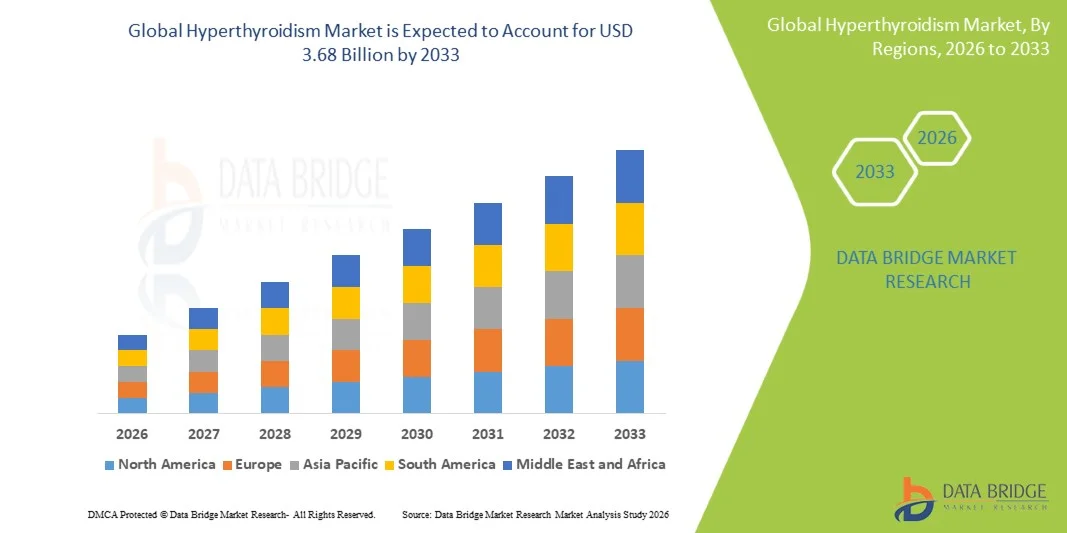
- По данным Data Bridge Market Research Analysis Мировой рынок гипертиреоза оценивается в2,69 млрд долларов в 2025 годуОжидается, что он достигнет3,68 млрд долларов к 2033 году, вCAGR 4,00%в течение прогнозируемого периода
- Рост рынка в значительной степени подпитывается растущей распространенностью заболеваний щитовидной железы, особенно гипертиреоза, наряду с повышением осведомленности о ранней диагностике и лечении, что приводит к более широкому принятию терапевтических и диагностических решений как в больницах, так и в амбулаторных условиях.
- Кроме того, растущий спрос на эффективные и долгосрочные варианты лечения, включая антитиреоидные препараты, терапию радиоактивным йодом и хирургические вмешательства, устанавливает управление гипертиреозом в качестве важнейшего компонента эндокринной медицины. Эти сходящиеся факторы ускоряют внедрение решений для лечения гипертиреоза, тем самым значительно повышая рост отрасли.
Размер рынка и прогноз
- Глобальная рыночная стоимость (2025):$2,69 млрд.
- Ожидаемая рыночная стоимость (2033):$3,68 млрд.
- Прогноз CAGR (2026–2033):4.00%
Анализ рынка гипертиреоза
- Решения для лечения гипертиреоза, включая антитиреоидные препараты, терапию радиоактивным йодом и хирургические вмешательства, становятся все более важными компонентами современных эндокринных систем здравоохранения из-за их эффективности в управлении чрезмерным производством гормонов щитовидной железы и улучшении результатов лечения пациентов.
- Растущий спрос на решения для лечения гипертиреоза в первую очередь подпитывается ростом распространенности заболеваний щитовидной железы, повышением осведомленности о ранней диагностике и лечении и растущим внедрением передовых диагностических и терапевтических подходов.
- Северная Америка доминировала на рынке гипертиреоза с самой большой долей дохода в 37,2% в 2025 году, что обусловлено развитой инфраструктурой здравоохранения, высокими показателями диагностики, сильным присутствием фармацевтических компаний и широким доступом к вариантам лечения в США.
- Ожидается, что Азиатско-Тихоокеанский регион станет самым быстрорастущим регионом на рынке гипертиреоза в течение прогнозируемого периода из-за повышения осведомленности в области здравоохранения, роста численности пациентов, улучшения доступа к здравоохранению и растущего принятия решений по лечению.
- Сегмент лекарств составил самую большую долю рынка почти 64,3% в 2025 году из-за его неинвазивного характера и широкого использования в качестве варианта лечения гипертиреоза первой линии.
Сфера охвата и сегментация рынка гипертиреоза
|
Атрибуты |
Гипертиреоз Ключевые идеи рынка |
|
Сегменты покрыты |
|
|
Страны, охваченные |
Северная Америка
Европа
Азиатско-Тихоокеанский регион
Ближний Восток и Африка
Южная Америка
|
|
Ключевые игроки рынка |
|
|
Рыночные возможности |
|
|
Информационные наборы данных с добавленной стоимостью |
В дополнение к информации о рыночных сценариях, таких как рыночная стоимость, темпы роста, сегментация, географическое покрытие и основные игроки, рыночные отчеты, курируемые Data Bridge Market Research, также включают углубленный экспертный анализ, эпидемиологию пациентов, анализ трубопроводов, анализ цен и нормативную базу. |
Каковы основные тенденции на рынке гипертиреоза
"Достижения в адресной терапии и персонализированных подходах к лечению"
- Значительной и ускоряющейся тенденцией на мировом рынке гипертиреоза является растущий сдвиг в сторону таргетной терапии и персонализированных подходов к лечению, которые направлены на улучшение клинических результатов при минимизации побочных эффектов и повышении качества жизни пациентов.
- Например, все более широкое использование высокоточных диагностических инструментов, таких как передовые методы диагностики.функциональные тесты щитовидной железыпозволяет клиницистам адаптировать планы лечения на основе индивидуальных профилей пациентов, что приводит к более эффективному лечению заболеваний;
- Фармацевтические компании активно сосредотачиваются на разработке новых антитиреоидных препаратов и улучшенных рецептур, которые обеспечивают лучшую эффективность, снижение побочных эффектов и повышение соответствия пациентов долгосрочному лечению.
- Кроме того, все больше внимания уделяется индивидуальным стратегиям ухода, которые учитывают такие факторы, как тяжесть заболевания, основные причины, такие как болезнь Грейвса, возраст пациента и сопутствующие медицинские условия.
- Внедрение цифровых технологий здравоохранения для непрерывного мониторинга уровня гормонов щитовидной железы способствует своевременной корректировке лечения и улучшению контроля заболеваний.
- Этот переход к ориентированным на пациента и точно управляемым парадигмам лечения значительно меняет общий ландшафт рынка гипертиреоза.
Динамика рынка гипертиреоза
водитель
«Повышение распространенности заболеваний щитовидной железы и повышение осведомленности»
- Растущее глобальное бремя заболеваний щитовидной железы, особенно гипертиреоза, является основным фактором, стимулирующим спрос на эффективные диагностические и лечебные решения в системах здравоохранения.
- Например, болезнь Грейвса остается одной из наиболее распространенных причин гипертиреоза во всем мире, что в значительной степени способствует росту числа диагностированных случаев и, следовательно, увеличивает потребность в соответствующих терапевтических вмешательствах.
- Растущая осведомленность пациентов о ранних симптомах и важности своевременной диагностики побуждает больше людей обращаться за медицинской помощью на ранних стадиях заболевания.
- Улучшения в инфраструктуре здравоохранения, наряду с более широким доступом к передовым диагностическим технологиям, способствуют раннему выявлению и эффективному лечению заболеваний щитовидной железы.
- Наличие нескольких методов лечения, включая антитиреоидные препараты, радиойодную терапию и хирургические процедуры, также способствует расширению рынка.
Сдержанность/вызов
"Побочные эффекты лечения и ограниченное долгосрочное лечение"
- Наличие побочных эффектов, связанных с широко используемыми вариантами лечения, продолжает выступать в качестве серьезной проблемы для роста рынка гипертиреоза.
- Например, антитиреоидные препараты, такие как метимазол, могут привести к побочным реакциям, включая токсичность печени и снижение количества белых кровяных телец, что может отбить у пациентов желание продолжать длительное лечение.
- Проблемы, связанные с результатами лечения, такие как развитие гипотиреоза после терапии радиоактивным йодом, еще больше усложняют принятие решений как для пациентов, так и для медицинских работников.
- Долгосрочная приверженность лечению остается критической проблемой, особенно в случаях, требующих постоянного мониторинга, частых корректировок дозировки и регулярных наблюдений.
- Вариабельность реакции пациента на терапию и риск рецидива также создают проблемы в достижении последовательного контроля заболеваний.
- Решение этих проблем посредством более безопасного развития лекарственных средств, улучшения образования пациентов и улучшения решений для мониторинга будет иметь важное значение для обеспечения устойчивого роста рынка.
Сфера рынка гипертиреоза
Рынок сегментирован на основе диагностики, лечения, пути введения, конечных пользователей и канала распределения.
• Диагностика
На основании диагноза рынок гипертиреоза сегментирован на физическое обследование, тест на холестерин, анализы крови, тест на поглощение радиойода, сканирование щитовидной железы, ультразвук щитовидной железы и другие. Сегмент анализов крови доминировал на крупнейшей доле рынка примерно в 41,6% в 2025 году, в первую очередь из-за его точности, доступности и широкого внедрения в качестве диагностического инструмента первой линии для выявления дисбалансов гормонов щитовидной железы, таких как уровни Т3, Т4 и ТТГ. Анализ крови является экономически эффективным и регулярно рекомендуется в клинических условиях, что позволяет проводить раннюю диагностику и постоянный мониторинг гипертиреоза. Кроме того, достижения в области автоматизированной лабораторной диагностики и повышения осведомленности о нарушениях щитовидной железы еще больше повысили спрос на анализы крови во всем мире. Больницы и диагностические лаборатории в значительной степени полагаются на эти тесты для точной оценки и планирования лечения. Интеграция передовых биомаркеров и улучшенная чувствительность к анализу укрепили доминирование сегмента.
Ожидается, что сегмент теста на поглощение радиойода будет наблюдать самый быстрый CAGR около 6,9% с 2026 по 2033 год, что обусловлено его способностью обеспечивать функциональное понимание активности щитовидной железы и дифференцировать причины гипертиреоза, такие как болезнь Грейвса и тиреоидит. Растущее предпочтение точных и специализированных диагностических процедур, особенно в сложных случаях, способствует росту сегмента. Технологические достижения в области ядерной визуализации и растущая доступность специализированных диагностических центров также способствуют внедрению. Кроме того, ожидается, что увеличение расходов на здравоохранение и повышение осведомленности в развивающихся регионах ускорит спрос. Сегмент также получает выгоду от усовершенствованных протоколов безопасности и методов снижения радиационного облучения.
• Лечение
На основе лечения рынок сегментирован на медикаментозное лечение и хирургию. Сегмент медикаментов составил самую большую долю дохода на рынке почти 64,3% в 2025 году из-за его неинвазивного характера и широкого использования в качестве варианта лечения гипертиреоза первой линии. Антитиреоидные препараты, такие как метимазол и пропилтиоурацил, обычно назначают для эффективного контроля производства гормонов. Доступность и простота введения лекарств делают их очень предпочтительными среди пациентов и поставщиков медицинских услуг. Кроме того, долгосрочное лечение заболеваний с помощью фармакологической терапии вносит значительный вклад в доминирование сегмента. Растущая распространенность гипертиреоза и растущее предпочтение пациентов к консервативному лечению приближаются к дальнейшему росту.
Ожидается, что сегмент хирургии будет регистрировать самый быстрый CAGR примерно на 5,8% с 2026 по 2033 год, что обусловлено ростом случаев тяжелого гипертиреоза, узелков щитовидной железы и резистентных к лечению состояний. Хирургические процедуры, такие как тиреоидэктомия, набирают обороты благодаря достижениям в минимально инвазивных методах и улучшению результатов лечения пациентов. Расширение доступности квалифицированных хирургов и улучшение послеоперационного ухода также способствуют росту сегмента. Кроме того, растущая осведомленность о решениях для постоянного лечения способствует более широкому принятию хирургических вмешательств.
• По маршруту администрации
На основе пути администрирования рынок сегментирован на устный, парентеральный и другие. Сегмент пероральных препаратов занимал самую большую долю рынка в размере около 57,9% в 2025 году, в первую очередь из-за удобства, соблюдения требований пациентов и широкого использования пероральных препаратов при лечении гипертиреоза. Пероральные препараты просты в применении, экономичны и подходят для длительной терапии, что делает их предпочтительным выбором среди пациентов. Доминирование сегмента также поддерживается наличием широкого спектра пероральных рецептур и растущим внедрением в амбулаторных условиях.
Ожидается, что в парентеральном сегменте самый быстрый CAGR составит около 6,2% с 2026 по 2033 год, что обусловлено его использованием в экстренных случаях и в тяжелых условиях, когда требуется быстрое действие препарата. Парентеральное введение обеспечивает немедленное терапевтическое воздействие и часто используется в больничных условиях для критических пациентов. Достижения в разработке инъекционных лекарственных препаратов и увеличение показателей госпитализации также способствуют росту сегмента. Ожидается, что растущий спрос на эффективные и быстродействующие методы лечения будет стимулировать сегмент в течение прогнозируемого периода.
• Конечными пользователями
На базе конечных пользователей рынок сегментирован на больницы, домашнюю помощь, специализированные центры и другие. Сегмент больниц доминировал на рынке с наибольшей долей выручки в 48,7% в 2025 году, благодаря наличию передовых диагностических учреждений, квалифицированных медицинских работников и комплексных вариантов лечения. Больницы служат основными центрами диагностики, лечения и лечения гипертиреоза, особенно в тяжелых и сложных случаях. Увеличение числа пациентов и увеличение инвестиций в инфраструктуру здравоохранения еще больше поддерживают доминирование сегмента.
Сегмент домашних услуг, по прогнозам, будет наблюдать самый быстрый CAGR около 7,1% с 2026 по 2033 год, что обусловлено растущей тенденцией к домашнему здравоохранению и удаленному мониторингу пациентов. Пациенты все чаще предпочитают условия ухода на дому для долгосрочного лечения заболеваний из-за удобства и экономической эффективности. Технологические достижения в области телемедицины и устройств дистанционного мониторинга еще больше увеличивают этот сегмент. Кроме того, старение населения и увеличение бремени хронических заболеваний ускоряют спрос на услуги по уходу на дому.
• Распределительный канал
На основе канала дистрибуции рынок сегментирован в больничную аптеку, онлайн-аптеку и розничную аптеку. Сегмент больничных аптек в 2025 году занимал самую большую долю рынка, составив почти 45,5%, что обусловлено большим объемом рецептов, выписываемых в больницах, и наличием специализированных лекарств. Больничные аптеки обеспечивают безопасное и регулируемое распространение лекарств, особенно для пациентов, проходящих лечение в клинических условиях. Сильные сети поставок и увеличение посещений больниц способствуют доминированию сегмента.
Сегмент онлайн-аптек, как ожидается, зарегистрирует самый быстрый CAGR примерно на 8,3% с 2026 по 2033 год, чему способствует растущее внедрение цифровых платформ здравоохранения и электронной коммерции. Увеличение проникновения интернета, удобство доставки на дом и конкурентные цены являются ключевыми факторами роста сегмента. Кроме того, растущая осведомленность потребителей и предпочтение бесконтактных услуг после пандемии ускоряют переход к онлайн-аптекам. Ожидается, что расширение цифровой инфраструктуры и нормативно-правовая поддержка будут способствовать росту сегмента в течение прогнозируемого периода.
Региональный анализ рынка гипертиреоза
- Северная Америка доминировала на рынке гипертиреоза с самой большой долей доходов37,2% в 2025 годуЭто обусловлено развитой инфраструктурой здравоохранения, высокими показателями диагностики и сильным присутствием ведущих фармацевтических компаний в регионе.
- Регион выигрывает от широкого доступа к эффективным вариантам лечения, включая антитиреоидные препараты, терапию радиоактивным йодом и хирургические вмешательства, которые способствуют улучшению результатов лечения заболеваний.
- Кроме того, высокий уровень осведомленности, хорошо зарекомендовавшая себя практика скрининга и благоприятная политика возмещения дополнительно поддерживают принятие решений для лечения гипертиреоза, особенно в США.
Американский рынок гипертиреоза Insight
Американский рынок гипертиреоза занял самую большую долю доходов в Северной Америке в 2025 году, что обусловлено высокой распространенностью заболеваний щитовидной железы, высокими расходами на здравоохранение и показателями ранней диагностики. Присутствие крупных фармацевтических компаний, наряду с постоянными достижениями в вариантах лечения и повышением осведомленности о здоровье щитовидной железы, значительно способствует росту рынка. Кроме того, наличие передовых диагностических инструментов и установленных протоколов лечения продолжает способствовать расширению рынка в стране.
Европейский рынок гипертиреоза Insight
По прогнозам, европейский рынок гипертиреоза будет расширяться при существенном CAGR в течение прогнозируемого периода, в первую очередь за счет увеличения распространенности заболеваний щитовидной железы, устоявшихся систем здравоохранения и сильной нормативной поддержки. Повышение осведомленности о ранней диагностике и эффективном лечении заболеваний наряду с растущим внедрением передовых вариантов лечения также способствует росту рынка во всем регионе.
Британский рынок гипертиреоза Insight
Ожидается, что рынок гипертиреоза в Великобритании в течение прогнозируемого периода будет расти с заметным CAGR, что обусловлено повышением осведомленности о расстройствах, связанных с щитовидной железой, и сильными инициативами в области общественного здравоохранения. Акцент страны на ранней диагностике, наряду с улучшением доступа к лечению и постоянным мониторингом пациентов, поддерживает расширение рынка.
Немецкий рынок гипертиреоза
Ожидается, что рынок гипертиреоза в Германии в течение прогнозируемого периода будет расширяться при значительном CAGR, поддерживаемом передовой инфраструктурой здравоохранения, высокими расходами на здравоохранение и сильным акцентом на инновационные подходы к лечению. Растущее внедрение эффективных методов лечения и растущая осведомленность об управлении заболеваниями щитовидной железы также способствуют росту рынка.
Азиатско-Тихоокеанский рынок гипертиреоза
Ожидается, что рынок гипертиреоза в Азиатско-Тихоокеанском регионе будет расти самыми быстрыми темпами в течение прогнозируемого периода, что обусловлено повышением осведомленности в области здравоохранения, увеличением числа пациентов и улучшением доступа к здравоохранению в странах с развивающейся экономикой. Расширение инфраструктуры здравоохранения наряду с растущим внедрением диагностических и лечебных решений значительно ускоряет рост рынка в регионе.
Японский рынок гипертиреоза
Японский рынок гипертиреоза набирает обороты из-за старения населения страны, увеличения распространенности заболеваний щитовидной железы и сильного внимания к передовым решениям в области здравоохранения. Высокое внедрение современных методов диагностики и эффективных вариантов лечения способствует устойчивому росту рынка.
Китайский рынок гипертиреоза
Захваченный рынок гипертиреоза в Китае составил самую большую долю доходов рынка в Азиатско-Тихоокеанском регионе в 2025 году, что объясняется большим пулом пациентов, улучшением инфраструктуры здравоохранения и повышением осведомленности о расстройствах щитовидной железы. Ожидается, что растущая доступность доступных вариантов лечения наряду с ростом инвестиций в системы здравоохранения будет способствовать дальнейшему росту рынка в стране.
Доля рынка гипертиреоза
Индустрия гипертиреоза в основном возглавляется хорошо зарекомендовавшими себя компаниями, в том числе:
- AbbVie Inc. (США)
- Pfizer Inc. (США)
- GlaxoSmithKline PLC (Великобритания)
- Merck & Co., Inc. (США)
- Novartis AG (Швейцария)
- Eli Lilly & Company (США)
- Санофи С.А. (Франция)
- Bayer AG (Германия)
- Takeda Pharmaceutical Company Limited (Япония)
- Bristol-Myers Squibb Company (США)
- AstraZeneca plc (Великобритания)
- Teva Pharmaceutical Industries Ltd (Израиль)
- Sun Pharmaceutical Industries Ltd. (Индия)
- Cipla Ltd. (Индия)
- Dr. Reddy's Laboratories Ltd. (Индия)
- Lupin Limited (Индия)
- Zydus Lifesciences Ltd. (Индия)
- Aurobindo Pharma Limited (Индия)
- Hikma Pharmaceuticals PLC (Великобритания)
- Amneal Pharmaceuticals, Inc. (США)
Последние события на мировом рынке гипертиреоза
- В мае 2021 года Управление по контролю за продуктами и лекарствами США (FDA) одобрило Tepezza (teprotumumab-trbw) компанией Horizon Therapeutics для лечения заболеваний щитовидной железы, связанных с гипертиреозом, отметив первую целевую терапию для этого состояния. Это одобрение значительно расширило варианты лечения для пациентов с осложнениями, связанными с болезнью Грейвса.
- В сентябре 2022 года Horizon Therapeutics объявила о положительных реальных данных, подтверждающих эффективность Tepezza в снижении проптоза и улучшении симптомов у пациентов с заболеваниями щитовидной железы, укрепив его клиническое принятие.
- В июне 2023 года Европейская комиссия предоставила разрешение на маркетинг Tepezza (тепротумумаб) для лечения умеренно-тяжелых активных заболеваний щитовидной железы, расширяя доступ к передовой биологической терапии по всей Европе.
- В октябре 2023 года Американская ассоциация щитовидной железы выпустила обновленные клинические руководящие принципы, подчеркивающие более раннюю диагностику и персонализированные подходы к лечению гипертиреоза, включая оптимизированное использование антитиреоидных препаратов, радиоактивный йод и хирургию. Эта разработка способствовала улучшению клинических стандартов управления во всем мире.
- В феврале 2024 года FDA США приняло повторное представление дополнительной лицензии на биологические препараты Horizon Therapeutics (sBLA) для Tepezza, с целью расширения ее использования на основе дополнительных производственных и клинических данных.
- В марте 2025 года были выделены текущие клинические исследования и достижения в области биологических препаратов и целевых методов лечения гипертиреоза и связанных с ним заболеваний щитовидной железы, уделяя особое внимание улучшению долгосрочных результатов и снижению частоты рецидивов.
SKU-
Получите онлайн-доступ к отчету на первой в мире облачной платформе рыночной аналитики
- Интерактивная панель анализа данных
- Панель анализа компании для возможностей с высоким потенциалом роста
- Доступ аналитика-исследователя для настройки и запросов
- Анализ конкурентов с помощью интерактивной панели
- Последние новости, обновления и анализ тенденций
- Используйте возможности сравнительного анализа для комплексного отслеживания конкурентов
Методология исследования
Сбор данных и анализ базового года выполняются с использованием модулей сбора данных с большими размерами выборки. Этап включает получение рыночной информации или связанных данных из различных источников и стратегий. Он включает изучение и планирование всех данных, полученных из прошлого заранее. Он также охватывает изучение несоответствий информации, наблюдаемых в различных источниках информации. Рыночные данные анализируются и оцениваются с использованием статистических и последовательных моделей рынка. Кроме того, анализ доли рынка и анализ ключевых тенденций являются основными факторами успеха в отчете о рынке. Чтобы узнать больше, пожалуйста, запросите звонок аналитика или оставьте свой запрос.
Ключевой методологией исследования, используемой исследовательской группой DBMR, является триангуляция данных, которая включает в себя интеллектуальный анализ данных, анализ влияния переменных данных на рынок и первичную (отраслевую экспертную) проверку. Модели данных включают сетку позиционирования поставщиков, анализ временной линии рынка, обзор рынка и руководство, сетку позиционирования компании, патентный анализ, анализ цен, анализ доли рынка компании, стандарты измерения, глобальный и региональный анализ и анализ доли поставщика. Чтобы узнать больше о методологии исследования, отправьте запрос, чтобы поговорить с нашими отраслевыми экспертами.
Доступна настройка
Data Bridge Market Research является лидером в области передовых формативных исследований. Мы гордимся тем, что предоставляем нашим существующим и новым клиентам данные и анализ, которые соответствуют и подходят их целям. Отчет можно настроить, включив в него анализ ценовых тенденций целевых брендов, понимание рынка для дополнительных стран (запросите список стран), данные о результатах клинических испытаний, обзор литературы, обновленный анализ рынка и продуктовой базы. Анализ рынка целевых конкурентов можно проанализировать от анализа на основе технологий до стратегий портфеля рынка. Мы можем добавить столько конкурентов, о которых вам нужны данные в нужном вам формате и стиле данных. Наша команда аналитиков также может предоставить вам данные в сырых файлах Excel, сводных таблицах (книга фактов) или помочь вам в создании презентаций из наборов данных, доступных в отчете.