


What is the Hyperthyroidism Market Size and Growth Rate?
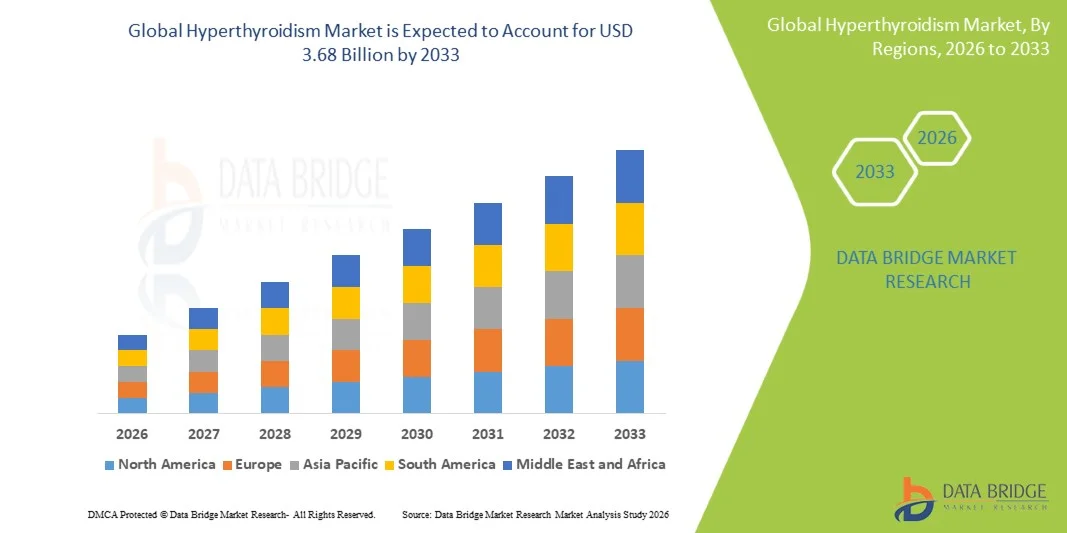
- As per Data Bridge Market Research Analysis the global hyperthyroidism market size was valued at USD 2.69 billion in 2025 and is expected to reach USD 3.68 billion by 2033, at a CAGR of 4.00% during the forecast period
- The market growth is largely fueled by the increasing prevalence of thyroid disorders, particularly hyperthyroidism, along with rising awareness regarding early diagnosis and treatment, leading to increased adoption of therapeutic and diagnostic solutions in both hospital and outpatient settings
- Furthermore, growing demand for effective and long-term treatment options, including antithyroid medications, radioactive iodine therapy, and surgical interventions, is establishing hyperthyroidism management as a critical component of endocrine healthcare. These converging factors are accelerating the uptake of Hyperthyroidism solutions, thereby significantly boosting the industry's growth
Market Size & Forecast
- Global Market Value (2025): USD 2.69 billion
- Expected Market Value (2033): USD 3.68 billion
- Forecast CAGR (2026–2033): 4.00%
Hyperthyroidism Market Analysis
- Hyperthyroidism treatment solutions, including antithyroid drugs, radioactive iodine therapy, and surgical interventions, are increasingly vital components of modern endocrine healthcare systems due to their effectiveness in managing excessive thyroid hormone production and improving patient outcomes
- The escalating demand for hyperthyroidism solutions is primarily fueled by the rising prevalence of thyroid disorders, increasing awareness regarding early diagnosis and treatment, and growing adoption of advanced diagnostic and therapeutic approaches
- North America dominated the hyperthyroidism market captured with the largest revenue share of 37.2% in 2025, driven by advanced healthcare infrastructure, high diagnosis rates, strong presence of pharmaceutical companies, and widespread access to treatment options in the U.S.
- Asia-Pacific is expected to be the fastest growing region in the Hyperthyroidism market during the forecast period due to increasing healthcare awareness, rising patient population, improving healthcare access, and growing adoption of treatment solutions
- The medication segment accounted for the largest market revenue share of nearly 64.3% in 2025, owing to its non-invasive nature and widespread use as the first-line treatment option for hyperthyroidism
Report Scope and Hyperthyroidism Market Segmentation
|
Attributes |
Hyperthyroidism Key Market Insights |
|
Segments Covered |
|
|
Countries Covered |
North America
Europe
Asia-Pacific
Middle East and Africa
South America
|
|
Key Market Players |
|
|
Market Opportunities |
|
|
Value Added Data Infosets |
In addition to the insights on market scenarios such as market value, growth rate, segmentation, geographical coverage, and major players, the market reports curated by the Data Bridge Market Research also include in-depth expert analysis, patient epidemiology, pipeline analysis, pricing analysis, and regulatory framework. |
What is the Key Trend in the Hyperthyroidism Market?
“Advancements in Targeted Therapies and Personalized Treatment Approaches”
- A significant and accelerating trend in the global Hyperthyroidism market is the growing shift toward targeted therapies and personalized treatment approaches that aim to improve clinical outcomes while minimizing adverse effects and enhancing patient quality of life
- For instance, the increasing use of precision-based diagnostic tools such as advanced thyroid function tests is enabling clinicians to tailor treatment plans based on individual patient profiles, leading to more effective disease management
- Pharmaceutical companies are actively focusing on the development of novel antithyroid drugs and improved formulations that offer better efficacy, reduced side effects, and enhanced patient compliance over long-term treatment
- In addition, there is a growing emphasis on individualized care strategies that consider factors such as disease severity, underlying causes like Graves’ disease, patient age, and coexisting medical conditions
- The incorporation of digital health technologies for continuous monitoring of thyroid hormone levels is further supporting timely treatment adjustments and improved disease control
- This transition toward patient-centric and precision-driven treatment paradigms is significantly transforming the overall landscape of the hyperthyroidism market
Hyperthyroidism Market Dynamics
Driver
“Rising Prevalence of Thyroid Disorders and Increasing Awareness”
- The increasing global burden of thyroid disorders, particularly hyperthyroidism, is a major factor driving the demand for effective diagnostic and treatment solutions across healthcare systems
- For instance, Graves’ disease remains one of the most common causes of hyperthyroidism worldwide, significantly contributing to the rising number of diagnosed cases and thereby increasing the need for appropriate therapeutic interventions
- Growing awareness among patients regarding early symptoms and the importance of timely diagnosis is encouraging more individuals to seek medical attention at earlier stages of the disease
- Improvements in healthcare infrastructure, along with greater access to advanced diagnostic technologies, are further supporting early detection and effective management of thyroid disorders
- The availability of multiple treatment modalities, including antithyroid medications, radioactive iodine therapy, and surgical procedures, is also contributing to the expansion of the market
Restraint/Challenge
“Side Effects of Treatment and Limited Long-Term Treatment Compliance”
- The presence of side effects associated with commonly used treatment options continues to act as a significant challenge for the growth of the hyperthyroidism market
- For instance, antithyroid medications such as methimazole can lead to adverse reactions including liver toxicity and reduced white blood cell count, which may discourage patients from continuing long-term treatment
- Concerns related to treatment outcomes, such as the development of hypothyroidism following radioactive iodine therapy, further complicate decision-making for both patients and healthcare providers
- Long-term adherence to treatment remains a critical issue, particularly in cases requiring continuous monitoring, frequent dosage adjustments, and regular follow-ups
- Variability in patient response to therapies and the risk of relapse also pose challenges in achieving consistent disease control
- Addressing these concerns through safer drug development, improved patient education, and enhanced monitoring solutions will be essential to ensure sustained market growth
Hyperthyroidism Market Scope
The market is segmented on the basis of diagnosis, treatment, route of administration, end-users, and distribution channel.
• By Diagnosis
On the basis of diagnosis, the Hyperthyroidism market is segmented into physical examination, cholesterol test, blood tests, radioiodine uptake test, thyroid scan, thyroid ultrasound, and others. The blood tests segment dominated the largest market revenue share of approximately 41.6% in 2025, primarily due to its accuracy, accessibility, and widespread adoption as the first-line diagnostic tool for detecting thyroid hormone imbalances such as T3, T4, and TSH levels. Blood testing is cost-effective and routinely recommended in clinical settings, enabling early diagnosis and continuous monitoring of hyperthyroidism. Additionally, advancements in automated laboratory diagnostics and increasing awareness regarding thyroid disorders have further boosted the demand for blood tests globally. Hospitals and diagnostic laboratories heavily rely on these tests for precise evaluation and treatment planning. The integration of advanced biomarkers and improved assay sensitivity has strengthened the segment’s dominance.
The radioiodine uptake test segment is expected to witness the fastest CAGR of around 6.9% from 2026 to 2033, driven by its ability to provide functional insights into thyroid activity and differentiate causes of hyperthyroidism such as Graves’ disease and thyroiditis. Increasing preference for accurate and specialized diagnostic procedures, especially in complex cases, is contributing to segment growth. Technological advancements in nuclear imaging and rising availability of specialized diagnostic centers are further supporting adoption. Additionally, increasing healthcare expenditure and growing awareness in developing regions are expected to accelerate demand. The segment is also benefiting from improved safety protocols and reduced radiation exposure techniques.
• By Treatment
On the basis of treatment, the market is segmented into medication and surgery. The medication segment accounted for the largest market revenue share of nearly 64.3% in 2025, owing to its non-invasive nature and widespread use as the first-line treatment option for hyperthyroidism. Antithyroid drugs such as methimazole and propylthiouracil are commonly prescribed to control hormone production effectively. The affordability and ease of administration of medications make them highly preferred among patients and healthcare providers. Moreover, long-term disease management through pharmacological therapies contributes significantly to the segment’s dominance. Increasing prevalence of hyperthyroidism and growing patient preference for conservative treatment approaches further fuel growth.
The surgery segment is anticipated to register the fastest CAGR of approximately 5.8% from 2026 to 2033, driven by rising cases of severe hyperthyroidism, thyroid nodules, and treatment-resistant conditions. Surgical procedures such as thyroidectomy are gaining traction due to advancements in minimally invasive techniques and improved patient outcomes. Increasing availability of skilled surgeons and better postoperative care facilities are also supporting segment growth. Additionally, growing awareness about permanent treatment solutions is contributing to the rising adoption of surgical interventions.
• By Route of Administration
On the basis of route of administration, the market is segmented into oral, parenteral, and others. The oral segment held the largest market revenue share of around 57.9% in 2025, primarily due to the convenience, patient compliance, and widespread use of oral medications in managing hyperthyroidism. Oral drugs are easy to administer, cost-effective, and suitable for long-term therapy, making them the preferred choice among patients. The segment’s dominance is further supported by the availability of a wide range of oral formulations and increasing adoption in outpatient settings.
The parenteral segment is expected to witness the fastest CAGR of about 6.2% from 2026 to 2033, driven by its use in emergency cases and severe conditions where rapid drug action is required. Parenteral administration ensures immediate therapeutic effects and is often used in hospital settings for critical patients. Advancements in injectable drug formulations and increasing hospitalization rates are further contributing to segment growth. Rising demand for effective and fast-acting treatments is expected to propel the segment during the forecast period.
• By End-Users
On the basis of end-users, the market is segmented into hospitals, homecare, specialty centres, and others. The hospitals segment dominated the largest market revenue share of approximately 48.7% in 2025, owing to the availability of advanced diagnostic facilities, skilled healthcare professionals, and comprehensive treatment options. Hospitals serve as primary centers for diagnosis, treatment, and management of hyperthyroidism, especially in severe and complex cases. Increasing patient admissions and rising healthcare infrastructure investments further support the segment’s dominance.
The homecare segment is projected to witness the fastest CAGR of around 7.1% from 2026 to 2033, driven by the growing trend toward home-based healthcare and remote patient monitoring. Patients increasingly prefer homecare settings for long-term disease management due to convenience and cost-effectiveness. Technological advancements in telemedicine and remote monitoring devices are further boosting this segment. Additionally, the aging population and increasing chronic disease burden are accelerating demand for homecare services.
• By Distribution Channel
On the basis of distribution channel, the market is segmented into hospital pharmacy, online pharmacy, and retail pharmacy. The hospital pharmacy segment held the largest market revenue share of nearly 45.5% in 2025, driven by the high volume of prescriptions generated within hospital settings and the availability of specialized medications. Hospital pharmacies ensure the safe and regulated distribution of drugs, particularly for patients undergoing treatment in clinical settings. Strong supply chain networks and increasing hospital visits contribute to segment dominance.
The online pharmacy segment is expected to register the fastest CAGR of approximately 8.3% from 2026 to 2033, fueled by the growing adoption of digital healthcare platforms and e-commerce. Increasing internet penetration, convenience of home delivery, and competitive pricing are key factors driving the segment’s growth. Additionally, rising consumer awareness and preference for contactless services post-pandemic are accelerating the shift toward online pharmacies. Expanding digital infrastructure and regulatory support are further expected to boost the segment during the forecast period.
Hyperthyroidism Market Regional Analysis
- North America dominated the Hyperthyroidism market with the largest revenue share of 37.2% in 2025, driven by advanced healthcare infrastructure, high diagnosis rates, and the strong presence of leading pharmaceutical companies across the region
- The region benefits from widespread access to effective treatment options, including antithyroid medications, radioactive iodine therapy, and surgical interventions, which contribute to improved disease management outcome
- In addition, high awareness levels, well-established screening practices, and favorable reimbursement policies further support the adoption of hyperthyroidism treatment solutions, particularly in the U.S.
U.S. Hyperthyroidism Market Insight
The U.S. hyperthyroidism market captured the largest revenue share within North America in 2025, driven by the high prevalence of thyroid disorders, strong healthcare expenditure, and early diagnosis rates. The presence of major pharmaceutical companies, along with continuous advancements in treatment options and increasing awareness regarding thyroid health, is significantly contributing to market growth. Furthermore, the availability of advanced diagnostic tools and established treatment protocols continues to support the expansion of the market in the country.
Europe Hyperthyroidism Market Insight
The Europe hyperthyroidism market captured is projected to expand at a substantial CAGR throughout the forecast period, primarily driven by increasing prevalence of thyroid disorders, well-established healthcare systems, and strong regulatory support. Rising awareness regarding early diagnosis and effective disease management, along with growing adoption of advanced treatment options, is further contributing to market growth across the region.
U.K. Hyperthyroidism Market Insight
The U.K. hyperthyroidism market captured is anticipated to grow at a noteworthy CAGR during the forecast period, driven by increasing awareness about thyroid-related disorders and strong public healthcare initiatives. The country’s emphasis on early diagnosis, along with improved access to treatment and ongoing patient monitoring, is supporting market expansion.
Germany Hyperthyroidism Market Insight
The Germany hyperthyroidism market captured is expected to expand at a considerable CAGR during the forecast period, supported by advanced healthcare infrastructure, high healthcare spending, and strong focus on innovative treatment approaches. Increasing adoption of effective therapies and growing awareness regarding thyroid disease management are further contributing to the market growth.
Asia-Pacific Hyperthyroidism Market Insight
The Asia-Pacific hyperthyroidism market captured is expected to grow at the fastest CAGR during the forecast period, driven by increasing healthcare awareness, rising patient population, and improving healthcare access across emerging economies. Expanding healthcare infrastructure, along with growing adoption of diagnostic and treatment solutions, is significantly accelerating market growth in the region.
Japan Hyperthyroidism Market Insight
The Japan hyperthyroidism market captured is gaining momentum due to the country’s aging population, increasing prevalence of thyroid disorders, and strong focus on advanced healthcare solutions. High adoption of modern diagnostic techniques and effective treatment options is supporting the steady growth of the market.
China Hyperthyroidism Market Insight
The China hyperthyroidism market captured accounted for the largest market revenue share in Asia Pacific in 2025, attributed to the large patient pool, improving healthcare infrastructure, and increasing awareness regarding thyroid disorders. The growing availability of affordable treatment options, along with rising investments in healthcare systems, is expected to further propel market growth in the country.
Hyperthyroidism Market Share
The Hyperthyroidism industry is primarily led by well-established companies, including:
- AbbVie Inc. (U.S.)
- Pfizer Inc. (U.S.)
- GlaxoSmithKline plc (U.K.)
- Merck & Co., Inc. (U.S.)
- Novartis AG (Switzerland)
- Eli Lilly and Company (U.S.)
- Sanofi S.A. (France)
- Bayer AG (Germany)
- Takeda Pharmaceutical Company Limited (Japan)
- Bristol-Myers Squibb Company (U.S.)
- AstraZeneca plc (U.K.)
- Teva Pharmaceutical Industries Ltd (Israel)
- Sun Pharmaceutical Industries Ltd. (India)
- Cipla Ltd. (India)
- Dr. Reddy’s Laboratories Ltd. (India)
- Lupin Limited (India)
- Zydus Lifesciences Ltd. (India)
- Aurobindo Pharma Limited (India)
- Hikma Pharmaceuticals plc (U.K.)
- Amneal Pharmaceuticals, Inc. (U.S.)
Latest Developments in Global Hyperthyroidism Market
- In May 2021, the U.S. Food and Drug Administration (FDA) approved Tepezza (teprotumumab-trbw) by Horizon Therapeutics for the treatment of thyroid eye disease associated with hyperthyroidism, marking the first targeted therapy for this condition. This approval significantly advanced treatment options for patients with Graves’ disease-related complications
- In September 2022, Horizon Therapeutics announced positive real-world data supporting the effectiveness of Tepezza in reducing proptosis and improving symptoms in thyroid eye disease patients, strengthening its clinical adoption
- In June 2023, the European Commission granted marketing authorization for Tepezza (teprotumumab) for the treatment of moderate-to-severe active thyroid eye disease, expanding access to advanced biologic therapy across Europe
- In October 2023, the American Thyroid Association released updated clinical guidelines emphasizing earlier diagnosis and personalized treatment approaches for hyperthyroidism, including optimized use of antithyroid drugs, radioactive iodine, and surgery. This development supported improved clinical management standards globally
- In February 2024, the U.S. FDA accepted the resubmission of Horizon Therapeutics’ supplemental Biologics License Application (sBLA) for Tepezza, aiming to expand its use based on additional manufacturing and clinical data
- In March 2025, ongoing clinical research and pipeline advancements in biologics and targeted therapies for hyperthyroidism and related thyroid eye disease were highlighted, focusing on improving long-term outcomes and reducing relapse rates

- Interactive Data Analysis Dashboard
- Company Analysis Dashboard for high growth potential opportunities
- Research Analyst Access for customization & queries
- Competitor Analysis with Interactive dashboard
- Latest News, Updates & Trend analysis
- Harness the Power of Benchmark Analysis for Comprehensive Competitor Tracking
Data collection and base year analysis are done using data collection modules with large sample sizes. The stage includes obtaining market information or related data through various sources and strategies. It includes examining and planning all the data acquired from the past in advance. It likewise envelops the examination of information inconsistencies seen across different information sources. The market data is analysed and estimated using market statistical and coherent models. Also, market share analysis and key trend analysis are the major success factors in the market report. To know more, please request an analyst call or drop down your inquiry.
The key research methodology used by DBMR research team is data triangulation which involves data mining, analysis of the impact of data variables on the market and primary (industry expert) validation. Data models include Vendor Positioning Grid, Market Time Line Analysis, Market Overview and Guide, Company Positioning Grid, Patent Analysis, Pricing Analysis, Company Market Share Analysis, Standards of Measurement, Global versus Regional and Vendor Share Analysis. To know more about the research methodology, drop in an inquiry to speak to our industry experts.
Data Bridge Market Research is a leader in advanced formative research. We take pride in servicing our existing and new customers with data and analysis that match and suits their goal. The report can be customized to include price trend analysis of target brands understanding the market for additional countries (ask for the list of countries), clinical trial results data, literature review, refurbished market and product base analysis. Market analysis of target competitors can be analyzed from technology-based analysis to market portfolio strategies. We can add as many competitors that you require data about in the format and data style you are looking for. Our team of analysts can also provide you data in crude raw excel files pivot tables (Fact book) or can assist you in creating presentations from the data sets available in the report.












