



Global Internet of Things (IoT) in Warehouse Market Segmentation, By Solution (Inventory Management, Workforce Management, Electronic Data Interchange, and Others), Service (Usage-Based Insurance, and 3PL), Devices (Sensing Devices, Networking and Gateways, and Others), End User (Retail and Logistics, Automotive, Food and Beverage, Healthcare, Electrical and Electronics, and Others)- Industry Trends and Forecast to 2033
Что такое Интернет вещей (IoT) в размере складского рынка и темпах роста
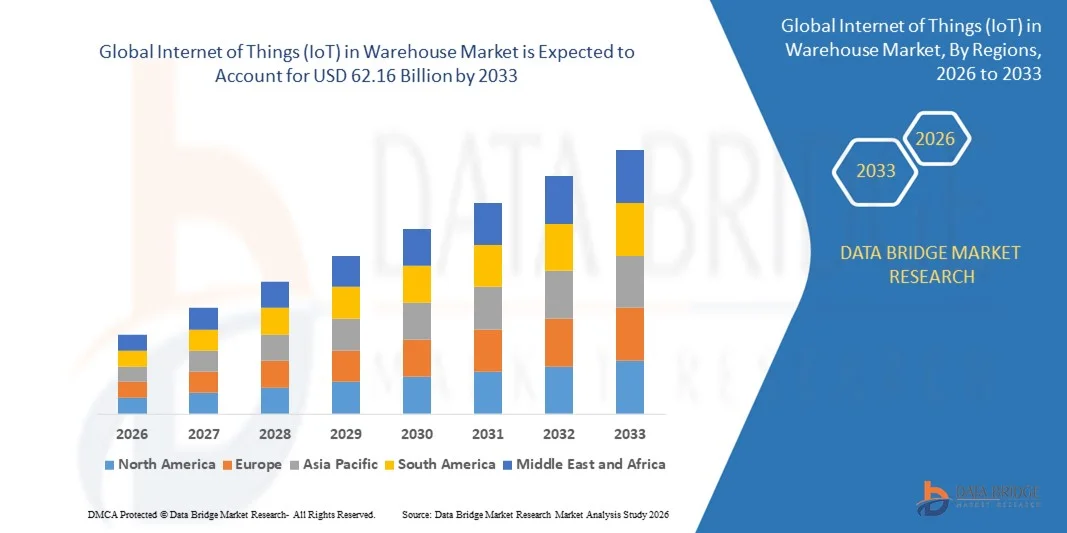
- Согласно анализу Data Bridge Market Research, глобальный интернет вещей (IoT) по размеру складского рынка был оценен в соответствии с прогнозом.12,66 млрд долларов в 2025 годуОжидается, что он достигнет$62,16 млрд к 2033 году, вCAGR 22.00%в течение прогнозируемого периода
- Рост рынка в значительной степени обусловлен растущим внедрением автоматизации и интеллектуальных технологий на складах.
Размер рынка и прогноз
- Глобальная рыночная стоимость (2025):USD 12,66 млрд.
- Ожидаемая рыночная стоимость (2033):$ 62,16 млрд.
- Прогноз CAGR (2026–2033):22.00%
Каковы основные выводы Интернета вещей (IoT) на складском рынке
- IoT обеспечивает мониторинг в режиме реального времени, прогнозное обслуживание и бесперебойную связь между устройствами, повышая производительность склада
- Возможность удаленного отслеживания активов и оптимизации распределения ресурсов значительно повышает общую операционную эффективность.
- Северная Америка доминировала на складском рынке IoT с самой большой долей выручки в 38,50% в 2025 году, чему способствовало быстрое внедрение автоматизации, интеллектуальных складских решений и подключенной логистики.
- Ожидается, что в Азиатско-Тихоокеанском регионе будут наблюдаться самые высокие темпы роста в мире.Интернет вещей (IoT) на складерынок, движимый быстрой индустриализацией, расширяющийсяэлектронная торговляРост располагаемых доходов и растущее внедрение интеллектуальных складских и логистических технологий
- Сегмент управления запасами занимал самую большую долю рынка в 2025 году, что обусловлено растущей потребностью в отслеживании уровней запасов в режиме реального времени, автоматических оповещениях о переупорядочении и повышении эффективности склада. Инвентарные решения с поддержкой IoT помогают компаниям уменьшать ошибки, оптимизировать хранение и поддерживать точные данные в нескольких местах, что делает их критически важными инвестициями для современных складских операций. Эти решения также позволяют прогнозной аналитике прогнозировать спрос, предотвращать накопление запасов и улучшать общую видимость цепочки поставок, делая управление запасами более умным и экономически эффективным.
Сфера охвата и Интернет вещей (IoT) в сегментации складского рынка
|
Атрибуты |
Интернет вещей (IoT) в Warehouse Key Market |
|
Сегменты покрыты |
|
|
Страны, охваченные |
Северная Америка
Европа
Азиатско-Тихоокеанский регион
Ближний Восток и Африка
Южная Америка
|
|
Ключевые игроки рынка |
|
|
Рыночные возможности |
|
|
Информационные наборы данных с добавленной стоимостью |
В дополнение к рыночным идеям, таким как рыночная стоимость, темпы роста, сегменты рынка, географический охват, игроки рынка и рыночный сценарий, отчет о рынке, курируемый командой Data Bridge Market Research, включает углубленный экспертный анализ, анализ импорта / экспорта, анализ цен, анализ потребления продукции и анализ пестле. |
Каковы ключевые тенденции в Интернете вещей (IoT) на складском рынке
Растущее внедрение автоматизации и интеллектуальных складских решений
- Растущее внедрение автоматизации, робототехники и интеллектуальных устройств значительно формирует IoT на складском рынке, поскольку компании все больше фокусируются на операционной эффективности, отслеживании в реальном времени и прогнозной аналитике. Решения IoT набирают обороты благодаря их способности улучшать управление запасами, оптимизировать рабочие процессы и уменьшать ошибки, побуждая склады инвестировать в интегрированные технологии.
- Увеличение внимания к видимости цепочки поставок и более быстрому выполнению заказов ускорило внедрение решений с поддержкой IoT в секторах электронной коммерции, розничной торговли и логистики. Операторы складов используют подключенные датчики, RFID и облачные платформы для мониторинга активов, отслеживания поставок и улучшения общей реакции на рыночный спрос.
- Тенденции в области технологий, такие как интеграция ИИ, прогнозное обслуживание и анализ данных, влияют на инвестиционные решения, при этом компании отдают приоритет решениям, которые предлагают практические идеи и экономию эксплуатационных расходов. Продавцы разрабатывают платформы, которые объединяют данные IoT с машинным обучением для прогнозирования спроса, предотвращения простоев и повышения пропускной способности склада.
- Например, в 2025 году Amazon в США и DHL в Германии расширили свои складские операции, включив робототехнику и датчики с поддержкой IoT для отслеживания запасов в режиме реального времени и автоматической обработки материалов. Эти развертывания были направлены на повышение точности, эффективности и масштабируемости в ответ на увеличение потребительского спроса на более быструю доставку.
- В то время как внедрение IoT на складах растет, устойчивый рост рынка зависит от совместимости, безопасности данных и экономически эффективного развертывания. Компании также сосредоточены на разработке масштабируемых платформ, улучшении связи и обеспечении беспрепятственной интеграции с существующими системами управления складами.
Интернет вещей (IoT) в динамике складского рынка
водитель
Растущая потребность в оперативной эффективности и мониторинге в режиме реального времени
- Растущий спрос на автоматизированные, подключенные складские операции является основным драйвером для IoT на складском рынке. Компании все чаще заменяют ручные процессы решениями с поддержкой IoT для повышения производительности, уменьшения ошибок и улучшения видимости по всей цепочке поставок. Эта тенденция также стимулирует инновации в технологиях автоматизации складов и интеллектуальных системах отслеживания активов.
- Расширение приложений в электронной коммерции, логистике, холодном хранении и сторонних центрах исполнения влияет на рост рынка. IoT помогает повысить точность инвентаризации, оптимизировать использование пространства и снизить эксплуатационные расходы, позволяя складам удовлетворять требованиям более быстрого и эффективного выполнения заказов.
- Операторы складов активно инвестируют в IoT-решения, интегрированные с ИИ, робототехникой и облачными платформами, для повышения операционной эффективности, прогнозного обслуживания и принятия решений. Эти усилия поддерживаются растущим внедрением методов Индустрии 4.0 и необходимостью устойчивых, энергоэффективных операций.
- Например, в 2024 году FedEx в США и Maersk в Дании сообщили об увеличении использования датчиков IoT и автоматизированных систем отслеживания в складских и распределительных центрах. Это расширение последовало за более высоким спросом на мониторинг активов в режиме реального времени и более быстрой доставкой, повышением операционной эффективности и удовлетворенности клиентов.
- Хотя растущий спрос на автоматизацию поддерживает рост, более широкое внедрение зависит от оптимизации затрат, безопасности данных и надежной связи. Инвестиции в масштабируемые IoT-платформы, расширенную кибербезопасность и стандартизированные протоколы будут иметь решающее значение для удовлетворения глобальных потребностей складов и поддержания конкурентных преимуществ.
Сдержанность/вызов
Высокая стоимость внедрения и сложность интеграции
- Относительно высокая стоимость развертывания IoT по сравнению с традиционными складскими системами остается ключевой проблемой, ограничивая внедрение среди малых и средних операторов. Расходы на оборудование, программное обеспечение и техническое обслуживание в сочетании с сложностями интеграции способствуют повышению инвестиционных требований.
- Ограниченная техническая экспертиза и неравномерное понимание преимуществ Интернета вещей, особенно на развивающихся рынках, ограничивают внедрение некоторых складских операций. Меньшим операторам может не хватать ресурсов или знаний для эффективного внедрения и управления подключенными системами.
- Проблемы интеграции с устаревшими системами управления складами и вопросы взаимодействия также влияют на рост рынка. Сложные настройки, требования к подключению к сети и препятствия стандартизации данных могут замедлить развертывание и снизить операционную эффективность.
- Например, в 2025 году дистрибьюторы и операторы складов в Индии и Бразилии сообщили о более медленном использовании IoT-решений из-за высоких затрат, ограниченности квалифицированной рабочей силы и трудностей интеграции с существующими складскими системами. Это привело к задержке проектов и выборочному внедрению технологий IoT.
- Для преодоления этих проблем потребуются экономически эффективные решения, расширенные программы обучения и стандартизированные протоколы для бесшовной интеграции. Партнерство между поставщиками технологий, операторами складов и системными интеграторами может раскрыть долгосрочный потенциал роста глобального IoT на складском рынке, в то время как инновации в недорогих масштабируемых решениях IoT будут способствовать дальнейшему внедрению.
Как сегментируется Интернет вещей (IoT) на складском рынке
Рынок сегментирован на основе решений, услуг, устройств и конечного пользователя.
- Решение
На основе решения IoT на складском рынке подразделяется на управление запасами, управление рабочей силой, электронный обмен данными и другие. Сегмент управления запасами занимал самую большую долю рынка в 2025 году, что обусловлено растущей потребностью в отслеживании уровней запасов в режиме реального времени, автоматических оповещениях о переупорядочении и повышении эффективности склада. Инвентарные решения с поддержкой IoT помогают компаниям уменьшать ошибки, оптимизировать хранение и поддерживать точные данные в нескольких местах, что делает их критически важными инвестициями для современных складских операций. Эти решения также позволяют прогнозной аналитике прогнозировать спрос, предотвращать накопление запасов и улучшать общую видимость цепочки поставок, делая управление запасами более умным и экономически эффективным.
Ожидается, что в сегменте управления персоналом будут наблюдаться самые быстрые темпы роста с 2026 по 2033 год, что обусловлено растущим внедрением решений IoT для отслеживания сотрудников, автоматизации задач и мониторинга производительности. Системы управления персоналом с поддержкой IoT повышают производительность труда, повышают безопасность и упрощают координацию рабочих процессов, особенно на крупных складах и распределительных центрах. Мониторинг деятельности сотрудников в режиме реального времени и автоматизированное планирование также уменьшают операционные узкие места, что приводит к лучшему распределению ресурсов и повышению эффективности.
- Услуги
На базе сервиса рынок сегментирован на Usage-Based Insurance и 3PL. Сегмент 3PL занял самую большую долю в 2025 году, чему способствовала растущая интеграция IoT-решений в сторонних логистических провайдерах, чтобы обеспечить отслеживание поставок в режиме реального времени, оптимизацию маршрутов и автоматизированные складские операции. Решения IoT позволяют операторам 3PL контролировать отгрузки, управлять парками и обеспечивать своевременную доставку, повышая удовлетворенность клиентов и снижая эксплуатационные расходы. Улучшенная видимость и анализ данных также поддерживают планирование запасов и управление рисками для поставщиков 3PL.
Ожидается, что в сегменте страхования на основе использования будут наблюдаться самые быстрые темпы роста с 2026 по 2033 год, поскольку устройства отслеживания с поддержкой IoT предоставляют страховщикам данные об использовании активов в режиме реального времени, снижая риск и предоставляя индивидуальные страховые решения для складских и логистических операторов. Эти услуги позволяют компаниям платить премии, основанные на фактическом использовании и эксплуатационных характеристиках, способствуя эффективности затрат и поощряя внедрение подключенных устройств.
- С помощью устройств
На основе устройств рынок сегментирован на сенсорные устройства, сетевые и шлюзы и другие. Сегмент сенсорных устройств доминировал на рынке в 2025 году благодаря широкому внедрению датчиков IoT, RFID-меток и экологических мониторов для отслеживания запасов, мониторинга состояния и прогнозного обслуживания. Эти устройства позволяют складам собирать данные в режиме реального времени о движении запасов, температуре, влажности и местоположении активов, обеспечивая качество продукции и эффективность работы. Растущая доступность недорогих высокоточных датчиков способствует дальнейшему внедрению в различных отраслях.
Ожидается, что в период с 2026 по 2033 год темпы роста сетей и шлюзов будут самыми высокими, что обусловлено необходимостью надежного подключения, бесперебойной передачи данных и интеграции нескольких устройств IoT в сложных складских средах. Надежные сетевые решения обеспечивают бесперебойную связь между датчиками, облачными платформами и системами управления, обеспечивая централизованное управление и улучшенную масштабируемость. Растущее внедрение 5G и периферийных вычислений также способствует более быстрой передаче данных и повышению производительности системы.
- Конечный пользователь
На основе конечного пользователя рынок сегментируется на розничную торговлю и логистику, автомобильную промышленность, продукты питания и напитки, здравоохранение, электротехнику и электронику и другие. Сегмент розничной торговли и логистики занимал самую большую долю в 2025 году благодаря быстрому росту электронной коммерции, высокому спросу на быструю доставку и необходимости эффективных операций склада и цепочки поставок. Внедрение IoT в этом сегменте позволяет отслеживать заказы в режиме реального времени, автоматизировать сортировку и прогнозировать спрос, уменьшая ошибки и повышая удовлетворенность клиентов. Компании также используют IoT для оптимизации запасов, снижения затрат и операционной гибкости.
Ожидается, что в сегменте продуктов питания и напитков будут наблюдаться самые быстрые темпы роста с 2026 по 2033 год, чему способствует принятие решений IoT для хранения, контролируемого температурой, мониторинга скоропортящихся товаров и соблюдения стандартов безопасности и качества. Мониторинг условий холодной цепи в режиме реального времени, оповещения о ротации запасов и автоматизированная отчетность помогают поддерживать качество продукции и уменьшать порчу. Растущий спрос на свежие, высококачественные и отслеживаемые пищевые продукты еще больше стимулирует внедрение IoT на складах, обслуживающих этот сектор.
В каком регионе самая большая доля Интернета вещей (IoT) на складском рынке
- Северная Америка доминировала на складском рынке IoT с самой большой долей выручки в 38,50% в 2025 году, чему способствовало быстрое внедрение автоматизации, интеллектуальных складских решений и подключенной логистики.
- Компании в регионе все чаще отдают приоритет операционной эффективности, отслеживанию запасов в режиме реального времени и прогнозной аналитике, что позволяет быстрее и точнее управлять складом.
- Это широкое внедрение также поддерживается передовой инфраструктурой, высоким технологическим проникновением и растущим спросом на электронную коммерцию и стороннюю логистику, что делает решения IoT предпочтительным выбором для современных складов.
IoT в США в Warehouse Market Insight
На складском рынке США IoT занял самую большую долю дохода в 2025 году в Северной Америке, чему способствовало ускоренное развертывание датчиков с поддержкой IoT, робототехники и облачных платформ. Склады сосредоточены на мониторинге в режиме реального времени, автоматизированном контроле запасов и прогнозном обслуживании для снижения затрат и повышения операционной эффективности. Растущая тенденция электронной коммерции и спрос на быстрое выполнение заказов способствуют дальнейшему внедрению подключенных складских решений. Интеграция с ИИ, аналитикой и мобильными приложениями вносит значительный вклад в расширение рынка.
Европа IoT в Warehouse Market Insight
Ожидается, что европейский рынок IoT на складах будет расти самыми быстрыми темпами с 2026 по 2033 год, в первую очередь благодаря растущей потребности в умной логистике, автоматизации и эффективном управлении цепочками поставок. Растущие инициативы по урбанизации и цифровизации во всех отраслях способствуют внедрению IoT. Европейские склады инвестируют в отслеживание активов в режиме реального времени, прогнозную аналитику и энергоэффективные решения. В регионе наблюдается значительный рост розничных, автомобильных и промышленных складов, а решения IoT внедряются как на новых объектах, так и в модернизированных операциях.
Британский IoT в Warehouse Market Insight
Великобритания. Ожидается, что IoT на складском рынке будет быстро расти с 2026 по 2033 год, что обусловлено растущим вниманием к автоматизации, видимости цепочки поставок и операционной эффективности. Компании все чаще интегрируют IoT-платформы для отслеживания активов, мониторинга производительности труда и оптимизации складских макетов. Сильный сектор электронной коммерции и технологическая инфраструктура Великобритании способствуют дальнейшему расширению рынка. Подключенные складские системы также помогают снизить эксплуатационные расходы, повысить точность и повысить удовлетворенность клиентов.
Германия IoT в Warehouse Market Insight
Ожидается, что немецкий IoT на складском рынке будет наблюдать сильный рост с 2026 по 2033 год, чему будет способствовать растущее внедрение методов Industry 4.0, умной логистики и складских операций, основанных на данных. Устоявшийся производственный сектор Германии и акцент на инновации поощряют использование датчиков с поддержкой IoT, робототехники и сетевых решений. Интеграция с системами прогнозного обслуживания и энергоэффективными технологиями становится все более распространенной. Склады сосредоточены на безопасных, автоматизированных и высоко оптимизированных операциях для удовлетворения как промышленных, так и коммерческих потребностей.
Азиатско-Тихоокеанский IoT в Warehouse Market Insight
Ожидается, что Азиатско-Тихоокеанский IoT на складском рынке будет наблюдать быстрый рост с 2026 по 2033 год, обусловленный урбанизацией, расширением электронной коммерции и растущим внедрением технологий автоматизации в таких странах, как Китай, Япония и Индия. Правительственные инициативы, поддерживающие цифровую логистику и интеллектуальную инфраструктуру цепочки поставок, способствуют дальнейшему внедрению IoT. Склады в регионе все чаще используют IoT-решения для мониторинга запасов, прогнозной аналитики и операционной эффективности. Растущая производственная база и растущие инвестиции в технологии делают IoT-решения более доступными и экономически эффективными.
Япония IoT в Warehouse Market Insight
Ожидается, что японский IoT на складском рынке будет значительно расти с 2026 по 2033 год благодаря передовой технологической экосистеме страны, повышению автоматизации и повышению операционной эффективности. Японские склады внедряют решения IoT для отслеживания в режиме реального времени, интеграции робототехники и энергоэффективных операций. Тенденция к умным фабрикам и подключенным цепочкам поставок еще больше ускоряет внедрение. Старение рабочей силы и потребности в оптимизации труда также поощряют использование автоматизированных систем IoT как в коммерческих, так и в промышленных складских операциях.
Китайский IoT в Warehouse Market Insight
Китайский IoT на складском рынке составил самую большую долю выручки в Азиатско-Тихоокеанском регионе в 2025 году, что объясняется быстрой индустриализацией, ростом электронной коммерции и высокими темпами внедрения технологий. Страна является центром развития интеллектуальных складов, а решения IoT развертываются в розничной торговле, логистике и производственном секторе. Доступные устройства IoT, отечественные поставщики решений и государственная поддержка интеллектуальных цепочек поставок являются ключевыми факторами роста рынка. Стремление к «умным городам» и «умной логистической инфраструктуре» способствует дальнейшему внедрению в регионе.
Каковы лучшие компании в Интернете вещей (IoT) на складском рынке
Интернет вещей (IoT) в складской промышленности в основном возглавляют хорошо зарекомендовавшие себя компании, в том числе:
- Software AG (Германия)
- Oracle (США)
- IBM (США)
- SAP SE (Германия)
- Infor (США)
- PSI Logistics (Германия)
- HCL Technologies Limited (Индия)
- Tecsys Inc. (Канада)
- Cisco Systems, Inc (США)
- HAL SYSTEMS (Великобритания)
- Codeworks, LLC (США)
- Blue Yonder Group, Inc. (США)
- PRIMA SOLUTIONS LTD.
- Magaya Corporation (США)
- Softeon (США)
- VANTIQ (США)
- Intel Corporation (США)
- DassaultSystèmes (Франция)
- Bastian Solutions, Inc. (США)
- Zebra Technologies Corp. (США)
Каковы последние события в Интернете вещей (IoT) на складском рынке
- В ноябре 2023 года компания Tecsys (Канада) запустила систему управления складами Elite (WMS) для сектора здравоохранения. Система предназначена для того, чтобы помочь компаниям-дистрибьюторам здравоохранения соблюдать Закон о безопасности цепочки поставок лекарств (DSCSA) при оптимизации операций. Консолидируя несколько программ в единую платформу, он уменьшает рабочие процессы с двойным входом и операционную сложность. Эта разработка повышает эффективность, точность и соответствие складским операциям, укрепляя позиции Tecsys в сегменте логистики здравоохранения.
- В мае 2023 года PTC (США) представила решение дополненной реальности Vuforia для визуальных осмотров склада. Платформа Step Check накладывает инструкции по проверке на физические объекты, обеспечивая руководство в режиме реального времени для работников. Он обнаруживает ошибки, такие как недостающие компоненты или неправильная сборка, и автоматически записывает результаты для создания приборных панелей для анализа тенденций. Это нововведение повышает точность работы, уменьшает ошибки проверки и способствует более быстрому внедрению передовых решений AR и AI в управлении складом.
SKU-
Получите онлайн-доступ к отчету на первой в мире облачной платформе рыночной аналитики

- Интерактивная панель анализа данных
- Панель анализа компании для возможностей с высоким потенциалом роста
- Доступ аналитика-исследователя для настройки и запросов
- Анализ конкурентов с помощью интерактивной панели
- Последние новости, обновления и анализ тенденций
- Используйте возможности сравнительного анализа для комплексного отслеживания конкурентов
Методология исследования
Сбор данных и анализ базового года выполняются с использованием модулей сбора данных с большими размерами выборки. Этап включает получение рыночной информации или связанных данных из различных источников и стратегий. Он включает изучение и планирование всех данных, полученных из прошлого заранее. Он также охватывает изучение несоответствий информации, наблюдаемых в различных источниках информации. Рыночные данные анализируются и оцениваются с использованием статистических и последовательных моделей рынка. Кроме того, анализ доли рынка и анализ ключевых тенденций являются основными факторами успеха в отчете о рынке. Чтобы узнать больше, пожалуйста, запросите звонок аналитика или оставьте свой запрос.
Ключевой методологией исследования, используемой исследовательской группой DBMR, является триангуляция данных, которая включает в себя интеллектуальный анализ данных, анализ влияния переменных данных на рынок и первичную (отраслевую экспертную) проверку. Модели данных включают сетку позиционирования поставщиков, анализ временной линии рынка, обзор рынка и руководство, сетку позиционирования компании, патентный анализ, анализ цен, анализ доли рынка компании, стандарты измерения, глобальный и региональный анализ и анализ доли поставщика. Чтобы узнать больше о методологии исследования, отправьте запрос, чтобы поговорить с нашими отраслевыми экспертами.
Доступна настройка
Data Bridge Market Research является лидером в области передовых формативных исследований. Мы гордимся тем, что предоставляем нашим существующим и новым клиентам данные и анализ, которые соответствуют и подходят их целям. Отчет можно настроить, включив в него анализ ценовых тенденций целевых брендов, понимание рынка для дополнительных стран (запросите список стран), данные о результатах клинических испытаний, обзор литературы, обновленный анализ рынка и продуктовой базы. Анализ рынка целевых конкурентов можно проанализировать от анализа на основе технологий до стратегий портфеля рынка. Мы можем добавить столько конкурентов, о которых вам нужны данные в нужном вам формате и стиле данных. Наша команда аналитиков также может предоставить вам данные в сырых файлах Excel, сводных таблицах (книга фактов) или помочь вам в создании презентаций из наборов данных, доступных в отчете.











