



Сегментация мирового рынка жидкостной биопсии по типу (тесты на циркулирующие опухолевые клетки (ЦОК), тесты на циркулирующую опухолевую ДНК (цДНК), тесты на основе экзосом, тесты на основе микроРНК и другие), применению (диагностика рака, мониторинг лечения, раннее выявление и скрининг, прогностическая оценка и персонализированная медицина) — тенденции отрасли и прогноз до 2033 года.
Каков размер и обзор рынка жидкой биопсии
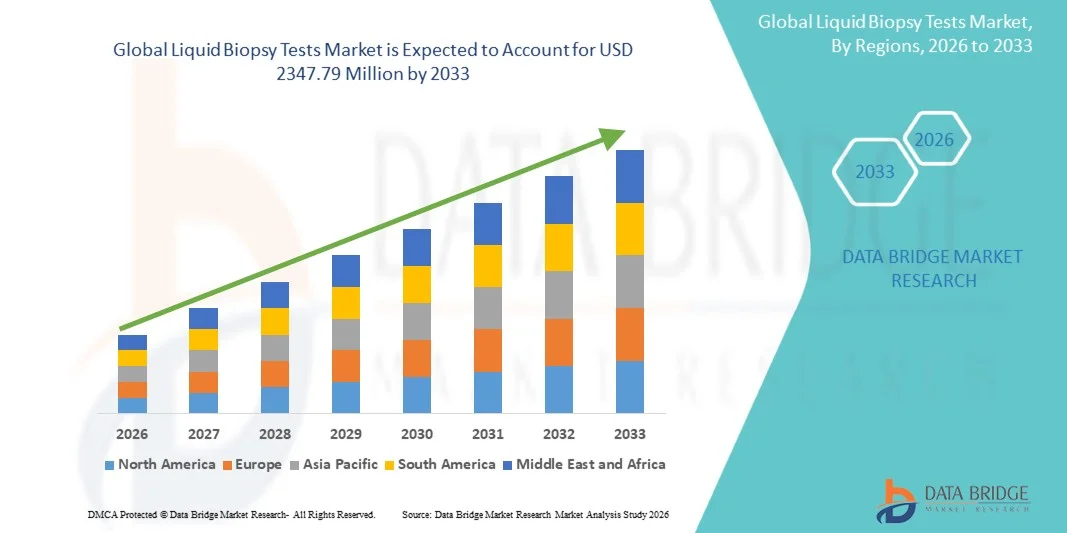
- Анализ рынка Data Bridge Мировой объем рынка жидкостных биопсий оценили в$673,2 млн. в 2025 годуОжидается, что он достигнет2347,79 млн долларов США к 2033 году, вCAGR 16,90%в течение прогнозируемого периода
- Рост рынка в значительной степени обусловлен растущим внедрением минимально инвазивных методов диагностики, растущей распространенностью рака и растущим спросом на персонализированную медицину и раннее выявление заболеваний.
- Кроме того, растущая осведомленность среди медицинских работников и пациентов о преимуществах жидкостных биопсий, таких как мониторинг заболеваний в режиме реального времени, раннее выявление рецидива опухоли и снижение потребности в инвазивной биопсии тканей, ускоряет внедрение решений для жидкостных биопсий, тем самым значительно повышая рост отрасли.
Размер рынка и прогноз
- Глобальная рыночная стоимость (2025) $ 673,2 миллион
- Ожидаемая рыночная стоимость (2033): 2347,79 млн. долларов США
- Прогноз CAGR (2026–2033): 16,90%
Каковы основные выводы рынка тестирования жидкой биопсии
- Тесты на жидкую биопсию, предлагающие минимально инвазивные диагностические решения для выявления и мониторинга рака и других генетических состояний, становятся все более важными компонентами современного здравоохранения из-за их способности предоставлять информацию в режиме реального времени, обеспечивать раннее выявление и уменьшать потребность в традиционной биопсии тканей.
- Растущий спрос на тесты жидкой биопсии в первую очередь подпитывается растущей распространенностью рака, растущим внедрением персонализированной медицины и повышением осведомленности среди поставщиков медицинских услуг и пациентов о преимуществах неинвазивных диагностических инструментов.
- Северная Америка доминировала на рынке тестирования жидкой биопсии с самой большой долей дохода в 46% в 2025 году, поддерживаемой передовой инфраструктурой здравоохранения, высоким внедрением точной медицины, сильной клинической исследовательской деятельностью и увеличением инвестиций ключевых игроков рынка. США лидируют в регионе с существенным ростом тестирования жидкой биопсии в онкологических центрах, больницах и диагностических лабораториях.
- Ожидается, что Азиатско-Тихоокеанский регион станет самым быстрорастущим регионом на рынке жидких биопсийных тестов в течение прогнозируемого периода, который, по прогнозам, увеличится на 11% с 2026 по 2033 год, что обусловлено ростом заболеваемости раком, улучшением инфраструктуры здравоохранения, растущей осведомленностью о передовых методах диагностики и расширением инициатив в области медицинских исследований в таких странах, как Китай, Индия, Япония и Южная Корея.
- Сегмент тестирования циркулирующей опухолевой ДНК (ctDNA) доминировал на крупнейшей доле рынка в 45,8% в 2025 году, что обусловлено его высокой чувствительностью, неинвазивным характером и доказанной клинической полезностью в обнаружении мутаций для персонализированной терапии.
Сфера охвата иТестирование жидкой биопсии на сегментацию рынка
Атрибуты |
Жидкая биопсия тестирует ключевые идеи рынка |
|
Сегменты покрыты |
|
|
Страны, охваченные |
Северная Америка
Европа
Азиатско-Тихоокеанский регион
Ближний Восток и Африка
Южная Америка
|
|
Ключевые игроки рынка |
|
|
Рыночные возможности |
|
|
Информационные наборы данных с добавленной стоимостью |
В дополнение к информации о рыночных сценариях, таких как рыночная стоимость, темпы роста, сегментация, географическое покрытие и основные игроки, рыночные отчеты, курируемые Data Bridge Market Research, также включают углубленный экспертный анализ, эпидемиологию пациентов, анализ трубопроводов, анализ цен и нормативную базу. |
Каковы основные тенденции на рынке тестирования жидкой биопсии
"Растущее применение минимально инвазивных методов диагностики рака"
- Ключевой тенденцией на мировом рынке жидкостных биопсий является растущее внедрение минимально инвазивных диагностических методов, которые позволяют раннее выявление рака, мониторинг заболеваний и оценку ответа на лечение без необходимости традиционной биопсии тканей.
- Например, в 2024 году Guardant Health запустила свой тест жидкой биопсии Guardant360, позволяющий клиницистам обнаруживать множественные действенные мутации из одного образца крови, подчеркивая переход к минимально инвазивной диагностике.
- Тесты на жидкую биопсию обеспечивают быструю и точную молекулярную информацию из простого образца крови, уменьшая дискомфорт и риск пациента по сравнению с хирургической биопсией.
- Достижения в секвенировании следующего поколения (NGS), цифровой ПЦР и микрофлюидике позволяют высокочувствительно и точно обнаруживать циркулирующие опухолевые ДНК (ctDNA), экзосомы и циркулирующие опухолевые клетки (CTCs)
- Эта тенденция подпитывается растущим предпочтением пациентов к менее инвазивным процедурам и более короткому пребыванию в больнице.
- Больницы и онкологические центры все чаще интегрируют тестирование жидкой биопсии в стандартные рабочие процессы, чтобы дополнить результаты визуализации и биопсии тканей. Фармацевтические компании используют технологии жидкой биопсии в клинических испытаниях для идентификации биомаркеров и мониторинга терапии.
- Увеличение доступности сопутствующих диагностических наборов для таргетной терапии способствует внедрению среди врачей. Развивающиеся страны быстро внедряют жидкую биопсию из-за расширения онкологических центров и улучшения инфраструктуры здравоохранения.
- Технологические инновации, такие как мультигенные панели и цифровые считывания, повышают надежность и скорость тестирования.
Жидкая биопсия тестирует динамику рынка
водитель
«Повышение распространенности рака и потребность в персонализированной медицине»
- Растущее глобальное бремя рака является основным драйвером рынка жидких биопсийных тестов, поскольку клиницисты требуют точных, быстрых и неинвазивных диагностических решений для раннего выявления и мониторинга.
- Например, в марте 2025 года Roche объявила о расширении своего мутационного теста Cobas EGFR, жидкого решения для биопсии, которое помогает отбирать пациентов для таргетной терапии.
- Растущее внедрение персонализированных и точных подходов к медицине еще больше стимулирует спрос, поскольку жидкие биопсии могут направлять выбор целевой терапии и контролировать реакцию на лечение.
- Фармацевтические компании все чаще используют жидкие биопсии для разработки лекарств, управляемых биомаркерами, мониторинга клинических испытаний и сопутствующей диагностики, поддерживая расширение рынка.
- Расширение инфраструктуры здравоохранения на развивающихся рынках в сочетании с улучшенным доступом к передовой диагностике способствует внедрению. Правительственные инициативы, способствующие программам раннего выявления рака, поддержке возмещения и кампаниям по скринингу онкологии, укрепляют рост рынка.
- Технологические достижения в области высокопроизводительного секвенирования, цифровой ПЦР и биоинформатики повышают точность, надежность и время выполнения испытаний. Осведомленность клиницистов и предпочтение менее инвазивных процедур способствуют более широкому внедрению жидкой биопсии по сравнению с традиционной биопсией.
- Инвестиции в исследования и разработки ключевых игроков рынка в новые панели жидкой биопсии стимулируют инновации и поглощение. Наличие мультиплексного тестирования для нескольких типов рака в одном анализе увеличивает клиническую полезность и рыночный спрос.
- Предпочтение пациентов минимально инвазивным процедурам способствует росту числа усыновлений. Сотрудничество между диагностическими лабораториями, больницами и биотехнологическими компаниями способствует проникновению на рынок.
Сдержанность/вызов
"Высокая стоимость и проблемы технической стандартизации"
- Высокая стоимость жидкостных биопсий по сравнению с традиционными диагностическими методами создает проблемы для широкого распространения, особенно в чувствительных к цене и развивающихся регионах.
- Например, в 2023 году исследование, опубликованное вОнкология ЛанцетаСредняя стоимость полигенных жидких биопсийных панелей превышает 1000 долларов США за тест, что ограничивает доступность и принятие клиницистов во многих регионах.
- Кроме того, отсутствие стандартизации при сборе, обработке и интерпретации образцов может привести к изменчивости результатов, что создает колебания среди врачей. Различия в чувствительности обнаружения и специфичности анализа между поставщиками могут снизить уверенность в результатах тестирования.
- Регуляторные и компенсационные барьеры в некоторых регионах задерживают расширение рынка и увеличивают операционную сложность для производителей. Наличие квалифицированного персонала и сертифицированных лабораторий в странах с формирующейся рыночной экономикой ограничено, что ограничивает возможности их внедрения.
- Высокие инвестиционные требования к созданию передовых платформ секвенирования в больницах и исследовательских центрах являются барьером. Исследования по клинической валидации необходимы для обеспечения точности тестирования и соответствия нормативным требованиям, замедляя развертывание рынка.
- Некоторые пациенты и клиницисты по-прежнему скептически относятся к достоверности результатов жидкой биопсии по сравнению с биопсией тканей, влияя на поглощение. Технические ограничения при обнаружении мутаций с низким изобилием на ранней стадии рака создают проблемы.
- Компании устраняют эти ограничения, предлагая экономически эффективные решения, улучшая чувствительность анализа и обеспечивая обучение и поддержку лабораторий.
Как сегментируется рынок жидкой биопсии
Рынок сегментирован на основе типа, технологии, приложения и конечного пользователя.
• По типу
На основе типа рынок жидких биопсий сегментирован на тесты циркулирующих опухолевых клеток (CTC), тесты циркулирующей опухолевой ДНК (ctDNA), тесты на основе экзосом, тесты на основе микроРНК и другие. TheЦиркулирующая опухолевая ДНК (ctDNA)Сегмент тестов доминировал на рынке с наибольшей долей дохода в 45,8% в 2025 году, что обусловлено его высокой чувствительностью, неинвазивным характером и доказанной клинической полезностью в обнаружении мутаций для персонализированной терапии. Тесты ctDNA широко используются в онкологии для выбора лечения, мониторинга заболеваний и выявления рецидивов. Сегмент пользуется широким распространением как в больничных лабораториях, так и в коммерческих диагностических центрах благодаря надежным результатам, широкому охвату раком и интеграции с платформами секвенирования следующего поколения (NGS). Клиницисты часто предпочитают ctDNA для мониторинга реакции терапии и минимального остаточного заболевания. Постоянные технологические достижения в области чувствительности к анализу, обнаружения мультиплексов и биоинформатики укрепляют лидерство ctDNA на рынке. Растущая распространенность рака во всем мире и спрос на точную медицину еще больше поддерживают рост сегмента. Участники рынка все чаще предлагают экономически эффективные панели ctDNA, расширяя доступность в развитых и развивающихся регионах. Стратегическое сотрудничество между диагностическими компаниями и онкологическими центрами способствует быстрому внедрению. Кроме того, наличие одобренных FDA тестов ctDNA повысило клиническую уверенность. Повышение осведомленности среди пациентов и медицинских работников о минимально инвазивных вариантах способствует принятию. В целом, тесты ctDNA считаются золотым стандартом для молекулярного профилирования на основе жидкой биопсии, сохраняя доминирование в доходах и клинических предпочтениях.
Ожидается, что в сегменте испытаний циркулирующих опухолевых клеток (ЦТК) будет наблюдаться самый быстрый CAGR в 22,4% с 2026 по 2033 год, что обусловлено их растущим использованием в раннем выявлении рака, прогнозе и метастатическом мониторинге. Тесты CTC позволяют в режиме реального времени отслеживать динамику опухоли и дают представление о неоднородности опухоли, что делает их очень ценными для персонализированного планирования терапии. Увеличение клинических исследований по новым методам обогащения и обнаружения КТК способствует принятию новых методов. Повышение осведомленности о неинвазивной диагностике среди пациентов и онкологов ускоряет спрос. Технологии КТК интегрируются в клинические испытания для мониторинга терапевтической эффективности и механизмов резистентности. Новые применения в мониторинге реакции иммунотерапии еще больше стимулируют рост рынка. Стратегические партнерства и инвестиции в НИОКР позволяют создавать инновационные платформы КТК с более высокой чувствительностью и меньшими требованиями к объему выборки. Расширение онкологических диагностических лабораторий в Северной Америке, Европе и Азиатско-Тихоокеанском регионе способствует быстрому проникновению на рынок. Правительственные инициативы и поддержка в области возмещения расходов в некоторых регионах способствуют более широкому принятию. Постоянное улучшение точности анализа, воспроизводимости и экономической эффективности обеспечивает широкое признание клиницистов. Тесты CTC дополняют анализы ctDNA, создавая синергетический подход в диагностике жидкой биопсии. Траектория роста усиливается за счет увеличения программ скрининга онкологии и академических исследований. Ожидается, что тесты CTC продемонстрируют самый быстрый рост доходов из-за растущей клинической значимости и технологических достижений.
• Подача заявки
На основе применения рынок жидких биопсий подразделяется на c, мониторинг лечения, раннее обнаружение и скрининг, прогностическую оценку и персонализированную медицину. Сегмент «Диагностика рака» составил самую большую долю рынка в 42,6% в 2025 году, что обусловлено растущим глобальным бременем рака и насущной необходимостью в точных, минимально инвазивных диагностических инструментах. Клиницисты все чаще полагаются на тесты жидкой биопсии для выявления мутаций, мониторинга прогрессирования заболевания и получения результатов биопсии тканей. Принятие тестов ctDNA и CTC для различных солидных опухолей, включая рак легких, колоректального, молочной железы и предстательной железы, усиливает лидерство сегмента на рынке. Сегмент выигрывает от технологических достижений, таких как мультиплексные панели и высокопроизводительное секвенирование, которые позволяют одновременно обнаруживать несколько биомаркеров. Расширение сотрудничества между больницами, исследовательскими центрами и диагностическими компаниями способствует широкому распространению. Предпочтение пациентов менее инвазивным процедурам еще больше усиливает спрос. Правительственные и неправительственные инициативы, способствующие раннему выявлению рака, создают благоприятные рыночные условия. Растущие инвестиции в онкологические исследования и разработки в сочетании с увеличением инфраструктуры здравоохранения в странах с развивающейся экономикой еще больше стимулируют рост. Заявки на диагностику рака приоритетны в развитых регионах из-за поддержки возмещения и клинического принятия. Академические публикации и клинические рекомендации все чаще поддерживают жидкую биопсию для диагностики, укрепляя доверие. В целом, сегмент сохраняет доминирование благодаря своей критической клинической значимости, технологическому внедрению и широкой применимости к различным типам рака.
Ожидается, что в сегменте мониторинга лечения будет наблюдаться самый быстрый CAGR в 23,1% с 2026 по 2033 год, чему способствует растущая потребность в оценке терапевтической эффективности в режиме реального времени и раннем выявлении лекарственной устойчивости. Тесты на жидкую биопсию позволяют клиницистам отслеживать динамику опухоли неинвазивно, что позволяет корректировать терапию без повторных биопсий тканей. Растущее использование таргетной терапии и иммунотерапии требует постоянного мониторинга, стимулирующего спрос. Технологические достижения в количественной оценке и характеристике КТДНК повышают точность и надежность. Фармацевтические компании все чаще включают жидкую биопсию в клинические испытания для мониторинга результатов лечения. Расширение больничных молекулярно-диагностических лабораторий в Северной Америке, Европе и Азиатско-Тихоокеанском регионе ускоряет их внедрение. Повышение осведомленности пациентов о преимуществах персонализированного лечения способствует росту рынка. Расширение сотрудничества между биотехнологическими фирмами и онкологическими центрами поддерживает инновации в области мониторинга. Развивающиеся страны внедряют мониторинг лечения для оптимизации ограниченных ресурсов здравоохранения. Улучшение политики возмещения в развитых регионах способствует более широкому клиническому использованию. Постоянные исследования прогностических биомаркеров укрепляют доверие к сегменту. В целом, применение мониторинга лечения является наиболее быстро растущим из-за клинической необходимости, технического прогресса и перехода к персонализированной онкологической помощи.
Жидкая биопсия тестирует региональный анализ рынка
- Северная Америка доминировала на рынке жидких биопсийных тестов с самой большой долей выручки в 46% в 2025 году.
- Поддержка развитой инфраструктуры здравоохранения
- Высокое внедрение точной медицины, сильная клиническая исследовательская деятельность и увеличение инвестиций ключевых игроков рынка
Американская жидкая биопсия тестирует рыночное понимание
Рынок жидкостных биопсий в США занял самую большую долю доходов в Северной Америке в 2025 году, чему способствовал значительный рост тестирования жидкой биопсии в онкологических центрах, больницах и диагностических лабораториях. Расширение рынка подпитывается технологическими достижениями в области обнаружения циркулирующей опухолевой ДНК (ctDNA) и циркулирующих опухолевых клеток (CTC), а также увеличением применения в раннем обнаружении рака, мониторинге реакции на лечение и минимальной оценке остаточных заболеваний. Сильная нормативная поддержка страны, растущие инвестиции в точную медицину и растущее сотрудничество между диагностическими компаниями и исследовательскими институтами еще больше усиливают рост рынка.
Европейская жидкая биопсия тестирует рыночное понимание
Согласно прогнозам, рынок жидких биопсий в Европе в течение прогнозируемого периода будет расширяться при существенном CAGR, что обусловлено растущей распространенностью рака, внедрением точной медицины и поддерживающей политикой здравоохранения, способствующей раннему диагностическому тестированию. Сотрудничество между диагностическими компаниями и научно-исследовательскими институтами, а также расширение клинических лабораторий, предлагающих передовые решения для молекулярного тестирования, еще больше ускоряют рост.
Британская жидкая биопсия тестирует рыночное понимание
Ожидается, что рынок жидкостных биопсий в Великобритании будет расти на фоне роста заболеваемости раком, растущего внедрения неинвазивных методов диагностики и увеличения инвестиций в клинические исследования. Надежная инфраструктура здравоохранения страны и акцент на раннее выявление и персонализированное лечение продолжают стимулировать внедрение технологий жидкой биопсии.
Немецкая жидкая биопсия тестирует рыночное зрение
Ожидается, что рынок жидких биопсий в Германии будет неуклонно расширяться, чему будет способствовать хорошо зарекомендовавшая себя система здравоохранения, высокая клиническая исследовательская активность и растущее внедрение передовых молекулярных диагностических платформ. Спрос на минимально инвазивную диагностику рака и мониторинг прогрессирования заболевания в режиме реального времени еще больше укрепляет рост рынка.
Азиатско-Тихоокеанская жидкостная биопсия тестирует рыночное понимание
Ожидается, что рынок жидкостных биопсий в Азиатско-Тихоокеанском регионе станет самым быстрорастущим регионом на рынке жидкостных биопсий в течение прогнозируемого периода, который, по прогнозам, увеличится на 11% с 2026 по 2033 год. Рост обусловлен ростом заболеваемости раком, улучшением инфраструктуры здравоохранения, повышением осведомленности о передовой диагностике и расширением инициатив в области медицинских исследований в таких странах, как Китай, Индия, Япония и Южная Корея. Ключевыми факторами роста являются правительственные инициативы, поддерживающие прецизионную медицину, растущее внедрение платформ секвенирования следующего поколения (NGS) и расширение онкологических диагностических центров.
Японская жидкая биопсия тестирует рыночное понимание
Рынок жидких биопсий в Японии набирает обороты из-за высокой распространенности рака в стране, технологически развитой системы здравоохранения и все более широкого использования неинвазивных диагностических тестов. Текущие инвестиции в НИОКР и внедрение передовых инструментов молекулярной диагностики еще больше поддерживают рост рынка, особенно в онкологии и персонализированных приложениях медицины.
Китайская жидкая биопсия тестирует рыночное понимание
Рынок жидких биопсий в Китае составил самую большую долю рынка в Азиатско-Тихоокеанском регионе в 2025 году, чему способствовало увеличение распространенности рака, расширение инфраструктуры здравоохранения, правительственные инициативы, способствующие раннему выявлению рака, и растущее внедрение технологий молекулярной диагностики. Наличие отечественных диагностических компаний, предлагающих экономически эффективные решения и быстрые технологические достижения на платформах жидкой биопсии, является ключевым фактором, способствующим расширению рынка.
Доля рынка жидкой биопсии
Индустрия тестирования жидкой биопсии в основном возглавляется известными компаниями, в том числе:
- Охрана здоровья(США)
- Рош (Швейцария)
- Иллюмин(США)
- Точные науки (США)
- Научный Термо Фишер(США)
- Foundation Medicine (США)
- Sysmex Corporation (Япония)
- Натера (США)
- Ф. Хоффманн-Ла Рош (Швейцария)
- Sophia Genetics (Швейцария)
- Cancer Genetics, Inc. (США)
- Singlera Genomics (Китай)
- Персональная диагностика генома (США)
- Freenome (США)
- ArcherDX (США)
- Chronix Biomedical (Германия)
- Guardant Health (США)
- Bio-Rad Laboratories (США)
- Burning Rock Biotech (Китай)
Последние разработки на мировом рынке жидкостных биопсий
- В июле 2024 года Guardant Health, Inc. объявила о запуске крупного обновления до своего ведущего на рынке теста жидкой биопсии Guardant360 с расширенной панелью из 739 генов, которая обеспечивает более широкую оценку биомаркеров и улучшенную чувствительность для расширенной характеристики рака, укрепляя свои позиции в точной онкологической диагностике.
- В октябре 2024 года Guardant Health получила одобрение FDA США на свой тест жидкой биопсии Guardant360 CDx в качестве сопутствующей диагностики для выявления мутаций EGFR при немелкоклеточном раке легкого (NSCLC), отмечая одно из первых одобрений FDA для диагностики жидкой биопсии на основе NGS в твердом опухолевом показании.
- В мае 2024 года Mercy BioAnalytics, Inc. получила от FDA США «Прорывное обозначение устройства» для своего скринингового теста на рак яичников Mercy Halo — жидкой биопсии на основе внеклеточных везикул, предназначенной для раннего выявления рака у бессимптомных женщин в постменопаузе, — подчеркивая нормативную поддержку инновационной неинвазивной диагностики.
- В августе 2024 года Labcorp объявила, что получила разрешение на маркетинг De Novo от FDA США для PGDx elio plasma focus Dx, первого одобренного FDA теста на жидкую биопсию для пан-твердых опухолей, что позволило клиницистам определить право на целевую терапию для нескольких типов рака.
- В марте 2025 года Belay Diagnostics в партнерстве с GenomOncology интегрировала GO Pathology Workbench в свой анализ теста на жидкую биопсию «Summit», оптимизируя рабочие процессы интерпретации вариантов и поддерживая высокопроизводительную обработку образцов для принятия клинических решений в лечении рака.
- В мае 2025 года Национальная служба здравоохранения (NHS) Англии выпустила новаторский тест на жидкую биопсию на основе ктДНК в качестве диагностического инструмента первой линии для подозреваемых пациентов с раком легких и прогрессирующим раком молочной железы, обеспечивая неинвазивное геномное профилирование для руководства персонализированной терапией и снижения потребности в инвазивной биопсии тканей.
SKU-
Получите онлайн-доступ к отчету на первой в мире облачной платформе рыночной аналитики

- Интерактивная панель анализа данных
- Панель анализа компании для возможностей с высоким потенциалом роста
- Доступ аналитика-исследователя для настройки и запросов
- Анализ конкурентов с помощью интерактивной панели
- Последние новости, обновления и анализ тенденций
- Используйте возможности сравнительного анализа для комплексного отслеживания конкурентов
Методология исследования
Сбор данных и анализ базового года выполняются с использованием модулей сбора данных с большими размерами выборки. Этап включает получение рыночной информации или связанных данных из различных источников и стратегий. Он включает изучение и планирование всех данных, полученных из прошлого заранее. Он также охватывает изучение несоответствий информации, наблюдаемых в различных источниках информации. Рыночные данные анализируются и оцениваются с использованием статистических и последовательных моделей рынка. Кроме того, анализ доли рынка и анализ ключевых тенденций являются основными факторами успеха в отчете о рынке. Чтобы узнать больше, пожалуйста, запросите звонок аналитика или оставьте свой запрос.
Ключевой методологией исследования, используемой исследовательской группой DBMR, является триангуляция данных, которая включает в себя интеллектуальный анализ данных, анализ влияния переменных данных на рынок и первичную (отраслевую экспертную) проверку. Модели данных включают сетку позиционирования поставщиков, анализ временной линии рынка, обзор рынка и руководство, сетку позиционирования компании, патентный анализ, анализ цен, анализ доли рынка компании, стандарты измерения, глобальный и региональный анализ и анализ доли поставщика. Чтобы узнать больше о методологии исследования, отправьте запрос, чтобы поговорить с нашими отраслевыми экспертами.
Доступна настройка
Data Bridge Market Research является лидером в области передовых формативных исследований. Мы гордимся тем, что предоставляем нашим существующим и новым клиентам данные и анализ, которые соответствуют и подходят их целям. Отчет можно настроить, включив в него анализ ценовых тенденций целевых брендов, понимание рынка для дополнительных стран (запросите список стран), данные о результатах клинических испытаний, обзор литературы, обновленный анализ рынка и продуктовой базы. Анализ рынка целевых конкурентов можно проанализировать от анализа на основе технологий до стратегий портфеля рынка. Мы можем добавить столько конкурентов, о которых вам нужны данные в нужном вам формате и стиле данных. Наша команда аналитиков также может предоставить вам данные в сырых файлах Excel, сводных таблицах (книга фактов) или помочь вам в создании презентаций из наборов данных, доступных в отчете.











