


Global Liver Cirrhosis Drugs Market Segmentation, By Type (Hepatitis C-related Cirrhosis, Alcoholic Cirrhosis, Primary Sclerosing Cholangitis, Primary Biliary Cirrhosis, Others), Stage Type (Compensated Cirrhosis, Decompensated Cirrhosis), Therapy Type (Medication, Healthy Diet, Surgery, Weight loss, Liver Transplantation, Others), Mechanism of Action Type (Diuretic, Ammonia Reducer, Beta Blocker, Antibiotics, Antiviral Drug), Drug Type (Ursodeoxycholic Acid, Obeticholic Acid, Azathioprine, Colchicine, Others), Route of Administration (Oral, Intravenous, Others), End- Users (Hospitals, Homecare, Specialty Clinics, Others), Distribution Channel (Hospital Pharmacy, Retail Pharmacy, Online Pharmacy) - Industry Trends and Forecast to 2033
Каковы размеры рынка лекарств от цирроза печени и темпы роста
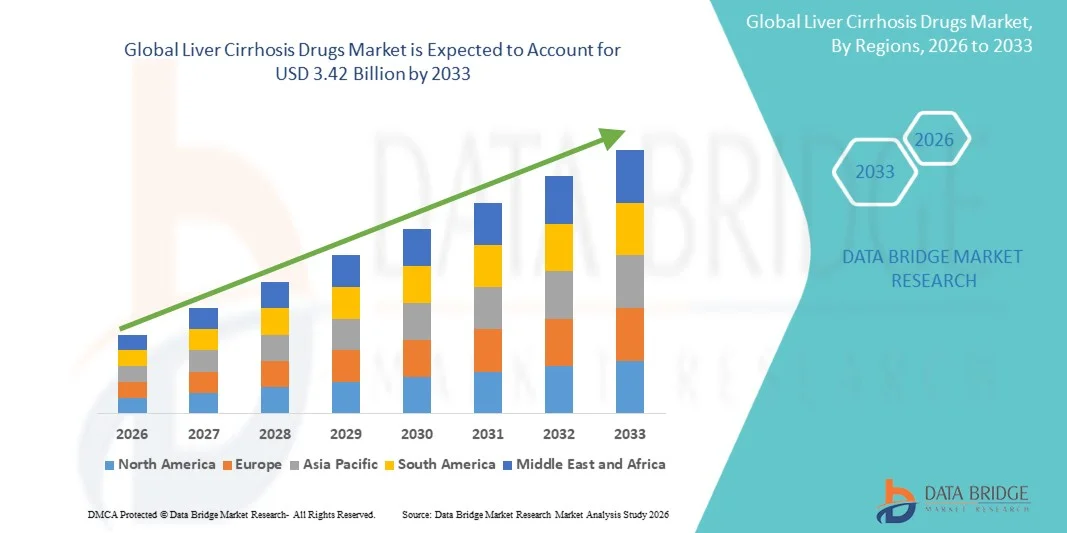
- По данным Data Bridge Market Research Analysis Мировой объем рынка препаратов для лечения цирроза печени был оценен1,49 млрд долларов в 2025 годуОжидается, что он достигнет3,42 млрд долларов к 2033 году, вCAGR 10,95%в течение прогнозируемого периода
- Рост рынка в значительной степени подпитывается растущей распространенностьюхроническийзаболевания печени, рост случаев повреждения печени, связанного с алкоголем, и рост заболеваемости гепатитными инфекциями, что приводит к более высокому спросу на эффективные варианты лечения и улучшению управления заболеваниями
- Кроме того, растущий спрос на передовые, целевые и долгосрочные терапевтические решения устанавливает препараты для лечения цирроза печени в качестве важнейшего компонента в гепатологической помощи. Эти сходящиеся факторы ускоряют поглощение лекарств от цирроза печени, тем самым значительно стимулируя рост рынка.
Размер рынка и прогноз
- Глобальная рыночная стоимость (2025):$1,49 млрд.
- Ожидаемая рыночная стоимость (2033):$3,42 млрд.
- Прогноз CAGR (2026–2033):10.95%
Каковы основные выводы рынка лекарств от цирроза печени
- Лекарства от цирроза печени, используемые для лечения осложнений и замедления прогрессирования заболевания при хронических заболеваниях печени, становятся все более важными в современном здравоохранении из-за растущего глобального бремени заболеваний печени и необходимости долгосрочного терапевтического управления.
- Растущий спрос на препараты для лечения цирроза печени в первую очередь обусловлен увеличением распространенности связанных с алкоголем заболеваний печени, инфекций гепатита и неалкогольных инфекций.жировая болезнь печени(NAFLD), наряду с растущей осведомленностью о ранней диагностике и лечении
- Северная Америка доминировала на рынке препаратов для лечения цирроза печени с долей выручки около 39,6% в 2025 году, чему способствовала развитая инфраструктура здравоохранения, высокие показатели внедрения лечения и сильное присутствие ключевых фармацевтических компаний. США лидируют в регионе благодаря высокому количеству пациентов и постоянным достижениям в области лекарственной терапии.
- Ожидается, что Азиатско-Тихоокеанский регион станет самым быстрорастущим регионом на рынке препаратов для лечения цирроза печени в течение прогнозируемого периода, что обусловлено увеличением расходов на здравоохранение, повышением осведомленности и растущей распространенностью заболеваний печени в таких странах, как Китай и Индия.
- Сегмент Oral занимал самую большую долю рынка в 58,7% в 2025 году, что обусловлено удобством, простотой администрирования и высоким уровнем соблюдения требований пациентов.
Сфера охвата и сегментация рынка лекарств от цирроза печени
|
Атрибуты |
Лекарства от цирроза печени ключевые рыночные идеи |
|
Сегменты покрыты |
|
|
Страны, охваченные |
Северная Америка
Европа
Азиатско-Тихоокеанский регион
Ближний Восток и Африка
Южная Америка
|
|
Ключевые игроки рынка |
|
|
Рыночные возможности |
|
|
Информационные наборы данных с добавленной стоимостью |
|
Каковы основные тенденции на рынке лекарств от цирроза печени
"Достижения в подходах к целевой терапии и регенеративной медицине"
- Значительной и ускоряющейся тенденцией на мировом рынке препаратов для лечения цирроза печени является растущее внимание к целевым методам лечения и регенеративной медицине, направленным на замедление прогрессирования заболевания и улучшение функции печени.
- Расширение исследований в области антифиброзных препаратов и биологических препаратов позволяет разрабатывать методы лечения, которые непосредственно затрагивают фиброз печени, ключевую причину цирроза печени.
- Например, текущие клинические исследования изучают новые кандидаты на лекарства, которые нацелены на воспалительные и фиброзные пути для предотвращения дальнейшего повреждения печени.
- Кроме того, достижения в регенеративной медицине, включая терапию стволовыми клетками, привлекают внимание как потенциальные варианты лечения для восстановления поврежденной ткани печени.
- Принятие комбинированной терапии, включающей противовирусные препараты, иммуномодуляторы и поддерживающее лечение, также улучшает результаты лечения пациентов.
- Кроме того, все большее внимание уделяется ранней диагностике и мониторингу заболеваний, что способствует своевременному терапевтическому вмешательству.
- Эта тенденция стимулирует инновации и расширяет возможности лечения на рынке лекарств от цирроза печени.
Динамика рынка лекарств от цирроза печени
водитель
«Повышение распространенности заболеваний печени и увеличение потребления алкоголя»
- Растущая распространенность хронических заболеваний печени является основным драйвером для рынка лекарств от цирроза печени.
- Такие факторы, как чрезмерное потребление алкоголя, вирусные инфекции гепатита и растущая заболеваемость неалкогольной жировой болезнью печени (NAFLD), в значительной степени способствуют росту бремени цирроза печени во всем мире.
- Например, увеличение числа пациентов с диагнозом гепатита В и С приводит к повышению спроса на эффективные терапевтические решения для управления и предотвращения прогрессирования цирроза.
- Кроме того, сидячий образ жизни, ожирение и метаболические расстройства еще больше ускоряют частоту осложнений, связанных с печенью.
- Растущая осведомленность о здоровье печени и улучшение доступа к диагностическим услугам способствуют раннему выявлению и лечению.
- Кроме того, достижения в области фармацевтических исследований и увеличение доступности вариантов лечения способствуют улучшению лечения заболеваний.
- Эти факторы в совокупности в значительной степени способствуют росту маркера цирроза печениt
Сдержанность/вызов
"Высокие затраты на лечение и ограниченные возможности лечения"
- Одной из основных проблем на рынке лекарств от цирроза печени является высокая стоимость, связанная с долгосрочным лечением и лечением заболеваний.
- Продвинутые методы лечения, длительное использование лекарств и частый мониторинг увеличивают общую финансовую нагрузку на пациентов и системы здравоохранения.
- Например, лечение, включающее противовирусную терапию и госпитализацию при осложнениях, таких как асцит или печеночная энцефалопатия, может быть дорогостоящим, особенно в регионах с низким и средним уровнем дохода.
- Кроме того, отсутствие окончательного лечения прогрессирующего цирроза печени ограничивает эффективность лечения, при этом трансплантация печени часто является единственным вариантом в тяжелых случаях.
- Ограниченная доступность донорских органов и высокие затраты на трансплантацию еще больше ограничивают доступ к лечебному лечению.
- Более того, поздняя диагностика и бессимптомное прогрессирование заболевания на ранних стадиях могут отсрочить своевременное вмешательство и ухудшить результаты лечения.
- Решение этих проблем с помощью доступных вариантов лечения, улучшенной ранней диагностики и продолжения исследований в области лечебной терапии будет иметь важное значение для устойчивого роста рынка.
Как сегментируется рынок лекарств от цирроза печени
Рынок сегментирован на основе типа, типа стадии, типа терапии, типа механизма действия, типа препарата, пути введения, конечных пользователей и канала распределения.
• По типу
Исходя из типа, рынок препаратов для лечения цирроза печени подразделяется на цирроз печени, связанный с гепатитом С, алкогольный цирроз, первичный склерозирующий холангит, первичный билиарный цирроз и другие. Сегмент цирроза печени, связанного с гепатитом С, доминировал на крупнейшей доле рынка в 41,8% в 2025 году, что обусловлено высокой глобальной распространенностью хронических инфекций гепатита С, приводящих к повреждению печени и циррозу. Растущие программы скрининга и инициативы по ранней диагностике значительно улучшили показатели выявления, поддерживая спрос на лечение. Сегмент выигрывает от наличия передовых противовирусных методов лечения, которые помогают замедлить прогрессирование заболевания. Кроме того, растущая осведомленность о вирусном гепатите и государственных программах ликвидации способствует росту рынка. Пациенты с циррозом, связанным с гепатитом С, часто нуждаются в длительном лечении и мониторинге, увеличивая использование здравоохранения. Расширение доступа к здравоохранению на развивающихся рынках также поддерживает доминирование сегмента. Фармацевтические компании вкладывают значительные средства в разработку эффективных методов лечения вирусных причин. Благоприятная политика возмещения в развитых регионах также способствует принятию. Непрерывные исследования в области разработки противовирусных препаратов улучшают результаты лечения. В целом, высокая нагрузка на болезнь и прочная схема лечения сохраняют лидирующие позиции в этом сегменте.
Ожидается, что в сегменте алкогольного цирроза будет наблюдаться самый быстрый рост на 21,4% с 2026 по 2033 год, чему способствует увеличение потребления алкоголя во всем мире и рост случаев заболеваний печени, связанных с алкоголем. Изменение образа жизни и растущий уровень стресса способствуют более высокому потреблению алкоголя, тем самым увеличивая заболеваемость. Сегмент также поддерживается повышением осведомленности о повреждении печени, вызванном алкоголем, и необходимости раннего вмешательства. Увеличение госпитализации из-за осложнений, связанных с алкоголем, стимулирует спрос на лечение. Правительства и организации здравоохранения сосредоточены на кампаниях по повышению осведомленности и программах лечения, что способствует дальнейшему росту. Кроме того, достижения в программах поддерживающей терапии и реабилитации улучшают результаты лечения пациентов. Растущее бремя заболеваний печени в развивающихся регионах также способствует расширению сегмента. Фармацевтические компании изучают новые варианты лечения, направленные на воспаление и фиброз. Увеличение расходов на здравоохранение и улучшение доступа к лечению еще больше ускоряют рост. Поскольку расстройства, связанные с образом жизни, продолжают расти, ожидается, что сегмент будет быстро расти в течение прогнозируемого периода.
• По типу стадии
На основе сценического типа рынок препаратов для лечения цирроза печени подразделяется на компенсированный цирроз и декомпенсированный цирроз печени. Сегмент компенсированного цирроза занимал самую большую долю рынка в 55,2% в 2025 году, что обусловлено более высокими показателями диагностики на ранних стадиях из-за улучшения методов скрининга и мониторинга. Пациенты на этой стадии часто проявляют легкие симптомы или не проявляют их, что позволяет своевременно вмешаться и длительно управлять заболеванием. Сегмент выигрывает от наличия различных фармакологических и основанных на образе жизни подходов к лечению, направленных на задержку прогрессирования заболевания. Повышение осведомленности и регулярные медицинские осмотры способствуют ранней диагностике. Кроме того, достижения в области диагностических технологий позволяют лучше выявлять заболевания печени. Пациенты в компенсированной стадии нуждаются в длительном лечении, способствуя устойчивому получению дохода. Медицинские работники подчеркивают важность профилактического ухода и мониторинга заболеваний на этом этапе. Растущая распространенность хронических заболеваний печени также поддерживает рост сегмента. Благоприятные сценарии возмещения также повышают доступность лечения. В целом, управление на ранней стадии обеспечивает сильное доминирование в этом сегменте.
Ожидается, что в сегменте декомпенсированного цирроза будет наблюдаться самый быстрый CAGR в 20,6% с 2026 по 2033 год, что обусловлено увеличением числа прогрессирующих случаев заболевания печени, требующих интенсивного лечения. Эта стадия характеризуется тяжелыми осложнениями, такими как асцит, печеночная энцефалопатия и варикальное кровотечение, что приводит к более высокому спросу на здравоохранение. Растущее число госпитализаций с прогрессирующими заболеваниями печени поддерживает рост сегмента. Потребность в специализированных методах лечения, включая госпитализацию и хирургические вмешательства, еще больше стимулирует спрос. Увеличение доступности передовых методов лечения и вариантов трансплантации печени также способствует расширению. Системы здравоохранения инвестируют в инфраструктуру критической помощи для управления такими случаями. Повышение осведомленности об осложнениях и улучшение показателей диагностики также способствуют росту. Кроме того, исследовательские усилия сосредоточены на разработке методов лечения для лечения поздних стадий заболевания. Высокая неудовлетворенная медицинская потребность в этом сегменте еще больше ускоряет инновации. По мере роста заболеваемости во всем мире ожидается, что этот сегмент значительно вырастет.
• По типу терапии
На основе типа терапии рынок препаратов для лечения цирроза печени подразделяется на лекарства, здоровую диету, хирургию, потерю веса, трансплантацию печени и другие. Сегмент лекарственных средств доминировал на рынке с наибольшей долей дохода в 49,6% в 2025 году, что обусловлено его ролью в качестве основного подхода к лечению симптомов и замедлению прогрессирования заболевания. Лекарства, такие как диуретики, бета-блокаторы и противовирусные препараты, широко назначаются на всех стадиях цирроза. Сегмент выигрывает от непрерывного прогресса в разработке лекарств и увеличения доступности эффективных методов лечения. Пациентам часто требуется длительное фармакологическое лечение, поддерживающее устойчивый спрос. Кроме того, лекарства более доступны и экономически эффективны по сравнению с хирургическими вариантами. Растущая осведомленность о раннем лечении и лечении заболеваний способствует дальнейшему принятию. Расширение рынков непатентованных лекарств также повышает доступность. Медицинские работники в значительной степени полагаются на лекарства для первоначального и текущего лечения. Рост распространенности заболеваний печени во всем мире продолжает поддерживать рост. В целом, широкое использование и доступность поддерживают доминирование сегмента.
Ожидается, что в сегменте трансплантации печени будет наблюдаться самый быстрый рост на 22,0% с 2026 по 2033 год, что обусловлено увеличением случаев заболевания печени на конечной стадии и достижениями в процедурах трансплантации. Трансплантация печени считается наиболее эффективным методом лечения тяжелого цирроза, предлагая улучшенные показатели выживаемости. Растущая доступность специализированных центров трансплантации способствует расширению сегмента. Кроме того, достижения в области хирургических методов и послеоперационного ухода улучшают результаты лечения пациентов. Повышение осведомленности о донорстве органов также способствует росту. Правительства и организации здравоохранения инвестируют в инфраструктуру и программы трансплантации. Растущее бремя хронических заболеваний печени еще больше увеличивает спрос на трансплантацию. Технологические инновации и улучшенная иммуносупрессивная терапия повышают показатели успеха. Кроме того, международное сотрудничество и медицинский туризм поддерживают доступ к услугам по трансплантации. Поскольку спрос на продвинутое лечение растет, ожидается, что этот сегмент будет быстро расти.
• Распределительный канал
На основе канала дистрибуции рынок препаратов для лечения цирроза печени сегментирован в больничную аптеку, розничную аптеку и онлайн-аптеку. Сегмент «Больничная аптека» составил самую большую долю рынка в 46,8% в 2025 году, чему способствовало большое количество больничных процедур и рецептов для пациентов с циррозом печени. Больницы служат в качестве центров первичной помощи для диагностики, лечения и лечения тяжелых заболеваний печени. Сегмент выигрывает от наличия специализированных лекарств и профессионального надзора. Увеличение госпитализаций по поводу заболеваний печени еще больше поддерживает рост. Кроме того, больничные аптеки обеспечивают наличие критических и неотложных препаратов. Сильные дистрибьюторские сети и партнерские отношения с фармацевтическими компаниями повышают эффективность поставок. Сегмент также пользуется поддержкой по возмещению расходов во многих регионах. Растущая инфраструктура здравоохранения еще больше укрепляет свои позиции. Постоянные достижения в области стационарного ухода способствуют улучшению результатов лечения пациентов. В целом, больничные аптеки остаются ведущим каналом распространения.
Ожидается, что в сегменте онлайн-аптек будет наблюдаться самый быстрый CAGR в 21,7% с 2026 по 2033 год, что обусловлено быстрым ростом цифровых медицинских платформ и увеличением потребительских предпочтений в отношении удобных вариантов покупки. Онлайн-аптеки предлагают доставку на дом, конкурентоспособные цены и легкий доступ к лекарствам, привлекая большую базу пациентов. Растущее проникновение интернета и использование смартфонов поддерживают рост сегмента. Пациенты с хроническими заболеваниями предпочитают онлайн-платформы для повторных покупок. Расширение электронной коммерции в здравоохранении также способствует принятию. Технологические достижения и безопасные платежные системы улучшают пользовательский опыт. Растущие партнерские отношения между фармацевтическими компаниями и онлайн-платформами способствуют дальнейшему расширению. Нормативные изменения также стимулируют рост цифровых аптек. Повышение осведомленности об онлайн-сервисах здравоохранения повышает спрос. Поскольку цифровая трансформация продолжается, ожидается, что этот сегмент будет быстро расти.
• По механизму действия
На основе механизма типа действия рынок препаратов для лечения цирроза печени сегментирован на мочегонные, аммиачные средства, бета-блокаторы, антибиотики и противовирусные препараты. Сегмент диуретиков доминировал на крупнейшей доле рынка в 36,9% в 2025 году, что обусловлено его широким использованием в управлении асцитом и задержкой жидкости, которые являются распространенными осложнениями цирроза печени. Диуретики, такие как спиронолактон и фуросемид, обычно назначаются в качестве лечения первой линии, что делает их широко используемыми в медицинских учреждениях. Сегмент выигрывает от сильных клинических рекомендаций, поддерживающих их использование в лечении симптомов. Кроме того, увеличение случаев декомпенсированного цирроза стимулирует спрос на эффективные методы лечения контроля жидкости. Диуретики являются экономически эффективными и легкодоступными, что еще больше способствует их доминированию. Врачи в значительной степени полагаются на эти препараты для улучшения комфорта пациентов и снижения уровня госпитализации. Растущая распространенность заболеваний печени во всем мире продолжает поддерживать спрос. Кроме того, постоянный мониторинг и долгосрочное использование способствуют устойчивому получению доходов. Наличие общих формул повышает доступность и доступность. В целом, их важная роль в управлении симптомами поддерживает сильное лидерство на рынке.
Ожидается, что сегмент противовирусных препаратов будет наблюдать самый быстрый CAGR в 22,5% с 2026 по 2033 год, что обусловлено растущим вниманием к лечению основных вирусных причин, таких как гепатит В и С. Антивирусная терапия помогает замедлить прогрессирование заболевания и предотвратить дальнейшее повреждение печени, что делает их очень ценными при лечении цирроза. Растущее глобальное бремя вирусного гепатита является основным фактором, поддерживающим рост сегмента. Кроме того, достижения в разработке противовирусных препаратов улучшают результаты лечения и соблюдение требований пациентов. Правительства и организации здравоохранения реализуют программы по ликвидации гепатита, повышая спрос. Повышение осведомленности и ранняя диагностика способствуют более широкому принятию. Фармацевтические компании вкладывают значительные средства в инновационные противовирусные методы лечения. Благоприятная политика возмещения расходов в развитых регионах также способствует росту. Растущие расходы на здравоохранение на развивающихся рынках улучшают доступ к лечению. Поскольку фокус смещается в сторону модифицирующих болезнь методов лечения, ожидается, что этот сегмент будет быстро расширяться.
• По типу наркотиков
На основе типа препарата рынок препаратов для лечения цирроза печени сегментирован на Урсодеоксихолевую кислоту, Обетическую кислоту, Азатиоприн, Колхицин и другие. Сегмент Ursodeoxycholic Acid доминировал на крупнейшей доле рынка в 39,4% в 2025 году, что обусловлено его широким использованием в лечении холестатических заболеваний печени и улучшении потока желчи. Этот препарат широко назначают из-за его доказанной эффективности в замедлении прогрессирования заболевания и улучшении функции печени. Сегмент выигрывает от сильного клинического принятия и долгосрочного использования у пациентов. Кроме того, его благоприятный профиль безопасности поддерживает широкое распространение. Увеличение диагностики заболеваний печени способствует повышению спроса. Наличие общих версий повышает доступность и доступность. Врачи предпочитают этот препарат из-за его установленных терапевтических преимуществ. Растущая осведомленность о здоровье печени также поддерживает рост сегмента. Непрерывные научно-исследовательские и опытно-конструкторские работы еще больше укрепляют его присутствие на рынке. В целом его эффективность и доступность сохраняют лидирующие позиции.
Ожидается, что в сегменте обетхоловой кислоты самый быстрый темп роста составит 21,8% с 2026 по 2033 год, чему способствует инновационный механизм действия, нацеленный на пути желчных кислот. Этот препарат набирает обороты при лечении прогрессирующих заболеваний печени и состояний, таких как первичный желчный холангит. Увеличение клинических данных, подтверждающих его эффективность, стимулирует принятие. Кроме того, растущее внимание к таргетной терапии повышает спрос. Фармацевтические компании инвестируют в расширение своих показателей. Повышение осведомленности среди поставщиков медицинских услуг также способствует росту. Препарат предлагает улучшенные результаты для пациентов с ограниченными возможностями лечения. Расширение исследований в области терапии заболеваний печени также способствует расширению сегмента. Выгодное одобрение регулирующих органов на ключевых рынках способствует их принятию. По мере роста спроса на передовые методы лечения ожидается, что этот сегмент значительно вырастет.
• По маршруту администрации
На основе пути введения рынок препаратов от цирроза печени сегментирован на оральный, внутривенный и другие. Сегмент Oral занимал самую большую долю рынка в 58,7% в 2025 году, что обусловлено удобством, простотой администрирования и высоким уровнем соблюдения требований пациентов. Большинство лекарств от цирроза печени доступны в пероральных препаратах, что делает их пригодными для длительного лечения. Пациенты предпочитают пероральные препараты, так как их можно принимать дома без медицинского наблюдения. Сегмент выигрывает от широкой доступности и экономической эффективности. Кроме того, пероральные препараты уменьшают необходимость посещения больницы, повышая удобство пациента. Увеличение распространенности хронических заболеваний печени еще больше поддерживает спрос. Фармацевтические компании сосредоточены на разработке передовых пероральных препаратов. Наличие дженериков также повышает доступность. Сильные распределительные сети обеспечивают легкий доступ во всех регионах. В целом, удобство и доступность поддерживают доминирование этого сегмента.
Ожидается, что внутривенный сегмент будет наблюдать самый быстрый CAGR в 20,9% с 2026 по 2033 год, что обусловлено растущей потребностью в немедленном и эффективном лечении в тяжелых случаях. Внутривенное введение обычно используется в больничных условиях для пациентов с прогрессирующим циррозом и осложнениями. Сегмент выигрывает от быстрой доставки лекарств и более высокой биодоступности. Растущие госпитализации по поводу заболеваний печени поддерживают спрос. Кроме того, достижения в инфузионной терапии улучшают результаты лечения. Медицинские работники предпочитают внутривенное введение для критически больных пациентов. Расширение инфраструктуры здравоохранения и учреждений по оказанию критической помощи еще больше способствуют росту. Повышение осведомленности о передовых вариантах лечения также способствует принятию. По мере увеличения тяжелых случаев цирроза этот сегмент, как ожидается, будет неуклонно расти.
• Конечными пользователями
На базе конечных пользователей рынок препаратов для лечения цирроза печени сегментирован на больницы, домашние учреждения, специализированные клиники и другие. Сегмент госпиталей доминировал на рынке с наибольшей долей выручки в 52,1% в 2025 году, что обусловлено наличием передовых диагностических и лечебных учреждений. Больницы служат центрами первичной помощи для лечения случаев цирроза печени от умеренной до тяжелой степени. Наличие квалифицированных специалистов в области здравоохранения и междисциплинарных групп поддерживает эффективное лечение. Увеличение числа госпитализаций по поводу осложнений, связанных с печенью, еще больше стимулирует спрос. Кроме того, больницы предоставляют доступ к хирургическим процедурам и услугам по трансплантации. Сильные рамки возмещения расходов в развитых регионах способствуют росту. Сегмент выигрывает от непрерывного развития инфраструктуры больниц. Рост распространенности заболеваний печени во всем мире способствует увеличению притока пациентов. Больницы также играют ключевую роль в неотложной помощи и долгосрочном управлении. В целом, комплексные возможности по уходу поддерживают доминирование сегмента.
Ожидается, что в сегменте Homecare самые высокие темпы роста составят 21,3% с 2026 по 2033 год, что обусловлено растущим предпочтением домашнего лечения и лечения хронических заболеваний. Пациенты со стабильными условиями предпочитают уход на дому из-за удобства и экономической эффективности. Наличие пероральных препаратов и телемедицинских услуг поддерживает эту тенденцию. Повышение осведомленности о самообслуживании и управлении образом жизни также способствует росту. Цифровые технологии здравоохранения позволяют осуществлять удаленный мониторинг и консультации. Кроме того, уход на дому снижает нагрузку на больницы и системы здравоохранения. Фармацевтические компании сосредоточены на вариантах лечения, удобных для пациентов. Растущий спрос на персонализированное здравоохранение также поддерживает расширение сегмента. По мере того, как здравоохранение смещается в сторону моделей, ориентированных на пациента, ожидается, что этот сегмент будет быстро расти.
В каком регионе находится наибольшая доля рынка лекарств от цирроза печени
- Северная Америка доминировала на рынке препаратов для лечения цирроза печени с самой большой долей доходов примерно 39,6% в 2025 году, поддерживаемой передовой инфраструктурой здравоохранения, высокими показателями принятия лечения и сильным присутствием ключевых фармацевтических компаний.
- Регион выигрывает от широкой доступности передовых терапевтических вариантов, ранней диагностики и хорошо отлаженных систем здравоохранения для лечения хронических заболеваний печени.
- Это доминирование еще больше усиливается увеличением распространенности заболеваний печени, благоприятными механизмами возмещения и постоянными достижениями в разработке лекарств, что делает Северную Америку ключевым фактором на рынке лекарств от цирроза печени.
Американский рынок лекарств от цирроза печени
Американский рынок препаратов для лечения цирроза печени занял самую большую долю дохода в 2025 году в Северной Америке, чему способствовало большое количество пациентов и постоянные достижения в области лекарственной терапии. Страна выигрывает от сильных исследований и разработок, раннего внедрения инновационных методов лечения и высоких расходов на здравоохранение. Кроме того, присутствие ведущих фармацевтических компаний и повышение осведомленности о заболеваниях печени в значительной степени способствуют росту рынка в Соединенных Штатах.
Европейский рынок лекарств от цирроза печени
Согласно прогнозам, европейский рынок препаратов для лечения цирроза печени будет расширяться с существенным CAGR в течение прогнозируемого периода, главным образом за счет увеличения распространенности заболеваний печени и сильной инфраструктуры здравоохранения. В регионе растет осведомленность о ранней диагностике и эффективном лечении заболеваний. Кроме того, растущее внедрение передовых терапевтических подходов и поддерживающая государственная политика в области здравоохранения способствуют улучшению результатов лечения пациентов по всей Европе.
Британский рынок лекарств от цирроза печени
Ожидается, что рынок препаратов для лечения цирроза печени в Великобритании в течение прогнозируемого периода будет расти с заметным CAGR, что обусловлено увеличением частоты заболеваний печени и растущим вниманием к ранней диагностике и лечению. Государственные инициативы в области здравоохранения и доступ к услугам общественного здравоохранения поддерживают борьбу с болезнями. Кроме того, ожидается, что повышение осведомленности о связанных с алкоголем заболеваниях печени и изменениях образа жизни будет способствовать росту рынка в Великобритании.
Немецкий рынок лекарств от цирроза печени
Ожидается, что в течение прогнозируемого периода рынок лекарств от цирроза печени в Германии будет расширяться на значительном CAGR, чему будет способствовать развитая инфраструктура здравоохранения и сильный акцент на исследования и инновации. Страна поддерживает принятие передовых вариантов лечения и эффективных стратегий борьбы с болезнями. Повышение осведомленности о здоровье печени и доступности специализированной помощи являются ключевыми факторами, способствующими росту рынка в Германии.
Азиатско-Тихоокеанский рынок лекарств от цирроза печени
Рынок лекарств от цирроза печени в Азиатско-Тихоокеанском регионе будет расти самыми быстрыми темпами в период с 2026 по 2033 год, что обусловлено увеличением расходов на здравоохранение, повышением осведомленности и растущей распространенностью заболеваний печени в таких странах, как Китай и Индия. В регионе наблюдается значительное улучшение инфраструктуры здравоохранения и доступа к лечению, что позволяет улучшить диагностику и лечение цирроза печени. Кроме того, рост заболеваемости гепатитными инфекциями, потребление алкоголя и расстройства, связанные с образом жизни, способствуют увеличению бремени болезней. Правительственные инициативы, направленные на улучшение систем здравоохранения и расширение доступа к лечению, еще больше ускоряют рост рынка в регионе.
Японский рынок лекарств от цирроза печени
Японский рынок лекарств от цирроза печени набирает обороты из-за старения населения страны и увеличения распространенности хронических заболеваний печени. Наличие передовых технологий здравоохранения и сильный акцент на ранней диагностике и профилактической помощи способствуют росту рынка. Кроме того, более широкое внедрение инновационных методов лечения и эффективных методов лечения заболеваний способствует улучшению результатов лечения пациентов в Японии.
Китайский рынок лекарств от цирроза печени
Китайский рынок препаратов для лечения цирроза печени составил самую большую долю рынка в Азиатско-Тихоокеанском регионе в 2025 году, что объясняется большим количеством пациентов, увеличением распространенности заболеваний печени и улучшением инфраструктуры здравоохранения. Рост расходов на здравоохранение, повышение осведомленности о здоровье печени и расширение доступа к передовым вариантам лечения являются ключевыми факторами, способствующими росту рынка. Кроме того, ожидается, что правительственные инициативы, направленные на борьбу с хроническими заболеваниями и улучшение медицинского обслуживания, будут способствовать дальнейшему развитию рынка в Китае.
Какие ведущие компании на рынке лекарств от цирроза печени
Индустрия препаратов для лечения цирроза печени в основном возглавляется хорошо известными компаниями, в том числе:
•F. Hoffmann-La Roche Ltd.(Швейцария)
•Gilead Sciences, Inc.(США)
•AbbVie Inc.(США)
•Компания Bristol-Myers Squibb(США)
•Компания Novartis AG(Швейцария)
Pfizer Inc. (США)
Johnson & Johnson (США)
• Санофи С.А. (Франция)
Merck & Co., Inc. (США)
• Bayer AG (Германия)
• AstraZeneca plc (Великобритания)
Eli Lilly and Company (США)
Intercept Pharmaceuticals, Inc. (США)
Madrigal Pharmaceuticals, Inc. (США)
Galectin Therapeutics Inc. (США)
Durect Corporation (США)
Viking Therapeutics, Inc. (США)
Conatus Pharmaceuticals Inc. (США)
Zydus Lifesciences Limited (Индия)
Sun Pharmaceutical Industries Ltd. (Индия)
Каковы последние события на рынке лекарств от цирроза печени
- В июле 2021 года Albireo Pharma объявила, что Управление по контролю за продуктами и лекарствами США одобрило Bylvay (odevixibat), первый в своем классе ингибитор переносчика илеальной желчной кислоты, для лечения редких детских холестатических заболеваний печени, что представляет собой значительный прогресс в управлении заболеваниями печени, которые могут постепенно привести к фиброзу и циррозу, если их не лечить.
- В марте 2024 года Madrigal Pharmaceuticals объявила, что Управление по контролю за продуктами и лекарствами США одобрило Rezdiffra (ресметиром), отметив первую в истории одобренную терапию стеатогепатита, связанного с метаболической дисфункцией (MASH), основной причиной фиброза и цирроза печени, тем самым преобразуя ландшафт лечения хронических заболеваний печени.
- В апреле 2024 года Madrigal Pharmaceuticals официально запустила Rezdiffra (resmetirom) в Соединенных Штатах, что позволяет врачам напрямую нацеливаться на накопление жира в печени и воспаление, которые являются ключевыми факторами в прогрессировании от ранней болезни печени до прогрессирующего фиброза и цирроза печени.
- В июне 2025 года Европейское агентство по лекарственным средствам опубликовало положительное заключение, рекомендующее условное одобрение ресметирома для пациентов с МАШ и значительным фиброзом, подчеркнув растущую нормативную поддержку в Европе инновационных методов лечения, направленных на предотвращение прогрессирования цирроза.
- В августе 2025 года Европейская комиссия предоставила разрешение на маркетинг Rezdiffra (ресметиром) по всему Европейскому союзу, значительно расширив доступ пациентов к модифицирующей болезнь терапии, которая направлена на ключевые метаболические факторы цирроза печени.
- В мае 2025 года Galectin Therapeutics объявила о положительных результатах клинических испытаний для бельапектина, ингибитора галектина-3, продемонстрировав его потенциал для снижения портальной гипертензии и связанных с ней осложнений у пациентов с циррозом, тем самым устраняя критические неудовлетворенные потребности в лечении заболеваний на продвинутой стадии.
- В сентябре 2025 года Roche объявила о своем соглашении о приобретении 89bio, клинической биотехнологической компании, специализирующейся на лечении заболеваний печени, на сумму до 3,5 млрд долларов США, с целью укрепления своего портфеля методов лечения метаболических заболеваний печени, которые могут прогрессировать до цирроза печени.
- В октябре 2025 года GlaxoSmithKline объявила о приобретении efimosfermin у Boston Pharmaceuticals, поздней стадии исследовательской терапии, направленной на фиброз печени, укрепив свой стратегический акцент на расширении своего портфеля хронических заболеваний печени, включая цирроз печени.
SKU-
Получите онлайн-доступ к отчету на первой в мире облачной платформе рыночной аналитики
- Интерактивная панель анализа данных
- Панель анализа компании для возможностей с высоким потенциалом роста
- Доступ аналитика-исследователя для настройки и запросов
- Анализ конкурентов с помощью интерактивной панели
- Последние новости, обновления и анализ тенденций
- Используйте возможности сравнительного анализа для комплексного отслеживания конкурентов
Методология исследования
Сбор данных и анализ базового года выполняются с использованием модулей сбора данных с большими размерами выборки. Этап включает получение рыночной информации или связанных данных из различных источников и стратегий. Он включает изучение и планирование всех данных, полученных из прошлого заранее. Он также охватывает изучение несоответствий информации, наблюдаемых в различных источниках информации. Рыночные данные анализируются и оцениваются с использованием статистических и последовательных моделей рынка. Кроме того, анализ доли рынка и анализ ключевых тенденций являются основными факторами успеха в отчете о рынке. Чтобы узнать больше, пожалуйста, запросите звонок аналитика или оставьте свой запрос.
Ключевой методологией исследования, используемой исследовательской группой DBMR, является триангуляция данных, которая включает в себя интеллектуальный анализ данных, анализ влияния переменных данных на рынок и первичную (отраслевую экспертную) проверку. Модели данных включают сетку позиционирования поставщиков, анализ временной линии рынка, обзор рынка и руководство, сетку позиционирования компании, патентный анализ, анализ цен, анализ доли рынка компании, стандарты измерения, глобальный и региональный анализ и анализ доли поставщика. Чтобы узнать больше о методологии исследования, отправьте запрос, чтобы поговорить с нашими отраслевыми экспертами.
Доступна настройка
Data Bridge Market Research является лидером в области передовых формативных исследований. Мы гордимся тем, что предоставляем нашим существующим и новым клиентам данные и анализ, которые соответствуют и подходят их целям. Отчет можно настроить, включив в него анализ ценовых тенденций целевых брендов, понимание рынка для дополнительных стран (запросите список стран), данные о результатах клинических испытаний, обзор литературы, обновленный анализ рынка и продуктовой базы. Анализ рынка целевых конкурентов можно проанализировать от анализа на основе технологий до стратегий портфеля рынка. Мы можем добавить столько конкурентов, о которых вам нужны данные в нужном вам формате и стиле данных. Наша команда аналитиков также может предоставить вам данные в сырых файлах Excel, сводных таблицах (книга фактов) или помочь вам в создании презентаций из наборов данных, доступных в отчете.











