


Chronic Respiratory Market Overview
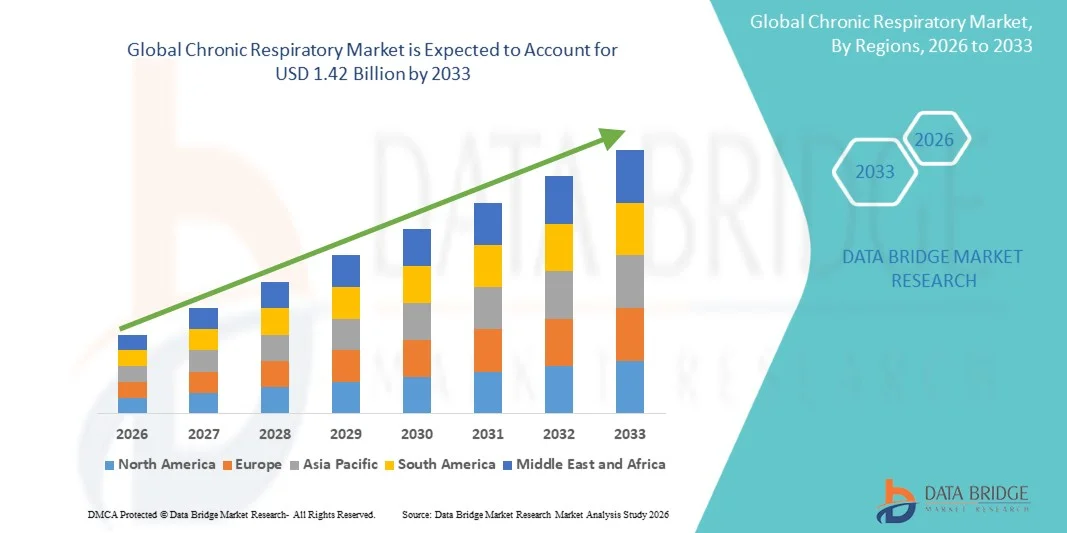
The Chronic Respiratory Market was valued at USD 1.42 billion in 2025 and is projected to reach USD 2.47 billion by 2033, growing at a CAGR of 7.20% from 2026 to 2033. The Chronic Respiratory Market is experiencing consistent growth driven by the rising prevalence of chronic respiratory diseases such as Chronic Obstructive Pulmonary Disease (COPD), asthma, pulmonary fibrosis, and sleep apnea. Increasing air pollution levels, smoking prevalence, occupational exposure to harmful particles, and aging populations are significantly contributing to the growing patient pool worldwide. In addition, advancements in drug delivery systems, biologics, and combination therapies are improving treatment outcomes and long-term disease management. Expanding awareness programs, early diagnosis initiatives, and increasing access to healthcare infrastructure in both developed and emerging markets are further supporting market expansion.
The increasing burden of respiratory illnesses globally, combined with stricter public health initiatives and government programs focused on respiratory care, is compelling healthcare providers, hospitals, and specialty clinics to adopt advanced treatment approaches. The growing use of inhalation therapies, oxygen therapy, and targeted biologics is replacing conventional treatment methods in many cases, offering improved symptom control, reduced hospitalizations, and enhanced patient quality of life. In addition, rising investments in pulmonary rehabilitation programs, homecare respiratory devices, and digital health monitoring solutions are further accelerating the adoption of advanced chronic respiratory disease management solutions worldwide.
Key Market Trends & Insights
- North America dominated the Chronic Respiratory Market with the largest revenue share of 34.12% in 2025, supported by advanced healthcare infrastructure, high disease diagnosis rates, strong presence of pharmaceutical companies, and widespread access to respiratory care treatments. The region also benefits from increasing prevalence of COPD and asthma, strong insurance coverage, and rapid adoption of advanced biologics and inhalation therapies, further strengthening its market leadership.
- The COPD segment dominated the market with an estimated revenue share of 42.36% in 2025, driven by its high global prevalence, increasing smoking population, and rising exposure to air pollution and occupational hazards.
- Asia-Pacific is expected to be the fastest-growing region at a CAGR of 7.6% from 2026 to 2033, driven by rising air pollution, increasing smoking rates, rapid urbanization, and expanding healthcare infrastructure. Growing awareness of respiratory diseases and improving diagnostic capabilities are boosting treatment adoption.
- Bronchodilators segment dominated the market with a 38.26% share in 2025, driven by their role as first-line therapy for COPD and asthma management. These drugs are widely used for rapid airway relaxation and long-term symptom control. High global patient population and chronic disease burden are supporting consistent demand. Increasing adoption of long-acting bronchodilators (LABA and LAMA) is improving treatment adherence. Rising prevalence of smoking-related respiratory diseases is boosting usage.
- Biologics segment is expected to witness the fastest growth with a CAGR of 8.1% from 2026 to 2033, driven by increasing adoption of targeted therapies for severe asthma and advanced respiratory conditions. Rising prevalence of treatment-resistant cases is accelerating demand. Expanding approvals of monoclonal antibodies such as anti-IgE and anti-IL therapies are supporting growth.
Market Size & Forecast
- Global Market Value (2025): USD 1.42 Billion
- Expected Market Value (2033): USD 2.47 Billion
- Forecast CAGR (2026–2033): 7.20%
- Leading Region in 2025: North America
- Fastest Growing Region: Asia-Pacific
Report Scope and Chronic Respiratory Market Segmentation
|
Attributes |
Chronic Respiratory Key Market Insights |
|
Segments Covered |
· By Disease Type: Chronic Obstructive Pulmonary Disease (COPD), Asthma, Pulmonary Fibrosis, Cystic Fibrosis, Sleep Apnea, and Others · By Treatment Type: Bronchodilators, Corticosteroids, Combination Therapies, Oxygen Therapy, Biologics, Antibiotics, and Others |
|
Countries Covered |
North America · U.S. · Canada · Mexico Europe · Germany · France · U.K. · Netherlands · Switzerland · Belgium · Russia · Italy · Spain · Turkey · Rest of Europe Asia-Pacific · China · Japan · India · South Korea · Singapore · Malaysia · Australia · Thailand · Indonesia · Philippines · Rest of Asia-Pacific Middle East and Africa · Saudi Arabia · U.A.E. · South Africa · Egypt · Israel · Rest of Middle East and Africa South America · Brazil · Argentina · Rest of South America |
|
Key Market Players |
• GlaxoSmithKline plc (U.K.) |
|
Market Opportunities |
· Expansion of Biologics and Targeted Therapies for Severe Respiratory Diseases · Growth in Home-Based and Digital Respiratory Care Solutions · Increasing Demand in Emerging Markets with Rising Pollution Levels |
|
Value Added Data Infosets |
In addition to the insights on market scenarios such as market value, growth rate, segmentation, geographical coverage, and major players, the market reports curated by the Data Bridge Market Research also include in-depth expert analysis, geographically represented company-wise production and capacity, network layouts of distributors and partners, detailed and updated price trend analysis and deficit analysis of supply chain and demand. |
Chronic Respiratory Market Trends
Trend: Growth in Biologics and Advanced Targeted Respiratory Therapies
Pharmaceutical companies are increasingly focusing on biologic therapies for severe asthma and advanced COPD, shifting treatment away from conventional symptom-control drugs toward precision medicine. The rising adoption of monoclonal antibodies such as anti-IgE and anti-IL therapies is improving disease control and reducing exacerbation rates in high-risk patients. Clinical studies show biologics can reduce severe asthma exacerbations by up to 50–70%, significantly lowering hospitalization rates. Leading companies such as AstraZeneca and Sanofi are expanding respiratory biologics pipelines, while GSK continues to invest in next-generation inhaled therapies. Increasing regulatory approvals from the U.S. FDA and EMA for advanced biologics are accelerating market penetration. Growing patient eligibility due to improved diagnostic biomarkers is further supporting uptake. The expansion of specialty respiratory clinics is enabling wider biologic administration. Rising healthcare expenditure in developed markets is improving affordability of high-cost therapies. Increasing focus on personalized medicine is reshaping treatment standards globally. Overall, biologics are transforming chronic respiratory disease management from symptomatic relief to disease modification.
Chronic Respiratory Market Dynamics
Key Market Driver: Rising Prevalence of Air Pollution and Smoking-Related Respiratory Disorders
The increasing global burden of respiratory diseases is a major driver of the chronic respiratory market. According to WHO estimates, chronic respiratory diseases account for more than 3.5 million deaths annually, with COPD alone affecting over 380 million people worldwide. Rising air pollution levels—particularly in urban regions of Asia-Pacific—are significantly increasing incidence rates of asthma and COPD. Long-term exposure to PM2.5 particles has been directly linked to declining lung function and higher hospitalization rates. Smoking remains a key risk factor, contributing to nearly 70% of COPD cases in developed countries. Governments across North America and Europe are implementing large-scale respiratory health screening programs to improve early diagnosis. Increasing adoption of inhalation therapies and combination treatments is supporting long-term disease management. Expanding geriatric population is further increasing demand for chronic care solutions. Growing awareness campaigns by organizations such as the American Lung Association are improving treatment-seeking behavior. Rising healthcare infrastructure investments in emerging economies are improving access to respiratory care. Overall, disease burden expansion continues to strongly drive market growth.
Key Restraint/Challenge: High Treatment Cost and Limited Access to Advanced Therapies in Emerging Regions
A major challenge in the Chronic Respiratory Market is the high cost of advanced therapies, particularly biologics and long-acting combination inhalers. Many patients in low- and middle-income countries still rely on low-cost generics due to affordability constraints. Biologic therapies can cost over USD 10,000–30,000 annually per patient, limiting widespread adoption. Limited reimbursement coverage in emerging economies further restricts access to advanced treatments. In addition, delayed diagnosis due to low awareness and inadequate screening infrastructure worsens disease progression before treatment begins. Healthcare disparities between urban and rural populations also impact access to respiratory care. Supply chain limitations for inhalation devices and oxygen therapy equipment further constrain market penetration. Shortage of trained pulmonologists in developing regions adds to diagnostic challenges. High dependency on long-term medication increases financial burden on patients. Inconsistent treatment adherence due to cost pressures leads to poor clinical outcomes. Overall, affordability and access barriers remain a critical restraint on market expansion.
Key Market Opportunity: Expansion of Digital Respiratory Care and Smart Inhalation Technologies
The integration of digital health technologies is creating significant growth opportunities in the chronic respiratory market. Smart inhalers equipped with sensors and Bluetooth connectivity are enabling real-time monitoring of medication usage and patient adherence. Studies indicate that digital inhaler systems can improve adherence rates by 25–40%, leading to better disease control. Telemedicine platforms are increasingly being used for remote respiratory consultations, particularly after COVID-19 accelerated digital healthcare adoption. AI-based respiratory monitoring tools are helping physicians predict exacerbations before they occur, reducing emergency admissions. Companies such as Propeller Health and ResMed are leading innovation in connected respiratory devices and sleep apnea management solutions. The expansion of home-based oxygen therapy systems is further supporting decentralized care models. Growing adoption of cloud-based patient monitoring platforms is improving long-term disease tracking. Increasing investment in healthcare AI startups is accelerating innovation in predictive respiratory analytics. Governments in North America and Europe are supporting digital health integration through reimbursement reforms. Overall, digital respiratory care is emerging as a transformative opportunity for improving outcomes and reducing healthcare costs.
Chronic Respiratory Market Scope
The Chronic Respiratory market is segmented on the basis of disease type and treatment type.
By Disease Type
On the basis of disease type, the Chronic Respiratory Market is segmented into Chronic Obstructive Pulmonary Disease (COPD), Asthma, Pulmonary Fibrosis, Cystic Fibrosis, Sleep Apnea, and Others. The COPD segment dominated the market with an estimated revenue share of 42.36% in 2025, driven by its high global prevalence, increasing smoking population, and rising exposure to air pollution and occupational hazards. COPD remains a leading cause of morbidity and mortality worldwide, significantly increasing demand for long-term treatment and management therapies. Strong adoption of bronchodilators, oxygen therapy, and combination therapies further supports segment dominance. Growing aging population across North America and Europe is a key contributing factor to sustained demand. Rising hospitalization rates and disease exacerbations are increasing healthcare burden, strengthening COPD-focused treatment adoption. Government-led awareness programs and early diagnosis initiatives are improving detection rates globally. Pharmaceutical companies are heavily investing in COPD drug development pipelines, reinforcing market leadership. Increasing use of inhalation therapies and advanced drug delivery systems is further boosting treatment penetration. High healthcare expenditure for chronic respiratory care supports continuous market expansion.
The Asthma segment is expected to witness the fastest growth with a CAGR of 7.4% from 2026 to 2033, driven by rising pediatric and adult prevalence globally. Increasing urban pollution, allergen exposure, and changing lifestyle patterns are key factors accelerating asthma incidence. Growing awareness regarding early diagnosis and long-term disease management is improving treatment uptake. The expansion of biologics and targeted therapies is transforming severe asthma care. Increasing availability of advanced inhalers and combination therapies is supporting patient compliance. Rising healthcare access in emerging economies is significantly contributing to demand growth. Digital health monitoring tools and smart inhalers are enhancing disease tracking and control. Government initiatives for respiratory health screening are further boosting early intervention rates. Pharmaceutical innovation in monoclonal antibodies is expanding treatment options for severe asthma cases. Increasing hospital admissions during seasonal flare-ups is reinforcing demand. Overall, improved disease management frameworks are driving rapid segment expansion.
By Treatment Type
On the basis of treatment type, the Chronic Respiratory Market is segmented into bronchodilators, corticosteroids, combination therapies, oxygen therapy, biologics, antibiotics, and others. The Bronchodilators segment dominated the market with a revenue share of 34.18% in 2025, owing to its widespread use as first-line therapy for COPD and asthma management. These drugs provide rapid relief from airway constriction and improve breathing efficiency, making them essential in chronic respiratory care. High prescription rates across hospitals and outpatient settings continue to support segment dominance. Increasing availability of inhalers and nebulized formulations is improving patient accessibility. Strong clinical preference for short-acting and long-acting bronchodilators is reinforcing demand. Rising geriatric population with chronic breathing disorders is further expanding usage. Combination inhalers containing bronchodilators are gaining popularity for improved efficacy. Growing emergency care usage during acute attacks also supports market leadership. Expanding healthcare infrastructure in developing regions is increasing treatment penetration. Pharmaceutical companies are focusing on improved drug delivery devices, enhancing adoption. Overall, bronchodilators remain the backbone of respiratory therapy globally.
The Biologics segment is expected to witness the fastest growth with a CAGR of 9.1% from 2026 to 2033, driven by increasing adoption for severe asthma and advanced respiratory disorders. These therapies target specific immune pathways, offering precision treatment for patients unresponsive to conventional drugs. Rising prevalence of severe eosinophilic asthma is significantly boosting demand. Strong clinical pipeline development by leading pharmaceutical companies is accelerating market expansion. Increasing FDA and global regulatory approvals for monoclonal antibodies are supporting adoption. Higher treatment efficacy and reduced hospitalization rates are driving physician preference. Growing awareness among patients regarding advanced therapies is improving uptake. Expansion of specialty clinics and respiratory care centers is facilitating access. Rising healthcare spending in developed markets is enabling affordability of high-cost biologics. Personalized medicine trends are further strengthening demand. Continuous innovation in immunotherapy is expected to sustain long-term growth momentum.
Chronic Respiratory Market Regional Analysis
The North America Chronic Respiratory market dominated the global market with the largest revenue share of 34.12% in 2025, supported by advanced healthcare infrastructure, high disease diagnosis rates, strong presence of leading pharmaceutical companies, and widespread access to respiratory care treatments. The region benefits from a well-established clinical ecosystem enabling early detection and effective long-term disease management for conditions such as COPD, asthma, and sleep apnea. Increasing prevalence of respiratory disorders driven by smoking, pollution exposure, and aging population is significantly contributing to sustained demand. Strong insurance coverage and reimbursement frameworks are improving patient access to advanced therapies, including biologics and combination treatments. Rapid adoption of inhalation therapies, oxygen therapy, and advanced drug delivery systems is further strengthening treatment outcomes. The presence of major pharmaceutical R&D hubs in the U.S. is accelerating innovation in biologics and targeted therapies. High hospitalization rates related to chronic respiratory conditions are reinforcing demand for long-term care solutions. Increasing awareness campaigns for early diagnosis and preventive care are improving treatment uptake. Growing integration of digital health and remote patient monitoring is enhancing disease management efficiency. Overall, strong healthcare spending and innovation leadership continue to reinforce North America’s dominance in the global market.
U.S. Chronic Respiratory Market Insight
The U.S. Chronic Respiratory market holds the largest share within North America, driven by a high burden of chronic respiratory diseases and advanced healthcare delivery systems. The country reports a significant prevalence of COPD and asthma cases, largely influenced by smoking habits, environmental pollution, and occupational exposure. Strong presence of global pharmaceutical leaders and biotech companies is accelerating innovation in biologics and inhalation therapies. Increasing adoption of advanced diagnostic tools and personalized treatment approaches is improving patient outcomes. Expanding healthcare coverage under public and private insurance systems is enhancing access to high-cost therapies. Rising hospital admissions due to respiratory exacerbations are supporting demand for emergency and long-term care solutions. The U.S. also benefits from strong clinical trial activity focused on next-generation respiratory drugs. Growing use of digital inhalers and connected health devices is improving adherence and monitoring. Government-led initiatives for respiratory health awareness and smoking cessation programs are further supporting market growth. Continuous advancements in precision medicine and immunotherapy are reshaping treatment approaches.
Europe Chronic Respiratory Market Insight
The Europe Chronic Respiratory market remains a major contributor to global revenue, driven by strong healthcare systems, supportive government reimbursement policies, and high awareness of chronic respiratory diseases. The region benefits from advanced diagnostic infrastructure and widespread adoption of modern treatment approaches, including biologics and combination therapies. High prevalence of COPD and asthma across aging populations is significantly contributing to market demand. Strong presence of leading pharmaceutical companies and continuous clinical research activities are accelerating drug innovation. Increasing environmental regulations and anti-smoking initiatives are also supporting disease management efforts. Widespread access to hospital care and specialty respiratory clinics is improving treatment outcomes. Rising adoption of personalized medicine and advanced inhalation therapies is further strengthening market growth. Government-funded healthcare programs across major EU countries are enhancing patient access to treatment. Growing focus on early diagnosis and disease prevention is reducing long-term complications. Overall, strong healthcare infrastructure continues to support Europe’s steady market expansion.
U.K. Chronic Respiratory Market Insight
The U.K. Chronic Respiratory market is witnessing steady growth, supported by a strong National Health Service (NHS) framework and increasing burden of respiratory diseases such as asthma and COPD. High levels of air pollution in urban areas and smoking-related complications continue to drive treatment demand. The country benefits from early diagnosis programs and structured respiratory care pathways. Increasing adoption of biologics and advanced inhalation therapies is improving treatment outcomes for severe patients. Strong clinical research ecosystem is supporting innovation in respiratory drug development. Rising use of digital health tools and remote patient monitoring is enhancing disease management efficiency. Government awareness campaigns for smoking cessation are positively impacting disease incidence rates. Expanding hospital infrastructure and specialist respiratory centers are improving access to care. Pharmaceutical companies are actively conducting clinical trials in the U.K. for next-generation therapies. Overall, strong healthcare delivery systems and innovation focus are supporting market growth.
Germany Chronic Respiratory Market Insight
The Germany Chronic Respiratory market is expanding steadily due to its highly advanced healthcare infrastructure and strong pharmaceutical manufacturing base. The country has a high prevalence of COPD linked to smoking and occupational exposure, driving consistent treatment demand. Strong emphasis on research and development is accelerating innovation in respiratory drugs and biologics. Germany’s well-established hospital network ensures efficient disease diagnosis and management. Increasing use of advanced inhalation therapies and oxygen-based treatments is supporting patient care. Environmental regulations aimed at reducing air pollution are contributing to long-term disease control efforts. Rising adoption of personalized medicine is improving treatment effectiveness. The presence of leading global pharmaceutical companies is enhancing drug availability and innovation. Government healthcare policies ensure broad patient access to respiratory treatments. Overall, Germany remains a key contributor to the European chronic respiratory market.
Asia-Pacific Chronic Respiratory Market Insight
The Asia-Pacific Chronic Respiratory market is expected to witness the fastest growth with a CAGR of 7.6% from 2026 to 2033, driven by rising air pollution, increasing smoking prevalence, and rapid urbanization. Countries such as China, India, and Southeast Asia are facing a growing burden of COPD and asthma cases. Expanding healthcare infrastructure is improving diagnosis and treatment accessibility. Rising government initiatives for respiratory health awareness are supporting early disease detection. Increasing healthcare expenditure and insurance penetration are improving affordability of treatments. Demand for bronchodilators, corticosteroids, and oxygen therapy is rising significantly across hospitals. Growing availability of generic drugs is increasing treatment access in rural and semi-urban areas. Pharmaceutical companies are expanding operations in the region to meet rising demand. Adoption of advanced biologics is gradually increasing in urban healthcare centers. Overall, improving healthcare systems are driving rapid regional market expansion.
Japan Chronic Respiratory Market Insight
The Japan Chronic Respiratory market is witnessing stable growth due to its aging population and increasing prevalence of chronic respiratory conditions. High healthcare standards and universal insurance coverage ensure broad access to treatment. The country has a strong focus on early diagnosis and preventive care. Rising adoption of advanced inhalation therapies and biologics is improving patient outcomes. Strong pharmaceutical innovation ecosystem is supporting development of next-generation treatments. Increasing use of digital health monitoring tools is enhancing disease management. Environmental factors such as urban pollution also contribute to respiratory disease burden. Hospitals and specialty clinics are well-equipped for advanced respiratory care. Government health programs are promoting smoking cessation and air quality improvement. Overall, Japan maintains a strong and stable chronic respiratory treatment market.
China Chronic Respiratory Market Insight
The China Chronic Respiratory market is growing rapidly, driven by severe air pollution, high smoking rates, and rapid urbanization. The country faces a significant burden of COPD and asthma cases, increasing demand for long-term respiratory care. Expanding healthcare infrastructure is improving access to diagnosis and treatment. Government initiatives focused on air quality improvement are supporting disease prevention efforts. Rising healthcare spending and insurance coverage expansion are improving treatment affordability. Strong domestic pharmaceutical production is increasing availability of respiratory drugs. Growing adoption of biologics in major cities is supporting advanced treatment trends. Increasing hospital capacity and specialist respiratory centers are improving patient care. Public awareness campaigns are helping improve early diagnosis rates. Overall, China remains one of the fastest-growing markets globally for chronic respiratory care.
Chronic Respiratory Market Share
The Chronic Respiratory industry is primarily led by well-established companies, including:
- GlaxoSmithKline plc (U.K.)
- AstraZeneca plc (U.K.)
- Novartis AG (Switzerland)
- Boehringer Ingelheim (Germany)
- Sanofi S.A. (France)
- Pfizer Inc. (U.S.)
- Teva Pharmaceutical Industries Ltd. (Israel)
- Chiesi Farmaceutici S.p.A. (Italy)
- Merck & Co., Inc. (U.S.)
- Regeneron Pharmaceuticals Inc. (U.S.)
- Amgen Inc. (U.S.)
- Cipla Ltd. (India)
- Dr. Reddy’s Laboratories Ltd. (India)
- Sun Pharmaceutical Industries Ltd. (India)
- Aurobindo Pharma Ltd. (India)
- Viatris Inc. (U.S.)
- Insmed Incorporated (U.S.)
- Theravance Biopharma Inc. (U.S.)
- ALK-Abelló A/S (Denmark)
- Circassia Pharmaceuticals plc (U.K.)
- Pulmonx Corporation (U.S.)
- Vectura Group plc (U.K.)
- Catalent Inc. (U.S.)
- Lonza Group AG (Switzerland)
- Aerogen Ltd. (Ireland)
- Recipharm AB (Sweden)
- AptarGroup Inc. (U.S.)
- PARI GmbH (Germany)
- Sanofi Genzyme (France)
Latest Developments in Chronic Respiratory Market
- In May 2022, the U.S. Food and Drug Administration (FDA) approved Tezepelumab (Tezspire) developed by Amgen and AstraZeneca for severe asthma treatment. The biologic targets thymic stromal lymphopoietin (TSLP) and became the first asthma therapy approved regardless of phenotype or biomarker status, marking a major advancement in precision respiratory medicine. This approval significantly expanded treatment options for severe, uncontrolled asthma patients
- In September 2024, the U.S. Food and Drug Administration (FDA) approved Dupilumab (Dupixent) as the first biologic add-on maintenance therapy for adults with chronic obstructive pulmonary disease (COPD) with eosinophilic inflammation. This milestone represented a breakthrough in COPD management, as biologics were previously limited mainly to asthma and atopic diseases. The approval opened a new precision medicine pathway for COPD patients with type 2 inflammation
- In May 2025, GSK announced FDA approval expansion of Mepolizumab (Nucala) for use in COPD patients with eosinophilic phenotype. The drug, originally developed for severe asthma, demonstrated efficacy in reducing COPD exacerbations in targeted patient populations. This marked a growing trend of repositioning asthma biologics for COPD treatment, strengthening the biologics segment in chronic respiratory care
- In December 2025, the European Medicines Agency (EMA) issued a positive CHMP opinion for GSK’s Depemokimab, a long-acting IL-5 targeted biologic for severe asthma and chronic rhinosinusitis with nasal polyps. The drug is designed for twice-yearly dosing and demonstrated strong clinical efficacy in reducing asthma exacerbations in late-stage trials. Final European approval is expected to significantly improve treatment convenience and adherence
- In July 2025, the American Lung Association launched a nationwide COPD awareness initiative in the United States aimed at improving early diagnosis and management of chronic obstructive pulmonary disease, particularly in rural and underserved populations. With an estimated 16 million Americans affected, the initiative focuses on expanding screening, education, and access to respiratory care services

- Interactive Data Analysis Dashboard
- Company Analysis Dashboard for high growth potential opportunities
- Research Analyst Access for customization & queries
- Competitor Analysis with Interactive dashboard
- Latest News, Updates & Trend analysis
- Harness the Power of Benchmark Analysis for Comprehensive Competitor Tracking
Data collection and base year analysis are done using data collection modules with large sample sizes. The stage includes obtaining market information or related data through various sources and strategies. It includes examining and planning all the data acquired from the past in advance. It likewise envelops the examination of information inconsistencies seen across different information sources. The market data is analysed and estimated using market statistical and coherent models. Also, market share analysis and key trend analysis are the major success factors in the market report. To know more, please request an analyst call or drop down your inquiry.
The key research methodology used by DBMR research team is data triangulation which involves data mining, analysis of the impact of data variables on the market and primary (industry expert) validation. Data models include Vendor Positioning Grid, Market Time Line Analysis, Market Overview and Guide, Company Positioning Grid, Patent Analysis, Pricing Analysis, Company Market Share Analysis, Standards of Measurement, Global versus Regional and Vendor Share Analysis. To know more about the research methodology, drop in an inquiry to speak to our industry experts.
Data Bridge Market Research is a leader in advanced formative research. We take pride in servicing our existing and new customers with data and analysis that match and suits their goal. The report can be customized to include price trend analysis of target brands understanding the market for additional countries (ask for the list of countries), clinical trial results data, literature review, refurbished market and product base analysis. Market analysis of target competitors can be analyzed from technology-based analysis to market portfolio strategies. We can add as many competitors that you require data about in the format and data style you are looking for. Our team of analysts can also provide you data in crude raw excel files pivot tables (Fact book) or can assist you in creating presentations from the data sets available in the report.













