Global Mechanistic Target of Rapamycin (mTOR) Inhibitors Market Segmentation, By Indication (Organ Transplant, Oncology, and Others), Product Types (Afinitor, Rapamune, Torisel, Zortress, and Others), Route of Administration (Oral, Parenteral, and Others), End-Users (Hospitals, Specialty Clinics, and Others), Distribution Channel (Hospital Pharmacy, Retail Pharmacy, and Others) - Industry Trends and Forecast to 2033
Какова механистическая цель ингибиторов рынка рапамицина и темпов роста
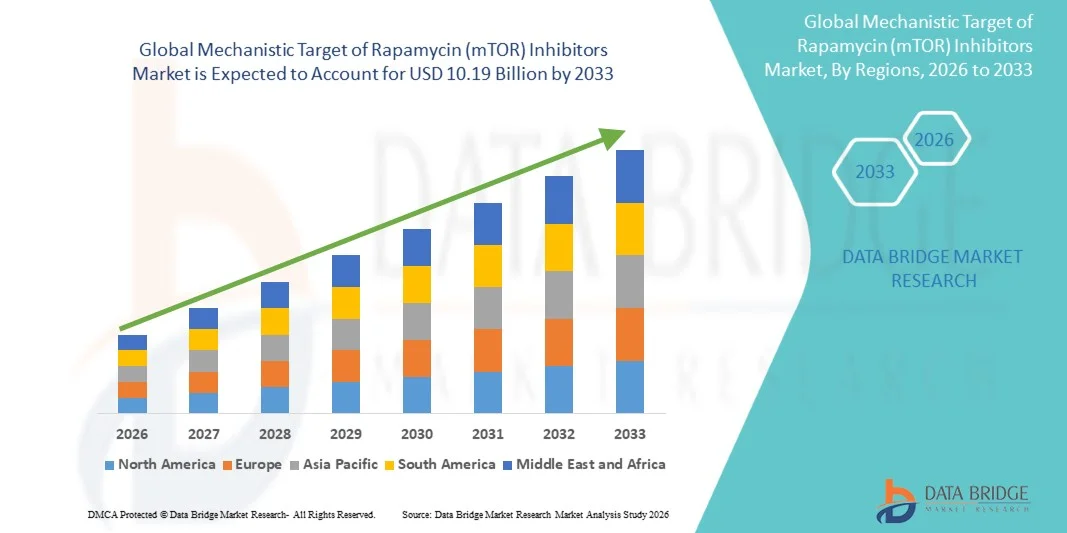
- Согласно анализу Data Bridge Market Research, глобальная механистическая цель ингибиторов рапамицина (mTOR) была оценена как7,74 млрд долларов в 2025 годуОжидается, что он достигнет10,19 млрд долларов к 2033 году, вCAGR 3,50%в течение прогнозируемого периода
- Рост рынка в значительной степени подпитывается увеличением распространенности рака, процедур трансплантации органов и редких генетических нарушений, что приводит к более широкому принятию целевых методов лечения, таких как ингибиторы механической мишени рапамицина (mTOR) в клинических условиях для улучшения результатов лечения.
- Кроме того, растущий спрос на точную медицину, наряду с растущими исследованиями клеточных сигнальных путей и иммуносупрессивной терапии, устанавливает механическую мишень ингибиторов рапамицина (mTOR) в качестве критического терапевтического класса в онкологии и трансплантологии. Эти сходящиеся факторы ускоряют поглощение решений ингибиторов mTOR, тем самым значительно повышая рост отрасли.
Размер рынка и прогноз
- Глобальная рыночная стоимость (2025):$7,74 млрд.
- Ожидаемая рыночная стоимость (2033):$10,19 млрд.
- Прогноз CAGR (2026-2033):3.50%
Каковы основные выводы механистической цели рынка ингибиторов рапамицина (mTOR)
- Ингибиторы рапамицина (mTOR) являются жизненно важным классом таргетной терапии, широко используемой в онкологии, трансплантации органов и лечении редких заболеваний из-за их способности регулировать рост клеток, пролиферацию и иммунный ответ посредством ингибирования сигнального пути mTOR.
- Растущий спрос на ингибиторы mTOR в первую очередь обусловлен увеличением распространенности рака, ростом процедур трансплантации органов и растущим внедрением подходов точной медицины, а также расширением клинических исследований целевых молекулярных методов лечения для улучшения результатов лечения пациентов.
- Северная Америка доминировала на рынке ингибиторов рапамицина (mTOR) с самой большой долей дохода в 41,8% в 2025 году, поддерживаемой передовой инфраструктурой здравоохранения, сильными инвестициями в исследования и разработки, высоким внедрением новой онкологии и иммуносупрессивной терапии и присутствием крупных фармацевтических компаний.
- Ожидается, что Азиатско-Тихоокеанский регион станет самым быстрорастущим регионом на рынке ингибиторов рапамицина (mTOR) в течение прогнозируемого периода из-за увеличения расходов на здравоохранение, роста заболеваемости раком, улучшения доступа к передовой терапии и расширения деятельности клинических испытаний в развивающихся странах.
- Сегмент орального лечения доминировал на рынке с самой большой долей дохода в 66,9% в 2025 году, что обусловлено простотой администрирования и высоким уровнем соблюдения пациентами долгосрочных методов лечения.
Сфера охвата и механистическая цель ингибиторов сегментации рынка рапамицина (mTOR)
|
Атрибуты |
Механическая цель рапамицина (mTOR) Ингибиторы ключевых рыночных представлений |
|
Сегменты покрыты |
|
|
Страны, охваченные |
Северная Америка
Европа
Азиатско-Тихоокеанский регион
Ближний Восток и Африка
Южная Америка
|
|
Ключевые игроки рынка |
|
|
Рыночные возможности |
|
|
Информационные наборы данных с добавленной стоимостью |
В дополнение к информации о рыночных сценариях, таких как рыночная стоимость, темпы роста, сегментация, географическое покрытие и основные игроки, рыночные отчеты, курируемые Data Bridge Market Research, также включают углубленный экспертный анализ, эпидемиологию пациентов, анализ трубопроводов, анализ цен и нормативную базу. |
Какова ключевая тенденция на рынке ингибиторов рапамицина (mTOR)
"Достижения в области точной онкологии и комбинационной терапии"
- Значительной и ускоряющейся тенденцией на мировом рынке ингибиторов рапамицина (mTOR) является растущее внедрение подходов точной онкологии и комбинированной терапии, направленных на повышение эффективности лечения и преодоление лекарственной устойчивости при раке и других хронических заболеваниях.
- Например, ингибиторы mTOR, такие как эверолимус и темсиролимус, все чаще изучаются в сочетании с химиотерапией, иммунотерапией и целевыми агентами для усиления терапевтического ответа при онкологических показаниях.
- Использование стратегий лечения, основанных на биомаркерах, позволяет клиницистам лучше идентифицировать подгруппы пациентов, которые, скорее всего, выиграют от ингибирования пути mTOR.
- Фармацевтические компании также сосредоточены на ингибиторах mTOR следующего поколения, которые обеспечивают улучшенную селективность и снижение токсичности по сравнению с более ранними агентами.
- Увеличение клинических испытаний, исследующих двойное ингибирование путей PI3K/AKT/mTOR, еще больше расширяет терапевтический потенциал этого класса препаратов.
- Этот переход к персонализированной медицине и комбинированным схемам значительно улучшает долгосрочные результаты лечения заболеваний.
- Ожидается, что растущий поток новых методов лечения, ориентированных на mTOR, укрепит будущее расширение рынка.
Механическая цель рапамицина (mTOR) Ингибиторы динамики рынка
водитель
«Увеличение распространенности рака и расширение использования целевой терапии»
- Растущее глобальное бремя рака является основным драйвером рынка ингибиторов mTOR, поскольку эти препараты играют решающую роль в целевых стратегиях лечения рака.
- Например, раковые заболевания, такие как почечно-клеточная карцинома, рак молочной железы и некоторые лимфомы, показали отзывчивость к ингибированию пути mTOR, увеличивая клиническое принятие.
- Расширение осведомленности о целевых методах лечения среди онкологов способствует дальнейшей интеграции ингибиторов mTOR в протоколы лечения.
- Например, больницы все чаще принимают молекулярную диагностику для поддержки принятия решений о целенаправленном лечении в онкологической помощи.
- Инвестиции в онкологические исследования и разработку лекарств ускоряют инновации в терапии на основе mTOR.
- Растущая доступность биопрепаратов и целевых лекарственных средств через специализированные каналы медицинской помощи способствует дальнейшему расширению рынка.
Сдержанность/вызов
"Неблагоприятные эффекты, лекарственная устойчивость и высокие затраты на лечение"
- Одной из ключевых проблем на рынке ингибиторов mTOR является возникновение значительных побочных эффектов, таких как иммуносупрессия, нарушения обмена веществ и инфекции, которые могут ограничить долгосрочное использование.
- Например, пациенты, получающие ингибиторы mTOR, могут испытывать осложнения, такие как стоматит, гиперлипидемия и повышенный риск инфекции из-за подавления иммунитета.
- Развитие лекарственной устойчивости со временем снижает эффективность лечения и остается серьезной клинической проблемой.
- Например, опухолевые клетки могут активировать альтернативные сигнальные пути, снижая долгосрочную эффективность терапии ингибирования mTOR.
- Высокие затраты на лечение, связанные с целенаправленной терапией рака, также создают барьер для широкого распространения, особенно в регионах с низким и средним уровнем дохода.
- Например, длительная терапия ингибиторами mTOR может создать финансовую нагрузку для пациентов и систем здравоохранения.
- Решение этих проблем требует разработки более безопасных рецептур, улучшенных комбинированных стратегий и более экономичных терапевтических вариантов.
Как сегментируется механистическая цель ингибиторов рапамицина (mTOR)
Рынок сегментирован на основе индикации, типов продукции, маршрута администрирования, конечных пользователей и канала распределения.
• По показаниям
На основании показаний рынок ингибиторов рапамицина (mTOR) сегментирован на трансплантацию органов, онкологию и другие. Сегмент онкологии доминировал на крупнейшей доле рынка в 61,8% в 2025 году, чему способствовало растущее глобальное бремя рака и растущее использование ингибиторов mTOR в целевой терапии рака. Препараты, нацеленные на путь mTOR, широко используются при лечении почечно-клеточной карциномы, рака молочной железы и нейроэндокринных опухолей. Более широкое внедрение прецизионной медицины еще больше поддерживает спрос. Растущая осведомленность о ранней диагностике рака повышает охват лечением. Расширение онкологической инфраструктуры на развитых и развивающихся рынках повышает доступность. Сильная клиническая эффективность в подавлении роста опухоли поддерживает предпочтение врача. Рост расходов на здравоохранение во всем мире способствует росту сегмента. Непрерывные исследования и клинические испытания расширяют терапевтическое применение. Благоприятная политика возмещения расходов на онкологическое лечение еще больше усиливает процесс усыновления. Увеличение гериатрической популяции также приводит к заболеваемости раком. В целом, онкология остается доминирующим сегментом из-за высокой распространенности заболеваний и зависимости от лечения.
Ожидается, что сегмент трансплантации органов будет наблюдать самый быстрый CAGR в 8,9% с 2026 по 2033 год, что обусловлено увеличением процедур трансплантации во всем мире. Ингибиторы mTOR играют важную роль в предотвращении отторжения органов, повышая их спрос. Растущие случаи конечной стадии органной недостаточности поддерживают рост. Улучшения в показателях успеха трансплантационной хирургии расширяют процесс принятия. Повышение доступности доноров в развитых регионах еще больше ускоряет процедуры. Растущая осведомленность об уходе после трансплантации усиливает употребление наркотиков. Достижения в иммуносупрессивной терапии улучшают результаты лечения пациентов. Расширение центров трансплантации во всем мире поддерживает доступность. Правительственные инициативы по донорству органов стимулируют рост рынка. Увеличение выживаемости после трансплантации еще больше стимулирует использование. В целом, применение трансплантации органов быстро растет из-за растущей клинической потребности.
• По видам продукции
На основе типов продуктов рынок ингибиторов mTOR сегментирован на Afinitor, Rapamune, Torisel, Zortress и другие. Сегмент Afinitor доминировал на рынке с наибольшей долей выручки в 38,6% в 2025 году, чему способствовала его сильная клиническая эффективность и широкое одобрение по нескольким онкологическим показаниям. Он широко используется при лечении прогрессирующих видов рака, таких как рак молочной железы и почечно-клеточная карцинома. Сильные предпочтения врача и установленные клинические рекомендации поддерживают его доминирование. Увеличение глобального бремени рака еще больше повышает спрос. Высокое принятие как на развитых, так и на развивающихся рынках усиливает долю рынка. Непрерывные R & D и расширения этикеток расширяют область использования. Сильное признание бренда и маркетинговая поддержка также способствуют лидерству. Наличие аптек в больницах обеспечивает широкую доступность. Рост расходов на здравоохранение повышает доступность. Растущая зависимость пациентов от долгосрочной терапии поддерживает постоянный доход. В целом, Afinitor остается ведущим типом продукта благодаря широкому терапевтическому применению.
Ожидается, что сегмент Rapamune будет наблюдать самый быстрый CAGR в 7,6% с 2026 по 2033 год, что обусловлено его сильной ролью в иммуносупрессии трансплантата органов. Увеличение числа процедур трансплантации почек поддерживает спрос. Растущая осведомленность о профилактике отторжения после трансплантации усиливает использование. Расширение центров трансплантации улучшает доступность. Врачи предпочитают Рапамуне для длительной поддерживающей терапии. Рост выживаемости после трансплантации поддерживает дальнейшее употребление наркотиков. Растущая инфраструктура здравоохранения в странах с развивающейся экономикой стимулирует принятие. Благоприятная политика возмещения дополнительно поддерживает рост. Достижения в иммуносупрессивной терапии улучшают результаты. Расширение общей доступности повышает доступность. В целом, рапамуне неуклонно растет из-за применения, связанного с трансплантацией.
• По маршруту администрации
На основе маршрута администрирования рынок ингибиторов mTOR сегментирован на устный, парентеральный и другие. Сегмент перорального лечения доминировал на рынке с самой большой долей дохода в 66,9% в 2025 году, что было обусловлено простотой администрирования и высоким уровнем соответствия пациентов долгосрочным методам лечения. Пероральные ингибиторы mTOR широко предпочтительны для лечения хронического рака и трансплантации. Повышение доступности рецептур таблеток способствует их принятию. Пациенты предпочитают неинвазивные методы лечения. Врачи часто назначают пероральные препараты для амбулаторной помощи. Сильная доступность через розничные и больничные аптеки увеличивает использование. Растущие популяции больных раком и трансплантацией поддерживают спрос. Улучшенные лекарственные препараты повышают эффективность и безопасность. Повышение осведомленности о приверженности долгосрочному лечению усиливает поглощение. Экономическая эффективность по сравнению с инъекционными формами еще больше стимулирует предпочтение. Расширение доступа к здравоохранению на развивающихся рынках способствует росту. В целом, пероральное введение доминирует благодаря удобству и эффективности.
Ожидается, что сегмент Parenteral будет наблюдать самый быстрый CAGR в 7,9% с 2026 по 2033 год, что обусловлено увеличением использования в больничных учреждениях неотложной помощи. Инъекционные ингибиторы mTOR используются в тяжелых и запущенных случаях, требующих немедленного действия. Рост числа госпитализаций для лечения рака поддерживает рост. Достижения в области инфузионных технологий повышают безопасность и эффективность. Увеличение предпочтений врача в контролируемом дозировании усиливает усыновление. Растущая доступность специализированных онкологических центров повышает доступность. Рост расходов на здравоохранение поддерживает расширенные варианты лечения. Расширение клинических исследований в области таргетной терапии стимулирует инновации. Улучшенный мониторинг пациентов улучшает результаты. Растущая распространенность сложных случаев способствует спросу. В целом, парентеральный путь набирает обороты в условиях критической помощи.
• Конечными пользователями
На базе конечных пользователей рынок ингибиторов mTOR сегментирован на больницы, специализированные клиники и другие. Сегмент госпиталей доминировал на крупнейшей доле рынка в 58,4% в 2025 году, что обусловлено высоким притоком пациентов для лечения рака и трансплантации. Больницы обеспечивают передовую инфраструктуру для администрирования и мониторинга лекарств. Наличие онкологических и трансплантологических отделений поддерживает спрос. Увеличение количества хирургических процедур увеличивает использование. Страховое покрытие повышает доступность в больницах. Растущая распространенность хронических заболеваний увеличивает количество посещений больниц. Наличие квалифицированных медицинских работников улучшает результаты. Больницы также являются основными центрами клинических испытаний. Государственные инвестиции укрепляют инфраструктуру больниц. Растущее внедрение передовых методов лечения еще больше поддерживает спрос. Доверие пациентов к институциональному уходу стимулирует их предпочтения. В целом, больницы остаются доминирующим сегментом конечного пользователя.
Ожидается, что в сегменте специализированных клиник будет наблюдаться самый быстрый CAGR в 8,3% с 2026 по 2033 год, что обусловлено растущим спросом на специализированную онкологическую и трансплантационную помощь. Эти клиники предлагают специализированное лечение с улучшенным опытом работы с пациентами. Растущее предпочтение амбулаторной помощи поддерживает рост. Расширение центров амбулаторной помощи повышает доступность. Повышение специализации врача повышает эффективность лечения. Растущая осведомленность о персонализированном уходе способствует усыновлению. Улучшение инфраструктуры в городских районах способствует расширению. Растущая доступность медицинских услуг в частных клиниках повышает спрос. Интеграция передовых методов лечения улучшает результаты. Расширение реферальных сетей поддерживает приток пациентов. В целом, специализированные клиники становятся быстрорастущим сегментом.
• Распределительный канал
На основе канала дистрибуции рынок ингибиторов mTOR сегментирован в больничную аптеку, розничную аптеку и другие. Сегмент «Больничная аптека» доминировал на рынке с самой большой долей дохода в 55,7% в 2025 году, что обусловлено высокой зависимостью от лечения рака и трансплантации. Большинство ингибиторов mTOR выпускаются в контролируемых клинических условиях. Интеграция цепочек поставок обеспечивает доступность. Увеличение числа госпитализаций стимулирует спрос. Рецепты под руководством врача обеспечивают последовательное использование. Государственные программы закупок поддерживают распределение. Растущая распространенность случаев онкологии повышает потребление. Наличие специализированного хранилища лекарственных средств обеспечивает безопасность. Страхование повышает доступность в больницах. Растущее число центров третичного ухода поддерживает расширение. Требования к клиническому мониторингу усиливают доминирование аптек в больницах. Аптеки остаются основным каналом распространения.
Ожидается, что сегмент розничной фармации будет наблюдать самый быстрый CAGR в 7,4% с 2026 по 2033 год, что обусловлено повышением доступности поддерживающей терапии. Растущая доступность непатентованных препаратов поддерживает расширение. Рост амбулаторного лечения повышает спрос. Пациенты предпочитают удобный аптечный доступ. Расширение аптечных сетей улучшает охват. Повышение осведомленности об управлении хроническими заболеваниями способствует росту. Цифровая интеграция рецептов повышает удобство. Растущая инфраструктура здравоохранения в развивающихся регионах стимулирует принятие. Повышение доступности стимулирует покупки. Расширение страхового покрытия поддерживает розничные продажи. В целом, розничные аптеки неуклонно расширяются как ключевой канал распространения.
В каком регионе находится наибольшая доля рынка ингибиторов рапамицина (mTOR)
- Северная Америка доминировала на рынке ингибиторов рапамицина (mTOR) с самой большой долей дохода в 41,8% в 2025 году, поддерживаемой передовой инфраструктурой здравоохранения, сильными инвестициями в исследования и разработки, высоким внедрением новой онкологии и иммуносупрессивной терапии и присутствием крупных фармацевтических компаний. Регион также выигрывает от раннего доступа к инновационным биологическим препаратам и хорошо зарекомендовавшей себя экосистеме клинических исследований, что ускоряет внедрение методов лечения, ориентированных на mTOR, по нескольким показаниям.
- Поставщики медицинских услуг и пациенты в регионе все больше полагаются на передовые целевые методы лечения и схемы иммуносупрессивного лечения с сильной интеграцией подходов точной медицины в онкологии и трансплантации.
- Это доминирование также поддерживается благоприятными механизмами возмещения, надежными регуляторными путями для сиротских и онкологических препаратов и постоянными инновациями ведущих фармацевтических компаний, укрепляя позиции Северной Америки в качестве ключевого источника дохода на мировом рынке ингибиторов mTOR.
Механистическая цель рапамицина (mTOR) в США препятствует пониманию рынка
Механистическая цель США на рынке ингибиторов рапамицина (mTOR) захватила самую большую долю доходов в Северной Америке в 2025 году, чему способствовало сильное поглощение целевой онкологии и широкое использование иммуносупрессивных агентов в трансплантологии. Страна извлекает выгоду из высокоразвитой системы здравоохранения, быстрого внедрения точной медицины и широкой доступности одобренных FDA ингибиторов mTOR, таких как эверолимус и темсиролимус. Например, ведущие онкологические центры в США все чаще интегрируют ингибиторы пути mTOR в протоколы комбинированного лечения почечной карциномы и рака молочной железы. Кроме того, сильная фармацевтическая R&D-активность и продолжающиеся клинические испытания ингибиторов mTOR следующего поколения еще больше ускоряют расширение рынка.
Европейская механистическая цель рапамицина (mTOR) Ингибиторы рынка
Европейская механистическая цель рынка ингибиторов рапамицина (mTOR), по прогнозам, будет расширяться при устойчивом CAGR в течение прогнозируемого периода, чему будет способствовать увеличение заболеваемости раком и аутоиммунными расстройствами, а также сильные системы общественного здравоохранения. Например, европейские онкологические сети активно продвигают раннюю диагностику и стандартизированные протоколы лечения, которые включают целевые методы лечения, такие как ингибиторы mTOR. Регион также выигрывает от сильной нормативной поддержки орфанных препаратов и увеличения покрытия расходов на передовые биологические препараты. Растущее внедрение методов прецизионной медицины и лечения на основе биомаркеров еще больше способствует расширению рынка в основных европейских экономиках.
Британская механистическая цель рапамицина (mTOR) Ингибиторы рынка
Ожидается, что механистическая цель рынка ингибиторов рапамицина (mTOR) в Великобритании будет расти при заметном CAGR в течение прогнозируемого периода, что обусловлено ростом распространенности рака и увеличением использования иммуносупрессивной терапии при трансплантации органов. Например, Национальная служба здравоохранения (NHS) все чаще принимает целевые онкологические методы лечения, включая ингибиторы mTOR, в рамках стандартизированных путей ухода. Сильная инфраструктура клинических исследований в стране и растущее участие в международных испытаниях лекарств еще больше поддерживают инновации и внедрение передовых методов лечения.
Немецкая механистическая мишень рапамицина (mTOR) Ингибиторы рынка
Ожидается, что механистическая цель рынка ингибиторов рапамицина (mTOR) в Германии будет расширяться при значительном CAGR в течение прогнозируемого периода, чему будет способствовать сильная инфраструктура здравоохранения, высокая осведомленность о целевых методах лечения и растущий спрос на передовые методы лечения онкологии. Например, немецкие больницы интегрируют ингибиторы mTOR в комбинированные схемы лечения рака, особенно в случаях рака почек и молочной железы. Акцент страны на прецизионной медицине в сочетании с сильными возможностями фармацевтического производства способствует дальнейшему росту рынка.
Азиатско-Тихоокеанская механистическая мишень рапамицина (mTOR) Ингибиторы рынка
Азиатско-Тихоокеанская механистическая цель рынка ингибиторов рапамицина (mTOR) будет расти самыми быстрыми темпами в течение прогнозируемого периода из-за роста расходов на здравоохранение, увеличения заболеваемости раком, улучшения доступа к передовым терапевтическим средствам и расширения деятельности клинических испытаний в развивающихся странах, таких как Китай, Индия и Южная Корея. Например, правительства по всему региону инвестируют в онкологическую инфраструктуру и расширяют охват возмещением расходов на жизненно важные целевые методы лечения. Быстрая урбанизация и растущая осведомленность о прецизионной медицине еще больше ускоряют внедрение ингибиторов mTOR в государственных и частных системах здравоохранения.
Японская механистическая цель рапамицина (mTOR) Ингибиторы рынка
Японская механистическая цель рынка ингибиторов рапамицина (mTOR) набирает обороты благодаря своей передовой системе здравоохранения, сильному акценту на инновации в онкологии и высокому внедрению иммуносупрессивной терапии в трансплантационной помощи. Например, японские больницы все чаще используют ингибиторы mTOR для улучшения выживаемости трансплантата. Старение населения страны и сильный акцент на передовых биомедицинских исследованиях способствуют устойчивому росту рынка.
Китайская механистическая цель рапамицина (mTOR) препятствует пониманию рынка
Китайская механистическая цель рынка ингибиторов рапамицина (mTOR) составила наибольшую долю доходов в Азиатско-Тихоокеанском регионе в 2025 году, что обусловлено ростом бремени рака, расширением инфраструктуры здравоохранения и увеличением внедрения целевых онкологических методов лечения. Например, крупные городские больницы все чаще включают ингибиторы mTOR в стандартные протоколы лечения рака, особенно при почечно-клеточной карциноме. Сильные возможности отечественного фармацевтического производства, наряду с государственной поддержкой разработки онкологических препаратов, еще больше усиливают расширение рынка по всей стране.
Каковы основные компании на рынке ингибиторов рапамицина (mTOR)
Отрасль ингибиторов рапамицина (mTOR) в основном возглавляется хорошо зарекомендовавшими себя компаниями, в том числе:
- Novartis (Швейцария)
- Pfizer (США)
- Рош (Швейцария)
- Merck & Co. (США)
- Бристол Майерс Сквибб (США)
- AstraZeneca (Великобритания)
- Johnson & Johnson (США)
- AbbVie (США)
- Амген (США)
- Takeda Pharmaceutical (Япония)
- Astellas Pharma (Япония)
- Bayer (Германия)
- Санофи (Франция)
- GSK (Великобритания)
- Eli Lilly & Company (США)
- CSL Limited (Австралия)
- Eisai Co., Ltd. (Япония)
- Дайичи Санкё (Япония)
- Ипсен (Франция)
- Сандоз (Швейцария)
Каковы последние события на мировом рынке ингибиторов рапамицина (mTOR)
- В марте 2021 года Novartis объявила об обновленных клинических данных для Everolimus (Afinitor), подчеркивая улучшенную выживаемость без прогрессирования у пациентов с прогрессирующими нейроэндокринными опухолями, усиливая свою роль в качестве ключевого ингибитора mTOR в лечении онкологии. Это обновление укрепило позиции Everolimus как широко используемого рапалога в терапии рака.
- В июне 2021 года Aadi Bioscience расширила свою программу наб-сиролимуса (ABI-009) для саркомы мягких тканей, сообщив об обнадеживающих результатах II фазы и прогрессировании в направлении регуляторных обсуждений с FDA США, отметив значительный шаг для препаратов ингибиторов mTOR, связанных с альбумином.
- В феврале 2022 года Pfizer продолжила расширение своего портфеля онкологии с обновленными реальными доказательствами, подтверждающими использование темсиролимуса (Торизел) при почечно-клеточной карциноме, усиливая его клиническую значимость в качестве ингибитора пути mTOR при трудно поддающихся лечению раковых заболеваниях.
- В сентябре 2022 года Novartis представила новые долгосрочные данные для эверолимуса при опухолях, связанных с раком молочной железы и туберкулезным склерозом, на крупной онкологической конференции, демонстрируя устойчивую эффективность и управляемый профиль безопасности в расширенных условиях лечения.
- В мае 2023 года FDA США расширило этикетку одобрения для Everolimus (Afinitor) в дополнительных редких опухолевых показаниях, включая некоторые продвинутые нейроэндокринные опухоли, укрепив его терапевтический охват в рамках лечения онкологии на основе ингибирования mTOR.
- В октябре 2023 года Takeda и компании-партнеры продолжили разработку селективных ингибиторов пути mTOR следующего поколения, уделяя особое внимание улучшенной специфичности и снижению иммуносупрессии по сравнению с рапалогом первого поколения, причем соединения трубопровода на ранней стадии входят в доклиническую оценку.
- В январе 2024 года Aadi Bioscience сообщила о дополнительных клинических обновлениях для наб-сиролимуса при запущенной злокачественной PEComa, показав устойчивые показатели ответа и поддерживая продолжающееся нормативное взаимодействие для расширенного терапевтического использования.
- В августе 2024 года Novartis объявила о текущих исследованиях по управлению жизненным циклом для Everolimus по онкологическим показаниям и показаниям к трансплантации, сосредоточившись на комбинированной терапии с иммунотерапевтическими агентами для повышения эффективности таргетинга пути mTOR.
- В апреле 2025 года несколько биотехнологических фирм расширили исследования в отношении ингибиторов mTOR, конкурирующих с ATP следующего поколения, нацеливаясь как на комплексы mTORC1, так и на комплексы mTORC2, чтобы преодолеть резистентность, наблюдаемую с рапалогом первого поколения, с несколькими соединениями, входящими в испытания фазы I.
- В июле 2025 года новые программы клинических исследований выявили улучшение результатов комбинированных схем с участием ингибиторов mTOR и ингибиторов иммунных контрольных точек в твердых опухолях, что указывает на растущую тенденцию к подходам комбинированной терапии в онкологии.
SKU-
Получите онлайн-доступ к отчету на первой в мире облачной платформе рыночной аналитики
- Интерактивная панель анализа данных
- Панель анализа компании для возможностей с высоким потенциалом роста
- Доступ аналитика-исследователя для настройки и запросов
- Анализ конкурентов с помощью интерактивной панели
- Последние новости, обновления и анализ тенденций
- Используйте возможности сравнительного анализа для комплексного отслеживания конкурентов
Методология исследования
Сбор данных и анализ базового года выполняются с использованием модулей сбора данных с большими размерами выборки. Этап включает получение рыночной информации или связанных данных из различных источников и стратегий. Он включает изучение и планирование всех данных, полученных из прошлого заранее. Он также охватывает изучение несоответствий информации, наблюдаемых в различных источниках информации. Рыночные данные анализируются и оцениваются с использованием статистических и последовательных моделей рынка. Кроме того, анализ доли рынка и анализ ключевых тенденций являются основными факторами успеха в отчете о рынке. Чтобы узнать больше, пожалуйста, запросите звонок аналитика или оставьте свой запрос.
Ключевой методологией исследования, используемой исследовательской группой DBMR, является триангуляция данных, которая включает в себя интеллектуальный анализ данных, анализ влияния переменных данных на рынок и первичную (отраслевую экспертную) проверку. Модели данных включают сетку позиционирования поставщиков, анализ временной линии рынка, обзор рынка и руководство, сетку позиционирования компании, патентный анализ, анализ цен, анализ доли рынка компании, стандарты измерения, глобальный и региональный анализ и анализ доли поставщика. Чтобы узнать больше о методологии исследования, отправьте запрос, чтобы поговорить с нашими отраслевыми экспертами.
Доступна настройка
Data Bridge Market Research является лидером в области передовых формативных исследований. Мы гордимся тем, что предоставляем нашим существующим и новым клиентам данные и анализ, которые соответствуют и подходят их целям. Отчет можно настроить, включив в него анализ ценовых тенденций целевых брендов, понимание рынка для дополнительных стран (запросите список стран), данные о результатах клинических испытаний, обзор литературы, обновленный анализ рынка и продуктовой базы. Анализ рынка целевых конкурентов можно проанализировать от анализа на основе технологий до стратегий портфеля рынка. Мы можем добавить столько конкурентов, о которых вам нужны данные в нужном вам формате и стиле данных. Наша команда аналитиков также может предоставить вам данные в сырых файлах Excel, сводных таблицах (книга фактов) или помочь вам в создании презентаций из наборов данных, доступных в отчете.