



Global Mental Illnesses Market, By Segmentation Mental Disorders (Clinical depression, Anxiety, Bipolar, Dementia, Attention-deficit/hyperactivity disorder, Schizophrenia, OCD, Autism, and Post-traumatic stress), Diagnosis (Psychological Test, Lab Tests, and Depression Screening Tests), Treatment (Psychotherapy and Medication), By End User (Hospitals and Medical Research Centres) - Industry Trends and Forecast to 2033
Каковы размеры рынка психических заболеваний и темпы роста
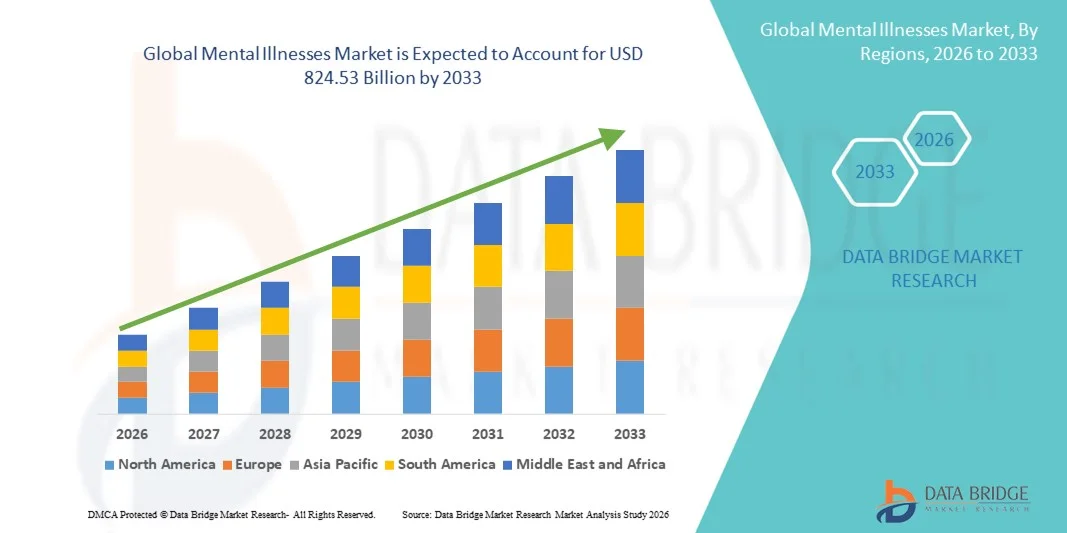
- Объем мирового рынка психических заболеваний оценивается в460,6 млрд долларов в 2025 годуОжидается, что он достигнет824,53 млрд долларов к 2033 году, вCAGR 7,55%в течение прогнозируемого периода
- Рост рынка в значительной степени обусловлен увеличением распространенности психических расстройств, повышением осведомленности о психическом благополучии и растущим внедрением цифровых решений в области психического здоровья.телепсихиатрияи терапевтических вмешательств. Технологические достижения в области цифровой терапии, мониторинга с поддержкой ИИ и онлайн-платформ консультирования еще больше повышают доступность, персонализацию и эффективность в управлении психическими заболеваниями в больницах, клиниках и учреждениях по уходу на дому.
- Кроме того, растущий спрос на ориентированные на пациента, неинвазивные и основанные на фактических данных решения для лечения, наряду с растущими правительственными инициативами и политикой вспомогательного возмещения, создает решения для психического здоровья как важный компонент современного здравоохранения. Расширение программ в области психического здоровья, информационно-просветительские кампании и интеграция платформ психического здоровья в первичную медико-санитарную помощь ускоряют внедрение решений в области психического здоровья, тем самым значительно стимулируя общий рост отрасли.
Каковы основные выводы рынка психических заболеваний
- Решения в области психического здоровья, включая цифровую терапию, консультационные услуги и фармакологические вмешательства, становятся все более важными компонентами современного здравоохранения из-за их способности решать растущую распространенность психических расстройств, улучшать результаты лечения пациентов и повышать качество жизни. Инновации в телепсихиатрии, отслеживании симптомов с помощью ИИ и платформах мобильной терапии способствуют дальнейшему внедрению в больницах, клиниках и учреждениях по уходу на дому.
- Растущий спрос на решения в области психического здоровья в первую очередь подпитывается растущей осведомленностью о психическом благополучии, растущим принятием терапевтических вмешательств и необходимостью доступного, ориентированного на пациента ухода. Интеграция программ психического здоровья в первичную медико-санитарную помощь, поддерживающие правительственные инициативы и растущее внедрение телемедицины ускоряют освоение рынка и расширяют доступ к вариантам лечения.
- Северная Америка доминировала на рынке психических заболеваний с самой большой долей дохода около 42,5% в 2025 году, что обусловлено развитой инфраструктурой здравоохранения, сильными структурами возмещения и широким внедрением цифровых платформ психического здоровья. США продолжают наблюдать значительный рост, поддерживаемый увеличением распространенности психических расстройств, повышением осведомленности в области здравоохранения и технологическими инновациями от ведущих поставщиков медицинских услуг.
- Ожидается, что Азиатско-Тихоокеанский регион станет самым быстрорастущим регионом на рынке психических заболеваний в течение прогнозируемого периода, прогнозируемого для регистрации CAGR примерно в 11,8%, что обусловлено расширением доступа к здравоохранению, растущей осведомленностью о психическом здоровье и ростом инвестиций в цифровые и телемедицинские решения в таких странах, как Китай, Индия и Япония.
- Сегмент психотерапии доминировал на крупнейшей доле рынка в 52% в 2025 году, что обусловлено растущим предпочтением нефармакологических подходов к лечению депрессии, тревоги, ПТСР и других психических расстройств.
Сфера охвата и сегментация рынка психических заболеваний
|
Атрибуты |
Психические заболевания ключевые рыночные идеи |
|
Сегменты покрыты |
|
|
Страны, охваченные |
Северная Америка
Европа
Азиатско-Тихоокеанский регион
Ближний Восток и Африка
Южная Америка
|
|
Ключевые игроки рынка |
|
|
Рыночные возможности |
|
|
Информационные наборы данных с добавленной стоимостью |
В дополнение к информации о рыночных сценариях, таких как рыночная стоимость, темпы роста, сегментация, географическое покрытие и основные игроки, рыночные отчеты, курируемые Data Bridge Market Research, также включают углубленный экспертный анализ, эпидемиологию пациентов, анализ трубопроводов, анализ цен и нормативную базу. |
Каковы основные тенденции на рынке психических заболеваний
Расширенный доступ и цифровая интеграция психического здоровья
- Значительной и ускоряющейся тенденцией на мировом рынке психических заболеваний является растущее внедрение цифровых решений в области психического здоровья и телепсихиатрии, которые расширяют доступ к уходу и улучшают взаимодействие с пациентами. Эти решения позволяют пациентам получать консультации, терапию и мониторинг удаленно, уменьшая географические и временные барьеры.
- Например, Talkspace предоставляет сеансы виртуальной терапии с лицензированными терапевтами через безопасное видео и обмен сообщениями, что позволяет гибко планировать для пациентов с напряженным образом жизни. Кроме того, BetterHelp предлагает персонализированные онлайн-консультации и программы психического здоровья для людей, испытывающих беспокойство, депрессию и стресс.
- Интеграция служб психического здоровья с системами первичной медико-санитарной помощи становится все более распространенной, помогая клиницистам удовлетворять как психологические, так и физические потребности в области здравоохранения посредством скоординированной помощи.
- Все большее внимание уделяется профилактическому психическому здоровью, при этом организации проводят ранние скрининги, кампании по повышению осведомленности и программы поддержки в школах, на рабочих местах и в общинах.
- Рост персонализированных планов лечения и цифровых терапевтических инструментов, таких как приложения когнитивно-поведенческой терапии (КПТ) и платформы отслеживания настроения, позволяет пациентам отслеживать свой прогресс, получать напоминания и поддерживать непрерывность ухода.
- Растущие кампании по информированию общественности и усилия по дестигматизации побуждают больше людей обращаться за лечением и придерживаться режимов терапии, что способствует более широкому внедрению услуг в области психического здоровья.
Каковы основные движущие силы рынка психических заболеваний
Растущая потребность из-за повышения осведомленности и расширения доступа к услугам в области психического здоровья
- Растущая распространенность психических расстройств во всем мире в сочетании с растущей осведомленностью о важности психологического благополучия стимулирует спрос на лечение и услуги в области психического здоровья.
- Например, в 2025 году Всемирная организация здравоохранения подчеркнула, что в странах, реализующих общенациональные программы в области психического здоровья и услуги телепсихиатрии, наблюдается измеримый рост доступа пациентов и раннего вмешательства, что способствует росту рынка.
- Поскольку общество признает долгосрочные социальные и экономические последствия нелеченных психических заболеваний, все больше пациентов ищут своевременную диагностику, терапию и постоянную поддержку.
- Интеграция услуг в области психического здоровья в программы первичной медико-санитарной помощи и оздоровления на рабочем месте делает лечение более доступным, удобным и социально приемлемым, что способствует принятию во всех демографических группах.
- Рост цифровых платформ, включая мобильные приложения для терапии, отслеживания настроения и консультирования, позволяет пациентам получать постоянный уход, отслеживать прогресс и заниматься профилактическими практиками психического здоровья из дома, поддерживая широкое распространение.
Сдержанность/вызов
Ограниченная доступность обученных специалистов и высокая стоимость услуг
- Существенной проблемой на рынке психического здоровья является нехватка квалифицированных специалистов в области психического здоровья, особенно в сельских и недостаточно обслуживаемых регионах, что ограничивает доступ к терапевтическим и консультационным услугам.
- Например, Американская психиатрическая ассоциация сообщает, что во многих сельских районах на 10 000 жителей приходится менее одного психиатра, что создает критические пробелы в доступности услуг и задерживает уход за пациентами с неотложными потребностями.
- Высокие затраты на лечение и ограниченное страхование делают долгосрочную терапию недоступной для многих пациентов, особенно в развивающихся странах или общинах с низким уровнем дохода.
- Регулирующие и лицензионные различия между регионами могут препятствовать внедрению телемедицинских решений для психического здоровья, что влияет на постоянный доступ к медицинской помощи.
- Социальная стигма и культурные барьеры, связанные с психическим здоровьем в некоторых регионах, продолжают ограничивать участие пациентов, несмотря на увеличение кампаний по повышению осведомленности и образовательных инициатив.
- Обеспечение конфиденциальности и безопасности данных пациентов в цифровых платформах психического здоровья имеет решающее значение; опасения по поводу конфиденциальности могут замедлить принятие и доверие пациентов к этим услугам.
Как сегментируется рынок психических заболеваний
Рынок сегментирован на основе психических расстройств, диагностики, лечения и конечных пользователей.
- По психическим расстройствам
На основе психических расстройств рынок сегментирован в клиническую депрессию, тревогу, биполярное расстройство, деменцию, СДВГ, шизофрению, ОКР, аутизм и посттравматическое стрессовое расстройство (ПТСР). Сегмент клинической депрессии доминировал на крупнейшей доле рынка в 28,5% в 2025 году, что было обусловлено ростом распространенности во всем мире, повышением осведомленности о психическом здоровье и программами раннего вмешательства. Правительства, НПО и организации здравоохранения сосредоточены на инициативах по скринингу, что стимулирует спрос на клиническую помощь. Сегмент выигрывает от наличия как фармакологических, так и нефармакологических методов лечения. Услуги телепсихиатрии и цифровые приложения для психического здоровья улучшили доступность. Финансирование исследований по-прежнему сосредоточено на клинической депрессии, улучшении диагностических инструментов и методов лечения. Больницы и клиники предоставляют стационарную и амбулаторную помощь, в то время как домашние и удаленные решения по уходу становятся все более популярными. Повышение уровня стресса из-за урбанизации, давления на рабочем месте и изменения образа жизни еще больше ускорило принятие. Расширение страхового покрытия также поддерживает этот сегмент. Кампании по информированию общественности нормализовали обращение за медицинской помощью, способствуя проникновению на рынок.
Сегмент тревоги, как ожидается, станет свидетелем самого быстрого CAGR в 9,8% с 2026 по 2033 год, что связано с растущим признанием генерализованного тревожного расстройства, социальной тревоги и панических расстройств. Растущий городской стресс, давление на работу и жизнь, а также академические требования среди детей и молодых людей увеличивают показатели диагностики. Распространение мобильных приложений для психического здоровья, онлайн-платформ терапии и телемедицинских услуг расширило охват, особенно в недостаточно обслуживаемых регионах. Ранние вмешательства, программы психического здоровья в школе и на рабочем месте, а также инициативы по оказанию помощи работникам на рабочем месте вносят дополнительный вклад. Растущее признание подходов комбинированной терапии, включая когнитивно-поведенческую терапию (КПТ) и вмешательства, основанные на осознанности, поддерживает принятие. Появляется интеграция ИИ-диагностики и прогнозной аналитики в планирование лечения. Государственно-частное сотрудничество в области исследований в области психического здоровья укрепляет этот сегмент. Увеличение кампаний по повышению осведомленности и корпоративных оздоровительных программ способствует росту. Доступность удаленного консультирования и доступность цифровых вмешательств являются ключевыми факторами.
- По диагнозу
На основе диагностики рынок сегментирован на психологические тесты, лабораторные тесты и тесты на выявление депрессии. Сегмент психологических тестов доминировал на рынке с наибольшей долей дохода в 35% в 2025 году, благодаря широкому использованию в оценке когнитивных, эмоциональных и поведенческих расстройств. Стандартизированные протоколы и проверенные инструменты оценки широко используются психиатрами, психологами и поставщиками первичной медико-санитарной помощи. Тесты интегрированы в больницы, клиники и исследовательские центры для диагностики, планирования лечения и отслеживания прогресса. Цифровые инструменты повысили эффективность администрирования тестов, а удаленная оценка становится все более распространенной. Усыновление обусловлено программами повышения осведомленности и правительственными инициативами по раннему выявлению. Психологические тесты охватывают все возрастные группы, включая взрослых и детей. Высокая надежность и клиническая значимость укрепляют спрос. Системы оценки с помощью ИИ и интеграция телемедицины еще больше поддерживают этот сегмент.
Ожидается, что в сегменте скрининговых тестов на депрессию будет зарегистрирован самый быстрый CAGR в 10,2% с 2026 по 2033 год, что обусловлено инициативами по раннему выявлению и профилактической помощи. Широко распространенные кампании по информированию о депрессии, корпоративные оздоровительные программы и школьный скрининг увеличивают принятие. Мобильные приложения и цифровые платформы позволяют проводить крупномасштабный дистанционный скрининг. Интеграция с электронными медицинскими записями позволяет улучшить мониторинг пациентов. Системы здравоохранения в развивающихся странах все чаще применяют стандартизированные методы скрининга. Программы раннего вмешательства и профилактической помощи улучшают результаты. Рост распространенности депрессии среди населения в сочетании с легкой доступностью цифровых инструментов способствует росту.
- Лечение
На основе лечения рынок сегментирован на психотерапию и медикаментозное лечение. Сегмент психотерапии доминировал на крупнейшей доле рынка в 52% в 2025 году, чему способствовало растущее предпочтение нефармакологических подходов к лечению депрессии, тревоги, ПТСР и других психических расстройств. Широко используются основанные на фактических данных подходы, такие как КПТ, ДБТ и групповая терапия. Телепсихология и платформы терапии на основе мобильных приложений улучшают доступность и удобство. Больницы, клиники и частные практики обеспечивают комплексный уход. Повышение квалификации специалистов в области психического здоровья во всем мире способствует усыновлению. Страховое возмещение за терапию способствует росту рынка. Исследования и разработки в области методов терапии повышают эффективность. Кампании по информированию пациентов способствуют принятию терапии. Интеграция с цифровыми платформами и инструментами терапии с помощью ИИ повышает персонализацию. Растущее признание психического здоровья в школах, на рабочих местах и домах способствует расширению.
Ожидается, что в сегменте лекарств будет наблюдаться самый быстрый CAGR в 8,7% с 2026 по 2033 год, чему способствует растущая распространенность тяжелых расстройств, таких как биполярное расстройство и шизофрения. Инновации в психотропных препаратах и более широкая доступность антидепрессантов, антипсихотиков и анксиолитиков поддерживают принятие. Расширение фармацевтических распределительных сетей, страховое покрытие и государственные субсидии также способствуют росту. Комбинированная терапия и персонализированные подходы к лечению улучшают результаты лечения. Платформы телемедицины поддерживают удаленное назначение и последующее наблюдение. Исследование новых систем доставки лекарств, включая цифровые таблетки и носимые устройства, способствует расширению рынка. Повышение осведомленности о вариантах лечения среди пациентов и лиц, осуществляющих уход, улучшает приверженность. Увеличение инвестиций в НИОКР ускоряет доступность инновационных препаратов.
- Конечный пользователь
На базе конечных пользователей рынок сегментирован на больницы и медицинские исследовательские центры. Сегмент больниц доминировал на рынке с самой большой долей доходов в 60% в 2025 году при поддержке психиатрических отделений, амбулаторных и стационарных учреждений и обученного персонала. Больницы обеспечивают комплексный уход за диагностикой, терапией и лечением. Интеграция отделов психического здоровья с общими системами здравоохранения увеличивает охват. Принятие телепсихиатрии и мобильных платформ повышает доступность. Партнерские отношения с поставщиками технологий для диагностики с помощью ИИ поддерживают уход за пациентами. Осведомленность общественности и страховое возмещение улучшают усыновление в больницах. Государственные программы и кампании по охране психического здоровья еще больше увеличивают доходы больничного сегмента.
Ожидается, что сегмент медицинских исследовательских центров будет наблюдать самый быстрый CAGR в 9,5% с 2026 по 2033 год, что обусловлено ростом инвестиций в исследования в области психического здоровья, клинические испытания и инновации в области терапии. Государственное и частное финансирование поддерживает исследовательскую инфраструктуру. Развитие диагностики на основе ИИ, цифровой терапии и персонализированных решений для лечения способствует внедрению. Сотрудничество с университетами и больницами ускоряет перевод исследований на практику. Увеличение распространенности психических расстройств мотивирует непрерывные исследования. Доступ к крупномасштабным наборам данных пациентов позволяет лучше анализировать данные. Рост клинических испытаний и новых протоколов лечения способствует расширению рынка. Развивающиеся страны инвестируют в исследования в области психического здоровья, чтобы улучшить результаты деятельности общества.
В каком регионе находится наибольшая доля рынка психических заболеваний
- Северная Америка доминировала на рынке психических заболеваний с долей дохода около 42,5% в 2025 году. Рост региона поддерживается развитой инфраструктурой здравоохранения, сильными структурами возмещения и широким внедрением цифровых платформ психического здоровья.
- Увеличение распространенности психических расстройств и повышение осведомленности о здравоохранении среди пациентов являются основными факторами. Технологические инновации, включая телездравоохранение, мобильные приложения и платформы терапии на основе ИИ, повышают доступность и вовлеченность пациентов.
- Высокие располагаемые доходы и сильные инвестиции в здравоохранение также способствуют усыновлению. Быстро расширяются как амбулаторные клиники, так и домашние цифровые решения. В целом, Северная Америка представляет собой зрелый, инновационный рынок с устойчивым потенциалом роста.
Американский рынок психических заболеваний
Рынок психических заболеваний в США занимает самую большую долю доходов в Северной Америке, что обусловлено ростом распространенности психических расстройств и растущим спросом на цифровые решения в области психического здоровья. Расширение амбулаторных клиник, телемедицинских услуг и домашних терапевтических платформ способствует росту рынка. Ведущие поставщики разрабатывают инновационные цифровые и ИИ-инструменты для повышения вовлеченности пациентов, мониторинга и результатов лечения. Сильная политика возмещения расходов, высокие расходы на здравоохранение и увеличение страхового покрытия еще больше облегчают усыновление. Интеграция мобильных приложений, виртуальной терапии и онлайн-консультаций ускоряет проникновение. Повышение осведомленности и программы обучения пациентов также способствуют расширению рынка. В целом, США остаются крупнейшим и наиболее технологически развитым рынком в Северной Америке.
Рынок психических заболеваний в Европе
Согласно прогнозам, рынок психических заболеваний в Европе будет стабильно расти с существенным CAGR в течение прогнозируемого периода. Рост обусловлен хорошо зарекомендовавшими себя системами здравоохранения, строгими правилами охраны психического здоровья и повышением осведомленности о цифровых и неопиоидных методах лечения. Германия, Франция и Великобритания стали свидетелями внедрения онлайн-консультаций, телемедицинских платформ и амбулаторных клиник психического здоровья. Старение населения, повышение уровня стресса и урбанизация еще больше стимулируют спрос. Расширение правительственных инициатив по повышению осведомленности о психическом здоровье также поддерживает рынок. Больницы и частные клиники интегрируют решения для цифровой терапии. Технологические инновации в сочетании с нормативной поддержкой способствуют последовательному региональному росту.
Британский рынок психических заболеваний
Ожидается, что рынок психических заболеваний в Великобритании будет расти значительными темпами, что обусловлено ростом распространенности психических расстройств и сильными правительственными инициативами по улучшению доступа к услугам в области психического здоровья. Телемедицина, онлайн-терапия и мобильные платформы здравоохранения все чаще используются. Потребители отдают приоритет удобным, домашним и цифровым решениям. Расширение амбулаторных услуг и психиатрических клиник также ускоряет проникновение на рынок. Надежная цифровая инфраструктура Великобритании в сочетании с сильными каналами электронной коммерции и распространения медицинских технологий способствует быстрому внедрению. Кампании по информированию общественности и растущее признание нетрадиционных методов лечения способствуют дальнейшему росту. В целом, Великобритания представляет собой постоянно расширяющийся рынок в Европе.
Немецкий рынок психических заболеваний
Немецкий рынок психических заболеваний остается ключевым европейским рынком, поддерживаемым сильной системой здравоохранения и высокой осведомленностью пациентов о проблемах психического здоровья. Быстро растет внедрение платформ цифровой терапии, инструментов мониторинга, основанных на ИИ, и решений телемедицины. Старение населения и уровень городского стресса способствуют росту спроса. Больницы и амбулаторные клиники все чаще интегрируют технологические решения в области психического здоровья. Правительственные инициативы, способствующие повышению осведомленности о психическом здоровье и доступности, способствуют дальнейшему расширению рынка. Частные и корпоративные программы здравоохранения также внедряют инновационные методы лечения. В целом, Германия объединяет нормативную поддержку и технологические инновации для поддержания роста рынка.
Азиатско-Тихоокеанский рынок психических заболеваний
Ожидается, что Азиатско-Тихоокеанский рынок психических заболеваний будет самым быстрорастущим регионом на рынке психических заболеваний, с ожидаемым CAGR примерно 11,8% в течение прогнозируемого периода. Рост обусловлен расширением доступа к здравоохранению, повышением осведомленности о проблемах психического здоровья и расширением внедрения цифровых и телемедицинских решений. Китай, Индия и Япония вкладывают значительные средства в инфраструктуру психического здоровья и онлайн-платформы. Урбанизация, изменение образа жизни и повышение уровня стресса повышают спрос. Мобильные приложения для здоровья, инструменты терапии на основе ИИ и телепсихиатрия набирают популярность. Правительственные инициативы и расширение участия частного сектора способствуют повышению доступности. В целом, Азиатско-Тихоокеанский регион предлагает значительный потенциал роста для цифровых решений в области психического здоровья.
Японский рынок психических заболеваний
Рынок психических заболеваний в Японии набирает обороты из-за высоких технологий, урбанизации и растущего спроса на удобные услуги в области психического здоровья. Домашняя цифровая терапия, телепсихиатрия и приложения для психического здоровья на основе ИИ все чаще используются. Старение населения и повышение уровня стресса, связанного с работой, также способствуют расширению рынка. Интеграция онлайн-платформ с амбулаторными услугами повышает доступность. Правительственные инициативы по повышению осведомленности о психическом здоровье и цифровые решения поддерживают принятие. Частные поставщики медицинских услуг разрабатывают инновационные, ориентированные на пациента платформы. В целом, Япония является быстрорастущим рынком для решений в области психического здоровья, основанных на технологиях.
Китайский рынок психических заболеваний
Китайский рынок психических заболеваний составил самую большую долю доходов в Азиатско-Тихоокеанском регионе в 2025 году, что обусловлено увеличением инвестиций в здравоохранение, урбанизацией и ростом среднего класса. Повышение осведомленности о психическом здоровье и внедрение цифровых терапевтических платформ являются ключевыми факторами роста. Расширение амбулаторных клиник и телемедицинских решений поддерживает доступность как в городских, так и в полугородских регионах. Государственная политика, поощряющая инициативы в области психического здоровья и онлайн-консультирование, способствует усыновлению. Интеграция технологий, включая приложения для мониторинга и терапии на основе ИИ, повышает вовлеченность пациентов. Участие частного сектора в цифровых решениях в области психического здоровья также быстро расширяется. В целом, Китай представляет собой очень динамичный и быстрорастущий рынок в регионе.
Какие компании являются ведущими на мировом рынке психических заболеваний
Индустрия психических заболеваний в основном возглавляется хорошо зарекомендовавшими себя компаниями, в том числе:
- MindMaze SA(Швейцария)
- Pear Therapeutics, Inc.(США)
- Talkspace, Inc.(США)
- Ginger.io(США)
- Помогите лучше(США)
- SilverCloud Health (Ирландия)
- Headspace Health, Inc. (США)
- Neurocrine Biosciences, Inc. (США)
- Akili Interactive Labs, Inc. (США)
- Mindstrong Health, Inc. (США)
- CompuGroup Medical SE (Германия)
- LivaNova PLC (Великобритания)
- Cognoa, Inc. (США)
- Otsuka Pharmaceutical Co., Ltd. (Япония)
- Neurocrine Biosciences, Inc. (США)
- Johnson & Johnson (США)
- Pfizer Inc. (США)
- Roche Holding AG (Швейцария)
- Eli Lilly & Company (США)
- Takeda Pharmaceutical Company Limited (Япония)
Каковы последние тенденции на мировом рынке психических заболеваний
- В сентябре 2024 года Thriveworks, известный американский поставщик услуг в области психического здоровья, объявил о приобретении Synchronous Health, компании по поведенческому здравоохранению, которая интегрирует сеансы телездравоохранения со своей цифровой платформой «Карла», основанной на ИИ, улучшая предложения по удаленному психическому здоровью и сочетая терапию с поддержкой цифрового коучинга.
- В сентябре 2024 года Talkiatry, ведущий поставщик психиатрической помощи, заключил эксклюзивное партнерство с BetterHelp, крупной онлайн-платформой терапии, для предоставления интегрированных услуг телепсихиатрии с сетевым управлением лекарствами для бизнес-клиентов BetterHelp, расширяя доступ к удаленной психиатрической помощи.
- В июне 2025 года Otsuka Pharmaceutical Europe Ltd. и Click Therapeutics, Inc. совместно запустили Rejoyn, приложение для смартфонов в Великобритании для лечения депрессивного расстройства. Приложение представляет собой ключевой шаг в расширении цифровых терапевтических возможностей для состояний психического здоровья с использованием мобильных технологий.
- В июне 2025 года XRHealth расширила свой портфель услуг в области психического здоровья путем приобретения Innerworld, виртуальной платформы для психического здоровья, которая обеспечивает иммерсивную, управляемую сообществом эмоциональную поддержку и поведенческие вмешательства.
- В феврале 2025 года Iris Telehealth в партнерстве с Holmusk интегрировала аналитику ИИ с услугами телепсихиатрии, что позволило идентифицировать группы риска, отслеживать прогресс и усиливать принятие клинических решений с помощью решений для поведенческого здоровья, основанных на данных.
- В июне 2025 года Sword Health, поставщик медицинских услуг с поддержкой ИИ, специализирующийся на поведенческом здоровье, достиг оценки в 4 миллиарда долларов США после раунда финансирования в 40 миллионов долларов США и представил Mind, платформу психического здоровья, объединяющую инструменты ИИ с лицензированными специалистами для предоставления персонализированной психиатрической поддержки.
- В марте 2025 года Lyra Health запустила свой первый клинический опыт в области искусственного интеллекта, интегрируя генеративный ИИ с эскалацией риска для клинической поддержки — улучшение адаптивного и персонализированного ухода при сохранении стандартов клинической безопасности.
- В сентябре 2025 года MentalHealth.com приобрела Therapy.ai для продвижения решений терапии с помощью ИИ, направленных на ответственное масштабирование цифровой поддержки психического здоровья при сохранении надзора врачей и этических гарантий.
SKU-
Получите онлайн-доступ к отчету на первой в мире облачной платформе рыночной аналитики

- Интерактивная панель анализа данных
- Панель анализа компании для возможностей с высоким потенциалом роста
- Доступ аналитика-исследователя для настройки и запросов
- Анализ конкурентов с помощью интерактивной панели
- Последние новости, обновления и анализ тенденций
- Используйте возможности сравнительного анализа для комплексного отслеживания конкурентов
Методология исследования
Сбор данных и анализ базового года выполняются с использованием модулей сбора данных с большими размерами выборки. Этап включает получение рыночной информации или связанных данных из различных источников и стратегий. Он включает изучение и планирование всех данных, полученных из прошлого заранее. Он также охватывает изучение несоответствий информации, наблюдаемых в различных источниках информации. Рыночные данные анализируются и оцениваются с использованием статистических и последовательных моделей рынка. Кроме того, анализ доли рынка и анализ ключевых тенденций являются основными факторами успеха в отчете о рынке. Чтобы узнать больше, пожалуйста, запросите звонок аналитика или оставьте свой запрос.
Ключевой методологией исследования, используемой исследовательской группой DBMR, является триангуляция данных, которая включает в себя интеллектуальный анализ данных, анализ влияния переменных данных на рынок и первичную (отраслевую экспертную) проверку. Модели данных включают сетку позиционирования поставщиков, анализ временной линии рынка, обзор рынка и руководство, сетку позиционирования компании, патентный анализ, анализ цен, анализ доли рынка компании, стандарты измерения, глобальный и региональный анализ и анализ доли поставщика. Чтобы узнать больше о методологии исследования, отправьте запрос, чтобы поговорить с нашими отраслевыми экспертами.
Доступна настройка
Data Bridge Market Research является лидером в области передовых формативных исследований. Мы гордимся тем, что предоставляем нашим существующим и новым клиентам данные и анализ, которые соответствуют и подходят их целям. Отчет можно настроить, включив в него анализ ценовых тенденций целевых брендов, понимание рынка для дополнительных стран (запросите список стран), данные о результатах клинических испытаний, обзор литературы, обновленный анализ рынка и продуктовой базы. Анализ рынка целевых конкурентов можно проанализировать от анализа на основе технологий до стратегий портфеля рынка. Мы можем добавить столько конкурентов, о которых вам нужны данные в нужном вам формате и стиле данных. Наша команда аналитиков также может предоставить вам данные в сырых файлах Excel, сводных таблицах (книга фактов) или помочь вам в создании презентаций из наборов данных, доступных в отчете.











